Cursos de Desarrollo
Los mismos datos para todos, vengan de Udemy o de Coursera: precio, valoración, duración e idioma. 1.285 cursos encontrados. Afinar la búsqueda

.NET Core Microservices - The Complete Guide (.NET 6 MVC)
Updated in May 2025. This course now features Coursera Coach! A smarter way to learn with interactive, real-time conversations that help you test your knowledge, challenge assumptions, and deepen your understanding as you progress through the course. In this course, you'll learn the foundational elements of microservices by building a real microservices-based application with .NET 6. We'll incrementally construct multiple microservices, utilizing IdentityServer for authentication and authorization. The course covers basic blocks of IdentityServer, .NET API, Ocelot, Entity Framework Core, and clean architecture with .NET 6. You'll develop e-commerce modules including product, shopping cart, ordering, payment, and email microservices, using SQL Server and Azure Service Bus with Ocelot API Gateway. By the end of the course, you'll have a complete application with seven fully functional .NET-based microservices, understanding every line of code and their interactions. Topics include .NET 6 microservices architecture, role-based authorization with IdentityServer, Azure Blob Storage basics, and Azure Service Bus. This course is designed for intermediate to advanced developers with a basic understanding of .NET Core and MVC frameworks. Familiarity with C# programming and fundamental web development concepts is recommended.

React Beginner Project: Build a Color Picker Tool
Enhance Your HTML, CSS, and JavaScript Skills by Building a Custom Color Lighten/Darken Tool This course provides a hands-on opportunity to refine your proficiency in HTML, CSS, and vanilla JavaScript by guiding you through the development of a custom color lighten/darken tool from scratch. Over 19 comprehensive lessons, you'll tackle a series of interactive challenges designed to deepen your understanding of core coding concepts, while also learning practical tips to enhance your workflow. You will structure the project using HTML, style it with CSS, and implement interactive functionality with vanilla JavaScript—no frameworks required. Upon completion, you'll have developed a robust project that is ideal for showcasing in your portfolio or sharing on GitHub. Elevate your coding skills with an engaging, practical project that adds both technical depth and creativity to your toolkit.
Code Yourself! An Introduction to Programming
Have you ever wished you knew how to program, but had no idea where to start from? This course will teach you how to program in Scratch, an easy to use visual programming language. More importantly, it will introduce you to the fundamental principles of computing and it will help you think like a software engineer. This course is also available with captions in the following languages: Arabic https://www.coursera.org/learn/intro-programming-ar Spanish https://www.coursera.org/learn/a-programar Learners can apply for Financial Aid directly with Coursera to assist with the cost of accessing the full course and gaining a certificate for successfully completing the course.

Llevar a cabo investigaciones en UX
Realizar investigaciones en UX y probar conceptos preliminares es el cuarto curso de un programa de certificación que te brindará las habilidades que necesitas para postularte a empleos de nivel básico en el diseño de experiencia del usuario (UX). En este curso, aprenderás a planear y llevar a cabo un estudio de usabilidad para recopilar retroalimentación sobre los diseños. Luego, podrás modificar los diseños de baja fidelidad en función de las conclusiones que saques de la investigación. En el curso, que dictarán personas que trabajan actualmente como diseñadores e investigadores de UX de Google, realizarás actividades prácticas que simulan escenarios reales de diseño de UX. Los alumnos que completen los siete cursos de este programa de certificados adquirirán las habilidades necesarias para solicitar trabajos de nivel básico como diseñadores de UX. Al final de este curso, podrás hacer los siguiente: - Planificar un estudio de investigación en UX que incluya antecedentes del proyecto, objetivos de investigación, preguntas de investigación, indicadores clave de rendimiento, metodología, participantes y un guion. - Explicar la importancia de respetar los datos y la privacidad del usuario. - Realizar estudios de usabilidad moderados y no moderados. - Tomar nota durante un estudio de usabilidad. - Crear diagramas de afinidad para agrupar y analizar los datos. - Sintetizar las observaciones de la investigación y sacar conclusiones. - Desarrollar habilidades de presentación persuasivas para compartir las conclusiones de la investigación. - Modificar los diseños de baja fidelidad en función de las conclusiones de la investigación. - Continuar diseñando una aplicación móvil para incluirla en tu portfolio profesional. Para tener éxito en este curso, debes realizar los tres cursos previos del programa de certificación. En caso de que no los hayas realizado, debes saber cómo llevar a cabo investigaciones de usuarios para poder crear mapas de empatía, personas, historias de usuarios, mapas del recorrido de usuarios, planteamientos de problemas, esquemas de páginas y prototipos de baja fidelidad en papel y en Figma.
Learn Bootstrap
This instructional course guides you through the essential knowledge required to build comprehensive websites using Bootstrap v4. Bootstrap is an open-source front-end framework designed for responsive development, prioritizing mobile-first websites and web applications. The Scrimba course offers interactive code engagement within tutorials, providing an opportunity to reinforce concepts as you learn.
Desarrollo de aplicaciones avanzadas con Android
En este curso se retoman los temas vistos en cursos anteriores. Se complementan con aspectos prácticos como la forma de implementar mapas en tus proyectos con el API de Google Maps. También, muestra cómo aprovechar el multitask de Android y hacer animaciones en 2D para llevar tus aplicaciones a más dispositivos como weareables, televisiones y autos. Después de este curso, podrás subir tu aplicación a Google Play Store y hacerte visible para el mundo entero.

Cómo empezar con Facebook Creator Studio
En este proyecto guiado conocerás la plataforma de Facebook Creator Studio, sus herramientas y cómo utilizarlas para tener éxito en las páginas que administras.

Build REST APIs with Go and MongoDB
By the end of this course, learners will be able to design, build, and test a complete REST API using Go and MongoDB. They will configure a professional backend development environment, deploy MongoDB using Docker, model application data with Go structs and JSON mapping, and implement database connectivity using a MongoDB client. Learners will also create REST API endpoints, perform database operations, and retrieve data using identifiers while validating functionality through Postman. This course benefits learners who want hands-on experience building real-world backend applications rather than working through isolated examples. By completing a full project workflow, learners gain practical skills that directly translate to backend development roles, including API design, database integration, and debugging API responses. What makes this course unique is its project-driven approach, guiding learners step by step through the complete lifecycle of a backend REST API. Instead of focusing on theory alone, the course emphasizes real implementation, tool usage, and industry-relevant workflows, helping learners build confidence in developing production-style Go and MongoDB applications.

Fundamentos de la ciberseguridad
En este primer curso del Certificado de Ciberseguridad de Google conocerás el mundo de la ciberseguridad a través de un plan de estudios interactivo, desarrollado por Google. Identificarás los eventos significativos que llevaron al desarrollo del campo de la ciberseguridad, conocerás su importancia para las operaciones comerciales actuales y explorarás las responsabilidades y habilidades laborales de un/a analista de ciberseguridad de nivel inicial. Te guiarán especialistas de Google, que actualmente trabajan en ciberseguridad, con actividades prácticas y ejemplos que simulan tareas comunes y frecuentes de este campo. Todo esto te ayudará a desarrollar tus habilidades y prepararte para trabajar. Los/las estudiantes que completen este certificado estarán preparados/as para solicitar trabajo en el área de la ciberseguridad, en un nivel inicial. No se necesita experiencia previa.

Apply UI/UX Design with Figma for Modern Interfaces
Learners will be able to apply core UI/UX design principles, create visually engaging interfaces, build interactive prototypes, and design responsive layouts using Figma. This course guides learners step by step from foundational design concepts to advanced, real-world UI design workflows. Throughout the course, learners will gain hands-on experience with Figma’s essential tools, including frames, visual elements, images, symbols, and prototypes. They will design social media creatives, website layouts, and responsive pages while learning how to structure content, establish visual hierarchy, and improve usability. The course also emphasizes modern design practices such as reusability, scalability, and collaboration using Figma Community resources. What makes this course unique is its practical, design-first approach that connects theory directly to application. Instead of focusing only on tools, learners understand why design decisions matter and how to apply them effectively across platforms and screen sizes. By the end of the course, learners will be equipped with job-ready UI/UX design skills, a strong understanding of responsive and interactive design, and the confidence to create professional-quality interfaces using Figma.

Advanced Modeling Techniques and Detailed Prop Creation
Updated in May 2025. This course now features Coursera Coach! A smarter way to learn with interactive, real-time conversations that help you test your knowledge, challenge assumptions, and deepen your understanding as you progress through the course. In this advanced 3D modeling course, you will explore sophisticated techniques to create detailed props and structures using Blender and Unreal Engine 5. Starting with the construction of complex architectural features like roofs, supports, and walkways, you will learn how to apply realistic materials and ensure your models are structurally sound. Through carefully designed lessons, you will master the creation of sloping roof supports, intricate woodwork, and tiled surfaces, bringing a medieval windmill to life with stunning realism. This course is designed to help you push your modeling skills to new heights. As you progress, you will work on refining and troubleshooting meshes, improving efficiency with UV mapping, and creating realistic architectural elements like doors, windows, and small extensions. The course delves deep into creating textures that bring out the authenticity of medieval buildings. You will also gain hands-on experience with Blender's powerful tools, such as booleans and SVGs, to add intricate details to your model, including metal signs and supporting chains. Each lesson builds on the previous one, ensuring a smooth transition from basic structure to advanced detailing. By the end of the course, you’ll have developed a fully modeled medieval windmill complete with a realistic waterwheel, wooden railings, and balconies. Whether you're looking to enhance your portfolio or gain the skills necessary for game development, this course offers the essential knowledge needed to create highly detailed, game-ready props in Blender and Unreal Engine 5. This course is designed for intermediate to advanced 3D modelers, game designers, and artists looking to refine their skills in creating detailed props. Familiarity with Blender basics and Unreal Engine 5 is recommended.

Authentication, E-Commerce Features & Order Management
Updated in May 2025. This course now features Coursera Coach! A smarter way to learn with interactive, real-time conversations that help you test your knowledge, challenge assumptions, and deepen your understanding as you progress through the course. This course offers a comprehensive guide to building secure, interactive e-commerce platforms using .NET Core. You will learn how to implement authentication systems, such as user registration and role-based access control, ensuring secure customer and company interactions. By the end, you'll also gain proficiency in adding dynamic shopping cart features, order confirmation processes, and efficient order management systems. The course begins with foundational topics such as building and designing the homepage of an e-commerce site, and the critical steps of implementing product details pages. You will dive deep into scaffolding Identity in .NET Core and configuring user authentication, including advanced topics such as user role creation, extending user properties, and troubleshooting common UI bugs. As the course progresses, you'll learn to build essential features such as a shopping cart, order management systems, and payment integrations using Stripe. You will develop practical skills by working on projects involving shopping cart updates, order summary creation, and order status management. Each lesson walks you through critical technical steps to ensure a seamless user experience and a robust back-end. Designed for both newcomers and those familiar with .NET Core, this course provides step-by-step guidance to integrate and refine e-commerce features. The course is ideal for developers who wish to specialize in e-commerce site management, order processing, and secure user authentication using modern frameworks.

Analysis of Algorithms
This course teaches a calculus that enables precise quantitative predictions of large combinatorial structures. In addition, this course covers generating functions and real asymptotics and then introduces the symbolic method in the context of applications in the analysis of algorithms and basic structures such as permutations, trees, strings, words, and mappings. All the features of this course are available for free. People who are interested in digging deeper into the content may wish to obtain the textbook Analysis of Algorithms, Second Edition (upon which the course is based) or to visit the website aofa.cs.princeton.edu for a wealth of additional material. This course does not offer a certificate upon completion.

Transitioning from Console to WinForms with Source Control
This course features Coursera Coach! A smarter way to learn with interactive, real-time conversations that help you test your knowledge, challenge assumptions, and deepen your understanding as you progress through the course. In this course, you will learn how to seamlessly transition from building C# console applications to creating fully functional Windows Forms (WinForms) applications, while incorporating source control for a professional development workflow. The course begins with setting up a GitHub account and adding your Visual Studio solutions to source control, providing you with the foundational skills to manage and track your projects. You’ll then dive into WinForms basics, starting with setting up your environment using Visual Studio 2022. Learn how to create a simple car rental application, and understand how to work with controls, properties, and events in WinForms. As you build your first applications, you’ll gain hands-on experience with form validation, exception handling, and integrating databases using SQL Server and ADO.NET. Through this course, you’ll acquire the essential skills to create database-driven WinForms applications. You’ll learn to work with SQL Server Express, set up databases, and utilize Language Integrated Query (LINQ) to interact with your database, making your applications dynamic and interactive. This course is perfect for developers who already have a basic understanding of C# and want to transition into WinForms development. It’s ideal for those looking to create more advanced, interactive applications and manage their code effectively with source control. Prerequisites include basic knowledge of C# programming and familiarity with Visual Studio. By the end of the course, you will be able to create Windows Forms applications, manage your projects with GitHub, interact with databases using ADO.NET and LINQ, and implement exception handling and form validation.

Core Java - Design Patterns
Want to write cleaner, smarter, and more scalable Java code? Design patterns are the secret tools that experienced developers use to solve common software challenges with elegance and efficiency. This course provides a comprehensive exploration of Java Design Patterns, with a focus on real-world applications and maintainable architecture. Through relatable scenarios and demos, you'll explore creational, structural, and behavioral design patterns—from the simplicity of the Singleton to the sophistication of Chain of Responsibility and Command. You'll also learn how patterns like Adapter, Facade, Iterator, and State bring clarity and flexibility to your code. But this course isn't just about memorizing definitions. It's about learning how and when to use each pattern to solve real problems in enterprise-grade Java development. With advanced JEE (J2EE) patterns also included, you'll be equipped to build scalable applications with confidence. This Core Java course is ideal for learners with a solid understanding of object-oriented programming concepts like classes, inheritance, polymorphism, and encapsulation. Ultimately, you'll recognize and apply design patterns. Learn to code more effectively and build robust, long-lasting Java applications.
Core Java - Foundations
Ready to start your coding career with one of the world's most versatile programming languages? Then this Core Java Foundations course is the ideal starting place. Designed for complete beginners, job changers, and ambitious developers, this hands-on course will take you from your first Java statement to confidently constructing object-oriented programs. Through videos, real-world examples, and practical assignments, you'll get a solid understanding of Java syntax, variables, operators, conditionals, loops, and functions. However, this course goes beyond the fundamentals, delving into strong concepts such as inheritance, polymorphism, interfaces, exception handling, and memory management, all of which are used in real-world programming. You'll also gain real-world experience with Java packages and designing reusable code, preparing you for more advanced subjects like Big Data, enterprise apps, and Android development. This Core Java course will provide you with the solid foundation you need to excel in any programming environment, whether you're looking for a tech job, getting ready for job interviews, or just learning to code. By the end, Java will be more than just a language you learn; it will be a language you can speak. Enroll now.

Algorithm Design: Mastering Computational Problem Solving
Dive into the world of algorithm design, a fundamental aspect of computer science. This course provides a comprehensive understanding of various algorithmic design paradigms such as divide and conquer, greedy methods, dynamic programming, backtracking, and branch and bound. You will explore fundamental graph algorithms, gain practical experience in solving complex graph-related problems, and delve into randomized algorithms and complexity classes. Designed to equip you with the knowledge and skills to tackle a wide range of computational challenges, the course covers the theoretical underpinnings and practical applications of algorithm design principles. By the end of the course, you will be able to design efficient algorithms to solve diverse computational problems, preparing you for advanced studies and professional careers in software development, data analysis, and other IT fields.

Advanced AI Techniques and Behavior in Unity
This course features Coursera Coach! A smarter way to learn with interactive, real-time conversations that help you test your knowledge, challenge assumptions, and deepen your understanding as you progress through the course. In this advanced-level course, you will explore sophisticated AI techniques for creating realistic, dynamic, and intelligent behaviors in Unity. Starting with crowd simulation, you will learn how to simulate large groups of agents moving as one, as well as how to implement flocking behavior for AI groups. The course takes you through the process of creating goal-driven AI using Goal-Oriented Action Planning (GOAP), and introduces behavior trees to structure complex decision-making systems. The course begins with a focus on crowd simulation, where you will learn how to simulate both fleeing and flocking behaviors in groups of agents. Then, you will dive into Goal-Oriented Action Planning (GOAP), creating intelligent agents that plan their actions dynamically based on environmental conditions. Additionally, you’ll explore behavior trees, a powerful tool for organizing AI actions and decision-making, allowing your agents to execute tasks like navigation, combat, and interaction with the game world. Designed for developers looking to level up their AI development skills, this course requires prior experience with Unity and basic AI concepts. Whether you're developing strategy games, simulation games, or action games, the techniques learned in this course will help you build more complex and engaging AI systems for your games. By the end of the course, you will be equipped to implement highly adaptive AI for a variety of game environments.

Modernizing Applications with Apigee X
This is a self-paced lab that takes place in the Google Cloud console. In this lab, you deploy a backend service on Cloud Run. The backend service implements a REST API for a bank, storing customers, accounts, ATMs, and transactions in a Firestore database. You create a shared flow that retrieves and caches content from an external service. You then call that shared flow from your API proxy, and use JavaScript code to modify an API response.

Anwendungen mit Gemini in Google Cloud einbinden
In diesem kurzen Kurs zur Verknüpfung von Anwendungen mit Gemini in Google Cloud lernen Sie die Gemini API und die zugehörigen generativen KI-Modelle kennen. Sie erfahren, wie Sie vom Code aus auf Gemini-Modelle zugreifen. Dabei können Sie die Funktionen der Modelle mithilfe von Text-, Bild- und Videoprompts über eine Anwendung testen.

Solving Algorithms for Discrete Optimization
Discrete Optimization aims to make good decisions when we have many possibilities to choose from. Its applications are ubiquitous throughout our society. Its applications range from solving Sudoku puzzles to arranging seating in a wedding banquet. The same technology can schedule planes and their crews, coordinate the production of steel, and organize the transportation of iron ore from the mines to the ports. Good decisions on the use of scarce or expensive resources such as staffing and material resources also allow corporations to improve their profit by millions of dollars. Similar problems also underpin much of our daily lives and are part of determining daily delivery routes for packages, making school timetables, and delivering power to our homes. Despite their fundamental importance, these problems are a nightmare to solve using traditional undergraduate computer science methods. This course is intended for students who have completed Advanced Modelling for Discrete Optimization. In this course, you will extend your understanding of how to solve challenging discrete optimization problems by learning more about the solving technologies that are used to solve them, and how a high-level model (written in MiniZinc) is transformed into a form that is executable by these underlying solvers. By better understanding the actual solving technology, you will both improve your modeling capabilities, and be able to choose the most appropriate solving technology to use. Watch the course promotional video here: https://www.youtube.com/watch?v=-EiRsK-Rm08

Database Design and Basic SQL in PostgreSQL
In this course you will learn more about the historical design of databases and the use of SQL in the PostgreSQL environment. Using SQL techniques and common commands (INSERT INTO, WHERE, ORDER BY, ON DELETE CASCADE, etc) will enable you to create tables, column types and define the schema of your data in PostgreSQL. You will learn about data modeling and how to represent one-to-many and many-to-many relationships in PostgreSQL. Students will do hands-on assignments creating tables, inserting data, designing data models, creating relational structures and inserting and querying relational data in tables.

Sicherheit in Google Workspace
In diesem Kurs lernen die Teilnehmenden, wie sie ihre Google Workspace-Umgebung schützen können. Sie implementieren strenge Passwortrichtlinien und die Bestätigung in zwei Schritten, um den Nutzerzugriff zu steuern. Anschließend lernen sie, wie sie mit dem Sicherheitsprüftool Risiken proaktiv erkennen und darauf reagieren können. Als Nächstes verwalten sie den Zugriff auf Drittanbieter-Anwendungen und Mobilgeräte, um für Sicherheit zu sorgen. Abschließend setzen die Teilnehmenden Maßnahmen für E-Mail-Sicherheit und Compliance um, die Unternehmensdaten schützen sollen.

Model Armor: Securing AI Deployments
This course reviews the essential security features of Model Armor and equips you to work with the service. You’ll learn about the security risks associated with LLMs and how Model Armor protects your AI applications.
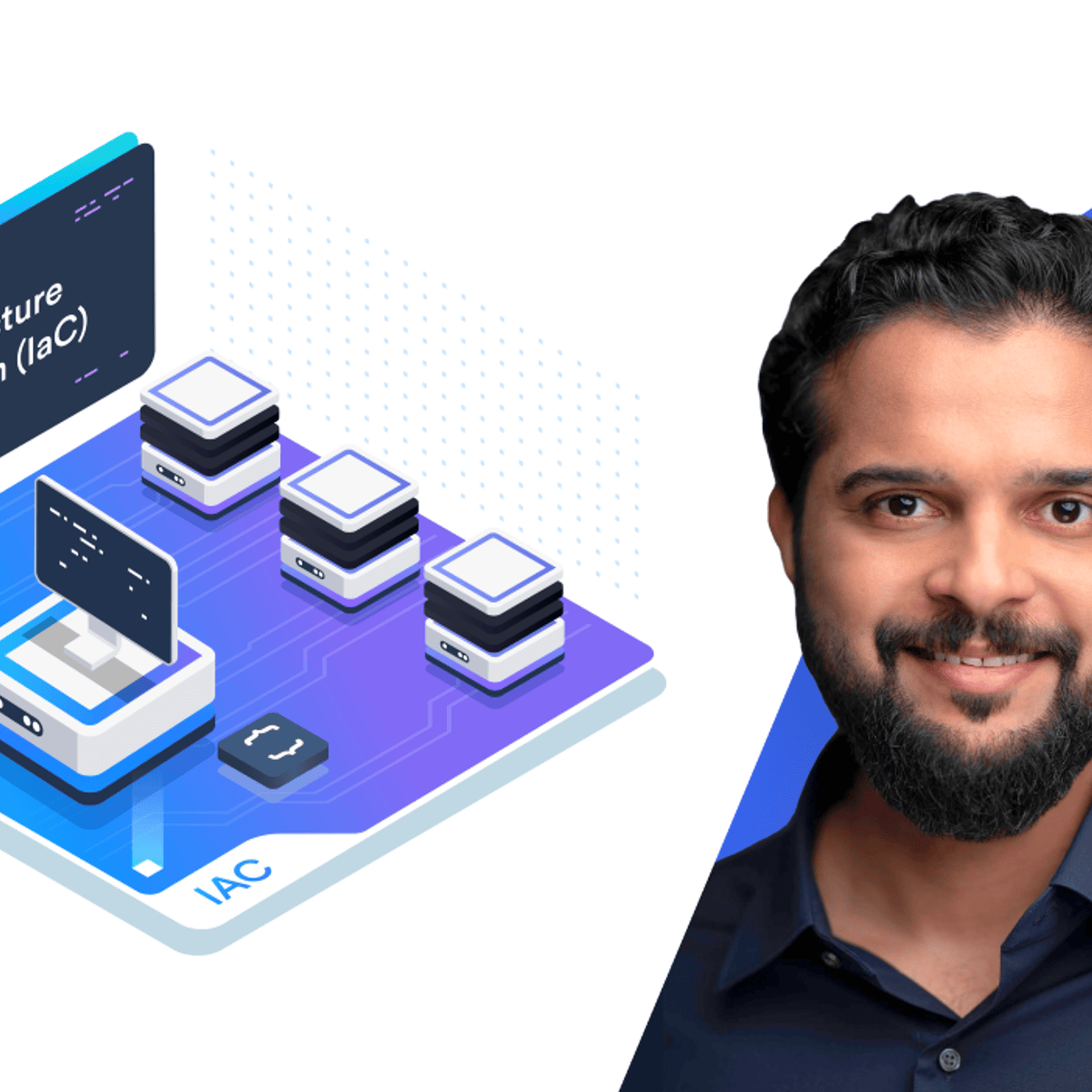
Terraform and Ansible on AWS: Applied IaC Capstone
Terraform and Ansible are two of the most widely used Infrastructure as Code tools — and they're most powerful when used together. This applied capstone course teaches you to provision AWS cloud resources with Terraform and configure servers with Ansible, then integrate both tools into a single automated pipeline. You'll start by applying Ansible modules to manage files, packages, services, and access controls across servers. You'll use Jinja2 templates to generate dynamic configurations and conditionals to adapt playbook behavior to different environments. From there, you'll use Terraform's Write-Plan-Apply workflow to build AWS networking and compute resources — VPCs with custom subnets, security groups, EC2 instances in both public and private subnets, and IAM policies. The course then scales to advanced scenarios: attaching IAM policies for DynamoDB access and creating CloudWatch alarms — all defined in Terraform code. You'll learn integration patterns for connecting Terraform provisioning to Ansible configuration, including passing Terraform outputs to dynamic Ansible inventories. Everything follows a hands-on structure: read the concept, attempt the lab, then watch a solution video that walks through expert reasoning. The course culminates in a portfolio-ready capstone project where you design and build a complete multi-tier AWS environment, provisioning infrastructure with Terraform and configuring it with Ansible through a seamless pipeline. Who this is for: DevOps engineers and cloud practitioners with AWS familiarity, networking fundamentals, and working knowledge of both Terraform and Ansible who are ready to integrate these tools for production-grade infrastructure automation.
PCEP: Python Setup
This course will be useful to anyone new to Python programming. You will learn how to set up a Python development environment and develop a simple application. This is the first course in a multi-course Specialization. All of the courses in this Specialization require that you use the provided virtual machine, which includes an installation of Python. The course setup instructions provided in the first module of this course go into more detail about the hardware and software requirements.
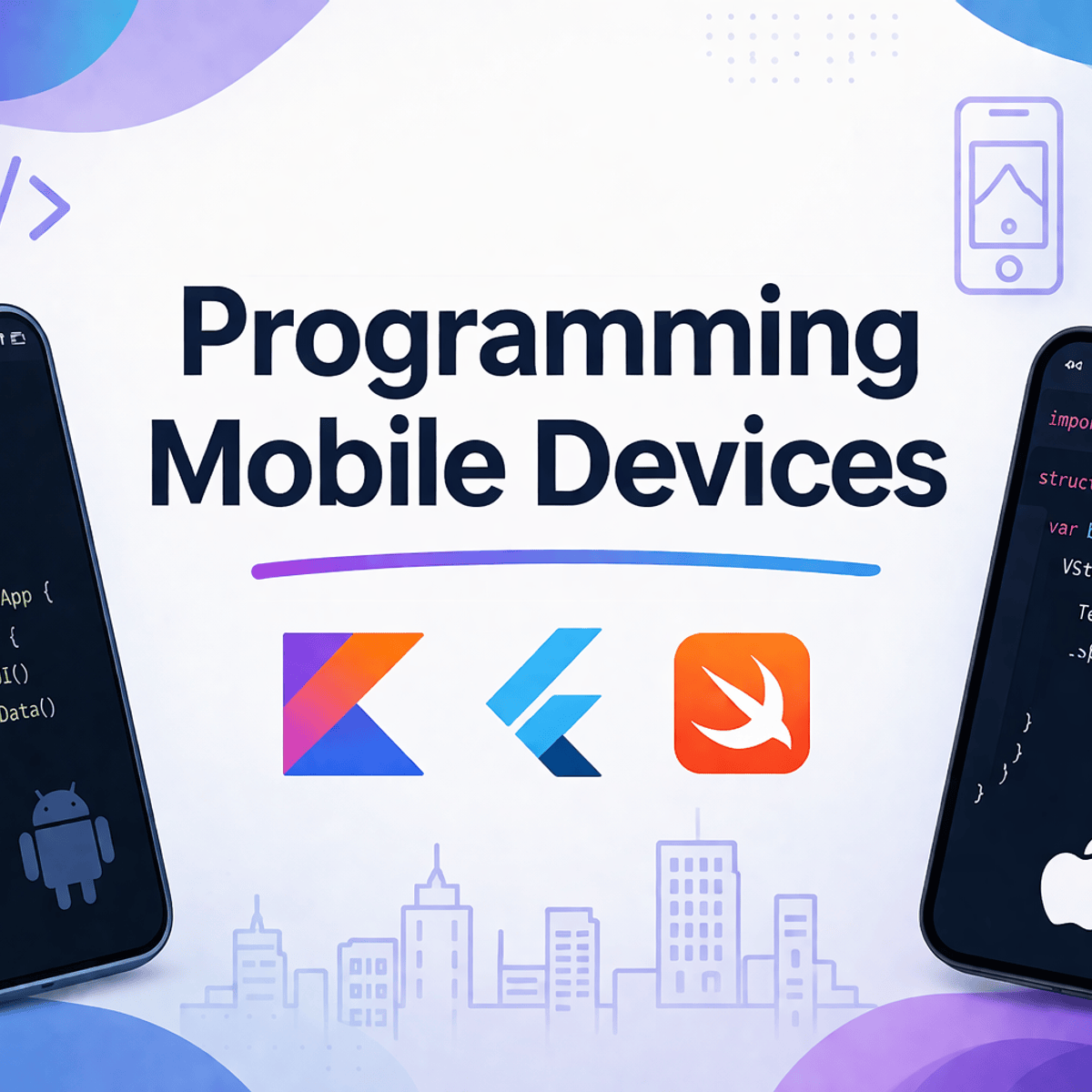
Programming Mobile Devices
The course “Programming Mobile Devices” provides a comprehensive introduction to creating Android applications, guiding learners from foundational principles to advanced practices in mobile app development. In this course, you’ll be introduced to the essential tools and programming languages, such as Android Studio and Kotlin, that form the backbone of professional Android development. You’ll learn about designing user interfaces, managing data storage, incorporating interactive components, and optimising performance to create dynamic, user-friendly mobile experiences. This course covers a wide variety of topics in Android app development, including UI design with XML, data management with SQLite and Firebase, network connectivity, and location services with Google Maps integration, all of which are designed to give you an overview of what’s to come in this course. By the end, students will possess a solid foundation in Android development, empowering them to build, test, and deploy engaging user-centered mobile applications.

Salesforce Security and Automation
Want to build secure and efficient Salesforce apps? Security and automation are more than simply technical skills; they are the key to developing smarter, safer, and more scalable applications. This comprehensive Security & Automation in Salesforce App Builder course is intended to help you thrive in real-world scenarios and go one step closer to your Salesforce App Builder certification. You'll learn about the most popular Salesforce features—data access protocols, permission settings, role hierarchies, and sharing rules—via engaging videos, hands-on activities, and real-world scenarios. You will also learn how to use Workflow, Process Builder, and Flows to successfully streamline and automate business procedures. Whether you're a new developer, administrator, or Salesforce professional, this Salesforce Platform App Builder course will teach you how to secure your apps, automate more effectively, and achieve business impact. By the end, you won't just understand Salesforce—you'll be equipped with future-ready skills to lead innovation, boost performance, and accelerate your career growth.

Advanced Git Features
Take your Git expertise to the next level with Advanced Concepts of Git — a course built for learners who already understand Git basics and are ready to explore its full potential. From diving into Git’s internal architecture to mastering branching strategies, rebasing, and automation, this course equips you with advanced skills to handle complex version control challenges. You’ll learn how to recover lost commits, rewrite history, manage submodules, and optimize collaboration in large teams or open-source projects. With a strong focus on problem-solving, clean workflows, and secure practices, this course ensures you can confidently manage real-world projects at scale. By the end of this course, you will be able to: - Analyze Git’s internal architecture, including objects, references, and repository structure. - Apply advanced history management techniques such as reflog, stashing, bisecting, and patching. - Implement effective branching strategies, rebasing, and commit history rewriting for cleaner workflows. - Utilize advanced commands like cherry-pick, reset, and revert to manage changes effectively. This course is ideal for: - Developers and engineers who have mastered Git fundamentals and want to level up to advanced workflows. - Team leads and project managers managing large, distributed development teams. - Open-source contributors seeking to handle complex pull requests and collaboration challenges. - DevOps and automation specialists who want to integrate Git into CI/CD pipelines. Note: Prior experience with Git fundamentals (repositories, commits, branching, and merging) is strongly recommended before taking this course. Disclaimer: This is an independent educational resource created by Board Infinity for informational and educational purposes only. This course is not affiliated with, endorsed by, sponsored by, or officially associated with any company, organization, or certification body unless explicitly stated. The content provided is based on industry knowledge and best practices but does not constitute official training material for any specific employer or certification program. All company names, trademarks, service marks, and logos referenced are the property of their respective owners and are used solely for educational identification and comparison purposes.
Master CSS: Responsive Websites with Flexbox, Grid & SCSS
You learned basic CSS. Then came the tough part. Broken layouts, confusing positioning, & designs that fail on mobile. This course helps you move beyond trial and error by teaching modern CSS, responsive layouts, Flexbox, Grid, and scalable styling the way real front-end developers actually use them. Here is what you will especially build: • Write CSS selectors, apply color, background, border, & typography in VS Code, and along the way, understand specificity and display. As a result, you stop guessing why things break. • Align elements with Flexbox, and then structure pages with CSS Grid. Handle positioning, sticky headers, & scroll behavior the same way real projects do. • Compile SCSS with Node and NPM, and use variables, nesting, transitions, animations, gradients, and blend modes for cleaner, more maintainable stylesheets. • Build a complete portfolio using media queries, viewport units, Font Awesome, Bootstrap Icons, and mobile navigation. So, by the end, everything comes together in one real project. Built for beginners and aspiring front-end developers who want practical skills and real projects, taught in Hindi and trusted by 200,000+ learners across 160+ courses. Enroll today and start building with confidence.

Principes de base pour les utilisateurs Snowflake
Ce cours aborde les principes de base de BigQuery pour les professionnels qui connaissent les entrepôts de données cloud basés sur SQL dans Snowflake et qui souhaitent commencer à travailler dans BigQuery. Grâce à des contenus de cours interactifs et des ateliers pratiques, vous apprendrez à provisionner des ressources, à créer et à partager des ressources de données, à ingérer des données et à optimiser les performances des requêtes dans BigQuery. En vous appuyant sur vos connaissances de Snowflake, vous découvrirez également les similitudes et les différences entre Snowflake et BigQuery pour faciliter votre prise en main des entrepôts de données dans BigQuery.

UX: Research Process
Updated in May 2025. This course now features Coursera Coach! A smarter way to learn with interactive, real-time conversations that help you test your knowledge, challenge assumptions, and deepen your understanding as you progress through the course. Embark on a transformative journey through the world of UX design and research, where you'll master the skills to create user-centric solutions. This comprehensive course begins by introducing you to the principles of design thinking, guiding you through empathy mapping, journey mapping, and storytelling to understand and address user needs effectively. Dive deeper as you explore UX content strategy, learning to craft engaging, helpful, and transparent content. From designing information architecture to creating intuitive navigation systems, this course covers all facets of organizing and labeling content for seamless user experiences. Hands-on exercises like card sorting and competitor research will solidify your understanding. Advance your expertise with modules on user interviews and persona creation. You'll learn to conduct insightful user research, synthesize findings, and develop data-driven solutions. The course culminates with evaluating design through usability testing, A/B testing, and user surveys, equipping you with the tools to iterate and refine designs for success. This course is perfect for aspiring and professional UX designers, product managers, and anyone passionate about creating exceptional user experiences. Whether you're a beginner or looking to enhance your skills, this course ensures you're ready to solve real-world UX challenges.

Apply OpenGL Texturing and Camera Systems
By the end of this course, learners will be able to apply OpenGL texturing techniques, analyze texture sampling behavior, implement transformation mathematics using GLM, configure camera and projection systems, and interactively debug rendering pipelines using ImGUI. This course provides a structured, practice-driven pathway to mastering one of the most critical aspects of modern graphics programming: rendering realistic, controllable, and optimized 3D scenes. Learners gain hands-on expertise in texture loading, coordinate mapping, filtering, mipmapping, multitexturing, and shader-based enhancements, followed by a deep understanding of transformation matrices, camera movement, and projection models. Completing this course equips learners with transferable skills for game development, simulation systems, visualization tools, and real-time graphics applications. Each module builds logically from foundational concepts to applied workflows, ensuring learners not only understand what to implement, but why it works. What makes this course unique is its integrated focus on texturing, mathematics, and interactive debugging within a single cohesive learning experience. Rather than treating these topics in isolation, the course demonstrates how they work together in real-world OpenGL applications, preparing learners for professional-grade graphics development.
Networking in Google Cloud: Network Security
Welcome to the fourth course of the "Networking in Google Cloud" series: Network Security! In this course, you'll dive into the services for safeguarding your Google Cloud network infrastructure. The first module, Distributed Denial of Service (DDoS) Protection, covers how to fortify your network against Distributed Denial of Service (DDoS) attacks, ensuring uninterrupted availability of your services. In the second module, Controlling Access to VPC Networks, you'll learn the network access control, enabling you to define permissions for who can access your resources and how. Finally, in the third module, Advanced Security Monitoring and Analysis, we'll explore how to proactively detect and respond to potential threats, keeping your Google Cloud environment secure and resilient. By the end of this course, you'll have a comprehensive understanding of Google Cloud network security.
Prompt Engineering for Web Developers
Not quite getting the results you want from ChatGPT? Wondering how you can use AI language models to your advantage? Then this course is for you! If you’ve spent any amount of time with AI language models like ChatGPT and Google Bard, you may have noticed the results can sometimes be, well, frustrating. When it comes to leveraging AI language models, your output is often only as good as your input. In other words, it’s all about learning how best to communicate your desired results. Effective prompt engineering is the secret sauce for getting the most out of AI. There are plenty of resources on prompt engineering out there, but this course focuses specifically on how you can learn the art and science of effective prompt engineering to get the most out of AI language models and ultimately become a better web developer. By the end of the course, you'll be an awesome prompt engineer with the skills to transform AI language models like ChatGPT into the ultimate coding assistant and pair programming partner. You’ll be equipped to leverage AI to plan, learn, generate, debug, document, and explore code better than you ever have before. And to make sure it sticks, there will be plenty of challenges and suggestions for further learning along the way! Ready? Let’s engineer some prompts!

Gemini in Google Docs 繁體中文
使用者將能透過 Gemini 版 Google Workspace 外掛程式運用生成式 AI 功能。本課程會使用影片、實作活動和練習範例,深入介紹 Gemini 版 Google 文件的功能。您將學到如何透過 Gemini 使用提示生成撰寫內容、編輯寫好的文字,以提升整體工作效率。本課程結束後,您將具備 Gemini 版 Google 文件的知識及技能,可自信地運用這項工具提升寫作品質。

6. 警告を発する: 検知と対応
Google サイバーセキュリティ プロフェッショナル認定証の 6 つめのコースです。各コースでは初級サイバーセキュリティの職に必要なスキルを身につけることができます。 このコースでは、検知とインシデント対応に焦点を当てます。具体的には、セキュリティインシデントを定義し、インシデント対応チームの役割と責任など、インシデント対応のライフサイクルを学びます。またパケット スニッフィングのツールを使用してネットワーク トラフィックをキャプチャし、セキュリティ インシデントを検知するためにネットワーク通信を分析、解釈します。アセスメントを行い、アーティファクトを分析することで、インシデント調査および対応のプロセスや手順を検討し、不正侵入検知システム(IDS)とセキュリティ情報イベント管理(SIEM)ツールの使用方法についても学びます。 サイバーセキュリティの分野で働いている現職の Google 社員が最適なツールやリソースを使って一般的なサイバーセキュリティの業務を遂行する実践的な方法を指導します。また就職活動への準備も手助けします。 この認定プログラムを修了すると、エントリーレベルのサイバーセキュリティの職に応募できるようになります。過去の業務経験は不要です。
Web Dev: Page Layout and Complex Style Rules
In this course, you'll continue developing your web-development skills by formatting element edges and corners, controlling an element's height and width, controlling an element's position and layering, and normalizing and resetting browser CSS defaults. You'll also use advanced selectors, manager user-interface states, make structure more apparent to users, and use CSS pseudo-element selectors. Then, you'll use CSS to create newspaper-style columns, grid layouts, and flexible box layouts. This is the third course in a multi-course Specialization. All of the courses in this Specialization require that you run a XAMPP web server on localhost. The course setup instructions provided in the first course go into more detail about the hardware and software requirements.
Learn Class Components in React
Although modern React tends to use functional components, knowledge of class components remains a useful skill to have in your toolbox. You might find yourself dealing with legacy code, or a colleague who prefers them. The difference between functional and class components might come up in an interview - who knows! In this course, Bob Ziroll takes you through the essential basics of class components with a collection of interactive challenges designed to get you coding as much as possible. This approach leaves you with rock-solid knowledge which really sticks.

ChatGPT 101 - Supercharge Your Work & Life with ChatGPT
This course features Coursera Coach! A smarter way to learn with interactive, real-time conversations that help you test your knowledge, challenge assumptions, and deepen your understanding as you progress through the course. In this course, you will explore the practical applications of ChatGPT in both your personal and professional life. You'll understand how to leverage ChatGPT's capabilities to enhance productivity, creativity, and decision-making. Through engaging lessons and exercises, you’ll learn how to effectively interact with ChatGPT, draft powerful prompts, and apply advanced techniques to get the most out of this AI tool. The course begins with an introduction to ChatGPT, its strengths and limitations, and how to use it responsibly. You will learn how to phrase questions effectively, verify information, and overcome common challenges. As you progress, you’ll explore the nuances of advanced prompt engineering, including follow-up prompts, expert personas, and audience tailoring. You'll also discover ways to integrate ChatGPT into different work scenarios, such as job applications, professional communication, and content creation. Whether you're a professional looking to enhance your workflow or a learner eager to boost your productivity, this course is designed to equip you with valuable skills. No prior knowledge of AI or ChatGPT is required. The course is suitable for anyone looking to improve their efficiency and creativity through AI-powered tools. By the end of the course, you will be able to create effective prompts, apply advanced techniques for tailored responses, integrate ChatGPT into your professional and personal life, and use AI to supercharge your work and creative projects.

Get started with Piktochart
At the end of this project, you will have all the basic skills to use Piktochart, a software and online tool for creating and editing infographics and Marketing designs of all kinds. You will be able to discover in detail the different features of the platform, and will be able to test its graphical content creation tools for the first time. This project is for beginners, people who have never used Piktochart. It is ideal for those who would like to use Piktochart for their professional projects.

Integrating Python for Web Systems, Testing, and Packaging
Build practical skills in Python web development, server-side scripting, testing, integration, and application packaging through a structured, hands-on learning experience. In this course, you will learn how to clean and parse web content, create dynamic CGI applications, and configure Apache for server-side execution. As you progress, you will develop dynamic web components using Python Server Pages (PSP), implement XML-RPC communication, validate applications with doctest and unittest, and analyze application performance using profiling tools. The course also explores advanced Python integration with Java and .NET through Jython and IronPython, memory management using reference counting, and packaging applications with distutils for distribution. Designed for learners who want to strengthen their Python web development skills, this course emphasizes practical implementation across the complete development pipeline—from web content preparation and application testing to cross-platform integration and deployment. By the end of the course, you will be able to parse and prepare web content, build and debug server-side Python applications, test and optimize application performance, integrate Python with multiple runtime environments, and package Python applications for scalable distribution. If you want to develop practical experience in building, testing, integrating, and deploying Python-based web systems, this course provides a comprehensive, project-based learning path.

Advanced Django: External APIs and Task Queuing
Code and run Django websites without installing anything! This course is designed for learners who are familiar with Python and basic Django skills (similar to those covered in the Django for Everybody specialization). The modules in this course cover connecting to external APIs, task queuing, and pulling together the topics across the specialization in capstone projects. To allow for a truly hands-on, self-paced learning experience, this course is video-free. Assignments contain short explanations with images and runnable code examples with suggested edits to explore code examples further, building a deeper understanding by doing. You’ll benefit from instant feedback from a variety of assessment items along the way, gently progressing from quick understanding checks (multiple choice, fill in the blank, and un-scrambling code blocks) to slowly building features, resulting in large coding projects at the end of the course. Course Learning Objectives: Connecting to external APIs Implement task queuing Leverage various Django skills to create portfolio-quality projects

Machine Learning Foundations
This course features Coursera Coach! A smarter way to learn with interactive, real-time conversations that help you test your knowledge, challenge assumptions, and deepen your understanding as you progress through the course. In this comprehensive course, you will dive into the world of machine learning, exploring key concepts, algorithms, and implementation techniques. You'll start by mastering feature engineering, a crucial aspect of building effective machine learning models. By focusing on data scaling, normalization, encoding categorical variables, and feature selection, you’ll enhance your ability to preprocess and transform data for optimal model performance. The journey continues as you explore the core machine learning algorithms. You'll implement these techniques using Python, including linear regression, logistic regression, decision trees, random forests, and gradient boosting. The course will also cover unsupervised learning techniques, such as K-means clustering, DBSCAN, and Gaussian mixture models, helping you tackle complex data analysis problems. Additionally, advanced methods like reinforcement learning and neural networks will be introduced, preparing you for cutting-edge machine learning applications. This course is designed for learners who have a basic understanding of programming and data science principles. It is ideal for those looking to build a solid foundation in machine learning, whether you're aiming to enhance your skills or transition into the field. No prior experience with machine learning is necessary, but a familiarity with Python is helpful. The course is suitable for intermediate learners looking to strengthen their understanding of machine learning algorithms and techniques. By the end of the course, you will be able to implement various machine learning algorithms in Python, from regression and classification to clustering and reinforcement learning, with a deep understanding of how to evaluate and optimize model performance.

Build a Static Website with Rust and Zola
In this project, you will learn how to use the Zola static site generator to build and deploy a fast, secure static website. You will install Zola, create a site structure, incorporate themes and templates, customize content and configuration, and deploy the final site to a cloud hosting platform. By the end of the project, you will have hands-on experience building a production-ready site with Zola that can be used for personal or professional use cases.

React Foundations & Core Frontend Development
This course features Coursera Coach! A smarter way to learn with interactive, real-time conversations that help you test your knowledge, challenge assumptions, and deepen your understanding as you progress through the course. This course equips you with a strong foundation in React and modern frontend development, enabling you to build scalable, dynamic, and high-performance web applications. You will gain hands-on experience with core React concepts, component-driven architecture, and real-world project workflows, preparing you for professional frontend roles. You begin by exploring React’s evolution, setting up projects with modern tools like TypeScript, Next.js, and Remix, and understanding project structure. As you progress, you will master JSX, components, props, dynamic rendering, and event handling through practical examples like product cards and employee components. The course then dives deeper into state management using hooks such as useState and useEffect, followed by advanced event handling techniques and form management. You will build a complete e-commerce-style application, implementing CRUD operations, UI enhancements, and performance optimizations. Finally, you will learn routing with React Router, global state management with Context API, and advanced patterns using Redux Toolkit. This course is ideal for aspiring frontend developers, JavaScript learners, and professionals transitioning to React. Basic JavaScript knowledge is recommended, and the course is designed at an intermediate level. By the end of the course, you will be able to build full-featured React applications, manage complex state efficiently, implement routing and global state, and structure production-ready frontend projects.

Fundamentals of Product Management
Course Description This course provides an essential introduction to product management, equipping learners with the foundational knowledge and skills to succeed in this dynamic field. Participants will explore the key roles and responsibilities of a product manager, distinguishing between product management, product ownership, and project management. The curriculum covers developing product visions and strategies, utilizing product metrics and KPIs, and performing market analysis. Additionally, learners will enhance essential skills such as effective communication, analytical thinking, and cross-functional collaboration. By the end of the course, participants will be prepared to pursue rewarding careers in product management. Learning Objectives: 1. Define the key responsibilities and contributions of a product manager to business success, understanding how effective product management drives organizational outcomes. 2. Distinguish between various product management roles, such as product manager, product owner, and project manager, and identify the unique skills required for each position. 3. Develop a comprehensive product vision and strategy using product metrics, KPIs, and market analysis techniques to effectively inform roadmapping and prioritization. 4. Demonstrate essential skills for successful product management, including effective communication, analytical decision-making, and cross-functional collaboration with stakeholders. Target Audience: This course is tailored for students seeking a career in Product Management and professionals looking to transition into Product Management roles. It is ideal for individuals who wish to enhance their interviewing skills and deepen their understanding of the product management landscape, preparing them effectively for product management interviews. Prerequisites: -Engineering Degree preferable - not necessary -Basic knowledge of technology company operations Disclaimer: This is an independent educational resource created by Board Infinity for informational and educational purposes only. This course is not affiliated with, endorsed by, sponsored by, or officially associated with any company, organization, or certification body unless explicitly stated. The content provided is based on industry knowledge and best practices but does not constitute official training material for any specific employer or certification program. All company names, trademarks, service marks, and logos referenced are the property of their respective owners and are used solely for educational identification and comparison purposes.

Network Principles in Practice: Linux Networking
Welcome! In this course, titled "Network Principles in Practice: Linux Networking," we delve into the dynamic domain of Linux Networking, featuring a robust set of features essential for contemporary networked systems. Departing from traditional approaches, our emphasis is on practical application over foundational knowledge. Throughout the course, you'll explore the integration of concepts into Linux, gaining hands-on experience in architecting and implementing complex networks and systems. From understanding the Linux kernel's role to building gateways and navigating virtual networking and container orchestration with Kubernetes, each week offers valuable insights and practical skills. Join us on this journey where understanding meets real-world application, providing a comprehensive exploration of network systems. This course can be taken for academic credit as part of CU Boulder’s Masters of Science in Computer Science (MS-CS) degrees offered on the Coursera platform. This fully accredited graduate degree offer targeted courses, short 8-week sessions, and pay-as-you-go tuition. Admission is based on performance in three preliminary courses, not academic history. CU degrees on Coursera are ideal for recent graduates or working professionals. Learn more: MS in Computer Science: https://coursera.org/degrees/ms-computer-science-boulder Course logo by Jordan Harrison on Unsplash.

Jmeter training for Beginners
This JMeter for Performance and API Testing course equips you with the skills to design, run, and automate performance and API tests using Apache JMeter. Begin with the fundamentals of performance testing—learn JMeter setup, key testing processes, and popular tools. Explore how JMeter simulates real-world load to assess application scalability and reliability. Progress to API testing with hands-on demos to validate performance and functionality. Conclude with script recording to capture user behavior and generate reusable test plans. To be successful in this course, you should have a basic understanding of web applications, APIs, and some experience with software testing or DevOps workflows. By the end of this course, you will be able to: - Set up and configure JMeter for performance testing - Simulate load and analyze scalability using JMeter - Test APIs for performance and reliability with real-world scenarios - Record and reuse user flows using JMeter’s script recording feature Ideal for QA testers, performance engineers, and DevOps professionals.

Practical Python Programming
Python is one of the world's most popular programming languages, powering everything from automation and data analysis to web applications and artificial intelligence. In this beginner-friendly program, learners develop practical Python programming skills by writing real code and solving programming challenges that build confidence step by step. Throughout the program, learners explore Python syntax, variables, data types, strings, numbers, operators, functions, conditional logic, collections, and loops while gaining experience creating programs that solve real problems. Rather than simply learning programming concepts, learners actively apply them through coding exercises designed to reinforce understanding and build technical fluency. By the end of the program, learners will have a solid programming foundation and the confidence to continue into more advanced areas such as software development, backend development, data engineering, automation, artificial intelligence, and other technical career pathways.