Cursos de Desarrollo
Los mismos datos para todos, vengan de Udemy o de Coursera: precio, valoración, duración e idioma. 1.285 cursos encontrados. Afinar la búsqueda

Roblox Coding for Kids 8–12: 2026
Build fun Roblox games using Roblox Studio, Lua scripting, obstacles, UI, timers, and custom 3D models.
Advanced Java
Advance your Java skills to the next level with this hands-on journey into enterprise-level development. This Advanced Java Training is built around the skills essential for generating industry requirements and for building scalable, modern applications using standard technologies. Begin with JDBC, then develop an understanding of its architecture, APIs, and environment setup, with advanced-level knowledge of connecting Java programs to an existing relational database. Then move on to Servlets and JSP, learn how these can be used to develop a dynamic site, deploying some server-side applications in real-life. Then, you’ll explore the Spring ecosystem, including Spring Core, Spring MVC, REST, Spring Boot, Spring JDBC, JPQL, JPA, Hibernate, and Spring Data. You’ll explore how these libraries can drastically reduce development times and improve performance for building applications that are ready to go live. Created for those who are seeking to take their career in software development to the next level, this course challenges you to learn professional techniques like backend, web, and framework development that Software Engineers utilize on the job every day.

Agentic AI Projects: FastAPI, MCP, AWS Deploy & Gemini 3
Build & Deploy 10 Production AI Agents with LangChain v1, LangGraph, MCP, Gemini 3, FastAPI, Streamlit & AWS EC2

React Native
React Native is an open-source framework for building cross-platform applications (apps) using React and the platform’s native capabilities. In this course, you will move from the basics of React to a more advanced implementation using React Native. You’ll review a wide range of different React components and ways of styling them. And you’ll get to practice using different mobile methods of interactivity with React Native. Some of the basics skills you will learn include: • Building a single-page React Native app and styling it using basic components • Building large lists and configuring user inputs within a React Native app • Using the Pressable component to build buttons and other clickable areas • Setting up an app with React Navigation and moving between screens You’ll gain experience with the following tools and software: • React • React Native • Front End development languages (HTML, CSS and JavaScript) • JSX • Code editing programs, such as Expo and Visual Studio Code This course is for learners who would like to prepare themselves for a career in mobile development. To succeed in this course, you will need foundational knowledge of React basics, internet navigation skills and an eagerness to code.

Masterclass Software Quality Engineering | AI Testing
Quality Engineering, Modern Testing Principles, Devops for Quality Engineers, Automation Testing, Generetive AI - GPT
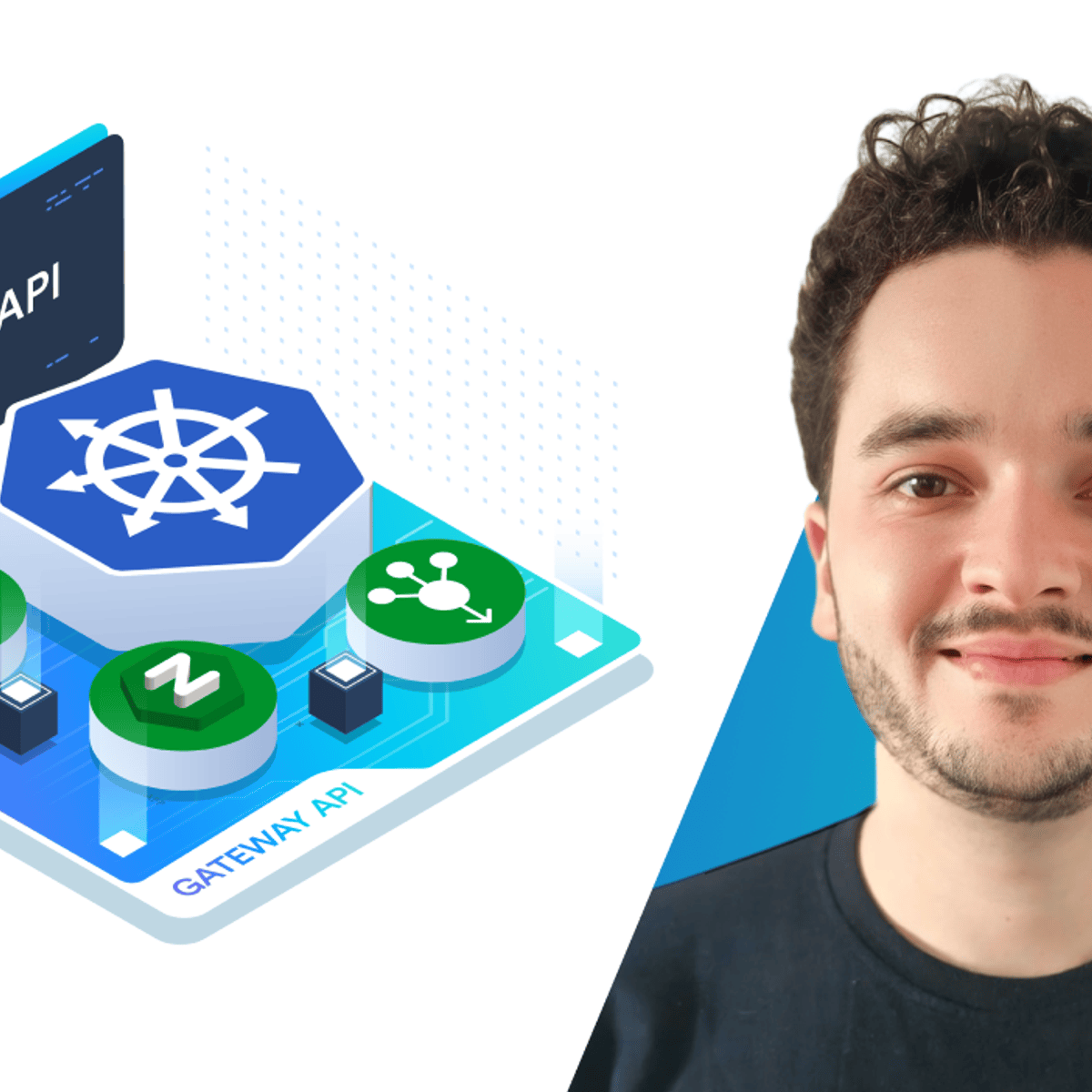
Gateway API with NGINX Fabric Gateway
Replace legacy Ingress with modern, production-ready traffic management using NGINX Gateway Fabric. Kubernetes Ingress is on its way out. With NGINX Ingress reaching End-of-Life and the IngressNightmare CVE exposing critical vulnerabilities in legacy approaches, organizations are actively migrating to the Kubernetes Gateway API — a more expressive, extensible, and secure model for managing cluster traffic. This course gives you the hands-on skills to lead that migration. You'll start by understanding exactly why Ingress is being deprecated, how Gateway API's role-oriented architecture separates responsibilities across infrastructure providers, cluster operators, and application developers, and how to deploy your first Gateway using NGINX Gateway Fabric. From there, you'll work through the core Gateway API resources — GatewayClass, Gateway, and HTTPRoute — before moving into advanced traffic management: cross-namespace routing, weight-based traffic splitting for canary deployments, header-based routing for A/B testing, and request and response filters for in-flight traffic manipulation. The course then covers TLS termination, HTTP-to-HTTPS redirect enforcement, and cross-namespace security using ReferenceGrant. The final module focuses on production observability — interpreting Gateway API status conditions, diagnosing common failure scenarios with kubectl, and applying production migration blueprints for safe DNS cutover from legacy Ingress. Who this is for: Kubernetes engineers, platform architects, DevOps engineers, and cloud-native developers responsible for managing cluster networking or migrating away from legacy NGINX Ingress controllers.

Claude AI for Data Analysis & Business Intelligence
“This course contains the use of artificial intelligence” Welcome to Claude AI for Data Analysis & Business Intelligence, a comprehensive, practical course designed to help professionals, analysts, managers, entrepreneurs, and business leaders transform the way they work with data using the power of Claude AI. In today's data-driven world, organizations generate massive amounts of information every day. The challenge is no longer collecting data—it is turning that data into meaningful insights, actionable recommendations, and strategic decisions. Traditional analytics workflows often require multiple tools, complex formulas, lengthy reporting processes, and significant manual effort. This course shows you how to leverage Claude AI as your intelligent analytics partner to dramatically accelerate data analysis, reporting, forecasting, research, and business intelligence workflows. Throughout this course, you will learn how to build a complete AI-powered analytics workflow using Claude. You will start by understanding the foundations of modern business intelligence, learning how AI is transforming analytics, reporting, and decision-making across organizations. You will then create an optimized analytics workspace, develop reusable analytical frameworks, and learn how to communicate with Claude using professional data analyst prompts that generate consistent, high-quality outputs. You will work extensively with Excel spreadsheets, CSV files, and common business datasets, learning how to explore data, identify trends, uncover anomalies, perform segmentation, compare performance, and generate meaningful insights. You will also learn how to analyze KPIs, automate recurring reports, create executive summaries, and develop decision-ready recommendations for leadership teams. As the course progresses, you will dive into specialized areas of business analytics including financial analysis, marketing analytics, sales intelligence, and operations performance analysis. You will learn how to evaluate business performance, identify growth opportunities, assess risks, analyze customer behavior, improve operational efficiency, and support strategic planning initiatives using AI-assisted workflows. You will also master the art of executive reporting and data storytelling, transforming complex findings into clear narratives that business leaders can understand and act upon. In addition, you will learn how to design effective dashboards, recommend visualizations, plan reporting structures, and create presentation-ready business intelligence outputs. The course further explores forecasting, predictive analysis, market research, and competitive intelligence, showing you how Claude can assist with trend analysis, scenario planning, opportunity discovery, competitor benchmarking, and strategic recommendations. These skills will help you move beyond basic reporting and into higher-value analytical work that drives business outcomes. One of the most valuable aspects of this course is its strong emphasis on hands-on learning. Throughout the program, you will complete practical exercises, real-world business scenarios, guided projects, and hands-on labs that demonstrate how Claude can be applied to everyday analytics challenges. Rather than focusing on theory alone, you will build repeatable systems and workflows that can be immediately applied in your professional environment. By the end of this course, you will be able to use Claude AI to analyze business data, automate reporting workflows, generate executive-level insights, support strategic decision-making, perform forecasting and research, design business intelligence systems, and even create specialized AI Analyst Teams that help scale analytical capabilities across an organization. Whether you are a business analyst, data analyst, manager, consultant, entrepreneur, finance professional, marketing professional, operations leader, or simply someone who wants to become more effective with data, this course will provide a practical framework for using AI to work faster, uncover deeper insights, and make better business decisions. Join us and learn how to transform Claude AI from a simple chatbot into a powerful Business Intelligence Partner, Analytics Assistant, and AI-Powered Decision Support System.

Kubernetes & Cloud Native Associate (KCNA) Prep
This course features Coursera Coach! A smarter way to learn with interactive, real-time conversations that help you test your knowledge, challenge assumptions, and deepen your understanding as you progress through the course. This course prepares you for the Kubernetes and Cloud Native Associate (KCNA) exam by covering key Kubernetes concepts and cloud-native technologies. You will explore the fundamentals of container orchestration, Kubernetes architecture, and essential components like pods, deployments, and services. Learn how to set up and manage Kubernetes clusters, configure networking, and implement best practices for security, including RBAC and network policies. With hands-on demonstrations, you'll dive into Kubernetes objects, storage, and services, while also gaining insights into cloud-native observability tools. This course is ideal for those preparing for the KCNA exam and IT professionals seeking to deepen their Kubernetes knowledge. By the end of the course, you’ll be able to deploy and manage Kubernetes clusters, secure applications, and utilize cloud-native tools for monitoring and application delivery.

Advanced T-SQL: Window Functions for Advanced Querying
Learn how to use Window Functions or Analytical Functions to perform data analysis in SQL Server
Hardware Security
In this course, we will study security and trust from the hardware perspective. Upon completing the course, students will understand the vulnerabilities in current digital system design flow and the physical attacks to these systems. They will learn that security starts from hardware design and be familiar with the tools and skills to build secure and trusted hardware.

Android OS Internals / AOSP Automotive ROM Development
Android Open Source Project Development (AOSP) - Android Automotive

Writing Clean Code: 20 Code Smells & How to Avoid Them
This course features Coursera Coach! A smarter way to learn with interactive, real-time conversations that help you test your knowledge, challenge assumptions, and deepen your understanding as you progress through the course. In this course, you will learn how to identify and eliminate common "code smells" that can degrade the quality and maintainability of your software. You'll gain hands-on strategies for improving your codebase, from identifying inefficient loops to eliminating unnecessary exceptions. Each lesson focuses on a specific code smell and guides you through the best practices to refactor and optimize your code for long-term health. The course begins by exploring the fundamental principles of clean software design, introducing you to key concepts like the SOLID principles and modular design. As you progress, you will dive deep into specific code smells such as "Primitive Obsession," "Feature Envy," and "Shallow Modules," each accompanied by real-world examples and actionable solutions. By the end of this course, you will be able to confidently analyze, refactor, and improve a codebase to enhance readability, performance, and maintainability. Whether you're a junior developer or an experienced software engineer, this course will help you refine your skills and develop cleaner, more sustainable code. This course is ideal for software developers and engineers looking to improve their coding practices, enhance the maintainability of their projects, and master the art of writing clean, efficient code. A basic understanding of programming principles is recommended.

Visual Embedded Android (AOSP) with Drawings and Practice
Explore Android Open Source Project and design powerful systems using Android 11

Networking in Google Cloud: Load Balancing - 日本語版
このトレーニング コースは、「Networking in Google Cloud: Fundamentals」コースで説明したコンセプトをベースに構築されています。プレゼンテーションやデモ、ラボを通じて、Cloud Load Balancing について詳しく学び、実装します。

The Complete Vibe Coding for Non-coders Guide
Build Powerful Apps and Websites Without Writing a Single Line of Code
Operations Research (3): Theory
Operations Research (OR) is a field in which people use mathematical and engineering methods to study optimization problems in Business and Management, Economics, Computer Science, Civil Engineering, Electrical Engineering, etc. The series of courses consists of three parts, we focus on deterministic optimization techniques, which is a major part of the field of OR. As the third part of the series, we study mathematical properties of linear programs, integer programs, and nonlinear programs. We also introduce applications of these theoretical properties: How they help us develop better ways to solve mathematical programs.

Certified Data Management Professional (CDMP) - Associate
Master the Core Principles of Data Management and Prepare for the CDMP Associate Certification

Google Cloud エージェントの把握
このコースでは、Vertex AI Agent Builder、Gemini Enterprise、会話エージェント、Agent Development Kit など、Google Cloud のエージェント プラットフォームに関する包括的な概要を説明します。受講者は、各サービスの固有の機能を理解し、ユースケースごとに最適なソリューションを見極められるようになります。また、検索およびチャット アプリケーションを作成するための基礎知識を習得します。

Google Antigravity Crash Course: Google Antigravity In a Day
Master Google Antigravity IDE & Agents Panel (Last Update: 05/2026)

Python for the Absolute Beginner
Python has been the growing and most sought-after programming language of the past decade. In this course, you’ll start your journey as a Programmer with Python. This course requires zero experience in programming or coding. This course will teach foundational concepts such as data types, operators, functions, and basic Python internals. After each module, you’ll enjoy access to practice questions to better understand the concepts. The Python Basics Course offers you. The most visualized Python course ever so that you can learn complex concepts in ways that are easy to understand Practice quizzes after each lecture to lock in the concepts and build on each module And much more. Python is an in-demand skill that can boost your career. Join us and the Python Institute in upgrading your skill set. Learn Python and prepare for a much sought-after Python Institute certificate. Who Should Take This Course: This Python Basics course is designed for: - Programming beginners seeking Python certification Start Your Python Basics Journey Today: If you’re new to programming and eager to earn a Python certification, seize this opportunity. Enroll with KodeKloud today and explore our Python Basics course along with other valuable offerings to fuel your programming aspirations.

The Complete Guide to AI Infrastructure: Zero to Hero
Master the Essential Skills of an AI Infrastructure Engineer: GPUs, Kubernetes, MLOps, & Large Language Models.
SQL Joins
In this 1-hour long project-based course, you will learn how to utilize MySQL joins in your queries. By the end of this project, you will create a number of examples that will develop your learning around joins in SQL. This course will enable you to take your beginner knowledge of SQL to the next level by enabling you to utilize joins. Thus, being able to develop more complex queries. This course will provide students with the knowledge behind different joins that are available in MySQL language such as inner join, outer join, and left join. This project will take students through a number of examples demonstrating SQL functions based on a database around a bookstore. You will gain an understanding of these concepts from the in-depth examples provided.

2026 Bootcamp: Generative AI, LLM Apps, AI Agents, Cursor AI
From zero to professional level: learn the keys to Generative AI, LLM Apps, AI Agents, and Cursor AI.

Working with Onscreen Data in a Flutter Application
This is a self-paced lab that takes place in the Google Cloud console. In this lab you will develop a Flutter app using a ListView widget. Learn how to contruct a Flutter application that is capable of efficiently showing a list of data. Customise the application AppBar to provide additional functionality.

Dart & Flutter | The Complete Flutter Development Course
2024 Complete Guide To Flutter Development - Build 7 Native Cross-Platform iOS and Android Apps Using Flutter.

JavaScript Essentials 2026 - Quickstart Guide for Beginners
This course features Coursera Coach! A smarter way to learn with interactive, real-time conversations that help you test your knowledge, challenge assumptions, and deepen your understanding as you progress through the course. In this course, you’ll gain a solid understanding of JavaScript, one of the most essential languages for web development. You’ll start with the basics—variables, functions, loops, and data types—and gradually move to more advanced topics like DOM manipulation, asynchronous programming with async/await, and API interaction. Throughout the course, you’ll work on hands-on projects that build your skills and confidence in JavaScript. This course is ideal for beginners who want to learn JavaScript quickly and efficiently. It's perfect for those planning to develop web applications or pursue a career in front-end web development. The course does not require prior programming knowledge. By the end of the course, you'll have the practical knowledge needed to develop interactive websites, handle data, and solve real-world programming problems.

React Native: Developing Android and iOS Apps
React Native is one of the two most popular frameworks used for mobile app development (Statista). Successful software developers in the mobile app world make a point of having it on their resume. This React Native: Developing Android and iOS Apps course gives aspiring mobile app developers in-demand skills employers are looking for. During this course, you’ll get hands on setting up the React Native development environment. You’ll explore working with style and state management, handling user interactions and lists, and debugging and publishing mobile apps in React Native. Additionally, you’ll practice testing mobile applications on different Android and iOS mobile OS versions and platforms through our online labs. You’ll discover how to build cross-platform mobile apps using React Native and implement key features like navigation. Plus, you’ll look at state management to create efficient apps for different Android and iOS devices using React Native. If you’re looking to build a successful career in mobile app development, ENROLL TODAY and get ready to add sought-after React Native skills to your resume.

Introducción a Java
¿Te gustaría aprender a programar pero no estás seguro por dónde empezar? Java es el punto de entrada ideal: claro, estructurado y con altísima demanda en el mercado laboral. A lo largo del curso aprenderás los conceptos básicos de programación, los principios fundamentales de la programación orientada a objetos y el uso de un entorno de desarrollo profesional como Eclipse. Comprenderás cómo se estructura un programa en Java, cómo escribir código correctamente y cómo utilizar algoritmos simples para resolver problemas. No necesitas experiencia previa. Desde el primer módulo entenderás cómo funciona un programa, cómo escribir código en Java y cómo usar Eclipse, uno de los entornos de desarrollo más usados en la industria. Al terminar, podrás escribir, compilar y ejecutar tus propios programas en Java y estarás listo para avanzar a niveles intermedios de desarrollo de software. Los objetivos del curso son: - Escribir, compilar y ejecutar programas simples en Java desde cero. - Aplicar los principios básicos de la programación orientada a objetos en Java. - Utilizar Eclipse como entorno de desarrollo integrado para proyectos en Java. - Implementar algoritmos simples para resolver problemas de programación. - Reconocer la sintaxis y estructura fundamental del lenguaje Java.

Blueprint Scripting
The Blueprint Visual Scripting system in Unreal Engine is a visual programming language that uses a node-based interface to create gameplay elements. The node-based workflow provides designers with a wide range of scripting concepts and tools that are generally only available to programmers. In addition, Blueprint-specific markup available in Unreal Engine's C++ implementation provides programmers with a way to create baseline systems that designers can extend. This is primarily aimed at first- and second-year undergraduates interested in engineering or science, along with high school students and professionals with an interest in programming. This course introduces learners to the Blueprint Visual Scripting system. Participants will learn Blueprint basics, how they relate to C++, and Blueprint programming principles, and will use their knowledge to create an interactive door for a video game. This course does not require learners to have any previous knowledge about Blueprint scripting to get started. It is recommended that the learner take courses 1 through 3 before starting this course.

AI for Teachers with ChatGPT
This course features Coursera Coach! A smarter way to learn with interactive, real-time conversations that help you test your knowledge, challenge assumptions, and deepen your understanding as you progress through the course. In this course, educators will unlock the transformative potential of AI tools, particularly ChatGPT, to revolutionize their teaching workflows. You’ll learn to create engaging lesson plans, quizzes, and assessments in a fraction of the time, while also exploring project-based learning, student feedback techniques, and content creation strategies. The course begins by introducing the core capabilities of ChatGPT, guiding you through course and assessment design. As you progress, you’ll explore integrations with other tools like SlidesAI for presentations, Education Copilot for collaborative content, and PrepAI for automated quizzes and test creation. Each module is crafted to be hands-on and classroom-ready. You'll then move into advanced content generation using platforms like Pictory for media-rich outputs, Tome for knowledge sharing, and Wisdolia for intuitive educational support. These tools are explored in practical, teacher-first scenarios to boost both classroom efficiency and creativity. This course is ideal for educators, instructional designers, and trainers at any level who want to enhance their teaching practices using AI. No programming background is required—just a willingness to explore how AI can streamline and energize educational experiences. The difficulty level is beginner. By the end of the course, you will be able to design full lesson plans, generate interactive assessments, produce multimedia presentations, and seamlessly integrate AI tools like ChatGPT, SlidesAI, PrepAI, and more into your teaching strategy.

TypeScript Interview Mastery – 2026 Q&A
This course features Coursera Coach! A smarter way to learn with interactive, real-time conversations that help you test your knowledge, challenge assumptions, and deepen your understanding as you progress through the course. In this in-depth course, you’ll gain mastery over TypeScript concepts through hands-on exercises and real-world problem-solving, preparing you for interviews that test your coding and problem-solving abilities. You will start with the fundamentals, including setting up TypeScript, understanding its differences with JavaScript, and exploring its various types. Gradually, you’ll dive into advanced topics such as function overloading, the use of generics, and class manipulation. The course also includes practical exercises and coding challenges to solidify your understanding of TypeScript and its applications. As you progress, the course will guide you through key TypeScript features such as interfaces, enums, type inference, and working with classes and functions. You'll gain experience in integrating TypeScript with React, using advanced concepts like overloading, extending, and conditional types. By the end of the course, you’ll have the confidence to take on TypeScript interviews and ace coding challenges with ease. This course is ideal for developers preparing for TypeScript-focused interviews. If you have basic programming knowledge and want to deepen your understanding of TypeScript, this course will provide you with the knowledge and skills necessary for success in any TypeScript interview. By the end of the course, you will be able to define and implement TypeScript types, work with generics and advanced features like overloading, and apply these concepts in real-world coding challenges.

Programming with Java
This is the second course in the Amazon Junior Software Developer Professional Certificate. In this course, you will explore advanced Object-Oriented Programming (OOP) concepts in Java, starting with an introduction to Interfaces and Abstract Classes. You'll learn how to effectively utilize interfaces for achieving multiple inheritance and how abstract classes play a crucial role in designing class hierarchies. Moving forward, you'll dive into Exception Handling, covering various types of exceptions in Java, along with best practices for handling them using try-catch-finally blocks. You'll also gain knowledge of File I/O operations, acquire skills in reading from and writing to files, understand different types of streams, and perform file operations efficiently. Finally, you'll explore Serialization and Deserialization techniques, enabling you to save and reconstruct object states, as well as use last run files for configuring current run states effectively. Overall, this course equips you with advanced Java programming skills essential for developing robust, efficient, and scalable applications. After completing this course, you’ll be able to: • Develop methods to organize and reuse code effectively. • Apply object-oriented programming concepts within the Java language to design modular and scalable code. • Handle errors and exceptions in Java to create robust applications.

The Command Line for Everyone
This beginner-friendly course introduces learners to the command line through the Mac Terminal. Using a practical, hands-on approach, it explains what the command line is, how it differs from a graphical interface, and how to use essential commands to navigate directories, create files and folders, inspect contents, and access built-in help. The course is especially useful for learners who want to feel more confident using AI-powered developer tools and other command-line applications.

XML Practical - XSLT and SVG Project
Build practical skills in designing scalable vector graphics by combining XML, SVG, and XSLT in a structured, project-based learning experience. This course guides you through creating standards-compliant SVG graphics, from foundational XML syntax and basic shapes to reusable components, advanced styling, filters, gradients, and semantic markup. Across five progressive modules, you will define SVG structures, construct vector drawings using XML, apply stroke and fill techniques, organize graphics with reusable definitions and styling, and integrate text, metadata, and accessibility features. You will also implement advanced SVG attributes, filters, gradients, and finishing techniques to create polished, scalable graphics with clean, well-structured markup. Designed for aspiring web developers, data visualizers, and interface designers, this course emphasizes hands-on practice through quizzes, graded assessments, and practical projects. Rather than focusing only on concepts, you'll build and refine SVG documents while learning best practices for organization, styling, reusability, and markup validation. By the end of the course, you'll be able to construct, style, optimize, and validate XML-based SVG graphics, creating reusable, accessible, and visually polished vector graphics using industry-standard XML and SVG techniques.

Testing and Deploying Angular Applications
This course provides you with the essential skills to effectively test, optimize, and deploy Angular applications. You will begin by mastering Angular’s testing ecosystem, setting up tools like Jasmine, Karma, and learning how to write robust test cases. Next, you will explore strategies for optimizing and deploying applications across various environments, while also discovering how to automate your testing and deployment processes through CI/CD pipelines. The course concludes with a focus on real-time monitoring and maintaining production-ready Angular applications. By the end of this course, you will be able to: - Set up advanced Angular testing tools such as Jasmine and Karma for comprehensive test case development. - Write robust unit and integration tests to ensure application reliability and stability. - Optimize Angular applications for performance and deploy them across different cloud or on-premises environments. - Automate build, test, and deployment processes using state-of-the-art CI/CD pipelines. - Utilize tools and strategies for application monitoring, error tracking, and maintaining highly available, production-ready applications. This course is ideal for front-end developers, web developers, and software engineers focused on building scalable, high-performance web applications, especially professionals looking to deepen their knowledge of Angular testing, deployment, and application lifecycle management. A basic understanding of Angular and JavaScript is recommended. Prior knowledge of version control and software testing concepts is helpful but not mandatory. Join this course to become proficient in ensuring that your Angular applications are thoroughly tested, seamlessly deployed, and robustly maintained for enterprise-level reliability and performance.

Security Operations
Updated in May 2025. This course now features Coursera Coach! A smarter way to learn with interactive, real-time conversations that help you test your knowledge, challenge assumptions, and deepen your understanding as you progress through the course. In this comprehensive course on Security Operations, you will gain the skills necessary to manage and secure ongoing operations within an organization, aligned with the latest CISSP curriculum. You will start by exploring the fundamentals of operational security, including forensic investigation standards, logging, and monitoring activities. You'll dive into the importance of Configuration Management (CM) and the use of logging tools like IDPS, SIEM, and SOAR to detect and prevent security threats. The course also covers essential topics such as incident management, detection, and preventive measures, ensuring you can handle and respond to security breaches effectively. You'll learn how to apply media protection methods, manage patches, and implement change management processes that help reduce vulnerabilities in your IT environment. The focus on recovery strategies will teach you how to maintain business continuity during disruptions, while disaster recovery planning ensures your organization is prepared for any major incident. Physical security and personnel safety are key components of operational security, and this course provides detailed insights into the methods and controls used to protect both digital and physical assets. You’ll explore contingency planning and continuity strategies, ensuring you are ready to implement resilient security operations in your organization. By the end of this course, you will have a comprehensive understanding of security operations, ensuring success in the CISSP exam and real-world cybersecurity environments. This course is designed for IT professionals, security managers, and incident response teams preparing for the CISSP certification or seeking to enhance their expertise in Security Operations. A basic understanding of cybersecurity principles is recommended.

Git Version Control Mastery – 2026 Guide
This course features Coursera Coach! A smarter way to learn with interactive, real-time conversations that help you test your knowledge, challenge assumptions, and deepen your understanding as you progress through the course. With hands-on exercises and guided learning, you'll build practical Git skills that will enhance your development workflow. In this course, you'll gain comprehensive knowledge of Git, the essential version control tool for modern development. The content takes you through all aspects of Git, from installation and configuration to advanced workflows and best practices, ensuring you can confidently manage your code in collaborative environments. You'll also learn how to sync your code with GitHub for seamless teamwork. This course is designed for developers looking to enhance their version control skills. Whether you're new to Git or seeking to refine your workflow, this course will guide you through everything you need to manage code, branches, and collaboration on GitHub effectively. By the end of this course, you will be able to set up and configure Git, manage repositories, handle branches and merges, resolve merge conflicts, utilize advanced features like GitFlow and aliases, and confidently use Git and GitHub for collaborative software development.
Learn Angular Routing by building a Cocktails Application
In this 2-hours long project-based course, you will build an Angular application that uses a real API to fetch and display cocktail recipes. You will master the basics of Angular routing, authorization and lazy loading NgModules. You need some basic understanding of Angular before going into this course. We recommend checking out the Angular 101 Guided project - https://www.coursera.org/learn/angular-101/.

Automation with Ansible: Web Server Deployment
In this 1-hour long project-based course, you'll learn how to automate web server deployment using Ansible, enabling efficient and scalable infrastructure management. You'll set up an Ansible control node, define inventory files, and create playbooks to deploy and configure Nginx automatically. Additionally, you'll explore the use of variables, handlers, and templates to make your deployments dynamic and reusable. Through hands-on exercises, you'll verify deployments, troubleshoot common issues, and implement best practices for managing web servers with Ansible. By the end of this project, you'll have the skills to automate web server provisioning confidently, ensuring consistency and reliability in your infrastructure. This is an intermediate level project meant for DevOps engineers and IT professionals looking to streamline server provisioning and configuration. For successful participation in this project, it is preferable that you have a basic understanding of Linux/Unix command-line operations, specifically the use of 'systemctl' and 'service' commands for managing services, as well as familiarity with SSH (secure shell) for remote access. Additionally, knowledge of YAML syntax is required, as it is used for writing Ansible playbooks.

Build and Implement Web Applications Using Golang
By the end of this course, learners will be able to configure a Go web server, design template-driven user interfaces, consume external APIs, process search results, structure responses, debug formatting issues, and implement pagination in a complete web application. This course provides a practical, end-to-end approach to building real-world web applications using Golang. Learners move beyond basic syntax to understand how Go is applied in modern web development, including HTTP handling, template rendering, asset management, structured data modeling, and API integration. Through a step-by-step progression, the course demonstrates how to build a functional search-driven web application that mirrors real industry workflows. Learners benefit by gaining hands-on experience with backend web development in Go, improving their ability to design scalable applications and troubleshoot common issues such as data formatting and pagination. The course emphasizes clean architecture, separation of concerns, and best practices that are directly transferable to professional projects. What makes this course unique is its project-centric design, incremental problem-solving approach, and focus on practical implementation rather than theory—making it ideal for developers who want to confidently apply Golang to real web applications.

Advanced ROS 2: Aerial Robotics, AI & Deployment
Advanced ROS 2 development is a critical skill for building intelligent, autonomous robotic systems in modern industries such as aerospace, manufacturing, and AI-driven automation. This course focuses on integrating ROS 2 with advanced domains like aerial robotics, machine learning, and deployment pipelines to create scalable and efficient robotic solutions. Through hands-on projects and practical workflows, you will learn how to design, program, and deploy robotic systems using ROS 2. From building a DIY mobile robot to implementing CI/CD pipelines and integrating large language models, this course equips you with the tools needed to develop real-world robotics applications. What sets this course apart is its strong emphasis on combining theoretical foundations with cutting-edge applications like deep reinforcement learning and AI integration. You will work on realistic scenarios that mirror industry challenges, ensuring you gain both conceptual clarity and practical expertise. This course is ideal for robotics enthusiasts, software engineers, and AI practitioners with prior experience in ROS 2 or robotics fundamentals. Familiarity with Python, Linux, and basic robotics concepts is recommended. This course is part three of a three-course Specialization designed to provide a comprehensive learning pathway in this subject area. While it delivers standalone value and practical skills, learners seeking a more integrated and in-depth progression may benefit from completing the full Specialization.

Generative AI for AWS Cloud Engineers
Generative AI for AWS Cloud Engineers course is designed for technical professionals aiming to master the integration, deployment, and optimization of large language models (LLMs) within the AWS cloud infrastructure. It aims to bridge the gap between traditional cloud engineering and the rapidly evolving landscape of generative AI. This course facilitates learners with approximately 4:00–5:00 Hours of Video lectures that provide a deep dive into both architectural theory and hands-on implementation. The course is structured into 3 Comprehensive Modules, with each module further split into technical lessons. To test the practical understanding of learners, every module includes Quizzes, and In-Video Knowledge Checks. Enroll in our “Generative AI for AWS Cloud Engineers” course to lead the next generation of cloud-native AI innovation. - Module 1: Gen AI on AWS - Amazon Bedrock - Module 2: Security and Governance of AI Solutions This course is specifically designed for technical professionals and cloud practitioners who aim to bridge the gap between core infrastructure and modern AI implementation. By the end of this course, a learner will be able to: - Understand foundational concepts, methods, and strategies related to artificial intelligence (AI), machine learning (ML), and generative AI (Gen AI) within the AWS ecosystem. - Identify appropriate AI/ML and generative AI technologies to address specific organizational use cases effectively. - Apply responsible practices in the utilization of AI, ML, and Generative AI technologies.

Network & Active Directory Security Testing with Kali Linux
This course equips cybersecurity professionals with advanced network and Active Directory security testing techniques using Kali Linux. It emphasizes practical skills for identifying vulnerabilities, exploiting network weaknesses, and securing critical infrastructure. Learners will gain hands-on experience performing network penetration tests, post-exploitation procedures, and command-and-control tactics. The course provides strategies to strengthen Active Directory security and evaluate wireless network vulnerabilities effectively. Unlike typical theory-heavy courses, this program integrates real-world exercises, combining detailed walkthroughs with actionable testing scenarios for immediate application in professional environments. This training is ideal for IT security professionals, penetration testers, and system administrators with foundational knowledge in networking and cybersecurity principles. Prior experience with basic Linux commands and network concepts is recommended. This course is part two of a three-course Specialization designed to provide a comprehensive learning pathway in this subject area. While it delivers standalone value and practical skills, learners seeking a more integrated and in-depth progression may benefit from completing the full Specialization.

The Complete Java Developer Course: From Beginner to Master
This comprehensive Java course takes you on a journey from a complete beginner to a proficient Java developer. By the end of the course, you'll have the foundational knowledge and practical experience to build robust applications in Java. You'll start with the basics of Java syntax, control flow, and simple projects, gradually moving into more advanced concepts like Object-Oriented Programming (OOP) principles, file I/O, and advanced exception handling. In the first few sections, you’ll learn essential Java programming skills, such as variables, constants, data types, and control statements. You'll also work on simple projects like calculating averages and creating games, which will help you solidify your understanding of these fundamental concepts. These hands-on projects give you the opportunity to practice real-world programming and problem-solving techniques. As you progress, you’ll dive deeper into more complex topics, including Object-Oriented Programming (OOP), where you’ll explore classes, objects, inheritance, and polymorphism. You’ll also learn how to manage collections with Arrays and ArrayLists, and master string manipulation and file handling. Throughout the course, you will work on projects that reinforce each concept, helping you develop practical coding skills that you can apply to real-life scenarios. This course is perfect for aspiring developers and anyone looking to master Java. Whether you want to build desktop applications, or Android apps, or work with backend systems, this course provides the knowledge and projects to help you get there. No prior programming experience is required, but an eagerness to learn and practice is essential.

Java Basics: Selection and Iteration
Code and run your first Java program in minutes without installing anything! This course is designed for learners with no coding experience, providing a solid foundation of not just Java, but core Computer Science topics that can be transferred to other languages. The modules in this course cover printing, operators, iteration (i.e., loops), and selection (i.e., conditionals). To allow for a truly hands-on, self-paced learning experience, this course is video-free. Assignments contain short explanations with images and runnable code examples with suggested edits to explore code examples further, building a deeper understanding by doing. You'll benefit from instant feedback from a variety of assessment items along the way, gently progressing from quick understanding checks (multiple choice, fill in the blank, and un-scrambling code blocks) to small, approachable coding exercises that take minutes instead of hours.

Introduction to Back-End Development
Welcome to Introduction to Back-End Development, the first course in the Meta Back-End Developer program. This course is a good place to start if you want to become a web developer. You will learn about the day-to-day responsibilities of a web developer and get a general understanding of the core and underlying technologies that power the internet. You will learn how front-end developers create websites and applications that work well and are easy to maintain. You’ll be introduced to the core web development technologies like HTML and CSS and get opportunities to practice using them. You will also be introduced to modern UI frameworks such as Bootstrap and React that make it easy to create interactive user experiences. By the end of the course, you will be able to: - Describe the front-end developer role - Explain the core and underlying technologies that power the internet - Use HTML to create a simple webpage - Use CSS to control the appearance of a simple webpage - Explain what React is - Describe the applications and characteristics of the most popular UI frameworks For the final project in this course, you will create and edit a webpage using HTML and the Bootstrap CSS framework. Using a responsive layout grid, you will construct a responsive webpage containing text and images that looks great on any size screen. This is a beginner course intended for learners eager to learn the fundamentals of web development. To succeed in this course, you do not need prior web development experience, only basic internet navigation skills and an eagerness to get started with coding.

AI Transformation in Finance, Insurance, and Healthcare
Uncover advanced AI architectures and strategies transforming financial services, insurance, and healthcare. Learn how semantic data protection, GenAI copilots, and intelligent document management are reshaping critical industries. This course explores the next wave of AI-driven innovation in financial services, insurance, and healthcare, focusing on practical architectures for compliance, risk management, and operational excellence. Learners will investigate semantic data protection, AI-powered underwriting, and the integration of GenAI copilots in banking. The course also covers the transformation of healthcare data architectures and enterprise document management, preparing learners to lead AI initiatives in highly regulated and data-intensive sectors. Combining industry case studies, architectural frameworks, and forward-looking perspectives, this course provides learners with the knowledge to design and implement AI solutions that address complex challenges in finance, insurance, and healthcare. The approach emphasizes actionable strategies and emerging trends to drive enterprise transformation. This course is part three of a three-course Specialization designed to build a complete and cohesive understanding of the subject. While it offers valuable skills on its own, you'll gain the most benefit by progressing through all three courses as a structured learning journey. This course is based on Architectures for the Intelligent AI-Ready Enterprise, by Boris Bialek, Sebastian Rojas Arbulu and Taylor Hedgecock. Packt is one of the world's most prolific publishers of cutting-edge technical content. For over two decades we've made it our mission to curate and publish the knowledge of only the very best technical experts. We focus on real-world courses that help our customers get the job done, with coverage that extends across a wide range of established and cutting-edge technical topics. If you're an individual or an organisation that embraces learning by doing, Packt is the perfect fit for you.

AI Systems Design: RAG Pipelines and LLM Architecture
Design and prototype enterprise-grade AI solutions that create real business value. In this course, you’ll learn to distinguish when to use predictive ML versus generative AI, align AI initiatives with business outcomes, and define success criteria that balance accuracy, latency, safety, and cost. You’ll compare traditional deterministic software with probabilistic AI systems to understand where AI is appropriate—and where it isn’t. You’ll diagram modern AI system architectures and evaluate build-versus-buy decisions for key components such as models, vector databases, and orchestration layers. Through hands-on work, you’ll implement data ingestion pipelines, chunking and embedding strategies, and retrieval flows, and you’ll prepare messy, unstructured enterprise data for use in AI systems. You’ll analyze orchestration patterns including tools, chains, and agents and learn when to apply each. The course culminates in building an end-to-end retrieval-augmented generation (RAG) prototype with an interactive Streamlit UI. You’ll experiment with cost–quality trade-offs, compare RAG with fine-tuning for different use cases, and use logs to iteratively test and refine your MVP. By the end, you’ll be able to demonstrate both technical viability and business feasibility for AI solutions within an enterprise context. Disclaimer: This is an independent educational resource created by Board Infinity for informational and educational purposes only. This course is not affiliated with, endorsed by, sponsored by, or officially associated with any company, organization, or certification body unless explicitly stated. The content provided is based on industry knowledge and best practices but does not constitute official training material for any specific employer or certification program. All company names, trademarks, service marks, and logos referenced are the property of their respective owners and are used solely for educational identification and comparison purposes.

Building RAG and MCP Servers with Claude
This course focuses on building reliable, production-ready AI systems using Claude, Model Context Protocol (MCP), and Retrieval-Augmented Generation (RAG). You will begin by learning the fundamentals of MCP, including why it exists, how MCP servers work, and how Claude interacts with tools, resources, and external integrations through a controlled server-based architecture. You will build MCP servers, expose tools and resources, and enforce strict input and output schemas to ensure predictable and safe system behavior. The course then moves into Retrieval-Augmented Generation, where you will design complete RAG pipelines. You will learn how to chunk documents effectively, generate embeddings, apply keyword and vector-based retrieval techniques, and improve results using ranking and reranking strategies. You will also integrate MCP servers directly into RAG workflows to create scalable and modular retrieval systems. In the final module, you will build agent-driven workflows using Claude. You will design planning and decision agents, coordinate multiple agents, and automate end-to-end workflows that combine RAG, tools, and structured decision-making. By the end, you will be able to build fully automated AI systems that retrieve information, reason over it, and take action reliably. By completing this course, you will be able to: - Explain MCP architecture, including clients, servers, tools, and resources - Build MCP servers that safely expose tools, files, databases, and APIs to Claude - Design and enforce structured input and output schemas for reliable AI behavior - Implement complete RAG pipelines using chunking, embeddings, ranking, and reranking - Integrate MCP servers as retrieval backends for modular RAG systems - Build planning agents and multi-agent workflows using Claude - Automate end-to-end AI workflows that combine retrieval, reasoning, and tool execution This course is ideal for developers and AI practitioners who want to move beyond simple prompt-based applications and build scalable, controllable, and production-ready AI systems using Claude. Basic familiarity with Python and APIs is recommended, but no prior experience with MCP or RAG is required. Join us to learn how to design modern AI architectures that combine MCP, RAG, and agent workflows into real-world, production-ready systems.

Advanced AWS Deployment, Databases & Optimization
This course features Coursera Coach! A smarter way to learn with interactive, real-time conversations that help you test your knowledge, challenge assumptions, and deepen your understanding as you progress through the course. In this course, you'll explore advanced AWS deployment strategies, including Lambda, API Gateway, Kinesis, and CloudFront. You will also dive deep into database design, focusing on relational, NoSQL, and high-availability solutions like DynamoDB, Aurora, and Redshift. You'll gain a solid understanding of AWS services such as CloudFormation, CloudWatch, and Trusted Advisor to automate deployments, monitor infrastructure, and ensure operational excellence. Learn how to use AWS Cost Explorer to optimize spending while maintaining high performance and security. This course is perfect for experienced cloud architects and IT professionals aiming to enhance their AWS skills and optimize cloud infrastructure. By the end of the course, you will be able to deploy applications, design high-availability databases, optimize AWS costs, and implement advanced AWS services for performance and security.