Cursos de Desarrollo
Los mismos datos para todos, vengan de Udemy o de Coursera: precio, valoración, duración e idioma. 1.285 cursos encontrados. Afinar la búsqueda

Building and Optimizing AI Agent Workflows
This long course equips you with practical knowledge and hands-on skills required to design, architect, and optimize autonomous AI agents that solve multi-step tasks reliably, efficiently, and responsibly. You will study reward-design and reinforcement-learning foundations to translate business objectives into robust reward signals, while learning to evaluate ethical, legal, and societal impacts of agent decision policies. The course covers competing reasoning-loop architectures (e.g., ReAct and Reflexion), modular agent component design with clear APIs, and search and planning strategies (A*, beam search, and heuristic augmentation). You will also practice feature engineering and model-interpretability methods to expose spurious correlations and produce explainable agent behaviors. Finally, the course guides you to make strategic modeling choices—such as fine-tuning large models versus training smaller task-specific models—and to package reproducible, reusable ML pipelines for agent subsystems. Throughout the course, practical labs and engineering-focused examples emphasize production-readiness, modularity, and trustworthiness.

Security Essentials for Modern Developers
Secure Software Delivery: From Code to Deployment is an intermediate-level course designed to help developers and technical leads build and ship secure applications confidently—without slowing down innovation. As software systems scale, so do the risks—and success now depends on embedding security into every phase of the development lifecycle. In this course, you’ll move beyond one-off vulnerability patching and learn how to systematically integrate secure coding practices, threat modeling, and automated security testing into your workflows. Through engaging videos, real-world case studies, interactive labs, and scenario-based coaching, you’ll gain hands-on experience with tools like SAST, DAST, and GitHub Actions. Whether you're fixing critical flaws, shifting security left in CI/CD, or leading team-wide secure coding habits, this course will help you operationalize security as a continuous, collaborative practice—and deliver software that’s not just functional, but resilient.

Build AI Agents using MCP
Get hands-on designing secure, intelligent AI agent workflows using the Model Context Protocol (MCP) in this labs-driven course. You’ll see how AI systems connect to external tools, services, and data sources. You’ll learn how those connections can be designed to stay safe and predictable using structured permissions, user prompts, and validation workflows. And in hands-on labs, you’ll build agents that reason, retrieve information, and carry out tasks while maintaining security and control. You’ll also work with permission enforcement models, JSON-schema-based elicitation, auditing concepts, and real-world security scenarios. You’ll explore how MCP works and why secure design decisions matter in practice. Plus, you’ll break down user requests, shape safe execution flows, and reduce the risk of unintended actions. Finally, you’ll plan and test a complete MCP-driven agent workflow, showing how usability, capability, and security come together in a real implementation. This course is designed for professionals in development, architecture, automation, or AI-powered applications who want hands-on, practical experience building responsible AI workflows.

Infraestructura de IA: GPU de Cloud
¿Sientes curiosidad por el potente hardware detrás de la IA? Este módulo analiza las computadoras de IA optimizadas para el rendimiento y muestra por qué son tan importantes. Exploraremos cómo las CPU, GPU y TPU hacen que las tareas de IA sean súper rápidas, qué hace que cada una sea única y cómo el software de IA las aprovecha al máximo. Al finalizar, sabrás exactamente cómo elegir la GPU adecuada para tus proyectos de IA, lo que te ayudará a tomar decisiones inteligentes para tus cargas de trabajo de IA.

Introduction to AutoSAR
This course covers every aspect of automotive software development, including the principles of AutoSAR, more complex AutoSAR ideas, non-AutoSAR use cases, and in-depth ECU abstraction development. You will examine the foundational software of AutoSAR, comprehend the subtleties of runnable, and develop knowledge of interfaces, connectors, and composition. Additionally, you will learn about real-time environments (RTE), such as sender-receiver, client-server, and communication RTE, and gain practical experience in planning events inside the RTE framework. The course also covers non-AutoSAR applications and goes beyond AutoSAR, concentrating on the Microcontroller Abstraction Layer (MCAL), ARXML configuration, and efficient project setup. By the end of the course, you will have a variety of abilities in automotive software development and be well-equipped to handle challenging automotive software projects, whether inside or outside the AutoSAR framework. This course is helpful for: 1) Engineers who work in creating automotive software, vehicle electronics, and systems engineering and wish to learn more about AUTOSAR and its use should take this course. 2) Software developers who want to embrace AUTOSAR-compliant development practices are responsible for developing software applications and components for automotive systems. 3) Engineers working on embedded systems in automobiles who want to include AUTOSAR principles into their work. 4) Systems Architects: Experts in the design and architecture of automotive systems interested in implementing AUTOSAR-compliant plans. To be successful in this course, you should have a background in programming skills, software engineering, embedded systems, and the fundamentals of automotive technology.

Mobile App Notifications, Databases, & Publishing
In today's mobile-first world, over 90% of people access the internet via mobile devices (Statista) creating a high demand for professionals with strong mobile app development skills. In this course, part of the IBM iOS and Android Mobile App Developer Professional Certificate, you'll gain essential skills for adding notifications, storing data and publishing mobile apps for Android and iOS. During the course, you'll explore key components of iOS and Android development, including the app lifecycle, design elements, interfaces, and notifications. Plus, you'll work with popular tools such as SQLite, Firebase, and Firestore to manage app data, and learn how to create, sign, and prepare your apps for publishing in both the Google Play Store and Apple App Store. Through hands-on labs, you'll enhance user engagement by integrating notifications into your Flutter and React Native apps, deploying APIs to back-end cloud services, and using Firebase to manage data and enhance app functionality. You'll also explore app marketing best practices and how to track performance with a custom dashboard. If you're looking to build your mobile app development career, ENROLL today and power up your resume with highly sought after skills in less than a month!

Cyber Security: Essentials for Managers and Leaders
• Watch our course introduction video before you enroll! (copy and paste into browser) https://vimeo.com/1176024347 Lead with Confidence. Govern with Clarity. Secure What Matters. In an era where cyber threats are a constant presence, leadership is no longer optional in the fight against cybercrime, it’s essential. Cyber security can no longer sit solely with the IT team. Boards, executives, and senior managers must be prepared to ask the right questions, interpret the right data, and make the right decisions. Cyber Starts at the Top This course is built specifically for non-technical leaders, CFOs, Strategy Officers, Chiefs of Staff, Operations Directors, and other decision-makers who want to confidently lead in a digital world. Whether you're shaping strategy, overseeing risk, or governing transformation, cyber security is now part of your leadership responsibility. Developed by Macquarie University’s Cyber Skills Academy, ranked in the top 1% of universities globally and a national leader in cyber security education, this course bridges the communication gap between cyber specialists and business leaders, empowering you to lead with insight and clarity. Throughout the course, you’ll learn how to: - Understand cyber threats, risks, and mitigation strategies in plain language, no jargon, no fluff. - Align cyber security goals with your organisation’s strategic priorities and risk appetite. - Read and interpret cyber metrics, dashboards, and board-level reports with confidence. - Communicate effectively with security teams and non-technical stakeholders alike. - Navigate key legal, regulatory, and compliance frameworks to make informed governance decisions. - Champion a security-first culture and drive meaningful behavioural change from the top down. Why It Matters Cyber security failures are no longer just technical issues; they’re business, financial, and reputational crises. From operational disruptions and legal consequences to loss of customer trust, the impact of cyber incidents reaches every corner of an organisation. Leaders who understand and engage in cyber governance are better equipped to prevent, manage, and recover from these challenges. Designed for Influence Cyber Security for Managers and Leaders is self-paced, practical, and designed for immediate relevance. It’s ideal for executives, senior managers, and team leads who want to make informed decisions, oversee risk, and lead their organisation’s cyber security strategy with clarity and conviction. Cyber resilience is a leadership competency. This is where it begins.

Houdini FX: Model, Animate & Optimize 3D Workflows
Master the core workflows of Houdini FX and develop practical skills in procedural 3D modeling, animation, and workflow optimization. This course guides you through the essential tools and techniques used to create accurate models, build efficient node-based workflows, and produce polished animations using Houdini's non-destructive approach. Designed for aspiring 3D artists, animators, and technical directors, the course begins with the Houdini interface, Boolean operations, camera configuration, pivots, channels, and construction planes before progressing to advanced modeling, curve deformation, dynamic parenting, path animation, and geometry editing. You will also learn to improve modeling precision with snapping, grids, NURBS geometry, Ray SOP, primitive tools, revolve operations, and transformation controls. As you advance, you will optimize your workflow using hotkeys, object organization, node editing, and workspace customization. The course concludes with scripting for animation, selection management, smooth shading, uniform sampling, and scaling techniques to help you create refined 3D assets and efficient production workflows. By the end of the course, you will be able to analyze Boolean operations, implement procedural modeling techniques, optimize Houdini workflows, and design polished animations while confidently applying industry-relevant tools for precision modeling and workflow efficiency.

Eye tracking y el estudio de la percepción visual
¿Alguna vez te has preguntado qué parte de una imagen o de una película capta más la atención? ¿O te has preguntado qué miran los usuarios mientras navegan por tu página web? ¿O, quizás, quieres evaluar el diseño de una interfaz y averiguar los patrones de lectura de los usuarios? La técnica del eye tracking te permite estudiar la percepción visual de espectadores y usuarios mientras miran o navegan por las imágenes. En este curso podrás conocer en profundidad la técnica, aprender a hacer diseños experimentales, a ejecutar estudios concretos, a crear tu propio laboratorio, a analizar y a redactar informes profesionales al respecto. Si te interesa el ámbito del diseño, la usabilidad o la investigación en percepción visual, este curso podrá darte información relevante para crear obras visuales más efectivas.

Bitbucket Pipelines for CI/CD Automation
DevOps has become a core aspect of the everyday development process. Being able to automate common tasks like testing, building, and deploying software allows developers to be more efficient and effective. This comprehensive course equips DevOps specalists and software developers with essential skills to build Bitbucket CI/CD pipelines into their development processes. Through hands-on labs using industry standard tools like Bitbucket, you'll master the process of building CI/CD pipelines and integrating the DevOps workflow. By course completion, you'll confidently be able to build pipelines that integrate build, test, and deployment tasks into your deveopment workflow. This course provides the practical expertise required to enhance your development process and automate the common tasks you have. This course is designed for DevOps specialists and software developers eager to integrate CI/CD automation into their workflows using Bitbucket Pipelines. With a basic understanding of programming concepts, you'll learn how to build and configure Bitbucket pipelines for tasks like testing, building, and deploying software. Ideal for those looking to automate and streamline their development process, this course provides hands-on experience and practical skills for enhancing your DevOps practices. A basic understanding of any programming language means being familiar with concepts like variables, loops, conditionals, and functions. You don’t need to be an expert, but having a grasp of these basics will help you work with code, automate tasks, and troubleshoot effectively throughout this course. By the end of this course, you will have the practical expertise to seamlessly integrate Bitbucket Pipelines into your development process, automating tasks like testing, building, and deployment. With hands-on experience, you'll be ready to enhance your workflows and boost your productivity in real-world DevOps environments.

Infraestructura de IA: opciones de almacenamiento
En este curso, realizarás un recorrido completo por las soluciones de almacenamiento disponibles en Google Cloud, diseñadas específicamente para cargas de trabajo de IA y computación de alto rendimiento (HPC). Aprenderás a elegir el almacenamiento adecuado para cada etapa del ciclo de vida del AA. Explorarás cómo optimizar el rendimiento de E/S durante el entrenamiento, administrar conjuntos de datos masivos para la preparación de datos y entregar artefactos de modelos con baja latencia. A través de ejemplos prácticos y demostraciones, obtendrás experiencia para diseñar soluciones de almacenamiento sólidas que aceleren tu innovación en IA.

Logic and Reasoning for Computing
Logic forms the backbone of computer science, providing the language and methods for precise reasoning, rigorous analysis, and formal proof. Logic and Reasoning for Computing equips learners with essential tools to represent statements, analyse arguments, and verify correctness. Across four modules—Propositional Logic, Predicate Logic, Boolean Algebra, and Proof Techniques—you will build a solid foundation in formal reasoning and connect abstract concepts directly to computing practice. You’ll explore truth tables, quantifiers, Boolean operations, and methods of proof, applying them to areas such as programming, digital circuits, and algorithm verification. By the end of this course, you’ll not only be able to reason critically and communicate arguments clearly, but also have the confidence to apply logical structures to both theoretical and practical problems in computer science.

Rust Programming Essentials: Real-World Rust in Action
This course is designed to bridge the gap between theory and practice, equipping you with the skills to implement Rust in real-world applications. Through hands-on lessons, you'll learn to build robust applications, such as a CSV Parser and a relational database interface, using Rust's powerful features. By the end of this course, you'll have the confidence and expertise to tackle complex programming challenges with Rust.

Linux Basics: The Command Line Interface - 6
This course will introduce you to Linux, a powerful operating system used by most professional developers! Why add Linux to your C programming skills? Most people use Linux without knowing it! Whether you use a smartphone, search the web, or use an ATM, each time Linux is involved somewhere in the background. It is the most used operating system for embedded devices and high-performance servers. It is also the most common operating system used by developers to create software applications. In this course, you will learn the history of Linux and how its open source community was able to create today’s most advanced operating system. You will navigate the file system, use fundamental Linux commands and master the Linux command line interface. These are essential skills for every developer. You will also be able to produce software written in C using the industry-standard tools on Linux. We are excited to introduce you to Linux and guide you along your path to becoming a skilled user of this powerful operating system! At the end of this short course, you will reach the sixth milestone of the C Programming with Linux Specialization, unlocking the door to a career in computer engineering. Your job Outlook: - Programmers, developers, engineers, managers, and related industries within scientific computing and data science; - Embedded systems such as transportation, utility networks, and aerospace; - Robotics industry and manufacturing; - IoT (Internet of Things) used in smart homes, automation, and wearables. - IEEE, the world’s largest technical professional organization for the advancement of technology, ranks C as one of the top programming languages of 2017 in demand by employers. (Source: IEEE Spectrum) This course has received financial support from the Patrick & Lina Drahi Foundation.

IA générative : découvrir les concepts fondamentaux
Le cours "IA générative : découvrir les concepts fondamentaux" est le deuxième du parcours de formation "Leaders en IA générative". Ce cours vous permettra de découvrir les concepts fondamentaux de l'IA générative en examinant les différences entre l'IA, le ML et l'IA générative. Vous comprendrez également comment l'IA générative permet de relever les défis métier à l'aide des différents types de données. Enfin, vous découvrirez les stratégies de Google Cloud pour gérer les limites des modèles de fondation et quelles sont les grandes problématiques du développement et du déploiement d'une IA responsable et sécurisée.

Test-Driven Development in .NET Core - The Handbook
Updated in May 2025. This course now features Coursera Coach! A smarter way to learn with interactive, real-time conversations that help you test your knowledge, challenge assumptions, and deepen your understanding as you progress through the course. This course is designed to take you on an in-depth journey through Test-Driven Development (TDD) with .NET 6/7, emphasizing practical application and real-world scenarios. Starting with the fundamentals, you'll learn how to set up and use .NET 6/7, create test projects, and develop unit tests based on specific requirements. You'll then delve into implementing code that meets these requirements, ensuring your applications return the correct data and function as expected. As you progress, the course will guide you through more advanced TDD concepts, including the testing and implementation of application core functionalities. You'll explore creating and saving room bookings, checking room availability, and handling various booking scenarios. The lessons are designed to build your confidence and competence in managing exceptions, adding booking IDs, and ensuring the reliability of your code through thorough testing. Finally, the course culminates with integration testing and continuous integration using GitHub. You’ll refactor projects for better data access, create unit test scenarios for ASP.NET Core applications, and learn to set up and protect GitHub repositories. By the end of the course, you'll be equipped with the skills to run and test your ASP.NET Core applications effectively and streamline your development process with continuous integration techniques.

Boost Your Productivity with GitHub Copilot
This module is designed to equip you with the essential skills to set up and optimize your environment for using GitHub Copilot effectively. You will gain practical knowledge on installing and configuring Visual Studio Code (VS Code) across different operating systems, including Mac, PC, and Linux. This course covers the basics of generating code suggestions with GitHub Copilot, from setting up the extension to exploring its chat capabilities. Additionally, you will refine your prompt crafting skills, applying techniques like zero-shot, one-shot, and few-shot learning to enhance the quality of Copilot’s suggestions. The course also delves into advanced features and best practices, guiding you through creating practical projects, such as a Todo application in Python and customizing Copilot to fit your development needs. Through hands-on activities, quizzes, and comprehensive lessons, you will be well-prepared to harness the full potential of GitHub Copilot in your software development workflows. Required Course Materials: A Copilot license is required to complete this course. If you don’t have a Microsoft 365 Personal or Family license, you can start a free 30-day trial using the link provided in the course.

Learn Motion Graphics and VFX
Master Adobe After Effects to create motion graphics, animations, visual effects, and professional video content. Learn keyframes, masking, tracking, text animation, 3D layers, and final video export from beginner to advanced. This course provides a complete learning path for Adobe After Effects, helping learners build skills from the ground up. You will start with the After Effects interface, workspace, panels, compositions, keyframes, transform controls, and core animation principles. As you progress, you will learn color correction, blending modes, masking, rendering, motion tracking, chroma keying, text animation, transitions, compositing, camera tools, depth of field, and 3D layers. The course also covers advanced animation workflows including character motion, UI design, and motion graphics elements. By the end of this course, you will be able to create polished animations, cinematic visual effects, professional motion graphics, and export high-quality videos for marketing, social media, portfolios, and creative projects. This course is ideal for beginners, editors, designers, and content creators who want practical After Effects skills.

Engineering Practices for Building Quality Software
Agile embraces change which means that team should be able to effectively make changes to the system as team learns about users and market. To be good at effectively making changes to the system, teams need to have engineering rigor and excellence else embracing change becomes very painful and expensive. In this course, you will learn about engineering practices and processes that agile and traditional teams use to make sure the team is prepared for change. In additional, you will also learn about practices, techniques and processes that can help team build high quality software. You will also learn how to calculate a variety of quantitative metrics related to software quality. This is an intermediate course, intended for learners with a background in software development. To succeed in the course, you should have experience developing in modern programming languages (e.g., Java, C#, Python, JavaScript), an understanding of software development lifecycle models, familiarity with UML diagrams (class and sequence diagrams), and a desire to better understand quality aspects of software development beyond program correctness. At the end of this course, you will be able to comfortably and effectively participate in various techniques and processes for building secure and high quality software.

Essential Tools For Application Development
In Essential Tools, we will look at two important classes of tools for developers: Version Control Systems and Built Automation Tools. We will look why we use such tools, discuss common concepts for those categories of tools, and then look at a specific and common example of each: Apache® Subversion® for version control, and Apache® Maven™ for build automation.
Introduction to Generative AI for Software Development
This course is designed to enhance your skills by integrating AI chatbots as pair programmers in your development process. You’ll learn about how large language models (LLMs) work and how this general-purpose technology can be applied to common software development tasks to help boost productivity, creativity, and support you in your tasks as a developer. By the end of this course, you will be able to: - Understand the differences between machine learning and traditional software development - Describe how large language models generate text - Prompt an LLM to assist in the tasks that make up the software developer role - Guide an LLM to complete a task in a specific way by writing detailed prompts and iterating to improve output - Leverage the depth of software development knowledge encoded in an LLM by prompting it to assume specific job roles or personas - Write code quickly using an LLM as a pair-coding partner - Analyze code for efficiency, security, and performance using an LLM This course assumes you have a background in software development, but are new to using LLMs as part of your development process. By knowing how machine learning systems work, and having an understanding of how they can be applied in software development, you’ll be able to use them more effectively to support your growth and work as a developer or engineer.
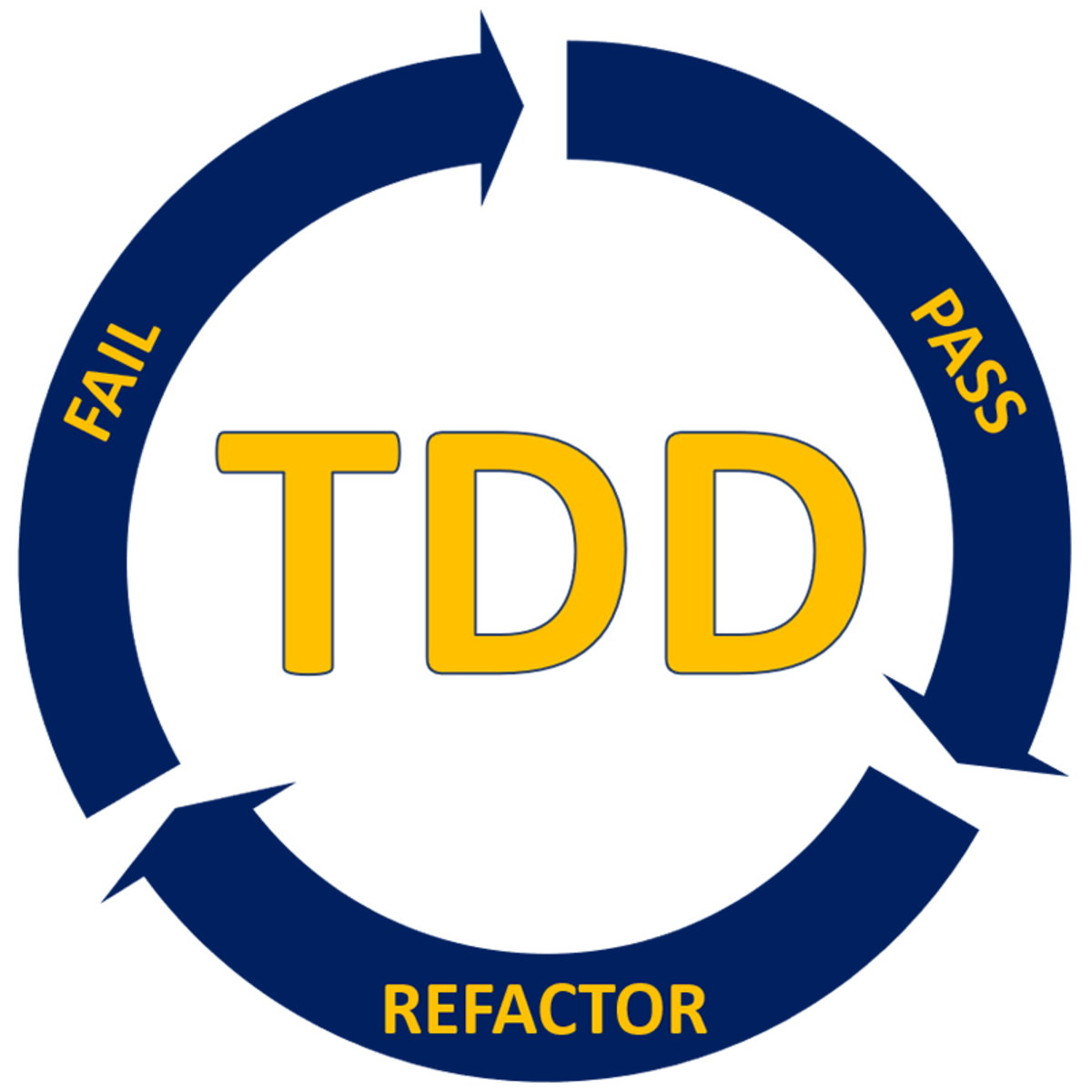
A Practical Introduction to Test-Driven Development
To be a proficient developer you need to have a solid grasp of test writing before putting code into production. In this course, we will take a hands-on look at Test-Driven Development by writing and implementing tests as soon as week one. TDD starts with good unit tests, so we will start there. Topics will also cover translating user specs into unit tests, applying the Red-Green-Refactor mantra, and applying mocks in python with the unittest.mock module. Once finished, you will have covered all the steps of TDD before development

UX: Visual Design Process
This course features Coursera Coach! A smarter way to learn with interactive, real-time conversations that help you test your knowledge, challenge assumptions, and deepen your understanding as you progress through the course. In this course, you’ll dive deep into the fundamentals of visual design and explore the various aspects that make up exceptional user experiences. From the elements and principles of design to advanced prototyping techniques, you will learn how to apply these principles in real-world projects, creating designs that are both aesthetically pleasing and functional. The course progresses through key stages of the visual design process, starting with a strong foundation in art and design principles. As you move on, you will explore handling feedback as a UX designer, how to create and refine wireframes, and how to master typography for effective user engagement. Through practical exercises, you’ll also learn how to use tools like Adobe XD and Figma for prototyping and collaborate effectively with developers. This course is designed for aspiring UX designers and professionals looking to enhance their design skills. With a mix of theory and hands-on practice, you’ll acquire the tools needed to create cohesive designs and confidently present them to stakeholders, making you a well-rounded designer.

Chaos Engineering
In today's fast-paced digital landscape, system resilience is vital for businesses of all sizes. "Chaos Engineering" is a comprehensive and hands-on course designed to equip you with the knowledge and skills needed to ensure your systems withstand and recover from failures. From foundational concepts to advanced applications on various AWS services, including EC2, Aurora, Fargate, and EKS, as well as strategies to ensure availability across multiple Availability Zones. What You’ll Learn: Chaos Engineering Fundamentals: Understand core principles and the philosophy behind Chaos Engineering. Learn why identifying and addressing system weaknesses through controlled chaos experiments is vital. Explore essential tools and methodologies for implementing Chaos Engineering. Building a Basic Fault Injection Simulation (FIS) Experiment: Gain a step-by-step understanding of constructing and executing your first Fault Injection Simulation (FIS) experiment. Understand how to design experiments targeting different failure modes in a controlled setting. Learn to interpret experiment results and refine your simulations for better accuracy. Introduction to Real-Life Application: Discover how to apply Chaos Engineering experiments to real-world applications. Learn best practices for monitoring, capturing metrics, and analyzing results to continually improve system resilience. Chaos Engineering on Compute - EC2: Conduct chaos experiments on EC2 instances to evaluate and improve system robustness. Simulate failures, such as instance termination or network latency, and observe impacts. Chaos Engineering on Database - Aurora: Learn to apply Chaos Engineering principles to Amazon Aurora databases. Simulate failures like cluster instability or node outages and develop strategies for seamless recovery. Chaos Engineering on Serverless - Fargate: Conduct chaos experiments on AWS Fargate to test the resilience of your serverless applications. Simulate events like task failures or service downtime to ensure robust serverless architectures. Chaos Engineering on Kubernetes - EKS: Implement Chaos Engineering on Amazon EKS to stress-test Kubernetes clusters. Simulate pod failures, node crashes, and other disruptions to validate recovery mechanisms. Chaos Engineering on Availability Zone: Conduct chaos experiments across different AWS Availability Zones. Test the impact of zone failures and ensure your systems are prepared for multi-availability zone disasters. Target Audience: - Developers interested in enhancing their systems’ resilience. - Site Reliability Engineers (SREs) focused on improving system reliability. - Cloud Engineers managing AWS environments. - Technical Support Engineers specializing in fault-tolerant systems. - Technical Leads overseeing cloud-native application projects. This course, with its combination of theory, demonstrations, and real-world scenarios, will enable you to build resilient systems capable of withstanding and recovering from unexpected failures efficiently. Join us to master Chaos Engineering and innovate with confidence.

Crea agentes de IA con bases de datos empresariales
Crea agentes de IA que puedan aprovechar las bases de datos empresariales con MCP Toolbox for Databases. Definirás herramientas de interacción segura con bases de datos y, además, implementarás capacidades de consulta inteligente (aprovechando embeddings de vectores y consultas estructuradas).

TCP/IP and Advanced Topics
In this course, we give an in-depth study of the TCP/IP protocols. We examine the details of how IP enables communications across a collection of networks. We pay particular attention to the hierarchical structure of IP addresses and explain their role in ensuring scalability of the Internet. The role of address prefixes and the uses of masks are explained in details. We review in details about TCP three-way handshake, flow control, and congestion control. Furthermore, we provide an introduction to some advanced topics, including Multicast, SDN and security
Web Dev: Optimization, Server Processing, and JavaScript
To round out your web-development skills, you'll improve web content by adjusting layouts, performing basic search-engine optimization (SEO), and test your website for issues. You'll also submit data to a web server for processing through a URL and a web form. Then, you'll add JavaScript to a web page, perform operations on data, program repetitive tasks, and manipulate Document Object Model (DOM) objects. After that, you'll enumerate elements and attach events through code. Lastly, you'll use third-party JavaScript libraries and frameworks to streamline your code. This is the fourth and final course in a multi-course Specialization. All of the courses in this Specialization require that you run a XAMPP web server on localhost. The course setup instructions provided in the first course go into more detail about the hardware and software requirements.

Estruturas de dados Python
Este curso apresentará as estruturas de dados centrais da linguagem de programação Python. Vamos superar os fundamentos da programação de procedimentos e explorar como podemos usar as estruturas de dados integradas do Python, como listas, dicionários e tuplas, para realizar análises de dados cada vez mais complexas. Este curso cobrirá os capítulos 6 a 10 do livro “Python para Todos”. Este curso aborda o Python 3.

Manage and schedule content in Facebook Creator Studio
In this project, learners will learn how to manage and schedule your content in Facebook Creator Studio. Facebook Creator Studio has all of the tools that you need together, for you to be able to publish your content, manage it, monetize it and measure your content. You can do all of that for all of your Facebook pages and Instagram accounts. Facebook Creator Studio is the perfect tool to manage your social media presence completely free and in a platform that lets you do it all. In this project you will have the opportunity to learn how you can be effective in your social media management skills and how to take advantage of the tools that you have in hand already. If you are looking into getting better with social media this is the guided project for you. Facebook Creator Studio it's free and available for you if you have a Facebook page.

Créer des diagrammes de Buyer Persona avec Creately
Ce projet vous permet de créer des diagrammes de Buyer Persona avec Creately. Vous découvrirez la plateforme Creately, logiciel en ligne de conception de diagrammes. Vous comprendrez les diverses fonctionnalités de la plateforme et serez capables de créer des diagrammes personnalisés et professionnels décrivant les profils d’acheteurs idéaux pour votre entreprise. Vous apprendrez à utiliser Creately pour créer des diagrammes de profil d’acheteur professionnels. Ce projet est destiné aux petites et moyennes entreprises.

Machine Learning Product Management - Strategy to Deployment
This course features Coursera Coach! A smarter way to learn with interactive, real-time conversations that help you test your knowledge, challenge assumptions, and deepen your understanding as you progress through the course. In this course, you will dive deep into machine learning product management, gaining hands-on knowledge and insights into how machine learning is integrated into products. The course explores critical roles, skills, and real-world applications of ML, offering practical exercises that reinforce concepts and strategies. Through detailed lessons, you'll explore the lifecycle of an ML product, from ideation and team structuring to deployment and monitoring. You'll also learn to make strategic decisions on when machine learning is the right tool and how to avoid common pitfalls. The journey includes a detailed exploration of data acquisition, preparation, preprocessing, and algorithm selection, helping you gain a comprehensive understanding of the full machine learning lifecycle. With an emphasis on practical applications, you'll also have the opportunity to implement various ML strategies in real-world scenarios. This course is designed for aspiring machine learning product managers, data-driven professionals, and those interested in understanding the intersection of product management and machine learning. It does not require prior technical experience but a passion for the field is essential. By the end of the course, you will be able to evaluate data needs for ML, structure ML teams, choose suitable algorithms, and deploy models into production, among other key competencies.

cPanel Advanced: Configure, Secure & Optimize
Develop advanced cPanel administration skills to configure email services, strengthen website security, analyze performance, and manage hosting environments with greater control. Designed for IT professionals, hosting administrators, and web developers with cPanel experience, this course takes you beyond basic administration through structured lessons, practical exercises, and quizzes. You’ll configure email accounts, MX entries, backups, delivery tracking, default addresses, filters, address imports, spam controls, and bulk account creation. You’ll apply secure email practices, use encryption and authentication features, manage security keys, interpret website statistics, and work with SSL/TLS certificates and certificate signing requests (CSRs). You’ll also implement Hotlink Protection and ModSecurity, customize PHP extensions and INI settings, install site software, and manage domain lookups, custom error pages, Apache handlers, and user access. By the end of the course, you’ll be able to evaluate and optimize cPanel’s email, security, performance, and user-control features for real-world hosting needs. Its step-by-step progression uniquely connects communication management, encryption, web metrics, advanced configuration, and access control in one practical learning path. Enroll to build the confidence to manage safer, more efficient websites and servers with cPanel.

Object Oriented Programming with C++
This course focuses on object-oriented programming (OOP) principles in C++. Learners will understand classes, objects, inheritance, polymorphism, and encapsulation. The course also covers memory management with pointers and references, and introduces error handling and debugging techniques. Students will learn to use GenAI tools for code review to improve code quality and reliability. By the end of this course, you will be able to: - Design and implement C++ classes that encapsulate data and behavior using principles of object-oriented programming. - Apply inheritance and polymorphism to create flexible, reusable, and maintainable code structures. - Manage dynamic memory in C++ using pointers, smart pointers, and memory management best practices. - Implement robust error handling and debugging strategies to identify and resolve issues in C++ programs. - Apply effective testing methodologies to ensure code reliability and correctness. - Leverage Generative AI tools to enhance code quality, accelerate development, and support professional C++ programming workflows.

Blender Materials, UVs, and Animation Essentials
This course focuses on materials, UV mapping, and animation in Blender, essential for creating realistic and dynamic 3D content. Mastering these skills is critical for 3D artists, animators, and game developers seeking professional-quality outputs. Learners will explore Blender’s particle system, digital sculpting, and retopology, gaining hands-on experience with shaders, seams, and UV unwrapping. You will also learn to animate your first scene, applying concepts to real-world projects. The course stands out by combining theory with practical application. Each lesson uses professional workflows and examples to ensure learners can immediately implement the techniques in their work. Ideal for aspiring 3D artists, animators, and hobbyists familiar with Blender basics. No advanced prerequisites are required beyond basic navigation and modeling skills. This course is part three of a three-course Specialization designed to provide a comprehensive learning pathway in this subject area. While it delivers standalone value and practical skills, learners seeking a more integrated and in-depth progression may benefit from completing the full Specialization.

Pipeline Engineering & Automation
Master the architecture of high-velocity software delivery by designing robust, event-driven CI/CD infrastructure. This course moves beyond basic script execution to focus on the engineering principles required to standardize and scale automation across an enterprise. You will begin by building sophisticated, event-driven remediation frameworks using Azure Functions and Event Grid, designed to auto-heal production environments and drastically reduce mean time to recovery (MTTR). The curriculum transitions into advanced YAML engineering, where you will develop modular, multi-stage template libraries that enforce organizational standards while accelerating team onboarding. You will also implement a rigorous pipeline governance toolchain, utilizing Spectral and pre-commit hooks to validate schemas and security policies at the point of commit. By the end of this course, you will have constructed a complete, automated pipeline framework that minimizes manual intervention, optimizes DORA metrics, and ensures consistent, compliant deployments across multi-cloud environments. This is a hands-on journey into transforming "pipelines as code" into a scalable, self-healing ecosystem.

Strategic Career Planning in Technology-Based Roles
This course offers a comprehensive roadmap to turn your computer science education into a successful and rewarding career. Designed to guide you from academic preparation to industry success, it covers essential aspects of career development, skill optimization, and seamless integration into the computer science workforce. You will learn how to align your educational background with the ever-evolving demands of the computer science industry. Explore diverse career paths, from software development and data science to cybersecurity, and discover the power of networking and continuous learning to stay ahead in the field. Whether you are a computer science student, a career shifter, or a professional looking to advance, this course will equip you with the strategies and tools to achieve your career aspirations. This course is for anyone aiming to succeed in computer science, including students, career shifters, and industry professionals seeking advancement. Academic advisors and educators will find it helpful for guiding students, while HR professionals can better understand the tech talent pipeline and industry growth opportunities. Participants should have a basic understanding of computer science principles and a strong interest in a tech career. Familiarity with the tech industry is helpful, but the course focuses on career growth and development. A willingness to network and adapt is crucial for success in this evolving field. By the end of this course, learners will be able to craft a strategic career plan that aligns with their professional and personal goals in computer science. They will also be equipped to leverage networking and personal branding techniques to effectively navigate the competitive job market. Furthermore, learners will develop strategies for continuous skill enhancement to stay relevant and competitive in the ever-changing tech landscape. Finally, they will master modern tools and platforms to streamline their job search efforts, maximizing their opportunities for success in the industry.
Use SharePoint & Power Virtual Agent to Create Smart Chatbot
It is a common situation that, in any company, employees want to get general information about a topic they are interested in, for example, how many vacation days they have, when was the company founded, do they work on weekends, are there any dressing rules, who is the CEO and so on. Of course, there is always a person or multiple persons in the company who can give those answers, but there is a much better way of providing your colleagues with information they need then chasing those all-knowing employees for answers, and that is a fully automated chatbot created with Power Virtual Agent, which is one of the 4 main parts of the Power Platform. In this 35-minutes long guided project, “Use SharePoint & Power Virtual Agent to Create Smart Chatbot”, you will create a SharePoint site and list, add some data to it and create a Power Virtual Agent chatbot which will automate the information flow from your company to the employees. Once the chatbot is up and running, you and your colleagues won’t have to bother other colleagues in person or send them emails or texts anymore, you will be able to have a nice and easy-going conversation with the bot behind the chatbot and find out the information you need. Since this project uses Office 365 services like SharePoint and Power Virtual Agent (part of the Microsoft Power Platform), you will need access to a Microsoft account and a Microsoft 365 Developer Program subscription account. In the video at the beginning of the project you will be given instructions on how to sign up for both. If you are ready to create your artificial co-worker which will help you and your colleagues provide information to others, then this project is for you! Let's get started!

Build Interactive Web Apps Using jQuery UI
Learners will analyze, design, and implement an interactive single-page web application using jQuery UI through a practical, end-to-end case study. By completing this course, learners will gain hands-on experience in structuring a front-end project, building user-friendly UI components, and adding dynamic functionality with JavaScript. This course guides learners step by step through a real-world jQuery UI project, starting from project setup and HTML structure to creating tab-based navigation, managing employee details, and implementing a fully functional daily task feature. Learners will develop the skills needed to build interactive interfaces using jQuery UI widgets such as tabs and dialogs, while applying best practices for code organization, event handling, and UI consistency. What makes this course unique is its case study–driven approach, which emphasizes practical implementation over isolated theory. Instead of learning jQuery UI components in isolation, learners see how they work together in a complete application. This course is ideal for aspiring front-end developers and web designers who want to strengthen their UI development skills and confidently apply jQuery UI concepts in real projects. By the end of the course, learners will be able to evaluate and showcase a working jQuery UI application as part of their professional portfolio.

Programming in C
C remains one of the most popular languages thanks to its portability and efficiency, and laying the groundwork for many programming languages like C++, Java, JavaScript, and Python. In this course, you’ll dive deeper into the syntax of C, learning the functions of the language and how to properly apply them within an algorithm. Identify types, operators, and expressions within C to build recursive functions and examine the role of the C preprocessor in achieving software portability.
Python استخدام قواعد البيانات مع
سيتعرف الطلاب خلال هذه الدورة على أساسيات لغة الاستعلام البنوية (SQL) وتصميم قاعدة البيانات الأساسية لتخزين البيانات كجزءٍ من جمع البيانات متعددة الخطوات وتحليلها ومعالجتها. تستخدم الدورة التدريبية SQLite3 قاعدة بيانات لها. نعمل أيضًا على إنشاء متتبعات الويب وعمليات جمع البيانات متعددة الخطوات وتصورها. نستخدم مكتبة D3.js لإجراء تصور البيانات الأساسية. تتناول هذه الدورة الفصلين 14 و15 من كتاب "Python for Everybody". كي تجتاز هذه الدورة، ينبغي أن تكون على دراية بالمواد المذكورة في الفصل الأول إلى الفصل 13 من الكتاب الدراسي والدورات الثلاث الأولى في هذا التخصص. تتناول هذه الدورة Python 3.

Introduction to Python and Google Colab Fundamentals
This course features Coursera Coach! A smarter way to learn with interactive, real-time conversations that help you test your knowledge, challenge assumptions, and deepen your understanding as you progress through the course. Learn Python and master Google Colab through a hands-on, step-by-step approach designed for beginners and those looking to refine their skills. This course begins by exploring the origins of Python and its evolution into one of the world’s most popular programming languages, before diving into why it’s favored in the tech community. You will also understand how Python compares to other languages and its real-world applications. As you continue, you will be introduced to core programming concepts, such as procedural programming, object-oriented programming (OOP), and functional programming. You'll learn how to work with variables, data types, operators, and write interactive programs, all while honing your skills within the Google Colab environment. The course is structured to gradually build your knowledge with practical hands-on exercises designed to deepen your understanding and programming abilities. The course is ideal for beginners looking to start programming or those who want to refine their skills with Python. It also caters to anyone interested in using Google Colab for coding projects. No prior programming experience is required, but a basic understanding of computers and the internet will be helpful. This course offers a comprehensive introduction to both Python and Google Colab at an accessible level. By the end of the course, you will be able to confidently write Python programs, navigate Google Colab, work with different data structures, and utilize Python for real-world applications. You'll also be prepared to apply your new skills in projects involving data analysis, automation, and beyond.
Python Development with ChatGPT: Fullstack App Development
Imagine unlocking the capabilities of ChatGPT AI in full-stack development—an idea turned into reality, now at your fingertips! Designed for web developers and Python enthusiasts, this Guided Project empowers you to seamlessly integrate Chat GPT AI into the creation of innovative full-stack applications. Through practical tasks, you'll master the development of a full-stack news aggregator, automate content generation with Chat GPT, and enhance backend processes using Python programming. Navigate the challenges of real-world application integration to craft a state-of-the-art news platform. This intermediate to advanced project is perfect for those well-versed in Python code reading, library utilization, and eager to embrace the future of web development entwined with AI. The project's uniqueness lies in its fusion of traditional Python development with cutting-edge AI, particularly Chat GPT. To succeed in this project, a robust understanding of Python and familiarity with mainstream libraries are prerequisites. Join us on this journey to redefine web development through the lens of advanced AI integration. Prerequisites: Learners should have Python reading proficiency, which includes: Ability to read Python code, debug Python scripts, and utilize common Python data structures (lists, dictionaries, tuples). Learners should have experience with Python control structures (loops, conditionals) and an understanding of Python functions and modules. Learners should also have API integration experience, which includes: Proficiency in using RESTful APIs with Python. Experience with Python libraries like Requests for API interactions. Ability to parse and handle JSON or XML data returned from APIs.

Styling & JavaScript Essentials
This course features Coursera Coach! A smarter way to learn with interactive, real-time conversations that help you test your knowledge, challenge assumptions, and deepen your understanding as you progress through the course. Learn essential web development skills with Tailwind CSS and JavaScript. Start by mastering Tailwind CSS, a utility-first framework for building responsive designs. Explore layout techniques, customization, and responsive websites. Then, dive into JavaScript to understand key concepts like data types, functions, loops, and asynchronous programming. Apply your knowledge by building two real-world projects: a Facebook login page with Tailwind CSS and a Slither game using JavaScript. This hands-on approach reinforces learning and prepares you for real-world tasks. Perfect for beginners with no prior knowledge of web design or programming, this course builds your foundation in styling websites and creating interactive content. By the end, you will be able to design responsive websites using Tailwind CSS, add interactive elements with JavaScript, and build projects like login pages and games.

Build and Deploy Agents in Production
Explore the architecture and deployment of multi-agent systems using Google’s Agent Development Kit (ADK) and Google Cloud’s robust infrastructure. You will learn to design hierarchical agent trees and deterministic workflow agents while identifying the ideal hosting environment—from serverless Cloud Run to high-performance GKE—to ensure your AI agents are secure, scalable, and production-ready.

Core Web Application Security Testing
This course features Coursera Coach! A smarter way to learn with interactive, real-time conversations that help you test your knowledge, challenge assumptions, and deepen your understanding as you progress through the course. Take your web application security skills to the next level by exploring common vulnerabilities that affect modern websites and learning how security professionals assess them in controlled environments. Through practical demonstrations and hands-on labs, you'll develop the ability to identify, analyze, and understand exploitation techniques while strengthening your knowledge of secure web application testing. The course begins with PHP code injection and file upload vulnerabilities before progressing to OS command injection and Server Side Include (SSI) attacks. You'll configure tools such as Foxy Proxy and Commix while learning to investigate server-side weaknesses responsibly. You'll then examine directory traversal vulnerabilities using Dotdotpwn and understand how attackers access unauthorized files through insecure application design. As you advance, you'll explore Cross-Site Scripting (XSS), broken access control, Insecure Direct Object References (IDOR), Cross-Site Request Forgery (CSRF), and brute force attacks using realistic lab environments and industry-standard tools. The course concludes with an SQL crash course, covering database fundamentals, queries, filtering, and advanced techniques that prepare you for understanding SQL-related security testing in later learning. This course is designed for aspiring penetration testers, cybersecurity students, IT professionals, developers, and ethical hackers seeking practical web security experience. Learners should have a basic understanding of networking, Linux, and introductory web technologies. The course is Intermediate level. By the end of the course, you will be able to identify and assess common web application vulnerabilities, configure security testing tools, evaluate authentication and authorization flaws, understand SQL fundamentals, and perform structured web application security assessments within authorized testing environments.

Concurrency in Java - Practical Multithreading - 2026
This course features Coursera Coach! A smarter way to learn with interactive, real-time conversations that help you test your knowledge, challenge assumptions, and deepen your understanding as you progress through the course. Learn how to build faster, safer, and more responsive Java applications by mastering practical multithreading concepts. You will understand how threads work, why concurrency matters, and how to prevent common issues such as race conditions, thread interference, and inconsistent shared data. The course begins with Java multithreading fundamentals, then moves into creating, starting, managing, and interrupting threads. You will explore synchronization, thread communication with wait, notify, and notifyAll, and techniques for coordinating work between concurrent tasks. You will then progress into modern Java concurrency tools, including the Executor framework, thread pools, Fork/Join framework, atomic variables, thread-local variables, and the Lock framework. The course also covers thread groups and uncaught exception handling for more reliable applications. This beginner-to-intermediate course is ideal for Java developers, software engineers, and programming students with basic Java knowledge. By the end of the course, you will be able to create and manage threads, synchronize shared resources, use Java concurrency utilities, design thread-safe code, and handle exceptions in multithreaded applications.

Introduction to Technical Writing
Technical Writing seamlessly blends the art of communication with the nuances of technology. Tailored for a diverse audience, including writers, communicators, engineers, and IT professionals, this course serves as a beacon, guiding participants toward the creation of effective technical documents tailored to specialized audiences. Starting with the fundamentals of technical writing, participants will delve into its history, discern its unique features, and grasp the core elements. This segment emphasizes audience-centric content, the journey from planning to publishing, and the importance of continuous feedback. Transitioning to design principles and tools, the course sharpens participants' skills in document aesthetics from typography to layouts. They'll also explore essential modern tools, including advanced word processors and collaboration platforms like GitHub. The next phase introduces a range of technical documents, from user manuals to API documentation, emphasizing the ethical responsibilities of writers. It underscores creating accessible, globally resonant content with cultural sensitivity and localization insights. Concluding with advanced topics and career advancement, participants will tackle complex documentation challenges, embrace multimedia elements, and explore writing for platforms like VR and AR. This segment also preps participants to build a strong technical writing portfolio and foster professional networks. By the course's end, participants will emerge as proficient technical writers, skilled in varied writing forms, contemporary tools, and ethical documentation, ready to showcase their expertise and embark on a rewarding career journey. This is a beginner to advance level of course, intended for learners with a background in Computer Science and Technology and professionals looking to upgrade their skills in Technical Writing. Disclaimer: This is an independent educational resource created by Board Infinity for informational and educational purposes only. This course is not affiliated with, endorsed by, sponsored by, or officially associated with any company, organization, or certification body unless explicitly stated. The content provided is based on industry knowledge and best practices but does not constitute official training material for any specific employer or certification program. All company names, trademarks, service marks, and logos referenced are the property of their respective owners and are used solely for educational identification and comparison purposes.

Design Foundations in Adobe Illustrator
This course builds on introductory Illustrator skills by focusing on the foundational tools that support structured, scalable design. Learners will explore how to set up their workspace, work with artboards, and organize content using layers. Whether designing on the web or desktop, this course helps learners create clean, flexible artwork with confidence. Through tutorials, readings, and videos, learners will gain practical experience with Illustrator’s interface, tools, and workflows—empowering them to produce professional-quality designs and collaborate effectively across platforms.
Adobe InDesign CC: Part 2
In Adobe® InDesign® CC: Part 1 you were introduced to the many features that help you create professional looking documents. Now you need to create much lengthier interactive documents that need to be accessed across a range of devices. In Adobe® InDesign® CC: Part 2, you will learn advanced InDesign techniques to enhance the look and functionality of your documents. Using Adobe InDesign, you can create interactive documents and export them for viewing in a web browser with various features such as buttons, page transitions, movies and audio files, hyperlinks, and animation. You have the ability to assign color profiles and establish print presets. In creating longer documents, you'll be able to include such features as a table of contents, footnotes, cross-references, and an index. This course is a great component of your preparation for the Adobe Certified Professional Print & Digital Media Publication Using Adobe InDesign CC exam. This course is intended for students who want to expand their entry-level knowledge of Adobe InDesign by using advanced features and collaboration tools. It's also for anyone interested in working toward the Print & Digital Media Publication Using Adobe InDesign certification. In this course, you will: prepare documents for multiple formats, manage advanced page layouts, manage styles, build complex paths, manage external files and create dynamic documents, manage long documents, and publish InDesign files for other formats and customize print settings. This course requires that you have Adobe InDesign installed on a Windows PC. The course setup instructions provided in the first module of the course go into more detail about the hardware and software requirements.

Secure AI: API and Dependency Risks
Secure AI: API and Dependency Risks is an intermediate course that moves you from developer to defender, teaching you the essential practices for building production-grade, secure AI. You will learn to implement OWASP ASVS guidelines to harden API endpoints with critical controls like JWT authentication, input validation to prevent injection attacks, and rate limiting. Then, you will adopt an attacker’s mindset, using DAST tools like OWASP ZAP to verify your defenses are effective. Next, you will master the art of managing your software supply chain by analyzing dependency vulnerability reports, using the CVSS framework to prioritize real threats over noise, and formulating verified hotfix and rollback plans. Through hands-on labs simulating real-world security incidents, you will leave this course ready to build, deploy, and maintain resilient AI services that can withstand modern threats.