Cursos de Desarrollo
Los mismos datos para todos, vengan de Udemy o de Coursera: precio, valoración, duración e idioma. 1.285 cursos encontrados. Afinar la búsqueda

Data structures and Algorithm (DSA) for Tech Interviews
Data Structures and Algorithms in Python - The Most Complete and Practical Guide for tech interviews. Learning Data Structures and Algorithms (DSA) is one of the most defining steps in your programming journey. It separates a good programmer from a great one, a developer who can write code from one who can architect solutions. This course is designed for exactly that transformation - from simply writing Python code to thinking algorithmically and solving problems like a computer scientist. This is not a crash course. It is a 51+ hour, deeply structured, and meticulously designed learning experience that takes you from the very fundamentals of Python all the way to advanced algorithms and real-world interview challenges. Every single concept, from the simplest loop to the most complex dynamic programming problem, has been broken down in plain, intuitive language and paired with live coding demonstrations that help you understand the why behind the how. Most students struggle with DSA not because it’s inherently difficult, but because the foundation is often rushed or fragmented. In this course, we do things differently. We start right from the basics of Python - setting up your environment, understanding data types, conditionals, loops, functions, comprehensions, generators, decorators, and the essential building blocks of clean and efficient code. Before we touch algorithms, you will already be thinking like a problem solver. Once your Python foundation is solid, we transition naturally into algorithms - not as abstract mathematical formulas, but as logical solutions to real-world problems. You will learn how to analyze algorithms through asymptotic notations, time and space complexity, and how to derive performance intuitively using substitution and recursion tree methods. The focus throughout this section is to help you reason about performance - a skill that is crucial in every major technical interview. From there, we enter the world of data structures - arrays, heaps, linked lists, stacks, queues, hash maps, trees, and graphs. But instead of just teaching their definitions or Python implementations, you will understand the story behind each one - when to use them, why they exist, and how they behave under the hood. You’ll learn how an array differs from a linked list not just in syntax, but in memory behavior; why heaps matter in real-world systems like schedulers; and how graphs model networks, maps, and relationships in every major tech application today. Every concept is reinforced through code, visual explanation, and problem-solving. For example, while studying arrays, you will not only implement linear and binary searches but also dissect sorting algorithms like Bubble Sort, Insertion Sort, and Ternary Search, understanding their time complexities and how they scale. When you move to recursion, you’ll see its power through problems like Fibonacci and Factorial, and learn to visualize each recursive call as a story unfolding in a stack frame. The Divide and Conquer section will change the way you approach problem-solving. Algorithms like Merge Sort, Quick Sort, and Binary Search are not just memorized but understood deeply. You will see how larger problems can be broken into smaller ones - a concept that drives modern software design, from database indexing to image processing. When we discuss Linked Lists, Stacks, and Queues, the course takes a practical turn toward real interview problems. Reversing a linked list, validating parenthesis, or managing function calls are not just exercises here - they are patterns you’ll start recognizing everywhere, from browser navigation history to system memory management. As the course advances, we dive into Trees and Graphs, where things become truly exciting. You will learn the logic behind tree traversal, binary search trees, and the implementation of depth-first and breadth-first search. These topics form the foundation of modern artificial intelligence, social network analysis, and pathfinding algorithms in games and navigation systems. The later sections on Greedy Algorithms and Dynamic Programming are built to challenge and elevate you. By the time you reach them, you will have already developed the analytical maturity to approach these problems systematically. You’ll study algorithms like Prim’s and Dijkstra’s for graph optimization, Huffman coding for data compression, and classic dynamic programming problems such as Knapsack and Longest Common Subsequence. These are not only theoretical concepts but also the same algorithms that power compilers, data compression tools, and machine learning optimization routines. What truly makes this course stand out is its structure and pacing. It doesn’t assume you’re already an expert, nor does it oversimplify the material. Instead, it guides you gradually, ensuring you truly understand before you move forward. Each concept builds upon the previous one, creating a coherent flow from Python fundamentals to the heart of computer science. You won’t just learn what works - you’ll understand why it works, and more importantly, how to think like an engineer when it doesn’t. Every coding exercise is accompanied by reasoning, every algorithm by analysis, and every topic by its real-world context. This combination of conceptual clarity and practical application is what prepares you not just for exams or interviews, but for long-term success in software development. The course doesn’t shy away from the tough parts either. Topics like time complexity derivation, recursion visualization, and dynamic programming breakdowns are handled with care and clarity. You’ll see the mathematics and logic come alive through live examples and step-by-step walkthroughs, removing the fear that often surrounds these advanced topics. By the end of this course, you will have mastered both the art and science of writing efficient code. You will be able to analyze problems, select the right data structures, reason about performance, and optimize your algorithms like a professional. Whether you are preparing for FAANG interviews, university exams, or simply want to become a confident problem solver, this course gives you the depth and breadth to get there. There are many courses that cover data structures and algorithms, but very few that build such a deep conceptual bridge between Python programming and algorithmic thinking. This one does. It has been crafted with precision and teaching experience - not as a collection of lectures, but as a complete learning journey designed to make you understand DSA at a fundamental level. Enroll today, and experience how mastering Data Structures and Algorithms in Python can change the way you think, code, and solve problems for the rest of your career.

Introduction to Vertex AI Studio
This course introduces Vertex AI Studio, a tool to interact with generative AI models, prototype business ideas, and launch them into production. Through an immersive use case, engaging lessons, and a hands-on lab, you’ll explore the prompt-to-product lifecycle and learn how to leverage Vertex AI Studio for Gemini multimodal applications, prompt design, prompt engineering, and model tuning. The aim is to enable you to unlock the potential of gen AI in your projects with Vertex AI Studio.

ISTQB Test Analyst (CTAL-TA) v4.0 [NEW!]
Prepare for the ISTQB Certified Tester Advanced Level – Test Analyst (CTAL-TA) certification with a practical and easy-to-follow course designed for software testers who want to advance their testing career. This course covers the complete ISTQB CTAL-TA syllabus with real-world examples, practical scenarios, exercises, and exam-focused explanations to help you understand both the theory and practical application of advanced software testing techniques. Whether you are preparing for the certification exam or aiming to improve your analytical testing skills in real projects, this course will help you build a strong understanding of advanced test analysis concepts used in the software industry. Why Take This Course? • Covers the latest ISTQB CTAL-TA syllabus • Practical explanations instead of pure theory • Real software testing examples and scenarios • Clear and structured lessons • Exam-oriented preparation • Created by an instructor with 9+ years of industry experience • Learn from an instructor with 300,000+ students worldwide Practical Learning Approach This course focuses on understanding how advanced testing techniques are used in real projects, not only memorizing theoretical concepts. You will learn through: • Real examples • Practical scenarios • Exam-style discussions • Industry-based testing situations This Course Is Perfect For • Software Testers • QA Engineers • Manual Testers • Senior Testers • Test Analysts • Test Leads • ISTQB certification candidates • Anyone wanting to improve advanced testing skills

Advanced Golang Concepts
The Advanced Golang Concepts course explores the potential for creating sophisticated ERP systems, complex software, websites, and mobile and web applications. The course aims to prepare learners to design concurrent and system programs, making the ecosystem client-friendly. By the end of this course, you’ll be able to: - Understand concurrency patterns and advanced goroutines - Work with reflection and metaprogramming in Go - Explain how to work with external C libraries - Analyze advanced testing and error handling in Go - Create advanced database connectivity - Write high-performance code - Web Development in Go using Restful API This course is designed for Web developers, Data Scientists, System programmers, Entrepreneurs, and freshers who aspire to build a career in web development. Prior experience with any programming language is not mandatory but can ease the learning curve. Begin an educational journey to become a master of Advanced Golang Concepts while learning its best practices and enhancing your expertise in development.

Godot 2D Megacourse: Mastering 2D Game Development
Learn how to create 2D video games! Develop in Godot like a pro! Have you ever wanted to create your own 2D games, from designing immersive worlds to programming gameplay mechanics? Welcome to the Godot 2D Game Development course, where we’ll help you master game creation using one of the most popular game engines available. But why Godot? Godot is an open-source, highly versatile game engine that allows developers of all levels to create both 2D and 3D games. Its user-friendly interface and robust features make it a perfect choice for beginners and experienced game creators alike. Whether you're looking to build your first game or expand your skills, this course is designed to provide a strong foundation in 2D game development. In this course, you’ll learn step by step how to use Godot to bring your game ideas to life. From setting up your project, creating scenes, and programming player mechanics, to designing interactive elements and building complex game systems. Each lesson is filled with practical, hands-on examples to ensure you gain the confidence to develop games independently. After taking this course, you will be able to: • Navigate the Godot engine with confidence • Build and launch your own 2D games • Confidently debug and extend existing Godot projects • Design your own scalable 2D (and hybrid 3D) game systems • Create complex game mechanics using Godot’s scripting language • Apply best practices in game design, development, and project management • Continue improving your game development skills through independent projects Start creating your own 2D games with Godot today!

Network Operations
This course explores the network tools, protocols, and techniques that govern the functioning of network systems. Communication takes place on a network, and that communication can introduce vulnerabilities to the network. You will understand protocols that regulate network communication and be introduced to the tools and concepts that play a major role in ensuring network operations are safe and reliable. By the end of this course, you will be able to: - Recognize common network protocols - Identify common network security measures and protocols - Describe the protocol(s) used to transmit and access data over wireless networks

Basic to Advanced: Retreival-Augmented Generation (RAG)
Transform your development skills with our comprehensive course on Retrieval-Augmented Generation (RAG) and LangChain. Whether you're a developer looking to break into AI or an experienced programmer wanting to master RAG, this course provides the perfect blend of theory and hands-on practice to help you build production-ready AI applications. What You'll Learn • Build three professional-grade chatbots: Website, SQL, and Multimedia PDF • Master RAG architecture and implementation from fundamentals to advanced techniques • Run and optimize both open-source and commercial LLMs • Implement vector databases and embeddings for efficient information retrieval • Create sophisticated AI applications using LangChain framework • Deploy advanced techniques like prompt caching and query expansion Course Content Section 1: RAG Fundamentals • Understanding Retrieval-Augmented Generation architecture • Core components and workflow of RAG systems • Best practices for RAG implementation • Real-world applications and use cases Section 2: Large Language Models (LLMs) - Hands-on Practice • Setting up and running open-source LLMs with Ollama • Model selection and optimization techniques • Performance tuning and resource management • Practical exercises with local LLM deployment Section 3: Vector Databases & Embeddings • Deep dive into embedding models and their applications • Hands-on implementation of FAISS, ANNOY, and HNSW methods • Speed vs. accuracy optimization strategies • Integration with Pinecone managed database • Practical vector visualization and analysis Section 4: LangChain Framework • Text chunking strategies and optimization • LangChain architecture and components • Advanced chain composition techniques • Integration with vector stores and LLMs • Hands-on exercises with real-world data Section 5: Advanced RAG Techniques • Query expansion and optimization • Result re-ranking strategies • Prompt caching implementation • Performance optimization techniques • Advanced indexing methods Section 6: Building Production-Ready Chatbots • Website Chatbot • Architecture and implementation • Content indexing and retrieval • Response generation and optimization • SQL Chatbot • Natural language to SQL conversion • Query optimization and safety • Database integration best practices • Multimedia PDF Chatbot • Multi-modal content processing • PDF parsing and indexing • Rich media response generation Who This Course is For • Software developers looking to specialize in AI applications • AI engineers wanting to master RAG implementation • Backend developers interested in building intelligent chatbots • Technical professionals seeking hands-on LLM experience Prerequisites • Basic Python programming knowledge • Familiarity with REST APIs • Understanding of basic database concepts • Basic understanding of machine learning concepts (helpful but not required) Why Take This Course • Industry-relevant skills currently in high demand • Hands-on experience with real-world examples • Practical implementation using Tesla Motors database • Complete coverage from fundamentals to advanced concepts • Production-ready code and best practices • Workshop-tested content with proven results What You'll Build By the end of this course, you'll have built three professional-grade chatbots and gained practical experience with: • RAG system implementation • Vector database integration • LLM optimization • Advanced retrieval techniques • Production-ready AI applications Join us on this exciting journey to master RAG and LangChain, and position yourself at the forefront of AI development.

Java Servlets Tutorial
Build the skills to design and implement dynamic web applications with Java Servlets and JDBC in a structured, hands-on learning experience. This course introduces the fundamentals of Java EE, servlet architecture, HTTP request handling, and Tomcat configuration before guiding you through building scalable servlet-based applications using the MVC architecture. As you progress, you will learn how to configure servlets, manage application context, process client requests, and maintain user state through session tracking, cookies, hidden fields, URL rewriting, and HTTP sessions. You will also explore relational database concepts and SQL, then integrate databases with servlets using JDBC to perform secure CRUD operations. The course concludes by implementing servlet filters and developing a complete user registration and login system that combines authentication, session management, and database connectivity into a deployable web application. Designed for aspiring backend developers, Java programmers, and learners interested in Java web development, this course emphasizes practical implementation while strengthening your ability to analyze architectures, apply configuration techniques, manage user sessions, integrate databases, and build complete servlet-based applications. By the end of the course, you will have the knowledge to develop Java web applications that combine servlets, JDBC, SQL, and authentication within the Java EE ecosystem.

No-Code Machine Learning: Practical Guide to Modern ML Tools
Do you want to leverage the power of Machine Learning without writing any code? Do you want to break into Machine Learning, but you feel overwhelmed and intimidated? Do you want to leverage Machine Learning for your business, but you don’t have data science or mathematics background? If the answer is yes to any of these questions, you came to the right place! This course is the only course available online that empowers anyone with zero coding and mathematics background to build, train, test and deploy machine learning models at scale. Machine Learning is one of the hottest tech fields to be in right now! The field is exploding with opportunities and career prospects. Machine learning is the study of algorithms that teach computers to learn from experience. Through experience (i.e.: more training data), computers can continuously improve their performance. Machine Learning techniques are widely used in several sectors nowadays such as banking, healthcare, transportation, and technology. In this course, we will cover top 3 brand new tools to build, train and deploy cutting edge machine learning models without writing a single line of code! We will cover the new Google Vertex AI, Microsoft Azure Machine Learning Designer, and DataRobot AI.
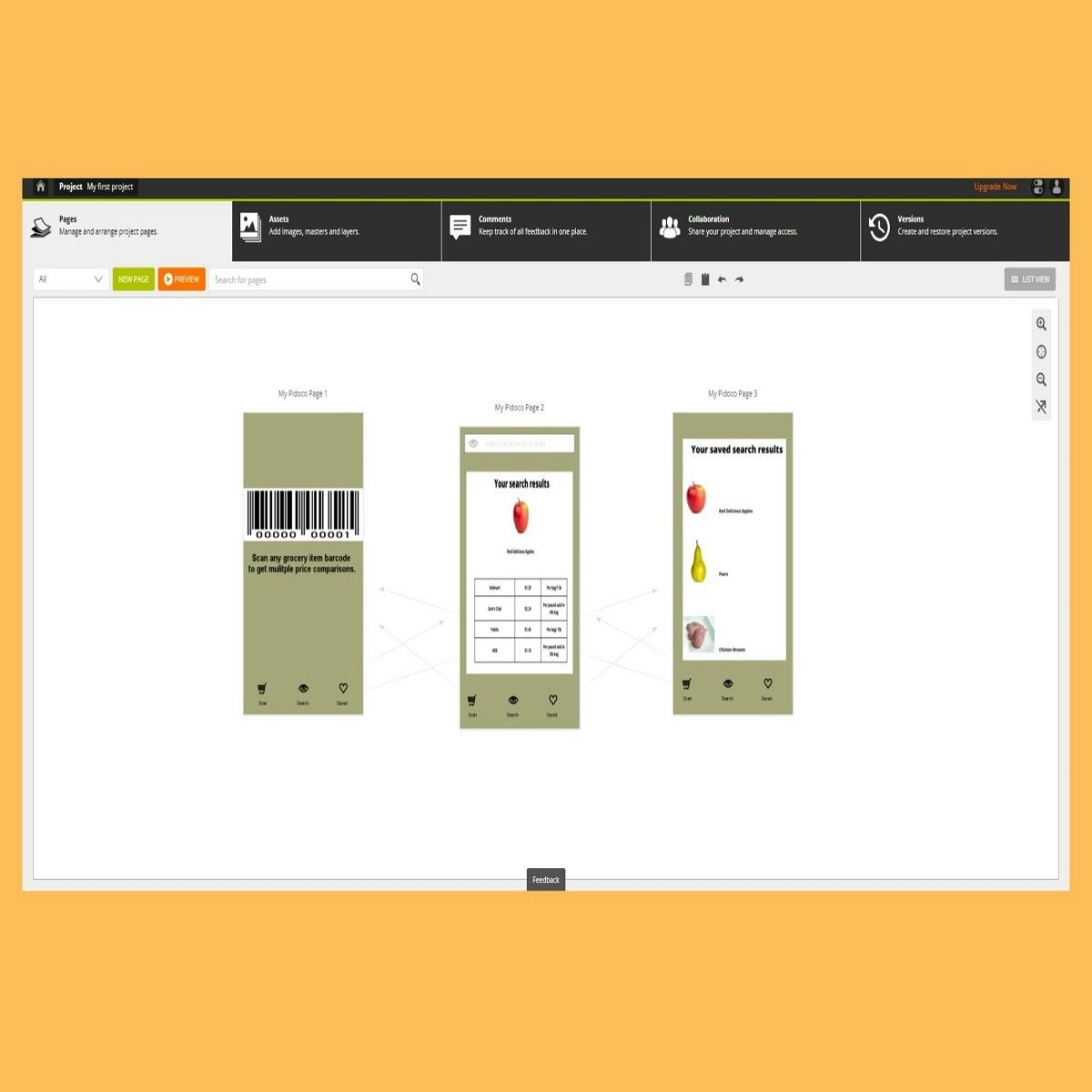
Create Interactive Prototypes with Pidoco
Creating wireframes and interactive user design prototypes is an important step in your planning process. Pidoco is a web based application that can help you with this process. Exploring the possibilities of apps like this help you to find the one that works best for you or your organization. Pidoco allows for interactivity so that you can simulate your application. You are able to share prototypes, work with comments and comment history throughout your development. Pidoco says it is easy to use and learn, you can explore the application in this project and decide for yourself. In this project you will create an interactive prototype with Pidoco.

AI-Driven Automation for Data Workflows with n8n
Transform Your Productivity with AI-Driven Automation Using n8n Are you tired of repetitive manual tasks eating up your valuable time? This comprehensive course will teach you how to harness the power of n8n, the leading open-source automation platform, to build intelligent workflows that work for you 24/7. What You'll Learn: Starting from the very beginning, you'll learn how to install and set up n8n using Docker, ensuring a smooth and professional development environment. We'll introduce you to the n8n workflow builder, where you'll discover how intuitive and powerful visual automation can be. Throughout this course, you'll build real-world projects that demonstrate practical automation scenarios. You'll create automated WordPress blog posting systems that can schedule and publish content without manual intervention. We'll develop intelligent Telegram bots that can interact with users and process requests automatically. You'll also learn how to implement audio transcription workflows, converting voice messages and audio files into text seamlessly using AI-powered tools. Why This Course? n8n is not just another automation tool, it's a complete workflow automation platform that connects hundreds of services, APIs, and AI tools. Whether you're a content creator, business owner, developer, or digital marketer, the skills you learn here will save you countless hours and open up new possibilities for automation. By the end of this course, you'll be confident in designing, building, and deploying sophisticated automated workflows that integrate AI capabilities, handle data processing, and connect multiple platforms together effortlessly. No prior coding experience required, just bring your curiosity and willingness to learn!
Software Testing for Engineers Part 1
This course covers the principles and processes of validation, verification, and integration for software, and software-intensive systems, including cyber-physical systems. The topics include test automation, testing metrics, test coverage, integration testing, state space exploration for cyber-physical systems, software assurance, and software reliability. Students in this course will learn the principles, tools, applications, and processes that efficiently integrate software elements to meet customer requirements and needs.

Advanced SQL : The Ultimate Guide (2026)
Welcome to • Most Comprehensive • Well-Organized • Professionally Designed by SQL Experts Advanced SQL course, not only in Udemy but also on the planet! This Advanced SQL course is the "One", "Enough", and "Ultimate" course to make you an "SQL Expert!". Here is the chance for you to Advance Your SQL Knowledge and Get Better Income From Your Job, like $200-300k per/year. Get Oracle's SQL Expert Certification. Oracle has two Certification Exams for SQL; The first one (SQL Fundamentals) covers the basic subjects (All of these subjects are covered in my first course.) The second one (SQL Expert) covers more advanced subjects including the basic ones. (All the advanced subjects (and more) for this exam are covered in this course.) All the subjects are explained in detail and exampled as many as I do with Oracle's HR schema. You can check the subjects from Oracle's related pages. Now, you are looking at a course that will make you pass this exam. • You can ask any questions about this course from the discussion board. • Your questions will be answered as soon as possible. You can check our website for further details. What are you going to learn from this Advanced SQL course? • Introducing Database Objects • Data Dictionary Views • Creating, Using, and Managing Sequences • Creating, Using, and Analyzing Synonyms • Understanding and Using Indexes • Creating, Using, and Managing Views • Creating, Using, and Managing Materialized Views • Creating and Using Advanced Subqueries • Advanced-Data Manipulation • Controlling Schema Objects • Administering User Privileges and Roles • Hierarchical Queries (Tree Structure) • Writing Advanced SQL Scripts • Generating Dynamic SQL Scripts • Analytical SQL Functions • Regular Expressions • And much more beyond these like: • Supportive Course Materials • Quizzes • Bonus Lectures • Regular Course Updates • Lifetime Support from Authors More? • Hundreds of Examples • Well-Organized Course Content by SQL Experts • In-Depth Subjects (All Subjects are Explained in All Detail) • Lifetime Author(s) Support

Secure AI Interpret and Protect Models
Ever wonder if your smart AI is actually secure? In this course, we'll ditch the dry theory to show you how to build genuinely resilient AI systems from the ground up, making security a core part of your design, not just an afterthought. You'll begin by stepping into the role of an AI Security Architect, running a “pre-mortem” to think like an attacker and neutralize threats before they even happen. Through focused videos and exercises, you’ll master essential defenses like blocking bad data with input sanitization, ‘vaccinating’ your model against attacks with adversarial training, and protecting user data with differential privacy. This all culminates in a hands-on lab where you'll personally fix a vulnerable model and prove its new resilience. The main goal is to shift your mindset from reactive patching to proactive design, so you’ll walk away with the real-world skills to analyze defense strategies, successfully harden a model in a lab, and design a comprehensive security plan for any new AI project. This course is for AI developers, security engineers, MLOps specialists, and data scientists aiming to master securing AI models against adversarial threats. Proficiency in Python and a machine learning framework (e.g., TensorFlow, PyTorch). Foundational knowledge of building and training AI models. By the end of this course, you’ll have gained the skills to thoroughly analyze and secure AI models, applying advanced defense mechanisms like adversarial training and differential privacy. You’ll be equipped to assess vulnerabilities, implement robust security strategies, and continuously test and improve your models. With hands-on experience fixing real-world AI vulnerabilities, you'll be prepared to design and deploy AI systems that are resilient against adversarial threats, ensuring their integrity and security throughout their lifecycle.

Data Warehouse Developer-SQL Server/ETL/SSIS/SSAS/SSRS + AI
This course describes how to design and implement a data warehouse solution. students will learn how to create a data warehouse with Microsoft SQL Server implement ETL with SQL Server Integration Services, and validate and cleanse data with SQL Server Data Quality Services and SQL Server Master Data Services. The Primary responsibilities of a data warehouse developer include: Implementing a data warehouse. Developing SSIS packages for data extraction, transformation, and loading. Enforcing data integrity by using Master Data Services. Cleansing data by using Data Quality Services. Prerequisites : Experience of working with relational databases, including: Designing a normalized database. Creating tables and relationships. Querying with Transact-SQL. Some exposure to basic programming constructs (such as looping and branching). An awareness of key business priorities such as revenue, profitability, and financial accounting is desirable. Students will learn how to : ••Deploy and Configure SSIS packages. ••Download and installing SQL Server ••Download and attaching AdventureworksDW database ••Download and installing SSDT ••Download and installing Visual studio ••Describe data warehouse concepts and architecture considerations. ••Select an appropriate hardware platform for a data warehouse. ••Design and implement a data warehouse. ••Implement Data Flow in an SSIS Package. ••Implement Control Flow in an SSIS Package. ••Debug and Troubleshoot SSIS packages. ••Implement an ETL solution that supports incremental data extraction. ••Implement an ETL solution that supports incremental data loading. ••Implement data cleansing by using Microsoft Data Quality Services. ••Implement Master Data Services to enforce data integrity. ••Extend SSIS with custom scripts and components. ••Databases vs. Data warehouses ••Choose between star and snowflake design schemas ••Explore source data ••Implement data flow ••Debug an SSIS package ••Extract and load modified data ••Enforce data quality ••Consume data in a data warehouse The volume of data available is huge and increasing daily. Structured Query Language -SQL (pronounced as sequel) is the standard language used to communicate and interact with data stored in relational management database systems like Microsoft SQL Server Oracle, PostgreSQL,MySQL etc. Different database management systems have their own proprietary version of the SQL language but they all conform to using some commands in SQL the same way. Microsoft SQL Server's version of SQL is known as Transact-SQL (T-SQL). You will learn the basics of the SQL language and Transact-SQL since both use certain commands in the same way. What You will learn includes: • Installing SQL Server • Install SSMS • Basic Database Concepts • Creating Database • Creating Table • Creating Views • Creating stored procedures • Reading data from a database • Updating database records • Backing up database • Deleting Records • Truncating Table • Dropping Table • Dropping Database • Restore Database

Terraform Fundamentals: Architecture & Core Utilities
This course provides an in-depth look into Terraform's core concepts, including architecture, state management, and the HashiCorp Configuration Language (HCL). You will learn how to use HCL to define infrastructure and leverage HashiCorp utility providers for effective automation. Throughout the course, you will build the skills necessary to automate and manage infrastructure across cloud environments. By working with Terraform's foundational components, you’ll gain hands-on experience in deploying and maintaining infrastructure as code. The course strikes a perfect balance between theory and practice, offering clear conceptual explanations while guiding you through real-world implementation. With demonstrations and practical exercises, learners will be well-equipped to apply their skills in real-world scenarios. This course is designed for DevOps professionals, cloud engineers, and those interested in infrastructure automation. A basic understanding of cloud environments and infrastructure is helpful but not required. This course is part one of a three-course Specialization designed to provide a comprehensive learning pathway in this subject area. While it delivers standalone value and practical skills, learners seeking a more integrated and in-depth progression may benefit from completing the full Specialization.

Generative AI for .NET Developers with Microsoft Foundry
This course is being rebuilt for the Microsoft Foundry era. It is currently being modernized to align with Microsoft Foundry, the native Microsoft AI Extensions library, Azure AI Search, RAG, agents, evaluation, security, observability, and production deployment. New lectures are being added while older Azure AI Studio, Azure ML, and legacy Azure AI Services content is being reviewed, replaced, or moved into optional refresher sections. Generative AI development on Azure has changed significantly. Modern .NET developers now need more than basic prompt demos or simple Azure OpenAI calls. Professional AI applications require secure model access, structured outputs, Retrieval-Augmented Generation, vector search, tool calling, agents, evaluation, observability, and production deployment practices. This course teaches .NET developers how to build production-minded generative AI applications using Microsoft Foundry, Azure OpenAI-compatible models, Azure AI Search, Microsoft AI Extensions, RAG, agents, security, evaluation, and deployment. The main project is VibeCast, an enterprise-style multimodal AI application. Through the project, you will build practical workflows for content generation, structured summaries, image and audio processing, document grounding, tool calling, agentic orchestration, security controls, monitoring, and deployment. This is not a generic AI theory course and not a pure certification cram course. It is a practical engineering course for developers who want to build real AI-enabled applications with C# and .NET. You will learn how to: • Build modern .NET AI applications using Microsoft Foundry and Azure OpenAI-compatible model deployments. • Use IChatClient, and IEmbeddingGenerator to keep your code testable and provider-flexible. • Design prompt assets, structured outputs, C# records, validation flows, and bounded response repair. • Build professional RAG workflows with Azure AI Search, embeddings, vector indexes, hybrid search, semantic ranking, citations, and grounded response contracts. • Understand classic RAG, agentic retrieval, and Foundry IQ-style knowledge grounding. • Build typed tools and agent workflows with safe execution boundaries. • Secure AI applications against prompt injection, indirect prompt injection, data leakage, and unsafe tool execution. • Add evaluation datasets, red-team tests, OpenTelemetry traces, token/cost monitoring, and production dashboards. • Containerize and deploy .NET AI applications using Azure-ready architecture patterns.

GitHub Enterprise Administration
Master GitHub Enterprise administration across seven critical domains. You will configure identity management using SAML SSO and Enterprise Managed Users with identity providers like Azure Active Directory and Okta. You will enforce the principle of least privilege by setting access permissions at the enterprise, organization, team, and repository levels, assigning roles such as member, owner, maintainer, and triage to match each user's responsibilities. The course covers security compliance through the security tab, dependency graphs, Dependabot alerts, and repository insights for monitoring project health. You will manage GitHub Actions at the enterprise scale using the Actions API to configure allowed actions, self-hosted runners, and workflow policies across organizations. You will also host and distribute software through GitHub Packages, including the container registry, RubyGems, npm, Maven, and NuGet registries. Each module includes hands-on demonstrations in the GitHub interface, from configuring organization settings and billing consoles to compiling Python from source in Codespaces. You will apply Kaizen continuous improvement methodology and the Plan-Do-Check-Act cycle to systematically optimize enterprise workflows.

GitLab CI/CD Bootcamp| Zero to Hero| Certification Prep 2026
"GitLab Mastery: From Novice to DevOps Expert" This comprehensive GitLab course takes you on a journey from beginner to expert level, covering all aspects of GitLab's powerful DevOps platform. Whether you're new to version control or an experienced developer looking to enhance your skills, this course provides in-depth knowledge and hands-on experience with GitLab's extensive features and integrations. Course Outline: • Introduction to GitLab • Version control basics • GitLab overview and architecture • GitLab Fundamentals • Repository management • Branching and merging strategies • Code review process • Continuous Integration and Continuous Deployment (CI/CD) • GitLab CI/CD pipeline configuration • Building, testing, and deploying applications • GitLab DevOps Tools • Package Registry • Container Registry • Terraform state management • Integrations and Advanced Features • AWS integration • Docker and DockerHub • Kubernetes and EKS • Terraform • Ansible • SonarQube for code quality analysis • Collaboration and Project Management • Jira integration • Confluence integration • Telegram integration for notifications • Security and Compliance • GitLab security features • Implementing secure DevOps practices • GitLab Administration and Optimization • Instance management • Performance tuning • Scaling GitLab for enterprise use Benefits of Taking This Course: • Comprehensive skill development: Gain expertise in GitLab's full suite of tools and features, from basic version control to advanced DevOps practices. • Enhanced career prospects: DevOps skills are in high demand, and GitLab proficiency can open doors to new job opportunities and career advancement. • Improved workflow efficiency: Learn best practices for streamlining development processes, reducing time-to-market, and increasing productivity. • Hands-on experience: Practice with real-world scenarios and integrate GitLab with popular tools and platforms used in modern software development. • Better collaboration: Master GitLab's features for team collaboration, project management, and communication. • Security focus: Learn to implement secure DevOps practices, ensuring your projects meet industry standards for security and compliance. • Scalable knowledge: Apply GitLab skills to projects of any size, from personal repositories to enterprise-level implementations. • Continuous learning: Stay updated with the latest DevOps trends and technologies through GitLab's evolving ecosystem. By the end of this course, you'll have the skills and confidence to leverage GitLab's powerful features in your development workflow, implement efficient CI/CD pipelines, and contribute to a modern DevOps environment.

Data Management for Analytics Part 2
This course will offer you an opportunity to learn the fundamental concepts and emerging technologies in data storage and data governance. It presents a balanced theory-practice focus and covers Structured Query Language, and two flavors of NoSQL databases in MongoDB and Neo4j graph database. It also includes a brief introduction to big data management including hadoop, MapReduce, and Apache Spark. By the end of this part 2 course on data analytics, you will have a foundational understanding of the theory and applications of database management to support data analytics, data mining, machine learning, and artificial intelligence.

Learn SQL Using PostgreSQL: From Zero to Hero
Learning SQL was one of the most valuable skills I learned while building Match. We had one of the largest instances of Microsoft SQL Server in the 90s with millions of records to keep the site running. The better we got at SQL, the better we could make the site work for our users and answers sophisticated questions about our users. I want to teach you how to use PostgreSQL. We will walk through • Basic selection statements • Joining multiple tables together • Grouping records to get aggregate data • Inserting, updating and deleting records • Creating tables and indexes • Subqueries to create sophisticated reports • Table constraints to keep data clean • Sequences to create auto incrementing fields • CTE - common table expressions that include recursive queries • Views to simply accessing complex queries • Conditional Expressions for queries • Window functions to combine regular queries with aggregate data • How to work with date, time and intervals • Create SQL Functions to capture complex statements • Create PL/pgSQL Functions that allow programming with if/then and loops • Triggers • Array data types • Composite data types • Transactions and concurrency control

Créer un diagramme d’affinité avec Creately
Ce projet vous permet de découvrir la plateforme Creately, logiciel en ligne de conception de diagrammes. Vous comprendrez les diverses fonctionnalités de la plateforme et serez capables de créer des diagrammes d’affinité personnalisés et professionnels pour votre entreprise. Vous aurez toutes les compétences de base pour utiliser Creately et créer facilement et rapidement des diagrammes d’affinité variés pour votre marque ou petite entreprise.

Google Antigravity: Master Vibe Coding & Agentic Development
Master Antigravity IDE: The Future of AI-First Development Stop coding line-by-line. Start architecting with the world's most advanced AI Editor. This course is your definitive guide to Antigravity IDE, the revolutionary workspace powered by Gemini 3 Pro. You will move beyond simple code completion and learn to command full-stack agents that understand your entire project architecture. Whether you are a beginner or a senior developer, this course will teach you to build complex software at the speed of thought. What You Will Master You will learn to orchestrate the Antigravity interface to handle research, backend logic, and UI generation simultaneously. • Auto Mode: Let the IDE take the wheel to fix errors, manage files, and iterate on code automatically. • Parallel Agents: Spin up multiple agents to generate logos, write documentation, and code logic all at once. • Artifacts: Master the workflow for viewing, editing, and version-controlling AI-generated code. The Projects: What You Will Build We focus on hands-on application. You will build three production-ready apps from scratch: 1. The "CineSwipe" Movie Platform Master Parallel Tasks by running simultaneous agents. • The Build: A movie trailer app with complex swiping algorithms. • Key Skills: API Integration, visual feedback loops, and concurrent agent management. 2. 3D Game with Nanobanana Step into game design using the Nanobanana integration. • The Build: A fully playable 3D game with AI-generated UI concepts. • Key Skills: Iterative design, game logic implementation, and 3D environment setup. 3. Real-Time Multiplayer System The advanced capstone project. • The Build: A shareable matchmaking system where users create and join rooms in real-time. • Key Skills: Supabase Auth, Realtime Database, and debugging complex race conditions. Advanced Tech Stack: The MCP Revolution This course teaches the Model Context Protocol (MCP)—the industry standard for connecting AI to external data safely. You will learn to: • Connect Backends: Wire Supabase to Antigravity via MCP. • Build Auth: Create secure Signup and Login flows that actually work. • Debug with AI: Teach agents to identify edge cases in your multiplayer logic. What Is Included • Lifetime Access to all high-quality video lectures and future updates. • Complete Source Code for the Movie App, Game, and Multiplayer System. • System Prompts: A library of tested prompts to control Antigravity agents. • 30-Day Money-Back Guarantee with no questions asked. The future of coding is not typing; it is guiding. Master Antigravity IDE today. See you inside!
Introduction to Bash Shell Scripting
This course will help those new to shells and shell scripting to build a foundation with the Bash shell. We'll learn several Bash shell commands that will allow you to navigate and use the shell for everyday tasks. We will also write a Bash shell script that will back up a directory and email the compressed file, a culmination of all the commands we’ll cover. We will cover: Not only will you gain the knowledge to customize your system, you will have a solid foundation to expand what you can do with Bash on the command line and in scripts. This beginner-level guided project is perfect for those who have an interest in learning to use a Linux or Unix operating system, whether to gain new skills in IT or software development, or to use an alternative to commercial, proprietary software. Those with no experience in IT, software development, cybersecurity, and more can start here and build on necessary skills for future training and employment. Note: This course works best for learners who are based in the North America region. We’re currently working on providing the same experience in other regions.

OpenClaw and Nvidia's NemoClaw Crash Course: Build AI Agents
Are you seeing all the hype around AI agents, but not sure how to actually build one yourself? This OpenClaw and Nvidia’s NemoClaw Crash Course gives you the practical skills to build real AI agents from scratch. Imagine running your own AI agent… on your own server… connected to real tools like Telegram… automating tasks for you in the background. No more just prompting AI. You’ll be building systems that actually work for you. With step-by-step guidance, you’ll go from zero to launching your own AI agent using OpenClaw… and expand into more advanced systems with NVIDIA’s NemoClaw. By the end, you’ll have real, working AI systems... and the skills to build more. What You’ll Learn in This Course: • Build Your First AI Agent: Set up and run your own OpenClaw agent from scratch on a real server. • Understand AI Agent Architecture: Learn how modern AI agents work and how they differ from tools like ChatGPT and Claude. • Deploy on a Linux VPS: Launch and manage your own cloud server using DigitalOcean. • Install and Configure OpenClaw: Go step-by-step through installation, setup, and system configuration. • Secure and Optimize Your System: Harden your setup and manage services using systemd like a real developer. • Work with APIs: Connect your AI agent to external services using API keys and integrations. • Use Multiple Interfaces: Run and control your agent via terminal, web dashboard, and VS Code Remote SSH. • Integrate Real-World Tools: Connect your agent to Telegram and interact with it in real-time. • Automate with Cron and Heartbeats: Build agents that run continuously and perform scheduled tasks. • Build Practical AI Workflows: Apply your skills in hands-on projects using OpenClaw. • Explore Nvidia’s NemoClaw: Learn how advanced AI agent systems expand what’s possible beyond basic setups. • Understand Self-Hosted AI: Gain control over your own AI systems instead of relying on third-party tools. With OpenClaw and NemoClaw skills, you unlock a whole new level of AI capability. But what if this feels too technical? No worries. We guide you step-by-step through everything—from server setup to running your first agent. You don’t need to figure this out on your own. What if I’m not an expert developer? That’s totally fine. If you’re comfortable using a computer and willing to follow along, you’ll be able to build your own AI agent system. What if I don’t have time? This is a crash course designed to get you results fast. Short, focused lessons let you build real skills without wasting time. Through this course, you will: ❖ Build and deploy your own AI agent using OpenClaw ❖ Run AI systems on your own server with full control ❖ Connect AI agents to real tools like Telegram ❖ Automate workflows using cron jobs and persistent agents ❖ Expand into advanced agent systems with Nvidia’s NemoClaw This OpenClaw & NemoClaw course isn’t just about learning AI… It’s about building real systems that actually do things. …and by the end, you won’t just be using AI tools, you’ll be creating your own. Why Invest in OpenClaw and Nvidia’s NemoClaw Crash Course? ● Go Beyond Prompting: Move from using AI tools to building autonomous AI agents ● Real-World Skills: Learn practical deployment, automation, and system setup ● Self-Hosted Control: Run your own AI systems without relying on third-party platforms ● Future-Proof Your Skills: AI agents are one of the fastest-growing areas in tech ● Hands-On Learning: Build real working systems—not just theory With these skills, you open doors to new opportunities: AI Engineer Build and deploy intelligent systems and AI-driven workflows Automation Specialist Create systems that automate tasks, saving time and increasing efficiency DevOps / AI Ops Engineer Manage and deploy AI systems in real-world environments Technical Founder / Builder Launch your own AI-powered tools, services, or products Meet Your OpenClaw & NemoClaw Instructors: Phil Ebiner & Andrei Dumitrescu Phil Ebiner is a top-rated instructor with millions of students worldwide, known for making complex topics simple and practical. Andrei Dumitrescu is a software engineer and educator with 15+ years of experience, specializing in Python, systems, and real-world development. Together, they combine clear teaching with hands-on technical depth to help you actually build things—not just learn about them. Try it Risk-Free You’re fully protected by Udemy’s 30-day money-back guarantee. Jump in, start building your first AI agent, and see if this is the skill you’ve been looking for. No risk. Just real skills. Who Should Enroll: ● Developers who want to build AI agents and automation systems ● Tech enthusiasts curious about how AI agents actually work ● Entrepreneurs looking to build AI-powered tools or products ● DevOps engineers interested in deploying AI systems ● Anyone ready to move beyond ChatGPT and start building real AI systems Stop just using AI… Start building it. Enroll now and launch your first AI agent today.
Shell Scripting with Bash: Basics
In this project, you will learn how to use Bash for creating basic shell scripts. After completing the 1-hour hands-on guided project, you'll know how to automatically rename a collection of files, read the contents of a file line by line and use all basic constructs of Bash. Note: It's recommended that you have some experience with the command line before starting this project. Consider looking into the project 'Practical introduction to the Command Line' first - https://www.coursera.org/projects/practical-introduction-to-the-command-line.

Automotive HIL Testing-Hardware In Loop Concept from scratch
Unlock the world of Automotive Hardware-In-Loop (HIL) Testing with our comprehensive course designed for both beginners and seasoned professionals. This in-depth course covers the foundational concepts and advanced techniques needed to master HIL testing from scratch. Learn how to integrate and validate automotive systems, simulate real-world driving conditions, troubleshoot complex issues, and ensure the highest levels of reliability and safety for vehicle systems. Throughout the course, you'll dive into the intricacies of HIL testing, exploring the latest tools and technologies that drive this essential field, all while receiving expert guidance from seasoned professionals. You'll develop a strong understanding of how to create accurate simulations, manage hardware-software interfaces, and apply best practices to ensure robust system performance. You'll explore a variety of automotive systems, including ABS understanding how HIL testing is used to validate each one. Learn how to design and implement test setups, configure vector based HIL systems, and use simulation models to test different scenarios and edge cases. By the end of this course, you'll be proficient in HIL testing, equipped with the skills and knowledge needed to excel in the automotive industry. Whether you're looking to advance your career or deepen your expertise, this course will provide you with the tools and insights to succeed. Join us and take the first step towards mastering Automotive HIL Testing from scratch, becoming a key player in the development and validation of cutting-edge vehicle technologies. This training covers the following objectives: Section 1: Introduction - Will provide an introduction to HIL Section 2: Automotive Software Life Cycle and Emerging ASPICE process - what is Software lifecycle in Automotive - ASPICE overview Section 3: A Closer look of V Model and mapping of testing concept - V model and where testing scope Section 4: Why Testing needed in Automotive - Test concepts of Automotive and needed of an ECO system Section 5: Automotive ECO System for E\E Section 6: Hardware in Loop in Automotive - What is HiL - Basic Elements of HiL - Understand the HiL Need and Testing Type - Input and Output (I/O) - Device under Test [DUT], Gui, process, Automation Section 7: Market Players in HiL - Important market players in HIL Section 8: Lets create the HiL - Use case of Antilock braking system -Anti lock braking system [ABS] - Electrical system circuit -Various Scope of the HiL - using ABS -ABS - ECU - A deeper look of components -ABS - Wiring and signals -ABS - Harness and pin details -Brake pedal switch Circuit -Brake fluid switch -Wheel speed sensor -Conceptual ABS - HiL -HiL - Power supply handing -Vector VT System cards - and GUI via CANoe, VT7001 - Power supply card - walkthrough, Automation of Power supply - Non VT -Handling Wheel speed information via VT2516 -VT2004A - Analog Inputs handling -VT System - Chassis walkthrough -Additional VT Cards - General information -Final view of HiL and real harness -Automation using VTeststudio -Overview of VTestStudio -VT 2516 - Digital Signal card walkthrough -A sample test case in VTstudio Section 10: HiL - Other components and Re-Configuration Section 11 Vehicle in Loop - ViL Overview
Building Cloud Services with the Java Spring Framework
This MOOC describes by example how to build cloud services via the use of object-oriented design techniques; Java programming language features; Java Servlets, the Java Spring Framework; and cloud computing platforms, such as Amazon Web Services. Due to the importance of building secure and scalable mobile/cloud platforms, this MOOC will not only show you how to build cloud services, but how to do so securely, scalably, and efficiently. Security and scalability topics will be woven into discussions of cloud service creation so that students learn, from the start, how to create robust cloud services.

Ultimate Unreal Engine 5.7 Environment PVE & PCG Masterclass
Unreal Engine 5.7 – Build a Cinematic Nordic Forest from Scratch Welcome to the definitive Unreal Engine 5.7 environment masterclass. In just 8 focused hours you will go from an empty project to a cinematic Nordic forest that runs at 60 fps. This is not theory. This is a complete, step-by-step project course where every single asset, material, and tool you see in the final cinematic is built live with you. You will master every major new 5.7 feature that matters for environments: • Procedural Vegetation Editor – create AAA trees in minutes • Voxelized Nanite foliage – scatter 800 000-poly spruces by the thousands with zero performance cost • The brand-new Shallow Water River System (the same one used in Witcher 4) • World Partition + selective Data Layers for massive open worlds that actually stream • PCG Framework & the new PCG Spacing Tool for perfect foliage placement • Megaplants & Fab integration – instantly pull the best free assets • Pivot-based wind animation that makes every tree breathe • Cinematic exterior lighting with Lumen Global Illumination & Ray Tracing • Professional Movie Render Queue workflow + full post-production in DaVinci Resolve Everything is included: full 4×4 km Landscape Height Map, Nanite Trees and the Bridge. By the end you will own a portfolio-ready open-world demo reel that looks like it came from a talented game studio, and the exact workflow to recreate it for any project. No fluff. No paid assets. No experience required beyond basic UE5 navigation. If you’re ready to create environments that make people say “how is this real-time?”, enroll now and let’s build something beautiful together.

The Non-Coder’s Guide to Vibe Coding
Unlock the power of no-code development with Vibe Coding, the innovative approach that lets anyone create functional apps and professional presentations using plain English prompts. This hands-on course guides you step by step, showing how AI tools like Lovable, v0, and Gamma make it easy to bring ideas to life—no programming experience required. Through interactive lessons, practical exercises, and real-world projects, you’ll learn how to: Transform ideas into fully functional apps and websites Write effective AI prompts to guide no-code tools Design professional presentations and share your work confidently Apply ethical best practices when using AI-generated content By the end of this course, you’ll have a working no-code app and an AI-powered presentation—ready to showcase your skills and turn concepts into reality. Whether you’re an aspiring entrepreneur, product designer, or curious learner, this course will give you the skills, confidence, and workflow to start building immediately.

Appian Learning From Beginner to Advanced
This course includes BPM( Business Process Management) Understanding with Appian Low Code Development Tool. It's a cloud-based BPM tool used to manage business processes. This course cover everything required to be an Appian Developer, to understand business process, process modeling, debugging techniques, fast coding, interactive UI(SAIL Interfaces), task management understanding & reporting features of Appian. Also, it will enhance any developer's debugging skills as to support any application in Appian debugging is a must. Anyone can take this course to kick off his/her journey in BPM tool Appian & Experts can also take this course for best practices understanding, latest features & techniques. It's also good for students who want to start their career with Low Code Technology. Please take this course and give me feedback. so, I can improve it for future use according to Appian's Latest Releases, The version in this course is 23.3, the latest to date. Course Includes: 1. Appian About. ( Tool Understanding & Introduction ) 2. Appian Architecture. 3. Appian Development ( Appian Objects & Process Modeling ). 4. Administrative Features. 5. Database Development & MariaDB. ( Table, Views & Stored Procedures ) 6. CDT( Custom Data Types) & Record Type Functionality. 7. Deployment Understanding & Environment Variable. 8. Task Management. 9. Process Monitoring & Debugging. 10. Sites, Security & Application Management.

RESTful API with Rust: Build a Game Map Server
Do you know that according to surveys, Rust is one of the most admired computer programming languages for 8 years in a row? Rust is a language that is prized for its performance, memory safety, and concurrency, making it ideal for today’s cloud-based computing world. It is used by major technology and gaming companies such as Microsoft and Discord. In this 1-hour long project-based course, you will hone your web development skill with and get a taste of game development with Rust. We will do this by building a RESTful HTTP server that provides flight map data for client applications to display the map. This course is aimed at learners who know the fundamentals including data types, variables, ownership, functions, macros, Cargo build system. Knowledge of REST API, TCP and HTTP are helpful but are optional. If your knowledge of Rust is limited, taking the guided project "Fundamentals with Rust: Build a CLI Distance Calculator" first is highly recommended.

2026 - ISTQB AI Testing (CT-AI) Certification - Crash Course
A complete practical course to make you understand AI Testing with ISTQB exam readiness. Traditional software testing assumes predictable logic and fixed expected outputs. AI systems don’t work that way. They learn from data, evolve over time, behave probabilistically, and often operate as black boxes. This shift breaks many traditional testing assumptions. In this course, you will learn how to test AI-based systems the right way, using globally accepted ISTQB AI Testing (CT-AI) principles, explained clearly and practically for testers. This course starts by building strong foundations. You will first understand what AI really is, how AI-based systems differ from conventional software, and why new testing strategies are required. You’ll then learn machine learning fundamentals — supervised, unsupervised, and reinforcement learning — not as a data scientist, but from a tester’s mindset. As the course progresses, you’ll explore the complete ML lifecycle, focusing on what testers must validate at each stage: data preparation, training, validation, testing, deployment, and ongoing monitoring. You’ll learn how poor data quality, bias, imbalance, and mislabeling directly impact model behavior and test outcomes. You will deeply understand ML performance metrics, their limitations, and how to detect overfitting and underfitting. The course then moves into testing AI-specific quality characteristics such as fairness, ethics, safety, transparency, interpretability, and explainability (XAI). Finally, you’ll apply AI-specific testing techniques like adversarial testing, metamorphic testing, data poisoning, A/B testing, and exploratory testing, and also learn how AI itself can be used to enhance testing through test generation and defect prediction. This course strictly follows the ISTQB CT-AI syllabus and prepares you with both conceptual clarity and exam confidence, making it ideal for testers, QA engineers, and test managers moving into AI-driven systems. Course FAQs ISTQB Syllabus-Oriented • Course content prepared entirely based on the official ISTQB syllabus. Practical Approach • Concepts explained with real-world examples so you can easily relate them to your work. Comprehensive Learning Structure • Each concept is followed by supplementary reading materials. • Chapter-by-chapter exam simulation quizzes to build confidence. • Full-length quiz tests at the end to ensure complete preparation. • Designed to familiarize you with the actual exam pattern. Success Strategy • A thorough understanding of the course content, combined with consistent practice of all quizzes, will set you up to successfully clear the ISTQB exam. Finally, I strongly encourage you to dedicate quality time to the quizzes—not just to find the right answer, but to carefully analyze why all the other options are incorrect. This will sharpen your reasoning process, improve conceptual clarity, and build the confidence needed to succeed in the real exam
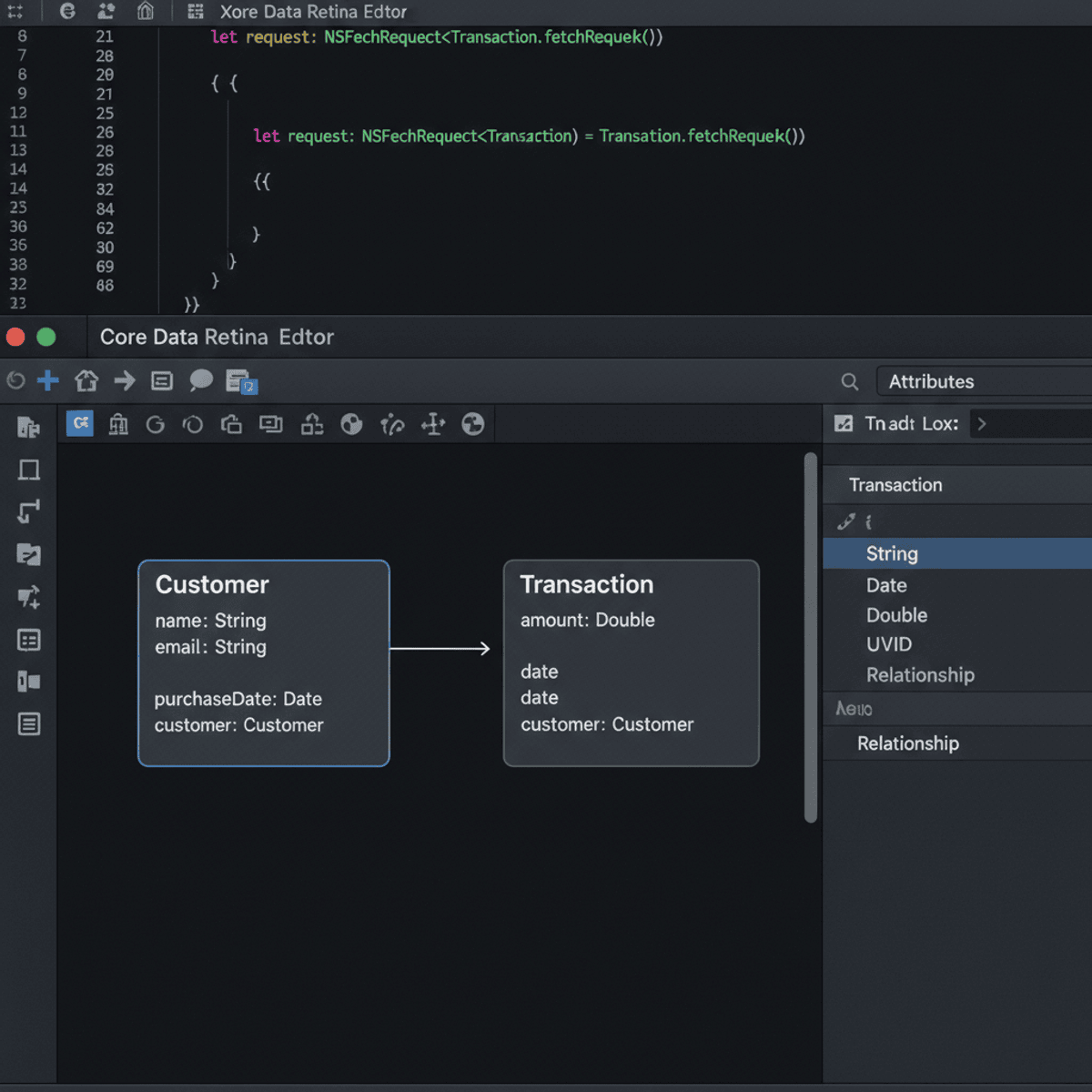
Apply Intermediate iOS Development with Swift Core Features
By the end of this course, learners will be able to design multi-screen iOS applications, implement secure data flow between view controllers, persist and retrieve structured data using Core Data, build adaptive user interfaces with Auto Layout, and apply Swift programming logic to manage application behavior and user interaction. This intermediate-level course helps learners move beyond basic iOS concepts and develop production-ready skills using Swift and core iOS frameworks. Learners will gain hands-on experience with view controller lifecycles, text field validation, Core Data persistence, table views, collection views, multimedia integration, and web services. The course also strengthens foundational Swift concepts such as conditional logic, functions, and data structures in real application contexts. What makes this course unique is its practical, end-to-end focus on how iOS components work together in real apps rather than in isolation. Each module connects UI design, data handling, and application logic to reflect real-world development workflows. By completing this course, learners will be better prepared to build scalable iOS applications, contribute confidently to professional iOS projects, and progress toward advanced iOS development roles.

Agent vibe testing 2026: Automated Playwright AI Testing
This course contains the use of artificial intelligence. It is the whole point. This course teaches an AI-first testing workflow, and the course itself was produced with it: AI-assisted scripts, narration, translations, and code, all reviewed and directed by a human instructor. What you see on screen is what the workflow actually produces. Playwright is the modern standard for browser and end-to-end (E2E) testing, and web test automation is one of the most requested skills in QA and SDET job postings. You will write real tests in TypeScript, run them cross-browser on Chromium, Firefox, and WebKit, and wire them into a CI/CD pipeline. In this course you learn to do it the way it actually works in 2026 — by letting an AI agent drive a real browser, explore the app, and write the tests, while you stay the reviewer who decides what matters. You will test one real application — TechShop — with fifteen bugs planted in it deliberately. Plaintext passwords. Broken cart math. A checkout button that does not respond. A form that submits completely empty. By the end you will have a Playwright suite that catches every one of them, running automatically on every push. What makes this course different: Most Playwright courses teach you the commands — the methods, the selectors, the syntax. This one teaches you a way of working. Before you write a single test, you watch an AI agent open a real browser through Playwright MCP and explore the app on its own — clicking, reading, and reporting what it finds, like a tester sitting at the keyboard. Then you build something most courses never give you: reusable Skills for the agent. Four of them — for designing test cases, writing tests, reporting bugs, and telling a real bug from a flaky one. You build them once and keep them. They are the leverage you carry to your next project and your next job. What you will produce: - A complete Playwright test suite (TypeScript) covering login, cart, and checkout - Your own AI Skills pack — four reusable skill files you keep forever - Structured bug reports generated from real test failures, ready to file - A GitHub Actions pipeline running the suite headless on every push, with HTML reports and traces archived - A capstone project on a second app you have never seen — completed independently - A prompt library ready to drop into your next project Tools you will use: - Playwright (TypeScript) - Antigravity IDE + Playwright MCP - GitHub + GitHub Actions - Node.js Every tool has a free tier. You do not need to spend anything beyond the course. The honest part about AI: The AI writes the code. It does not know what "correct" means in your application — you do. So a large part of this course is learning to read what the agent produces and catch it when it is wrong: fragile locators, weak assertions, and the most dangerous thing in automation — a test that passes for the wrong reason. Green does not mean correct. You mean correct. Who this course is for: - Manual and QA testers ready to move into automation without a coding background - Students who completed the Manual Vibe Testing course and want to automate what they tested by hand - Developers who want durable end-to-end coverage on their web apps - Anyone curious how AI agents and Playwright MCP change browser testing in 2026 You do not need to write code from scratch. You need to understand what the app should do — the agent handles the code, and you handle the judgment.

Jupyter & Python: Visualize, Optimize & Accelerate
Build Jupyter and Python skills for data visualization, notebook productivity, and high-performance computing. You’ll begin by configuring Jupyter Notebook and using IPython for markdown, calculations, documentation, and interactive code execution. You’ll then use Matplotlib and NumPy to create and customize line, scatter, histogram, bar, pie, and polar charts. As you progress, you’ll design scientific visualizations with annotations, multiple and logarithmic axes, date formatting, Mathtext, LaTeX rendering, contour plots, and image plotting. You’ll work with IPython magic commands, configuration options, HTML and JavaScript rendering, interactive widgets, kernels, and unit testing for reliable notebook workflows. Next, you’ll focus on Python performance optimization. You’ll convert notebooks to HTML and LaTeX, handle structured data with JSON, profile code, use memory mapping for large NumPy arrays, and create real-time interactive applications. Finally, you’ll accelerate Python with Numba, Cython, and C integration; execute asynchronous, parallel, distributed, and cluster-based computing; and explore advanced visualization with Seaborn, D3.js, and Julia. Designed for beginners learning Jupyter and practitioners improving data science, research, or analytics workflows, this course provides a path from setup and plotting to optimized, scalable computing. Enroll to create clearer visualizations, work efficiently in IPython, and improve data-driven application performance.

Databricks Data Engineering: The Real World Simulator
Helios Trading Corporation needs a Data Engineer. That is you. Helios ships parts across six depots in the solar system. Ten source feeds land every day. Nobody has built the pipeline yet. This is not a tutorial you follow. It is a job you do. Simulate, then Execute Every build starts as a conversation. A short AI Role Play with a colleague, and goals you are measured against. Then you build what you talked through. Most labs are work tickets: context, task, and acceptance criteria that run as real checks in the notebook. What you will build 1. Design Meet Helios, walk the ten source feeds with the person who owns them, and agree the Medallion lakehouse design that every later section implements. 2. Databricks Jobs The classic build. Auto Loader into Bronze, Structured Streaming and MERGE into Silver, SCD Type 2 for prices and customer tiers, a Gold star schema with point in time pricing, then a five task orchestrated Job with retries, alerts and a schedule. 3. Lakeflow Spark Declarative Pipelines The same platform, rebuilt declaratively. Streaming tables, expectations as quality gates, AUTO CDC. Then an inherited pipeline fails on a night run and you diagnose it from the event log. 4. Genie and AI/BI Dashboards A semantic layer of Metric Views over Gold, so one definition of revenue feeds both a Genie Space and a dashboard. Then you make the case for self serve to the Commercial Director. 5. Lakebase and a Databricks App Sync curated Gold into Lakebase and deploy a live Depot Operations Console. Source feeds to running app. Real data, from a purpose built generator The data comes from a custom synthetic generator written for this course, not a downloaded sample set. Ten interlocking feeds in three formats, around 293,000 order lines across five batches, and it is deterministic, so your numbers match the videos exactly. The domain is order to cash for a parts distributor. Customers place orders, orders move through a lifecycle, stock leaves the shelf, prices and costs change over time, and some of it comes back as returns. Sales, inventory, pricing and returns, the same shapes you meet in retail, wholesale, manufacturing and logistics. It behaves like production data too: • Duplicate order lines • Late arrivals from the depots with poor uplinks • Dirty quantities and missing keys • An order lifecycle arriving as CDC • Prices that change underneath your joins No cloud account. No credit card. No Azure subscription. The course runs end to end on Databricks Free Edition. The skills transfer directly to Azure, AWS and GCP. Every lab bootstraps to a clean state in under two minutes, so you can start at any section. Current for 2026 Built on what Databricks ships today: • Lakeflow Spark Declarative Pipelines, formerly Delta Live Tables • Lakeflow Jobs • Unity Catalog and Volumes • Serverless compute • Genie Spaces • Metric Views and AI/BI Dashboards • Lakebase and Databricks Apps These patterns also cover much of the ground tested by the Databricks Certified Data Engineer Associate and Professional exams, though this is a course about doing the job, not passing an exam. Your instructor Malvik Vaghadia is a Databricks Partner Champion and a Principal Data Engineering Consultant. He has taught more than 250,000 students across 15 courses on Databricks, PySpark, Delta Lake and Azure. Helios is waiting. Start your first day.

Diseño de Videojuegos: Una introducción
¡Hola! ¡Bienvenidos a Diseño de videojuegos: una introducción! El diseño de videojuegos es el arte de aplicar conceptos de diseño para crear la interacción entre jugadores. Es un ejercicio mental que requiere varios conocimientos en diferentes campos y la habilidad de comunicar qué es lo que se quiere lograr. Este curso hace parte del Programa desarrollo y diseño de videojuegos, de la Universidad de lo Andes, Colombia. En este ambiente de aprendizaje los estudiantes aprenderán las bases del diseño de videojuegos, aplicarán éstas al diseño de juegos de acción y de plataformas en 2D y prepararán una especificación funcional en un documento de 10 puntos y no más de 10 páginas. Al final deben presentar un prototipo funcional en Unity del juego. Se recomienda que los participantes hayan visto el curso de "Desarrollo de videojuegos en Unity: una Introducción", pues para el desarrollo de los prototipos deberán tener conocimientos de programación en este motor de desarrollo de ambientes lúdicos y bajo control del usuario. Ten en cuenta que este curso ha sido diseñado como el segundo de cinco cursos que hacen parte del programa especializado en Desarrollo y Diseño de Videojuegos. Puedes tomar todos los cursos por separado o sólo uno de ellos, sin embargo te recomendamos que te inscribas y participes en los cinco, ojalá en el orden que te proponemos, de manera que llegues al último curso denominado "Desarrollo y Diseño de Videojuegos: proyecto final" preparado para aplicar los conocimientos adquiridos en los cursos anteriores. Para inscribirte únicamente a este curso debes ir a la página del mismo: https://www.coursera.org/learn/diseno-videojuegos-intro/home/welcome. Haz click en el botón azul de la izquierda "Enroll now" o "Inscribirse ahora", donde podrás elegir si deseas tomar el curso pagando por la certificación con una suscripción mensual o anual, en cuyo caso debes hacer unas evaluaciones adicionales obligatorias y cumplir con los otros requisitos de certificación; o si deseas auditarlo, es decir acceder al contenido sin pagar por el certificado o suscripción.

Complete Introduction to Object-Oriented Programming with C#
In this course, you will attain a strong understanding of the fundamental principles behind the development of object-oriented models in C# and .NET. In the time when AI-driven tools are taking large parts of our everyday work, it becomes more important than ever to understand how the applications are designed and how good code is written, lest your projects may suffer catastrophic failures under headless AI development. After completing this course, you will be qualified to continue learning the principles of object-oriented design, and to start developing full business applications, ready for production. You will also be confident to manage AI tools and to decide on accepting or rejecting their output, rather than blindly accepting everything they produce. This course differs from other similar courses in that it puts first principles in focus and insists on their application. Where many courses will lower the guard when it comes to practical coding, you will learn through this course that there are no reasons to do that! The first principles are there to help you produce more stable, more robust solutions, not to impede your progress. This course is your opportunity to leverage that knowledge. Join the course and dive into the wonderful world of C# and .NET.

Acelera el intercambio de conocimientos con Gemini Enterprise
Combina la experiencia en la búsqueda y la IA de Google con Gemini Enterprise, una herramienta potente diseñada para ayudar a los empleados a encontrar información específica en almacenes de documentos, correos electrónicos, chats, sistemas de tickets y otras fuentes de datos, todo desde una sola barra de búsqueda. El asistente de Gemini Enterprise también puede ayudarte a generar ideas, investigar, crear esquemas de documentos y realizar acciones como invitar a compañeros de trabajo a un evento de calendario para acelerar el trabajo de conocimiento y la colaboración de todo tipo. (Ten en cuenta que Gemini Enterprise antes se llamaba Google Agentspace, por lo que puede haber referencias al nombre anterior del producto en este curso).

FULL STACK PYTHON ARCHITECT: DJANGO + REACT + VIBE CODING
FULL STACK PYTHON DEVELOPER: DJANGO + REACT + VIBE CODING Are you ready to elevate your career in IT? Dive into our Full Stack Python Development course designed for all skill levels. Whether you're a seasoned IT professional looking to expand your skillset or a newcomer eager to explore the world of web development, our comprehensive course is crafted to cater to all levels of expertise. The course begins with a solid foundation in Python, ensuring a seamless transition for beginners and a perfect refresher for those with existing programming knowledge. Dive deep into Python fundamentals, exploring key concepts such as Functions, Object-Oriented Programming, Exception Handling, File Management, Logging, Debugging, Regular Expressions, NumPy, and Pandas. As you progress, immerse yourself in the exciting world of AI-powered development through Prompt Engineering, LLM Chatbots, and Vibe Coding. Learn how modern developers leverage AI tools to accelerate software development, improve productivity, and build applications more efficiently. Harness the power of Django, one of the world's most popular Python frameworks, to master the art of building scalable and maintainable web applications. Learn application architecture, authentication, RESTful APIs, database integration, and modern backend development practices. Our course places special emphasis on mastering RESTful APIs, a vital component of modern software development. Explore HTTP protocols, resource-based URIs, HATEOAS, status codes, and industry-standard API design principles. Take your skills to the next level with comprehensive frontend development using HTML, CSS, JavaScript, and React. Learn how to create responsive user interfaces, consume APIs, manage authentication tokens, perform CRUD operations, and build modern web applications that integrate seamlessly with Django-powered backends. You'll also gain hands-on experience with advanced technologies such as Docker, Keycloak, AWS Cognito, AWS S3, Celery, Whisper AI, and Architecture Design Patterns, ensuring you are equipped with the skills used by modern development teams worldwide. Our commitment to providing a holistic learning experience means you'll not only grasp the theoretical concepts but also gain practical insights through real-world projects and production-oriented development practices. Join our course and benefit from a curriculum that is carefully curated to align with the demands of the ever-evolving software industry. Whether you're aiming for a career transition or seeking to enhance your existing skills, our Full Stack Python Developer course is your gateway to success in modern web application development. Course Highlights • High-quality video content • Course materials (Project files and exercises) • AI-Powered Development and Vibe Coding • More than 180+ lectures • Practical use cases and hands-on projects • Latest tools and software versions used • Django Full Stack Development • React Frontend Development • Docker and Cloud Integration • Enterprise Authentication Solutions • Architecture Design Patterns • Production-ready development workflows What Sets Us Apart? Extensive Content With over 180+ lectures covering Python, Django, React, AI-powered development, authentication systems, cloud integrations, and modern software architecture, our course leaves no stone unturned in equipping you with the knowledge and skills needed to excel as a Full Stack Python Developer. Latest Tools and Technologies Stay ahead of the curve with our curriculum built around modern development practices and industry-standard technologies. Learn: • Python • Django • React • JavaScript • NumPy • Pandas • Docker • Keycloak • AWS Cognito • AWS S3 • Celery • Whisper AI Focus on Modern Development Immerse yourself in the world of modern software development with a special emphasis on: • AI-Assisted Development • Prompt Engineering • RESTful APIs • React Development • Authentication & Authorization • Cloud Integration • Scalable Architecture • Production-Ready Applications Uncover the Top Skills Taught in Our Course • Python Programming • Django Framework • REST API Development • Front-End Development • Back-End Development • React Development • Cloud Technologies • Authentication & Security • AI-Assisted Development • Software Architecture New Addition: Dive into the Exciting World of AI-Powered Development But that's not all! In response to the growing demand for AI-assisted software development, we've added comprehensive sections on AI-powered development workflows. Explore topics such as: • Prompt Engineering • AI Development Workflows • LLM Chatbots • Vibe Coding • Intelligent Code Generation • AI Project Planning • Practical Development Use Cases Learn how professional developers leverage AI tools to maximize productivity and accelerate software development. What You'll Learn • Enhance your foundational understanding of Python and modern software development practices. • Develop expertise in Django, React, and RESTful API development. • Elevate your programming skills through comprehensive Python fundamentals and advanced concepts. • Build complete full-stack applications from scratch. • Learn modern AI-assisted development techniques. • Master Object-Oriented Programming concepts. • Understand exception handling, debugging, and logging. • Work with files, JSON, CSV, and structured data. • Learn NumPy and Pandas for data processing. • Design and implement RESTful APIs. • Build dynamic web applications using Django. • Create responsive user interfaces using React. • Implement authentication and authorization workflows. • Integrate Keycloak and AWS Cognito. • Use Docker for modern development environments. • Implement background processing with Celery. • Integrate AWS S3 storage services. • Utilize Whisper AI in practical applications. • Apply architecture and design patterns in real-world projects. Course Curriculum Content Build a Strong Foundation in Python The course begins with a solid foundation in Python, ensuring a seamless transition for beginners and a perfect refresher for those with existing programming experience. Topics covered: • Variables and Data Types • Collections • Functions and Methods • Type Hints • OOP Concepts • Inheritance and Polymorphism • Exception Handling • Logging and Debugging • File Management • Regular Expressions NumPy and Pandas for Data Processing Topics covered: • Arrays and Data Structures • Indexing and Slicing • Broadcasting • Statistical Operations • DataFrames • Data Cleaning • Data Analysis • Data Transformation AI Tools, LLM Chatbots & Vibe Coding Topics covered: • Prompt Engineering • AI Development Workflows • LLM Chatbots • Project Structure • Development Best Practices Special Emphasis on Django Topics covered: • Django Fundamentals • Models • Views • Templates • Routing • Authentication • Blog Development • Application Architecture Elevate Frontend Dynamics with React & JavaScript Topics covered: • JavaScript Fundamentals • DOM Manipulation • Async Programming • React Setup • Material UI • Axios • Authentication • CRUD Operations • File Uploads Enterprise Authentication & Cloud Integration Topics covered: • Keycloak • Identity Providers • AWS Cognito • AWS S3 • Secure Authentication Workflows Advanced Development Topics Topics covered: • Docker • WSL • Celery • Whisper AI • Environment Configuration • Architecture Design Patterns Why Choose This Course? Comprehensive Content: Covering essential concepts, tools, frameworks, and technologies required by modern Full Stack Python Developers. Unique Teaching Style: Experience a unique and easy-to-understand teaching approach that caters to various learning styles. Comprehensive Learning: From Python fundamentals to advanced cloud integrations, our curriculum leaves no stone unturned. Hands-On Approach: Learn by doing through practical projects and real-world examples. Career Booster: In today's competitive software industry, mastering Full Stack Python Development isn't just an advantage—it's a necessity. Why Learn Full Stack Python Development? In today's digital era, where web applications power businesses across industries, Full Stack Python Developers are in high demand. Mastering Python, Django, React, cloud technologies, and AI-assisted development provides a versatile skill set that enables you to build modern, scalable, and secure applications. About the Instructor Our experienced instructor, with over 200,000+ students worldwide, is also a seasoned software developer. His unique teaching style ensures that you not only grasp the concepts but also gain the practical skills needed to apply them confidently in real-world projects. Enroll Risk-Free Still hesitating? Rest easy with our 30-Day Money-Back Guarantee. If you're not satisfied within the first 30 days, we'll refund your investment—no questions asked. Your journey to becoming a modern Full Stack Python Developer begins with a single step. Enroll today and start building the applications of tomorrow. See you on the course!
Crear un Business Model Canvas con Miro
Este proyecto te permite crear un Business Model Canvas con la plataforma Miro, una herramienta en línea para crear imágenes gráficas profesionales y trabajo colaborativo remoto. Comprenderás las diversas funcionalidades de la plataforma y tendrás todas las habilidades básicas para crear un Business Model Canvas para tu proyecto con facilidad. Aprenderás a usar Miro para construir fácilmente un Business Model Canvas y podrás presentarlo con claridad. Este proyecto está destinado a personas que deseen desarrollar sus proyectos profesionales.

Modern AI-Native Software Engineering with Java, Claude Code
Build Modern Software with AI-Native Engineering Workflows AI is fundamentally changing how software engineers build and deliver software. The opportunity is not just to use AI for coding. It is to engineer a development workflow where AI can dramatically accelerate implementation while you remain in control of the architecture and engineering decisions. Take your software engineering skills to the next level by learning how to build high-quality distributed systems faster with AI. In this hands-on course, you will use Claude as an AI development partner to design, analyze, plan, implement, test, review, and deliver software through a structured engineering workflow. You will learn how to: • Build an AI-driven software engineering workflow from task specification to pull request • Use Context Engineering, project rules, and CLAUDE md to give AI the right engineering context • Create reusable Skills to automate development activities • Integrate AI with GitHub to streamline the development lifecycle • Use Subagents to parallelize development and delegate specialized engineering tasks • Build workflows using Planner, Implementer, and Coder subagents • Improve implementation quality through structured planning and code review • Connect AI to external systems using Model Context Protocol (MCP) • Use PostgreSQL through MCP The goal is simple: build better software, faster. By the end of the course, you will understand how to combine your Java/Spring Boot expertise with modern AI capabilities to build sophisticated distributed systems while automating and accelerating significant parts of the engineering workflow. This is the next step in becoming a modern software engineer who knows how to leverage AI effectively.
Foundations of Information Architecture
Information architecture plays a critical role in the success of digital environments by organizing content effectively and ensuring users can find information easily. This course provides a comprehensive introduction to the essential principles of information architecture, with a focus on human-centered design and information-seeking behaviors. You will explore the key concepts of information architecture, including strategic value, the structure of content, and how users interact with digital information. The course will teach foundational design principles and organizational patterns that underpin effective, intuitive digital experiences. By the end, you'll be able to apply the core building blocks of information architecture to real-world design projects. What distinguishes this course is its blend of theoretical principles and practical application, reinforced by real-world examples and structured readings. Learners will gain not just knowledge but also actionable skills to enhance digital design practices. This course is ideal for designers, developers, and anyone involved in creating digital experiences. No prior experience is required, but an interest in user-centered design will be beneficial. This course is part one of a three-course Specialization designed to provide a comprehensive learning pathway in this subject area. While it delivers standalone value and practical skills, learners seeking a more integrated and in-depth progression may benefit from completing the full Specialization.

ML & MLOps Masters 2026 - Build, Train, Evaluate, Deployment
Welcome to ML & MLOps Masters 2026 - Build, Train, Evaluate & Deploy Models! This course is designed for learners who want to master the full machine learning lifecycle—from Python and statistics through modeling (classification, regression, clustering, and time series) to production-grade deployment using MLOps. Whether you’re starting out or already know the basics, you’ll learn how to build accurate models, evaluate them properly, and then package them into real pipelines that can be monitored, retrained, and improved over time. What You Will Learn In this Masters program, you will develop practical skills across: • Python for ML: Write production-minded Python code for data and ML workflows • Statistics for Modeling: Distributions, hypothesis testing, uncertainty, and assumptions that impact ML • Data Prep & EDA: Explore, clean, and transform datasets for reliable training • SQL (optional but applied): Query and shape data efficiently for ML use cases • Machine Learning Core: Train, validate, and tune models that actually perform • Classification / Regression / Clustering: Choose algorithms and metrics correctly • Time Series & Forecasting: Handle temporal data and build forecasting pipelines • Model Evaluation & Validation: Metrics, cross-validation, leakage prevention, and model diagnostics • MLOps Foundations: Model packaging, deployment patterns, versioning, and pipeline structure • Monitoring & Retraining: Detect drift, evaluate performance in production, and improve models • Real-World Project Development: Build end-to-end systems you can showcase Projects You Will Build You’ll work on multiple projects that mirror real business and technical needs. Example project directions include: • Cancer Risk Assessment • Churn Prediction Course Structure The course is delivered through modules designed to build momentum and ensure you retain everything you learn: • Video lessons (concept + implementation) • Hands-on coding exercises • Quizzes and checkpoints • Project-based learning (your portfolio grows module by module) Conclusion By the end of ML & MLOps Masters 2026 - Build, Train, Evaluate & Deploy Models, you won’t just “know ML”—you’ll know how to ship ML: build strong models, evaluate them with confidence, deploy them reliably, and maintain them using real MLOps practices. Enroll now and start building models that work in production.
RAG Systems and Production Operations
This advanced course transforms you into an enterprise-level ML engineer capable of designing, implementing, and operating sophisticated retrieval-augmented generation (RAG) systems. You'll progress from foundational RAG architecture to cutting-edge patterns like Self-RAG and Corrective RAG, then dive deep into production operations including secure deployment, performance optimization, and cross-platform migration. By combining hands-on projects with real-world enterprise requirements, you'll learn to build AI systems that deliver accurate, grounded responses at scale. Each module builds practical skills used by senior ML engineers in high-stakes domains like legal tech, healthcare, and finance. Who this is for: Experienced software engineers and data scientists ready to build production-grade AI applications. Strong Python programming and basic machine learning knowledge required.

AI Document Intelligence: RAG, Agents & ML Data
AI Document Intelligence: RAG, Agents & ML Data Build a complete AI-powered Document Intelligence platform from scratch and learn how to transform unstructured PDFs into intelligent applications, structured datasets, AI agents, and ML-ready data. Most AI courses stop at embeddings and question-answering. This course goes much further. You will build an end-to-end healthcare claims intelligence platform that starts with raw PDF documents and evolves into a production-style system featuring RAG, AI Agents, FastAPI services, React applications, structured datasets, analytics-ready outputs, and machine learning pipelines. Throughout the course, you will work on a realistic project and implement every major component yourself instead of relying on black-box frameworks. What You Will Build • PDF ingestion and document processing pipeline • Automated text extraction from real-world documents • Data cleaning and preprocessing workflows • Intelligent document chunking strategies • Embedding generation and vector storage using ChromaDB • Retrieval-Augmented Generation (RAG) applications • AI Agents capable of selecting and executing tools • Structured claim datasets generated from unstructured documents • ML-ready datasets for analytics and machine learning • FastAPI backend services • Modern React frontend application • End-to-end AI Document Intelligence platform What You Will Learn • Document Intelligence architecture and design patterns • RAG implementation from scratch • Vector databases and semantic search • ChromaDB integration • Prompt engineering for retrieval systems • Agentic AI workflows and tool usage • Dynamic query planning and execution • Structured data extraction from PDFs • Data quality validation and reporting • FastAPI API development • React application development • Building production-style AI applications • Preparing data for Machine Learning and MLOps workflows Why This Course Is Different Most courses teach RAG as an isolated concept. This course demonstrates how RAG fits into a complete AI ecosystem where documents are processed, validated, transformed into structured data, queried through AI agents, exposed through APIs, visualized in modern web applications, and ultimately prepared for machine learning use cases. You will understand not only how individual components work, but also how they fit together to create enterprise-grade AI solutions. Course Statistics • 11.5+ Hours of Content • 91+ Lectures • End-to-End Project-Based Learning • Real-World Healthcare Claims Use Case • FastAPI + React Integration • RAG + Agents + ML Data Pipeline • Source Code Included Who This Course Is For • AI Engineers • Machine Learning Engineers • Data Scientists • Python Developers • Full Stack Developers • Solution Architects • GenAI Practitioners • Students looking to build real-world AI applications Prerequisites • Basic Python knowledge • Basic understanding of APIs • Curiosity to learn AI, RAG, Agents, and Document Intelligence By the end of this course, you will have built a complete AI Document Intelligence platform capable of transforming raw PDFs into searchable knowledge, intelligent agent workflows, structured datasets, analytics-ready outputs, and ML-ready data pipelines.

ASP.NET Core MVC - Cross-Platform Development
Updated in May 2025. This course now features Coursera Coach! A smarter way to learn with interactive, real-time conversations that help you test your knowledge, challenge assumptions, and deepen your understanding as you progress through the course. ASP.NET Core MVC is a versatile framework for building modern, cross-platform web applications. This course begins with the fundamentals, teaching you to create and configure new projects, design application layouts, and implement features like authentication, authorization, and data validation. As you advance, you'll: - Explore dependency injection, middleware, filters, and performance optimization. - Cover data models, database contexts, views, and actions in controllers, and use Bootstrap 5 to enhance web application aesthetics. - Utilize tools like Visual Studio Code, Azure Data Studio, and Docker, and manage packages in .NET projects while employing GitHub for source control. - Learn to add OpenID Connect authentication with Auth0. By the end, you'll master ASP.NET Core MVC, ready for real-world projects. This course is designed for developers who have a basic understanding of C# and web development. Prior experience with ASP.NET or MVC frameworks is beneficial but not required. It's perfect for those looking to expand their skills in cross-platform development using modern tools and practices.

Unreal Engine 5: Beginners 3D Platformer Blueprints Course
Learn Unreal Engine 5 by making your own 3D game from scratch, no coding or experience needed! Going from ZERO to HERO!

Introduction to Flask framework
In this 2-hour long project-based course, you will learn how to create a basic Flask web application, handle requests with route decorators, return responses, raise errors, and run the app locally for debugging. You will use Python packaging best-practices and will have a ready-to-use lab where you can practice what you've learned