Cursos de Desarrollo
Los mismos datos para todos, vengan de Udemy o de Coursera: precio, valoración, duración e idioma. 1.285 cursos encontrados. Afinar la búsqueda

Intro to MCP (Model Context Protocol)
Think of an AI that can talk to anything on the web!? This comprehensive course teaches you Model Context Protocol (MCP) - the revolutionary standard that's changing how AI models connect to real-world systems. Think of MCP as USB-C for AI. Just like USB-C standardized how devices connect to each other, MCP provides a standardized way for AI models like Claude to connect to APIs, databases, tools, and services. Instead of building custom integrations for every AI model and every tool (the dreaded M × N problem), MCP lets you build once and connect everywhere. Here's the challenge most developers face: modern AI models are incredibly powerful, but out of the box, they're like super-smart brains with no arms or legs. They can think brilliantly, but they can't actually do anything in the real world. If you want them to pull data from GitHub, update a Slack channel, or query your company database, you end up writing mountains of glue code, custom APIs, and authentication layers - and you have to do this over and over for every model and every tool. MCP solves this elegantly. It's an open standard that gives AI models a structured, secure way to connect with tools, services, and real-time data. Once you implement MCP, your model and tools can talk to each other without reinventing the wheel. Whether it's Claude, another AI model, or an internal chatbot, once it supports MCP, it can use any tool that also supports MCP. This course is built around hands-on learning. You won't just learn concepts - you'll build real, working MCP servers that AI models can use immediately. We start with understanding the fundamental architecture: clients (AI models), servers (your tools), and capabilities (the actions they can perform). Then we dive straight into building. You'll create your first MCP-compliant server using Python and FastAPI, implementing proper HTTP methods and capability schemas. We'll explore real-world examples by examining .well-known/mcp.json files from popular platforms like GitHub, Slack, and Notion. You'll see exactly how these companies expose their functionality to AI models through standardized interfaces. The hands-on lab is where everything comes together. You'll build a complete task tracker API with full CRUD operations, proper data validation, and OpenAPI documentation. This isn't a toy example - it's a production-ready server that demonstrates real-world patterns you'll use in your own projects. Integration is where the magic happens. You'll connect your MCP server to Claude, test it with development tools, and see your AI assistant actually using your custom tools. We'll cover multi-tool management, fallback strategies, and how to handle complex workflows that span multiple services. Security isn't an afterthought - it's essential. You'll implement API key authentication, OAuth integration, CORS configuration, and rate limiting. You'll learn how to protect your endpoints from abuse while maintaining the seamless experience that makes MCP so powerful. Finally, you'll master the debugging and troubleshooting skills that separate professional developers from beginners. We'll cover systematic approaches to common issues, performance monitoring, and deployment strategies for cloud platforms. This course positions you at the forefront of AI development. Every organization will need professionals who can bridge the gap between AI capabilities and existing systems. The skills you learn here - building standardized AI tool integrations - will only become more valuable as AI adoption accelerates across industries. Whether you're building internal AI assistants that need company database access, creating chatbots that interact with multiple services, or developing AI-powered automation that spans different platforms, this course gives you the standardized framework to make it happen reliably and securely. By the end, you'll have built multiple MCP servers from scratch, connected them to Claude, and deployed secure, production-ready integrations. More importantly, you'll understand the architectural decisions that make some integrations robust while others fail in production. This isn't just about learning a protocol - it's about unlocking the full potential of AI in your organization.
Code Faster with Tabnine: Optimise a NextJS Application
Did you know that AI can significantly accelerate the speed of web development and reduce coding errors? This Guided Project is crafted for intermediate web developers eager to leverage the power of AI in streamlining their coding processes. Over this project, you will learn how to enhance code completion, generate contextual code suggestions, and interact with AI for coding insights using Tabnine within a NextJS environment. You'll optimize and extend an existing open-source NextJS application, navigating through a scenario that mimics real-world software development in a tech company. This project is unique because it applies AI directly in your coding workflow, improving both efficiency and code quality. To succeed in this project, familiarity with JavaScript, React, and basic usage of IDEs like Visual Studio Code is recommended. By the end of this project, you'll have the tools to be able to use a cutting edge AI coding assistant for advanced faster web development.

AWS Lambda - A Practical Guide - Learn from an Expert
(updated June 2026) I am a Senior Software Engineer that has worked at Amazon for over a decade. I made this course to help you learn the fundamentals of AWS Lambda using a practical approach that is focused around examples and practical projects. Absolutely zero AWS Lambda experience is required. What makes this course different than others? After helping millions of developers learn through my YouTube channel (Be a Better Dev), I found there was very little material that focused on learning AWS Lambda from a practical perspective. Much of the content being offered on Udemy and elsewhere focuses mainly on theory, with very little commentary on what it actually takes to build and run Lambda based applications at scale. This course leverages my 10 years of industry experience building Lambda based applications. I've built small microservices for APIs, and large event processing systems handling billions of requests of day. This course teaches you what you need to know and provides practical tips gained from real world usage. You simply wont learn this anywhere else. You'll learn • AWS Lambda Fundamental Concepts • How AWS Lambda works behind the scenes • How To Create, Deploy, and Debug Lambda Applications • How To Develop and Deploy Lambda based applications using CDK • Advanced concepts such as Concurrency, Monitoring, and Service Integration • 3 Practical Projects that Integrate With Other AWS Services (Cloudwatch Events, API Gateway, and SQS). • And much much more In addition to that, I will be constantly updating course content as new features get released for AWS Lambda. So what are you waiting for? Enroll now and lets start learning AWS Lambda! About Me I am a Senior Software Engineer Amazon. I've been using AWS services since 2015 and began using Lambda shortly after its launch date in 2015. This course will help you ramp up quickly and teach you what you need to know about AWS Lambda.

Functional Program Design in Scala (Scala 2 version)
In this course you will learn how to apply the functional programming style in the design of larger Scala applications. You'll get to know important new functional programming concepts, from lazy evaluation to structuring your libraries using monads. We'll work on larger and more involved examples, from state space exploration to random testing to discrete circuit simulators. You’ll also learn some best practices on how to write good Scala code in the real world. Finally, you will learn how to leverage the ability of the compiler to infer values from types. Several parts of this course deal with the question how functional programming interacts with mutable state. We will explore the consequences of combining functions and state. We will also look at purely functional alternatives to mutable state, using infinite data structures or functional reactive programming. Recommended background: You should have at least one year programming experience. Proficiency with Java or C# is ideal, but experience with other languages such as C/C++, Python, Javascript or Ruby is also sufficient. You should have some familiarity with using the command line. This course is intended to be taken after Functional Programming Principles in Scala: https://www.coursera.org/learn/scala2-functional-programming.

n8n Crash Course: Master AI Agents with n8n in a Day
Welcome to the future of productivity, where an entire world of possibilities will open up for you. This course will show you how to master AI agents with n8n in just one day and unlock the power of AI automation to transform your workflows, boost efficiency, and stay ahead in the fast-changing digital landscape. The way we build software has changed forever. With n8n and AI agents, you no longer need years of coding experience to create powerful, intelligent applications. Anyone can now build systems that think, decide, and act on their own — automating repetitive work and freeing up time for high-value tasks. What You’ll Learn: By the end of this course, you’ll be able to design and launch self-operating AI systems powered by n8n and AI agents — the kind that were once only possible for large development teams. Here’s what you’ll master: • Foundations of AI Agents & Automation Understand what AI agents are, why they’re the future of software, and the core components that make them work. Learn how to build them with no-code tools like n8n, and explore deployment options — cloud vs. self-hosting. • n8n Fundamentals Master workflows, triggers, nodes, expressions, and the n8n interface. Learn to set up your environment quickly using n8n Cloud. • Practical Automation Projects & Key Skills Build your first AI automation, work with ready-made n8n templates, integrate popular apps like Notion, analyze real-world data (e.g., Reddit trends), and even modify or generate new nodes. • Master Project – Build Your Own AI Agent System From scratch, design a personal AI-powered day planner. Connect it to Google Calendar, integrate live weather with OpenWeatherMap, enable web search with SerpAPI, and send custom reports via Gmail and Telegram — all built in n8n and fully automated. Who This Course Is For: • Professionals looking to automate repetitive workflows with n8n and AI agents • Freelancers wanting to offer high-demand AI automation services Entrepreneurs aiming to build AI-powered products • Developers and non-developers who want to harness the power of AI agents without writing code Why This Course Stands Out: • Learn by doing, with practical projects that are directly applicable to your work or business • Covers both n8n fundamentals and advanced AI agent integrations Designed for rapid results — go from zero to building your first AI-powered workflow in just one day The Opportunity: Companies are actively searching for experts in n8n and AI agents. Freelancers and early adopters are already finding new income streams and massively increasing their productivity with AI automation. This is your chance to gain an in-demand skill set that will define the next decade of work. The future is happening now. Enroll today and start building AI agents and n8n automations that work for you — 24/7.

SQL Injection and Advanced Web Pentesting
This course features Coursera Coach! A smarter way to learn with interactive, real-time conversations that help you test your knowledge, challenge assumptions, and deepen your understanding as you progress through the course. Master advanced web application penetration testing by exploring SQL injection techniques, real-world attack scenarios, and modern web vulnerabilities in controlled lab environments. You'll develop practical skills to identify, analyze, and validate security weaknesses while gaining hands-on experience with industry-standard tools and intentionally vulnerable applications used by security professionals. The course begins with SQL injection fundamentals, where you'll learn to identify vulnerable inputs, validate SQL injection flaws, understand authentication bypass techniques, and explore GET-based attacks using UNION queries. You'll then progress to advanced SQL injection topics, including blind SQL injection, alternative testing methods, hexadecimal payloads, file operations, shell access concepts, and automated testing with SQLMap. Building on these techniques, you'll apply your knowledge within the OWASP Juice Shop environment by completing practical security challenges involving SQL injection, DOM-based XSS, XXE, authentication flaws, access control issues, request manipulation, cookie security, and business logic vulnerabilities. The course concludes with Server-Side Request Forgery (SSRF), where you'll examine backend exploitation techniques and evaluate blacklist and whitelist filtering mechanisms in realistic scenarios. This course is intended for aspiring penetration testers, cybersecurity professionals, ethical hackers, and security researchers who have a foundational understanding of web application security and SQL concepts. Prior experience with Linux, HTTP, and introductory penetration testing is recommended. The course is designed at an Advanced difficulty level. By the end of the course, you will be able to assess SQL injection vulnerabilities, perform advanced web application penetration testing, use SQLMap and OWASP Juice Shop effectively, analyze complex security flaws such as SSRF and XXE, and conduct structured web security assessments within authorized testing environments.

The Complete Python/PostgreSQL Course 2.0
Master PostgreSQL and use it in your Python apps! Python and PostgreSQL are two of the most in-demand skills in the world. After completing this course, you'll be confident in adding both to your resume/CV. Everything you'll learn in this course is relevant to other database systems too, like MySQL, Microsoft SQL Server, or Oracle. With this course, you'll master PostgreSQL and how to work with it from Python. If you use Python and you want to augment your skills with a database, you'll love this course! You will: • Work with different types of databases (in-memory, SQLite, and PostgreSQL), and understand when to use each in your Python apps. • Build a programming journal project to add a SQLite database to your Python application. • Improve a database design incrementally so you're not bound by your initial design. • Model different relationships with PostgreSQL, including one-to-many and many-to-many. • Reduce errors by applying database changes using database migrations with Python and alembic. • Build a polling app to learn about advanced data analysis with GROUP BY, PostgreSQL window functions, and nested queries. • Work with dates and times in PostgreSQL, and avoid common timezone pitfalls. • Structure Python apps like a professional, to make development much easier. • Produce data analysis reports and charts using matplotlib with PostgreSQL data. You'll also tackle advanced PostgreSQL topics, such as: • User-Defined Functions • Stored Procedures • Locking • Async database connections As you can see, you're going to learn a lot! But this is a no-nonsense, no-frills course. We have planned, crafted, and edited every lecture to be concise and compact. No time wasted, so you can master PostgreSQL in record time. We've created dozens of diagrams to explain database concepts, as well as code-along videos. But you won't just be watching me code! You'll develop the projects yourself first, to gain hands-on experience and master PostgreSQL. Also, throughout the course, I provide data sets with challenges and exercises for you to practice what you've learned. I've been teaching and helping students online for over 8 years, and this course is the culmination of my teaching experience. I know how to help you understand concepts fully and quickly, in the best way for you. When you complete this course you'll be able to: • Extend your Python applications with database functionality using PostgreSQL. • Answer complex questions using data and generate reports. • List PostgreSQL as one of your strongest skills. Check out the free preview videos for more information and to try out the course! I'll see you on the inside!

Exploiting and Securing Vulnerabilities in Java Applications
In this course, we will wear many hats. With our Attacker Hats on, we will exploit Injection issues that allow us to steal data, exploit Cross Site Scripting issues to compromise a users browser, break authentication to gain access to data and functionality reserved for the ‘Admins’, and even exploit vulnerable components to run our code on a remote server and access some secrets. We will also wear Defender Hats. We will dive deep in the code to fix the root cause of these issues and discuss various mitigation strategies. We do this by exploiting WebGoat, an OWASP project designed to teach penetration testing. WebGoat is a deliberately vulnerable application with many flaws and we take aim at fixing some of these issues. Finally we fix these issues in WebGoat and build our patched binaries. Together we will discuss online resources to help us along and find meaningful ways to give back to the larger Application Security community.

Manual Testing for Complete Beginners
Are you looking to start a career in software testing or improve your manual testing skills? This course is designed to provide a comprehensive understanding of manual testing, covering everything from basic concepts to real-world application. Whether you’re a beginner or someone looking to solidify your knowledge, this course will guide you through the essentials of software testing without requiring any prior experience in coding. You will learn how to write effective test cases, execute test scenarios, and report defects professionally. We’ll explore key testing methodologies, software development life cycles, and the role of a tester in ensuring software quality. Additionally, you will gain hands-on experience in identifying bugs, creating detailed defect reports, and verifying fixes to ensure high-quality software. This course also includes best practices for test documentation, understanding different testing types, and working with real-world examples to prepare you for a career in manual testing. You will get practical assignments and exercises to reinforce your learning, making sure you can confidently apply your knowledge in real projects. By the end of this course, you will have a strong foundation in manual testing, allowing you to work as a tester and contribute effectively to any software development team. Enroll now and take the first step toward becoming a skilled manual tester!

Mastering Hardware Protocols with ESP32 and Arduinos
This course features Coursera Coach! A smarter way to learn with interactive, real-time conversations that help you test your knowledge, challenge assumptions, and deepen your understanding as you progress through the course. Mastering Hardware Protocols with ESP32 and Arduino is designed to equip learners with essential skills for understanding and implementing various communication protocols like UART, I2C, SPI, OneWire, and non-standard protocols such as DHT11 and DHT22. The course begins with an introduction to the fundamentals, helping learners grasp the importance of hands-on practice alongside theoretical concepts, ensuring they build practical skills from the outset. Through engaging video lessons, students will dive into topics such as setting up the VSC PlatformIO program in Arduino IDE, differentiating wireless protocols, and using tools like PulseView for signal analysis. The course offers a step-by-step exploration of each protocol, from theory to real-world application, with a focus on using logic analyzers and various Arduino devices. By the end of the course, learners will have a comprehensive understanding of serial communication, sensor interfacing, and how to analyze and optimize signals. Whether working with basic hardware like the DS18B20 temperature sensor or advanced setups involving the ESP32, this course ensures that you not only understand the protocols but also how to implement them efficiently for different projects. This course is ideal for electronics enthusiasts, makers, and developers who wish to advance their knowledge of hardware communication protocols and work with embedded systems. It is suitable for individuals with a basic understanding of electronics and programming, though a prior background in Arduino or microcontrollers is recommended.

Flutter & Dart: Complete App Development Course
Full Course Update in 2024 Flutter Development is here to stay! Welcome to The Complete Flutter App Development Course (The World's First Complete Dart and Flutter Course). Flutter is the new Cross-platform Mobile Development Framework created by Google, allowing developers to build Android and iOS Apps with one single codebase! Flutter is the BEST way to create cross-platform apps that otherwise would require two distinct mobile development teams to create. Why is Flutter a BIG Deal? Flutter is a big deal because any developer (or anyone who wants to learn mobile development) can now build native Android and iOS apps with one codebase ONLY! This means, instead of having to learn Objective-C or Swift to build iOS apps, and Java, or Kotlin to build Android apps, you can now use Flutter Mobile Development Framework to build apps that run natively on both iOS and Android devices using the General-purpose Dart Programming Language. By learning Flutter App Development, you'll be able to build iOS and Android apps with a single codebase! This course is the ultimate Flutter tutorial created for those who want to build cross-platform iOS and Android mobile apps using the Dart Programming language. This course is fully hands-on, in which you'll get the chance to practice and learn: • Dart Programming Language - Fundamentals and intermediate topics • How to understand Flutter Mobile Development by building apps incrementally. • How to design, build, debug Flutter Android and iOS Apps • How to get Flutter apps to communicate with a realtime database - Firestore • How to build robust apps with Flutter. You’ll see how easy it’s to get started building Android and iOS apps using Google’s Flutter App Development Framework! The course is structured in such a way to improve your knowledge retention - by having a lot of hands-on projects. In each section of the course, you will be practicing and building something meaningful and useful, which will further your understanding of Flutter iOS and Android Development. For instance, you'll start by learning the very basics of the Dart Programming language (which is the programming language used in Flutter) - you'll learn control flow and functions, how to do arithmetic in Dart, and so forth. Next, you'll learn Object-Oriented Programming in Dart - understanding how to construct classes and Objects and how it all works when building robust programs. Furthermore, you'll learn intermediate and advanced Dart topics such as Abstract classes, Interfaces, and Data Structures. Once you've learned the Dart Programming language, you'll then start with Flutter Mobile Development. You'll start by building small, simple iOS and Android apps using Flutter, such as the Business Card app. Then, we move into the realm of Stateful Widgets in Flutter - how to manage state in an App. Along the way, we continue to build several fun apps to solidify the main, fundamental Flutter concepts. You'll also have several challenges you need to further dive deeper into understanding Flutter concepts. Continuing with the course, you'll also have the opportunity to learn how to parse JSON from a remote API into your Flutter app and cleanly display the parsed data to the user using Material Design concepts. Additionally, you'll learn how to connect your app to Firebase/Firestore and use a real-time database. You'll finish the journey by learning how to package up your Flutter iOS or Android app to publish on either the Appstore or Google Play store. The course will take you from zero to hero - from knowing nothing (or a little) about Flutter iOS and Android Mobile development to building complex, stunning mobile applications! Why Should You Take This Course? My name is Paulo Dichone; I've created the most best-selling online programming courses (with over 250,000 happy and satisfied students). I'm a Software Engineer, a teacher, and the author of highly rated Development courses on Udemy. I've taught over 100,000 students online and received over 15,000 reviews. Students love my teaching methodology, which is heavy on hands-on, project-based approaches. I know how hard it can be to learn programming and Android development - there's a lot of information out there, but the problem is that it needs to be completed, and it needs to be updated. I understand how frustrating it's to try to learn something independently and spend months without seeing progress! This Course Also Comes With: • Lifetime Access to All Future Updates • A responsive instructor in the Q&A Section • Links to interesting articles and lots of good code to base your next template onto • Udemy Certificate of Completion Ready for Download • A 30 Day, "No Questions Asked" Money Back Guarantee! Take this complete Flutter course now, completely risk-free!

Cómo encontrar intereses de la audiencia con Meta Business
Facebook tiene un nuevo nombre, y con ese nuevo nombre también, una nueva plataforma para sus negocios. Ahora, mejor conocido hoy como Meta, tiene una nueva vista de todo en su Suite Comercial, y queremos mostrarte cómo funcionan las nuevas herramientas. Estos le mostrarán cómo encontrar percepción de la audiencia en Facebook, Meta. Este proyecto te mostrará las herramientas que necesitas para conocer este juego de Meta Business Suite. Eso te ayudará a encontrar la audiencia que te sigue, a la que quieres impactar y cómo esto afecta o brinda mejores opciones para tu negocio. Conocerás todas las estadísticas, edades, países o ciudades donde están registrados tus seguidores o compradores. Entonces, en este proyecto, verá todas las opciones disponibles para crear contenido y anuncios dirigidos a su audiencia, lo que apunta a oportunidades fantásticas para su negocio. Podrás ver cómo crear un anuncio dirigido al público que quieres y validar cómo las campañas que has creado ofrecen opinión. Este proyecto es para ti si quieres conocer todo lo que ofrece Meta Business Suite en tu área de audiencia. Vamos a practicar y poner manos a la obra en lo que aprendemos. Prepárate para aprender mucho y practicar para tu próximo proyecto.

The Complete Quantum Computing Course
Welcome to the Complete Quantum Computing Course! Quantum computers are expected to change our lives drastically in upcoming years. We know we can solve specific problems in minutes in Quantum computers while we can solve them in thousands of years in classical computers. If you want to get ahead of the technology and learn about future, then you are at the right place! Throughout the course we will start from scratch and understand principals of quantum mechanics and how to use them in quantum computers. We will write our own codes to execute on real quantum computers using IBM Qiskit technology. If you have high school level of mathematical knowledge, you can take this course. Training is given by Atil Samancioglu, who has more than 250.000 students worldwide on Programming & Cyber Security along with the Codestars, serving more than 1 million students online. Atil is co-founder of Academy Club & Pera Games and he also teaches programming in Bogazici University in Turkey. Some of the topics that will be covered throughout the course: • Quantum Computer and Classical Computer principals • Probability, Statistics, Matrices • Superposition • Entanglement • Interference • Qubit • Superdense Coding • Quantum Teleportation • Bernstein Vazirani Algorithm • Deutsch Algorithm • Shor Algorithm • Grover Algorithm • Python from Scratch • Quantum Fourier Transform • Quantum Phase Estimation Training will start from completely zero and you will be able to reach the trainer in Q&A section if you have anything in your mind. All materials used in the training will be shared via GitHub and Udemy. Throughout the course we will use real Quantum Computers as well as simulators using IBM Qiskit framework. Python programming language will be delivered from scratch to all the way up to the details. When you complete this training you will be able to understand theory and practice of Quantum Computing, write your own circuits and execute codes on real quantum computers. You will easily adapt your quantum knowledge to other Quantum computers rather than IBM. Since IBM is the only provider for quantum computers on cloud, without paying any fee right now, all examples will be executed on IBMQ. This course is eligible for the Codestars Certificate Authority (CCA) certificate. Students can take the official exam via codestarscom, and those who pass the quiz will receive their CCA certificate. (more details in the course!) Happy coding!
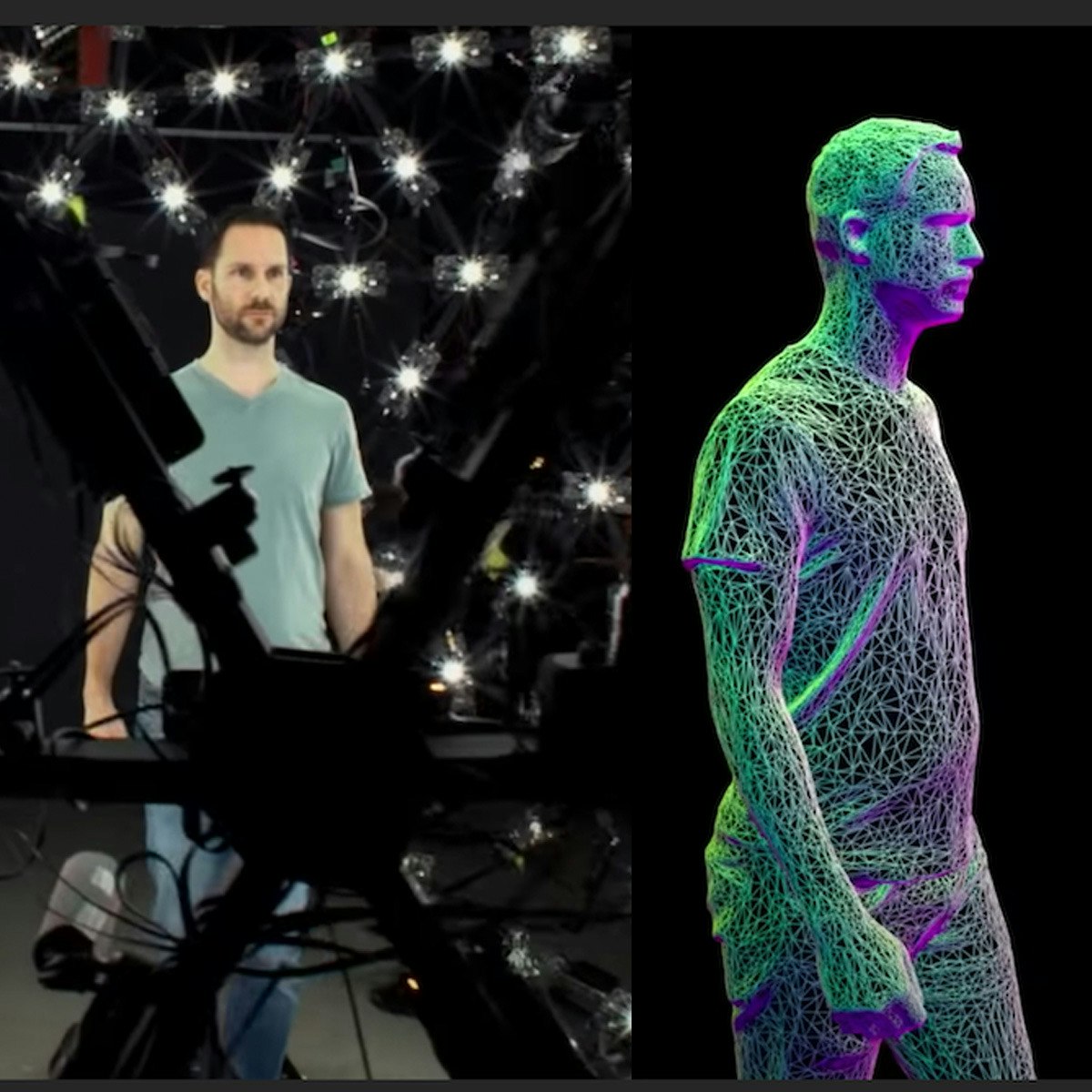
3D Reconstruction - Single Viewpoint
This course focuses on the recovery of the 3D structure of a scene from its 2D images. In particular, we are interested in the 3D reconstruction of a rigid scene from images taken by a stationary camera (same viewpoint). This problem is interesting as we want the multiple images of the scene to capture complementary information despite the fact that the scene is rigid and the camera is fixed. To this end, we explore several ways of capturing images where each image provides additional information about the scene. In order to estimate scene properties (depth, surface orientation, material properties, etc.) we first define several important radiometric concepts, such as, light source intensity, surface illumination, surface brightness, image brightness and surface reflectance. Then, we tackle the challenging problem of shape from shading - recovering the shape of a surface from its shading in a single image. Next, we show that if multiple images of a scene of known reflectance are taken while changing the illumination direction, the surface normal at each scene point can be computed. This method, called photometric stereo, provides a dense surface normal map that can be integrated to obtain surface shape. Next, we discuss depth from defocus, which uses the limited depth of field of the camera to estimate scene structure. From a small number of images taken by changing the focus setting of the lens, a dense depth of the scene is recovered. Finally, we present a suite of techniques that use active illumination (the projection of light patterns onto the scene) to get precise 3D reconstructions of the scene. These active illumination methods are the workhorse of factory automation. They are used on manufacturing lines to assemble products and inspect their visual quality. They are also extensively used in other domains such as driverless cars, robotics, surveillance, medical imaging and special effects in movies.

Complete SQL & MySQL Course 2026: From Beginner to Advanced
Complete SQL & MySQL Course 2026: From Beginner to Advanced Want to master SQL and MySQL from scratch and confidently work with real-world databases? This complete SQL course will take you from absolute beginner to advanced level — covering everything from basic queries to window functions, CTEs, stored procedures and triggers. • By the end of this course, you will be able to: • Create and design databases from scratch • Write powerful SQL queries with joins, subqueries & aggregations • Work with real-world relational database structures • Use window functions & CTEs (MySQL 8+) • Build stored procedures and triggers • Understand database concepts required for interviews What Makes This Course Different? • Step-by-step structured learning path • Clear, word-by-word explanation of every SQL query • 15+ hours of HD video content • Practice exercises after every major section • Interview-focused database theory section • Direct instructor support This is not just theory — you will write SQL queries throughout the course and build real confidence working with databases. What You Will Learn This course is divided into 23 comprehensive sections covering: • Database fundamentals & SQL basics • Creating databases and tables • Constraints and relationships • CRUD operations • String, arithmetic & aggregate functions • Date & time operations • Joins (Inner, Left, Right, etc.) • Views • CASE statements • Window functions • Common Table Expressions (CTEs) • Stored Procedures & Stored Functions • Triggers • Interview-focused database theory Who This Course Is For • Beginners with no prior SQL knowledge • Students preparing for database interviews • Developers wanting strong SQL fundamentals • Anyone looking to work with MySQL professionally Why Learn SQL? SQL is one of the most in-demand skills in software development, data analysis and backend engineering. Strong SQL skills make you: • A better backend developer • A stronger full stack developer • More valuable in interviews • More confident working with production databases About The Instructor Ashutosh Pawar is an experienced programming instructor with hundreds of thousands of students worldwide and extensive experience teaching Python, Django and full-stack development. Join now and take your first step towards becoming confident with SQL & MySQL.

Créer du contenu marketing pour LinkedIn avec Visme
À la fin de ce projet, vous aurez toutes les compétences de base pour créer du contenu digital pour Linkedin en utilisant Visme, outil en ligne de conception et d’édition de visuels Marketing. Vous serez capable de découvrir en détail les différentes fonctionnalités de la plateforme, et serez en mesure de créer du contenu graphique professionnel pour LinkedIn.

Full-Stack AI Engineer 2026: ML, Deep Learning, GenerativeAI
This course contains the use of artificial intelligence(AI). Welcome to Full-Stack AI Engineer: Python, ML, Deep Learning & GenAI, the ultimate end-to-end program designed to turn you into a production-ready Artificial Intelligence Engineer. In this comprehensive AI course, you will master every layer of the AI engineering pipeline, from Python programming and data science foundations to machine learning, deep learning, Recursive Language Models, MLOps, and Generative AI with Large Language Models (LLMs). This course is your complete roadmap to becoming a Full-Stack AI Engineer, capable of designing, building, training, deploying, and scaling AI models across real-world environments. You’ll gain hands-on experience through real projects using NumPy, Pandas, Scikit-learn, TensorFlow, PyTorch, Docker, Git, MLflow, LangChain, and FastAPI, ensuring you learn the same AI tools used by leading tech companies. You’ll begin your journey by learning Python for Data Science, mastering control flow, functions, data structures, and file handling. Next, you’ll dive into data analysis and data visualization with Matplotlib, Seaborn, and Pandas, developing a strong foundation in data cleaning, feature engineering, and statistical modeling. These essential data skills will empower you to manipulate large datasets and prepare them for machine learning workflows. The next phase of the course focuses on Machine Learning (ML). You’ll explore supervised learning, unsupervised learning, classification, regression, ensemble methods, and model evaluation techniques. You’ll implement algorithms such as linear regression, logistic regression, decision trees, random forests, XGBoost, LightGBM, and CatBoost. Each topic is reinforced with hands-on ML projects that help you apply theory in real scenarios. After mastering ML, you’ll advance to Deep Learning (DL) — building and training neural networks using TensorFlow and PyTorch. You’ll understand forward propagation, backpropagation, activation functions, loss functions, and gradient descent optimization. You’ll construct Convolutional Neural Networks (CNNs) for image classification and Recurrent Neural Networks (RNNs), LSTMs, and GRUs for sequence modeling. By the end of this module, you’ll have built and deployed multiple deep learning models on real datasets. Next, you’ll step into the world of MLOps (Machine Learning Operations) — the essential skill for deploying and managing AI systems in production. You’ll learn version control with Git and DVC, model packaging with ONNX and TorchScript, API serving using Flask and FastAPI, and cloud deployment on AWS, GCP, and Azure. You’ll automate model pipelines using CI/CD tools, ensuring that your models are reliable, scalable, and ready for enterprise use. Finally, you’ll dive into Generative AI (GenAI) and Large Language Models (LLMs). You’ll master prompt engineering, tokenization, fine-tuning, retrieval-augmented generation (RAG), and AI agent frameworks like LangChain and CrewAI. You’ll build real LLM applications using OpenAI GPT, Claude, and Gemini APIs, culminating in a capstone project where you develop your own AI chatbot or content generator. By the end of this course, you’ll have the full technical stack to become a Full-Stack AI Engineer — a professional who understands data science, machine learning, deep learning, MLOps, and Generative AI end-to-end. Whether you’re starting your AI career or scaling into advanced engineering roles, this course equips you with the skills, tools, and portfolio to build the future of Artificial Intelligence.

Industrial IoT Markets and Security
In Industrial IoT Markets and Security, students will learn about markets (Transportation, Agriculture and more), platforms (IBM Watson Cloud services for example), software and services, networking basics, wireless communications protocols and a thorough introduction to computer security. Developing tomorrow's industrial infrastructure is a significant challenge. This course goes beyond the hype of consumer IoT to emphasize broader application areas such as Advanced Manufacturing and Building Automation. The Industrial Internet of Things (IIoT), is also known as Industry 4.0. Cisco’s CEO stated: “IoT overall is a $19 Trillion market. IIoT is a significant subset including digital oilfield, advanced manufacturing, power grid automation, and smart cities”. This is part 1 of the specialization. The primary objective of this specialization is to closely examine emerging markets, technology trends, applications and skills required by engineering students, or working engineers, exploring career opportunities in the IIoT space. The structure of the course is intentionally wide and shallow: We will cover many topics, but will not go extremely deep into any one topic area, thereby providing a broad overview of the immense landscape of IIoT. There is one exception: We will study security in some depth as this is the most important topic for all "Internet of Things" product development. In this course students will learn : * What Industry 4.0 is and what factors have enabled the IIoT. * Key skills to develop to be employed in the IIoT space. * What platforms are, and also market information on Software and Services. * What the top application areas are (examples include Manufacturing and Oil & Gas). * What the top operating systems are that are used in IIoT deployments. * About networking and wireless communication protocols used in IIoT deployments. * About computer security; encryption techniques and secure methods for insuring data integrity and authentication. This course can be taken for academic credit as part of CU Boulder’s Master of Science in Electrical Engineering (MS-EE) degree offered on the Coursera platform. The degree offers targeted courses, short 8-week sessions, and pay-as-you-go tuition. Admission is based on performance in three preliminary courses, not academic history. CU degrees on Coursera are ideal for recent graduates or working professionals. Learn more: MS in Electrical Engineering: https://www.coursera.org/degrees/msee-boulder

Project Manager Skillpath: Agile, Scrum & Jira®
If you are an aspiring or practicing project manager who wants to lead with confidence in today’s fast-paced business environment, this course is for you. Do you ever feel overwhelmed by all the frameworks, tools, and jargon—wondering which ones really matter to your success? Or maybe you’ve mastered one methodology but feel stuck when projects demand more flexibility, scale, or technical know-how? This course is designed to give you the complete skillpath to thrive as a modern project manager. Unlike courses that focus only on one area of Agile or one tool, this program brings it all together. You’ll not only grasp the foundations of Agile, Scrum, Kanban and Extreme Programming (XP), but also see how they connect in real-world practice. And you’ll put theory into action using Jira® and AI-powered teammates like Rovo®—so you walk away with practical, job-ready skills. In this course, you will: • Develop a strong foundation in Agile principles and understand why traditional methods needed to change. • Master Scrum roles, events, and artifacts to drive collaboration and deliver value. • Apply Kanban techniques to visualize work, optimize flow, and reduce bottlenecks. • Practice XP values and technical practices that improve team software delivery. • Build Jira® projects, customize workflows, manage tasks, and create automation that saves time. • Leverage Atlassian® Intelligence and Rovo® agents as AI teammates for smarter decisions and instant insights. Why is this important? Because being a project manager today is no longer about just following a plan. It’s about adapting, collaborating, and using the right frameworks and tools to consistently deliver results. Companies worldwide are looking for professionals who can not only speak Agile but also scale it, and run projects efficiently with Jira®. That’s the edge this course gives you. Throughout the course, you’ll engage in practical activities—building backlogs, estimating with Planning Poker, setting up sprints in Scrum, creating Kanban boards, configuring Jira® automations, and even testing out Rovo® for AI-driven teamwork. These hands-on exercises ensure you don’t just hear about concepts—you actually apply them. What makes this course different is that it’s designed as a complete skillpath, not a one-off deep dive. It equips you with both the strategic mindset and the technical skills to handle projects of any scale. And as your instructor, I bring a background in software engineering and product management at American Express, along with teaching thousands of professionals worldwide through best-selling Udemy courses. So, are you ready to become the kind of project manager companies are looking for—the one who can adapt, collaborate, and deliver with the right tools at scale? Join me in this course and take your project management career to the next level.

Introducción al Desarrollo de Software
El desarrollo de software es una actividad compleja que requiere de una comprensión profunda de los conceptos y procesos involucrados. Este curso está dirigido a personas que quieran iniciarse en el desarrollo de software o que quieran actualizar o formalizar los conceptos sobre este tema. No se requieren conocimientos previos de programación. En este curso revisarás los conceptos principales y generales que son esenciales para un exitoso desarrollo de software. Aprenderás sobre las características de la construcción de software, los procesos involucrados en su desarrollo, modelos de ciclo de vida, terminología utilizada y una visión general del lenguaje unificado de modelado. Este conocimiento te ayudará a comprender mejor el software y su desarrollo.

Streamlit for Snowflake Masterclass Hands-On
Why You Can Trust Me • I was the only Snowflake technical expert from Canada selected for their Data Superhero program in Jan 2022. • Former SnowPro Certification SME (Subject Matter Expert) - many exam questions have been created by me. • Passed four SnowPro certification exams to date (with no retakes): Core, Architect, Data Engineer, Data Analyst. • Dozens of other certifications in Data Science and Machine Learning, Cloud Solution Architectures, Databases, etc. • Dozens of apps designed and implemented with Streamlit and Snowflake on my blog on Medium. • Specialized in Snowflake for several years, I served dozens of clients and implemented many real-life projects. What You Will Learn • How to create simple to complex web applications in Streamlit. • How to deploy for free local Streamlit web apps to the Streamlit Community Cloud. • How to connect to Snowflake from Streamlit apps, through either the Python Connector or a Snowpark session. • How to use the DataFrame API and push Python code as stored procedure with Snowpark. • How to extend Snowflake's capabilities, with a hierarchical data viewer and a hierarchical metadata viewer. • How to prototype with Streamlit apps data science, machine learning and data analysis scenarios. • How to deploy a Streamlit web app as a Streamlit in Snowflake App. • How to deploy a Streamlit web app as a Snowflake Native App. • How to use the Snowflake Native App Framework to build or use apps with Streamlit. • We'll build several apps in Python from scratch, we'll then convert them to local single or multi-page Streamlit web apps, deploy and share them on the Streamlit Community Cloud, deploy them in Snowflake as stored procs or Streamlit Apps, share them as Native Apps with other Snowflake accounts... What Streamlit Areas You Will Learn About • Input and Output Controls (Interactive Widgets, Display Text controls, etc.). • Layout Components (sidebar, container, expander, tabs, etc.) and Forms. • Events and Page Reruns. • Data Caching, Session State and Callbacks. • Theming and Configuration, TOML Secrets. • First half of the course will be an end-to-end complete Streamlit bootcamp, with everything you need to know about Streamlit. What Snowflake Areas You Will Learn About • Creating a free Snowflake account and using the Snowflake web UI at the basic level. • Connecting to Snowflake with SnowSQL, and executing SQL scripts with this command-line interface. • Connecting to Snowflake with the Snowflake Connector for Python. • Connecting to Snowflake with Snowpark for Python. • Using Snowpark to push Python code as stored procedures. • Using Snowpark to generate SQL queries with the DataFrame API. • Writing and deploying Streamlit in Snowflake Apps. • Writing and deploying Snowflake Native Apps, with the Snowflake Native App Framework. • Integrating Snowflake with ChatGPT, external dashboards, data science and machine learning libraries. • Second half of the course will be all about Snowflake client apps, Snowpark, Streamlit in Snowflake Apps and Native Apps. What is NOT Included in This Course • In-depth knowledge of Snowflake. • In-depth data science, data analytics and machine learning. • Programming in languages other than Python and SQL. • Main focus will be on all sorts of applications in Python using Streamlit, to connect and deploy the code to Streamlit Cloud or Snowflake in all possible ways. Real-Life Applications You Will Learn To Build • Hierarchical Data Viewer, for CSV files and Snowflake tabular data, using JSON, graphs, animations, recursive queries. • Hierarchical Metadata Viewer, for Snowflake object dependencies and data lineage. • Entity-Relationship Diagram Viewer for Snowflake. • Chatbot Agent with OpenAI's ChatGPT, used as a SQL query generator for Snowflake Marketplace datasets. • Dashboards for Snowflake data, with Vega-Lite, Altair and Plotly charts. • Machine Learning scenarios, with Model Training and Predictions. • Data enrichment of IP addresses using external free services. • I sold tools similar to many of these to real-life clients and Snowflake partners! Enroll today, to keep this course forever! [Disclaimer: We are not affiliated with or endorsed by Snowflake, Inc.]
Intermediate Object-Oriented Programming for Unreal Games
This course is the fourth and final course in the Specialization about learning how to develop video games using the C++ programming language and the Unreal game engine on Windows or Mac. This course assumes you have the prerequisite knowledge from the previous three courses in the specialization. You should make sure you have that knowledge, either by taking those previous courses or from personal experience, before tackling this course. Throughout this course you'll build on your foundational C# and Unity knowledge by developing more robust games with better object-oriented designs using file input and output, inheritance and polymorphism, and event handling. This course gives you even more tools to help you build great games with C++ and Unreal! Module 1: Start using files to implement your Unreal games Module 2: Learn how inheritance and polymorphism help us write less code for our games Module 3: Implement event handling to make better object-oriented designs and add menus to your Unreal games Module 4: Explore the complete implementation of a small Unreal game

Anthropic Claude for Absolute Beginners
This course contains the use of artificial intelligence. Claude for Absolute Beginners is a practical, beginner-friendly course designed to help anyone start using Claude AI with confidence—no technical background required. If you’ve heard about artificial intelligence but feel unsure where to begin, this course gives you a simple, step-by-step path to mastering one of today’s most powerful AI assistants. Built for complete beginners, this course focuses on real-world use cases instead of confusing theory. You’ll learn how Claude works, how to create your account, navigate the interface, and write prompts that generate useful, high-quality results. From your very first lesson, you’ll begin using AI tools to solve everyday problems, save time, and improve productivity. You’ll discover how to use Claude AI for writing emails, messages, to-do lists, schedules, brainstorming ideas, summarizing notes, organizing information, and learning new topics faster. Whether you’re a student, working professional, entrepreneur, freelancer, or simply curious about AI, this course helps you turn Claude into your personal digital assistant. One of the biggest beginner challenges is knowing what to ask AI. That’s why this course teaches you how to write better prompts using clear instructions, context, structure, and follow-up questions. You’ll learn the difference between weak prompts and powerful prompts, and how small changes can dramatically improve your results. By the end of the course, you’ll know how to communicate with Claude chatbot effectively and consistently. You’ll also explore career-focused applications of AI. Learn how to use Claude for resume improvement, LinkedIn profile writing, cover letters, interview practice, professional communication, and job applications. These practical modules help you use AI to grow your confidence and career opportunities in today’s competitive job market. For learners who want to improve knowledge and skills, the course includes modules on using Claude as a learning coach. You’ll build personalized study plans, get beginner-friendly explanations, generate quizzes, practice interviews, and learn how to ask smarter questions. This makes Claude an ideal tool for self-learning, career growth, and lifelong education. You’ll also learn how to upload documents, analyze PDFs, extract insights from notes, compare documents, conduct beginner research, and build repeatable workflows. These lessons show how AI productivity tools can simplify both personal and professional tasks. Most importantly, this course teaches responsible AI use. You’ll learn how to fact-check outputs, review responses critically, understand Claude’s limitations, and build healthy long-term AI habits. Instead of relying blindly on AI, you’ll learn how to use it intelligently. By the end of the course, you’ll complete a final capstone project: building your own personal Claude assistant system with templates for email writing, learning, research, productivity, and career growth. If you want to learn Claude AI for beginners, improve productivity, save time, and future-proof your skills, this course is the perfect place to start. No experience needed. Just curiosity, a device, and the willingness to learn.

Building Web Applications with Flask
This course focuses on using Python and Flask to create scalable, maintainable web applications. Flask's lightweight framework will empower you to build custom, fully-featured applications, adhering to best industry practices. Whether you're new to web development or looking to enhance your existing Flask skills, this course is designed to provide a comprehensive learning experience. Throughout the course, you will gain hands-on experience in building single-page applications, rendering dynamic content, and implementing secure form handling. By mastering Flask’s extensions and incorporating secure authentication techniques, you'll be well-equipped to develop real-world applications that meet modern standards. What sets this course apart is its project-driven approach, which encourages you to apply theory to practical, real-world scenarios. You will build a scalable web application from the ground up, using the same techniques professionals use in the field. By the end, you'll be confident in your ability to deploy Flask applications in production environments. This course is perfect for Python developers familiar with basic web development who want to take their Flask skills to the next level. A foundational understanding of Python and web concepts is recommended, but no advanced experience is required.

[NEW] Spring Boot 4, Spring Framework 7: Beginner to Guru
This course is All Things Spring! Do you wish to Master Spring Boot 4 and Spring Framework 7? Then this is the course for you. This comprehensive course is for developers with no previous Spring Framework or Spring Boot experience. You will master developing RESTful APIs with Spring Framework. Spring has three different options of creating RESTFul APIs: Spring MVC, Spring WebFlux, and Spring WebFlux.fn. You will see how to use each, and how to secure each using OAuth 2.0 with JWT. Also covered in the course are popular persistence technologies. You will learn to use Spring Data JPA with Hibernate, Spring Data MongoDB, and Reactive with Spring R2DBC with MySQL. You will see how to build event driven microservices using Spring Boot and Apache Kafka. You will be guided step by step to implement the event driven microservice example Spring Integration Cafe Sample project which was inspired by Gregor Hohpe’s classic post “Starbucks Does Not Use Two-Phase Commit”. All examples in the course use Java 25 and Spring Boot 4.0.0 (Released November 2025). Inside this course, you will learn about: • Build a Spring Boot Web App • Use Spring for Dependency Injection • Create RESTful Web Services with Spring MVC • Create RESTful Web Services with Spring Webflux • Create RESTful Web Services with Spring Webflux.fn • Learn Best Practices using Project Lombok with Spring • Create MapStruct Mappers as Spring Components • Spring MockMVC with Mockito and JUnit 5 • Spring Data JPA • Spring Data MongoDB • Spring Data R2DBC (Reactive) • Spring RestTemplate • Spring RestClient • Spring WebClient • Spring WebTestClient • Spring Security HTTP Basic Authentication • Spring Security OAuth2 Authentication w/ JWT • Spring Authorization Server • Spring WebMVC OAuth2 Resource Server • Spring WebFlux OAuth2 Resource Server • Spring Cloud Gateway • Spring Boot Actuator • Spring AI • Spring Kafka • Spring Caching • Spring Application Events • Spring Boot Maven Plugin • Spring Boot Gradle Plugin • Spring Boot Test Containers • Spring Boot Docker Compose • Use Java Bean Validation with Spring • Spring Boot Auto-Configuration with MySQL • Use Spring Boot and Flyway for Database Migrations • Hibernate Database Relationship Mapping with Spring Data JPA • Build Docker Images using Spring Boot • Run Spring Boot Applications in Docker Containers • Use Docker Compose to run Spring Boot Applications • Deploy Spring Boot Applications to Kubernetes • Structured Logging with Spring Boot Spring AI - Learn to use OpenAI with Spring! This is the first major Spring course to include a section on Spring AI. You will learn how to leverage OpenAI's ChatGPT API using Spring AI. Course Updates • April 2024 - Introduction to Spring AI added to Course • May 2024 - Course Updated to Java 21 and Spring Boot version 3.3.0 • May 2024 - Spring RestClient - NEW to Spring Framework 6.1 • June 2024 - Using Spring Boot with Docker, Docker Compose and Kubernetes • November 2024: • Adding Spring Professional Certification Practice Test - 100 questions to test your Spring knowledge! • Course Updated to Spring Boot version 3.4.0, includes content on the new Structured Logging feature. • Added section on using Spring Boot Test Containers and Spring Boot Docker Compose • December 2024 - Add content for building microservices with Spring Boot and working with Apache Kafka • June 2025 - Added extra section for Introduction to Junie and JetBrains AI. Catch the vibe with agentic coding! • November 2025 - Course Updated for Spring Boot 4, Spring Framework 7, and Java 25 Spring Core At the core of the Spring Framework is the Spring IoC Container. Inversion of Control is a design pattern where control is inverted compared to procedural programming. In procedural programming, the software calls reusable components to complete tasks. In contrast, with IoC it is the framework which calls the reusable libraries. Development with IoC becomes very efficient since the focus is more on the custom business logic and common logic is left to the framework to perform. Spring MVC SpringMVC is Spring Framework's original web application framework. Spring MVC implements the model-view-controller design pattern, where a model (data) is shared with with a controller which presents the data to the end user in the view (HTML, JSON, XML, etc). In this course you will learn how to develop RESTful APIs using Spring MVC. Spring Webflux Spring Webflux was introduced to the Spring Framework in version 5. Spring Webflux is a reactive web application framework using non-blocking Java components for building efficient and scalable web applications. Like Spring MVC, Spring Webflux also implements the model-view-controller design pattern. Spring Webflux closely follows the familiar syntax of Spring MVC. In this course you will learn to use Spring Webflux to create modern RESTful APIs. Spring Webflux.fn Spring Webflux.fn was also introduced in Spring Framework version 5. Spring Webflux.fn follows a functional programming paradigm. Through the use of functional programming, you can rapidly develop API endpoints. In this course you will learn how to use the functional programming paradigm of Spring Webflux.fn to develop RESTful APIs. Spring Data Spring Data is a family of Spring Framework projects for persistence operations to SQL and NoSQL databases. The Spring Data projects implement the easy to use Repository Pattern to persist objects to the database. In this course you will see how to use Spring Data JPA for persistence with SQL databases, how to use Spring Data Mongo for persistence to the NoSQL Mongo Database, and how to use Spring Data R2DBC for reactive/non-blocking SQL database persistence. Spring Security Spring Security is commonly used to secure Spring Framework applications. You will see how simple it is to use Spring Security for HTTP Basic authentication. You will also learn how to use Spring Security with OAuth 2.0 authentication. Spring Authorization Server is a recent addition to the Spring Framework family of projects. Spring Authorization server is a lightweight alternative to other identity providers, such as Keycloak. You will learn to implement the OAuth 2.0 Client Credentials flow to obtain a JWT authorization token from the Spring Authorization Server and how to configure RESTful APIs in Spring MVC, Spring Webflux, and Spring Webflux.fn as OAuth 2 Resource Servers. Spring Rest Clients Spring Framework 7 now has 3 different rest clients which may be used to interact with RESTful APIs. Spring RestTemplate was originally was introduced in Spring Framework version 3. You will learn to use Spring RestTemplate to authenticate with OAuth 2.0 and interact with RESTful APIs. Spring WebClient was introduced in Spring Framework version 5. Spring WebClient is a reactive/non-blocking rest client. Like Spring Webflux.fn, Spring WebClient uses an efficient fluent API. In this course you will learn to use Spring WebClient to authenticate with OAuth 2.0 and interact with RESTful APIs. Spring RestClient is the latest Rest Client for the Spring Framework. Spring RestClient was introduced to the Spring Framework with Spring Framework 6.1 in November of 2023. Spring RestClient uses the same synchronous libraries as Spring RestTemplate. But Spring RestClient uses the same functional API as Spring WebClient. You will learn to use Spring RestClient to authenticate with OAuth 2.0 and interact with RESTful APIs. Spring Boot Spring Boot was added to the Spring Framework family of projects in 2014. Spring Boot brings sensible 'convention over configuration' to the Spring Framework. Spring Boot helps minimize configuration tasks by providing an opinionated configuration through the use of Spring Boot starters. For many 3rd party libraries, Spring Boot will automatically provide sensible defaults and configuration of components. Spring Boot also provides production-ready features such as metrics, health checks and externalized configuration. Docker with Spring Boot A very common way to deploy Spring Boot applications is to use Docker containers. You will see how easy it is to use the Spring Boot Maven plugin to generate a Docker image for your application. Once the image is created, you can run the image in a Docker container. You will learn the Docker commands to start 5 different Spring Boot applications. Docker Compose with Spring Boot Docker Compose is a tool for running multi-container applications. You will learn how to start the 8 different Spring Boot Applications you build in this course, plus how to run MySQL and Mongo DB inside of a Docker network. Spring Cloud Gateway is used to control ingress to the RESTful Spring Boot services running in side the Docker network. Kubernetes with Spring Boot Kubernetes is a popular container orchestration platform. Originally developed by Google, Kubernetes is being adopted by companies all over the world. Using the same applications you learned to deploy with Docker and Docker Compose, you will learn how to deploy them in a Kubernetes context. Spring Boot Microservices with Apache Kafka Learn about creating event driven microservices using Spring Boot and Apache Kafka. You will learn about the concepts behind using microservices and how to develop microservices using Spring Boot. See how you can use asynchronous messaging with Apache Kafka to send and consume messages from microservices. All Source Code in Github In this course you will build 18+ Spring Boot projects. Each project is maintained in a GitHub repository. When you enroll in this course, you will have access to all 18+ Github repositories. Each lesson in the course contains links to the relevant Github repository for the lesson. Course Extra - IntelliJ IDEA Ultimate Students enrolling in the course can receive a free 4 month trial license to IntelliJ IDEA Ultimate! Get hands on experience using the Java IDE preferred by Spring Framework professionals! Course Extra - Access to a Private Slack Community You're not just enrolling in a course --> You are joining a community learning Spring. With your enrollment to the course, you can access an exclusive Slack community. Get help from the instructor and other Spring Framework Gurus from around the world - in real time! This community is only available to students enrolled in this course. This is a very active Slack community with over 19,000 Spring Framework Gurus! This is the largest online community of people learning Spring in the world. With your enrollment, you can join this community of awesome gurus! Course Extra - Spring Professional Certification Practice Test When you've completed this course, at the end you will have access to a Spring Professional Certification Practice Test. Test your Spring knowledge! The test is designed to help you prepare for the Spring Professional Certification, or maybe to get ready for an interview as a Spring Developer! This test has 100 random questions about the Spring Framework and Spring Boot. Course Extra - Introduction to Junie and JetBrains AI Junie is a modern AI enabled agent to assist you with coding tasks. See how you can use Junie to complete Spring Boot coding tasks, such as creating JPA Entities and Spring MVC controllers. Closed Captioning / Subtitles Closed captioning in English, Spanish, French, German, Dutch, Polish, Portuguese, Chinese, and Turkish is available for all course videos! PDF Downloads All keynote presentations are available for you to download as PDFs. Lifetime Access When you purchase this course, you will receive lifetime access! You can login anytime from anywhere to access the course content. No Risk - Money Back Guarantee You can buy this course with no risk. If you are unhappy with the course, for any reason, you can get a complete refund. The course has a 30 day Money Back Guarantee. Your Learning Outcomes of this Course Completing this course you will be: • Comfortable managing Dependency Injection with Spring. • Proficient writing RESTful APIs using all three Spring web frameworks: Spring MVC, Webflux, and Webflux.fn • Able to consume RESTful APIs using all three clients in the Spring Framework: RestTemplate, WebClient, and RestClient • Use non-blocking reactive programming for RESTful APIs and database persistence • Use Spring Security to secure RESTful APIs using QAuth 2.0 and JWT • Proficient persisting data to SQL databases like MySQL using JPA and Hibernate • Use NoSQL databases like MongoDB for persistence operations • Send and receive messages with Apache Kafka • Use Spring Cloud Gateway to secure and route traffic to microservices • Deploy Spring Boot applications using Maven, Gradel, Docker, Docker Compose, and Kubernetes • Develop microservices using Spring Boot and asynchronous messaging with Apache Kafka • Able Easily manage database migrations using Flyway • Ready to use Spring Boot to build real world applications! • Build event driven microservices using Spring Boot and Apache Kafka. Are You Ready to Become a Spring Framework Guru? Jumpstart your career as a Spring Developer and enroll in this today! You're not going to find a more comprehensive Spring Course than this one!
The Software Developer's Guide to Linux
The course is designed to equip software developers with essential Linux command-line skills that are crucial for daily development tasks. It emphasizes practical, real-world applications, helping developers become more efficient and confident when working in Linux environments. By mastering these tools, learners will improve their productivity and streamline their development workflow. Throughout the course, you'll dive into hands-on examples that demonstrate the power of Linux's command-line interface for tasks such as shell scripting, Docker management, and debugging. The course bridges the gap between basic knowledge and advanced proficiency, focusing on skills that are directly applicable to software development rather than system administration. What sets this course apart is its focus on developer-specific tasks and tools. It avoids unnecessary system administration details and instead highlights techniques like shell scripting and leveraging Docker to enhance your workflow. This practical approach ensures that learners can apply what they learn immediately in their development environments. This course is ideal for software developers who have a basic understanding of computers and are looking to improve their Linux command-line skills. While prior knowledge of file systems and text editing will be helpful, no deep Linux expertise is required. By the end, you'll have a solid grasp of Linux command-line tools and techniques to solve real development challenges.

MVI architecture with Jetpack Compose for Android
In this course we discuss the MVI - Model View Intent - architecture for Android development using Jetpack Compose. The MVI Architecture is the newest iteration in the MVX types or architectures for Android, and brings with it a few different benefits. Most importantly, user interaction traceability, system state predictability and ultimately, improved scalability and testability. As an Android developer, it's important to stay up to date with the latest developments. This architecture has distinct advantages and disadvantages that are important to know when deciding whether to implement it in your application. In addition, it’s important to be able to discuss it in an Android interview, where you might be judged on whether or you have heard of it. In this course, we will go through a theoretical description of Android architectures in general, such as MVC - Model View Controller, MVP - Model View Presenter and MVVM - Model View ViewModel. Finally we will see what the new MVI Architecture brings to the table. We will also implement the knowledge we learned in a practical application. We will build an app that retrieves a list of animals from a backend api, and displays it in a list in the application. The application will showcase how to use the MVI architecture in a simple case, so that it’s easier to understand. This is also an excellent project course for someone who wants to sharpen their Android development skills. So sign up today and let's learn about the MVI architecture as it applies to Android development.

Play It Safe: Manage Security Risks
This course takes a deeper dive into concepts introduced in the first course, with an emphasis on recognizing the focus of the CISSP eight security domains, steps of risk management, security frameworks and controls (e.g., NIST, CIA triad, OWASP), as well as common security threats, risks, and vulnerabilities. Additionally, learners are provided with an opportunity to explore and analyze SIEM data, use a playbook to respond to identified threats, risks, and vulnerabilities, and conduct a security audit. By the end of this course, you will: - Identify the common threats, risks, and vulnerabilities to business operations. - Understand the threats, risks, and vulnerabilities that entry-level cybersecurity analysts are most focused on. - Comprehend the purpose of security frameworks and controls. - Describe the confidentiality, integrity, and availability (CIA) triad. - Explain the National Institute of Standards and Technology (NIST) framework. - Explore and practice conducting a security audit. - Use a playbook to respond to threats, risks, and vulnerabilities.

Low Level System Design, Design Patterns & SOLID Principles
Are you looking to take your Java programming skills to the next level and master the art of designing scalable, maintainable, and efficient software systems? In this course, Low Level System Design, Design Patterns & SOLID Principles, Prateek Narang, an experienced Software Engineer and Instructor and having worked with companies like Google, Scaler, Coding Minutes etc will guide you through the world of object-oriented design patterns, essential for building robust applications in real-world scenarios. What You’ll Learn: • Understand the fundamental design patterns used in software engineering and how to apply them effectively in Java. • Explore creational, structural, and behavioral patterns, and their practical use cases. • Write cleaner, more efficient code by leveraging well-established design principles. • Learn how to improve low-level design for building scalable and maintainable applications. • Solve complex design problems with ease using proven design techniques. Benefits of Doing a Design Patterns Course • Improved Software Design Skills: • Learn how to build flexible, maintainable, and scalable software systems by applying proven design solutions. • Design Patterns are tried-and-tested solutions that help you handle recurring problems in software design. • Enhances Problem-Solving: • Acquire a deeper understanding of common software design challenges and how to solve them using structured approaches. • Patterns provide frameworks for thinking about structural, creational, and behavioral issues in software. • Better Code Readability and Maintenance: • Patterns lead to code that is more understandable and self-explanatory. • By following widely known design patterns, your codebase becomes easier for other developers to read and maintain. • Code Reusability: • Design patterns encourage reusability, which reduces redundancy and makes your codebase more efficient and concise. • Patterns like Factory, Prototype, and Singleton encourage the creation of reusable objects and solutions. • Align with Industry Best Practices: • Design patterns are a fundamental part of object-oriented design and are widely adopted by the industry. Mastering them shows you’re following industry standards. • In interviews and workplace challenges, design patterns often serve as best practices when architecting solutions. • Better Team Collaboration: • Design patterns provide a shared vocabulary for discussing design problems and solutions with other developers. • This common language improves collaboration within teams and makes communication more effective. • Preparation for System Design Interviews: • Many technical interviews for mid-to-senior roles focus on system design questions where knowledge of design patterns is essential. • Mastering the foundational concepts of design patterns is crucial for successfully handling these interviews and presenting scalable, optimized solutions. • Handle Complex Systems: • Gain the ability to break down complex systems into smaller, manageable pieces using patterns like Composite, Facade, and Bridge. • Structural patterns allow you to design systems that are easier to extend and maintain. • Build Scalable and Extensible Architectures: • By using design patterns, you can create systems that can scale with increasing complexity and adapt to changing requirements. • Patterns like Decorator and Strategy support adding functionality or swapping algorithms without modifying existing code. • Improved Decision-Making: • By understanding the pros and cons of each design pattern, you'll be better equipped to make decisions about which approach suits a specific situation. • It enables you to evaluate different design options and pick the most optimal solution. • Framework and Library Understanding: • Modern frameworks and libraries heavily rely on design patterns (e.g., Singleton in Spring Framework, Factory in GUI toolkits). • A strong grasp of design patterns helps you better understand how these frameworks work under the hood. • Career Growth and Opportunities: • Mastery of design patterns is often expected for senior-level roles (e.g., architect, tech lead), improving your chances for career advancement. • It increases your confidence to tackle complex design problems and lead teams in making architectural decisions. Design patterns are the foundation of good software design. They help you solve recurring problems and improve the structure and quality of your code. This course offers hands-on examples and real-world scenarios to help you understand and implement these patterns effectively. Whether you’re preparing for technical interviews or aiming to write better software, this course will give you the practical skills and confidence you need to level up your design capabilities.

Advanced Quality and Capstone Project
Master advanced quality assurance practices, from test strategies and risk-based methods to Agile and DevOps collaboration, and apply them in a real-world capstone project. This course equips you with the ability to design effective testing strategies, apply risk-based testing, use quality metrics, and collaborate within Agile and DevOps environments. You will start by creating advanced test strategies that align with project goals, applying risk-based testing methods, and tracking quality through key metrics. Next, you will explore how quality assurance operates in Agile and DevOps workflows, learning how to integrate testing into delivery pipelines, collaborate effectively with teams, and build continuous feedback loops that drive improvement. The course culminates in a structured capstone project where you will plan, execute, and reflect on a complete quality assurance cycle. You will create test cases, execute both manual and automated tests, log defects, and evaluate outcomes. This project simulates the real responsibilities of a quality assurance professional and helps you transition classroom learning into workplace application. By the end of this course, you will be able to: - Create test strategies using risk-based approaches and quality metrics. - Contribute to Agile and DevOps teams by embedding quality assurance practices into workflows. - Apply continuous feedback to improve testing processes. - Complete a full capstone project with planning, execution, and reflection. Disclaimer: This is an independent educational resource created by Board Infinity for informational and educational purposes only. This course is not affiliated with, endorsed by, sponsored by, or officially associated with any company, organization, or certification body unless explicitly stated. The content provided is based on industry knowledge and best practices but does not constitute official training material for any specific employer or certification program. All company names, trademarks, service marks, and logos referenced are the property of their respective owners and are used solely for educational identification and comparison purposes.

Backend Engineering with Go
In this project-based course, we will build a complete REST API in Go from scratch and deploy it to the cloud, ready to handle real traffic and scale affordably. Our journey begins by creating a simple TCP server, which will help us explore the net/http package in Go and understand the basics of handling network communication. Next, we’ll dive into the theory behind building reliable and composable Go web applications. From there, we’ll develop our project step-by-step, covering carefully curated topics such as request handling, middleware creation, database integration, request and database optimisations and rate limiting to equip you with the skills needed to ship real backend services to the cloud and manage real-world traffic efficiently. This course aims to provide you with the foundational knowledge required to build and understand backend systems, implement industry best practices, and create production-ready APIs that are secure, scalable, and maintainable. It is not just a step-by-step tutorial, but a comprehensive learning experience that prepares you for real-world scenarios. Legal Notice: All product and company names, logos, and trademarks featured on this thumbnail are the property of their respective owners. Their use in this course does not imply any affiliation, sponsorship, or endorsement by these companies.

Secure Software Lifecycle: From Requirements to Maintenance
Master secure coding throughout the entire software development lifecycle, from gathering requirements and designing secure systems to testing, deployment, and ongoing maintenance. Learn how to embed security at every stage for resilient, trustworthy software. This course guides learners through the critical phases of the secure software development lifecycle, emphasizing the importance of security from initial requirements and design through coding, testing, deployment, and maintenance. You will explore secure design patterns, static analysis tools, secure CI/CD pipelines, and effective monitoring strategies. By the end of this course, you will be able to implement comprehensive security practices that support continuous improvement and long-term protection of your software assets. Combining clear explanations with real-world scenarios, this course empowers learners to integrate security seamlessly into every phase of development. The content is structured to foster continuous learning and practical application, ensuring security remains a core focus throughout the software lifecycle. This course is part three of a three-course Specialization designed to build a complete and cohesive understanding of the subject. While it offers valuable skills on its own, you’ll gain the most benefit by progressing through all three courses as a structured learning journey. From Alice and Bob Learn Secure Coding Copyright © 2025 by John Wiley & Sons, Inc. All rights, including for text and data mining, AI training, and similar technologies, are reserved. Used by arrangement with John Wiley & Sons, Inc.

Intro to ChatGPT: ChatGPT and AI for Beginners (2026 Update)
**This course includes a downloadable course prompt file to follow along** ChatGPT for Beginners is a comprehensive course designed to provide you with a deep understanding of the revolutionary AI Chatbot developed by OpenAI known as ChatGPT. Through this course, you'll learn about ChatGPT's human-level response capability, its role in the emerging field of Generative AI, and its practical applications in various domains such as content creation, coding, translation, and more. The course starts with an overview of what ChatGPT is and the underlying concepts of Artificial Intelligence (AI) and Large Language Models (LLMs). You'll then dive into practical aspects of working with ChatGPT, including writing prompts, fact-checking, and editing. The course also teaches how to address hallucinations, a challenge that involves AI generating inaccurate information. By taking this course, you will benefit from gaining a robust understanding of one of the most powerful AI technologies available today. You'll acquire hands-on experience in utilizing ChatGPT for various tasks, including researching, email writing, brainstorming, and copywriting. Additionally, you'll understand the ethical considerations and limitations of AI, preparing you to use the technology responsibly. The course is suitable for learners interested in AI, writers, marketers, educators, and anyone who wants to explore the cutting-edge technology that is shaping our world. Whether you're a beginner or have some background in AI, this course offers valuable insights and practical skills that will enable you to leverage ChatGPT in various professional and creative endeavors. By the end of this course, learners will be able to: • Identify the key features and capabilities of ChatGPT. • Describe the process of how Large Language Models work. • Discuss the applications and implications of AI and LLM in various fields. • Demonstrate the ability to write effective prompts for AI tools like ChatGPT. • Analyze the issue of 'hallucinations' in AI systems and strategies to limit them. • Illustrate the importance of AI in various applications such as Machine Learning, Deep Learning, and Natural Language Processing. • Understand the evolution of GPT models and the improvements in the latest version of ChatGPT. This course includes: • 1 hour of video tutorials • 9 individual video lectures • Course prompt file to follow along • Certificate of completion

Learn Data Governance Workflows with Databricks Tools
Learn Data Governance Workflows with Databricks Tools is a meticulously designed course to help you understand and implement efficient data governance in your organization. The course begins by familiarizing you with the key principles of data governance and the role of Databricks in facilitating effective governance of data. This is followed by a deep dive into the core components of data governance such as frameworks, policies, roles, and regulatory considerations, as well as data quality and metadata management. The course is segmented into two distinct modules. Module 1, "Data Governance and Databricks - Fundamentals", provides a comprehensive understanding of the importance of data governance and the integral role of Databricks in the process. By the end of this module, you will be well-equipped with a fundamental understanding of data governance and the features of Databricks that support governance initiatives. Module 2, "Data Governance and Databricks - Application", focuses on practical applications of Databricks for data governance. You will learn how to manage data, implement governance workflows, manage metadata, and ensure security in Databricks. The module also explores best practices for data governance using Databricks and culminates with real-world examples and case studies highlighting successful data governance implementations. This course is perfect for data professionals, data governance analysts, data stewards, IT managers, and anyone interested in improving their organization's data governance using Databricks. Prior knowledge of Databricks is not a prerequisite, making it suitable for beginners as well as experienced professionals seeking to enhance their skills. By the end of this course, you'll understand the significance of data governance and the ways to leverage Databricks for it. You'll gain the ability to manage data, design governance workflows, and ensure security in Databricks, drawing from best practices and real-world examples. Disclaimer: This is an independent educational resource created by Board Infinity for informational and educational purposes only. This course is not affiliated with, endorsed by, sponsored by, or officially associated with any company, organization, or certification body unless explicitly stated. The content provided is based on industry knowledge and best practices but does not constitute official training material for any specific employer or certification program. All company names, trademarks, service marks, and logos referenced are the property of their respective owners and are used solely for educational identification and comparison purposes.

Clean architecture & SOLID principles for Android in Kotlin
Learn Clean Architecture and SOLID principles with this new course on Android development and Kotlin. Most tutorials and how to's show you the basics of app building, but they don't show you how to use the latest technologies and libraries. Most projects and jobs require you to know how to use the latest libraries. This is what this course is all about. The purpose of this course is to give you a practical example of how to use Clean architecture, all while building a simple example app. We will learn about: • Clean Architecture • Components and layers • SOLID principles • MVVM • Applying Clean architecture in an example app • Jetpack navigation • Room database • Dependency Injection All of these topics are necessary to have a well rounded, scalable, robust and maintainable application. So we not only need to understand how they work, but also how they are implemented in practice and how they relate to each other. In this course we will go line by line, explain why we need it and what it does, so that you have a clear understanding of the complete process of building a modern Android app. If you want to become an expert Android Developer, you need to know how to structure and build your applications correctly Sign up today, and let's learn how to implement Clean architecture and SOLID principles in your projects.

Mastering NestJS
This course features Coursera Coach! A smarter way to learn with interactive, real-time conversations that help you test your knowledge, challenge assumptions, and deepen your understanding as you progress through the course. Mastering NestJS empowers you to build robust and scalable server-side applications using this progressive Node.js framework. You'll gain hands-on expertise in core NestJS concepts such as controllers, middleware, guards, interceptors, and pipes. By the end, you will confidently create full-featured backend apps integrated with databases like MySQL and MongoDB. The course begins by introducing NestJS fundamentals, including project setup, modular architecture, and HTTP request handling. It then dives deep into data validation with pipes, request lifecycle control using middleware and guards, and advanced features like interceptors. Practical sections guide you through creating a full-stack MyStore application, implementing authentication, session management, and database CRUD operations with TypeORM and Mongoose. This comprehensive journey covers both foundational concepts and advanced patterns, preparing you to develop real-world applications with NestJS. Each module builds progressively, reinforcing concepts with hands-on assignments and projects. Ideal for backend developers and Node.js programmers aiming to master NestJS, this course requires basic knowledge of JavaScript and Node.js. It is designed for intermediate learners looking to deepen backend development skills and build scalable enterprise applications.

LLMOps And AIOps Bootcamp With 8 End To End Projects
Are you ready to take your Generative AI and LLM (Large Language Model) skills to a production-ready level? This comprehensive hands-on course on LLMOps is designed for developers, data scientists, MLOps engineers, and AI enthusiasts who want to build, manage, and deploy scalable LLM applications using cutting-edge tools and modern cloud-native technologies. In this course, you will learn how to bridge the gap between building powerful LLM applications and deploying them in real-world production environments using GitHub, Jenkins, Docker, Kubernetes, FastAPI, Cloud Services (AWS & GCP), and CI/CD pipelines. We will walk through multiple end-to-end projects that demonstrate how to operationalize HuggingFace Transformers, fine-tuned models, and Groq API deployments with performance monitoring using Prometheus, Grafana, and SonarQube. You'll also learn how to manage infrastructure and orchestration using Kubernetes (Minikube, GKE), AWS Fargate, and Google Artifact Registry (GAR). What You Will Learn: Introduction to LLMOps & Production Challenges Understand the challenges of deploying LLMs and how MLOps principles extend to LLMOps. Learn best practices for scaling and maintaining these models efficiently. Version Control & Source Management Set up and manage code repositories with Git & GitHub, integrate pull requests, branching strategies, and project workflows. CI/CD Pipeline with Jenkins & GitHub Actions Automate training, testing, and deployment pipelines using Jenkins, GitHub Actions, and custom AWS runners to streamline model delivery. FastAPI for LLM Deployment Package and expose LLM services using FastAPI, and deploy inference endpoints with proper error handling, security, and logging. Groq & HuggingFace Integration Integrate Groq API for blazing-fast LLM inference. Use HuggingFace models, fine-tuning, and hosting options to deploy custom language models. Containerization & Quality Checks Learn how to containerize your LLM applications using Docker. Ensure code quality and maintainability using SonarQube and other static analysis tools. Cloud-Native Deployments (AWS & GCP) Deploy applications using AWS Fargate, GCP GKE, and integrate with GAR (Google Artifact Registry). Learn how to manage secrets, storage, and scalability. Vector Databases & Semantic Search Work with vector databases like FAISS, Weaviate, or Pinecone to implement semantic search and Retrieval-Augmented Generation (RAG) pipelines. Monitoring and Observability Monitor your LLM systems using Prometheus and Grafana, and ensure system health with logging, alerting, and dashboards. Kubernetes & Minikube Orchestrate containers and scale LLM workloads using Kubernetes, both locally with Minikube and on the cloud using GKE (Google Kubernetes Engine). Who Should Enroll? • MLOps and DevOps Engineers looking to break into LLM deployment • Data Scientists and ML Engineers wanting to productize their LLM solutions • Backend Developers aiming to master scalable AI deployments • Anyone interested in the intersection of LLMs, MLOps, DevOps, and Cloud Technologies Covered: Git, GitHub, Jenkins, Docker, FastAPI, Groq, HuggingFace, SonarQube, AWS Fargate, AWS Runner, GCP, Google Kubernetes Engine (GKE), Google Artifact Registry (GAR), Minikube, Vector Databases, Prometheus, Grafana, Kubernetes, and more. By the end of this course, you’ll have hands-on experience deploying, monitoring, and scaling LLM applications with production-grade infrastructure, giving you a competitive edge in building real-world AI systems. Get ready to level up your LLMOps journey! Enroll now and build the future of Generative AI.

Advanced Full Stack Development and SwiftUI Basics
Updated in May 2025. This course now features Coursera Coach! A smarter way to learn with interactive, real-time conversations that help you test your knowledge, challenge assumptions, and deepen your understanding as you progress through the course. This course provides an in-depth guide to building and integrating robust backend services for a full-stack Twitter Clone using Node.js, Express, and SwiftUI. Beginning with server and user model creation, you’ll establish a secure and scalable backend environment. You'll implement essential features like user registration, login services, and profile management, ensuring that your application has a solid foundation for handling user data and authentication. As the course progresses, you'll develop advanced functionalities that bring your Twitter Clone to life. You'll learn to manage tweets, including creating, liking, and displaying them, while ensuring smooth interaction between the server and front-end components. The course covers the intricacies of integrating image upload and display functionalities, allowing users to personalize their profiles and tweets. Additionally, you’ll explore implementing follow/unfollow features and ensuring data consistency across the application. The final sections focus on enhancing user engagement with real-time notifications. You'll build systems to send, fetch, and display notifications, creating a dynamic and interactive user experience. By the end of the course, you’ll have the expertise to develop, integrate, and manage backend services that support a fully functional Twitter Clone, seamlessly connected to a SwiftUI front end. This course is ideal for developers who have experience with Node.js and Express and are looking to integrate backend services with SwiftUI applications. Familiarity with RESTful APIs and basic SwiftUI concepts will be beneficial.

Manual & Automation Software Testing with the Help of Gen AI
Hi everyone. This course is about how Generative AI (GenAI) can be useful for a Manual Software Tester or a Tester who would like to automate with the help of AI. The course will be useful for testers: • Absolute beginners in Software Testing who want to learn the usage of one of the most popular Generative AI tools(ChatGPT/Cursor) for Manual and Automation Testing • Experienced Manual Software Testers who want to learn how to automate test cases with the help of ChatGPT in a short time • Anyone who wants to take the first steps in Software Automation Testing with the help of ChatGPT • Anyone who wants to take the first steps in Software Automation Testing with the help of Cursor AI To help you understand how and whether we need Generative AI (ChatGPT) for testing, we have prepared two parts of our course: Since the course is about how to use AI for testing, in the introductory lectures, you will get acquainted with: 1. The Evolution of Generative AI 2. What is an AI Agent? Afterward, we learn how to use Generative AI (GenAI) (ChatGPT/Cursor IA) for Manual Software Testing In particular, we will familiarize ourselves with such aspects of using ChatGPT for Manual Software Testing as: 1. Review Software Business Requirements 2. Assistance with building the Test Plan 3. Assistance with test monitoring and control 4. Assistance with Test Design of manual test cases 5. Assistance with writing a bug report 6. Assistance in API testing 7. Assistance in creating test tables, lists 8. Assistance in writing SQL queries 9. Assistance with Data Generation Each of these aspects of using ChatGPT for software testing is shown in real-life examples to better understand the purpose of using this tool. Also, in the course, we will discuss the top 3 AI alternatives to ChatGPT for Software Testing. In particular, we will take a look at alternatives such as Bard AI (By Google), Bing AI (By Microsoft), and Chatsonic AI by Writesonic In this course, a manual QA Engineer can learn how to successfully write and then run the test script for the desired test case within one or a few days. For that reason, we have prepared the Second part of the course, How to use Generative AI (GenAI) (ChatGPT/Cursor AI) for Automation Software Testing In particular, you will review the lectures for the different automation tools using various programming languages: Playwright/JavaScript: • 001 - How to set up the JavaScript/Playwright environment • 002 - How to set up a new project and install Playwright with npm init • 002.1 - JavaScript/Playwright test script configs and first launch • 003 - JavaScript/Playwright test case for website login with the assistance of ChatGPT • 004 - JavaScript/Playwright test cases for login (Negative cases) with the assistance of ChatGPT • 005 - JavaScript/Playwright test cases for My Account(Adding address) with the assistance of ChatGPT • 006 - JavaScript/Playwright test case for End-to-End purchase flow • 007 - XPath Playwright Locators • 008 - JavaScript/Playwright End-to-End Purchase Flow: Code Optimization with XPath Locators • 009 - How to install GitHub • 010 - How to Push Project to GitHub • 011 - How To Pull a Project from GitHub to Visual Studio Code • 012 - POM model intro + URL as a Static data • 013 - POM - Consent Pop-Up - dynamic interactions • 014 - POM - XPath • 015 - POM - Test Data Cursor AI: • 000 – The Evolution of Generative AI • 001 – What Cursor AI Is and How to Install It • 002 – How to Set Up the JavaScript/Playwright Environment (Node.js & New Project via Terminal) • 003 – How to Launch the First JavaScript/Playwright Test Script via the Cursor Terminal • 004 – How to Use Cursor AI: Basic Navigation and Core Features • 005 – JavaScript/Playwright Test Case for Login with Cursor AI • 006 – JavaScript/Playwright Test Case for Login: Negative Test Cases with Cursor AI • 007 – JavaScript/Playwright Test Case for Login: Code Optimization with XPath • 008 – JavaScript/Playwright Test Case for Login Using the Page Object Model (POM) • 009 - JavaScript/Playwright END-TO-END Purchase flow with Cursor AI • 010 - JavaScript/Playwright Refactoring ETE Purchase Flow to POM with Cursor AI • 011 - What Are Cursor Rules and How to Write Them for a Software Testing Project • 012 - What Are Cursor Skills and How to Create and Use Them for Software Testing • 013 - How to Build a Cursor AI Skill to Generate and Export Test Cases to TestRail (manual-test-case-generator) Selenium/Java: 1. How to write and run a Selenium/Java test case with ChatGPT. 2. HOW TO INSTALL JAVA JDK 3. HOW TO INSTALL IntelliJ IDEA Community Edition 4. HOW TO SETUP Selenium WebDriver Chrome 5. Selenium WebDriver browserOptions() 6. Selenium Locators XPath 7. Selenium Locators XPath With Help Of CHATGPT 8. Selenium/Java Interactions with web elements 9. TestNG assertions With the Help Of CHATGPT 10. Test report for Selenium Java test script With Help Of CHATGPT 11. Selenium/Java test case for a search with the help of Chat GPT 12. Selenium/Java test case for Sorting on a web page with the help of Chat GPT 13. Selenium/Java test case for navigating to PLP>PDP>Minicard with the help of Chat GPT Each lecture from the part of the course on using Generative AI (GenAI) (ChatGPT/Cursor AI)for automation software testing is shown on our website, where we created separate components to show everything in practice. For each of our lessons, we created a separate class in the IntelliJ IDEA Integrated Development Environment for the Selenium/Java lectures, Visual Studio Code for the Playwright/JavaScript lectures, and Cursor AI for Playwright/JavaScript lectures. So it will be easier for you to find the code you need in the future. The final code will be available in the lecture materials, on our website, and in the case of Playwright/JavaScript lectures on GitHub. We can open our webpage, run it, and check the results using this code. We hope you will enjoy the course, and feel free to write reviews and send topics that you would like to see. Prepare a cup of coffee or another favorite drink and enjoy the course!

Online Course Creation Teach an Online Course
Learn to teach online effectively, with step-by-step guidance on creating engaging content, connecting with your students, and presenting like a pro. Whether you're new to online education or looking to refine your skills, this course helps you stand out. From video rehearsals to interactive techniques, you'll be equipped to succeed. In this course, you'll start by learning how to choose the best topic for your expertise and build confidence as an online presenter. The early modules cover essential tips for creating engaging lectures, connecting with virtual audiences, and using technology to enhance your online classroom. As you progress, you'll discover techniques for bringing your expertise to life on camera. The course emphasizes the importance of preparation, with video rehearsals and strategies for addressing common concerns, such as video length and interactivity. You’ll learn how to structure your lessons effectively, ensuring they are both engaging and impactful. By the end of the course, you'll have the skills to teach confidently online, with a solid understanding of communication techniques that resonate with digital learners. With practical exercises, real-world examples, and expert guidance, you’ll be well-equipped to make a lasting impression on your students and create a compelling, interactive learning experience. This course is designed for professionals looking to transition into online teaching or improve their current virtual education skills. Ideal for educators, trainers, consultants, and anyone with expertise they want to share online. No prior teaching experience is required, but a willingness to experiment with new technologies and teaching methods will help you get the most out of this course. This course combines actionable insights with real-world examples to ensure practical application. You’ll learn at your own pace, building confidence with each lesson. With video rehearsals, interactive exercises, and expert guidance, you’ll refine your teaching methods to connect with students more effectively. This course is based on Online Course Creation Teach an Online Course, by Media Training Worldwide and Timothy John Walker. This course is licensed and distributed by Packt. All rights reserved. Packt is one of the world's most prolific publishers of cutting-edge technical content. For over two decades we've made it our mission to curate and publish the knowledge of only the very best technical experts. We focus on real-world courses that help our customers get the job done, with coverage that extends across a wide range of established and cutting-edge technical topics. If you're an individual or an organisation that embraces learning by doing, Packt is the perfect fit for you.

GitHub Copilot Masterclass for Java, Spring, AI and IntelliJ
This isn't your typical Udemy course. That's one thing I can assure you. A Better Way to Learn In this course, you won't find any long PowerPoint presentations or teleprompter driven lectures that put you to sleep. That's a promise. I've always believed that training has to be project driven, and that the best learning happens when a developer gets hands on experience with the tools, technologies and APIs they have to master. I have also always believed that conversations are better than slideshows, and that the mantra that shapes this entire course. What This Course Covers So what do we cover in this course? Quite frankly, we'll cover everything a Java developer needs to know to become both capable and confident with GitHub Copilot and the broader ecosystem of Java frameworks and MCP tools that empower modern, enterprise software developers. You'll learn about how GitHub Copilot works, how to effectively structure your LLM-driven projects in IntelliJ, and you'll learn how to architect and design modern applications so you can get the most out of AI-enabled tools. What You Will Build and Learn This is a hands-on masterclass packed with practical topics, tasks, and real projects. Here's a non-exhaustive list of the tools, technologies and frameworks covered in this course, along with the projects that drive that learning: GitHub Copilot Fundamentals • How to install GitHub Copilot in IntelliJ and get up and running fast • How to use Ask, Agent, and Planning modes to work more effectively as a Java developer • How to use inline suggestions, edits, and guided prompting to write code faster • How to explain code, fix bugs, and generate tests with Copilot • How to build practical starter projects like a Snake game and a JavaFX app Spring, Quarkus, Micronaut and Jakarta EE Development • How to build Spring Boot RESTful APIs with GitHub Copilot • How to steer Copilot with prompt artefacts for better results • How to push your LLM toward Java 25 features and modern coding practices • How to fix common problems like devtools reload issues, port conflicts, and logging challenges • How to improve application setup and workflow in real development scenarios Skills, Instructions, and Reusable Guidance • How to create skill files that improve the quality of Copilot’s generated code • How to teach your LLM stronger RESTful API and enterprise Java practices • How to build global skills for persistence, deployment, and reusable development patterns • How to create Java 25 and Jakarta EE instruction files • How to dramatically improve Copilot output with better guidance Custom Agents and Smarter AI Workflows • How to understand custom agents and where they fit into software development • How to build projects using agent-based workflows • How to design handoffs between agents with different responsibilities • How to use memorable agent examples like the Cautious Captain, Planning Pirate, and Building Buccaneer • How to use advanced Copilot workflows on more complex applications MCP, Chrome DevTools, Jira Connectivity and the Copilot CLI • How to use Model Context Protocol to expand what GitHub Copilot can do • How to connect MCP servers to IntelliJ, Chrome DevTools, and Jira • How to audit websites for performance, SEO, accessibility, and vulnerabilities with MCP tools • How to use the GitHub Copilot CLI from the command line • How to build, review, ship, and manage code from the terminal with Copilot support What This Course Will Do for You This masterclass will not teach you everything there is to know about GitHub Copilot. No course can, especially given how quickly the AI-augmented, coding landscape is changing. What this GitHub Copilot Masterclass will do is teach you everything you need to know to understand and explore GitHub Copilot with confidence, competence, and credibility, even as the AI landscape changes and grows. The GitHub Copilot Masterclass that Every Java Developer needs This course is built for Java developers who want to move into the AI space and do it the right way. It is designed to help you get started, keep progressing, and maintain the pace of learning required to stay current with the rapid changes happening across the Java, Copilot, machine learning, and Agentic AI space. If you want a practical, project-driven course that helps you build real skills, and maybe even have a bit of fun while doing it, this course is made for you.

Introduction and Rust Basics
Updated in May 2025. This course now features Coursera Coach! A smarter way to learn with interactive, real-time conversations that help you test your knowledge, challenge assumptions, and deepen your understanding as you progress through the course. Introduction and Rust BasicsUnlock the potential of AI-driven development with this in-depth course on building an AutoGPT code generation tool using Rust and GPT-4. You’ll begin with a solid introduction to Rust, mastering its syntax, memory management, and advanced features like concurrency. As you progress, you’ll explore how to leverage Rust’s robust ecosystem to create modular and efficient code. The course then transitions to integrating GPT-4, where you'll learn to harness this powerful language model for automating complex coding tasks. Through practical exercises, you'll see how Rust and GPT-4 work together to streamline code generation, testing, and deployment. By the end of the course, you’ll have built a fully functional AutoGPT tool, equipping you with the skills to innovate and automate in your software projects. This course is designed for software developers, AI enthusiasts, and technical professionals who want to explore AI-powered automation and advance their Rust programming skills. Prerequisites include programming experience and an interest in AI-driven development.

AWS Glue - The Complete Masterclass
Learn the latest in AWS Glue - And learn to use it with other AWS resources. In this growing world of data and growing cloud computing, it is necessary to have the core competency in cloud ETL tool also. AWS Glue come with the in built Spark support, Data Quality and data curation using Data brew. The top technology, finance and insurance companies like JPMC, Vanguard, BCBS, Amazon, Capital One, Capgemini, FINRA and more are all using AWS Glue to run their ETL on PetaBytes scale of data everyday. AWS Glue provides server less and scalable ETL solution where scripts can be written in Python, Spark and currently using Ray. It also provides the visual drag and drop options to create the ETL pipelines. As now more and more companies are migrating to cloud it has caused an explosion in demand for this skill! With the mastery of AWS Glue, you now have the ability to quickly become one of the most knowledgeable people in the job market! This course will teach the basics in AWS Glue Data Catalog, AWS Glue Studio, AWS resources such as IAM, SNS, KMS, CloudFormation, CloudWatch and continuing on to learning how to use AWS Glue to build ETL solution for the organization! Once we've done that we'll go through how to use the Glue Data Quality, Glue Streaming and Glue Data Brew ETL pipelines. All along the way you'll have multiple labs to create all the resources and ETL pipelines using AWS console and CloudFormation templates that you put you right into a real world situation where you need to use your new skills to solve a real problem! This course now includes the role playing also to solidify your understanding on the concepts learned. If you're ready to jump into the data engineering world of AWS Glue, this is the course for you!

CorelDRAW for Beginners
Transform your creative ideas into professional visual identities with this project-based course. You will master the CorelDRAW 2024 interface, learning to architect digital canvases with precise bleeds and color profiles. Moving into vector construction, you will deconstruct complex icons into geometric shapes, utilizing Weld and Trim tools to build unique, scalable logos. Finally, you will apply layout principles to design professional flyers and business cards for the "EcoVibe Home" brand, culminating in the expert export of PNG, JPG, and PDF files. This course is perfect for beginners with little to no experience in graphic design or CorelDRAW. If you're a budding designer, a small business owner seeking to create your own branding assets, or someone who wants to learn the fundamentals of digital design using a professional software suite, this course is for you. No prior experience with CorelDRAW or graphic design is required, but basic computer literacy and a copy of CorelDRAW 2024 are necessary. No prior experience with CorelDRAW or graphic design is required. Basic computer literacy and a copy of CorelDRAW Standard 2024 are necessary, along with a desire to learn and create professional design assets using industry-standard tools. By the end of this course, you will have developed the skills to create professional logos, flyers, and business cards using CorelDRAW 2024, and you'll be able to confidently design and export high-quality visual assets tailored to any brand.

All of AI: ChatGPT, Midjourney, Stable Diffusion & App Dev
Ever wondered how AI is transforming industries and creating opportunities that were unimaginable just a few years ago? "AI will not take your job, but someone who knows how to use AI might," says Richard Baldwin. Are you ready to master the art of generating everything from captivating video scripts to innovative business strategies, all at the touch of a button? Dive into 'All of AI: ChatGPT, Midjourney, Stable Diffusion & App Dev'—where you'll learn to harness the full potential of AI tools like ChatGPT, Midjourney, and more. Transform your creative vision and technical skills into real-world applications and lead the charge in the AI revolution. This masterclass is perfect for anyone, from developers and creatives to entrepreneurs and enthusiasts, who wants to understand and apply cutting-edge AI technologies like ChatGPT, Leonardo AI, Dall-E, Google Bard, Gemini by Deepmind, Midjourney, and Stable Diffusion. Whether your interest lies in content creation, social media, advertising, SEO, YouTube scripts, business communication, or even gaming and art, this course has got you covered. In this course, you will dive deep into the heart of AI and learn how to create your own models and apps using the latest technologies like ChatGPT, GPTs, the Assistant API, diffusion models, Google Colab, and more. Here's what you can expect: • In-Depth AI Knowledge: Gain a solid foundation in AI basics, including the history and development from DeepMind to AlphaGo, machine learning, deep learning, neural networks, Diffusion Models and Large Language Models (LLMs). • Prompt Engineering: Unlock the full potential of AI with advanced prompt engineering techniques. In this course, you'll learn how to craft precise and effective prompts to guide AI tools like ChatGPT, Midjourney, and Stable Diffusion to produce desired outcomes. Whether you're generating text, creating images, or developing complex AI models, mastering prompt engineering allows you to fine-tune inputs to achieve high-quality, relevant outputs for any content or application scenario. • Mastering Midjourney: Uncover the secrets of Midjourney to transform text into stunning visuals tailored for any platform. Learn to navigate aspect ratios and styles perfect for enhancing digital marketing or artistic projects, making every image a masterpiece of your making. • Stable Diffusion: Delve into Stable Diffusion's capabilities for custom image generation and editing. Master techniques for style, composition, and detail adjustments to create visuals that stand out in personal, professional, and social media settings. • Adobe Firefly: Harness the power of Adobe Firefly to seamlessly integrate AI into your creative processes. Gain skills in generating and refining images that align perfectly with specific project needs, ensuring your visuals resonate across all media. • DALL-E: Explore DALL-E’s revolutionary ability to generate detailed images from simple descriptions. Learn to manipulate elements for specific contexts and dimensions, empowering you to produce versatile and impactful visuals for any use case. • Practical Skills and Applications: Learn to create effective prompts, integrate ChatGPT into custom applications, and develop GPT-based apps. Master generative art with Midjourney, Stable Diffusion, and DALL-E 3, delve into code generation, debugging, and documentation with ChatGPT, and even build websites and games like Snake. • Creative AI Tools: Experiment with AI video tools to create talking AI avatars, visually stunning videos, and dive into 3D world creation. Utilize AI photo tools for editing and personalizing images, exploring Leonardo AI for inpainting, outpainting, and more. • Sound and Music Innovation: Discover the fascinating world of text-to-audio and text-to-music creation. • Business and Marketing Applications: Generate innovative business ideas, optimize writing for business communication, and explore lead generation techniques. • Ethical Insights and Future Perspectives: Engage in discussions about AI's ethical considerations, copyrights, privacy, and future implications. • Interactive Learning Experience: With over 34 hours of content, lifetime access, regular updates, and quick support, you’ll be actively involved in learning through example projects, combining various AI tools for optimal application. • Comprehensive Toolset Knowledge: Get to grips with essential tools like Node.JS, Flowise, StackAI, Voiceflow, Dall-E 3, Midjourney, Stable Diffusion, Leonardo AI, D-ID, and many others. • Industry-Specific Applications: From creating music videos and social media content to developing speech and image recognition applications, the course provides insights into diverse industry applications. • Transformative Opportunities: Unleash your creativity, enhance productivity, and open up new income sources. Whether it's for personal development or professional advancement, this course prepares you for the AI-driven future. • Earn with AI: Learn how to monetize your skills through avenues like the GPT Store and more. • LLM and Diffusion Model Applications: Understand and apply the workings of Large Language Models (LLMs) and diffusion models. • GPT-Based Development: Develop your own GPT-based apps and assistants for various industries. • Speech and Image Recognition: Deepen your knowledge and create practical applications in these fields. • Monetization Opportunities: Explore avenues for earning money with your Ai-Skills • OpenAI API Mastery: Understand and apply the OpenAI API and Assistant API. • Custom GPT Integration: Build your own GPTs and integrate ChatGPT into custom applications like websites. • App Development Skills: Develop apps using tools like Google Colab, GitHub, and various programming languages. • Advanced AI Techniques: Master fine-tuning LLMs and diffusion models, including creating your own models and using Lora Fine-Tuning for specific image creation. • Creative Media Projects: Create music videos, social media content, and deepfakes with tools like Stable Diffusion & Google Colab. • Text-to-Speech Innovations: Utilize technologies like Whisper by OpenAI or Elevenlabs for AI avatars. • GPT for Business: Explore GPT applications for lead generation and other business uses. • AI Ethics Discussion: Engage in important conversations about ethical concerns, copyrights, and privacy in AI. Additionally, you will learn about important tools like Node.JS, Flowise, StackAI, Voiceflow, Dall-E 3, Midjourney, Stable Diffusion, Leonardo AI, D-ID, and many more. This course is ideal for anyone who wants to dive deeper into the world of AI – from developers and creatives to entrepreneurs and even those who just want to learn. You will harness the transformative power of AI technology to develop innovative solutions and broaden your understanding of the diverse applications of AI. Take this opportunity to gain a comprehensive understanding of AI technologies and strengthen your skills in developing AI applications. By the end of 'All of AI' you will have a holistic understanding of AI, its applications, and the skills to harness its power for various purposes. If you're ready to embark on a transformative journey into AI and position yourself at the forefront of this technological revolution, this course is tailor-made for you. Sign up today and start your journey to become an expert in the AI world!

Web Development Concepts for Everyone
This course features Coursera Coach! A smarter way to learn with interactive, real-time conversations that help you test your knowledge, challenge assumptions, and deepen your understanding as you progress through the course. Unlock the power of web development with this comprehensive course that takes you through the essentials of both front-end and back-end technologies. You'll master the concepts behind full-stack applications, explore the workings of both client-side and server-side components, and understand how databases fit into the web ecosystem. As you progress, you will learn to integrate the right frameworks and libraries for smooth, interactive user experiences. The course introduces version control tools like Git and GitHub, equipping you with the skills to collaborate effectively in software development environments. Throughout the course, you'll build a strong foundation by mastering web protocols, client-server communications, authentication, and more. Dive into both SQL and NoSQL databases, understand cloud platforms like AWS, and explore DevOps practices that streamline development. You’ll also gain proficiency with various tools, such as Visual Studio Code, Postman, and Docker, that are vital for modern web development workflows. With hands-on modules and expert guidance, you’ll become adept at solving real-world challenges and deploying dynamic web applications. Whether you're aiming to become a full-stack developer, work in cloud computing, or enhance your understanding of modern IT practices, this course offers a comprehensive learning experience. Beginners and intermediate developers alike will benefit from the content, as it combines theory with practical application. No prior web development experience is necessary—just an eagerness to learn and build. By the end of the course, you will be able to build full-stack web applications, use version control effectively, deploy your projects to the cloud, and implement best practices for real-world web development. You’ll also have a solid grasp of security protocols, database management, and modern development tools.

SAP ABAP RAP (RESTful App. Programming) Model [ Latest ]
Master SAP ABAP RAP (RESTful Application Programming) | Build Full OData V4 Apps Unlock the Future of SAP ABAP Development with RAP & OData V4 – A Hands-on, Practical Course! Are you an SAP ABAP Developer, Consultant, or Technical Architect looking to master the SAP RESTful Application Programming Model (RAP)? This course is designed to take you from beginner to advanced with a step-by-step, hands-on approach to building full-fledged OData V4 applications in SAP RAP. What You’ll Learn in This Course 1- Understand the SAP RAP Framework and its role in modern SAP development 2- Create database tables, basic views, and consumption views 3- Define Behavior Definitions & Behavior Implementations 4- Develop Metadata Extensions, Service Definitions & Service Bindings 5- Build & Deploy a complete RAP-based OData V4 application 6- Preview & test your application in SAP Business Application Studio 7- Gain real-world experience with practical examples & hands-on exercises Why Take This Course? 1- Practical Learning: Hands-on exercises for real-world SAP projects 2- Latest SAP Technology: Stay ahead with the newest ABAP RAP & OData V4 standards 3- Beginner to Advanced: No prior RAP experience needed – structured step-by-step guidance 4- High-Demand Skillset: SAP RAP & OData V4 expertise is crucial for SAP S/4HANA, Fiori & Cloud Development Who Should Enroll? 1- SAP ABAP Developers transitioning to SAP RAP & OData V4 2- SAP Consultants & Technical Architects looking to enhance their skillset 3- Students & Professionals eager to master modern SAP development frameworks Course Requirements Basic knowledge of SAP ABAP (recommended but not mandatory) Passion for learning SAP RAP & OData V4 development Enroll Now & Start Building Next-Gen SAP Applications with RAP & OData V4!

Large Multimodal Model Prompting with Gemini
Multimodal models like Gemini are pushing the boundaries of what’s possible by unifying traditionally siloed data modalities. With Gemini, you can build applications that seamlessly understand and reason across text, images, and videos, enabling a new class of intelligent systems. For example, building a virtual interior designer that can analyze a user’s room images, understand their style preferences from a text description, and generate personalized design recommendations. Or creating a smart document processing pipeline that can extract structured data from complex PDFs, answer questions based on the content, and generate human-like summaries. You’ll learn prompt engineering techniques to guide Gemini’s behavior and optimize its performance for diverse use cases, from creative story generation to analytical report writing. And you’ll discover how to integrate Gemini with external APIs and databases using function calling, with the ability to infuse your applications with real-time data and dynamic content. What you’ll learn, in detail: 1. Introduction to Gemini Models: Explore the Gemini model family, and understand the key differences and use cases for Gemini Nano, Pro, Flash, and Ultra. Understand how to select optimal models based on capability, latency, and cost considerations. 2. Multimodal Prompting and Parameter Control: Learn advanced techniques for structuring effective text-image-video prompts to elicit desired model behavior. Fine-tune key parameters like temperature, top_p, top_k to control model creativity vs determinism. 3. Best Practices for Multimodal Prompting: Get experience with prompt engineering for Gemini multimodal models, and best practices around role assignment, task decomposition, and formatting. Analyze the impact of prompt-image ordering on model performance for different objectives. 4. Creating Use Cases with Images: Build engaging multimodal applications like interior design assistants and receipt itemization tools. Leverage Gemini’s cross-modal reasoning capabilities to analyze relationships between entities across multiple images. 5. Developing Use Cases with Videos: Implement “needle in the haystack” semantic video search powered by Gemini’s large context window. Explore techniques for long-form video QA and content summarization. 6. Integrating Real-Time Data with Function Calling: Extend Gemini with external knowledge and live data via function calling and API integration. Combine Gemini’s Natural Language Understanding (NLU) capabilities with APIs for up-to-date facts and interactive services. Through this course, you’ll become well-versed in Gemini’s capabilities, how to maximize them in different use cases, and a portfolio of practical techniques for architecting advanced multimodal AI applications. Note that due to technical requirements, this course features downloadable-only notebooks on the learning platform. You are free to download, review, and run these notebooks on your own.

Mathematical Foundations of Machine Learning
Mathematics forms the core of data science and machine learning. Thus, to be the best data scientist you can be, you must have a working understanding of the most relevant math. Getting started in data science is easy thanks to high-level libraries like Scikit-learn and Keras. But understanding the math behind the algorithms in these libraries opens an infinite number of possibilities up to you. From identifying modeling issues to inventing new and more powerful solutions, understanding the math behind it all can dramatically increase the impact you can make over the course of your career. Led by deep learning guru Dr. Jon Krohn, this course provides a firm grasp of the mathematics — namely linear algebra and calculus — that underlies machine learning algorithms and data science models. Course Sections • Linear Algebra Data Structures • Tensor Operations • Matrix Properties • Eigenvectors and Eigenvalues • Matrix Operations for Machine Learning • Limits • Derivatives and Differentiation • Automatic Differentiation • Partial-Derivative Calculus • Integral Calculus Throughout each of the sections, you'll find plenty of hands-on assignments, Python code demos, and practical exercises to get your math game in top form! This Mathematical Foundations of Machine Learning course is complete, but in the future, we intend on adding extra content from related subjects beyond math, namely: probability, statistics, data structures, algorithms, and optimization. Enrollment now includes free, unlimited access to all of this future course content — over 25 hours in total. Are you ready to become an outstanding data scientist? See you in the classroom.
Object-Oriented Programming with Java
If you have basic knowledge of Java and want to delve into the world of object-oriented programming, this course is for you. In four weeks, you will start with the fundamental concepts of object orientation to advance towards more advanced concepts. You will immerse yourself in the world of object-oriented design. Through this course, you will learn how to apply these concepts in your Java programs, translate them into code and make the most of the tools provided by the language.