Cursos de Desarrollo
Los mismos datos para todos, vengan de Udemy o de Coursera: precio, valoración, duración e idioma. 1.285 cursos encontrados. Afinar la búsqueda

Complete Computer Vision Bootcamp With PyTorch & Tensorflow
In this comprehensive course, you will master the fundamentals and advanced concepts of computer vision, focusing on Convolutional Neural Networks (CNN) and object detection models using TensorFlow and PyTorch. This course is designed to equip you with the skills required to build robust computer vision applications from scratch. What You Will Learn Throughout this course, you will gain expertise in: • Introduction to Computer Vision • Understanding image data and its structure. • Exploring pixel values, channels, and color spaces. • Learning about OpenCV for image manipulation and preprocessing. • Deep Learning Fundamentals for Computer Vision • Introduction to Neural Networks and Deep Learning concepts. • Understanding backpropagation and gradient descent. • Key concepts like activation functions, loss functions, and optimization techniques. • Convolutional Neural Networks (CNN) • Introduction to CNN architecture and its components. • Understanding convolution layers, pooling layers, and fully connected layers. • Implementing CNN models using TensorFlow and PyTorch. • Data Augmentation and Preprocessing • Techniques for improving model performance through data augmentation. • Using libraries like imgaug, Albumentations, and TensorFlow Data Pipeline. • Transfer Learning for Computer Vision • Utilizing pre-trained models such as ResNet, VGG, and EfficientNet. • Fine-tuning and optimizing transfer learning models. • Object Detection Models • Exploring object detection algorithms like: • YOLO (You Only Look Once) • Faster R-CNN • Implementing these models with TensorFlow and PyTorch. • Image Segmentation Techniques • Understanding semantic and instance segmentation. • Implementing U-Net and Mask R-CNN models. • Real-World Projects and Applications • Building practical computer vision projects such as: • Face detection and recognition system. • Real-time object detection with webcam integration. • Image classification pipelines with deployment. Who Should Enroll? This course is ideal for: • Beginners looking to start their computer vision journey. • Data scientists and ML engineers wanting to expand their skill set. • AI practitioners aiming to master object detection models. • Researchers exploring computer vision techniques for academic projects. • Professionals seeking practical experience in deploying CV models. Prerequisites Before enrolling, ensure you have: • Basic knowledge of Python programming. • Familiarity with fundamental machine learning concepts. • Basic understanding of linear algebra and calculus. Hands-on Learning with Real Projects This course emphasizes practical learning through hands-on projects. Each module includes coding exercises, project implementations, and real-world examples to ensure you gain valuable skills. By the end of this course, you will confidently build, train, and deploy computer vision models using TensorFlow and PyTorch. Whether you are a beginner or an experienced practitioner, this course will empower you with the expertise needed to excel in the field of computer vision. Enroll now and take your computer vision skills to the next level!

Architecting with Google Kubernetes Engine: Foundations 한국어
Architecting with Google Kubernetes Engine: Foundations' 과정에서는 Google Cloud의 레이아웃 및 원리를 살펴본 후 소프트웨어 컨테이너를 생성 및 관리하는 방법과 Kubernetes 아키텍처에 대해 알아봅니다. Architecting with Google Kubernetes Engine 시리즈의 첫 번째 과정입니다. 이 과정을 이수한 후 Architecting with Google Kubernetes Engine: Workloads 과정에 등록하세요.

Flutter Riverpod Essential & Riverpod 3.0 Masterclass
Welcome to the [Flutter Riverpod Essential] course, the most in-depth exploration of Riverpod—the standard for state management in Flutter. This comprehensive course covers everything from the solid fundamentals of Riverpod 2 to the groundbreaking changes in the recently released Riverpod 3. We don’t just list theories. We adopt a “iterative, hands-on” approach, building small apps to test new concepts as they arise and internalizing them through large-scale, real-world projects. In addition to the existing 19-hour, meticulously designed curriculum, this course now includes a new 5.5-hour [Riverpod 3 Masterclass] section. Now, master both the legacy of the past and the standard of the future in a single course. What Makes This Course Special: [NEW] Riverpod 3 Masterclass (5.5 hours added) In the newly updated Riverpod 3 sections, you’ll master Riverpod 3’s evolution into a data synchronization framework through a 10-step roadmap and 14 dedicated hands-on apps. • Implement 14 Dedicated Hands-On Apps: Directly compare Legacy (v2) and Modern (v3) approaches to gain a practical understanding of their structural differences. • Learn Innovative Features: Gain in-depth coverage of Mutation, the standard for asynchronous data changes, and Persistence, native offline support. • Practical Reliability: Get a complete guide to Automatic Retry, error prevention via `ref.mounted`, Generic Support, and end-to-end testing using enhanced Testing Utilities. Curriculum Details 1. Fundamentals and Modern Data Management • Dart Data Class: Efficient data modeling using the Data Class Generator and the Freezed package • All Providers: Mastering all providers, from Provider to Notifier, AsyncNotifier, and StreamNotifier • All Modifiers: How to use autoDispose, family, and combinations 2. Advanced Control and Optimization • AsyncValue Deep Dive: Utilizing various properties and extension methods frequently used in real-world projects • Lifecycle & Scoping: Customizing provider lifecycles and scoping techniques for performance optimization • Riverpod Lint: Utilizing a powerful tool to prevent developer errors and boost productivity 3. Real-World Architecture and Library Integration • Pagination: Complete Implementation of Numbered Pagination and Infinite Scroll • Navigation: Examples of Seamless Integration Between Riverpod and GoRouter Comprehensive Hands-On Projects (The Essence of Repetitive Learning) We repeat the process until you fully master the concepts. • TODO App (Implemented 5 times total): Sync/Async, Enum/Sealed Class, AsyncValue, Hive Persistence • Weather App (Implemented 4 times total): AsyncValue, Pattern Matching, Geolocator Integration • Firebase Auth: Sign-up, Login, Email Verification, Password Change, etc. Who is this course for? • Those who are new to Riverpod but want to learn it “properly,” from the basics to a practical level • Those currently using Riverpod 2 but want to immediately incorporate the latest changes in Riverpod 3 into their projects • Those who want to understand the practical aspects of persistence and mutations, which aren’t fully covered in the documentation • Those who want to understand the philosophy behind state management, rather than just copying code What You’ll Achieve By the time you finish this course, you’ll have moved beyond being a developer who simply uses state management libraries to become a senior-level developer with a deep understanding of modern data synchronization paradigms. After this 25-hour journey, your code will be simpler and your apps will be more robust.

Interaction Intelligence: Advanced Prototyping with Figma
In this course, learners will elevate their UX design skills by immersing themselves in advanced prototyping techniques using Figma's sophisticated interaction and animation capabilities. They will learn how to create complex interactive experiences, implement advanced transitions and micro-interactions, and build prototypes that closely simulate real application behavior. Throughout the course, learners will develop highly interactive prototypes that demonstrate advanced user flows and engaging interface behaviors using Figma's most powerful prototyping features. By the end of this course, learners will be able to: - Create complex interactive prototypes using Figma's advanced prototyping features and capabilities - Implement sophisticated animations, transitions, and micro-interactions to enhance user experience - Design multi-layered interactions including overlays, component states, and conditional logic - Build realistic prototypes that accurately simulate final product behavior and functionality

Learn JavaScript in 2 Weeks (Complete JavaScript Bootcamp)
Learning to code feels overwhelming? Let’s change that. About the Course This course will teach you JavaScript from the very beginning to an advanced level, where you can build amazing and interactive websites. By the end, you’ll not only understand how JavaScript works — you’ll be able to write your own code, build real-world projects, and think like a developer. What you will learn • How to write your very first JavaScript code — even if you’ve never programmed before • The difference between var, let and const — and when to use which • How to store, update, and work with data using variables • Mastering data types like strings, numbers, booleans, null, undefined • Making decisions in your code with if statements and logical operators • How to repeat actions with for, while, and do while loops • Writing clean and reusable code using functions • Understanding parameters, return values, hoisting, and scope • Building logic using nested conditionals and loops • Interacting with the user using input fields and buttons • Responding to user actions with event listeners • Mastering the DOM (Document Object Model) to make websites dynamic • Creating elements, changing text, adding styles — all with JavaScript • Traversing the DOM to access parents, children, and siblings • Building a Cookie Clickers Clone • Building a fully working Todo App with add, delete, and check-off features • Saving your app data with localStorage so it stays even after a refresh • Learning best practices that professional developers use every day • Laying a strong foundation for future learning: React, backend, and beyond How this course is different Most beginner courses either go too fast or stay too theoretical. This one is project-based and practical from the start. We don’t just explain how things work — we show you how to build real things, step by step. You'll constantly apply what you’ve learned through exercises, quizzes, and projects. And since we are coming from a YouTube background, we made sure to keep the videos engaging enough While it is expected that you know at least the basics of HTML & CSS before going into this course... Don't stress if you haven't learned these languages yet. We included a quick HTML & CSS section into this JavaScript course that will get you started with all the basics you need to know. Your Instructors Hey, we are Fabian and Pavel coming from a coding YouTube channel who has helped thousands of students making sense of web development with HTML, CSS and JavaScript. We’ve designed this course with simplicity, clarity, and real-world relevance in mind. If you want to learn how to think like a developer, and feel confident writing JavaScript… You’re in the right place. You can watch some preview lessons before buying the course to get familiar with our teaching style. If you like what you see, get the course and start learning today! One Day or Day One? You’ve been thinking about learning to code. Maybe even started and stopped a few times. But the best part about online learning is: You don’t need to wait. You don’t need permission. You don't need to wait for the start of a new year, new month, new week, new me. Do you want to become a JavaScript developer "One Day" somewhere in the future? Or will today become day one of your journey. Let’s make it happen. Get the course now and I will be happy to see you in the first lesson
Linux Foundations
This course gives you a solid foundation in Linux fundamentals, including practical command-line skills and an understanding of how a Linux system is organized. It's built entirely on Red Hat Enterprise Linux 10 (RHEL 10) and aligned with the RHCSA (EX200) exam objectives. Unlike courses that emphasize passive learning, this course is heavily hands-on. You'll watch RHEL 10 installed on a real system, then see the same things you'd do day to day: navigating and organizing files, keeping track of what's running, customizing the shell to work the way you want, and setting permissions so you control who can access what. Every task is demonstrated step by step. By the end, you will be comfortable working in a Linux environment and confident in handling everyday Linux command-line tasks. This course is best suited if you simply want to learn Linux or are exploring a career in IT. It's also a great fit if you want to build Linux administration skills or are preparing for the EX200 exam. No prior Linux experience is required. Enroll in this Linux Foundations course today to start building practical Linux skills from the ground up.

AI Mastery Bootcamp 2026: Complete Guide with 1000 Projects
Artificial Intelligence is no longer optional. With tools like ChatGPT, Claude, DeepSeek AI, Mistral, Google Gemini, Microsoft Copilot, Perplexity AI, Meta AI, GitHub Copilot, Jasper AI, Writesonic, YouChat, Chatsonic, and Hugging Face models transforming the way we work, learn, build, and automate, everyone needs to understand how AI works and how to use it effectively. Welcome to AI Mastery Bootcamp 2026: Complete Guide with 1000 Projects — a complete, hands-on Artificial Intelligence training program designed to help you go from beginner to confident AI builder. This bootcamp is your practical guide to mastering modern AI, from the foundations of Python and machine learning to today’s most in-demand AI technologies, including Generative AI, Large Language Models, AI Agents, Agentic AI Workflows, Retrieval-Augmented Generation, Multimodal AI, Deep Learning, NLP, Computer Vision, Prompt Engineering, LLM Applications, and AI Automation. Unlike traditional AI courses that focus only on theory, this bootcamp is built around 1000 real-world AI projects so you can learn by building. You will create practical AI systems, experiment with modern tools, and develop the confidence to apply AI to business, productivity, software development, content creation, automation, data analysis, and real-world problem solving. Throughout this course, you will learn the fundamentals of Artificial Intelligence, including Python programming, data preprocessing, machine learning, model training, model evaluation, and AI problem framing. You will then move into advanced topics such as neural networks, deep learning, natural language processing, computer vision, transformers, embeddings, vector databases, RAG systems, AI assistants, autonomous agents, and multi-agent systems. You will also explore popular AI frameworks and platforms used by modern developers and AI teams, including TensorFlow, PyTorch, Hugging Face, LangChain, LangGraph, CrewAI, AutoGen, OpenAI APIs, Claude APIs, Gemini, Mistral, DeepSeek, Ollama, FastAPI, Streamlit, and AI coding assistants. As AI evolves beyond simple chatbots, this course also introduces you to the next generation of AI systems: agentic AI systems that can plan, reason, use tools, retrieve information, automate workflows, and assist with complex tasks. You will learn how AI agents work, how RAG improves AI accuracy, how multimodal AI uses text, images, audio, and documents, and how production-ready AI systems are designed, deployed, monitored, and improved. This course is beginner-friendly, but it is also practical enough for learners who want to build a serious AI portfolio. Whether you want to become an AI Engineer, AI Developer, AI Product Builder, AI Automation Specialist, Prompt Engineer, Data Scientist, Machine Learning Engineer, or AI Entrepreneur, this bootcamp gives you a complete roadmap. By the end of AI Mastery Bootcamp 2026, you will have built a large portfolio of AI projects and gained practical experience with the tools, workflows, and technologies shaping the future of AI. What You Will Learn You will learn how to: Create AI projects using Python, machine learning, and deep learning Build real-world AI applications using modern AI tools and APIs Understand Generative AI, LLMs, transformers, embeddings, and prompt engineering Build AI assistants, chatbots, RAG systems, and LLM-powered applications Create AI agents that can plan, reason, use tools, and complete tasks Work with frameworks like TensorFlow, PyTorch, Hugging Face, LangChain, LangGraph, CrewAI, and AutoGen Use AI coding assistants like GitHub Copilot, ChatGPT, Claude, and Gemini to accelerate development Build NLP, computer vision, data science, automation, and multimodal AI projects Deploy AI applications using FastAPI, Streamlit, cloud platforms, and APIs Understand Responsible AI, AI safety, governance, bias, privacy, and ethical AI design Develop a strong AI project portfolio with 1000 practical projects Key Highlights of the Course Complete AI Bootcamp updated for 2026 1000 hands-on AI projects Beginner-friendly step-by-step learning path Covers Python, machine learning, deep learning, NLP, and computer vision Includes Generative AI, LLMs, RAG, AI Agents, and Agentic AI Workflows Covers modern tools like ChatGPT, Claude, Gemini, DeepSeek, Mistral, Hugging Face, and GitHub Copilot Learn frameworks such as TensorFlow, PyTorch, LangChain, LangGraph, CrewAI, and AutoGen Build portfolio-ready projects for jobs, freelancing, startups, and business use cases Includes AI automation, productivity workflows, and real-world business applications Covers Responsible AI, AI governance, safety, and ethical AI practices Who This Course Is For This course is designed for: Beginners who want to learn Artificial Intelligence from scratch Students who want to build a strong AI project portfolio Software developers who want to move into AI engineering Data analysts and data scientists who want to expand into modern AI Entrepreneurs who want to build AI-powered products Business professionals who want to understand AI tools and automation Product managers and leaders who want to understand AI systems Anyone who wants to learn ChatGPT, Claude, Gemini, AI agents, RAG, and modern AI development Why Take This AI Bootcamp? Artificial Intelligence is changing every industry. Companies are adopting AI for automation, customer support, software development, marketing, analytics, cybersecurity, operations, research, and decision-making. The people who understand how to build and apply AI will have a major advantage. This course does not just teach you AI concepts. It helps you build real projects, understand real tools, and develop practical skills that you can use immediately. You will not only learn what AI is — you will learn how to create with AI. Enroll Today Join AI Mastery Bootcamp 2026: Complete Guide with 1000 Projects and start building the AI skills needed for the future. Learn Artificial Intelligence. Build real projects. Master modern AI tools. Create your AI portfolio. Enroll today and become part of the AI revolution.

Advanced Styling with Responsive Design
It used to be the case that everyone viewed web pages on about the same size screen - a desktop computer. But now it is just as likely that someone will be using a smart phone, tablet, or assistive technology to access the Internet. Therefore, people viewing your site will now expect that it will perform regardless of the device (smartphone, tablet, laptop, desktop computer, or screen reader) AND take into account some common personal settings such as color schemes. This ability to respond to any platform and user preferences is called Responsive Design. This course will expand upon the basic knowledge of CSS3 to include topics such as wireframes, fluid design, media queries, and the use of existing styling paradigms. After the course, learners will be able to: ** Explain the mobile-first paradigm and the importance of wireframes in the design phase ** Create sites that behave across a range of platforms ** Recognize existing design frameworks such as Bootstrap A basic understanding of HTML and CSS is expected when you enroll in this class, so it can be taken third or fourth in the Web Design for Everybody specialization. Additional courses focus on adding interactivity with the JavaScript Programming Language and completing a capstone project.

Ultimate Guide to FastAPI and Backend Development
Unlock the Power of APIs with Python and FastAPI! Ready to transform your Python skills into building blazing-fast, production-ready APIs? This hands-on course is your definitive guide to crafting high-performance APIs using FastAPI and Python. Go beyond theory and build a complete backend API for a real-world Delivery Management System. You'll master essential backend concepts like the request/response cycle, data modeling, databases, asynchronous programming, and dependency injection – all while leveraging the power of FastAPI's built-in features: asynchronous speed, automatic data validation, OpenAPI support, and exceptional developer productivity. Python Even though having a basic understanding of python is required, core language concepts like type hinting, decorator functions, context managers, async programming and others will still be covered. SQL Database We will cover databases and SQL from the basics. Especially if you're a beginner, we will first learn the need for structured databases, what SQL is, how to define tables and write SQL queries. Then we will integrate a SQLite database manually with our FastAPI application and then leverage modern tools like SQLModel to define database table schema and FastAPI's powerful dependency injection to provide database session to API endpoints. After covering the essentials, we will move onto advanced concepts like asynchronous database (PostgreSQL), manage schema changes with alembic migrations, define one-to-many and many-to-many SQL relationships and link models. User Authentication FastAPI has built-in support for OAuth2 Scheme. Implement secure user authentication with OAuth2 Password Flow and handle user signups, email verification of registered users, login, control access to endpoints with JWT, allow password resets and logout users. Email and SMS Notifications In our delivery management system, we will send email updates and sms to recipients on shipment updates. Like sending tracking links with email on order placed, shipment status updates, and sending verification codes or OTP as sms to recieve shipments. API Testing Learn the basics of the pytest - testing framework. Write and run simple tests, and use fixtures to manage test state. Then, write test for API endpoints with FastAPI's built-in test client. We will cover required concepts when testing APIs like setting up test databases, overriding dependencies, authentication in test functions and automate testing with schemathesis. Frontend? As a bonus, we will also cover frontend web development with React JS. Covering the essentials like components, state management, hooks, context providers and routing. Using modern and meme proof tools like Vite, Axios, React Router, Shadcn UI, and Tanstack React Query. Docker Learn the industry standard tool for packaging applications. We will cover the basics of docker and the essential concepts of containerisation. And run our API Server, PostgreSQL database, Redis and Celery background worker seamlessly with Docker Compose. If you're a Python developer looking to create fast, reliable, and modern web APIs, and if you're eager to understand and build the backend yourself, then this course is your perfect starting point. Join us in the first lesson and start building today!
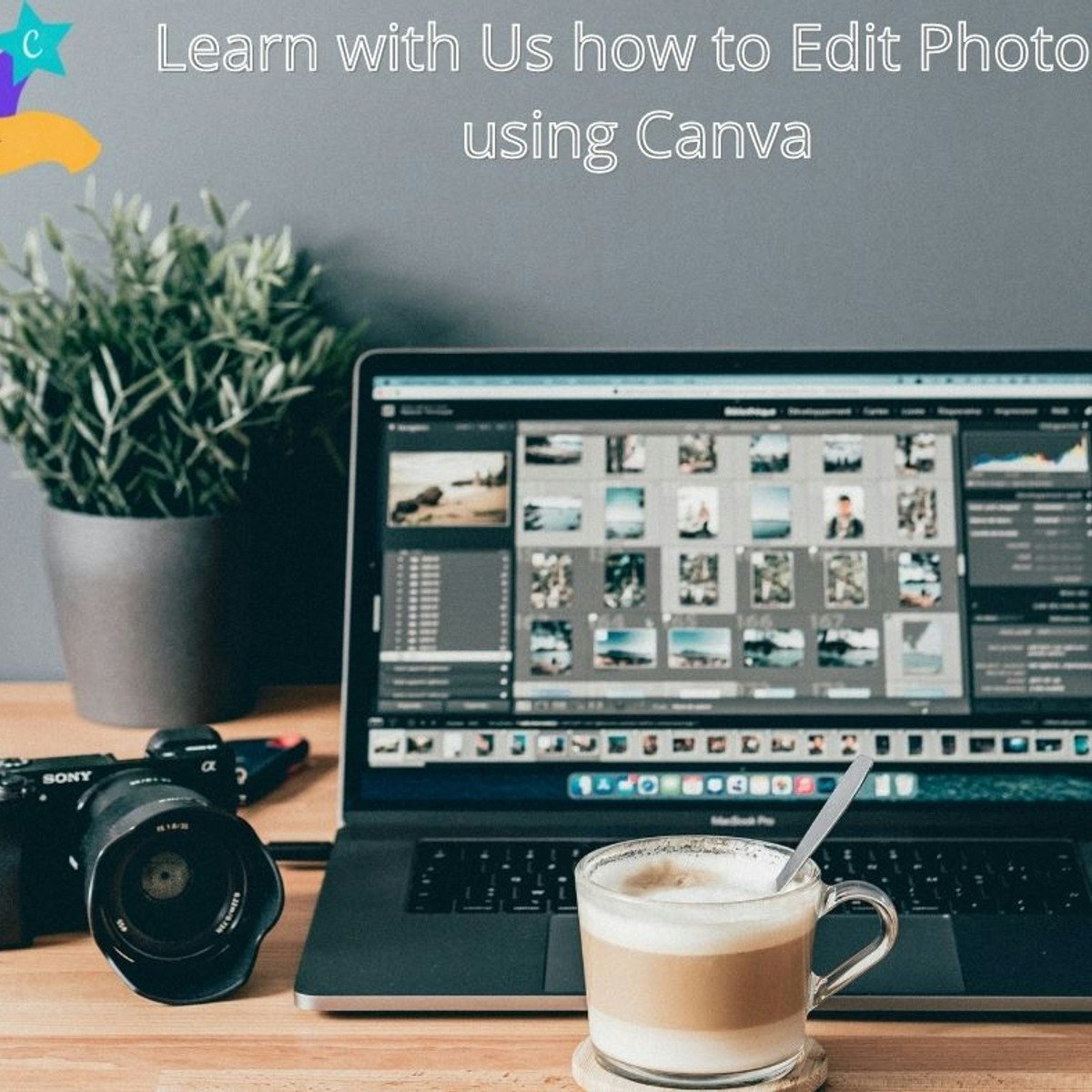
كيفية تحرير الصور لوسائل التواصل الاجتماعي باستخدام كانفا
هناك عدد كبير من البرامج والتطبيقات والمواقع التي يمكن من خلالها تحرير الصور والتعديل عليها، بعضها بدائي أولي لا يتمتع بإمكانيات كبيرة، وبعضها الآخر قد يكون أكثر تعقيدا أو أعلى إمكانيات مما يحتاجه المستخدم العادي، وفي هذه الحالات يأتي دون استخدام موقع كانفا وهو الموقع الذي استطاع أن يجمع بين أفضل ما يمكن إيجاده في أي من تطبيقات تحرير الصور الاحترافية مع تقديم هذه الإمكانيات في واجهة استخدام بسيطة وسهلة ملائمة للمبتدئين، حتى ممن لا يملكون أي خبرة سابقة في تحرير الصور. في هذه الدورة التدريبية، ستتعلم كيفية تحرير الصور لوسائل التواصل الاجتماعي باستخدام كانفا. ستصبح قادرا على إنشاء حساب مجاني، وكسْبِ معرفة حول أهم الخطوات الرئيسية لتحرير الصور على كانفا. كما ستتعلم كيفية تعديل صورك، وكيفية إنشاء كولاج الصور لنشره على وسائل التواصل الاجتماعي الخاصة بك

Laravel & PHP Mastery: Build 5 Real-World Projects
The PHP ecosystem is still one of the most important parts of the web, and Laravel has become the framework that most teams reach for. If you look at job postings or production apps, Laravel shows up everywhere. The problem is that most tutorials cover only small pieces of the puzzle - you end up with gaps, or you just copy code without understanding how everything fits together. This course takes you through the entire process of building applications the way you’d actually do it on a real project. We start from the basics, and by the time you’re done you’ll have gone through the complete cycle of building the apps. You won’t just watch me code - you’ll build five substantial projects that give you practice with the features and patterns developers really use: Projects you’ll create: • Task List: a simple app to learn the MVC structure, CRUD, forms, and validation. • Book Review System: a relational app with reviews, ratings, advanced queries, and caching. • RESTful API: a backend service with secure endpoints, authentication, and rate limiting. • Livewire Poll App: real-time UI updates with Livewire, no heavy front-end frameworks required. • Full Job Board: a larger SaaS-style application with dashboards, filtering, file uploads, and advanced authentication. Skills you’ll develop along the way: • Solid understanding of Laravel fundamentals and how to use advanced features when needed. • Writing clean, modern PHP 8 code that follows best practices. • Designing and managing databases with migrations and Eloquent ORM. • Building and securing REST APIs. • Creating interactive user interfaces with Livewire, Alpine.js, and Tailwind CSS. By the end of the course, you’ll have gone through the full application lifecycle more than once, so you’ll actually understand how things fit together. You’ll be comfortable working with Laravel and PHP in a modern workflow, and you’ll have five projects in your portfolio that show real, practical skills.

Advanced WinForms with Entity Framework
This course features Coursera Coach! A smarter way to learn with interactive, real-time conversations that help you test your knowledge, challenge assumptions, and deepen your understanding as you progress through the course. In this course, you will explore advanced concepts of Windows Forms (WinForms) application development, with a focus on implementing user management and login functionality. You’ll learn how to design secure login forms, handle user roles, and manage user permissions within your application. Additionally, you’ll dive deep into resetting passwords, managing active status, and adding new users seamlessly within your WinForms applications. As you progress, you’ll also explore the process of adding your project to GitHub for source control, ensuring that your development process remains organized and secure. This will equip you with the necessary skills to manage large-scale WinForms applications and collaborate efficiently with others. The course will use Entity Framework to integrate data-driven functionality, allowing you to manage user data with ease and integrate security features that enhance your applications. This course is ideal for developers who are already familiar with WinForms and wish to deepen their understanding of Entity Framework and advanced user management. It’s designed for those who want to build more dynamic, secure, and scalable applications with Windows Forms and modern development practices. Basic knowledge of C# and WinForms is recommended. By the end of the course, you will be able to create complex user management systems, manage roles and permissions, integrate password resets, and securely store user data using Entity Framework. You’ll also be proficient in using GitHub for version control in your projects.

The Complete Coding for Beginners Course (2026)
Do you want to learn to code in 2026, and start a developer career? Or have you already started and feel lost because you don’t really understand what you’re coding? Welcome to the most comprehensive Coding for Beginners course - Zero experience needed! At the end of the course, you will become a developer. You will be able to create your own algorithms to solve any problem, and turn those algorithms into real code (Python, …). If you have to take any coding course first, this is the ONE. → Why this coding course? Coding can be quite hard when you get started. You have to learn so many things at the same time: coding logic, syntax, developer tools, frameworks, and much more. Because of this, it’s easy to get lost. And I realized that many people start their coding journey not really knowing what to do. Then the questions appear: Should you start with a language such as Python or Java? Should you go with web development or mobile apps? Which code editing software is the best? The truth is, those questions are not that important when you get started. What’s important at the beginning is to make progress on the programming fundamentals. With those fundamentals, everything else - for example programming languages - will be easier to learn. And you will be able to truly kick-start your developer career. It’s not just about the syntax of a language. Let’s say you learn the Python language. Well, you might learn the syntax, but then, how does this teach you how to code? Coding is not about syntax, coding is about solving real problems. That's why in this course, I focus on this problem-solving part. To give you the thinking tools you really need to become a great developer. Once you have this training, you can then expand on it to learn anything else. Now, how to learn those fundamentals the right way? That’s where things get complicated. When searching on the Internet, I didn’t find a lot of resources talking about this in a clear way, without focusing so much on one particular language. And that’s why I’ve created this course, which is the one I wish I had when I got started. → How will you learn to code? I’ve been a beginner myself, and I first learned the coding fundamentals. Today, I know this was the right way, although how it was taught in school was a bit boring. From this experience, and after many years coding and teaching coding, I’ve come up with a simplified approach to code that is going to give you not only the fundamentals you need, but that is also fun, step by step, and project-based. You will build real applications right from the start. In this course, I’m deconstructing programming by removing everything you don’t need at the beginning. I will teach you the very basics without any distraction. And then, little by little, we will add more things, until you reach a point when you can call yourself a developer. The method I use is simple, but efficient: • WHY: Focus on the “why” first so you understand what you’re doing. • HANDS-ON lessons to learn in a better way. • STEP BY STEP: Every lesson is built on top of previous ones. • PRACTICE with many activities and projects. • NO COPY AND PASTE!!! I write all the code from scratch. This teaching method actually works: I have already taught 100 000+ students in 150 countries, with 25 000+ reviews over 4.7/5. And don’t take my word for it - here are some reviews from my students on Udemy: “Simple and great course, learning while doing.” — Jose Almeida “Halfway and still loving this course. The instructor is clear and teaches in such a way that you actually learn how to navigate, conceptualize, and write your own code rather than teaching from premade code.” — Westley Bolton “Really happy with the course. Exactly what I paid for and am pretty happy with my progress. I am getting exactly what is promised. Edouard is an excellent teacher.” — Jihad Anbous “Really step by step. It’s what I was needing. Extremely clear, with no blind spots in the lectures. Definitely worth it.” — Nicolas Hernandez → What will you do in the course? You will first learn about the programming process - how to: • Define what problem you’re really trying to solve. • Create an algorithm to solve that problem. • Implement the algorithm with code (Scratch and Python). Then we will apply this coding process in many activities and projects, step by step, while learning the coding fundamentals: variables, conditions, lists, loops, functions, libraries, etc. For each coding fundamentals, you will get: • Real life analogy to explain the “why”. • Flowchart programming to create algorithms using this concept. • Block programming to start implementing the algorithm with code (in an easy way). • Text programming with Python (“real” programming). • An activity directly related to the concept you’ve just learned. After each coding concept, you will create a complete project to build a real app, which will allow you to consolidate your knowledge by practicing on the new concept you’ve discovered, combined with all the previous concepts you’ve learned in the course. → Start to code Now! So, do you want to finally become a developer and understand what you’re doing? Enroll in this course and start your programming journey TODAY! After this course, you will feel much more confident when writing code. You will really understand the “why” behind what you’re doing, and also you will have a much better idea of what you can do next. That’s not all: right from the start you will get the best practices I personally use when coding. My goal is not to make you become good, I want to make you become great at what you do. You also get a 30 days money-back guarantee if you’re not fully satisfied. So just get started now, and if I don’t deliver on what I said, feel free to get the refund without having to justify yourself. No risk here, only a great opportunity to learn a life-changing skill. This course is eligible for the Codestars Certificate Authority (CCA) certificate. Students can take the official exam via codestarscom, and those who pass the quiz will receive their CCA certificate. (more details in the course!) See you in the course! :)

Build and Implement Microservices Patterns
Do you think an e-commerce application can be created as one large application? Imagine there is an ongoing sale, or some new features are to be added. How, according to you are the changes made visible on the application? Microservices is a cloud-based architectural approach. It contains loosely coupled, and independently deployable smaller services that are put together cohesively to develop and work on larger, and more complex applications. This approach is being increasing recognized among the business leaders of today, as it helps them structure their operation model and manage their teams according to their requirements. This course will enable you to create an application using multiple microservices. It will provide you hands-on practice on building microservices using Node.js and help establish communication between the microservices.

Learn Salesforce OmniStudio | Vlocity
April - 2024 Updates- We’re excited to announce a new section OmniStudio For LWC Developers is live on your OmniStudio Course. Videos are designed especially for salesforce LWC developers! Whether you’re a seasoned coder or just starting your journey in the Salesforce ecosystem, these videos are designed to enhance your skills and empower you to create dynamic and interactive experiences. What’s Covered: • Introduction to Flex Cards: Understand the basics of Flex Cards, their structure, and how they fit into the Lightning Experience. • Use Image and Pass Data From Parent Flex Card to Child Flex Cards: Learn how to customize Flex Cards , and pass data from parent Flex Cards to Child Flex Cards. • Use Of Block, Text and Data Binding: Explore how to bind data dynamically to Flex Cards, making them responsive to changes in your Flex Data data. • Use Of Icon, Style, Version, and other Input elements: Discover how to use Icons, add Style and use of Versions and other interactive elements to your Flex Cards. • Send Data from OS to Flex Cards - Using Parent Attribute: Dive into advanced topics, including Data Transfer from Omniscript to Flex Card Using Parent Attribute. • Send Data from OS to Flex Cards - Using Parent Data and records: Send Data the complete Omniscript JSON to your Flex Card and override Flex Cards Data Source. • Send Data from OS to Flex Cards - Using record-Id: Passing the current record ID from Omniscript to your Flex Cards. • Send and Receive Data From OS to LWC Use Of Dataraptor Transform: Send Data from Omniscript to your custom LWC Component. This course is mainly for salesforce professionals who want to switch careers in salesforce vlocity. Salesforce Vlocity is one of the trading technology If you are looking for an extensive training program that helps you get well-versed with the world of Salesforce and Vlocity, you have landed just on the right page! SFDCGYM’s training sessions allow you to master the different Vlocity domains and equip you with skills that would land you jobs in reputed enterprises. If you are a fresher and have little to no knowledge about Vlocity, let us brief you about the same. What Is Vlocity? Vlocity is a cloud-based enterprise-level business management software developed natively on Salesforce. It provides some of the biggest companies across the globe with industry-specific solutions and software applications (web and mobile) for streamlining their processes. Being industry-specific, Vlocity allows users to develop applications and solutions that deal with the aspects unique to a particular industry. It takes into consideration the laws and standards applying to a specific industry while designing solutions. Owing to the pre-built nature of Vlocity solutions, it helps organizations save a considerable amount of money on development and configuration. Working with Vlocity allows you to cater to a number of industries, including: • Energy and utilities • Mass media • Health • Insurance • Education As the solutions are built natively on Salesforce, it allows users to innovate their offerings and cater to the specific needs of their customers. Benefits Of Getting Trained In Vlocity Integration With Salesforce The biggest advantage of getting trained in Vlocity is its integration with Salesforce. This helps users in undertaking complete, fast, and precise interactions over multiple communication channels. Seamless Mobile Customization Vlocity allows users to develop applications with seamless mobile customization. This helps users in working on the go and provides them with the utmost flexibility in work. Omnichannel Support Vlocity provides seamless and omnichannel support to businesses through responsive applications. Right from call centers and retail locations to reseller channels and indirect partner channels, Vlocity applications help users connect with their customers across multiple channels. Moreover, this allows organizations to provide targeted offers to their customers for up-selling and cross-selling their offerings. Extensive CRM Analytics As they are built on Salesforce, Vlocity applications provide users with seamless and extensive CRM analytics for customer service, marketing, sales, and community. Vlocity provides companies with powerful analytics features without imitating the features of Salesforce. Increased Focus On The Customers Vlocity allows users to have more focus on the customers and less focus on the software itself. This helps organizations in building personalized buying experiences for their customers and developing healthy relations with them. Use Of Artificial Intelligence The functionality of Vlocity applications can be leveraged by incorporating artificial intelligence and machine learning. This allows users to obtain valuable insights about the data managed by the applications and undertake predictive analytics to improve their processes. Smart Integrations Vlocity applications can be readily integrated with suitable third-party applications and solutions to provide a unified interface to the users. This prevents them from switching platforms for undertaking specific processes helps them reconcile their data between the integrated applications. Low-code Development Vlocity applications do not require the developers to write extensive lines of code and spend a considerable amount of time in development. The low-code development ensures that robust applications are built with minimal code without compromising the quality of the applications.
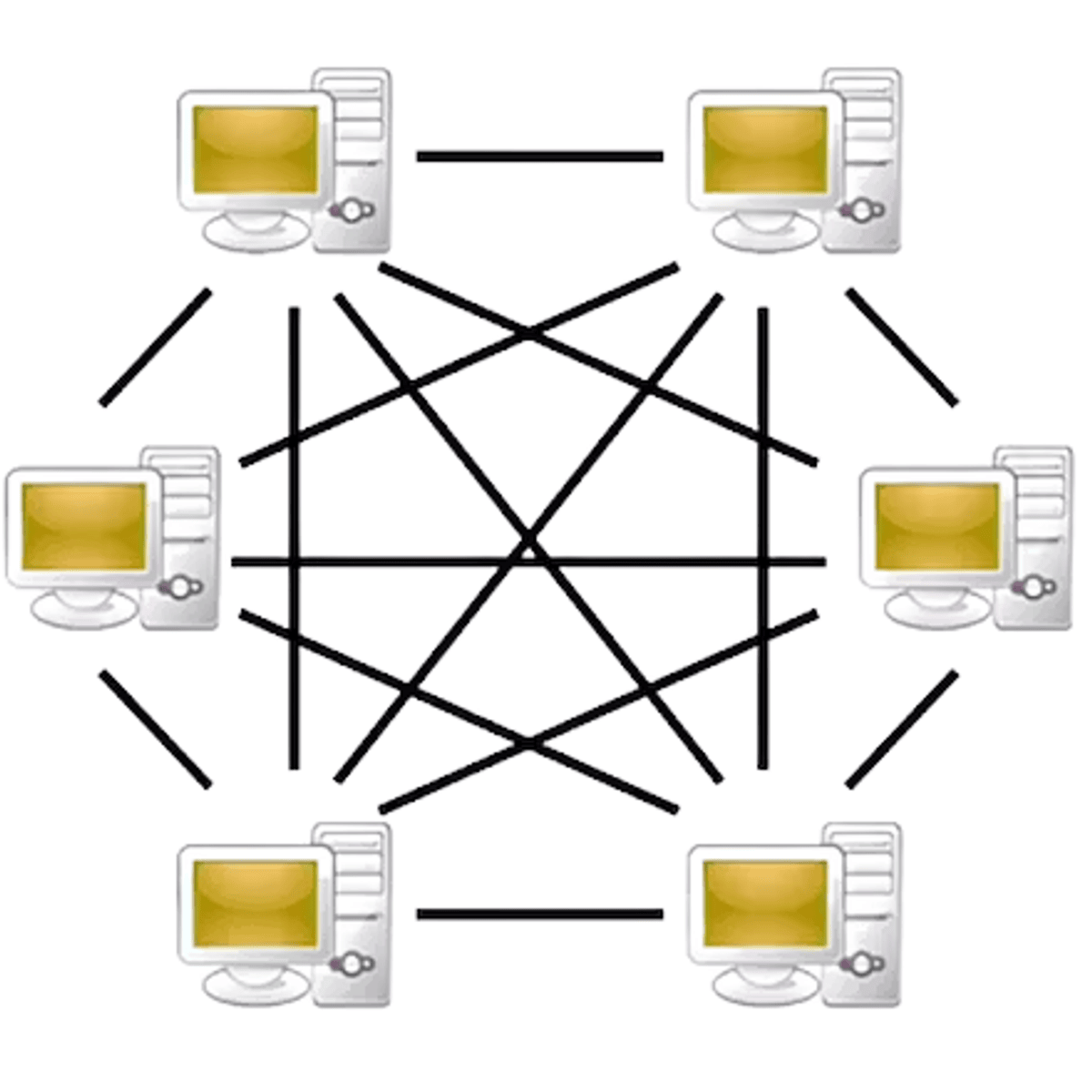
Packet Switching Networks and Algorithms
In this course, we deal with the general issues regarding packet switching networks. We discuss packet networks from two perspectives. One perspective involves external view of the network, and is concerned with services that the network provides to the transport layer that operates above it at the end systems. The second perspective is concerned with the internal operation of a network, including approaches directing information across the network, addressing and routing procedures, as well as congestion control inside the network.

Generative AI for NodeJs: OpenAI, LangChain - TypeScript
It's time to add AI to your JavaScript/TypeScript app! AI for NodeJs devs with OpenAI and LangChain is an advanced course designed to empower developers with the knowledge and skills to integrate artificial intelligence (AI) capabilities into Node.js applications. This course is tailored for developers who are proficient in Node.js and wish to explore the fascinating realm of AI-driven solutions. Throughout the course, participants will delve into various AI concepts, algorithms, and frameworks, focusing on their practical implementation within Node.js environments. Key topics covered in this course include: • Introduction to AI and its applications in Node.js • OpenAI setup for basic apps • Understanding models, tokens and roles • OpenAI request parameters Practice apps: • ChatGPT clone in the console • App features: history, context and token limit • OpenAI tools app • OpenAI tools parameters • Generative AI with tools Key topics for AI development: • Embeddings - presentation, persistence, load • Similarity search using cosine or dot product Vector databases: • Introduction and setup • ChromaDB setup • Building a ChromaDB server with Docker • Building a ChromaDB client with NodeJS • Pinecone Vector database setup • Pinecone indexes and index operations • Building apps backed by Pinecone • Generative AI with Pinecone Dedicated section for LangChain, the most popular LLM apps wrapper: • LangChain introduction and setup • LangChain prompt templates • LangChain output parsers • Building RAG applications with LangChain • Web and file LangChain loaders • Generative AI with LangChain What if you want to run the AI models yourself on your own machine? This is possible with open source models! We will explore Hugging face and it's APIs and open source models for local LLM apps: • Local embeddings • Translation models • Text models • Voice models • Image models Since all the used libraries are build with TypeScript and offer great TS support, the course also contains a TypeScript recap section: • TypeScript type aliases • The TypeScript compiler • Functions, special types, any and unknown • Enums and the never type • TypeScript generics • TypeScript classes • ...and many more features. Course advantages: • Beyond the basics - after finish, you can directly use this knowledge into production code • Practical knowledge - presentations are kept to a minimum, we focus on what is really important • Logical and flexible structure - take the course at your own pace • Fast paced, concise, most typing cut out - focus on explanations - respect for your time • Big font, dark background, full HD content, this way it is readable even on a small screen or even tablet. • Lifetime access • Certificate of completion to present to your current or prospective employer • Q&A active instructor Go beyond the theory and learn from an active instructor, aligned with today's programming demands! Whether you're a seasoned NodeJs developer looking to expand your skill set or a newcomer interested in harnessing the power of AI, AI for NodeJS offers an exciting journey into the intersection of artificial intelligence and modern web development. Enroll and unlock the potential to create intelligent, cutting-edge applications with NodeJs!

Python Basics: Selection and Iteration
Code and run your first python program in minutes without installing anything! This course is designed for learners with no coding experience, providing a solid foundation of not just python, but core Computer Science topics that can be transferred to other languages. The modules in this course cover printing, operators, iteration (i.e., loops), and selection (i.e., conditionals). To allow for a truly hands-on, self-paced learning experience, this course is video-free. Assignments contain short explanations with images and runnable code examples with suggested edits to explore code examples further, building a deeper understanding by doing. You'll benefit from instant feedback from a variety of assessment items along the way, gently progressing from quick understanding checks (multiple choice, fill in the blank, and un-scrambling code blocks) to small, approachable coding exercises that take minutes instead of hours.

Claude Code : Agent Skills, Agent Loop, Code Agents, MCP
“This course contains the use of artificial intelligence to give better experience on a better voice quality” July 4, 2026 - Agent Loop June 26, 2026 - Agent Skills Course Overview Master Claude Code, Skills, Agent Loop, AI Subagents, MCP Servers, Slash Commands, Hooks, and GitHub Actions to build next-generation AI-augmented developer workflows. This course is your complete guide to the future of software engineering—where AI works alongside developers through automated pipelines, intelligent context handling, and well-orchestrated subagent systems. This hands-on program teaches you how Claude Code transforms development productivity by acting as an AI teammate capable of executing workflows, running MCP servers, generating code, reviewing API designs, maintaining memory, and performing GitHub-integrated automations. Whether you’re a software engineer, DevOps professional, QA engineer, or an AI enthusiast, this course equips you with the skills to build enterprise-grade AI workflows using Claude Code’s cutting-edge capabilities. Learning Objectives By the end of this course, students will be able to: • Understand Claude Code: Explain how Claude Code functions as both an MCP server and client, and its role in AI-assisted development • Agent Skills : Give your agents new abilities in minutes. Package expertise, workflows, and tools into reusable Skills — no rebuilding from scratch every time. • The agent loop : The five-step cycle — receive, evaluate, execute, repeat, return — that powers every Claude Code session, running once for a quick lookup or hundreds of times for a complex refactor. It's the same loop exposed directly through the Claude Agent SDK, giving you full visibility and control over how Claude reasons, calls tools, and returns results. • Implement Subagent Systems: Design and deploy specialized AI subagents for different aspects of the development lifecycle. We will go over understanding how Subagents work and what are their benefits • Slash Commands: Developers trigger powerful coding, debugging, and automation actions directly from chat. They streamline workflows by invoking predefined tools, hooks, and GitHub Action integrations with a simple command. • Workflow: An automated, multi-step process that Claude can run on your codebase—such as generating code, refactoring, testing, or syncing changes—based on defined steps in your project configuration. It acts like a programmable pipeline that Claude executes deterministically, ensuring repeatable and reliable automation triggered by slash commands or file changes. • Configure MCP Servers: We will take a deep dive on MCP server. Set up and integrate Model Context Protocol servers to extend Claude Code's capabilities. We will integrate with the MCP servers • Memory Systems: Create and maintain hierarchical memory structures that enhance AI assistance quality • Apply Best Practices: Implement enterprise-ready workflows using AI subagents while maintaining security and compliance standards SECTION 1 — Introduction Learn installation, extension setup, and create your first “Hello World” application inside the IDE. SECTION 2 — Claude Architecture • Learn about Claude Code Architecture and how claude interacts with different components SECTION 3 — Introduction to Claude Skills • Learn what Claude Skills are, how they load efficiently using a three-level filesystem model, and how they compare to MCP servers and Agents. • By the end you will have your first working Skill installed and triggering correctly in Claude Code or claude ai. SECTION 4 — Building Custom Skills • Go deep on authorship — the exact YAML frontmatter rules, writing descriptions that trigger reliably using the WHAT + WHEN formula, and structuring the SKILL body using template, examples, and workflow patterns. • Covers installing Skills across claude ai, Claude Code, and the API, plus a hands-on walkthrough of Anthropic's pre-built Skills. SECTION 5 - The Agent Loop: How Claude Code Actually Thinks and Acts • The 5-step loop behind every Claude Code session, and the 5 message types it streams back • How to control cost and depth with turns, budget, and effort settings • How context accumulates and compacts over long sessions • A hands-on lab building and running your own agent loop script SECTION 6 & 7 — Slash Commands Understand Slash Command structure, frontmatter definitions, and backend logic. Learn how to create custom commands powered by Bash scripts to automate: • Code refactoring • Git commits & version control • MCP integration • Multi-step workflows Hands-on labs reinforce practical usage. SECTION 8 — Subagents: General Purpose Dive deep into the Subagent You’ll build intelligent multi-agent systems that perform tasks like: • Travel planning • Trip scheduling • Restaurant recommendations • Parallel & sequential orchestration These modules teach AI planning and agent chaining. SECTION 9 — Subagents for Developers Use Subagents to accelerate real engineering workflows: API review assistants, documentation reviewers, code auditors, and more. Perfect for teams adopting AI pair-programming at scale. SECTION 10 — Workflows with Subagents + Slash Commands Build hybrid pipelines combining Slash Commands and Subagents. Create deterministic workflows that Claude executes reliably for: • Code changes • Commit flows • Automated testing • Structured build steps SECTION 11 — Claude Code Memory (Theory + Hands-On) Master Claude’s hierarchical memory system, including: • Context preservation • User memory • Project root memory • Subdirectory memory • Memory priority • Memory access commands This section teaches persistent multi-file context handling—critical for large projects. SECTION 12 — All About MCP A full deep dive into Model Context Protocol, covering: • MCP • Server components • Transports • End-to-end data flow You will clearly understand how tools communicate with Claude. SECTION 13 — Claude Code with MCP Servers Integrate powerful servers: • Puppeteer MCP • Sequential Thinking MCP • GitHub MCP (with and without authentication) Learn how MCP extends Claude Code into a full automation platform. • SECTION 13 — Hooks • Type Script formatting • Activity logging • Execution safeguards • Multi-step sequences • Debugging failing Hooks SECTION 12 — Claude Code with GitHub Actions • Pull Request creation • Bug fixing • Code review workflows • Repo updates • Continuous automation pipelines

Introducción al control de versiones con Git y GitHub
Bienvenidos al curso Introducción al Control de Versiones con Git y GitHub. Los sistemas de control de versiones son herramientas fundamentales para poder gestionar el código fuente de las aplicaciones, todo desarrollador debe conocer para qué se usan y cómo se usan. En este curso aprenderás a utilizar el sistema de control de versiones más usado en el mundo Git y a colaborar en repositorios remotos con GitHub. A lo largo de este curso tendrás la oportunidad no solo de estudiar los conceptos de control de versiones sino también, a través de tutoriales y de talleres prácticos, de adquirir las habilidades necesarias para gestionar tus aplicaciones y las de tus equipos con estas herramientas. En los talleres podrás interactuar con un robot que te permitirá resolver situaciones de uso de Git y GitHub que se presentan en el día a día de un desarrollador

Kotlin 2026: The Mega Course – All-in-One
Hello everyone, and welcome to the Complete Kotlin Course: Zero to Job-Ready! My name is Andrey Sumin. This course is for anyone who wants to learn Kotlin—a modern language used to build Android apps, create server-side applications, and work on multiplatform projects. It’s designed so you can start from scratch, even with no prior programming experience. Not just the basics—we’ll dive into the language’s nuances and practice hands-on, so by the end you’ll be fully prepared for a Kotlin interview. Throughout the course, you’ll complete practical assignments and projects that reinforce each topic and help you build real development skills. I wish you success in mastering Kotlin—may you gain new knowledge and the inspiration to conquer the world of programming! See you in the course! Why Kotlin? Because it’s a modern language with official support from Google. Designed with lessons from dozens of other languages, Kotlin keeps the best practices and removes unnecessary complexity. Code is shorter and clearer, and writing in Kotlin is fast and convenient. Built-in null-safety and a modern concurrency model with coroutines improve application stability and safety. Plus, it’s fully compatible with Java and the JVM ecosystem, so you can leverage existing libraries and familiar tools without extra hurdles. Most importantly, Kotlin has strong prospects: active development, broad industry support, and high market demand.

Crafting User Interface - End to End Web Development
This course is the first step in the End-to-End Web Development specialization, focusing on mastering the art of creating engaging and responsive user interfaces (UIs). You will learn the fundamentals of HTML, CSS, and JavaScript, as well as explore advanced topics such as responsive design, UI design principles, CSS frameworks, and JavaScript front-end frameworks like React. By the end of this course, you will have the skills to create intuitive, professional-grade web interfaces that adapt seamlessly to various devices and screen sizes, ensuring optimal user experiences. Module 1: Introduction to Web Development and User Interfaces In this module, you will be introduced to the core concepts of web development and user interfaces. You will gain an understanding of the differences between front-end and back-end development, the role of user interfaces in web applications, and the fundamental tools required for web development. Module 2: Advanced HTML and CSS Techniques This module dives into more advanced HTML and CSS techniques, focusing on how to create structured and accessible HTML pages. You will also learn to build responsive, flexible layouts using CSS Flexbox, Grid, and media queries, enabling your web pages to adapt to various devices and screen sizes. Module 3: JavaScript and Front-End Frameworks In this module, you’ll move into the world of JavaScript to make your web pages dynamic and interactive. You’ll cover the basics of JavaScript syntax and features, and progress to more advanced topics like DOM manipulation, ES6 features, and asynchronous JavaScript. The module also introduces front-end frameworks, focusing on React for creating scalable and maintainable user interfaces. Course Learning Objectives: Design aesthetically pleasing and responsive user interfaces using HTML, CSS, and JavaScript. Apply advanced HTML5 and CSS3 techniques to create structured, accessible, and adaptive web layouts. Develop dynamic web interactions through JavaScript, including DOM manipulation and event handling. Implement front-end frameworks like React to build scalable, interactive web applications. Prerequisites: Basic understanding of web browsers and how websites function. No prior coding experience is required, but basic familiarity with HTML/CSS is helpful. Note - This is the Course 1 of Specialisation (series of courses) on Crafting User Interface - End to End Web Development. Disclaimer: This is an independent educational resource created by Board Infinity for informational and educational purposes only. This course is not affiliated with, endorsed by, sponsored by, or officially associated with any company, organization, or certification body unless explicitly stated. The content provided is based on industry knowledge and best practices but does not constitute official training material for any specific employer or certification program. All company names, trademarks, service marks, and logos referenced are the property of their respective owners and are used solely for educational identification and comparison purposes.

Intro to AI Agents: Build an Army of Digital Workers with AI
Dive into the forefront of AI innovation with our comprehensive course, "Mastering AI Agents with Advanced Tools." This cutting-edge program is designed for individuals eager to explore the vast capabilities of AI agents and harness the power of sophisticated tools such as CrewAI, AutoGen, AutoGPT, AutoDev, Devin AI, Open Interpreter Light 01, Swarm of Agents, PerplexityAI, and AutoGen Studio. Starting with the basics, you'll gain a solid foundation in the principles of AI agents—understanding their function, the mechanisms behind their decision-making processes, and their applications across various industries. This initial stage is crucial for beginners and experts alike, providing the necessary groundwork before delving into more complex concepts. As you progress, each module introduces you to a different tool, unraveling its unique features, practical applications, and integration capabilities. Through a blend of theoretical knowledge and hands-on exercises, you'll learn how to leverage these tools to automate tasks, generate content, develop AI applications, and enhance agent collaboration and intelligence. The course offers an in-depth look at how these tools are shaping the future of AI technology, including: • CrewAI: Discover how to orchestrate autonomous AI agents for complex tasks, emphasizing collaboration and task delegation. • AutoGen & Related Tools: Explore the development of LLM applications and conversational agents, enhancing your AI projects with customizable and conversable agents. • Advanced Applications: Dive into the functionalities of Devin AI, Open Interpreter Light 01, and others, learning to integrate these advanced systems into your AI solutions. With real-world case studies and practical projects, you'll apply what you've learned in actual scenarios, preparing you for the challenges and opportunities in the AI field. By the end of this course, you will have a comprehensive understanding of AI agents and the proficiency to utilize advanced AI tools in your projects or workplace, pushing the boundaries of what's possible with AI technology. Enroll now in "Mastering AI Agents with Advanced Tools" and embark on a journey to the cutting edge of artificial intelligence, unlocking new possibilities and transforming the landscape of automation and AI development.

UX for Augmented Reality: An Introduction for Designers
Design immersive experiences with confidence in UX for Augmented Reality: An Introduction for Designers by Nuria Quero. By the end of this course, you will be able to define key AR concepts and device types, apply core UX principles such as presence, agency, and affordance to 3D environments, and outline a clear UX strategy for an AR brief—including interaction, onboarding, and basic user testing considerations. This course demystifies augmented reality by bringing scattered information into one structured journey. You’ll move from understanding what AR is and how it works, into the foundations of UX for AR, and finally into designing within 3D space—exploring field of view, 2D vs. 3D interfaces, interaction patterns, and error management. Whether you’re a UX/UI designer curious about immersive tech, a product designer exploring spatial experiences, or a creative looking to enter AR, this class will help you approach projects with clarity and confidence. To be successful, you should have a basic understanding of UX design principles and digital product workflows. No prior AR experience is required—just curiosity and a willingness to think beyond the screen.

The C++23 Masterclass : From Fundamentals to Advanced
Welcome to the C++ 23 Masterclass! A course designed to teach you cutting edge modern C++ from the absolute beginning all the way to very advanced topics, the topics you need in areas where C++ is used massively in modern times. Want to be a confident game developer? High performance applications in the financial sector, how about powerful software modules on top of which server systems, network infrastructure, database systems, even operating systems themselves run on top of? Well C++ is the dominant language used in these areas and many more! C++ is the programming language even other programming languages and technologies like NodeJS, PHP, Java, JavaScript and many more are written in. By learning modern C++, you will be setting yourself up for success in writing software that runs devices ranging from bare metal embedded devices, to mainstream electronic tech products like fridges, toasters, to networking infrastructure like routers and switches, all the way to power plants, manufacturing facilities and medical equipment. C++ is simply everywhere! This course was carefully designed in a way that it will make you ready to take on technologies and industries where C++ is widely used, by teaching you Modern C++ the way it is used in industry, and you will learn and master how to use shiny new features from the latest C++ standard (C++20) like ranges, modules coroutines, concepts, the three way comparison infrastructure and many more features spread out through out chapters and lectures in the course. This course will teach you modern C++ from the absolute beginning all the way to a point where you can use advanced features like function templates, class templates, polymorphism, move semantics, functors , callbacks, STL container, iterators and algorithms, I will even show you how to build iterators for your own collection types, giving you the tools to plug into the infrastructure provided by the C++ standard library to tune it to your own needs. Here are some of the things you'll get to master through this course : • C++23 • C++20 • C++17 • C++14 • C++11 • C++98 • Ranges • Modules • Concepts • Coroutines • Classes • Variables and data types • Functions • Inheritance • Polymorphism • Const correctness • Static variables • Storage duration • Linkage • One Definition rule • Operator Overloading • Three way comparison infrastructure • Function like entities • Move semantics • STL containers, iterators and algorithms • And much more! By the time you're done with the course, you will be ready to use modern C++ with standards C++ 11,C++14, C++17, C++20 and C++ 23, but you will also have the tools necessary to read, understand and work with older C++ code bases with C++98 and below out there, making your C++ skills valuable across a wide range of areas regardless of the C++ standard in use. The course was designed with complete beginners in mind. So if you have never programmed a computer before, don't worry, I will be with you every step of the way, showing you around, teaching you the tools, constructs and mechanisms necessary to build real C++ projects. Existing C++ developers or experienced developers from other programming languages will also get a lot of value from the course as we cover advanced topics not covered in other online courses and books as far as I can tell. These include things like building your own iterators, callback functions and many more. Now C++ is a very powerful language used by big companies like Microsoft, Apple, Google, NASA, and many more across a wide range of products and I can talk about it all day. I am privileged to have been using it in my daily work for the last decade and I am excited to share my accumulated knowledge with you in this course. If you are serious about learning and mastering cutting edge modern C++, then this course is designed with the skill, the patience and the depth needed to get there as efficiently as possible. Please check some of the preview lectures, and lets get you started with modern C++ development, using C++ 23 as our base standard.

Generative AI Course in Software Testing and Documentation
This Generative AI in Software Testing, Security, and Documentation course equips you with the skills to automate critical stages of the software development lifecycle. Begin with AI-powered software testing—learn how to generate test cases automatically and detect code vulnerabilities across multiple programming languages. Understand how AI helps identify and fix security flaws in real time. Progress to documentation automation using Generative AI tools to create accurate, consistent project and API documentation. Explore how AI supports end-to-end documentation for full-stack applications with hands-on demos. To be successful in this course, you should have a basic understanding of software development practices, programming concepts, and technical documentation. By the end of this course, you will be able to: - Generate test cases and identify vulnerabilities using GenAI - Apply AI to fix security issues across diverse codebases - Automate API and project documentation with AI tools - Create full-stack software documentation using GenAI workflows Ideal for QA engineers, developers, and technical writers.

10 Days of No Code Artificial Intelligence Bootcamp
The no-code AI revolution is here! Do you have what it takes to leverage this new wave of code-friendly tools paving the way for the future of AI? Businesses of all sizes want to implement the power of Machine Learning and AI, but the barriers to entry are high. That's where no-code AI/ML tools are changing the game. From fast implementation to lower costs of development and ease of use, departments across healthcare, finance, marketing and more are looking to no-code solutions to deliver impactful solutions. But groundbreaking as they are, they're nothing without talent like YOU calling the shots... • Do you want to leverage machine learning and AI but feel intimidated by the complex coding involved? • Do you want to master some of the top no-code tools on the market? • Do you want to implement ML and AI solutions in your business, but don't have the academic background to understand? Yes?! Then this course is for you. Master the top tools on the market and start solving practical industry scenarios when you enroll in our new course: 10 Days of No Code Artificial Intelligence Bootcamp Join our best-selling instructor Dr. Ryan Ahmed and learn how to build, train, test, and deploy models that solve 10 practical challenges across finance, human resources, business, and more, using these state-of-the-art tools: • Google Teachable Machine • Google TensorFlow Playground • DataRobot • AWS SageMaker Autopilot • Google Vertex AI • Tensorspace.JS The best part? You'll be done in 10 days or less! Take a look at the 10 professional projects you will complete: Day #1: Develop an AI model to classify fashion elements using Google Teachable Machines. Day #2: Deep-dive into AI technicalities by tweaking hyperparameters, epochs, and network architecture. Day #3: Build, train, test, and deploy an AI model to detect and classify face masks using Google Teachable Machines. Day #4: Visualize state-of-the-art AI models using Tensorspace.JS, Google Tensorflow Playground, and Ryerson 3D CNN Visualizations. Day #5: Develop a machine learning model to predict used car prices using DataRobot. Day #6: Develop an AI model to predict employee attrition rate using DataRobot. Day #7: Develop an AI model to detect Diabetic Retinopathy Disease using DataRobot Day #8: Build, train, test, and deploy an AI model to predict customer sentiment from text. Day #9: Develop an AI to predict credit card default using AWS SageMaker Autopilot. Day #10: Develop an AI model to predict university admission using Google Vertex AI. Ready to challenge your AI skills in new and exciting ways? Enroll now and experience the power of no-code AI tools.

MCP Developer Blueprint: AI-Powered Automation & Integration
This course features Coursera Coach! A smarter way to learn with interactive, real-time conversations that help you test your knowledge, challenge assumptions, and deepen your understanding as you progress through the course. Unlock the potential of AI-powered automation and integration with the MCP Developer Blueprint. This course offers a comprehensive guide to leveraging the Model Context Protocol (MCP) in real-world scenarios, helping you master automation, integration, and AI system enhancement. You will learn how to apply MCP in practical projects, setting up your environment, and tackling hands-on challenges that simulate real-life use cases. As you progress through the course, you will explore the architecture behind MCP, from its core concepts to the integration with popular tools like GitHub, Twitter, Gmail, and Zapier. You’ll start by gaining an understanding of MCP, then build simple projects such as the "Hello World" tool and a Weather API, before advancing to more complex integrations using Docker to secure and containerize your MCP server. Whether you're a developer looking to enhance your automation workflows or an enthusiast eager to explore AI system integration, this course provides the practical knowledge needed to take your skills to the next level. No prior knowledge of MCP is required, though familiarity with basic programming and APIs will be helpful. By the end of the course, you will be able to integrate MCP with various tools, automate tasks, manage GitHub repositories, build secure AI solutions, and confidently deploy your projects.

.NET 8 Microservices: DDD, CQRS, Vertical/Clean Architecture
This course comes from a live github aspnetrun microservices repository which verified from community with 3000+ stars and 1600+ forks. You will learn how to build Microservices on .Net platforms which used Asp.Net Web API, Docker, RabbitMQ, MassTransit, Grpc, Yarp API Gateway, PostgreSQL, Redis, SQLite, SqlServer, Marten, Entity Framework Core, CQRS, MediatR, DDD, Vertical and Clean Architecture implementation using latest codes and best practices of .NET 8 on cloud-native environments. You will develop e-commerce modules over Product, Basket, Discount and Ordering microservices with NoSQL (PostgreSQL DocumentDB, Redis) and Relational databases (SQLite, Sql Server) with communicating over RabbitMQ Event Driven Communication and using Yarp API Gateway. You can find Microservices Architecture and Step by Step Implementation on .NET which step by step developing this course with extensive explanations and details. Along with this you’ll develop following microservices and items: Catalog microservice which includes; • ASP.NET Core Minimal APIs and latest features of .NET 8 and C# 12 • Vertical Slice Architecture implementation with Feature folders • CQRS implementation using MediatR library • CQRS Validation Pipeline Behaviours with MediatR and FluentValidation • Marten library for .NET Transactional Document DB on PostgreSQL • Carter library for Minimal API endpoint definition • Cross-cutting concerns Logging, global Exception Handling and Health Checks • Dockerfile and docker-compose file for running Multi-container in Docker environment Basket microservice which includes; • ASP.NET 8 Web API application, Following REST API principles, CRUD operations • Redis as a Distributed Cache over basketdb • Implements Proxy, Decorator and Cache-aside Design Patterns • Consume Discount gRPC Service for inter-service sync communication to calculate product final price • Publish BasketCheckout Queue with using MassTransit and RabbitMQ Discount microservice which includes; • ASP.NET gRPC Server application • Build a Highly Performant inter-service gRPC Communication with Basket Microservice • Exposing gRPC Services with creating Protobuf messages • Entity Framework Core ORM - SQLite Data Provider and Migrations • SQLite database connection and containerization Microservices Communication • Sync inter-service gRPC Communication • Async Microservices Communication with RabbitMQ Message-Broker Service • Using RabbitMQ Publish/Subscribe Topic Exchange Model • Using MassTransit for abstraction over RabbitMQ Message-Broker system • Publishing BasketCheckout event queue from Basket microservices and Subscribing this event from Ordering microservices • Create RabbitMQ EventBus.Messages library and add references Microservices Ordering Microservice • Implementing DDD, CQRS, and Clean Architecture with using Best Practices • Developing CQRS with using MediatR, FluentValidation and Mapster packages • Use Domain Events & Integration Events • Entity Framework Core Code-First Approach, Migrations, DDD Entity Configurations • Consuming RabbitMQ BasketCheckout event queue with using MassTransit-RabbitMQ Configuration • SqlServer database connection and containerization • Using Entity Framework Core ORM and auto migrate to SqlServer when application startup Yarp API Gateway Microservice • Implement API Gateways with Yarp Reverse Proxy applying Gateway Routing Pattern • Yarp Reverse Proxy Configuration; Route, Cluster, Path, Transform, Destinations • Rate Limiting with FixedWindowLimiter on Yarp Reverse Proxy Configuration • Sample microservices/containers to reroute through the API Gateways WebUI ShoppingApp Microservice • ASP.NET Core Web Application with Bootstrap 4 and Razor template • Consume YarpApiGateway APIs using Refit Library with Generated HttpClientFactory • ASPNET Core Razor Tools — View Components, partial Views, Tag Helpers, Model Bindings and Validations, Razor Sections etc. Docker Compose establishment with all microservices on docker; • Containerization of microservices • Orchestrating of microservices and backing services (databases, distributed caches, message brokers..) • Override Environment variables On top of all these, you'll learn how to write quality code, not just how to build microservices. In this course you will see the demonstrating a layered application architecture with DDD best practices. Implements NLayer Hexagonal architecture (Core, Application, Infrastructure and Presentation Layers) and Domain Driven Design (Entities, Repositories, Domain/Application Services, DTO's...) and aimed to be a Clean Architecture, with applying SOLID principles in order to use for a project template. Also implements best practices like loosely-coupled, dependency-inverted architecture and using design patterns such as Dependency Injection, logging, validation, exception handling and so on. Is this course for you? This course is very practical, about 95%+ of the lessons will involve you coding along with me on this project. If you are the type of person who gets the most out of learning by doing, then this course is definitely for you. Tools you need for this course In this course all the lessons are demonstrated using Visual Studio as a code editor. You can of course use any code editor you like and any Operating system you like as long as it's Windows or Mac. Also using Docker Desktop in order to use different database providers.

Mastering REST APIs with FastAPI
This course features Coursera Coach! A smarter way to learn with interactive, real-time conversations that help you test your knowledge, challenge assumptions, and deepen your understanding as you progress through the course. In this comprehensive course, you'll master the art of building robust and efficient REST APIs using FastAPI, a modern, fast (high-performance) web framework for Python. You'll learn how to build an entire social media API, implement user authentication, integrate databases, manage background tasks, and deploy your applications in production. By the end of the course, you'll be able to design and deploy production-grade REST APIs with FastAPI, ensuring your skills are sharp and industry-ready. Throughout the course, you will start with foundational concepts, such as what APIs are and how REST APIs work. Then, you'll dive deeper into the FastAPI framework and how to build efficient, maintainable APIs with it. The course includes hands-on projects where you will work on creating social media API endpoints, integrating databases with FastAPI, adding logging and error tracking, handling user authentication, and working with background tasks. In addition, you will explore advanced topics such as integrating third-party services, like DeepAI for image generation, and learn how to deploy your FastAPI application to platforms like Render. With real-world projects and a focus on industry best practices, you will gain valuable experience to take into your future development work. This course is perfect for aspiring backend developers and those familiar with Python who wish to deepen their knowledge of REST API design and implementation using FastAPI.

Django Masterclass: Build 9 Real World Django Projects
Django Masterclass : Build 9 Real World Django Projects Here Is What You Get By Enrolling In This Course: • Word-By-Word Explanation: In the entire course, I explain each line of code, without skipping a single line of code. • Awesome Quality Content: Over 39+ hours of HD Videos. Well Structured & Easy To Learn: Course has been specially designed to make it easy for the students to learn Django starting from a basic level and gradually moving up to advance concepts. 24 X 7 Support: I will always be there to guide you in your journey to become a Django expert. Here Is Everything You Will Learn In This Complete Course: In this hands-on course, you will learn how to build complex web applications from scratch using Django. The course will teach you Django, right from scratch from a very basic level and will gradually move towards advanced topics like authentication. The entire course is divided into 17 major sections. Here is a brief description of what you will learn in each section of the course: Section 1: Introduction and installing required software. In this section we will learn what Django is and why it is used. We will also install the tools you will need to start making Django web apps. Section 2: Setting up Django project: In this section we will learn about setting up the Django project, using the development server. Section 3: Views & URL patterns in Django. We learn about what the MVT (model-view-template) architecture by starting off by creating views in Django, we will also learn what URL patters are and how they help us to setup routes for our website. Section 4: Database & Models: This section covers content about how to create models in Django and how models help us to create database tables. Section 5: Templates: In this section will learn about templates in Django and how we can pass data from the database to Django templates. Section 6: Static Files & Site design: This section will teach you how to use static content in your site such as static images, JavaScript etc and how to use these static elements to style up your web-page. Section 7: Forms. Every Django app needs to submit data to the back-end, this section covers how to create forms in Django which allow us to perform basic CRUD operations i.e. create, read, update & delete. Section 8: Authentication in Django: Every web-app needs to make sure that it provides a registration and login feature, in this section we learn exactly how to authenticate users on our site and log them in. We will also learn how to password-protect certain webpages in Django. Section 9: Django signals, Class based views in Django: This section covers Django signals and class based views in Django, which is an alternative to creating function based views. Section 10: Primary & Foreign Keys in Django In this section, you’ll master how Django manages relationships between database tables. We’ll cover: What Primary Keys (PKs) are and why they’re essential. How to define and use Foreign Keys (FKs) to link models. One-to-many and many-to-many relationships in Django. Writing queries that take advantage of these relationships. By the end, you’ll confidently structure relational databases in Django. Section 11: Databases & Models In Depth Here, we’ll go beyond the basics and truly understand Django’s ORM and model layer: How MVT architecture works in Django Advanced model fields and options. How to configure PostgreSQL database with Django apps. Learn how migrations work behind the scenes. Using Meta options to control behaviour of models. Creating and managing custom model methods. Understanding model inheritance. Best practices for designing scalable models. This section ensures you can design, query, and optimize Django models like a professional. Section 12: Middleware In Django In this section, we’ll explore how Django processes requests and responses behind the scenes: What middleware is and why it’s important. Built-in middleware (security, authentication, sessions, etc.). Writing your own custom middleware step by step. Real use cases: logging, security headers, request throttling. Understanding the request–response lifecycle in Django. By the end, you’ll know how to extend Django’s core functionality with your own middleware. Section 13: Pagination & Caching Performance and usability are critical in modern web apps. In this section, you’ll learn: Implementing pagination in Django views and templates. Styling pagination controls for a better user experience. Understanding caching and why it’s vital for performance. Different caching strategies: per-view, template fragment, and low-level caching. This section equips you to build Django apps that load fast and handle large datasets smoothly. Section 14: REST APIs In this section we will learn Django Rest Framework which helps us to create a REST API using Django for any Django web application. Section 15: Pagination, Search & User permissions. Every modern web app needs advanced features like pagination, & search. We learn how to paginate out webpages and how to add search functionality to our webpages in Django. We also learn how to add user permissions to our Django models so that only a certain set of users on our app have access to certain models. Section 16: Building an E-commerce site. This section will cover everything you need to know to build a fully functional E-commerce website. Right form listing products, searching them, adding them to the cart, and checkout we implement each and every feature from scratch. Section 17: Admin Panel Customisation. A good web-app has a good admin panel, in this section we will learn how to customise the admin panel for our E-commerce site to make it better to track and manage our orders. Section 18: Building A Web Based CV Generator. In this section we will build a tool which automatically generates a CV in a PDF format from user submitted data. This app will help users to collect their data which they want on their resume and will dynamically generate a CV for them which is automatically downloaded to their computer. Section 19: Building a Web Based Link Scraper. We will build a web based utility tool which will automatically scrape all the links present on the given webpage and will generate a report out of it in terms on the link name and address. This app will accept a webpage URL from the end-user and will then scrape the given webpage for links, store all the link related information in the back-end and will display it to the user as well. Section 20: Building a Social Media App. We will build a web based social media app with a full fledged authentication system with reset and forgot password functionality. The app will also include features like commenting and liking a post by other users. Section 21: Building an Advanced Expense Tracker. In this section we build an advanced expense tracker web application which allows users to create, read, update and delete expenses across multiple categories and then calculates the statistical data such as past month, week and year expenses spread across categories. We also visually represent these expenses in charts using CharJS and also learn how data from Django backed database could be loaded into dynamic JavaScript charts. Section 22: Building a Real-Time Chat App. In this section we build a Real-TIme chat application using Django Channels and WebSockets. By default Django uses HTTP protocol to make synchronous requests, but Django also supports asynchronous requests as well which are required to real time and multi client communication. In this section we explore the asynchronous capabilities of Django and build a multi-client chat application in which multiple users could connect to and send messages to a chat room. Section 23: Building a Multi-Vendor Digital Marketplace App. In this section we build an app which allows vendors/sellers to sell digital products to their customers. A customer can buy a product by making an online payment using Stripe as a payment gateway and download the digital product only after a successful payment. A vendor/seller will have the ability to create digital products, list them on marketplace and sell them. Along with it the seller will also be provided a dashboard which provides sales statistics such as the annual, monthly and weekly sales for the products listed. In this section you will learn how to implement features like adding a paywall to restrict access to a product, how to integrate stripe payment gateway to make payments, how to create sales dashboard to display statistical sales data in numeric as well as graphical format. After completing this course, you will be able to do the following: 1. Build advanced Django apps with features like authentication, search and pagination. 2. Build REST APIs using Django Rest Framework. 3. Build a fully functional E-commerce website with features like add-to-cart, search, checkout. 4. Fully customise admin panels for any Django web-app. 5. Build advanced tools and web applications like PDF generators and web-crawlers. 6. Build a social media app which allows you to post images, like and comment on them. 7. Build an advanced financial tool like an expense tracker and represent data in terms of chart. 8. Build a real-time chat app using Django Channels and async requests. 9. Build a multi-vendor marketplace with advanced paywall features and statistical sales dashboards. So let's begin the journey of becoming an expert in Django. In addition to the Udemy 30-day money back guarantee, you have my personal guarantee that you will love what you learn in this course. If you ever have any questions please feel free to message me directly and I will do my best to get back to you as soon as possible! Take yourself one step closer towards becoming a professional Django developer! Join the journey. Sincerely, Ashutosh Pawar

Scrum Master Certification Exam Preparation
This course is designed to help Scrum beginners review knowledge in order to prepare to take the Scrum Master Certification Exam. We will review several of the Scrum Methodologies and the Sprint process as well as complete several exercises and discussions. This is a standalone course, however we recommend completing the Scrum Master Certification specialization courses prior to beginning this one, as the methodologies and exercises within those courses are the foundations for this exam preparation course.

Open-source LLMs: Uncensored & secure AI locally with RAG
ChatGPT is useful, but have you noticed that there are many censored topics, you are pushed in certain political directions, some harmless questions go unanswered, and our data might not be secure with OpenAI? This is where open-source LLMs like Llama3, Mistral, Grok, Falkon, Phi3, and Command R+ can help! Are you ready to master the nuances of open-source LLMs and harness their full potential for various applications, from data analysis to creating chatbots and AI agents? Then this course is for you! Introduction to Open-Source LLMs This course provides a comprehensive introduction to the world of open-source LLMs. You'll learn about the differences between open-source and closed-source models and discover why open-source LLMs are an attractive alternative. Topics such as ChatGPT, Llama, and Mistral will be covered in detail. Additionally, you’ll learn about the available LLMs and how to choose the best models for your needs. The course places special emphasis on the disadvantages of closed-source LLMs and the pros and cons of open-source LLMs like Llama3 and Mistral. Practical Application of Open-Source LLMs The course guides you through the simplest way to run open-source LLMs locally and what you need for this setup. You will learn about the prerequisites, the installation of LM Studio, and alternative methods for operating LLMs. Furthermore, you will learn how to use open-source models in LM Studio, understand the difference between censored and uncensored LLMs, and explore various use cases. The course also covers finetuning an open-source model with Huggingface or Google Colab and using vision models for image recognition. Prompt Engineering and Cloud Deployment An important part of the course is prompt engineering for open-source LLMs. You will learn how to use HuggingChat as an interface, utilize system prompts in prompt engineering, and apply both basic and advanced prompt engineering techniques. The course also provides insights into creating your own assistants in HuggingChat and using open-source LLMs with fast LPU chips instead of GPUs. Function Calling, RAG, and Vector Databases Learn what function calling is in LLMs and how to implement vector databases, embedding models, and retrieval-augmented generation (RAG). The course shows you how to install Anything LLM, set up a local server, and create a RAG chatbot with Anything LLM and LM Studio. You will also learn to perform function calling with Llama 3 and Anything LLM, summarize data, store it, and visualize it with Python. Optimization and AI Agents For optimizing your RAG apps, you will receive tips on data preparation and efficient use of tools like LlamaIndex and LlamaParse. Additionally, you will be introduced to the world of AI agents. You will learn what AI agents are, what tools are available, and how to install and use Flowise locally with Node.js. The course also offers practical insights into creating an AI agent that generates Python code and documentation, as well as using function calling and internet access. Additional Applications and Tips Finally, the course introduces text-to-speech (TTS) with Google Colab and finetuning open-source LLMs with Google Colab. You will learn how to rent GPUs from providers like Runpod or Massed Compute if your local PC isn’t sufficient. Additionally, you will explore innovative tools like Microsoft Autogen and CrewAI and how to use LangChain for developing AI agents. Harness the transformative power of open-source LLM technology to develop innovative solutions and expand your understanding of their diverse applications. Sign up today and start your journey to becoming an expert in the world of large language models!

Introduction to Website Development Technologies
Updated in May 2025. This course now features Coursera Coach! A smarter way to learn with interactive, real-time conversations that help you test your knowledge, challenge assumptions, and deepen your understanding as you progress through the course. This course is designed to introduce you to the foundational technologies used in web development, including HTML, CSS, JavaScript, and Bootstrap. You will gain hands-on experience in creating visually appealing, functional websites, learning everything from coding your first HTML page to deploying your site online. In the first section, you'll explore the basics of web development and the core technologies involved, including HTML, CSS, and JavaScript. The course will guide you through setting up your development environment, installing and configuring Visual Studio Code, and getting familiar with the best tools for efficient coding. You'll progress into creating and structuring websites by learning how to design web pages with HTML and enhance them using CSS for visual styling. You'll dive deeper into JavaScript to add interactivity and use the Bootstrap framework to streamline and improve the design process for responsive websites. By the end of the course, you'll have a fully functional website ready for deployment. This course is perfect for beginners who are eager to learn the basics of website development and want to dive into the world of web technologies. No prior experience is required, making it accessible for anyone interested in becoming a web developer. The course emphasizes hands-on learning, so you’ll gain practical experience that can be applied in real-world web development projects.

Generative AI Masters 2026 - From Python to Gen AI
Unlock the potential of Generative AI with our comprehensive course, "Gen AI Masters 2025 - From Python To LLMs and Deployment" This course is designed for both beginners and seasoned developers looking to deepen their understanding of the rapidly evolving field of artificial intelligence. Learn how to build Generative AI applications using Python and LLMs. Understand prompt engineering, explore vector databases like FAISS, and deploy real-world AI chatbots using RAG architecture. In this course, you will explore a wide range of essential topics, including: • Python Programming: Learn the fundamentals of Python, the go-to language for AI development, and become proficient in data manipulation using libraries like Pandas and NumPy. • Natural Language Processing (NLP): Dive into the world of NLP, mastering techniques for text processing, feature extraction, and leveraging powerful libraries like NLTK and SpaCy. • Deep Learning and Transformers: Understand the architecture of Transformer models, which are at the heart of many state-of-the-art AI applications. Discover the principles of deep learning and how to implement neural networks using TensorFlow and PyTorch. • Large Language Models (LLMs): Gain insights into LLMs, their training, fine-tuning processes (including PEFT, LoRA, and QLoRA), and learn how to effectively use these models in various applications, from chatbots to content generation. • Retrieval-Augmented Generation (RAGs): Explore the innovative concept of RAG, which combines retrieval techniques with generative models to enhance AI performance. You'll also learn about RAG evaluation methods, including the RAGAS framework, BLEU, ROUGE, BARScore, and BERTScore. • Prompt Engineering: Master the art of crafting effective prompts to improve interactions with LLMs and optimize outputs for specific tasks. • Vector Databases: Discover how to implement and utilize vector databases for storing and retrieving high-dimensional data, a crucial skill in managing AI-generated content. The course culminates in a Capstone Project, where you will apply everything you've learned to solve a real-world problem using Generative AI techniques. Projects List: • AI Career Coach: A personalized chatbot that guides users in career development and job search strategies using real-time data and insights. • AI Powered Automated Claims Processing: An intelligent system that streamlines insurance claims by automating data extraction and decision-making processes. • Chat Scholar Chatbot + Essay Grading System: An interactive chatbot that assists students with writing and provides AI-driven grading and feedback on essays. • Research RAG Chatbot: A research assistant chatbot that retrieves relevant academic information and generates summaries based on user queries. • Sustainability Chatbot (GROK AI): An eco-focused chatbot that educates users on sustainable practices and provides actionable tips for reducing their carbon footprint. If you have a specific project idea in mind, feel free to share it, and we will do our best to bring your vision to life. By the end of this course, you will have a solid foundation in Generative AI and the skills to implement complex AI solutions. Whether you're looking to enhance your career, transition into AI development, or simply explore this fascinating field, this course is your gateway to mastering Generative AI. Enroll now and take the first step toward becoming an expert in Generative AI!

Ultimate TypeScript Course 2024 – Learn, Build & Excel
Updated in May 2025. This course now features Coursera Coach! A smarter way to learn with interactive, real-time conversations that help you test your knowledge, challenge assumptions, and deepen your understanding as you progress through the course. Unlock the full potential of TypeScript with this all-in-one course designed to take you from beginner to confident developer. You'll master foundational concepts, advanced features, and hands-on project development to elevate your coding skills and build robust, type-safe applications. Whether you're transitioning from JavaScript or starting fresh, this course provides the structured guidance you need to succeed. The journey begins with a deep dive into how TypeScript works behind the scenes—from setup and tooling to the transpilation process and its role in modern development. You'll learn multiple ways to run TypeScript across environments like Node.js and browsers, followed by in-depth guidance on using the TSC compiler, PATH configuration, batch scripts, and creating your first functional script. Midway through, you'll set up tsconfig.json, explore modules, and implement bundling, all leading to the heart of the course: a hands-on project. Here, you’ll define types, build interactive DOM elements, validate inputs, manage state, and refactor code with class-based syntax—all while reinforcing best practices in real-world scenarios. Perfect for web developers, JavaScript users, or computer science students looking to scale their skill set. A basic understanding of JavaScript is recommended, but the course caters to both beginners and intermediate learners aiming to level up with TypeScript.

Microsoft Foundry & Python: Enterprise AI Agents on Azure
Welcome to enterprise AI in 2026: the era of autonomous agents is here. Organizations today demand more than simple chatbots - they need intelligent systems that reason, retrieve knowledge, enforce policies, orchestrate tools, and execute real business workflows at scale. This hands-on, production-grade course teaches you how to build enterprise AI agents on Azure using Microsoft Foundry (the unified AI app & agent factory) and the Microsoft Agent Framework (the official 2026 successor to Semantic Kernel and AutoGen). This is the exact stack top corporations use for governed, scalable, and production-ready agentic AI. The Microsoft Foundry Advantage Microsoft Foundry is the "Agent Factory" for the modern enterprise. It unifies high-performance models (OpenAI, Anthropic, Llama, DeepSeek and more), centralized knowledge via Foundry IQ, and built-in governance in one secure environment. Paired with the open-source Microsoft Agent Framework, you will go from local Python prototypes to compliant production deployments on Azure. Course Curriculum at a Glance Phase 1: Foundations & Setup • Agentic AI vs. Traditional Automation: When to use which. • Microsoft Foundry Architecture: Understanding Hubs, Projects, and the Agent Service. • The Microsoft Agent Framework: Deep dive into the unified SDK for Python. • Environment Setup: Azure CLI, VS Code AI Toolkit, and Python SDK configuration. Phase 2: Building the Customer Support Agent • Foundry Playground: Rapid prototyping and agent configuration. • Tool Calling: Connecting your agents to real-time APIs and business systems. • Foundry IQ & Knowledge Retrieval: Implementing enterprise-grade RAG. • Responsible AI: Setting up Guardrails, Prompt Shields, and Grounding policies. • Front-End Integration: Building a Streamlit UI to interact with your agents. Phase 3: Multi-Agent Workflows & Orchestration • Agents vs. Workflows: The decision framework for enterprise architects. • Foundry Workflow Designer: Building deterministic, multi-step AI pipelines. • Agent Communication Patterns: Orchestrating "teams" of agents to solve complex tasks. • Observability: Using Traces and Application Insights to debug and monitor agent reasoning. Phase 4: The Capstone Project • Design & Architecture: Modeling a Support Triage system for a large organization. • Intelligent Routing: Using LLMs to categorize and route requests with high precision. • Autonomous Execution: Validating end-to-end production-grade agent workflows including human-in-the loop. What You Will Build • Full Customer Support AI Agent: An autonomous system with reasoning, multi-step resolution, and tool-calling capabilities. • Advanced RAG with Foundry IQ: Grounding your agents in enterprise data using Azure AI Search and Foundry’s intelligent retrieval layer. • Memory-Enabled Corporate Agents: Systems with persistent state that maintain context across complex, long-running business cycles. • Strict Enterprise Governance: Implementing AI guardrails, prompt shields, and Responsible AI controls to ensure safety and compliance. • Streamlit Front-End: A professional dashboard for agent interaction, testing, and real-time observability. • Capstone Project: An Automated Support Triage Workflow featuring intelligent ticket routing, prioritization, and autonomous execution. Who This Course Is For • Enterprise Developers & Architects leading the transition to agentic AI on Azure. • Cloud & Platform Engineers advancing from simple LLM calls to complex AI orchestration. • Python Developers who want to master the official, 2026-standard Microsoft AI stack. • Consultants & Technical Managers delivering autonomous business solutions for regulated industries. Why This Course Stands Out • 100% Current: Fully updated for the 2026 Microsoft Foundry rebrand and Agent Framework standards. • Enterprise-First: We prioritize security, compliance, and grounding—not just "happy path" demos. • Production Patterns: Learn the architectures required for deployment in large, regulated organizations. • Practical Python Integration: Focus on the Python SDK patterns used by professional AI engineers. Enroll Today The future of enterprise software is agent-driven. Join now to master Microsoft Foundry and the Microsoft Agent Framework, and position yourself at the forefront of the 2026 AI transformation.

Desarrollo de Aplicaciones Web: Conceptos Básicos
Este es el primer curso en una línea de especialización de Coursera que trata el desarrollo de aplicaciones Web. Este curso le dará los conocimienots básicos, la terminología y los conceptos fundamentales que son necesarios para construir aplicaciones web integradas modernas. Un desarrollador de aplicaciones web integradas está familiarizado con cada "capa" de las tecnologías de software que participan en una aplicación web, incluidas las tecnologías de modelado de datos y bases de datos, los componentes del entorno de servidor web y middleware, protocolos de red, la interfaz de usuario y diseño visual básicos, y los conceptos de interacción del usuario. En este curso vamos a aprender practicando. Vamos a empezar por el aprendizaje de los principales componentes de las arquitecturas de aplicaciones web, junto con los patrones de diseño fundamentales y filosofías que se utilizan para organizarlos. El alumno construirá y perfeccionará continuamente una aplicación web integrada totalmente funcional a medida que avanzamos a través de los módulos de este curso. En el camino el alumno levará a cabo prácticas ágiles de desarrollo de softwar, numerosas herramientas que los ingenieros de software deben sabe cómo utilizar, y un marco de desarrollo de aplicaciones web integradas modernas.

Playwright Automation with TypeScript
Learn Playwright + TypeScript by building a maintainable, production‑ready test suite step by step. We start with a fast JS to TS primer for testers, then move from first run to a clean Page Object Model, fixtures, API tests, network mocking, visual/a11y checks, and CI/CD. What you’ll do • Set up Node, VS Code, and Playwright • Use robust locators and assertions to write readable, flaky‑free tests. • Capture and refactor Codegen output into clean, reusable test code. • Add visual snapshots, debug with the HTML report, trace, and video. • Intercept/mimic API calls to test slow responses, errors, and edge cases. • Validate REST APIs directly with Playwright’s request library. • Check accessibility with axe and address common WCAG issues. • Organize everything with a Page Object Model and Playwright fixtures. • Ship tests in CI with GitHub Actions and artifacts. • Explore AI‑assisted testing to draft, refactor, and review scenarios safely. By the end, you’ll be able to design and build your own Playwright solution tailored to your product and team workflow—using reliable locators and assertions, a clean POM architecture, reusable fixtures, API and network tests, visual and accessibility checks, and a fast GitHub Actions pipeline. You’ll leave with a comprehensive, job‑ready starter template (POM + fixtures + utilities + CI) and the know‑how to adapt it to new apps, add custom helpers, and scale your suite with confidence. In the final module, we add AI‑assisted testing—showing how to use tools like Copilot/MCP Server to draft tests, generate data, refactor POMs, and review failures with human‑in‑the‑loop guardrails.

Django with MySQL: Build & Deploy Web Apps
Build practical Django web development skills by creating, testing, and managing database-driven applications with Python, Django, and MySQL. You’ll begin by installing Django, configuring projects, running the development server, and exploring Django’s structure. You’ll then build models and simple APIs, render dynamic content with templates and filters, connect URLs to views, process forms securely, and create reusable templates. As you progress, you’ll write automated tests, analyze error tracebacks, debug views, and improve test coverage and maintainability. You’ll also work with static files, documentation, authentication, advanced field options, many-to-many relationships, model inheritance, overridden model methods, and custom managers for optimized queries. The course culminates in a hands-on Django blog project integrated with MySQL. You’ll configure apps, apply migrations, and combine models, templates, views, and the request-response cycle to build a functional web application. Designed for beginners exploring Django and developers strengthening their full-stack skills, this course offers a structured progression from project setup to advanced model management. Enroll to gain practical experience building reliable, secure, scalable, and maintainable Django applications.

SAP CPI for beginners with hands-on
This course has been made for beginners in SAP CPI, it'll help them to understand SAP CPI and work in real time. In this course I'll be teaching you basics of SAP Cloud platform, CPI. First we'll be creating our own tenant on SAP Cloud and then I'll be covering most of the concepts of CPI. Topics which will be covered in this course are: • You will be creating your own tenant and learning various aspects of SAP CPI. • You'll learn how to use content modifier, number ranges, exception handling, version management in CPI. • You'll also learn request-reply, content enricher, message mapping, content based router, splitter / gather, time based transfer, HTTP adapter, data store, security, connectivity, multicast, convertor, debug / trace log, session handling, etc • Finally, you'll learn how to code using Groovy script and perform various functions using Groovy. I have tried to explain all the concepts using simple examples which can be extended to match your business case in real time. All the concepts have been explained using simple examples so that even beginners can understand them. In the resources section of lectures you'll find the WSDL's, Groovy Code, XML / XSD files which I have used in the practical demos which I have shown in CPI.
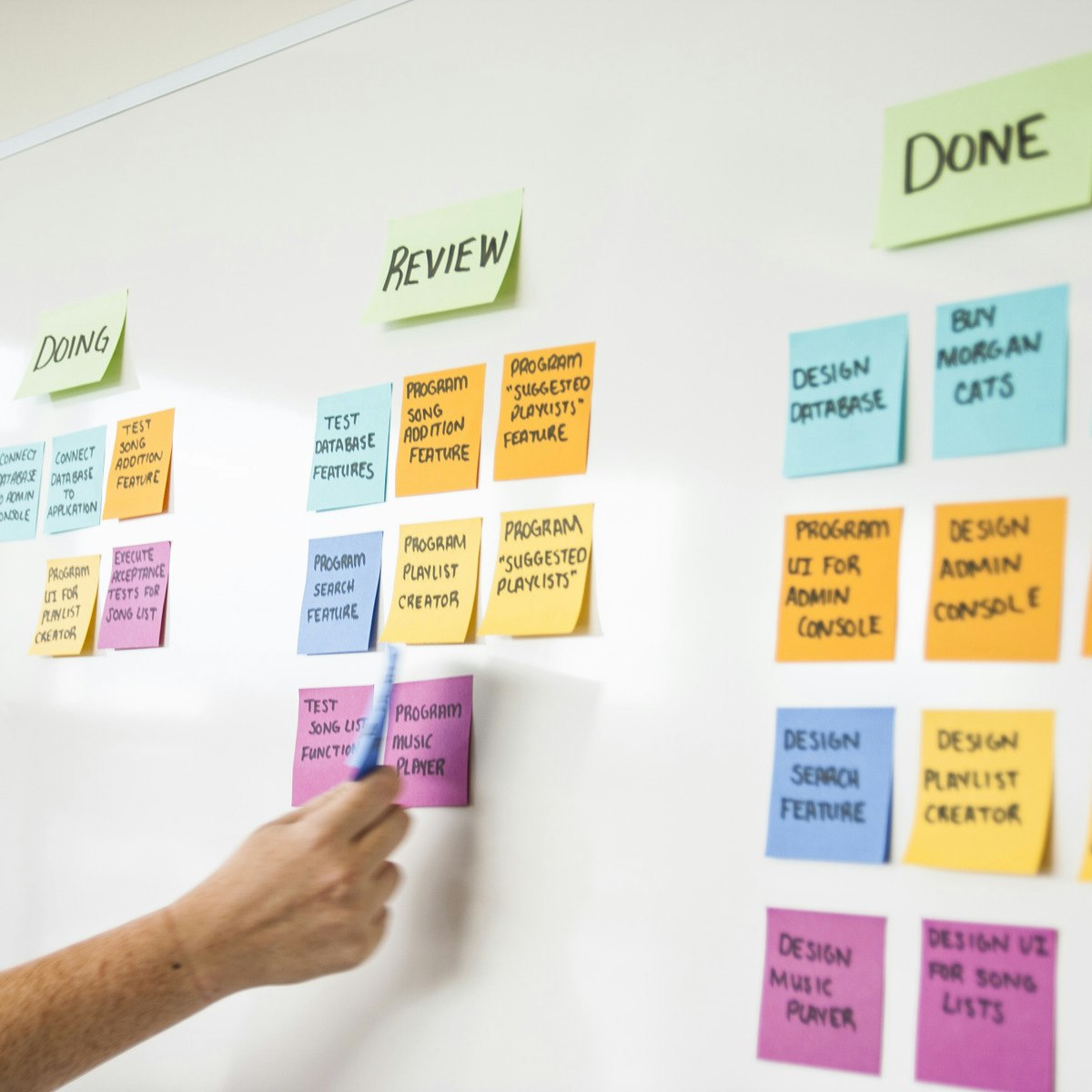
Software Processes and Agile Practices
This course delves into a variety of processes to structure software development. It also covers the foundations of core Agile practices, such as Extreme Programming and Scrum.

GitLab — A Complete Hands-On for CI/CD Pipelines & DevOps
This course requires you to download Docker Desktop from Docker's official website. If you are a Udemy Business user, please check with your employer before downloading software. GitLab is a trending and the most admired tool to build CI CD pipelines for DevOps. Since GitLab is a self-contained platform that supports the DevOps lifecycle, that is why it is getting traction in the CI/CD landscape from mass companies including the big ones. The demand of GitLab CI CD tool in real-time projects is growing exponentially and DevOps engineers, architects are preferring to use GitLab as a CI/CD tool over other available options in the market. What's included in the course? • Complete GitLab CI/CD concepts explained from Scratch to ADVANCE with Real-Time implementation. • Concise crash course on Continuous Integration, Continuous Delivery, Continuous Deployment (CICD) and the DevOps concept. • Each and every GitLab CI CD concept is explained with HANDS-ON examples. • Includes each and every, even thin detail of GitLab CI/CD. • For every concept, first, we will cover its theoretical stuff, followed by their running example. • Learn the CI CD workflow, by deploying a complete Python website on to Heroku. Technicalities • GitLab Basics - Git Commands, Setup GitLab account, GitLab CI/CD UI Tour, Docker, adding SSH keys. • GitLab Core concepts - Pipeline, Jobs, Stages, Artifacts, Custom and Secret Variables, Runners and many more. • How to build GitLab CI CD pipelines with Docker. • GitLab Advance Concepts - Optimizing the Pipeline, Keywords, Environments, Static & Dynamic environments, Teardown the environments etc. • Industry standard Real-time Python web application deployed automatically on Heroku with GitLab CI/CD pipeline. After completing this course, you can start working on any real-time DevOps GitLab CI/CD project with full confidence.

Social Media Automation using Python
Updated in May 2025. This course now features Coursera Coach! A smarter way to learn with interactive, real-time conversations that help you test your knowledge, challenge assumptions, and deepen your understanding as you progress through the course. This course on automating social media applications using Python covers essential skills to automate routine tasks across platforms like WhatsApp, YouTube, Facebook, and Gmail. - Starting with WhatsApp, you'll learn to send automated messages to individuals and groups. - Delve into email automation using Smtplib, enabling you to send emails and attach files via Gmail with SMTP. - Explore scheduling tasks with Python - Fetching and downloading YouTube channel stats as CSV files - Posting, deleting, and commenting on Facebook content. While it assumes basic to intermediate Python knowledge, it offers hands-on projects and practical live coding to help you master automation packages and libraries. By the end, you'll be adept at creating automated posts, scheduling tasks, and handling various social media automation projects. This course is designed for beginners with some programming experience or even those who need to know about data analysis, data manipulation, and more. This course is for individuals wanting to understand and implement automation packages and libraries, master scheduling tasks, automate emails, automate WhatsApp, automate YouTube data, and automate Facebook posts. Basic to intermediate Python programming knowledge is required for the course.

Full Stack Web Development With MERN STACK & GenAI 2026
This course is perfect for anyone looking to learn fullstack web development . It covers all the latest technologies and frameworks that you'll need to know to build today's modern websites and web applications. We'll start by learning HTML, CSS, and JavaScript, the fundamental technologies of the web. Then we'll move on to more advanced topics like React, React Redux, React Query Node js, and MongoDB. By the end of the course, you'll build different projects ranging from a simple website to a fully-fledged web app. This course is designed for you to build your own business or a new career, and become an expert web developer. You don't need any previous experience in website development or programming as this course is designed in such a way that it can be done even if you have no coding or web development background. It’s all explained in an easy to understand way with step by step instructions, video tutorials, and live examples. This is a hands-on course, where you get immediate access to every lesson, So whether you're a complete beginner or an experienced web developer looking to stay up-to-date with the latest changes, this course is for you. Enrol now and let's get started!

Crie um guia de estudo: preparando-se para o exame da PCD
Aprenda a usar o NotebookLM para criar um guia de estudo personalizado para o exame da certificação Professional Cloud Developer (PCD). Conheça os principais recursos, integre materiais de fonte e use comandos eficazes para otimizar sua preparação.

Node.js- Beginner to Advance course with projects
The Complete Backend Development Bootcamp with Node.js and Modern Tooling Master backend development with Node.js by building real-world applications using PostgreSQL, Drizzle ORM, MongoDB, JWT, Docker, and more. This course takes you from JavaScript fundamentals to deploying production-grade applications, step-by-step. Whether you’re just getting started or want to level up your backend skills, this course is designed to give you a solid foundation and deep understanding of modern backend development practices. Start with Strong JavaScript Fundamentals Before diving into Node.js, we revisit core JavaScript concepts that are essential for any backend developer. From variable scope, functions, closures, to async/await and event-driven programming, this foundation ensures you don’t just write code - you understand it. Understand Architecture and Structure Learn how scalable applications are built using the Model-View-Controller (MVC) pattern. You’ll understand how to organize your code for clarity, reusability, and long-term maintainability. Build Data-Driven Applications The course dives deep into database systems: • Learn the difference between SQL and NoSQL • Use PostgreSQL with Docker for isolated development environments • Integrate Drizzle ORM, a modern type-safe ORM built for efficiency and clarity • Create real relationships, apply indexes for faster queries, and learn how to structure a schema for real-world needs Master Authentication and Authorization Security is non-negotiable in production systems. You will: • Build session-based and stateless (JWT) authentication systems • Create role-based access controls • Use Express middlewares to modularize and protect routes • Understand the practical differences between authentication and authorization Dynamic Frontend with Templating Engines Integrate EJS to render dynamic HTML from the backend. Understand how templating engines work and where they fit in full-stack applications. Explore NoSQL with MongoDB Learn the strengths of NoSQL systems by integrating MongoDB and Mongoose. You’ll build full CRUD applications and explore the aggregation pipeline, a powerful tool for advanced data processing and reporting. Production Readiness and Deployment Understand the fundamentals of system design, including: • Reverse proxy vs forward proxy • Vertical vs horizontal scaling • Deployment strategies like blue-green and rolling updates Finally, learn how to Dockerize your Node.js applications and deploy them using AWS ECR, giving you real-world deployment experience. Why Take This Course? • Covers both SQL and NoSQL databases • Real-world authentication and authorization flows • Learn modern tools like Drizzle ORM, Docker, and Postman • Includes structured learning for system design and deployment • Helps you build scalable, maintainable, and secure applications By the end of this course, you’ll have the confidence and skillset to build backend systems that are secure, scalable, and ready for real-world use. Enroll now and transform your Node.js knowledge into professional backend development expertise.

Generative AI Fundamentals for Beginners
This course features Coursera Coach! A smarter way to learn with interactive, real-time conversations that help you test your knowledge, challenge assumptions, and deepen your understanding as you progress through the course. Dive into the world of Generative AI and gain a strong foundation in its concepts, tools, and applications. You will understand how AI models generate text, images, audio, and video, and how these technologies are transforming industries. This course equips you with practical knowledge, from neural networks to large language models, enabling you to harness AI effectively in real-world projects. The course starts with the fundamentals, introducing AI, machine learning basics, and the distinction between traditional and generative AI. Through guided demos, you will experiment with neural networks, image generation, and AI audio/video tools, building hands-on experience while visualizing complex AI processes in action. Next, you will explore advanced AI concepts including Large Language Models, transformers, embeddings, and prompt engineering. Step-by-step exercises and live demos allow you to apply these techniques across text, image, audio, and video AI, reinforcing both conceptual understanding and practical skills. This course is ideal for beginners, aspiring AI professionals, and creative technologists seeking to understand and apply generative AI. No advanced programming skills are required, though basic familiarity with computers and data concepts will help. Difficulty level: Beginner. By the end of the course, you will be able to understand key generative AI concepts, build and interact with AI models, create text, image, audio, and video outputs, and apply prompt engineering techniques to optimize AI-generated results for real-world use cases.

Masterclass Testing Machine Learning (AI) Models
Welcome to "Testing AI: Foundation Models, LLMs, Chatbots & More," your comprehensive guide to understanding the fundamentals of testing advanced AI systems. Whether you're a developer, a data scientist, or simply an AI enthusiast, this course will equip you with the knowledge and skills necessary to assess and improve the reliability, performance, and safety of AI technologies. What You Will Learn: • Introduction to AI Testing: Understand the importance of testing AI systems, including ethical considerations and the potential impacts of AI failures. • Testing Basics: Learn about different types of testing methodologies like unit testing, integration testing, and system testing as applied to AI. • Special Focus on Foundation Models and LLMs: Dive deep into the challenges and techniques for testing large language models and foundational AI systems that are reshaping numerous industries. • Chatbot Testing: Explore the unique aspects of testing conversational AI, ensuring they respond accurately and appropriately in varied scenarios. • AI System Evaluations: Learn how to design and implement effective testing regimes for different AI-based systems, using both manual and automated tools. • K - Folding of Data: Understand how to split all your data into : Training, Evaluation and testing data. Get more out of your data by splitting and training it on the same data, but with different validation subsets each time, ensuring that your model learns from multiple perspectives. This technique helps improve generalization, reduces overfitting, and provides a more reliable estimate of model performance. • Case Studies: Gain insights from real-world scenarios that highlight common pitfalls and best practices in AI testing. • Ethical AI: understand the risk with AI and the ethics behind AI. How can and should you test for this • Benchmarking: Understand how to test the AI against some common benchmarking models such as: BLUE, HellaSWAG, MMLU, HumanEval and other. • Testing ChatGPT / Chatbots with the help of an API and integration this into MLOPS chain. • Adversarial AI: understand how to test for robustness in AI Models Who This Course Is For: This course is ideal for anyone looking to gain a solid grounding in the techniques and practices essential for testing AI systems. Whether you’re starting a career in AI, looking to enhance your professional skills, or interested in the mechanisms behind AI system reliability, this course has valuable insights for you. Course Features: • Engaging video lectures • Practical assignments and hands-on projects • Quizzes and exams to test your knowledge • Access to a community forum for discussion and collaboration • Lifetime access to course materials Enroll now to start mastering the crucial skill of testing AI systems and ensure you’re prepared to contribute to the development of safe and reliable AI technologies!

Advanced Relational Database and SQL
In this 1-hour long project-based course, you will gain hands-on experience and learn about advanced SQL topics such as stored procedures, tiggers, functions, common table expressions and recursion. If you have intermediate level of experience with SQL and want to learn more, this course is for you! Note: This is an advanced level course. Taking my course "Introduction to Relational Database and SQL" and "Intermediate Relational Database and SQL" before taking this course is highly recommended. Especially if you do not have any previous experience with relational database and SQL.