Cursos de Datos e IA
Los mismos datos para todos, vengan de Udemy o de Coursera: precio, valoración, duración e idioma. 470 cursos encontrados. Afinar la búsqueda

Google BigQuery for Data and ML Engineers
Learn how to use Google BigQuery to enhance your data engineering and machine learning skills in this practical, instructor-led course. Taught by experienced cloud architect and author Dan Sullivan, you’ll work with BigQuery’s serverless architecture, advanced SQL, and data warehousing features to efficiently manage and analyze large datasets. This course is suitable for both beginners and those with experience. You’ll get hands-on practice with data ingestion, transformation, and building reliable data pipelines. The curriculum covers how to create, evaluate, and deploy machine learning models within BigQuery, as well as recent generative AI applications. Through real-world projects and clear instruction, you’ll build the skills needed to use BigQuery in your day-to-day work. Whether you’re new to the field or looking to expand your knowledge, this course offers practical tools and techniques for data engineering and machine learning.

GenAI for Code Migration Tasks Training
This beginner-friendly course explores how Generative AI revolutionizes code migration and optimization across the software development lifecycle. Learn to automate language conversion, framework shifts, version upgrades, and performance tuning using tools like GitHub Copilot. Understand and compare manual vs AI-driven workflows, and explore real-world demos. Master the use of GenAI to improve time and space complexity, refactor legacy systems, and boost code efficiency and scalability. Build practical skills to transform codebases with AI-powered automation, precision, and speed. Basic understanding of programming or software development is recommended. By the end of this course, you will be able to: - Use GenAI tools like GitHub Copilot to automate code migration and optimization tasks - Perform language conversion, framework shifts, and version upgrades using AI - Reduce time and space complexity through AI-powered code analysis - Evaluate GenAI adoption through real-world examples like Uber’s code transformation Ideal for developers, software engineers, and tech professionals seeking to modernize codebases using AI.

Splunk Fundamentals: Analyze & Visualize Data
Master Splunk fundamentals and build practical skills in analyzing, visualizing, and correlating machine-generated data. You’ll begin by exploring Splunk’s role in Operational Intelligence, installing and configuring Splunk Enterprise, managing applications, and setting up data inputs. You’ll then navigate Splunk Web and use Search Processing Language (SPL) commands to search, filter, transform, and organize event data. As you progress, you’ll apply statistical functions to calculate counts, sums, averages, and distinct values; create reports and dashboards; and turn search results into line, area, pie, scatter, gauge, and single-value visualizations. You’ll also use trendlines, totals, cluster maps, eval expressions, conditional logic, filtering, and transaction options to enrich results, monitor KPIs, identify sessions, and uncover complex event patterns. Designed for learners who want practical Splunk skills for IT operations, security monitoring, or business insights, this course combines structured lessons with quizzes, exercises, and real-world use cases. By the end, you’ll be able to optimize searches, analyze machine data, build meaningful dashboards, and correlate events to support data-driven decisions. Its progression from setup and SPL essentials to advanced analytics and event correlation makes it a focused, hands-on path to professional Splunk application.

GA4 Implementation with Google Tag Manager
This course transforms how you approach digital analytics by taking you beyond the basics and into the professional implementation, measurement, and intelligence systems that power data-driven organizations. You'll learn how to leverage Google Analytics 4 (GA4), Google Tag Manager (GTM), and Looker Studio to build a complete analytics ecosystem that captures accurate data, attributes performance correctly, and communicates insights that move businesses forward. You'll start by mastering GA4 implementation through Google Tag Manager, learning how to govern containers, design scalable event tracking frameworks, and configure the data layer for clean, reliable data collection. You'll establish the professional standards that separate trustworthy analytics from fragile, inconsistent setups. Next, you'll dive into e-commerce measurement and campaign attribution. You'll build end-to-end tracking across the full purchase funnel, standardize UTM-based campaign tracking across channels, integrate Google Ads with GA4, and evaluate attribution models to understand how each channel truly contributes to conversion outcomes. You'll also analyze conversion funnels and map user journeys to identify drop-off points and surface optimization opportunities. Finally, you'll move from tracking to intelligence. Through hands-on exercises, you'll apply advanced segmentation strategies, build cohort analyses, configure predictive metrics, and design Looker Studio dashboards that enable leadership teams to self-serve strategic insights without analyst dependency. By the end of this course, you will be able to: - Implement and govern a professional GA4 tracking setup using Google Tag Manager, including event architecture and data layer configuration. - Build and validate a complete e-commerce measurement framework that captures accurate revenue and funnel data. - Standardize campaign tracking with UTM parameters and evaluate multi-touch attribution models for smarter budget decisions. - Analyze conversion funnels, user paths, and behavioral segments to generate actionable optimization recommendations. - Configure predictive metrics in GA4 and activate audience intelligence for retention and growth campaigns. - Design and publish Looker Studio dashboards that translate GA4 data into clear, executive-ready business insights. Designed for digital marketers, analytics professionals, e-commerce specialists, and marketing operations practitioners, this course equips you with the technical depth and hands-on experience to build, manage, and extract strategic value from a professional-grade GA4 analytics system. Step in, elevate your analytics practice, and learn how to turn implementation precision and behavioral data into the intelligence your organization needs to grow with confidence.

Real-World Applications & Model Deployment in Java
Course Description: Take your machine learning skills to the next level by learning how to deploy real-world ML applications using Java. In this hands-on course, you’ll use tools like Spring Boot, Jenkins, GitHub Actions, and RL4J to integrate, automate, and monitor ML systems in enterprise environments—no advanced ML background required. In the first module, you’ll explore how machine learning is applied in industries like banking and e-commerce. You’ll learn to build and expose ML models through Spring Boot REST APIs and automate deployment workflows using Jenkins and GitHub Actions. The second module introduces advanced concepts like reinforcement learning, federated learning, and responsible AI. You'll explore how to build ethical, fair, and secure AI systems. In the final module, you’ll apply your learning in a capstone project—designing, deploying, and monitoring a complete ML pipeline while exploring career opportunities in MLOps and AI engineering. Learning Objectives: -Deploy ML models in Java applications using Spring Boot, REST APIs, and edge deployment tools. -Automate ML pipelines with MLOps tools like Jenkins and GitHub Actions. -Apply reinforcement learning, federated learning, and responsible AI practices in enterprise contexts. Target Audience: This course is ideal for: -Experienced Java developers and machine learning practitioners ready to deploy ML in production. -Engineers working on enterprise software who need to integrate or scale ML capabilities. -DevOps or MLOps professionals seeking to automate ML workflows in Java-based stacks. -Professionals interested in responsible AI, edge computing, and advanced ML concepts like reinforcement or federated learning. Disclaimer: This course is an independent educational resource developed by Board Infinity and is not affiliated with, endorsed by, sponsored by, or officially associated with Oracle Corporation or any of its subsidiaries or affiliates. This course is not an official preparation material of Oracle Corporation. All trademarks, service marks, and company names mentioned are the property of their respective owners and are used for identification purposes only.

AI Agent Skills for Leaders
AI is not just a tool. It is becoming your team. The leaders who win in the next decade will not be the ones who “use AI occasionally.” They will be the ones who know how to deploy it—to turn a simple idea, question, or conversation into fully realized outputs: dashboards, reports, systems, analyses, and decisions that would normally require entire teams to produce. This course teaches you how to do exactly that with AI Agent Skills that anyone can deploy in ChatGPT, Claude, and Gemini. AI Agent Skills are a new way of working with AI. Instead of starting from scratch every time you ask for something, you create reusable “skills” that act like on-demand training manuals for your AI—teaching it how to think, how to structure work, and how to produce outputs the way you want them done. But the real breakthrough is not just automation—it is transformation. Most people use AI to generate text. Leaders use AI to generate artifacts. Instead of getting an explanation, you get an interactive dashboard. Instead of a summary, you get a decision framework. Instead of a pile of files, you get a fully organized system packaged and ready to use. You are not just getting answers—you are getting work done. This course will teach you how to think like a CEO assigning work to a team: how to design AI Agent Skills that take the raw intelligence of a conversation and turn it into outputs that are structured, tailored, visually polished, and immediately actionable. You will learn how to take something that would normally require hours—or days—of effort and compress it into a single interaction. How to turn a few lines of instruction into dashboards, PDFs, spreadsheets, file systems, and tools that live beyond the chat and create real-world value. By the end of this course, you will be able to: - Turn any conversation into an interactive HTML dashboard you can download and share - Create AI-powered file organization systems that rename, categorize, and package messy data into structured archives - Build reusable AI Agent Skills that perform complex workflows on demand - Generate decision frameworks with scoring models, tradeoffs, and recommendations - Produce executive-ready reports, PDFs, and slide decks automatically - Design custom tools and systems (not just text) tailored to your work, team, or business - Transform raw ideas into structured plans with timelines, dependencies, and execution steps - Convert explanations into visualizations, simulations, and learning systems - Capture your best workflows and turn them into repeatable, high-quality outputs every time - Think like a leader who doesn’t just ask for answers—but deploys AI to produce outcomes This is not a course about prompts. This is a course about leverage. Once you understand how to build and use AI Agent Skills, you stop interacting with AI like a chatbot—and start operating it like a team that can produce high-quality work on demand. Almost every task you do today can be upgraded. This course shows you how.
Fundamentals of Machine Learning
This course features Coursera Coach! A smarter way to learn with interactive, real-time conversations that help you test your knowledge, challenge assumptions, and deepen your understanding as you progress through the course. This course offers a comprehensive foundation in machine learning, taking you through both the theoretical and practical aspects of this powerful field. By learning the fundamentals of algorithms, models, and techniques, you will gain the skills to design, implement, and assess machine learning systems effectively. Throughout the course, you'll dive deep into various methods, including regression, classification, decision trees, SVM, deep learning, and more. The course is structured into lectures, hands-on labs, and deep learning-focused modules. It starts with foundational concepts such as statistical learning and progresses to complex models like neural networks and support vector machines. You'll also explore practical tools like Principal Component Analysis (PCA), random forests, and classification metrics, helping you build confidence in both theory and application. Ideal for those new to the field of machine learning, the course assumes no prior experience in programming or data science. However, a basic understanding of algebra and statistics will be beneficial. It's designed for learners at all levels, providing an accessible entry point into machine learning while offering deep technical insights for more experienced students. By the end of the course, you will be able to implement machine learning models, use deep learning techniques, assess model performance, and apply machine learning methods to real-world datasets.
Visualizing Filters of a CNN using TensorFlow
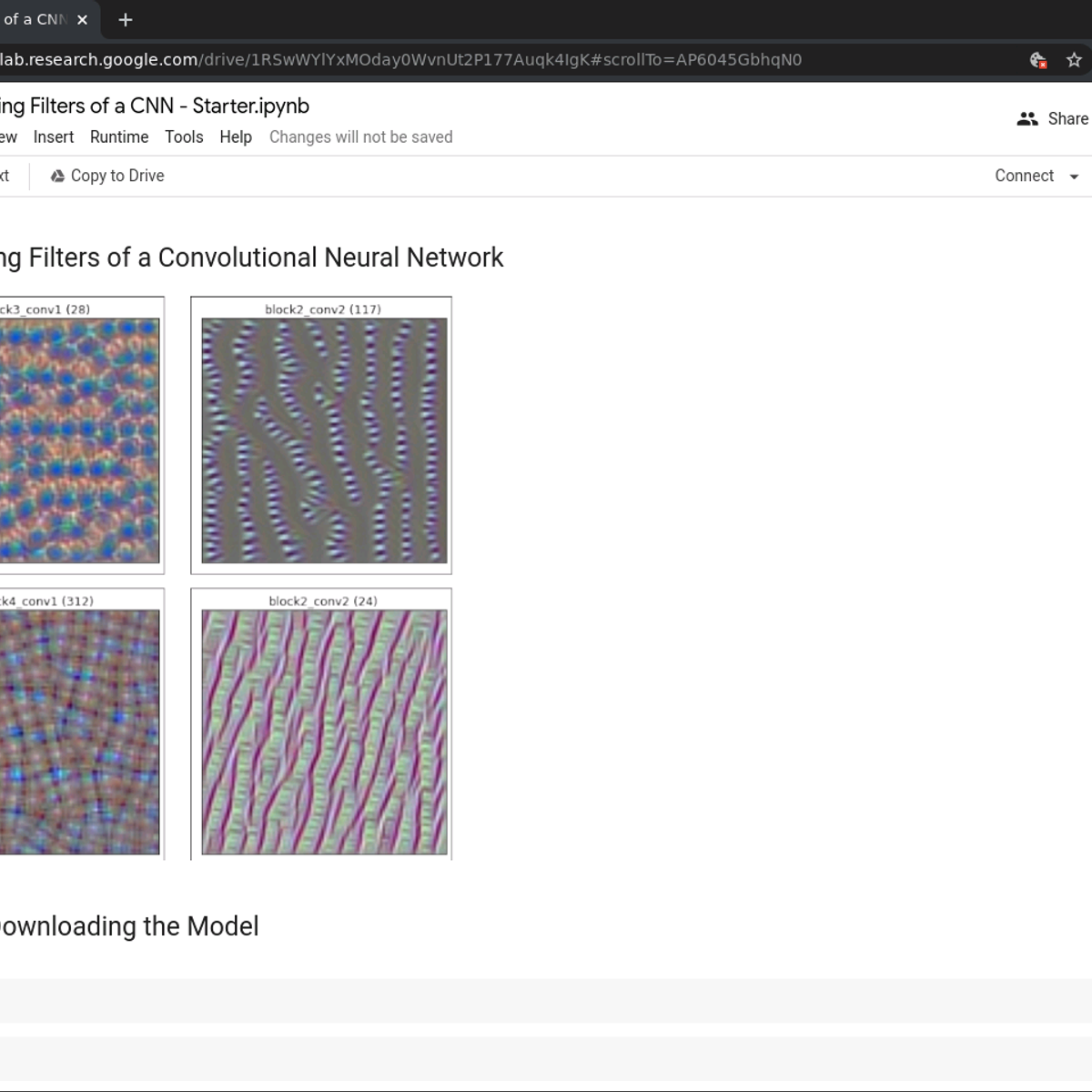
In this short, 1 hour long guided project, we will use a Convolutional Neural Network - the popular VGG16 model, and we will visualize various filters from different layers of the CNN. We will do this by using gradient ascent to visualize images that maximally activate specific filters from different layers of the model. We will be using TensorFlow as our machine learning framework. The project uses the Google Colab environment which is a fantastic tool for creating and running Jupyter Notebooks in the cloud, and Colab even provides free GPUs for your notebooks. You will need prior programming experience in Python. This is a practical, hands on guided project for learners who already have theoretical understanding of Neural Networks, Convolutional Neural Networks, and optimization algorithms like gradient descent but want to understand how to use the TensorFlow to visualize various filters of a CNN. Note: This course works best for learners who are based in the North America region. We’re currently working on providing the same experience in other regions.

Optimize and Deploy Edge AI Models
This course teaches you how to evaluate and optimize machine learning models for reliable performance on edge devices. You’ll learn how to move beyond overall accuracy by analyzing model behavior across meaningful data slices—such as device type or environmental conditions—to uncover hidden robustness and fairness issues. You’ll also explore how models are optimized for edge deployment using TensorFlow Lite, including how quantization affects model size, inference speed, and accuracy. Through videos, hands-on activities, and guided reflection, you’ll practice interpreting these trade-offs and communicating deployment readiness clearly. By the end of the course, you’ll be able to assess slice-level performance gaps, evaluate optimization outcomes, and make informed decisions about deploying models in real-world edge environments.

Perform exploratory data analysis on retail data with Python
In this project, you'll serve as a data analyst at an online retail company helping interpret real-world data to help make key business decisions. Your task is to explore and analyze this dataset to gain insights into the store's sales trends, customer behavior, and popular products. Upon completion, you’ll be able to demonstrate your ability to perform a comprehensive data analysis project that involves critical thinking, extensive data analysis and visualization, and making data-driven business decisions. There isn’t just one right approach or solution in this scenario, which means you can create a truly unique project that helps you stand out to employers. ROLE: Data Analyst SKILLS: Python PREREQUISITES: Python, Numpy, Matplotlib or Seaborn, Git, Jupyter Notebook

Decoding AI: A Deep Dive into AI Models and Predictions
Decoding AI: A Deep Dive into AI Models and Predictions explores the significance of large datasets, demystifies generative artificial intelligence (AI), and challenges common media myths about AI. By defining key terms and exploring how systems “learn” from data, you will gain a baseline understanding of how AI works. Work to understand different critiques of AI narratives, learn to navigate conversations with precision, discern conflicts of interest, and appreciate the multidisciplinary expertise needed to shape AI's impact on society. This course provides you with the strategies and frameworks to engage in better conversation about the role of AI in your work and beyond. This is the third course in Understanding Data: Navigating Statistics, Science, and AI Specialization, in which you’ll gain a core foundation for statistical and data literacy and gain an understanding of the data we encounter in our everyday lives.

Analyze HR Attrition Using R Analytics
By the end of this course, learners will be able to analyze HR attrition data, evaluate key workforce factors, apply statistical techniques, select significant features, and build a predictive attrition model using R. This course provides a practical, end-to-end approach to HR analytics with a strong focus on employee attrition. Learners begin by preparing and validating real-world HR data, followed by in-depth exploratory data analysis to understand workforce demographics, job-related factors, and attrition patterns. The course then progresses to statistical analysis using correlation and Chi-Square tests, helping learners identify meaningful relationships between employee attributes and attrition outcomes. What makes this course unique is its structured, project-driven methodology that mirrors real HR analytics workflows. Learners apply Information Value (IV) techniques for feature selection, create a final modeling dataset, and build an attrition prediction model in R, concluding with performance evaluation on unseen data. By completing this course, learners gain hands-on experience in HR data analysis, develop job-ready analytical thinking, and build confidence in using R for data-driven HR decision-making, making it ideal for aspiring data analysts, HR professionals, and analytics learners seeking practical industry skills.

Data Management: Dictionaries, Quality and Communication
Data Management Basics: Dictionaries, Quality, and Communication is an entry-level course designed for professionals, analysts, and team members who want to ensure their organization’s data is clear, reliable, and actionable. In today’s data-driven workplace, mistakes and misunderstandings can quietly erode trust, waste time, and lead to costly errors. This course empowers you with the tools and mindset to build shared definitions, catch and correct quality issues, and communicate clearly about data standards—across both technical and business teams. You’ll work through hands-on labs, scenario-driven readings, and real-world case studies, learning how to create and maintain a data dictionary, audit data for errors, and develop practical communication routines. From everyday spreadsheets to larger organizational projects, you’ll practice skills that prevent confusion and set the stage for advanced data management. Whether you're supporting analytics, building business processes, or just want to stop the endless back-and-forth over data definitions, this course helps you build a foundation for trust and smarter decision-making—right from the start.
Orchestrating Agent Teams with CrewAI Training for Beginners
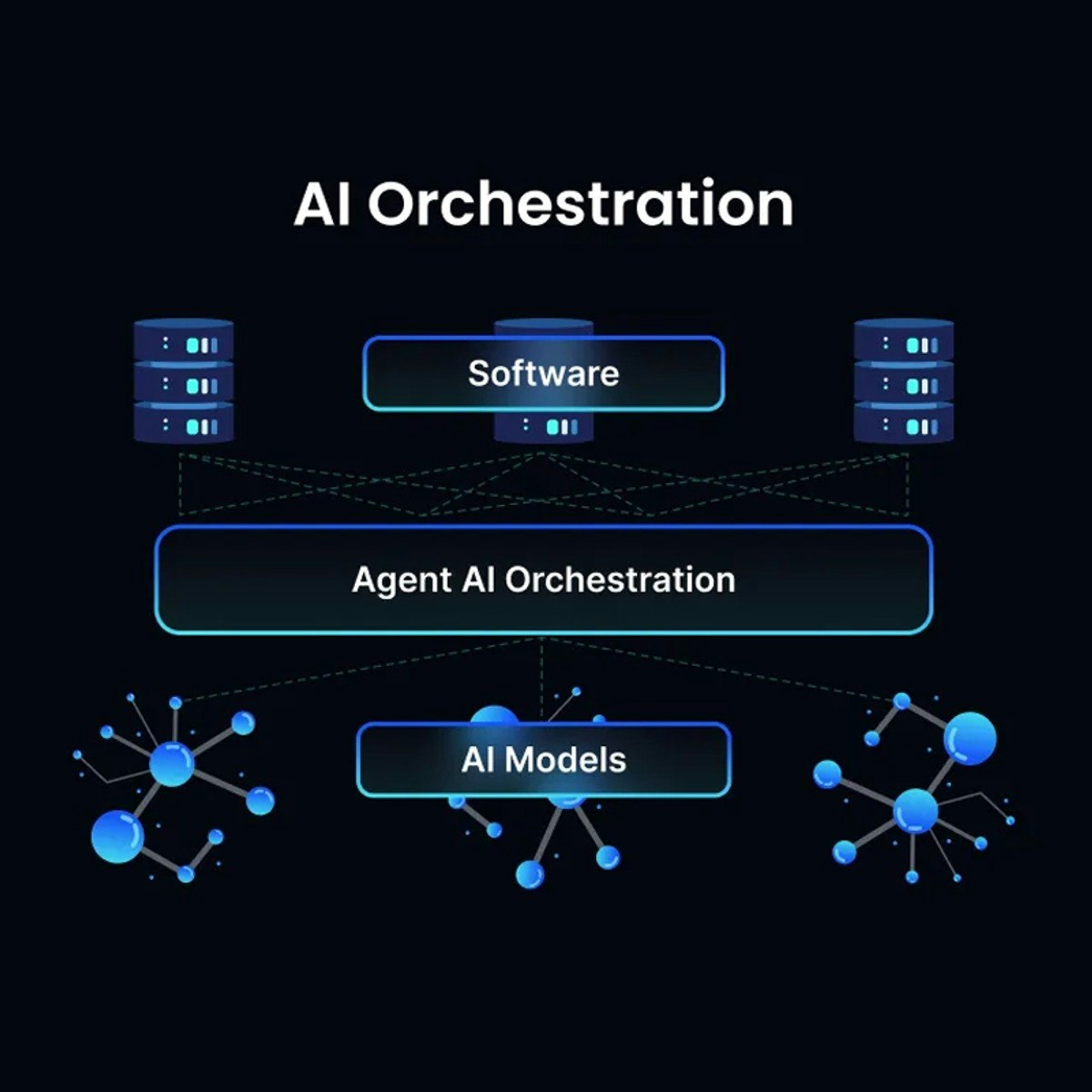
This certificate for Orchestrating Agent Teams with CrewAI for Beginners validates your expertise in building intelligent AI agents, task management, crew orchestration, and workflow automation. You demonstrate the ability to create collaborative agent teams, develop custom tools, manage AI workflows, coordinate task execution, and build scalable AI-powered solutions using CrewAI and Streamlit.
Data Science Decisions in Time: Using Data Effectively
Sequential Decisions builds from math and algorithms that can be understood and used by Coursera Students. This course will start from a consideration of the simplest type of data streams and then gradually advance to more complex types of data and more nuanced decisions being made on that data. You will be able to: (a) program optimal decisions for data arriving from known distribution functions, (b) define error bars and nuanced hedges about ongoing data streams to reflect missing data and/or missing knowledge, (c)understand and use the connections from these models to further understand Markov Chains and Markov Processes and how these ideas connect to Reinforcement Learning and (d) Understand better the nuances between time-independent, time-dependent, one-dimensional and multi-dimensional data. The course is aimed at those working with data, this includes both those charged with analyzing the data and those in charge of making decisions based on that data.

Data Science Fundamentals, Part 1: From Zero to Your First Project
This course demystifies core data science concepts and techniques through engaging Python lessons and real datasets. You’ll gain practical experience working with the Python ecosystem, including pandas, NumPy, scikit-learn, and more, as you analyze authentic data and build meaningful applications from scratch. From setting up your programming environment to building your first recommendation engine, each lesson emphasizes intuition, best practices, and the computational skills needed to tackle “undomesticated” data problems. No advanced math or statistics background required—just a willingness to learn and a basic familiarity with programming. By the end of the course, you’ll have built real projects, mastered essential data science workflows, and developed the confidence to apply machine learning algorithms to real-world challenges.

Build & Evaluate Decision Trees for ML
Are you ready to master one of machine learning’s most powerful and interpretable algorithms? This course will guide you through the complete journey of understanding, building, and evaluating decision tree models using Java, the enterprise-standard programming language. You’ll start by exploring the core concepts, how decision trees partition data, why splitting criteria such as entropy and the Gini index matter, and when decision trees outperform other algorithms. From there, you’ll move into hands-on implementation, using industry-standard tools like Weka’s intuitive GUI and Java API along with Smile’s high-performance library to develop, tune, and deploy models. Through practical exercises, you’ll learn to configure hyperparameters, balance rapid prototyping with production-ready design, and apply robust model evaluation techniques such as confusion matrices, cross-validation, and key performance metrics. Aspiring and experienced data scientists, Java developers, and machine learning engineers seeking to build, evaluate, and interpret decision tree models for real-world applications in finance, healthcare, and business analytics. Basic Java programming experience, understanding of object-oriented concepts, and fundamental knowledge of data science principles required. By the end of the course, you’ll be equipped to detect and reduce overfitting, optimize model performance, and effectively communicate insights to technical and business stakeholders alike.

Foundations of Probability and Random Variables
The course "Foundations of Probability and Random Variables" introduces fundamental concepts in probability and random variables, essential for understanding computational methods in computer science and data science. Through five comprehensive modules, learners will explore combinatorial analysis, probability, conditional probability, and both discrete and continuous random variables. By mastering these topics, students will gain the ability to solve complex problems involving uncertainty, design probabilistic models, and apply these concepts in fields like machine learning, AI, and algorithm design. What makes this course unique is its practical approach: students will develop hands-on proficiency in the R programming language, which is widely used in data science and statistical modeling. The course also includes real-world applications, allowing learners to bridge theoretical knowledge with practical problem-solving skills. Whether you are aiming to pursue advanced studies in machine learning or develop data-driven solutions in professional settings, this course provides the solid foundation you need to excel. Designed for learners with a background in calculus and basic programming, this course prepares you to tackle more advanced topics in computational science.

Functions and Conditional Statements
In this course, you’ll discover how to call functions to perform useful actions on your data. You’ll also learn how to write conditional statements to tell the computer how to make decisions based on your instructions. And you’ll practice writing clean code that can be easily understood and reused by other data professionals. By the end of this course, you will be able to: • Explain the purpose and logic of conditional statements such as if, else, and elif • Use comparators and logical operators to compare values • List the benefits of commenting on code • Identify best practices for writing clean code such as reusability, modularity, and refactoring • Describe how to define Python functions using the def and return keywords

Build RAG Applications: Get Started
Data Scientists, AI Researchers, Robotics Engineers, and others who can use Retrieval-Augmented Generation (RAG) can expect to earn entry-level salaries ranging from USD 93,386 to USD 110,720 annually, with highly experienced AI engineers earning as much as USD 172,468 annually (Source: ZipRecruiter). In this beginner-friendly short course, you’ll begin by exploring RAG fundamentals—learning how RAG enhances information retrieval and user interactions—before building your first RAG pipeline. Next, you’ll discover how to create user-friendly Generative AI applications using Python and Gradio, gaining experience with moving from project planning to constructing a QA bot that can answer questions using information contained in source documents. Finally, you’ll learn about LlamaIndex, a popular framework for building RAG applications. Moreover, you’ll compare LlamaIndex with LangChain and develop a RAG application using LlamaIndex. Throughout this course, you’ll engage in interactive hands-on labs and leverage multiple LLMs, gaining the skills needed to design, implement, and deploy AI-driven solutions that deliver meaningful, context-aware user experiences. Enroll now to gain valuable RAG skills!
Deep Learning with PyTorch : Image Segmentation
In this 2-hour project-based course, you will be able to : - Understand the Segmentation Dataset and you will write a custom dataset class for Image-mask dataset. Additionally, you will apply segmentation augmentation to augment images as well as its masks. For image-mask augmentation you will use albumentation library. You will plot the image-Mask pair. - Load a pretrained state of the art convolutional neural network for segmentation problem(for e.g, Unet) using segmentation model pytorch library. - Create train function and evaluator function which will helpful to write training loop. Moreover, you will use training loop to train the model.

Data Analytics Course with Generative AI
This comprehensive Generative AI in Data Analytics course equips you with the skills to optimize data workflows, automate analysis, and generate actionable insights using AI. Begin by mastering the four types of analytics, descriptive, diagnostic, predictive, and prescriptive, and explore how GenAI enhances each stage. Learn to automate ETL processes, generate synthetic data with tools like ChatGPT-4 and MOSTLY AI, and perform EDA using Julius AI and Tableau Pulse. Progress to building predictive models, forecasting trends, and conducting risk analysis through real-world simulations. Understand performance metrics, address integration challenges, and apply GenAI in practical business scenarios. You should have a basic understanding of data analysis, statistics, and familiarity with tools like Excel, SQL, or BI platforms. By the end of this course, you will be able to: - Automate Data: Streamline ETL and generate synthetic data using GenAI - Analyze Insights: Perform EDA and visualize data with AI-powered tools - Predict Outcomes: Build models and simulate risk for better decisions - Apply GenAI: Use GenAI across real-world analytics with measurable impact Ideal for analysts, data professionals, and business leaders advancing data strategy with AI.

AI Optimization & Experimental Methods
Advanced analytics teams don't rely on a single technique — they combine AI-driven optimization, causal inference, and probabilistic simulation to solve problems that simpler methods can't touch. In this course, you will build that multi-method capability. You will apply ensemble AI techniques and linear programming to prescribe optimal actions, use propensity-score matching and causal discovery to confirm that your insights reflect true cause-and-effect relationships, and run Monte Carlo simulations to quantify risk and uncertainty in your recommendations. Along the way, you will evaluate trade-offs across accuracy, interpretability, and computational efficiency — the judgment calls that separate capable analysts from trusted advisors. Each skill builds toward a capstone project in which you synthesize all methods into an integrated marketing mix optimization framework, complete with an executive-ready recommendation. Whether you are advancing in data science, moving into an analytics leadership role, or building portfolio credentials that demonstrate strategic analytical thinking, this course gives you the end-to-end toolkit to do it.

Interpretable Machine Learning Applications: Part 4
In this 1-hour long guided project, you will learn how to use the "What-If" Tool (WIT) in the context of training and testing machine learning prediction models. In particular, you will learn a) how to set up a machine learning application in Python by using interactive Python notebook(s) on Google's Colab(oratory) environment, a.k.a. "zero configuration" environment, b) import and prepare the data, c) train and test classifiers as prediction models, d) analyze the behavior of the trained prediction models by using WIT for specific data points (individual basis), e) moving on to the analysis of the behavior of the trained prediction models by using WIT global basis, i.e., all test data considered.
Bioconductor for Genomic Data Science
Learn to use tools from the Bioconductor project to perform analysis of genomic data. This is the fifth course in the Genomic Big Data Specialization from Johns Hopkins University.
Measure Vector Similarity
Measure Vector Similarity: Cosine, Dot-Product, and Euclidean Distance is an intermediate course for machine learning engineers and data scientists looking to master how similarity metrics impact information retrieval, recommendation systems, and classification tasks. In a world where the right comparison can mean the difference between a successful product recommendation and a flawed medical insight, choosing the correct metric is critical. This course moves beyond theory and provides direct, hands-on experience. You will learn to calculate and implement cosine similarity, dot-product, and Euclidean distance using Python and NumPy. Through practical examples inspired by real-world applications at companies like Amazon and in healthcare research, you will analyze how each metric uniquely influences vector ranking and search precision. The course culminates in a capstone project where you will build a benchmark notebook to rigorously compare the performance of these metrics on a sample dataset—a portfolio-ready project that proves your ability to make informed, data-driven decisions in machine learning applications. You will need to have basic Python programming skills, familiarity with NumPy, and foundational knowledge of linear algebra (vectors, dot products).

Advanced Deep Learning Methods for Healthcare
This course covers deep learning (DL) methods, healthcare data and applications using DL methods. The courses include activities such as video lectures, self guided programming labs, homework assignments (both written and programming), and a large project. The first phase of the course will include video lectures on different DL and health applications topics, self-guided labs and multiple homework assignments. In this phase, you will build up your knowledge and experience in developing practical deep learning models on healthcare data. The second phase of the course will be a large project that can lead to a technical report and functioning demo of the deep learning models for addressing some specific healthcare problems. We expect the best projects can potentially lead to scientific publications.

Gen AI Foundational Models for NLP & Language Understanding
This IBM course will equip you with the skills to implement, train, and evaluate generative AI models for natural language processing (NLP) using PyTorch. You will explore core NLP tasks, such as document classification, language modeling, and language translation, and gain a foundation in building small and large language models. You will learn how to convert words into features using one-hot encoding, bag-of-words, embeddings, and embedding bags, as well as how Word2Vec models represent semantic relationships in text. The course covers training and optimizing neural networks for document categorization, developing statistical and neural N-Gram models, and building sequence-to-sequence models using encoder–decoder architectures. You will also learn to evaluate generated text using metrics such as BLEU. The hands-on labs provide practical experience with tasks such as classifying documents using PyTorch, generating text with language models, and integrating pretrained embeddings like Word2Vec. You will also implement sequence-to-sequence models to perform tasks such as language translation. Enroll today to build in-demand NLP skills and start creating intelligent language applications with PyTorch.

Linear Regression & Predictive Modeling with SPSS
Master the fundamentals and practical applications of linear regression while building predictive models using SPSS and Excel. In this hands-on course, you will learn how to construct regression models, interpret statistical outputs, evaluate statistical significance, and apply predictive analytics to solve real-world problems across engineering, energy, and finance. You will begin by exploring the core concepts of linear regression, including scatter plots, T-values, regression equations, coefficient interpretation, and model evaluation in SPSS. As you progress, you will apply regression techniques to engineering and energy datasets, analyzing scenarios such as copper expansion and energy consumption while validating model performance with new data. In the final module, you will develop regression models for financial applications, including debt-to-income analysis, credit risk assessment, and predictive forecasting using SPSS and Excel. Designed for data analysts, business professionals, and students, this course combines statistical theory with practical case studies to help you build confidence in predictive modeling. By the end of the course, you will be able to interpret regression results, analyze diverse datasets, develop forecasting models, and transform data into actionable insights that support informed, data-driven decision-making.
Intro to TensorFlow em Português Brasileiro
O objetivo deste curso é aproveitar a flexibilidade e a facilidade de uso do TensorFlow 2.x e do Keras para criar, treinar e implantar modelos de machine learning. Você aprenderá sobre a hierarquia da API TensorFlow 2.x e conhecerá os principais componentes do TensorFlow nos exercícios práticos. Mostraremos como trabalhar com conjuntos de dados e colunas de atributos. Você aprenderá a projetar e criar um pipeline de entrada de dados do TensorFlow 2.x. Você terá uma experiência prática com o carregamento de dados CSV, matrizes numpy, dados de texto e imagens usando o tf.Data.Dataset e com a criação de colunas de atributos numéricas, categóricas, em bucket e com hash. Apresentaremos as APIs Keras Sequential e Keras Functional para mostrar como criar modelos de aprendizado profundo. Abordaremos as funções de ativação, perda e otimização. Nos laboratórios práticos dos notebooks do Jupyter, você poderá criar modelos de machine learning de regressão linear básica e de regressão logística básica e avançada. Você aprenderá a treinar, implantar e produzir modelos de machine learning em escala com o AI Platform do Cloud.

Data Visualization e manipolazione dei dati con Tableau
I contenuti di questo corso sono pensati per permettere agli utilizzatori di Tableau di migliorare le proprie capacità sull’uso del tool, a un livello intermedio. Spesso i dati provengono da fonti diverse; dobbiamo quindi essere in grado di stabilire tra questi delle relazioni che ci permettano di includere in un’analisi tutte le informazioni di cui abbiamo bisogno. Vedremo quindi come costruire queste relazioni su Tableau, ricorrendo a Join, Union e Data Blending. Lavoreremo con i campi calcolati e i parametri. I primi sono nuovi campi (dimensioni e misure) che, a partire dalla logica utilizzata, aggiungono nuovi dati al data base di partenza. I secondi, invece, sono valori dinamici che possono essere impiegati in tantissimi modi per personalizzare i propri calcoli e la loro visualizzazione all’interno dello spazio di lavoro. Vedremo come Tableau esegue le operazioni di calcolo secondo un ordine preciso, che influisce sui risultati dei calcoli che facciamo. Andremo infine a lavorare con i dati geografici. Nel processo analitico, sono diverse le domande che possiamo porci. Padroneggiando le conoscenze sulla manipolazione dei dati geografici possiamo rispondere al “dove”, un aspetto fondamentale da considerare nel processo analitico.

Troubleshooting and Solving Data Join Pitfalls
This is a self-paced lab that takes place in the Google Cloud console. This lab focuses on how to reverse-engineer the relationships between data tables and the pitfalls to avoid when joining them together.

AI Workflow: Enterprise Model Deployment
This is the fifth course in the IBM AI Enterprise Workflow Certification specialization. You are STRONGLY encouraged to complete these courses in order as they are not individual independent courses, but part of a workflow where each course builds on the previous ones. This course introduces you to an area that few data scientists are able to experience: Deploying models for use in large enterprises. Apache Spark is a very commonly used framework for running machine learning models. Best practices for using Spark will be covered in this course. Best practices for data manipulation, model training, and model tuning will also be covered. The use case will call for the creation and deployment of a recommender system. The course wraps up with an introduction to model deployment technologies. By the end of this course you will be able to: 1. Use Apache Spark's RDDs, dataframes, and a pipeline 2. Employ spark-submit scripts to interface with Spark environments 3. Explain how collaborative filtering and content-based filtering work 4. Build a data ingestion pipeline using Apache Spark and Apache Spark streaming 5. Analyze hyperparameters in machine learning models on Apache Spark 6. Deploy machine learning algorithms using the Apache Spark machine learning interface 7. Deploy a machine learning model from Watson Studio to Watson Machine Learning Who should take this course? This course targets existing data science practitioners that have expertise building machine learning models, who want to deepen their skills on building and deploying AI in large enterprises. If you are an aspiring Data Scientist, this course is NOT for you as you need real world expertise to benefit from the content of these courses. What skills should you have? It is assumed that you have completed Courses 1 through 4 of the IBM AI Enterprise Workflow specialization and you have a solid understanding of the following topics prior to starting this course: Fundamental understanding of Linear Algebra; Understand sampling, probability theory, and probability distributions; Knowledge of descriptive and inferential statistical concepts; General understanding of machine learning techniques and best practices; Practiced understanding of Python and the packages commonly used in data science: NumPy, Pandas, matplotlib, scikit-learn; Familiarity with IBM Watson Studio; Familiarity with the design thinking process.

Advanced Python for Data Analysis: Build & Optimize
Take your Python skills to the next level by learning how to build, integrate, and optimize real-world data analysis applications. In this course, you will strengthen your Python development workflow by working with packages, modules, Anaconda, and PyCharm before expanding into client-server networking, socket programming, chatbot development, database integration with SQLite, and high-performance data analysis using NumPy. You will begin by configuring professional Python development environments and applying coding best practices to write efficient, maintainable programs. Next, you will implement TCP/IP communication, build socket-based client-server applications, and develop chatbot functionality for real-time messaging. You will then integrate SQLite databases into Python projects, create and manage tables, and execute SQL queries to store, retrieve, and update structured data. Finally, you will analyze datasets using Python and optimize numerical computations with NumPy through multidimensional arrays, reshaping, vectorization, matrix operations, and comparison techniques. This course is designed for learners with intermediate Python knowledge who want to expand their programming skills for practical data analysis and application development. By the end of the course, you will be able to configure professional Python environments, develop networked Python applications, integrate databases, analyze datasets, and optimize data processing with NumPy, giving you practical skills for data-driven Python projects.

Trace and Fix Data Anomalies
Did you know that hidden data anomalies can cascade through pipelines and corrupt entire dashboards, models, and business decisions? Finding the source of a data issue quickly is essential for maintaining trustworthy analytics and automated workflows. This Short Course was created to help professionals in this field build reliable data quality monitoring and debugging capabilities for maintaining trustworthy automated data workflows. By completing this course, you will be able to trace data anomalies back to their origin, inspect upstream and downstream dependencies, and diagnose quality failures inside complex pipelines—skills that dramatically reduce downtime and improve overall data reliability. By the end of this course, you will be able to: Investigate data quality issues by tracing anomalies to their source within a data pipeline. This course is unique because it connects data engineering principles with hands-on debugging techniques, giving you the practical skills needed to keep pipelines accurate, resilient, and ready for production demands. To be successful in this project, you should have: Basic SQL knowledge Understanding of data pipeline concepts Familiarity with ETL and ELT workflows

Doing Economics: Measuring Climate Change
This course will give you practical experience in working with real-world data, with applications to important policy issues in today’s society. Each week, you will learn specific data handling skills in Excel and use these techniques to analyse climate change data, with appropriate readings to provide background information on the data you are working with. You will also learn about the consequences of climate change and how governments can address this issue. After completing this course, you should be able to: • Understand how data can be used to assess the extent of climate change • Produce appropriate bar charts, line charts, and scatterplots to visualise data • Calculate and interpret summary statistics (mean, median, variance, percentile, correlation) • Explain the challenges with designing and implementing policies that address climate change No prior knowledge in economics or statistics is required for this course. No knowledge of Excel is required, except a familiarity with the interface and how to enter and clear data.
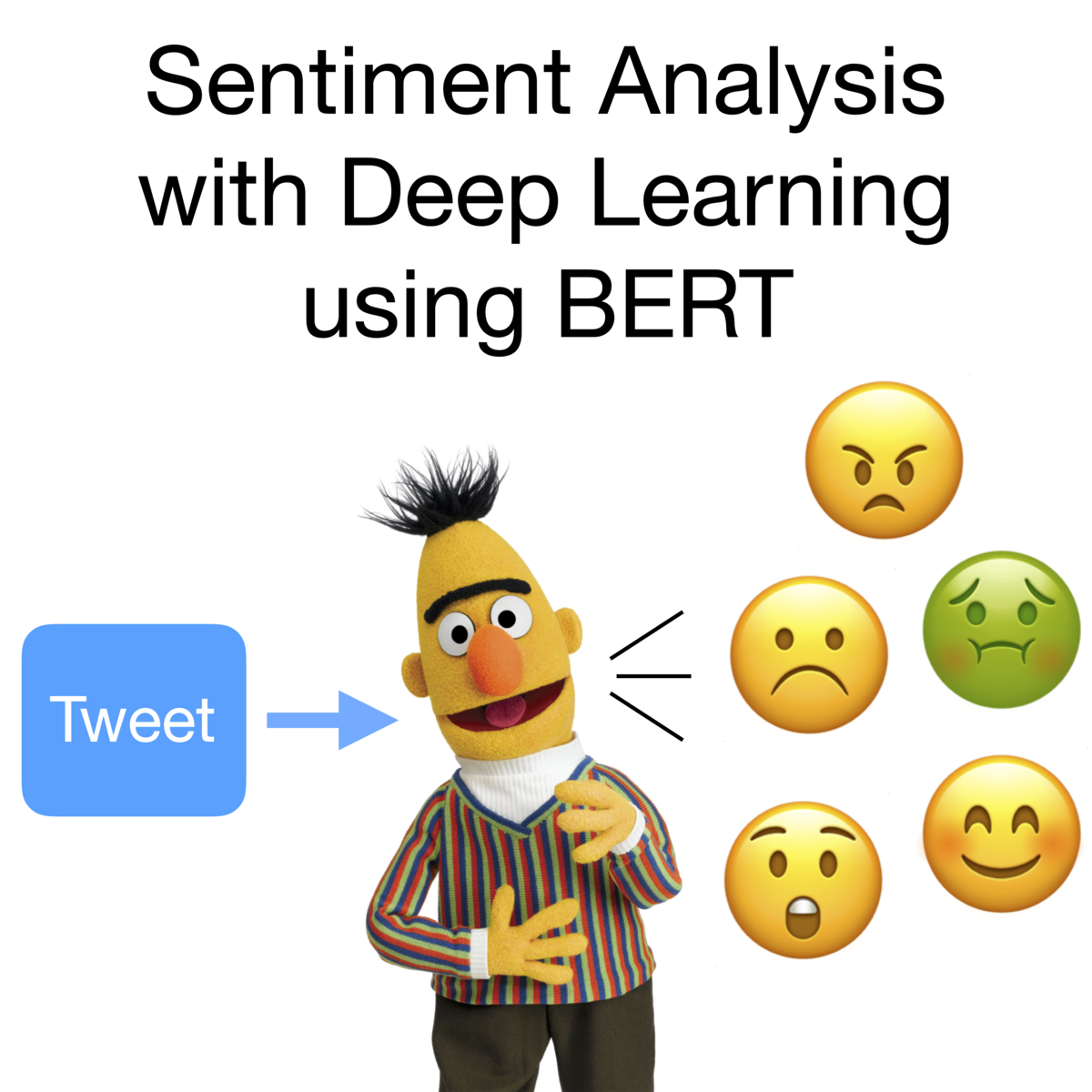
Sentiment Analysis with Deep Learning using BERT
In this 2-hour long project, you will learn how to analyze a dataset for sentiment analysis. You will learn how to read in a PyTorch BERT model, and adjust the architecture for multi-class classification. You will learn how to adjust an optimizer and scheduler for ideal training and performance. In fine-tuning this model, you will learn how to design a train and evaluate loop to monitor model performance as it trains, including saving and loading models. Finally, you will build a Sentiment Analysis model that leverages BERT's large-scale language knowledge. Note: This course works best for learners who are based in the North America region. We’re currently working on providing the same experience in other regions.

Data Science Fundamentals, Part 1: Data Collection & Modeling
This course dives into real-world data sourcing, including making web requests, web scraping, and integrating diverse data types from APIs, files, and databases. You'll learn to parse and structure data in formats like XML and JSON, and leverage object-oriented programming to create robust data models. By the end of the course, you’ll be equipped to efficiently acquire, transform, and prepare data for advanced analysis.

Beyond basics: Advanced Data Analysis with Python
In this course, you'll elevate your analytical capabilities with advanced statistical methods and testing procedures. You'll learn to conduct hypothesis tests, design and analyze A/B tests, and automate analytical workflows. Working with real employee and medical data, you'll gain hands-on experience in applying sophisticated analytical techniques to solve complex business problems. Upon completion, you'll be able to: • Perform hypothesis testing and correlation studies. • Design, conduct, and analyze A/B tests to compare different versions of an approach • Automate repetitive tasks, generate professional reports, and document workflows effectively using automated tools. • Tackle a challenge that integrates statistical analysis, A/B testing, and workflow automation to simulate real-world data problems.

Statistics and Data Analysis with Excel: Intermediate
In today's data-driven world, the ability to analyse and interpret complex data is crucial for making informed, strategic decisions. This comprehensive online course will empower you with advanced statistical techniques to transform raw data into actionable insights, using Microsoft Excel. Through hands-on exercises, you will delve into the world of inferential statistics, learning how to draw meaningful conclusions and make accurate predictions based on sample data. Gain proficiency in creating and interpreting pivot tables, pivot charts, and other interactive data visualisations to effectively communicate your findings. Enhance your digital literacy with extensive use of Excel's advanced functions and the Data Analysis ToolPak, streamlining your data analysis workflow. Each module includes downloadable workbooks, toolbox summaries, applied dialogue activities, and both practice and graded assessments, building to a comprehensive final assignment. Who this is for: Data analysts, business professionals, and researchers who have completed the Essentials course — or equivalent statistics experience — and are ready to apply more advanced analytical methods. Join over 1 million professionals who have advanced their careers with our highly-rated Excel courses. Whether you’re looking to boost your employability, enhance your current role, or simply elevate your Excel skills, this course will provide you with the knowledge and tools to stand out in the competitive job market. Enrol now and become a data-driven leader, driving strategic decisions with confidence and precision.

Hands-on Text Mining and Analytics
This course provides an unique opportunity for you to learn key components of text mining and analytics aided by the real world datasets and the text mining toolkit written in Java. Hands-on experience in core text mining techniques including text preprocessing, sentiment analysis, and topic modeling help learners be trained to be a competent data scientists. Empowered by bringing lecture notes together with lab sessions based on the y-TextMiner toolkit developed for the class, learners will be able to develop interesting text mining applications.

Data Visualization and Transformation with R
Learn the foundations of data science by exploring, transforming, and visualizing data with R. In this course, you’ll develop core skills in exploratory data analysis and statistical thinking including: using visualizations to uncover patterns, identifying trends, and generating insights. You’ll gain hands-on experience with Tidyverse packages in R, work in RStudio, and create reproducible reports with Quarto. Along the way, you’ll also learn version control practices with Git and GitHub to document and share your work. By the end of this course, you’ll be able to transform and summarize data, craft clear and informative graphics, and communicate your findings through professional, reproducible workflows - laying the groundwork for all your future data science projects.
What is Data Science?
Do you want to know why data science has been labeled the sexiest profession of the 21st century? After taking this course, you will be able to answer this question, understand what data science is and what data scientists do, and learn about career paths in the field. The art of uncovering insights and trends in data has been around since ancient times. The ancient Egyptians used census data to increase efficiency in tax collection and accurately predicted the Nile River's flooding every year. Since then, people have continued to use data to derive insights and predict outcomes. Recently, they have carved out a unique and distinct field for the work they do. This field is data science. In today's world, we use Data Science to find patterns in data and make meaningful, data-driven conclusions and predictions. This course is for everyone and teaches concepts like how data scientists use machine learning and deep learning and how companies apply data science in business. You will meet several data scientists, who will share their insights and experiences in data science. By taking this introductory course, you will begin your journey into this thriving field.

Microsoft Azure Machine Learning for Data Scientists
Machine learning is at the core of artificial intelligence, and many modern applications and services depend on predictive machine learning models. Training a machine learning model is an iterative process that requires time and compute resources. Automated machine learning can help make it easier. In this course, you will learn how to use Azure Machine Learning to create and publish models without writing code. This is the second course in a five-course program that prepares you to take the DP-100: Designing and Implementing a Data Science Solution on Azurecertification exam. The certification exam is an opportunity to prove knowledge and expertise operate machine learning solutions at a cloud-scale using Azure Machine Learning. This specialization teaches you to leverage your existing knowledge of Python and machine learning to manage data ingestion and preparation, model training and deployment, and machine learning solution monitoring in Microsoft Azure. Each course teaches you the concepts and skills that are measured by the exam. This Specialization is intended for data scientists with existing knowledge of Python and machine learning frameworks like Scikit-Learn, PyTorch, and Tensorflow, who want to build and operate machine learning solutions in the cloud. It teaches data scientists how to create end-to-end solutions in Microsoft Azure. Students will learn how to manage Azure resources for machine learning; run experiments and train models; deploy and operationalize machine learning solutions, and implement responsible machine learning. They will also learn to use Azure Databricks to explore, prepare, and model data; and integrate Databricks machine learning processes with Azure Machine Learning.
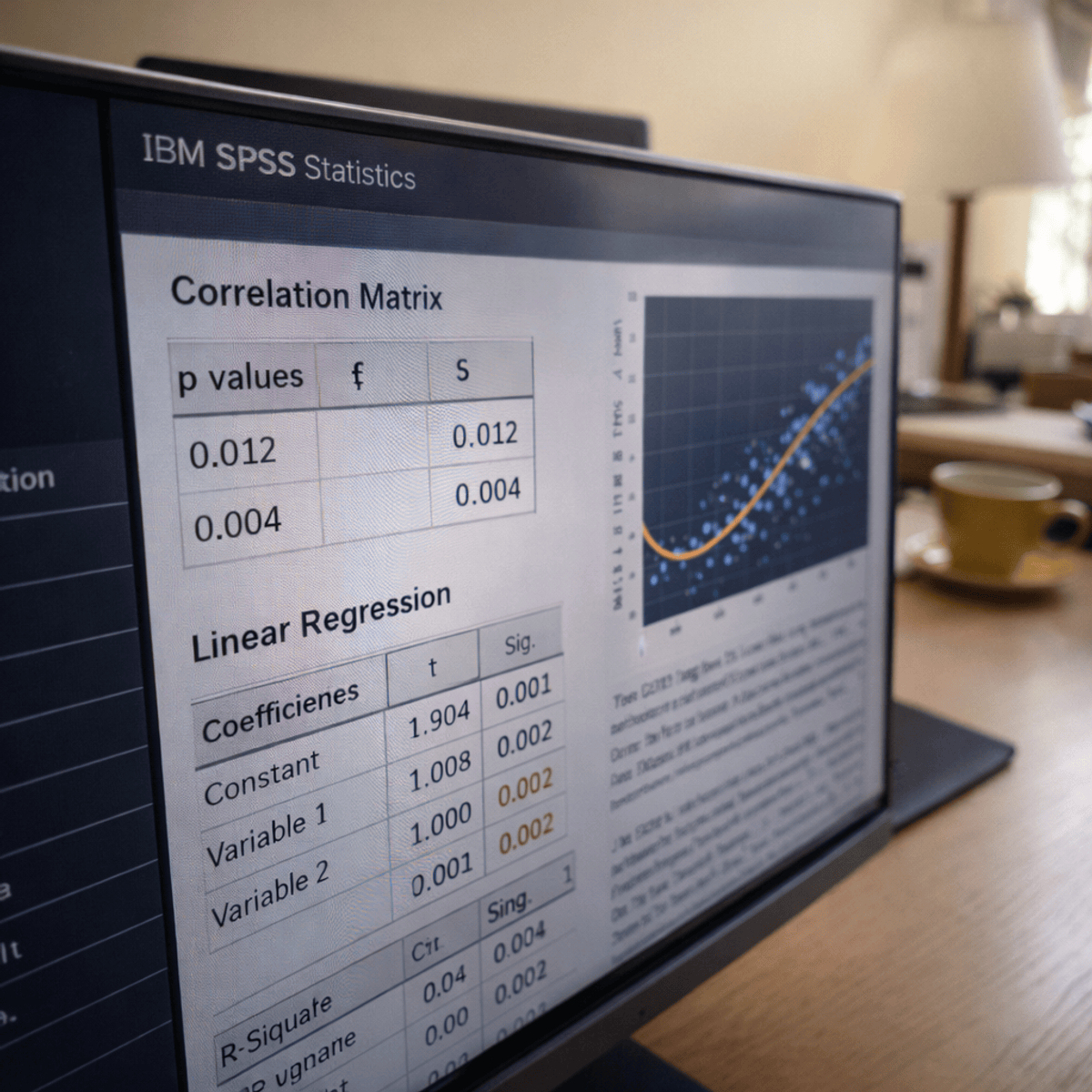
Analyze Advanced Data Projects Using SPSS
Learners will analyze real-world datasets, interpret statistical outputs, evaluate relationships among variables, and apply advanced SPSS techniques to support data-driven decision-making. By the end of this course, learners will confidently move from raw data to meaningful insights using industry-relevant analytical workflows. This course is designed for learners who already understand SPSS fundamentals and want to advance their applied analytics skills through hands-on projects. You will work with realistic datasets to perform descriptive analysis, create and interpret visualizations, compute and analyze correlation matrices, generate statistical estimates, conduct hypothesis testing, and build and evaluate linear regression models. Each module emphasizes not just how to run analyses, but how to interpret results accurately and responsibly. What makes this course unique is its project-centric and interpretation-first approach. Instead of focusing on isolated commands, the course mirrors real analytical practice by integrating data preparation, statistical reasoning, visualization, and result validation into a cohesive workflow. Learners gain practical experience in reading SPSS outputs, diagnosing analytical issues, and communicating insights clearly. By completing this course, learners strengthen their analytical confidence, improve job-ready SPSS proficiency, and build skills directly applicable to research, business analytics, and data-driven roles.
GPU Clusters & Containers
Ready to unlock the power of distributed AI training and production-scale deployment? Modern machine learning demands infrastructure that can handle massive computational workloads while ensuring reliable, scalable service delivery. This Short Course was created to help ML and AI professionals accomplish seamless scaling from prototype to production using cloud GPU clusters and containerized deployment strategies. By completing this course, you'll be able to provision multi-node GPU environments for parallel model training, dramatically reducing training times while implementing robust containerization workflows that ensure consistent, scalable application deployment across environments. By the end of this course, you will be able to: - Apply configurations to cloud GPU clusters for distributed training - Apply containerization and orchestration to deploy and manage applications This course is unique because it bridges the critical gap between model development and production deployment, combining hands-on GPU cluster configuration with enterprise-grade containerization practices. To be successful in this project, you should have a background in cloud computing fundamentals, basic containerization concepts, and machine learning model training workflows.

Generative AI for Workflow Automation
This course introduces you to the transformative potential of Generative AI (GenAI) in driving business process automation, empowering you to design intelligent workflows that enhance efficiency, productivity, and decision-making across various functions. Through interactive lessons and guided demos, you’ll learn how to deploy GenAI-powered chatbots, leverage advanced features like multimodal interactions and personalization, and measure automation success using industry-standard KPIs. By the end of this course, you will be able to: -Explain the role and capabilities of GenAI in automating business workflows and operations -Identify and assess high-impact use cases for GenAI in enterprise functions like customer service, IT, and HR -Design and implement cross-functional automation solutions using GenAI tools and frameworks -Build, personalize, and deploy conversational AI agents to improve user experience and task automation -Measure, optimize, and scale GenAI-powered automation solutions using relevant KPIs and performance metrics This course is ideal for business automation professionals, IT managers, HR specialists, and technical leaders seeking to leverage GenAI for operational efficiency, cross-departmental workflows, and conversational AI solutions in their organizations. A basic understanding of AI concepts, business workflows, and process automation tools is recommended. Join us to learn next-generation GenAI-driven automation workflows that are transforming business operations.
Copywriting with ChatGPT: Produce Compelling Copy That Sells
Can AI be used to help us to create effective copy that actually converts? In this 2-hour project-based course, you'll discover how to leverage ChatGPT, a cutting-edge AI tool, to produce compelling content for an eco-friendly water bottle. As brands compete fiercely for consumer attention, the ability to quickly craft resonant and authentic copy becomes invaluable. You'll journey through defining the bottle's unique selling points, researching your target audience, and refining your copy to ensure it feels genuinely human. By the end, you'll have a piece of copy that not only captivates but also resonates with its core user. Ideal for budding copywriters and marketers, this course requires just a web browser and a dash of creativity. Note: This course works best for learners who are based in the North America region. We’re currently working on providing the same experience in other regions.

Ethics of Generative AI
This comprehensive Foundations of Ethical Generative AI course equips you with the skills to build responsible, transparent, and regulation-ready AI solutions. Begin by mastering core AI ethics principles, understanding ethical concerns, and learning data privacy frameworks like GDPR. Progress into solving transparency challenges by implementing Explainable AI (XAI) techniques and using tools like DALEX for model evaluation. Advance further into analyzing the regulatory, societal, and labor market impacts of Generative AI through real-world case studies in critical domains such as hiring, finance, and healthcare. To be successful in this course, you should have a foundational understanding of AI concepts, data handling, and familiarity with programming or data science workflows. By the end of this course, you will be able to: - Understand Ethical AI Foundations: Learn ethical concerns, frameworks, and data privacy regulations - Build Transparent AI Systems: Address the black box problem using Explainable AI (XAI) methods - Analyze GenAI’s Societal Impact: Study real-world impacts and regulatory needs across industries - Apply Responsible AI Practices: Implement ethical frameworks to drive trustworthy AI solutions Ideal for AI practitioners, data scientists, developers, and compliance professionals focused on building ethical, scalable, and impactful Generative AI systems.

Generative AI for Developers: ChatGPT Prompt Engineering Essentials
This course starts with an overview of chatbot development and the architecture of ChatGPT. You will learn how to write prompts that improve the accuracy and usefulness of AI responses. Through practical exercises, you will use AI for tasks such as data analysis, code generation, translation, and content creation. The course also covers advanced topics like API integration, automated prompt testing, and building custom GPTs, with a focus on automating workflows and customizing AI tools. You will learn how generative AI can interact with files, create images, and use third-party APIs to perform actions. This course is suitable for developers, content creators, and anyone interested in AI, and will help you build practical skills for working with generative AI.