Cursos de Datos e IA
Los mismos datos para todos, vengan de Udemy o de Coursera: precio, valoración, duración e idioma. 470 cursos encontrados. Afinar la búsqueda

Statistical Analysis and Data Modeling in Healthcare
Advance your career in healthcare data analytics by mastering the statistical and predictive modeling techniques used across clinical, operational, and population health settings. In this hands-on course, you’ll learn how to analyze real-world healthcare datasets using descriptive statistics, hypothesis testing, regression analysis, and machine learning. Through interactive labs using Python and Jupyter Notebook in a Google Colab environment, you’ll compute key metrics, evaluate clinical groups, build predictive models, and interpret results with confidence. Designed for healthcare professionals, data analysts, and IT specialists, this course focuses on practical, industry-relevant skills. You’ll discover how to assess treatment effectiveness, explore associations among clinical variables, and generate predictions that support evidence-based clinical decision-making. The course also emphasizes ethical data practices, model validation, fairness, and the unique challenges of working with healthcare data. By the end of the course, you will be able to perform end-to-end healthcare data analysis, from data exploration and statistical testing to predictive modeling and interpretation. You’ll develop job-ready skills in healthcare analytics, statistical modeling, clinical data interpretation, and machine learning for healthcare, preparing you for roles such as healthcare data analyst, clinical data manager, or quality improvement specialist.

AI Ethics, Governance, and Risk - The Complete Guide
This course features Coursera Coach! A smarter way to learn with interactive, real-time conversations that help you test your knowledge, challenge assumptions, and deepen your understanding as you progress through the course. This course empowers you to harness AI and modern tools for effective data modeling, improving your ability to design, analyze, and optimize databases and analytics systems. You'll gain practical experience using ChatGPT and GitHub Copilot to accelerate data model creation and documentation. The journey begins with foundational concepts, covering conceptual, logical, and physical data models, dimensional modeling, additivity, conformed and slowly changing dimensions, normalization, and star schema design. You will explore practical demonstrations in Power BI and diagramming tools, ensuring a strong grasp of data modeling principles. This course is ideal for data analysts, BI professionals, developers, and anyone seeking to leverage AI-assisted tools for data modeling. No prior experience is required, though familiarity with databases is helpful. By the end of the course, you will be able to design conceptual, logical, and dimensional models, implement ETL pipelines, document schemas, perform data quality checks, and integrate AI tools to streamline modeling workflows.

Introduction to Machine Learning
This course provides a foundational understanding of machine learning models (logistic regression, multilayer perceptrons, convolutional neural networks, natural language processing, etc.) and demonstrates how they can solve complex problems in various industries, from medical diagnostics to image recognition to text prediction. Through hands-on practice exercises, you'll implement these data science models on datasets, gaining proficiency in machine learning algorithms with PyTorch, used by leading tech companies like Google and NVIDIA.
Applied Text Mining in Python
This course will introduce the learner to text mining and text manipulation basics. The course begins with an understanding of how text is handled by python, the structure of text both to the machine and to humans, and an overview of the nltk framework for manipulating text. The second week focuses on common manipulation needs, including regular expressions (searching for text), cleaning text, and preparing text for use by machine learning processes. The third week will apply basic natural language processing methods to text, and demonstrate how text classification is accomplished. The final week will explore more advanced methods for detecting the topics in documents and grouping them by similarity (topic modelling). This course should be taken after: Introduction to Data Science in Python, Applied Plotting, Charting & Data Representation in Python, and Applied Machine Learning in Python.

Analyzing Big Data with SQL
In this course, you'll get an in-depth look at the SQL SELECT statement and its main clauses. The course focuses on big data SQL engines Apache Hive and Apache Impala, but most of the information is applicable to SQL with traditional RDBMs as well; the instructor explicitly addresses differences for MySQL and PostgreSQL. By the end of the course, you will be able to • explore and navigate databases and tables using different tools; • understand the basics of SELECT statements; • understand how and why to filter results; • explore grouping and aggregation to answer analytic questions; • work with sorting and limiting results; and • combine multiple tables in different ways. To use the hands-on environment for this course, you need to download and install a virtual machine and the software on which to run it. Before continuing, be sure that you have access to a computer that meets the following hardware and software requirements: • Windows, macOS, or Linux operating system (iPads and Android tablets will not work) • 64-bit operating system (32-bit operating systems will not work) • 8 GB RAM or more • 25GB free disk space or more • Intel VT-x or AMD-V virtualization support enabled (on Mac computers with Intel processors, this is always enabled; on Windows and Linux computers, you might need to enable it in the BIOS) • For Windows XP computers only: You must have an unzip utility such as 7-Zip or WinZip installed (Windows XP’s built-in unzip utility will not work)

ChatGPT + Zapier: From Email Inbox to Excel Spreadsheet
Unlock the power of automation with ChatGPT + Zapier: From Email Inbox to Excel Spreadsheet! This hands-on course teaches you how to streamline workflows by extracting valuable information from your email inbox and effortlessly organizing it into spreadsheets. Whether you want to track expenses, log action items, collect customer reviews, or manage follow-ups, this course gives you the skills to automate tedious tasks and turn unstructured email content into structured data. Imagine transforming your Gmail inbox—or any other email provider supported by Zapier—into a dynamic source of insights. Learn how to automate data extraction and integration with thousands of popular apps in Zapier, such as Salesforce, Office365, HubSpot, Notion, and more. With detailed, step-by-step guidance, you’ll create “Zaps” that connect email providers, ChatGPT, and various apps to build seamless, automated workflows. Each lesson builds your automation skills, from setting up your data destinations and labeling emails, to configuring Zapier actions and leveraging ChatGPT’s natural language processing capabilities to extract actionable information. What You’ll Learn: • Automate Your Data Collection: Build Zaps that automatically extract key information from labeled emails and store it in tools like Google Sheets. • Customize Prompts for ChatGPT: Master the art of prompt engineering to extract structured data like dates, vendors, amounts, and categories from email bodies. • Use Code by Zapier to Process Data: Add custom JavaScript to parse ChatGPT’s responses and format them for various app integrations. • Expand and Tailor Your Automation: Clone and customize your Zap workflows to track different types of information, such as project tasks, customer feedback, or event dates. Key Course Highlights: • From Email to Apps in Minutes: Quickly set up Zaps that move data from your inbox into Google Sheets, freeing up time and reducing manual data entry. • Hands-On Projects: Follow along with practical examples, like automating expense tracking, to learn real-world applications of ChatGPT and Zapier. • Scalable Solutions: Discover how to adapt your workflows for various use cases by changing prompts, labels, or data formats. Go Beyond the Course: While this course teaches you how to integrate Gmail and Google Sheets, the skills you’ll learn can be applied to other email providers supported by Zapier and thousands of connected apps, such as Salesforce, Office365, HubSpot, Notion, and more. The techniques covered will empower you to extend your automations to a variety of tools and platforms—from CRM systems to project management apps—giving you the flexibility to target different data sources and destinations with your new automation expertise. By the end of the course, you’ll be equipped to automate data extraction from emails, save time, and boost your productivity. Let ChatGPT and Zapier work together to transform your everyday tasks—taking you from email overload to organized data and seamless app integrations with the click of a button!
Building Production-Ready Apps with Large Language Models
In the age of artificial intelligence (AI), it is essential to learn how to apply the power of large language models (LLMs) for building various production-ready applications. In this hands-on-course, learners will gain the necessary skills for building and responsibly deploying a conversational AI application. Following the demo provided in this course, learners will learn how to develop a FAQ chatbot using HuggingFace, Python, and Gradio. Core concepts from applying prompt engineering to extract the most value from LLMs to infrastructure, monitoring, and security considerations for real-world deployment will be covered. Important ethical considerations such as mitigating bias, ensuring transparency, and maintaining user trust will also be covered to help learners understand the best practices in developing a responsible and ethical AI system. By the end, learners will have developed familiarity with both the technical and human aspects of building impactful LLM applications. The learners can design, develop, and deploy production-ready applications powered by Large Language Models. This course is designed for individuals with a basic understanding of programming and application development concepts. It is suitable for developers, data scientists, AI enthusiasts, and anyone interested in using LLMs to build practical applications. you need basic concepts, software tools, and an internet-connected computer.

Cluster Analysis and Unsupervised Machine Learning in Python
Updated in May 2025. This course now features Coursera Coach! A smarter way to learn with interactive, real-time conversations that help you test your knowledge, challenge assumptions, and deepen your understanding as you progress through the course. Master the art of unsupervised machine learning with this in-depth course on clustering techniques. Begin by understanding the fundamental concepts of unsupervised learning and how clustering is applied in real-world scenarios. You'll gain insights into key algorithms such as K-Means, hierarchical clustering, and Gaussian Mixture Models, while also learning practical implementation in Python. The course is structured to guide you through various clustering techniques, starting with K-Means clustering. Through a combination of theory, hands-on exercises, and visual walkthroughs, you'll learn how to implement these algorithms, evaluate their effectiveness, and overcome their limitations. Next, you'll dive into hierarchical clustering, exploring its applications in data visualization and real-world contexts, such as evolutionary studies and social media analysis. The final sections cover advanced techniques like Gaussian Mixture Models and Expectation-Maximization, alongside practical comparisons with other methods like K-Means. You'll also explore tools for setting up your environment, coding basics for beginners, and effective learning strategies to optimize your experience in machine learning. Designed for data enthusiasts, analysts, and aspiring machine learning practitioners, this course is ideal for learners with basic Python knowledge who want to deepen their expertise in clustering algorithms. Whether you're a beginner or looking to expand your machine learning toolkit, this course has something for everyone.

Statistical Methods
Build your statistics and probability expertise with this short course from the University of Leeds. The first week introduces you to statistics as the art and science of learning from data. Through multiple real-life examples, you will explore the differences between data and information, discovering the necessity of statistical models for obtaining objective and reliable inferences. You will consider the meaning of "unbiased" data collection, reflecting on the role of randomization. Exploring various examples of data misrepresentation, misconception, or incompleteness will help develop your statistical intuition and good practice skills, including peer review. In the second week, you will learn and practice R software skills in RStudio for exploratory data analysis, creating graphical and numerical summaries. The final week will involve completing probability experiments and computer simulations of binomial trials, such as tossing a coin or rolling a die. This will help you develop an intuitive concept of probability, encompassing both frequentist and subjective perspectives. Throughout the course, you will acquire vital statistical skills by practicing techniques and software commands and engaging in discussions with fellow students. By the end of the course, you will be able to: - Understand and explain the role of statistical models in making inferences from data. - Implement appropriate tools for numerical and graphical summaries using RStudio, and interpret the results. - Evaluate the stability of frequencies in computer simulations through experimental justification and "measurement" of probability. No matter your current level of mathematical skill, you will find practical and real-life examples of statistics in action within this course. This course is a taster of the Online MSc in Data Science (Statistics) but it can be completed by learners who want an introduction to programming and explore the basics of Python.
Data Science Methodology
If there is a shortcut to becoming a Data Scientist, then learning to think and work like a successful Data Scientist is it. In this course, you will learn and then apply this methodology that you can use to tackle any Data Science scenario. You’ll explore two notable data science methodologies, Foundational Data Science Methodology, and the six-stage CRISP-DM data science methodology, and learn how to apply these data science methodologies. Most established data scientists follow these or similar methodologies for solving data science problems. Begin by learning about forming the business/research problem Learn how data scientists obtain, prepare, and analyze data. Discover how applying data science methodology practices helps ensure that the data used for problem-solving is relevant and properly manipulated to address the question. Next, learn about building the data model, deploying that model, data storytelling, and obtaining feedback You’ll think like a data scientist and develop your data science methodology skills using a real-world inspired scenario through progressive labs hosted within Jupyter Notebooks and using Python.

Financial Reporting with Tableau: Parameters & Filters
In this guided project, you'll master Tableau's interactive features to create dynamic financial dashboards. Using a real-world financial statements dataset, you'll learn how to design reports that allow for deeper data exploration and analysis. You will start with learning how to use parameters to switch between key metrics, like the income statement, balance sheet and cash flow. Next, you'll explore how to use filters to focus on specific financial information by year and statement item. By the end of this project, you will be able to effectively use both parameters and filters to build fully interactive financial dashboards. You’ll have the skills to build professional-grade dashboards that drive data-driven decisions. This project is ideal for finance professionals, data analysts, or anyone looking to enhance their data visualization and reporting skills using Tableau. Learn to turn raw financial data into powerful, actionable insights. Learners should have: • Basic knowledge of financial statements and business analysis (e.g., income statements, revenue, profit) • Tableau Desktop (or Tableau Public) installed and ready to use • A willingness to explore how dynamic parameters and filters enhance real-time financial analysis
Структурирование проектов по машинному обучению
Из этого курса вы узнаете, как создавать успешные проекты по машинному обучению. Вы — лидер команды по внедрению ИИ или хотите им стать? Этот курс научит вас ставить правильные цели для своей команды. Многое из содержимого этого курса никогда не предлагалось в других образовательных проектах и наработано на основе моего опыта построения и внедрения многочисленных проектов. В настоящий курс также включены два тренажера, которые позволят вам отработать принятие решений в ходе организации проектов по машинному обучению. Тренажеры дадут вам опыт, на получение которого иначе могло бы потребоваться несколько лет работы в машинном обучении. После двух недель занятий вы: — поймете, как диагностировать ошибки в системах машинного обучения; — научитесь выделять наиболее перспективные направления для снижения количества ошибок; — получите знания о сложных настройках машинного обучения, таких как несоответствие наборов для обучения тестовым наборам, и сравнении показателей машины с показателями человеческого уровня; — узнаете, как применять сквозное обучение (end-to-end learning), перенос обучения (transfer learning) и многозадачное обучение (multi-task learning). Я видел, как команды специалистов впустую тратили месяцы и даже годы работы потому, что не понимали принципы, излагаемые в этом курсе. Я надеюсь, что этот двухнедельный курс сэкономит месяцы вашего времени. Он независим от других, и для его прохождения нужны только базовые знания в области машинного обучения. Это третий курс специализации «Глубокое обучение».
Build AI Agents & Secure API Integrations with n8n
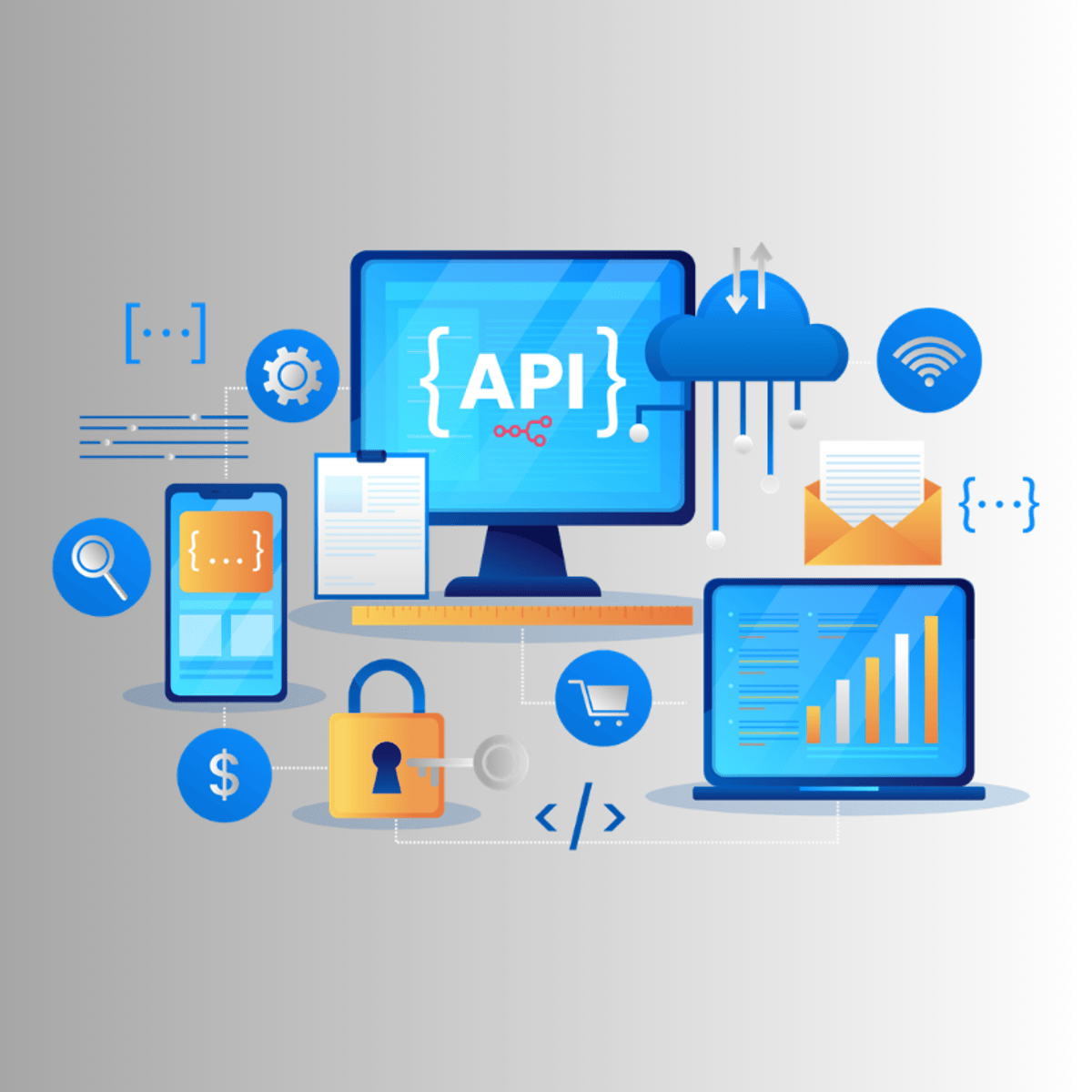
Knowing what AI agents are is not the same as building one that works. This course closes that gap. AI agents are already automating research, handling APIs, securing integrations, and making decisions in real workflows. This course gives you the hands-on skills to do the same. Here is what you will build: AI Research Agent with Live Web Search & Memory: Your agent searches the web, scrapes results, stores the context in memory, & delivers structured research without you lifting a finger. Weather API Bot with Webhooks and Custom Logic: Get real-time weather alerts delivered automatically through a live API, a webhook trigger, and custom JavaScript logic you build yourself. Secure Webhook System with HMAC and Rate Limiting: Protect your API integrations with signature-based security, block unauthorized access, and keep your system stable under load. Who is this for: professionals, career switchers, and curious builders across every role who want to go beyond basic automation and start building AI systems that work. 200,000+ learners have chosen LearnKartS across 160+ courses on Coursera. The skills you build here are already in demand. Claim your spot now.

NLP: Twitter Sentiment Analysis
In this hands-on project, we will train a Naive Bayes classifier to predict sentiment from thousands of Twitter tweets. This project could be practically used by any company with social media presence to automatically predict customer's sentiment (i.e.: whether their customers are happy or not). The process could be done automatically without having humans manually review thousands of tweets and customer reviews. Note: This course works best for learners who are based in the North America region. We’re currently working on providing the same experience in other regions.

Harden AI: Patch and Recover Incidents Fast
Master the critical skills needed to maintain AI systems in production through this hands-on course designed for DevOps engineers, ML engineers, and SREs. As AI deployments grow more complex, the ability to patch safely, recover from incidents quickly, and maintain operational health becomes essential. Through realistic crisis scenarios, you'll learn systematic patching strategies that minimize downtime, conduct blameless post-mortems that transform failures into knowledge, and build monitoring systems that detect issues before users notice. Work with industry tools like MLflow while practicing with real incident data. You'll tackle challenges like emergency vulnerability patches, investigate mysterious model failures, and design monitoring for a million-user scale. Each module features immersive scenarios where you make critical decisions under pressure. Ideal for DevOps, ML engineers, and SREs managing AI systems in production. Perfect for those seeking to strengthen skills in monitoring, incident response, and reliability, or preparing for senior operations roles. Basic knowledge of AI/ML concepts, familiarity with deployment pipelines, and some experience in incident management are recommended for successful course completion. By course completion, you'll confidently handle production AI incidents, implement preventive measures, and lead operational excellence initiatives. Perfect for professionals managing AI in production or preparing for senior DevOps/SRE roles.
Introducción al deep learning contemporáneo
El aprendizaje profundo actualmente es una parte central de la inteligencia artificial contemporánea, y se refiere al proceso realizado por los computadores para aprender de la experiencia permitiendo describir abstracciones complejas a partir de conceptos más simples de forma jerárquica. Este curso presenta una introducción al aprendizaje profundo, centrándose en los métodos más utilizados en diferentes contextos y tipos de datos. A lo largo del curso se estudiarán arquitecturas como redes neuronales artificiales, redes neuronales convolucionales, redes neuronales recurrentes, Transformers para lenguaje y para visión y redes generativas como las redes generativas adversarias y los modelos de difusión. Este es el único curso en español disponible en la plataforma que habla de las más recientes arquitecturas de aprendizaje profundo, como lo son los Transformers para visión.
Creating Multi Task Models With Keras
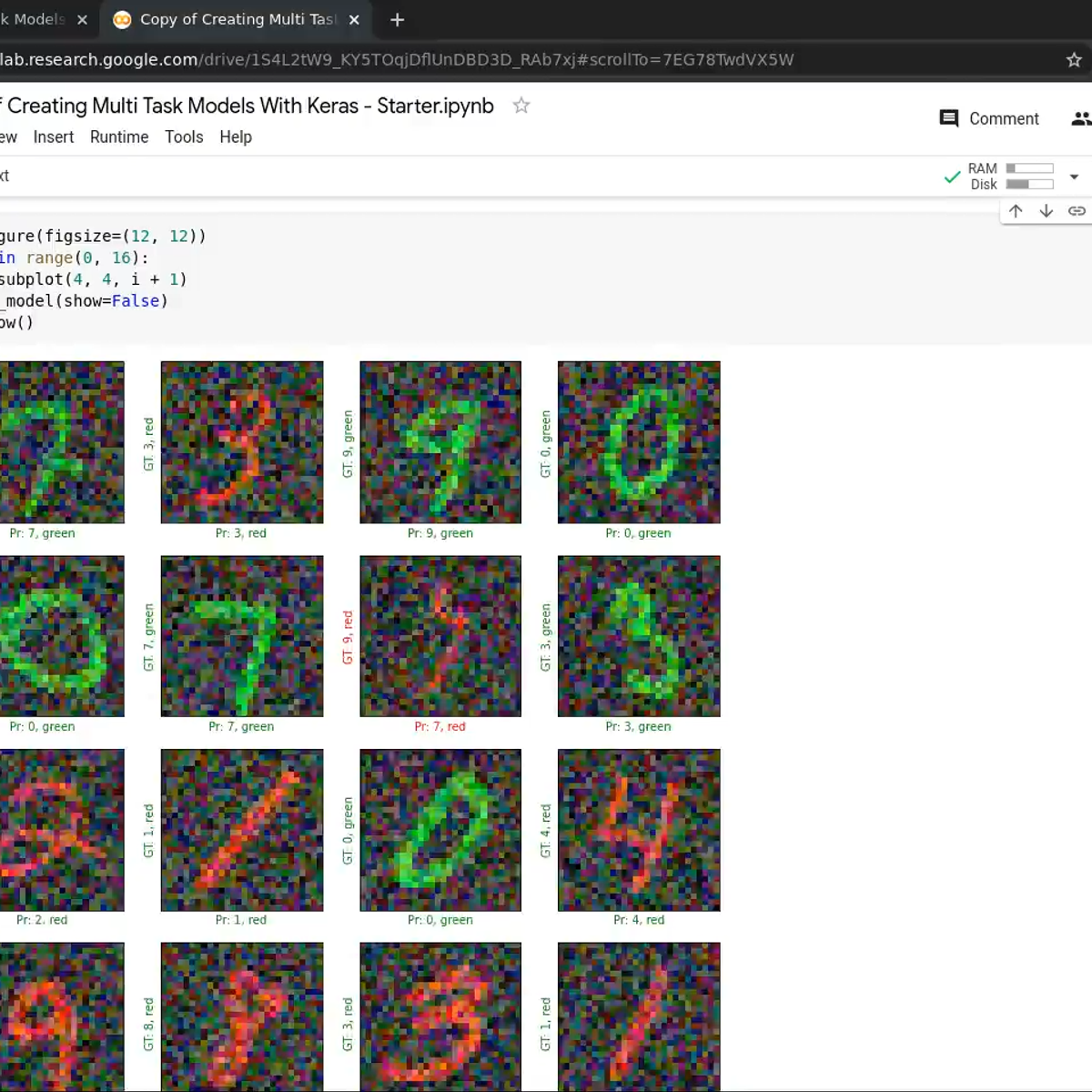
In this 1 hour long guided project, you will learn to create and train multi-task, multi-output models with Keras. You will learn to use Keras' functional API to create a multi output model which will be trained to learn two different labels given the same input example. The model will have one input but two outputs. A few of the shallow layers will be shared between the two outputs, you will also use a ResNet style skip connection in the model. If you are familiar with Keras, you have probably come across examples of models that are trained to perform multiple tasks. For example, an object detection model where a CNN is trained to find all class instances in the input images as well as give a regression output to localize the detected class instances in the input. Being able to use Keras' functional API is a first step towards building complex, multi-output models like object detection models. We will be using TensorFlow as our machine learning framework. The project uses the Google Colab environment. You will need prior programming experience in Python. You will also need prior experience with Keras. Consider this to be an intermediate level Keras project. This is a practical, hands on guided project for learners who already have theoretical understanding of Neural Networks, Convolutional Neural Networks, and optimization algorithms like gradient descent but want to understand how to use use Keras to write custom, more complex models than just plain sequential neural networks. Note: This course works best for learners who are based in the North America region. We’re currently working on providing the same experience in other regions.
Evaluating and Debugging Generative AI
Machine learning and AI projects require managing diverse data sources, vast data volumes, model and parameter development, and conducting numerous test and evaluation experiments. Overseeing and tracking these aspects of a program can quickly become an overwhelming task. This course will introduce you to Machine Learning Operations tools that manage this workload. You will learn to use the Weights & Biases platform which makes it easy to track your experiments, run and version your data, and collaborate with your team.

Data Science Companion
The Data Science Companion provides an introduction to data science. You will gain a quick background in data science and core machine learning concepts, such as regression and classification. You’ll be introduced to the practical knowledge of data processing and visualization using low-code solutions, as well as an overview of the ways to integrate multiple tools effectively to solve data science problems. You will then leverage cloud resources from Amazon Web Services to scale data processing and accelerate machine learning model training. By the end of this short course, you will have a high-level understanding of important data science concepts that you can use as a foundation for future learning.

Build Intelligent Agents Using DeepSeek & N8N
This n8n course gives you hands-on ai agents course skills for automating real business tasks without writing code, using n8n and DeepSeek together. Start with Foundations of Workflow Automation and Project Setup. You install and configure n8n, explore its node based interface, and connect it to DeepSeek, Gmail, and Google Sheets. Then in Module 2, Designing Intelligent Workflows with N8N and LLMs. You build automated workflows, apply prompt engineering, and chain DeepSeek powered AI agents to generate content and decisions. Module 3, Automating Data Analysis with DeepSeek and N8N. You extract data from PDFs and emails, apply DeepSeek to classify that data, and route results into Google Sheets. Finally, Error Handling and Deployment. You test, debug, and deploy your automation into a stable, production ready system. By the End, You Will: - Build a complete no-code automation project for this n8n course outcome using real triggers and nodes - Apply DeepSeek and prompt engineering to design intelligent, decision-making AI agents - Analyze and extract data from PDFs and emails using AI workflow automation techniques - Develop a production ready, error-handled automation you can showcase in interviews Ideal For: business professionals automating repetitive tasks and startup founders exploring ai automation tools. Product managers and enthusiasts curious about building ai agents will also benefit. Automate smarter, not harder. Enroll and start this n8n full course today. Disclaimer: This course is an independent educational resource developed by Board Infinity and is not affiliated with, endorsed by, sponsored by, or officially associated with Deepseek & n8n or any of its subsidiaries or affiliates. This course is not an official preparation material of deepseek & n8n. All trademarks, service marks, and company names mentioned are the property of their respective owners and are used for identification purposes only.

Responsible AI Practices
In this course, you will learn about responsible artificial intelligence (AI) practices. In the first section of this course, you will be introduced to what responsible AI is. You will learn how to define responsible AI, understand the challenges that responsible AI attempts to overcome, and explore the core dimensions of responsible AI. Then in the next section of the course, you will dive into some topics for developing responsible AI systems. In this section of the course, you will learn about some of the services and tools that AWS offers to help you with responsible AI. You will also learn about responsible AI considerations for selecting a model and preparing data for your AI systems. Finally, in the last section of the course, you learn what it means for a model to be transparent and explainable. You will also learn about tradeoffs to consider between safety and transparency for an AI model and the principles of human-centered design for explainable AI.

Optimize Deep Learning: Tune PyTorch Models
Optimize Deep Learning: Tune PyTorch Models is an intermediate course for deep learning practitioners ready to move beyond off-the-shelf training and gain granular control over their models. Standard training loops can hide critical issues, leading to unstable performance and suboptimal results. This course empowers you to take full command of the training process using PyTorch Lightning. You will learn to implement custom callbacks for sophisticated control, such as early stopping and model checkpointing, to save costs and prevent overfitting. Through hands-on labs, you will master advanced debugging techniques, learning to diagnose and fix training instabilities by analyzing gradient norms and activation distributions. You will also gain practical experience in fine-tuning large, pretrained models for specialized tasks. By the end of this course, you will be able to build, diagnose, and optimize high-performing, stable, and efficient PyTorch models ready for real-world deployment.
Mastering Data Analysis with Pandas
In this structured series of hands-on guided projects, we will master the fundamentals of data analysis and manipulation with Pandas and Python. Pandas is a super powerful, fast, flexible and easy to use open-source data analysis and manipulation tool. This guided project is the first of a series of multiple guided projects (learning path) that is designed for anyone who wants to master data analysis with pandas. Note: This course works best for learners who are based in the North America region. We’re currently working on providing the same experience in other regions.

Generative AI Foundations
Generative AI Foundations is a comprehensive course designed to provide learners with a strong foundation in Generative Artificial Intelligence, covering key principles, core methodologies, and real-world applications across multiple domains such as text, images, audio, and code. Ideal for beginners and professionals alike, this course explores how Generative AI models like GANs, VAEs, and transformers are transforming industries through content creation, automation, and innovation. By the end of this course, you will have acquired the knowledge and skills to: - Grasp the foundational concepts and technical intricacies of Generative AI, including its advantages and limitations. - Apply Generative AI for code generation, enhancing your programming efficiency and creativity in Python and other languages. - Master the art of prompt engineering to optimize interactions with AI models like ChatGPT, leading to improved outcomes in code generation and beyond. - Utilize ChatGPT for learning and mastering Python, data science, and software development practices, thereby broadening your technical skill set. - Explore the revolutionary fields of Autoencoders and Generative Adversarial Networks (GANs), understanding their architecture, operation, and applications. - Dive into the world of language models and transformer-based generative models, gaining insights into their mechanisms, applications, and impact on the future of AI. This course is meticulously crafted to cater to a broad audience, including software developers, data scientists, AI enthusiasts, and professionals seeking to leverage Generative AI technologies for innovative solutions. While prior knowledge of Generative AI Fundamentals or Python Coding is helpful, but it is not a prerequisite to complete the course. Whether you're looking to enhance your existing skills or embark on a new career path in the field of AI, this course will provide you with the knowledge, practical skills, and confidence to succeed. Join us on this exciting journey into the world of Generative AI!

Real-World SQL Projects - 5 Hands-On Case Studies
A smarter way to learn with interactive, real-time conversations that help you test your knowledge, challenge assumptions, and deepen your understanding as you progress through the course. Gain practical SQL expertise by working through real-world datasets and solving business-focused problems across multiple domains. This course helps you build strong analytical thinking, improve query-writing skills, and develop a portfolio of hands-on projects that demonstrate your ability to extract actionable insights from data. You’ll begin by setting up your SQL environment and learning how to approach project-based learning effectively. Then, you’ll dive into your first case study analyzing IPL team data, followed by T20 cricket matches, where you’ll progressively tackle increasingly complex queries and uncover meaningful patterns. As you advance, you’ll work with diverse datasets including flight operations, hospital records, and retail superstore sales. You’ll also learn essential data cleaning techniques and consistently apply structured exploration methods to answer real-world questions while publishing your work on GitHub. This course is ideal for aspiring data analysts, SQL beginners, and professionals looking to gain hands-on experience. Basic familiarity with databases is helpful but not required, making this a beginner-friendly yet practical learning experience. By the end of the course, you will be able to design and execute SQL queries, analyze diverse datasets, clean and transform data, and publish end-to-end data projects using GitHub.

Elasticsearch: Build, Query & Optimize with ELK
Build practical Elasticsearch skills and learn to create, query, and manage distributed search solutions with the ELK Stack. You’ll begin by exploring NoSQL fundamentals and the core architecture of Elasticsearch, including clusters, nodes, indices, documents, mappings, and data types. Using Kibana Dev Tools, you’ll interact with Elasticsearch and test queries in real time. You’ll then examine how character filters, tokenizers, and token filters process text, and implement edge n-gram and synonym analyzers to improve search relevance and autocomplete. You’ll also configure cluster discovery and gateway settings to improve stability and prevent split-brain issues. As you progress, you’ll distinguish query and filter contexts and build match, term-level, range, prefix, geo_point, and geo_shape queries. You’ll use Cluster, Indices, Document, and Bulk APIs to monitor cluster health, manage shards and aliases, and perform efficient CRUD operations. Designed for beginners in NoSQL and IT professionals ready to advance their search expertise, this course uniquely connects distributed architecture, near real-time search, query precision, and practical troubleshooting. You’ll also understand how Elasticsearch works with Logstash and Kibana for real-time data ingestion, indexing, and visualization. Enroll to develop applicable skills for scalable, data-driven environments.
Apply Generative AI for Coaching, Research, and Performance
By completing this course, learners will be able to apply generative AI tools for personalized coaching, analyze AI-assisted research and writing workflows, and evaluate strategic applications of AI in performance management and organizational decision-making. This course provides a comprehensive, practice-oriented exploration of generative AI across three critical domains: coaching and productivity, research and writing, and performance management. Learners begin by mastering ChatGPT fundamentals, including configuration, prompt engineering, ethical considerations, and real-time feedback for continuous improvement. The course then advances into AI-powered research and writing, with a deep focus on Perplexity AI—covering synthesis, citation-based research, advanced features, and practical limitations. Finally, learners examine how generative AI transforms performance management through goal setting, OKRs, employee engagement, calibration, ROI evaluation, and strategic AI integration. What makes this course unique is its end-to-end perspective: it moves beyond tool demonstrations to connect AI capabilities with human judgment, emotional intelligence, and organizational strategy. Through structured modules, practice quizzes, and graded assessments, learners gain not only technical proficiency but also the critical thinking skills needed to use AI responsibly and effectively in real-world professional contexts. This course is ideal for professionals, educators, researchers, and leaders seeking to leverage generative AI for measurable impact and long-term value.

Trustworthy AI: Managing Bias, Ethics, and Accountability
The course "Responsible AI and Ethics" explores the ethical, social, and technical aspects of artificial intelligence (AI) and machine learning (ML). It focuses on understanding bias in both human and machine systems and provides strategies for mitigating risks. By examining key issues such as fairness, accountability, and the regulatory landscape, learners will gain essential knowledge to navigate the ethical challenges in AI. Through case studies and real-world examples, students will explore the complexities of AI implementations, assessing their impact on society and industries. This course provides practical insights into responsible AI development, emphasizing both ethical decision-making and effective risk management. By the end of the course, learners will be equipped to lead AI projects that balance innovation with accountability, ensuring AI systems are fair, transparent, and sustainable. This unique combination of theoretical knowledge and real-world applications makes the course invaluable for anyone aiming to lead in the AI field.

Compartir datos a través del arte de la visualización
Este es el sexto curso del Certificado de análisis computacional de datos de Google. En estos cursos obtendrás las habilidades necesarias para solicitar empleos de analista de datos de nivel introductorio. A medida que realices el proceso de análisis de datos, aprenderás a visualizar y presentar tus descubrimientos con respecto a los datos. En este curso, se explicará de qué manera las visualizaciones de datos, como los paneles visuales, pueden darles vida a tus datos. Además, explorarás Tableau, una plataforma de visualización de datos que te permitirá crear visualizaciones eficaces para tus presentaciones. Los analistas de datos actuales de Google seguirán dándote instrucciones y te proporcionarán formas prácticas de llevar a cabo las tareas comunes de los analistas de datos con las mejores herramientas y recursos. Los alumnos que completen este programa de certificados estarán listos para solicitar trabajos de nivel introductorio como analistas de datos. No se requiere experiencia previa. Al final de este curso, serás capaz de: - Comprender la importancia de la visualización de datos. - Aprender a crear una narrativa convincente por medio de historias de datos. - Comprender cómo usar Tableau para crear paneles y filtros de paneles. - Descubrir cómo usar Tableau para crear visualizaciones eficaces. - Explorar las prácticas y los principios relacionados con las presentaciones eficaces. - Aprender a considerar posibles limitaciones relacionadas con los datos de tus presentaciones. - Comprender cómo aplicar las prácticas recomendadas en las sesiones de preguntas y respuestas con tu público.
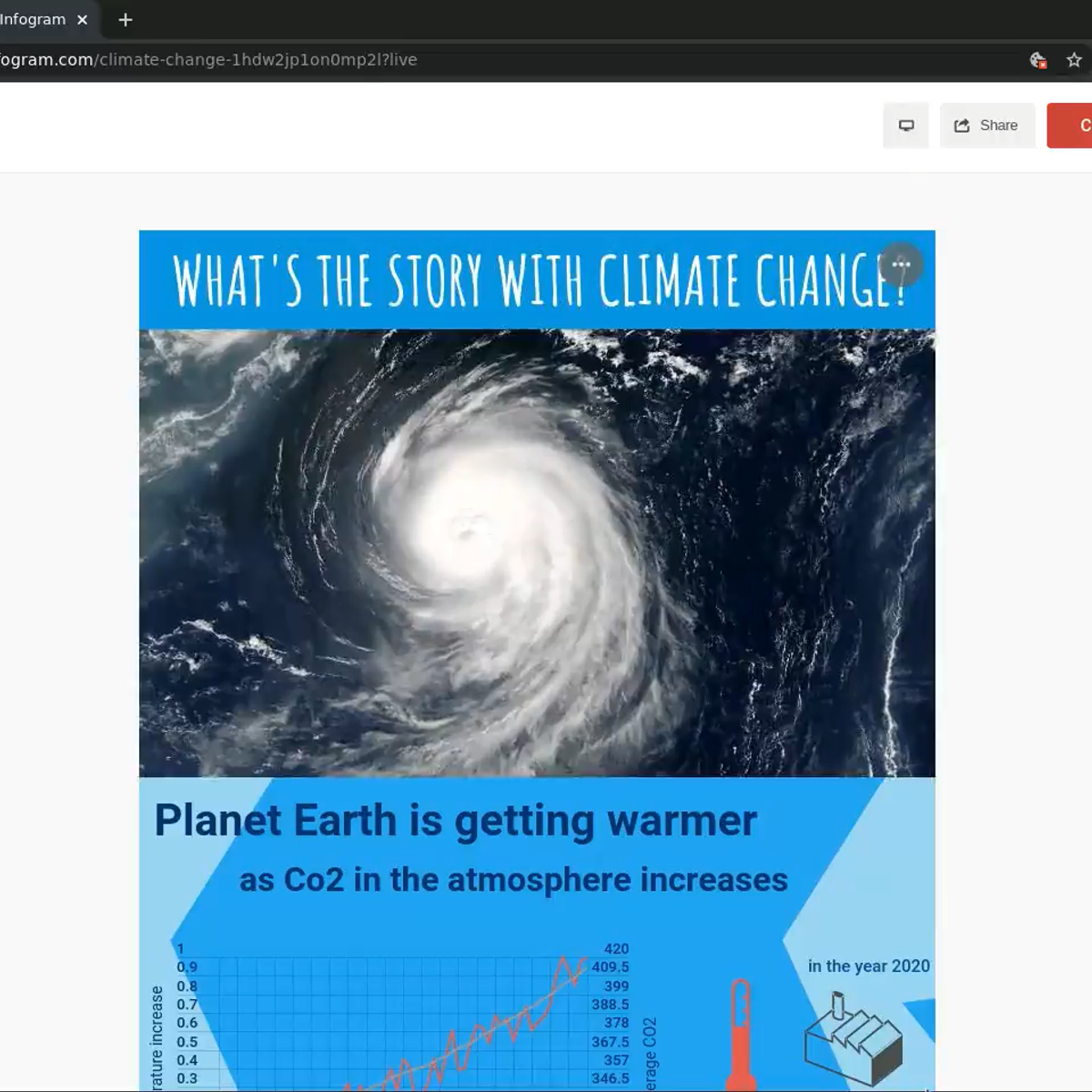
Create an infographic with Infogram
In this 2-hour long project-based course, you will learn how to design effectively an infographic with infogram.com, adding line, bar and map charts, and connecting the data story with text and visuals. Note: This course works best for learners who are based in the North America region. We’re currently working on providing the same experience in other regions.

Advanced Tokenization and Sentiment Analysis
This course offers a clear pathway to undertsand advanced tokenization and sentiment analysis—two core pillars of modern NLP. You'll learn how to convert raw text into structured input using subword, character-level, and adaptive tokenization techniques, and how to extract sentiment using rule-based, statistical, and deep learning models. Through hands-on exercises, you’ll gain the skills to handle complex language input, model sentiment at fine granularity, and deploy systems that generalize across domains and languages. By the end of this course, you will be able to: - Explain and apply advanced tokenization techniques, including BPE, character-level, and streaming methods - Handle out-of-vocabulary terms and domain-specific language using adaptive and hybrid encoding strategies - Build sentiment analysis models using VADER, Naïve Bayes, BERT, and RoBERTa - Address challenges such as class imbalance, multilingual variation, and aspect-level sentiment - Evaluate sentiment systems using semantic similarity, temporal trends, and domain-specific metrics This course is ideal for NLP practitioners, data scientists, developers, and applied researchers aiming to build robust, ethical, and production-ready sentiment analysis systems. A basic understanding of Python, NLP fundamentals, and machine learning is recommended. Join us to learn how tokenization and sentiment analysis power the next generation of intelligent language technologies.
Responsible and Ethical AI
In this course, we will investigate the ethical challenges in Artificial Intelligence (AI) systems. The focus of this course is on preparing students with the knowledge and practical approaches necessary in designing reliable and ethical AI systems that are responsible and trustworthy. Key topics covered include: • Bias and Fairness in AI and Machine Learning • Nature of data privacy and AI Risks • Understanding AI regulations. • Frameworks for building truly trustworthy and responsible AI. There are 2 hands-on labs in this course. You need knowledge of python and basics of AI model development.

Hello, Python!
In this course, you'll discover the main features and benefits of the Python programming language, and how Python can help power your data analysis. Python is an object-oriented programming language based on objects that contain data and useful code. You’ll become familiar with the core concepts of object-oriented programming: object, class, method, and attribute. You’ll learn about Jupyter Notebooks, an interactive environment for coding and data work. You’ll investigate how to use variables and data types to store and organize your data; and, you'll begin practicing important coding skills. By the end of this course, you will be able to: - Explain Python fundamentals, including core Python syntax, data types (integer, float, string), and variable assignment - Define fundamental concepts like object, class, method, and attribute in object-oriented programming - Recognize the uses and benefits of Jupyter Notebook for data work and as a Python environment - Identify Python's relevance to data science and why it is an essential tool for data analysis - Perform basic mathematical calculations in Python - Use Python's inherent capabilities to explore data effectively with built-in functions and keywords - Gain knowledge of how to manage and utilize Python packages and interpreter options

Building a Generative AI-Ready Organization
The Building a Generative AI Ready Organization course provides components needed for a successful organizational adoption of Generative AI. This course focuses on business leaders and other decision-makers currently or potentially involved in Generative AI projects.

Supervised Text Classification for Marketing Analytics
Build reliable supervised classifiers from marketing text and defensible human labels. Learners create coding rules, reconcile coders into gold-standard labels, transform text into predictive features, train a regularized elastic-net model, separate training from validation evidence, and use errors and learning curves to judge model quality and the value of collecting more labeled data.

데이터 기반 의사결정을 위한 질문
Google 데이터 애널리틱스 수료증 과정의 두 번째 강좌입니다. 본 강좌에서는 데이터 애널리스트 직무에 필요한 입문 수준의 스킬을 배우게 됩니다. Google 데이터 애널리틱스 수료증 과정의 첫 번째 강좌에서 배운 주제에 대한 이해를 넓힙니다. 이 자료는 이해관계자의 요구사항에 따른 데이터 기반 의사결정을 내리기 위해 효과적으로 질문하는 방법을 배우는 데 도움이 됩니다. 현직 Google 데이터 애널리스트가 최고의 도구와 리소스를 사용하여 일반적인 데이터 분석 작업을 완료하는 실습을 제공하고 지도합니다. 이 수료증 과정을 완료한 수강생은 데이터 애널리스트로서 입문 수준의 직무에 지원할 역량을 갖추게 됩니다. 관련 경험은 필요하지 않습니다. 본 강좌의 목표는 다음과 같습니다. - 분석 방향을 정하는 데 도움이 되는 효과적인 질문 기법을 학습합니다. - 데이터 기반 의사결정이 무엇인지와 데이터 애널리스트가 발견한 정보를 제시하는 방식을 이해합니다. - 질문 방식 및 의사결정의 이해에 도움이 되는 다양한 실제 비즈니스 시나리오를 살펴봅니다. - 스프레드시트가 데이터 애널리스트에게 중요한 도구인 이유와 사용 방식을 알아봅니다. - 구조적 사고와 관련된 핵심 개념 및 이러한 아이디어가 애널리스트의 문제 파악과 해결책 개발에 어떤 도움이 되는지 살펴봅니다. - 비즈니스 목표를 달성하기 위해 데이터 애널리틱스팀과의 명확한 의사소통 방식을 구축하는 전략과 이해관계자의 기대치를 관리하기 위한 전략을 학습합니다.

Vibe Coding with Cursor AI
Get up and running with Cursor AI, the next-gen developer tool designed to boost productivity with powerful AI-assisted workflows. In this hands-on course, you’ll start by installing Cursor AI and exploring its sleek, developer-friendly interface. Then, you’ll unlock how to code smarter and faster with its AI chat panel, agent mode, and context-aware tools. Whether you're debugging tricky issues, building projects from scratch, or iterating on features, Cursor AI makes it all smoother—and a lot more efficient. You’ll learn how to collaborate with Cursor’s AI to generate, refactor, and review code, and you'll build real apps like a quote generator using these tools. By the end, you’ll not only be confident navigating Cursor, but you’ll also have a clearer understanding of how to integrate AI into your dev workflow for real-world projects. Perfect for devs curious about AI tooling—or anyone ready to code with a little extra help from a very smart assistant.
Data Processing and Manipulation
The "Data Processing and Manipulation" course provides students with a comprehensive understanding of various data processing and manipulation concepts and tools. Participants will learn how to handle missing values, detect outliers, perform sampling and dimension reduction, apply scaling and discretization techniques, and explore data cube and pivot table operations. This course equips students with essential skills for efficiently preparing and transforming data for analysis and decision-making. Learning Objectives: 1. Understand the importance of data processing and manipulation in the data analysis pipeline. 2. Learn techniques to handle missing values in datasets, including imputation and exclusion strategies. 3. Identify and detect outliers to assess their impact on data analysis and decision-making. 4. Explore sampling methods and dimension reduction techniques for large datasets and high-dimensional data. 5. Apply data scaling techniques to normalize and standardize variables for meaningful comparisons. 6. Utilize discretization to transform continuous data into categorical representations, simplifying analysis. 7. Understand the concept of data cube and perform multidimensional aggregation for exploratory analysis. 8. Create pivot tables to summarize and reshape data, gaining valuable insights from complex datasets. Throughout the course, students will actively engage in practical exercises and projects, allowing them to apply data processing and manipulation techniques to real-world datasets. By the end of the course, participants will be well-equipped to effectively prepare, clean, and transform data for subsequent analysis tasks and data-driven decision-making.

Power BI: Data Visualization and Analysis
This course is designed to provide a comprehensive foundation in Power BI, equipping learners with the skills to visualize, analyze effectively, and present data insights. Participants will explore a variety of chart types, understand their applications, and optimize visual reporting for business intelligence. The course begins with an introduction to various bar and column charts, including stacked bar, stacked column, clustered bar, and clustered column charts, essential for comparative analysis. Learners will then progress to line charts, pie charts, funnel charts, scatter charts, and map charts, providing insights into trends, distributions, and geographical data. Participants will gain hands-on experience working with table and matrix visuals, understanding the role of filters and KPI visuals for tracking performance metrics. Special emphasis is placed on card visuals, report types in Power BI, and designing analytical report layouts for clarity and impact. Advanced visualization techniques, including ribbon charts, waterfall charts, and gauge charts, will be explored alongside methods for selecting appropriate report visuals. Additionally, learners will delve into integrated visuals, such as line and stacked column charts, line and clustered column charts, ensuring effective multi-dimensional analysis. This course is structured into multiple modules, each featuring lessons and video lectures that provide both theoretical understanding and hands-on practice. Participants will engage with 3:00–4:00 hours of instructional content, reinforcing learning through graded and ungraded assignments to ensure real-world applicability. Module 1 - Power BI Visualizations: Essential Charts for Data Storytelling Module 2 - Power BI Visualizations: KPI Insights and Reporting Whether you're preparing for Power BI certification or seeking to optimize business intelligence workflows, this course equips you with the essential skills to master visualization techniques and enhance data-driven decision-making. The course is for Business Managers, Data Analysis Managers, Digital Marketing Managers, Power BI Associates and Experts.

Validate Multimodal Data: Ensure Quality
Did you know that 90% of multimodal AI system failures can be traced back to data quality issues that could have been prevented with proper validation techniques? This Short Course was created to help machine learning and AI professionals accomplish systematic multimodal data validation that ensures system reliability and performance. By completing this course, you'll be able to implement robust validation frameworks that catch data integrity issues before they impact your AI models, saving countless hours of debugging and improving system accuracy. By the end of this course, you will be able to: Evaluate multimodal data for consistency and completeness Verify temporal alignment between different data streams Check referential consistency across modalities Assess completeness of multimodal records Implement automated validation pipelines This course is unique because it combines theoretical validation principles with hands-on implementation using industry-standard tools like Great Expectations, giving you immediately applicable skills for production environments. To be successful in this project, you should have a background in data engineering, basic machine learning concepts, and familiarity with Python programming.

Getting Started with SAS Programming
This course is for users who want to learn how to write SAS programs to access, explore, prepare, and analyze data. It is the entry point to learning SAS programming for data science, machine learning, and artificial intelligence. It is a prerequisite to many other SAS courses. By the end of this course, you will know how to use SAS Studio to write and submit SAS programs that access SAS, Microsoft Excel, and text data. You will know how to explore and validate data, prepare data by subsetting rows and computing new columns, analyze and report on data, export data and results to other formats, use SQL in SAS to query and join tables. Prerequisites: Learners should have experience using computer software. Specifically, you should be able to understand file structures and system commands on your operating systems and access data files on your operating systems. No prior SAS experience is needed.

Probability Foundations for Data Science and AI
Understand the foundations of probability and its relationship to statistics and data science. We’ll learn what it means to calculate a probability, independent and dependent outcomes, and conditional events. We’ll study discrete and continuous random variables and see how this fits with data collection. We’ll end the course with Gaussian (normal) random variables and the Central Limit Theorem and understand its fundamental importance for all of statistics and data science. This course can be taken for academic credit as part of CU Boulder’s Master of Science in Data Science (MS-DS) and the Master of Science in Artificial Intelligence (MS-AI) degrees offered on the Coursera platform. These interdisciplinary degrees bring together faculty from CU Boulder’s departments of Applied Mathematics, Computer Science, Information Science, and others. With performance-based admissions and no application process, the CU degrees on Coursera are ideal for individuals with a broad range of undergraduate education and/or professional experience in computer science, information science, mathematics, and statistics. Learn more about the MS-DS program at https://www.coursera.org/degrees/master-of-science-data-science-boulder. Learn more about the MS-AI program at https://www.coursera.org/degrees/ms-artificial-intelligence-boulder Logo adapted from photo by Christopher Burns on Unsplash.

Data Analytics in Excel Using Real-World Examples
This course features Coursera Coach! A smarter way to learn with interactive, real-time conversations that help you test your knowledge, challenge assumptions, and deepen your understanding as you progress through the course. In this course, you will gain practical skills in data analytics using Excel. You’ll start by mastering basic functions like viewing, entering, and formatting data. From there, you'll explore powerful data management techniques including cleaning, sorting, filtering, and using pivot tables to summarize large datasets. The course also covers advanced functions such as concatenation, SUMIF, and complex criteria handling, helping you to better analyze data and make informed decisions. The second part of the course takes you through the use of Excel's What-If Analysis tools and the Analysis ToolPak for deeper statistical insights. You’ll work through scenarios to improve your decision-making capabilities by utilizing tools like Scenario Manager, Data Tables, and Goal Seek. You will also learn to work with advanced functions such as correlation, covariance, and descriptive statistics. This course is designed for anyone looking to enhance their data analytics skills using Excel, from beginners to more experienced users. Whether you are managing financial data, conducting market analysis, or working with large datasets, this course provides the necessary tools to excel in data analysis and reporting.

Navigating Generative AI: A CEO Playbook
This is a shortened, executive summary of our comprehensive program, Navigating Generative for Leaders. Start your journey in this accelerated 4-hour course. If you need to go deeper your progress will carry over into our longer program. Created by Coursera's CEO, this course is your quick-start guide to unlocking the transformative power of GenAI for your organization. It features hands-on labs with access to Google Gemini Pro in a secure, private environment. These labs not only teach you how to use GenAI, but also how to apply it to design your GenAI strategy, identify specific opportunities to enhance customer value, and increase productivity. Learn from the best in the field, including Andrew Ng, worldwide AI expert and Coursera co-founder; Clara Shih, CEO of Salesforce AI; and Hayden Brown, CEO of Upwork. These expert insights, updated quarterly, will keep you at the cutting edge of GenAI developments. Embrace the future of AI with confidence. Get started on your AI journey today.
Spatial Data Science and Applications
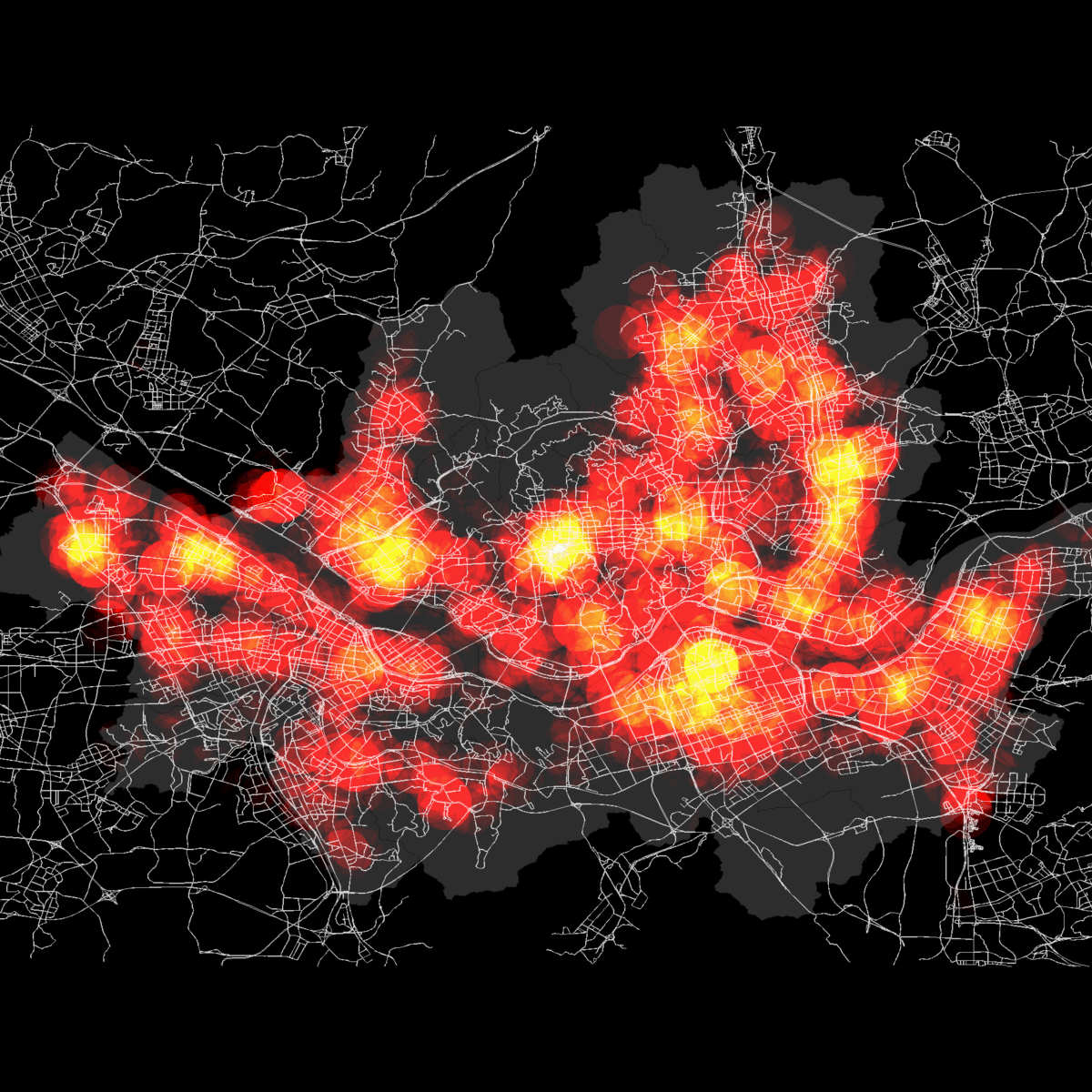
Spatial (map) is considered as a core infrastructure of modern IT world, which is substantiated by business transactions of major IT companies such as Apple, Google, Microsoft, Amazon, Intel, and Uber, and even motor companies such as Audi, BMW, and Mercedes. Consequently, they are bound to hire more and more spatial data scientists. Based on such business trend, this course is designed to present a firm understanding of spatial data science to the learners, who would have a basic knowledge of data science and data analysis, and eventually to make their expertise differentiated from other nominal data scientists and data analysts. Additionally, this course could make learners realize the value of spatial big data and the power of open source software's to deal with spatial data science problems. This course will start with defining spatial data science and answering why spatial is special from three different perspectives - business, technology, and data in the first week. In the second week, four disciplines related to spatial data science - GIS, DBMS, Data Analytics, and Big Data Systems, and the related open source software's - QGIS, PostgreSQL, PostGIS, R, and Hadoop tools are introduced together. During the third, fourth, and fifth weeks, you will learn the four disciplines one by one from the principle to applications. In the final week, five real world problems and the corresponding solutions are presented with step-by-step procedures in environment of open source software's.

Gen AI Dev - Design Retrieval Mechanisms for FM Augmentation
As organizations increasingly deploy retrieval-augmented generation (RAG) systems to unlock the value of their knowledge assets, the demand for skilled professionals who can architect, implement, and optimize these solutions continues to grow. This curriculum prepares you to meet that demand by providing hands-on experience with AWS services and production-ready implementation patterns.In this module, you will learn how to do the following:Design and implement effective retrieval mechanisms

AI Infrastructure and Operations Fundamentals
Artificial Intelligence, or AI, is transforming society in many ways. From speech recognition to self-driving cars, to the immense possibilities offered by generative AI. AI technology provides enterprises with the compute power, tools, and algorithms their teams need to do their life’s work. Designed for enterprise professionals, this course provides invaluable insights into the ever-changing realm of AI. Whether you're a seasoned professional or just beginning your journey into AI, this course is essential for staying ahead in today's rapidly evolving technological landscape. We start the journey with an Introduction to AI where we cover AI basic concepts and principles. Then, we delve into data center and cloud infrastructure followed by AI operations. This course is part of the preparation material for the “NVIDIA-Certified Associate: AI Infrastructure and Operations" certification. Successfully completing this exam will allow you to showcase your expertise and support your professional development. Who should take this course? * IT Professionals * System and Network Administrators * DevOps Engineers * Datacenter professionals No prior experience required. Let's get started!
AI Agents and Agentic AI Architecture in Python
Master the Art of Building Intelligent Python Agents That Think, Reason, and Act Unlock the full potential of Python for creating autonomous AI agents that solve complex problems without constant human direction. In this comprehensive course on AI Agents and Agentic AI with Python & Generative AI, you'll learn how to architect sophisticated agent systems that leverage Python's robust ecosystem and industry-standard capabilities. This course takes you beyond the foundations covered in the AI Agents and Agentic AI with Python & Generative AI course to explore advanced patterns for building truly intelligent agents in Python. You'll delve into specialized techniques like self-prompting, expert personas, document-as-implementation, and multi-agent orchestration - all implemented with Python's powerful frameworks and libraries. What You'll Learn: - Self-Prompting Patterns in Python: Build agents that dynamically adopt different thinking modes to handle specialized tasks, transforming unstructured data into structured formats with clean Python implementations - Python-Based Expert Persona Systems: Implement consultation frameworks where agents can invoke domain experts for specialized knowledge while maintaining clean architecture - Document-as-Implementation: Use Python's powerful file handling to create systems where human-readable documents become executable business logic - Multi-Agent Collaboration with Python: Design sophisticated memory sharing and coordination mechanisms between specialized Python agents - Progress Tracking & Planning: Implement robust planning and reflection capabilities using Python's comprehensive tooling - Python Agent Safety & Trust Systems: Build transaction management and safety mechanisms that leverage Python's exception handling and security features By the end of this course, you'll be equipped to build complex, production-ready agent systems in Python that can reason across multiple domains, handle complex workflows, and safely interact with real-world systems. Whether you're building productivity tools, automating complex business processes, or creating intelligent assistants, you'll have the Python-specific knowledge to implement agentic AI solutions that provide genuine business value. This course will teach you these concepts using OpenAI's APIs, which require paid access, but the principles and techniques can be adapted to other LLMs.

Data Visualization for Genome Biology
The past decade has seen a vast increase in the amount of data available to biologists, driven by the dramatic decrease in cost and concomitant rise in throughput of various next-generation sequencing technologies, such that a project unimaginable 10 years ago was recently proposed, the Earth BioGenomes Project, which aims to sequence the genomes of all eukaryotic species on the planet within the next 10 years. So while data are no longer limiting, accessing and interpreting those data has become a bottleneck. One important aspect of interpreting data is data visualization. This course introduces theoretical topics in data visualization through mini-lectures, and applied aspects in the form of hands-on labs. The labs use both web-based tools and R, so students at all computer skill levels can benefit. Syllabus may be viewed at https://tinyurl.com/DataViz4GenomeBio.

Process SAR & Multispectral
Process SAR & Multispectral is a short course for learners who want to move beyond viewing satellite imagery and begin producing structured geospatial analysis. Designed for those with basic familiarity with maps and raster imagery, the course introduces practical techniques for interpreting and analyzing satellite data in a disaster-response scenario: estimating flood extent after a major storm. You will first work with Synthetic Aperture Radar (SAR), learning why it is essential when clouds block optical imagery and how speckle filtering can improve interpretability while introducing analytical trade-offs. The course then transitions to multispectral imagery, where you explore change detection across time to identify areas where surface conditions may have shifted after the storm. Finally, you will evaluate whether your results are reliable enough to share by interpreting simple accuracy metrics and identifying limitations in your analysis. Through guided videos, applied exercises, and scenario-based assessments, you will build both technical understanding and analytical judgment—preparing you for more advanced geospatial analysis workflows.