Cursos de IT y software
Los mismos datos para todos, vengan de Udemy o de Coursera: precio, valoración, duración e idioma. 902 cursos encontrados. Afinar la búsqueda

SC-500 & AZ-500 Hands-On Certification Course with Sims
We really hope you'll agree, this training is way more than the average course on Udemy! Have access to the following: • Training from an instructor of over 25+ years who has trained thousands of people and also a Microsoft Certified Trainer • Lecture that explains the concepts in an easy to learn method for someone that is just starting out with this material • Instructor led hands on and simulations to practice that can be followed even if you have little to no experience TOPICS COVERED INCLUDING HANDS ON LECTURE AND PRACTICE TUTORIALS: Secure access to resources by using Microsoft Entra ID • Understanding the concepts of Privileged Identity Management (PIM) • Implement and configure Privileged Identity Management (PIM) • Understanding the concepts of conditional access policies • Implement conditional access policies • Implement & configure authentication methods, multifactor (MFA) & passwordless • Understanding multifactor authentication (MFA) • Implement and configure multifactor authentication (MFA) • Understanding the concepts of enterprise applications and app registrations • Implement and configure identity for applications with app registrations • Implement and configure app registration permission scopes • Implement and configure app registration permission with roles • Implement and configure identity for applications with enterprise applications • Manage permission grants and consent settings • Understanding the concepts of managed identities and service principals • Creating a managed identities for Azure resources • Implement a virtual machine to used with a managed identity • Implement and configure managed identities for Azure resources Secure secrets and keys by using Azure Key Vault • Deploy Key Vault and configure settings • Key Vault security with Hardware Security Modules (HSMs) • Configure access to Key Vault • Manage keys, secrets, and certificates • Configure Key rotation • Implement backup and recovery of certificates, secrets, and keys Implement governance to enforce security and regulatory compliance • Implement and configure security controls by using Azure Policy and more • Introduction to Microsoft Defender for Cloud • Costs involved in using Microsoft Defender for Cloud • Setting up plans for using Microsoft Defender for Cloud • Evaluate regulatory compliance by using Microsoft Defender for Cloud • Security controls in Defender for Cloud, security standards & recommendations • Implement resource groups • Implement resource locks • Understanding the concepts of roles in Azure • Manage Azure built-in role assignments • Manage custom roles, including Azure roles and Microsoft Entra roles Implement security for storage accounts • Understanding the concepts of storage accounts • Implement and configure a storage account • Configure Azure Storage firewall rules • Implement and configure security for storage accounts with SAS and more • Implement Defender for Storage threat protection configurations • How to test Defender for Storage by uploading malware • Accessing Defender for Storage recommendations and alerts • Manage access to storage, including access policies Implement security for databases • Understanding the concepts of relational databases before using Azure SQL • Implement a platform-level Azure SQL configuration • Setting up SQL Server Management Studio (SSMS) for connecting to SQL • How to connect to a SQL database with SSMS • Configure Defender for Databases protection across Azure database services • Configure database vulnerability assessment support for Defender for Databases Implement security for Azure network services • Introduction to VNets, peering, Network Security Groups (NSGs), and VPN gateways • Setting up a virtual machine for use in hands on • Implement and configure virtual networks • Implement and configure virtual network peering • Configure user-defined routes (UDRs) • Implement & manage network security groups NSG & application security groups ASG • Understanding the concepts of Azure Virtual WAN • Azure Virtual WAN SKUs • Architectures used for configuring the security for an Azure Virtual WAN • Azure Private Link services to secure access to network resources • Implement and configure Azure Firewall • Direct traffic through the Azure Firewall Implement security for AI • Understanding how Copilot AI accesses data • Identify which Copilot features can be enabled or disabled • Identify use cases for AI Researcher, Analyst, and custom agents • Manage access to Copilot with licenses • Manage user access to agents • Enable and configure a Microsoft Copilot Studio agent • Configure approval for accessing an agent Implement security for servers and virtual machines (VMs) • Implement and configure disk encryption • Plan and implement Azure Bastion to support just-in-time (JIT) VM access • Extend security controls to hybrid and multicloud servers by using Azure Arc • Understanding the concepts of Defender for Servers • Setting up a virtual server for Onboarding to Defender for Servers/Cloud • Verifying a virtual server is Onboarded into Defender for Servers/Cloud • Configure Defender for Servers settings, including vulnerability scanning & EDR Implement security for application platform services • Detect risks in container workloads by using Defender for Containers • Enable Defender for Containers through Defender for Cloud • Implement and configure security controls for Azure Kubernetes Service (AKS) • Implement and configure an Azure Container Registry • Implement and configure security controls for Azure Container Registry • Implement and configure an Azure Container Instance • Implement and configure an Azure Container App • Plan support for Azure App Service • Implement and configure an Azure App Service Plan • Implement and configure and Azure App Service • Implement and configure security controls for Azure App Service • Understanding the concepts of Azure Web Application Firewall • Implement and configure Azure Web Application Firewall Manage security posture by using Defender for Cloud • Understanding the concepts of Cloud Security Posture Management (CSPM) • Identity security features with Defender CSPM • Enable and configure Defender for Cloud workload protection plans • Concepts of Common Vulnerabilities and Exposures (CVEs) • Configure Microsoft Defender Vulnerability Management settings for Azure VMs • Setup a group to represent a security team for Defender Vulnerability Management • Identify security risks by using Defender CSPM and assign recommendations • Discover unprotected assets & vulnerabilities External Attack Surface Management Implement activity and event collection in Microsoft Sentinel • Understanding the concepts of using Microsoft Sentinel • Create and connect workspaces in Microsoft Sentinel • Assign roles in Microsoft Sentinel • Implement and use content hub solutions • What are data connectors in Microsoft Sentinel? • Configure and use Microsoft data connectors for Azure resources • Setting up Azure Monitor Agent (AMA) and data collection rules • Implement and configure syslog and Common Event Format (CEF) event collections • Implement and configure collection Windows events by using data collection rules • Create custom log tables in the workspace to store ingested data • Ingesting data from Azure and Entra ID • Understanding automation rules and Microsoft Sentinel playbooks • Implement automation rules and playbooks in Microsoft Sentinel • Implement data retention in Microsoft Sentinel data stores Implement Microsoft Security Copilot • Understanding the purpose of Microsoft Security Copilot • Generating sample data for querying with Security Copilot • What are Security compute units (SCUs) • Warning before allocating Security compute units (SCUs) for Security Copilot • Configure a workspace for Security Copilot and allocate SCUs • Manage permissions and roles in Security Copilot • What are Prompts, Promptbooks, Roles and Plugins? • Enable and configure plugins • Investigating a VM incident using a prompt in Security Copilot • Investigating an Azure Storage incident using a prompt in Security Copilot Finishing Up • Where do I go from here?

Responsible AI for Developers: Interpretability & Transparency - 简体中文
本课程介绍了 AI 可解释性和透明度的相关概念,探讨了 AI 透明度对于开发者和工程师的重要性。同时探索了有助于在数据和 AI 模型中实现可解释性和透明度的实用方法及工具。

Claude Associate Cert: CCAO-F, CCAO Exam Prep 2026
This course contains the use of artificial intelligence. However, every lecture recording involves me reading the scripts, and I am fully involved in scripting and production. Be careful buying courses with instructors that don't appear in person. AI courses are becoming quite common on learning platforms. This course is a complete, structured study program for the Anthropic Claude Certified Associate — Foundations (CCAO-F) exam. Built domain by domain against the official exam blueprint, it covers every topic area you need to understand before sitting for the exam. Each lesson is a narrated video that explains how concepts connect to each other and to real-world practice, not just what the definition is, but how a practitioner applies it. D1: Prompting and Task Execution (14% of the exam), covering create effective prompts for business and technical tasks, iterate prompts to improve output quality, apply task decomposition techniques to structure complex requests, adapt prompting strategy by task type (analysis, research, drafting, brainstorming). You will understand how each of these areas is tested on the exam and how they connect to real-world practice. D2: Output Evaluation and Validation (21% of the exam), covering evaluate claude-generated outputs for accuracy and completeness, identify hallucinations, inconsistencies, and biases in responses, apply fact-checking and validation techniques, determine when human review or additional verification is required, edit, adapt, refine, and compare outputs for the intended audience, organize and curate information and select output formats (artifacts, inline, structured data). You will understand how each of these areas is tested on the exam and how they connect to real-world practice. D3: Product and Model Selection (12% of the exam), covering select appropriate claude product features (projects, research mode, chat, artifacts), differentiate between claude model types (haiku, sonnet, opus), align model selection with task requirements (cost, speed, quality), understand and manage context limitations and memory (when to restart, summarize, or persist). You will understand how each of these areas is tested on the exam and how they connect to real-world practice. D4: Workflow Integration and Solution Design (16% of the exam), covering apply claude to analyze requirements and use cases, leverage claude for research, planning, and process optimization, use claude to support solution design, development, and iteration, integrate claude into existing workflows to augment or redesign them, communicate claude's value and limitations to stakeholders. You will understand how each of these areas is tested on the exam and how they connect to real-world practice. D5: Configuration and Knowledge Management (12% of the exam), covering configure claude projects with instructions and knowledge sources, create effective system-level (project) instructions, manage uploaded knowledge and connectors (e.g., google drive, gmail), inform, maintain, and update configurations, knowledge sources, and instructions. You will understand how each of these areas is tested on the exam and how they connect to real-world practice. D6: Governance, Risk, and Responsible Use (15% of the exam), covering identify appropriate and inappropriate use cases, apply data sensitivity, regulatory, and privacy considerations, follow organizational ai policies and governance standards, understand the ethical implications of ai usage. You will understand how each of these areas is tested on the exam and how they connect to real-world practice. D7: Troubleshooting and Optimization (10% of the exam), covering identify, diagnose, and resolve issues with underperforming prompts or poor outputs, adjust approach based on feedback and results, optimize workflows for efficiency and effectiveness. You will understand how each of these areas is tested on the exam and how they connect to real-world practice. Every domain includes practice questions designed to mirror the style and difficulty of CCAO-F exam scenarios, covering not just recall but application and analysis. The course closes with full-length practice exams with detailed answer explanations, so you can measure your readiness and focus your remaining study time where it matters most. Major topics covered: create effective prompts for business and technical tasks, iterate prompts to improve output quality, apply task decomposition techniques to structure complex requests, adapt prompting strategy by task type (analysis, research, drafting, brainstorming), evaluate claude-generated outputs for accuracy and completeness, identify hallucinations, inconsistencies, and biases in responses, apply fact-checking and validation techniques, determine when human review or additional verification is required, edit, adapt, refine, and compare outputs for the intended audience, organize and curate information and select output formats (artifacts, inline, structured data), select appropriate claude product features (projects, research mode, chat, artifacts), differentiate between claude model types (haiku, sonnet, opus), align model selection with task requirements (cost, speed, quality), understand and manage context limitations and memory (when to restart, summarize, or persist), apply claude to analyze requirements and use cases, leverage claude for research, planning, and process optimization, use claude to support solution design, development, and iteration, integrate claude into existing workflows to augment or redesign them, communicate claude's value and limitations to stakeholders, configure claude projects with instructions and knowledge sources, create effective system-level (project) instructions, manage uploaded knowledge and connectors (e.g., google drive, gmail), inform, maintain, and update configurations, knowledge sources, and instructions, identify appropriate and inappropriate use cases, apply data sensitivity, regulatory, and privacy considerations, follow organizational ai policies and governance standards, understand the ethical implications of ai usage, identify, diagnose, and resolve issues with underperforming prompts or poor outputs, adjust approach based on feedback and results, optimize workflows for efficiency and effectiveness, CCAO-F exam prep 2026.

AppSheet Administration
"This course teaches you how to administer Google AppSheet, a no-code app development platform. In this course, you learn how to plan an AppSheet rollout strategy in your enterprise. You also learn how to manage AppSheet teams by using the standard or organizational model, and how to implement governance policies. We discuss how data sources and sample apps can be shared within the enterprise, and the options available for external integration and monitoring with AppSheet. "

AEO, GEO, AI SEO: Get Cited by ChatGPT, Google, Perplexity
Become the Brand ChatGPT, Google, Perplexity Recommends BY NAME with GEO, LLM SEO, AEO and AI SEO Imagine someone asks ChatGPT who the best expert in your industry is. What if it said YOUR name? That's not fantasy. That's what happens when you build the right infrastructure—the infrastructure AI engines need to trust you, cite you, and recommend you. This course gives you that infrastructure. The Problem No One Is Talking About Your rankings are stable. But your traffic is down. That's not a coincidence. 20%+ of searches now happen through AI assistants—ChatGPT, Perplexity, Google AI Mode. And these AI engines don't send traffic. They BUILD answers on the spot, citing the sources they trust. If you're one of those trusted sources? You get mentioned by name. You become THE expert in your space. If you're not? You're invisible. And "invisible" is where most businesses are right now—while the early movers build unassailable positions. What You'll Build (Not Just Learn) Within the first 12 minutes, you'll test your AI visibility and have a screenshot documenting exactly where you stand. No more guessing. By the end of Section 2, you'll have: • A Wikidata entry—your brand's digital birth certificate in the knowledge graph AI trusts most • Your Entity Home with Schema markup deployed on your website • Zero coding required. AI generates the code. You copy and paste. By the end of Section 3, you'll have: • Answer Blocks—structured content designed so AI can extract and cite it directly • The Master Prompt Library that turns one piece of content into 20 platform-specific posts • A content system that would take weeks to build yourself—done in hours By the end of Section 4, you'll know exactly why Google, ChatGPT, and Perplexity each behave differently—and which levers to pull for each one. In Section 5, you'll compare your before-and-after AI visibility. That transformation documentation becomes proof—proof you can show a client, an employer, or yourself. What's Included • 36 implementation-focused lectures — not theory, infrastructure • The Master Prompt Library — AI generates your Entity Home, Schema, and content (value: weeks of work) • Platform Playbooks — specific strategies for Google, ChatGPT, and Perplexity • The 30-Day Implementation Roadmap — day-by-day, step-by-step action plan • Content Atomization System — turn 1 post into 20 platform-specific pieces • Before/After Transformation Documentation — screenshot proof of your progress • Lifetime access + updates as AI search evolves Why 196,000+ Students Trust This Instructor I've taught over 196,000 students, on Udemy. My courses earn 4.5+ star ratings because I focus on one thing: practical implementation. When AI started changing search, I did what I always do—tested, measured, and built a system that works. This course is that system. The "Love It Or Leave It" Guarantee You have 30 days to go through the material and implement. If this isn't the most actionable GEO training you've found—if you don't have deployed infrastructure and documented transformation—get a full refund. No questions. I'm confident, because I've seen what happens when people actually build this infrastructure instead of just reading about GEO. The Window Is Open—For Now The marketers who build AI visibility infrastructure in the next 6 months will have a massive head start. The ones who wait? They'll spend years trying to catch up to positions that are already locked in. This is the course I wish existed when AI search started changing everything. 36 lectures. Master prompts included. 30-day roadmap. Transformation documented. Become the brand AI recommends by name. - Arun
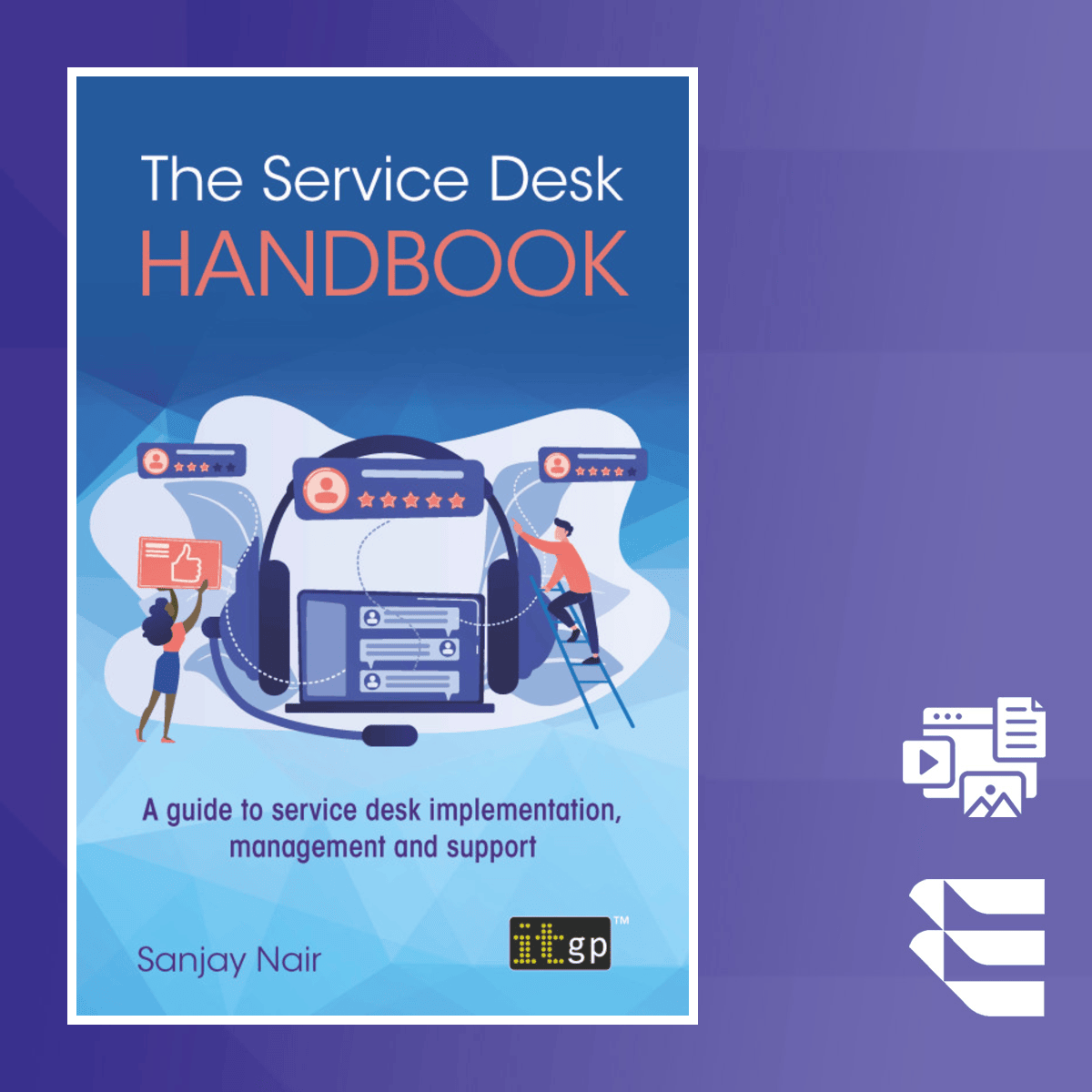
The Service Desk Handbook
This course offers a comprehensive approach to mastering service desk management, focusing on the strategies and skills needed to optimize and future-proof service desk operations. It covers both foundational concepts and advanced techniques, allowing learners to develop a deep understanding of IT service management (ITSM) and its significance in improving overall service delivery. Throughout the course, learners will acquire practical knowledge to enhance their service desk operations, from building an effective team to implementing performance tracking metrics. By applying these strategies, professionals will be equipped to optimize their workflows and adopt cutting-edge technologies such as AI and chatbots to elevate service desk effectiveness. What sets this course apart is its combination of theoretical concepts with real-world applications. Learners will explore how to implement ITSM best practices in actual service desk environments, using actionable strategies to address common challenges and drive performance improvements. This course is ideal for IT service desk managers, support staff, and IT professionals who aim to enhance their service desk operations. While no specialized prior knowledge is required, familiarity with basic IT support concepts and ITSM tools will be beneficial for a better understanding of the material. © Sanjay Nair 2020 The author has asserted the rights of the author under the Copyright, Designs and Patents Act, 1988, to be identified as the author of this work. First published in the United Kingdom in 2020 by IT Governance Publishing. Every possible effort has been made to ensure that the information contained in this course is accurate at the time of going to press, and the publisher and the author cannot accept responsibility for any errors or omissions, however caused. Any opinions expressed in this course are those of the author, not the publisher. Websites identified are for reference only, not endorsement, and any website visits are at the reader's own risk. No responsibility for loss or damage occasioned to any person acting, or refraining from action, as a result of the material in this publication can be accepted by the publisher or the author. Apart from any fair dealing for the purposes of research or private study, or criticism or review, as permitted under the Copyright, Designs and Patents Act 1988, this publication may only be reproduced, stored or transmitted, in any form, or by any means, with the prior permission in writing of the publisher or, in the case of reprographic reproduction, in accordance with the terms of licences issued by the Copyright Licensing Agency. Enquiries concerning reproduction outside those terms should be sent to the publisher at the following address: IT Governance Publishing Ltd Unit 3, Clive Court Bartholomew’s Walk Cambridgeshire Business Park Ely, Cambridgeshire CB7 4EA United Kingdom www.itgovernancepublishing.co.uk

The Complete Networking Fundamentals Course. Your CCNA start
Welcome to the Complete Network Fundamentals Course! In this course, you will learn the technologies that keep the world as you know today connected and running. We cover both the fundamentals of networking as well as the topics in the new Cisco CCNA 200-301 exam. Networks are all around us and you are using one right now to access this course. Imagine for a moment, how different your life would be without access to Facebook, Snapchat, Google, YouTube, Whatsapp or any of the other websites on the Internet? How would you live with no Internet? The Internet is extremely important in modern life today and all websites and Internet communication relies on networking. This reliance is only predicted to continue with the growth of the Internet of Things (IoT) in the next few years. Without routers, switches, network cabling and protocols like BGP there would be no Internet! This course will teach you how networks actually work and how you are able to connect to websites like Facebook, Google, and YouTube. Companies throughout the world (from the smallest to the largest) rely on networks designed, installed and maintained by networking engineers. Join this in demand industry! Start your journey today learning about networking. Content in this course can be used towards your CCNA. Topics such as IP addressing, subnetting and many others can be applied directly to passing your CCNA certification. Access our online simulations so you can practice on simulated Cisco routers and switches. You will get to type commands such as enable, configure terminal, router ospf and many others and learn how to configure devices. I want to welcome you to this Complete Networking Fundamentals course! I'm David Bombal, and I have been teaching networking courses for over 15 years. I qualified as a Cisco Certified Network Engineer (CCIE) in 2003 and hold with numerous other networking certifications. I'm also a Cisco and HPE certified instructor where I have trained thousands of networking engineers in many of the largest companies in the world including Fortune 100 companies. I have designed this course for anyone wanting to learn more about networking and gain foundational knowledge, to help them embark on their networking career. The concepts taught in this course can be applied directly to multiple industry certifications including the Cisco Certified Network Associate (CCNA). In this course, you will learn about topics such as IP addressing, IP subnetting, Routing, Switches, VLANs, Spanning Tree, Network Address Translation, Wireless and a whole lot more. You will also learn more about the latest networking trends including OpenFlow and Software Defined Networking. The course covers the following topics including (and this list will be constantly updated): • Network basics • Network architectures (OSI Model) • What are hubs, switches, routers? • How is data forwarded through a network? • IP addresses • IP subnetting • Cabling and network topologies • Ethernet basics • TCP and UDP • DNS and DHCP • Routing • VLANs • Cisco device initial configurations • ACLs • Network naming • IP Telephony • Quality of Service (QoS) • SDN At the end of this course, you will be able to confidently discuss networking topics; and be able to start configuring real networking devices such as routers and switches. In this an introductory course, but contains a lot of information that can be directly applied to the CCNA certification. The ideal student for this course is someone looking to break into the networking field, someone looking to extend their knowledge from PCs and servers to networking, or someone interested in getting knowledge to work in one of the most exciting, most in-demand jobs in IT - networking. There are no requirements necessary to enroll in this course, I only ask that you come open minded and ready to learn. Feel free to take a look at the course description and some of the sample free videos. I look forward to seeing you on the inside!

Getting Started with Security Command Center
This is a self-paced lab that takes place in the Google Cloud console. In this lab, you take your first steps with Security Command Center (SCC) by exploring the service’s interface, configurations, vulnerability findings, and analyzed asset features.

Complete Linux Bash Shell Scripting with Real Life Examples
Welcome to our comprehensive course on Linux Bash Shell Scripting, tailored for those with a foundational understanding of Linux who are eager to enhance their Linux Command Line and shell scripting skills. In this course, we explore the practical aspects of Linux bash, focusing extensively on bash script Linux techniques and Linux bash shell script applications. Through this training, you'll gain hands-on experience with various bash scripts, each rooted in real-life scenarios. This approach not only makes learning more enjoyable for hobbyists but also equips aspiring Linux system admins with vital shell scripting abilities. Additionally, experienced Linux engineers will find this course a valuable opportunity to consolidate their command line and bash scripting expertise. With the Complete Linux Bash Shell Scripting with Real Life Examples course, you'll master key concepts in shell scripting, from script automation and process management to advanced command line techniques. This course dives deep into essential Linux commands, text processing, and control structures, giving you the skills to create scripts that automate repetitive tasks and enhance system efficiency. Designed for Linux enthusiasts, system administrators, and DevOps professionals, this course combines real-life examples with best practices, providing a strong foundation for tackling complex scripting challenges and optimizing Linux environments. By the end, you’ll be ready to apply your scripting knowledge to streamline workflows and increase productivity across diverse Linux systems. Join us as we explore the fascinating world of bash and Linux bash script through real-life examples, ensuring that you acquire skills that are both practical and relevant in today's tech-driven landscape. In this training we will cover the following: • Section 1 – (Lab Setup) · What is Virtual Box? · Downloading and installing Virtual Box · Creating first virtual machine · Linux installation Section: 2 – (Shell Scripting Basics) · What is Kernel? · What is a Shell? · Shell Scripting? · Type of Shells · Starting a Shell · How to Run a Shell Script Section: 3 – (Scripting Standards) · Naming Convention · Script File Permissions · Shell Script Format · Sequence of Script Execution Section: 4 – (Basic Shell Scripts) · Creating 1st script · Script to run basic tasks · Defining variable · Input/output script · Conditions/If else statement scripts · Case statement scripts · For loop scripts · Do-while scripts · Exist Status · Handouts Section: 5 – (Real Life Scripts) · Accessing data from files · Check remote servers connectivity · Script for scheduling and notification · Script to delete old files · Backup filesystem · For loops scripts for file system – 1 · For loops scripts for file system – 2 · Copy files to remote hosts · User directory assignment · List of users logged in by date · Central logging (rsyslog) script · Script for user account management · Disable inactive users · Check process status and killing it · Status on total number of files · Script to create system inventory · Getting online help · Homework • Additional Resources · This section has so many additional Linux related lectures Here is the testimonial from my students: • To all of you that are looking for a REALLY GOOD LINUX course, THIS IS IT, SERIOUSLY I promise you won't find a course on LINUX here that is THIS GOOD. -- T.J. Marstiller (Udemy Student) • Imran is a very knowledgeable and engaging instructor. As others have said, you can tell that he is not just trying to sell a course, but that he is invested in giving his students a strong career foundation with a positive and approachable attitude. He is also entertaining with his use of pop culture and practical work examples. It really feels like you're in a classroom with him. I'm taking this course mainly as a hobbyist, but got a lot from it already. The homework assignments, quizzes, and handouts help reinforce the material. -- Raymond B. (Udemy Student) • Main thing about course is its simplicity and the hierarchy. Design is very good and easy which helps to understand things better. -- Akash Garg (Udemy Student) • I just love the teaching ad the learning experience I am getting -- Jacob Samba (Udemy Student) • Imran Afzal might be my favorite teacher I've EVER had. He is funny, and engaging. The course was easy to follow, and with no experience starting I am now extremely comfortable with Linux, and actually really like it. He does make you do your googles, but this is not a bad thing especially considering the nature of IT and documentation to solve your own problems. I highly recommend. -- Vanessa Diaz-Goumond (Udemy Student) • The course is run very well and I really like the handouts and the homework that is assigned. The homework helps me learn and continue with the learning process even when adult life is still progressing forward. -- Thomas Rogers (Udemy Student) • Such an amazing instructor. Imran must have put in a lot of effort in structuring the course and taking the student step by step, he takes his time in explaining everything, from what Linux is, how to down load it, coding, etc. I have taken other courses from Imran. I am a student for life. Keep it up and please keep preparing more courses for please like us who can benefit from your way of teaching, knowledge and experience. Thank you. -- Ali Shiekh (Udemy Student) • In the first place I say a big thank you to the instructor for making such a great course. I was afraid to learn Linux. I now feel very comfortable with Linux. I have understood both the concept behind and the practical as well. I would recommend every one who is NEW to Linux and wants to grab it once and for all without wasting time to go ahead and ENROLL. You will not regret it. I would like the instructor to do same for WINDOWS SERVER ADMIN., I don't seem to find any better and beginner oriented course out there that could be matched with this course. To me, it is the BEST Linux Course on Online. I just started some real world projects with Linux after this great course, I was new to Linux and in just a month I am on the command line always playing. -- Opoku Bright (Udemy Student) • I genuinely look forward to additional courses in the future. This has been so informative. You hear the name oracle all the time, but this was well put in layman’s terms -- Atoofa Hasan (Classroom Student) • Imran Afzal eats, breathes and sleeps Linux! He really knows his stuff. I feel like he has brought me from a novice level education to masters level in a short time period. Anyone who is looking to get a job in Linux should definitely take this course. -- TJ Walker (Udemy Student)

Cyber Security: DevSecOps
• Watch our course introduction video before you enroll! (copy and paste into browser) https://vimeo.com/1176048656 This course focuses on DevSecOps, integrating security into the software lifecycle. Building and deploying software at scale requires security from the start. Built by the Cyber Skills Academy at Macquarie University, this course provides expertise to embed security into every software development phase. Co-designed with industry, it offers actionable knowledge for developers, engineers, and security professionals. You will learn: • Secure software architecture principles for resilient systems. • Security-aware coding practices, including API, access control, and web vulnerability management. • Application-layer security using static analysis and dependency checks. • CI/CD pipeline hardening with tools like Infrastructure as Code, SLSA, and SBOMs. • Cloud-native security for Azure deployments using containers and Kubernetes. • MLSecOps, addressing machine learning model security within DevSecOps workflows. • Attack surface awareness to anticipate and defend against threats. The course explores real-world tools and frameworks, teaching how to shift security left and build security into every commit, build, and deploy. This course provides skills for secure software delivery, from development to deployment. To succeed, learners should have a basic understanding of software development concepts and familiarity with command-line interfaces.

Local LLMs via Ollama & LM Studio - The Practical Guide
Unlock the Power of Private, Powerful AI on Your Own PC! ChatGPT, Google Gemini and all those other AI chatbots are standard tools for everyday use. But like all tools, they're not the best choices for all tasks. When privacy, cost, offline access, or deep customization matter, running powerful open models locally on your own computer beats all those proprietary models and third-party AI chatbots. This course will teach you how to leverage open LLMs like Meta's Llama models, Google's Gemma models or DeepSeek models to run AI workloads and AI chatbots right on your machine - no matter if it's a high-end PC or a normal laptop. Why Local & Open LLMs? In an era dominated by cloud-based AI and chatbots like ChatGPT, running state-of-the-art models locally offers game-changing advantages. Imagine leveraging cutting-edge AI with: • Zero or Low Cost: Forget expensive subscriptions; tap into powerful models freely. • 100% Privacy: Your prompts and data stay securely on your machine – always. • Offline First: Operate powerful AI tools anytime, anywhere, no internet required. • Freedom from Vendor Lock-in: Access a diverse and rapidly growing ecosystem of open models. • Astonishing Capability: Discover how open models like Gemma, Llama, and DeepSeek are not just alternatives, but top performers, ranking high on benchmarks and the Chatbot Arena leaderboard! Course Overview This course is your comprehensive, hands-on journey into the practical world of local LLMs. We'll cut through the complexity, guiding you step-by-step from setup to advanced usage. Here's what you'll master: • The Open LLM Landscape: Understand what open models are and why they matter (and where to find them). • Hardware Demystified: Learn the realistic hardware requirements for running LLMs locally. • Quantization Explained: Uncover the technique that makes running huge models feasible on consumer hardware. • LM Studio In-Depth: Get hands-on with installing, configuring, selecting, downloading, and running models using LM Studio. • Ollama Mastery: Learn to install, configure, and interact with models seamlessly via Ollama. • Real-World Use Cases: Apply your knowledge to practical tasks like image OCR (reading text from images), summarizing PDF documents, mastering few-shot prompting, and generating creative content. • Programmatic Power: Discover how to integrate these locally running models into your own scripts and applications using their built-in APIs (LM Studio & Ollama). • And much more! Build a solid foundation and gain the confidence to explore the vast potential of local AI. Who Should Enroll? This course is tailor-made for: • Developers looking to integrate powerful, private AI into their workflows or applications. • Tech enthusiasts eager to experiment with cutting-edge AI without the cloud constraints. • Privacy-conscious individuals wanting full control over their data when using AI. • Anyone seeking powerful AI solutions without ongoing subscription costs. • Students and professionals aiming to add practical, in-demand AI skills to their toolkit. Ready to Take Control of Your AI Future? Step into the world of powerful, private, and cost-effective artificial intelligence. Enroll now in "Unlock Local AI Power" and start running incredible Large Language Models directly on your own computer today!

Hybrid Cloud Architecture
Hybrid AI infrastructure requires more than basic cloud familiarity—it demands evaluating trade-offs, defending architecture decisions, and enforcing cross-environment governance. This course builds the skills to lead architecture reviews and design hybrid cloud solutions for enterprise AI workloads. You'll apply the Azure Well-Architected Framework to assess multicloud setups, compare hub-and-spoke and Virtual WAN topologies, and provision GPU resources via Terraform with spot-instance cost controls. You'll enforce service mesh security using Istio across AKS, EKS, and GKE, while implementing data sovereignty controls with Azure Policy and Microsoft Purview. By the end of this course, you'll be ready to lead Well-Architected Framework reviews, produce portability assessments, define GPU scaling strategies, and direct data sovereignty policies balancing compliance, latency, and cost. Designed for platform engineers operating hybrid AI infrastructure. You should understand cloud networking (VNets, peering, routing) and have hands-on experience with infrastructure automation tools.

AWS Databases Crash Course – RDS, Aurora & DynamoDB
"Great introduction to AWS RDS and AWS Aurora databases. Rick explains all of the concepts very thoroughly and the organization of the content and quizzes are very well put." -Ivan "Undoubtedly the best course on AWS RDS along with Aurora available in internet. Rick will decouple all the specifics of RDS services in short chunks and explain them with demos from basic to intermediate level. This increased my knowledge on the subject matter quite extensively." -Dwaipayan Do you need to understand databases in AWS — including RDS, Aurora and DynamoDB? Have you found that many training resources use overly technical language that makes it hard to grasp the fundamentals? If you want to quickly and clearly build a solid understanding of AWS-managed databases — both relational and NoSQL — this course is for you. In this course, you’ll learn: • The difference between relational and non-relational databases • How database scaling works — vertical vs. horizontal • The nature and benefits of the RDS managed service • How to use RDS automated backups and on-demand snapshots • How to secure RDS and Aurora databases with security groups, SSL/TLS, and encryption • Authentication using IAM and Secrets Manager • How to use parameter and option groups to customize databases • How to deploy Multi-AZ databases for failover protection • How to scale out databases using read replicas • The architecture and features of Aurora • How to deploy provisioned and serverless Aurora DB clusters • How to deploy Aurora global databases across multiple regions New DynamoDB lessons include: • Introduction to NoSQL databases • Introduction to DynamoDB — AWS’s fully managed NoSQL database • Hands-on: Create DynamoDB tables with partition and sort keys • Understanding and configuring DynamoDB capacity (Provisioned vs. On-Demand) • DynamoDB API basics for certification prep • DynamoDB Indexes — searching efficiently with Local and Global Secondary Indexes I’ve taught hundreds of thousands of students across a variety of platforms, and I believe anyone who needs to understand AWS databases will love this course. Most lectures are 5–15 minutes long and designed to be clear, concise, and practical. If you need to work with RDS, Aurora, or DynamoDB, this course will give you a strong foundation — it’s the perfect place to start.

Integração e Cibersegurança entre os Sistemas de Informação
Nossas boas-vindas ao Curso Integração e Cibersegurança entre os Sistemas de Informação. Neste curso, você aprenderá como os atores de um ecossistema de soluções e produtos digitais conseguem se conectar entre si, estabelecer um fluxo de informações que gere valor ao entregar ao cliente serviços de múltiplos fornecedores integrados. Como em qualquer transação que envolva valor na integração e comunicação entre sistemas, é necessário identificar a presença de criminosos tentando transgredir as regras de funcionamento do ecossistema. Por isso, a atenção à segurança cibernética deve também fazer parte dos projetos de integração e comunicação entre sistemas. Ao final deste curso, você será capaz de compreender como os sistemas de informação de uma mesma organização, ou de diferentes organizações, conectam-se e trocam informações e dados entre si, quais os riscos de segurança da informação envolvidos nestas integrações e como garantir a segurança dos dados e dos sistemas integrados. Este curso é composto por quatro módulos, disponibilizados em semanas de aprendizagem. Cada módulo é composto por vídeos, leituras e testes de verificação de aprendizagem. Ao final de cada módulo, temos uma avaliação de verificação dos conhecimentos. Estamos muito felizes com sua presença neste curso e esperamos que você tire o máximo de proveito dos conceitos aqui apresentados. Bons estudos!

ESP32 For Arduino Makers
Course updated in August 2025 I have updated this course to support the ESP32-S3-DevKitC-1 N16R8 development board, using the latest Arduino IDE (2.2.x) and ESP32 Arduino Core Library (v3.2.1). I have also added new lectures in section four to provide you with the necessary information so that you can work with the newer ESP32-S3 module and devkits. I have revised all example sketches for compatibility with this modern hardware and software environment. The complete set of updated scripts is available on GitHub, with most lessons offering both a simple version (ideal for quick testing) and a comprehensive version (including extended functionality and inline documentation). Each script contains detailed comments describing software behavior and hardware wiring instructions. New videos are in development to demonstrate the updated setup and highlight the new capabilities of the ESP32-S3 platform. Course updated in July 2022 We updated this course so that all experiments work with the ESP32 Dev Kit v4 (based on the ESP32-WROOM-32E) and the ESP32 Arduino Core library 2.0.3. All sketches and schematics have been tested and updated, links for external resources checked for validity, and several lecture videos were updated to reflect these development. The updated course is tested to work with the ESP32 development kit version 4, ESP32 Arduino Core version 2.0.3, and the Arduino IDE 1.8.19. About this course The ESP32 is a powerful microcontroller. It integrates Wifi and Bluetooth, many GPIOs, analog input and output capabilities, many device interconnection protocols, a fast dual-core processor. All that, at a low price. And best of all: you can use your existing Arduino knowledge and skill to turbo-charge your projects. Especially if you have already learned how to use the Arduino Uno in your projects, it is likely that you have hit a hardware limitation. Perhaps your projects needed more memory, more speed, or more pins. With the ESP32, you can get a lot more capacity to build more interesting projects, almost for free. However, the ESP32 is not a plug-in replacement for the Arduino. While it shares much of the Arduino’s programming and GPIO interface, you still need to learn the basics before you can deploy it. This is the purpose of this course. In this course you will learn: • What is the ESP32. • What are the various modules with that name, and how these modules are available to us in the form of development kits. • What are the differences and similarities between the ESP32 and the Arduino. • How can we use what we know from the Arduino to make things based on the ESP32. • How can we use the ESP32 GPIOs to work with simple components like LEDs and buttons, but also to drive peripherals like displays, sensors (including the integrated ones) and motors. • How can we set up the familiar Arduino IDE so that we can write programs for the ESP32. • How to store data in non-volatile memory. • How to communicate with near field devices and the Internet. In this course, I have also included numerous mini-projects to demonstrate how to use capabilities such as GPIO read and write, classic Bluetooth, Bluetooth Low Energy, Wifi, digital to analog conversion, touch sensors, and more. Larger projects will also show you how to create simple Internet of Things and Bluetooth applications, to name a few. If you are ready to learn more, please be sure to watch the lectures in this introductory section to find our more.

Decentralized Application (DApp) Development
The course aims to provide a thorough understanding of the core principles and characteristics of decentralized applications (DApps). Participants will learn about the benefits and challenges of DApp development, including decentralization, immutability, and user empowerment. ● Participants will acquire the necessary skills to develop front-end interfaces for DApps. They will learn modern web development technologies such as HTML, CSS, and JavaScript frameworks (e.g., React, Angular) to create engaging and user-friendly interfaces that interact with the underlying blockchain. ● The course will cover the integration of smart contracts with DApps. Participants will learn how to interact with smart contracts from the front-end using web3.js or similar libraries, enabling DApps to read from and write to the blockchain, execute transactions, and update contract states. ● Participants will gain insights into designing DApp architecture and optimizing user experience. They will learn best practices for structuring DApps, handling data flows between the front-end and smart contracts, and implementing intuitive user interfaces that seamlessly interact with the blockchain. ● The course will cover essential aspects of testing, deploying, and maintaining DApps. Participants will learn how to write comprehensive tests for their DApp's smart contracts and front-end components, deploy DApps to testnets or the mainnet, and ensure ongoing maintenance and updates to keep their DApps functional and secure. Target Learners: ● Software Developers: Experienced developers interested in expanding their skills into blockchain technology and decentralized application development. ● Blockchain Enthusiasts: Individuals with a keen interest in blockchain technology and its applications, who want to learn how to build decentralized applications. ● Entrepreneurs and Innovators: Individuals looking to explore opportunities in the decentralized finance (DeFi), decentralized autonomous organizations (DAOs), or other blockchain-based ventures. ● Tech Professionals: Professionals in various technology-related fields such as IT, cybersecurity, or fintech who want to enhance their understanding of blockchain technology and its implementation. ● Corporate Developers: Developers working in large corporations who want to understand the potential impact of blockchain technology on their industry and learn how to integrate decentralized applications into existing systems. ● Cryptocurrency Traders and Investors: Individuals involved in trading or investing in cryptocurrencies who want a deeper understanding of the underlying technology and potential investment opportunities in DApps. To be successful in this course, you should have a background in: ● Programming: A solid understanding of programming fundamentals is essential. Proficiency in languages commonly used in blockchain development such as JavaScript, Python, or Solidity (for Ethereum) is particularly useful. ● Web Development: Knowledge of web development technologies such as HTML, CSS, and JavaScript is valuable since many decentralized applications have front-end interfaces. ● Data Structures and Algorithms: Understanding fundamental data structures and algorithms will help in designing efficient and secure decentralized applications. ● Blockchain Basics: Familiarity with basic blockchain concepts such as distributed ledger technology, consensus mechanisms, smart contracts, and cryptographic principles is recommended.

Mastering of MariaDB: MariaDB Administration
This comprehensive course on MariaDB administration and Development is designed for developers and database administrators looking to master the skills needed for effective MariaDB management. From setting up and configuring MariaDB to understanding its unique architecture, you’ll gain hands-on knowledge essential for building and managing robust databases. Throughout the course, we’ll dive into critical topics such as benchmarking, creating databases and objects, and performing efficient user and role management to secure your environment. You’ll also learn essential backup and recovery strategies, along with auditing and monitoring practices to ensure data integrity and optimal performance. Security is a focus, with modules covering data encryption techniques to safeguard sensitive information from unauthorized access. Additionally, we’ll explore database and table cloning, which can help you to build a dynamic environment for the database developers. I’ll also guide you through clustering in MariaDB, a powerful technique for achieving higher availability and scalability. You’ll learn how to set up and manage MariaDB clusters, ensuring your database can handle increased workloads and minimize downtime. Whether you're new to MariaDB or looking to deepen your expertise, this course will equip you with the tools and techniques needed to handle complex database environments effectively. By the end, you’ll have a thorough understanding of MariaDB, ready to tackle real-world challenges and drive performance in any organization. Enroll today and start mastering MariaDB administration to enhance your database skills and advance your career in the dynamic field of database management! * This course is still evolving, and new videos will be added in the future to cover even more advanced topics and techniques, ensuring you stay up to date with the latest in MariaDB administration.

Cloud Natural Language API: Qwik Start
This is a self-paced lab that takes place in the Google Cloud console. The Cloud Natural Language API lets you extract entities and perform sentiment and syntactic analysis on text. Watch these short videos Gain Valuable Insights from Text with Cloud Natural Language and Cloud Natural Language: Qwik Start - Qwiklabs Preview.

Apple Endpoint Management Using Microsoft Intune (2026)
Now featuring iOS/iPadOS 26 & macOS 26 Tahoe. A trending practice as of late by IT departments in mid-large sized organizations is to utilize Microsoft Intune for Apple device deployment. The thinking goes, they already own licenses of Intune as part of the various Microsoft 365 subscriptions so why not use that to manage iPhones and Macs instead of purchasing and supporting yet another tool specific to Apple platforms? That seems like sound logic, but with a focus on Intune’s cross-platform capabilities, most of the courses out there provide some information on Apple device management using Intune — but nothing goes extremely in-depth on how to use this tool to do the most common Apple deployment tasks…until now. Apple Endpoint Management Using Microsoft Intune (2026) is solely devoted to Apple device configuration and support. With over 16 hours of content, 5 real-world projects, and a lot of in-depth explanation of key Apple device management concepts, it is one of the most comprehensive resources for managing Macs and iOS devices using the Microsoft Endpoint toolset. With a focus on balancing device security and user experience, this course covers the essential strategies, tools, and best practices for configuring Apple devices, including iPhones and MacBooks, to work seamlessly with Microsoft 365 services. Central to the curriculum is the use of Microsoft Intune, a tool for managing Apple endpoints in alignment with an organization's existing support framework for Windows PCs. Using a mix of both lectures and project-based practical exercises, students will learn the overall process for managing Apple platforms in larger organizations. Once students have mastered the basic concepts, they can 'code-along' with several class projects to build "Pilot Deployments" in their own Microsoft Intune tenant. These projects are based on some of the most common scenarios that system administrators handle every day including Mobile Application Management (MAM) and zero-touch Mac deployment. By the end of this course, learners will: • Understand the fundamentals of Apple device architecture and its compatibility with Microsoft environments. • Gain expertise in using Microsoft Intune for the effective management of Apple devices within an enterprise setting. • Learn to configure Apple devices to seamlessly integrate with Microsoft services, including Office 365, Exchange, and Entra ID (formerly Azure Active Directory) using Federation and Platform SSO. • Configure Account Driven User Enrollment for BYOD. • Develop skills in deploying, managing, and securing Apple devices using policies and profiles standardized across the organization. • Implement best-practices for network performance and data security for Apple devices on corporate networks. Upon successful completion of the course, participants will receive a certification of completion, demonstrating their competence in integrating Apple devices with-in Microsoft-driven enterprise environments using Microsoft Intune.

Project Management Foundations, Initiation, and Planning
To navigate today’s complex and rapidly changing work environments, many organizations divide work into projects. Project management provides a structured approach to plan and manage projects in order to achieve on-time, within-budget, and scope as planned delivery. Compare and contrast predictive and adaptive project management models. Learn to avoid common causes of project failure. Investigate how to lead effective meetings and how motivating your team can lead to project success. Create essential documents required during the project initiation phase like the business case, project charter, project brief, stakeholder register, and stakeholder engagement plan. Prepare other project documents to help you scope a project and plan accurate project schedules and budgets. You will gain practical experience with hands-on labs. Upon completion, you will have a portfolio of widely used project initiation and planning assets to demonstrate your skills to potential employers. This course is set up to help you succeed as a project manager. It is well-suited for those looking to step up their careers or new graduates seeking to establish their project management careers. This course is part of series of courses intended to help you prepare for CAPM and PMP certification exam. RECOMMENDED: It is good for everyone gearing toward a career in Project Management to have basic to intermediate skills in an Office Productivity Suite, such as Microsoft Office 365. We highly recommend enrolling in the SkillUp EdTech Office Productivity Software Specialization, which covers Word Processing, Spreadsheets, PowerPoint, Messaging, and Email.

Embedded Linux Using Yocto Part 2
Welcome to Embedded Linux using Yocto Part 2 Update: 11/10/2020: Added notes used in the course What will you learn in this course • Various operators which are used by bitbake - ?=,??, =,+=, =+, overriding style syntax, append operators • Creating your own layer - Manual and Automatic • Creating your own image - scratch and reusing an existing image • Customizing image using IMAGE variables and IMAGE_FEATURES • Creating your own recipe - for C projects and git projects • Logging Functions provided by Yocto Course Curriculum in Deep Hour 1: a) Various operators which are used by bitbake b) Creating your own layer : Manually and Automatically through script c) Verifying whether your layer is yocto compatible or not Hour 2: a) How to create our own custom image from scratch or reusing an existing image b) Looked into various image features provided by core-image.bbclass such as debug-tweaks, selecting a ssh server, read only rootfs etc c) Other customization variables related to image recipe d) Manifest file which contains list of packages generated by the image Hour 3: a) Basics of Recipes b) Important tasks performed by Bitbake in detail c) Writing a recipe for simple hello world c program d) Various Variables used in Recipe (WORKDIR, S, D, PN, PV, PR) e) Explored the WORKDIR Hour 4: a) Log Files (Overall Log & Recipe Logs) b) Bitbake Logging Functions c) -D option of Bitbake d) Makefile Recipe Hour 5: a) Automatically fetching the latest revision b) Fetching a specific revision c) Fetching a branch d) Fetching a tag e) Fetching a local repository f) Applying Patch This course comes with a 30 day money back guaranteed!. If you are not satisfied with the course, you'll get your money back So what are you waiting for, enroll now and take the next step in mastering Yocto Project

AZ-140: Microsoft Azure Virtual Desktop
This course features Coursera Coach! A smarter way to learn with interactive, real-time conversations that help you test your knowledge, challenge assumptions, and deepen your understanding as you progress through the course. This course is designed to provide you with in-depth knowledge of Microsoft Azure Virtual Desktop (AVD) and its implementation in a variety of environments. You'll gain proficiency in automating deployment tasks, managing resources, and ensuring proper network connectivity within an AVD environment. The course is structured to first give you a solid overview of Azure Virtual Desktop, then move into the essential elements such as host pools, session hosts, licensing, and storage management. You’ll dive deep into configuring the infrastructure, including network settings, automation, and integrating Azure services like NetApp Files and FSLogix. The next section covers the critical aspects of identity management and security, with a focus on multi-factor authentication, role-based access control, and monitoring security using Azure tools. In the final sections, you will explore user and app management, including managing session properties, utilizing cloud-based storage, and optimizing virtual desktop experiences with Teams, Universal Print, and MSIX App Attach. Monitoring, backup strategies, and disaster recovery planning will also be covered. By the end of the course, you will be well-equipped to manage, troubleshoot, and optimize an Azure Virtual Desktop environment. Ideal for IT professionals or cloud administrators with basic knowledge of Azure services and cloud computing. Prior experience with Microsoft Azure or virtual desktop infrastructure is recommended.

Verification Series Part 2: Hands-On SystemVerilog Projects
The VLSI industry can be divided into two branches, viz., design of RTL and verification of the RTL. Verilog and VHDL remain the popular choices for most design engineers working in RTL design. Functional verification could also be performed with the Hardware Description Language, but the Hardware Description Language has limited capabilities for performing code coverage analysis, corner case testing, and so on, and writing TB code may be impossible for complex systems at times. SystemVerilog has become the primary choice of verification engineers to perform verification of complex RTL's. SystemVerilog object-oriented capabilities such as inheritance, polymorphism, and randomization allow users to find critical bugs with minimum effort. Each complex system in FPGAs is built with the help of multiple subsystems. These subsystems can be either simple sequential components / simple combinational components / data communication protocols RTL / bus protocol RTL. Once we understand strategies to perform verification of the common subsystems, you can easily perform verification of any complex system with the same logic. Our objective for the course will be to build logic with the help of the fundamentals discussed in the first part of the course to perform verification of these common subsystems. We start our course by performing verification of data flipflops and FIFOs, then proceed to verification of common data communication protocols, viz., SPI, UART, and I2C. Finally, we will perform the verification of bus protocols, viz., ABP, AHB, AXI, and Whishbone protocol.

Configure and Automate Infrastructure with Chef
By the end of this course, learners will be able to configure a Chef environment, deploy and manage a Chef server, connect and manage nodes, and automate software installations using Chef recipes. This course provides a structured, hands-on introduction to infrastructure automation using Chef, one of the most widely used configuration management tools in DevOps. Learners will start by understanding the project workflow and setting up a Chef workstation, followed by deploying and validating a Chef server on the cloud. The course then progresses to managing nodes, editing recipes, scaling configurations across multiple systems, and automating software installation such as Python using Chef. Learners benefit by gaining practical, job-ready skills that are directly applicable to real-world DevOps and system administration roles. Each lesson builds logically on the previous one, ensuring a clear understanding of how Chef components interact in a production-like environment. What makes this course unique is its end-to-end, project-driven approach that focuses on real infrastructure scenarios rather than isolated concepts. By completing the course, learners will gain the confidence to implement scalable, consistent, and automated infrastructure management using Chef in modern IT environments.

Verification Series Part 5: UVM RAL Essentials
Writing Verilog test benches is always fun after completing RTL design. You can assure clients that the design will be bug-free in tested scenarios. As system complexity grows day by day, System Verilog becomes a choice for verification due to its powerful capabilities and reusability, which help verification engineers quickly locate hidden bugs. System Verilog lags behind the structured approach, whereas UVM works hard to form a general skeleton. The addition of the configuration database shifts the way we used to work with the verification language in the past. Within a few years, verification engineers recognized the capabilities of UVM and adopted it as a de facto standard for RTL design verification. The UVM will have a long run in the verification domain; hence, learning about the UVM will help VLSI aspirants pursue a career in this domain. The UVM Register layer provides a set of libraries for adopting UVM for verification of DUTs consisting of registers as well as memories. UVM RAL provides a set of abstract methods to access the register as well as memories with either a front-door or back-door access mechanism that are easy to use as well as configurable. We will also be covering the coverage computation we get with UVM RAL.

Gemini for Data Scientists and Analysts - 日本語版
"このコースでは、生成 AI を活用した Google Cloud のコラボレーターである Gemini が、顧客データの分析や商品売上の予測にどのように役立つかについて学びます。また、BigQuery で顧客データを使用して、新規顧客を特定、分類、発見する方法も学習します。ハンズオンラボでは、Gemini でデータ分析と ML のワークフローがどのように向上するかを体験します。 Duet AI は、次世代モデルである Gemini に名称変更されました。"

Python Data Structures & Algorithms + LEETCODE Exercises
Welcome to Data Structures & Algorithms in Python This course makes learning to code fun and makes hard concepts easy to understand. How did I do this? By using animations! Animating the Data Structures & Algorithms makes everything more visually engaging and allows students to learn more material - in less time - with higher retention (a pretty good combination). I will use these visuals to guide you, step-by-step, through the entire course. The course also includes dozens-and-dozens of Coding Exercises. So you can immediately put everything into practice as soon as you learn it (a very important step). All of this will help you to feel more confident and prepared when you walk into a coding interview. I have made several Free Sample Videos available for the course so you can see the difference the animations make. Also, I am very active on the Q&A, so I will be with you every_step_of _the_way. _____________________________ What you will get in this course… Over 100 hand-crafted animated HD videos to illustrate the Data Structures & Algorithms. Here are the topics we will cover: Technical • Big O notation Data Structures • Lists • Linked Lists • Doubly Linked Lists • Stacks & Queues • Binary Trees • Hash Tables • Heaps • Graphs • Heaps Algorithms • Dynamic Programming • Sorting • Bubble Sort • Selection Sort • Insertion Sort • Merge Sort • Quick Sort Searching • Breadth First Search • Depth First Search Don't just take my word for it though, check out what existing students have to say about my courses: • 5-Star Review: "In order to describe this course accurately, we need the definition of the word Beautiful. beau·ti·ful: adjective 1.- pleasing the senses or mind aesthetically. 2.- of a very high standard; excellent." - Josue Hernandez Amezcua • 5-Star Review: "The best course on DSA on Udemy" - Enlai Li • 5-Star Review: "One of the best courses on DSA. The animations do make a huge impact. All the points are explained in detail. The only problem is that I can't give it more than a 5-star rating." - Nikita Sarkar • 5-Star Review: "Amazing Course. My words cannot describe how much animations helped me to understand the concepts. 100% Recommended." - Simarjeet Singh • 5-Star Review: Being a visual learner this is BY FAR the BEST course ever. The way the instructor presents this topic makes it so easy to understand." - Eduardo SN • 5-Star Review: "The animations were really helpful for an easy understanding, but the best thing about this course for me is that it will not waste your time! It is perfectly optimized, covers the important topics that I wanted, and at the same time perfectly clear. Thank you so much." - Fatemeh Moghaddam • 5-Star Review: "This course is very well done! ... the animations in each video take the explanation and understanding of the material to a new level." - Luis Felipe Posada • 5-Star Review: "This course has seriously been amazing. The animations have worked wonders for my understanding and I have made significant progress from the beginning of the course until now." - Dakota Fabro • 5-Star Review: "I can follow as a beginner, amazing." - Sabrina Fung • 5-Star Review: "This is the best course I have ever seen" - Luong Viet Tri REMEMBER… I'm so confident that you'll love this course that we're offering a FULL money-back guarantee for 30 days! So it's a complete no-brainer, sign up today with ZERO risk and EVERYTHING to gain. So what are you waiting for? Click the "Buy now" button and join the best Python Data Structures & Algorithms course on Udemy. I look forward to seeing you in the course. Now let's get started! :-)

Model Armor: AI デプロイの保護
このコースでは、Model Armor の重要なセキュリティ機能を復習し、このサービスを使いこなすための技術が身についていることを確認します。LLM に関連するセキュリティ リスクと、Model Armor にによる AI アプリケーションの保護の仕組みについて説明します。

SC-300 Course: Microsoft Identity and Access Administrator
We really hope you'll agree, this training is way more then the average course on Udemy! Have access to the following: • Training from an instructor of over 20 years who has trained thousands of people and also a Microsoft Certified Trainer • Lecture that explains the concepts in an easy to learn method for someone that is just starting out with this material • Instructor led hands on and simulations to practice that can be followed even if you have little to no experience TOPICS COVERED INCLUDING HANDS ON LECTURE AND PRACTICE TUTORIALS: Introduction • Welcome to the course • Understanding the Microsoft Environment • A Solid Foundation of Active Directory Domains • A Solid Foundation of RAS, DMZ, and Virtualization • A Solid Foundation of the Microsoft Cloud Services • Creating a free Microsoft 365 Entra ID Account • IMPORTANT Using Assignments in the course How to setup a Practice Lab • Introduction to building a practice lab • Downloading a Windows 10 ISO • Downloading Windows Server 2019 ISO • Getting Hyper-V Installed on Windows • Creating a Virtual Switch in Hyper-V • Installing a Windows 10 Virtual Machine • Installing a Windows Server 2019 Virtual Machine • Installing Active Directory on Windows Server 2019 • Joining a Windows 10 Computer to a Microsoft Domain Configure and manage a Microsoft Entra tenant • The First Concepts to know about Microsoft's Cloud Services • Basics of using the Entra ID Portal • Azure and Microsoft 365 share the Entra ID Services • Evaluate effective permissions for Microsoft Entra roles • Configuring and managing Entra ID directory roles • Configure and manage roles in Microsoft 365 • Custom Domains in Microsoft 365 / Entra ID • Configuring and Managing Device Registration Options • Understanding Administrative Units • Configuring Delegation by using Administrative Units • Configuring Tenant-Wide Settings Managing Services using PowerShell • Foundation of Administration with PowerShell • Connecting PowerShell to Azure • Using PowerShell to manage Entra ID (formerly Azure AD) Create, configure, and manage Microsoft Entra identities • Understanding the Concepts of User Identities • Creating, Configuring and giving a license to User Identities • Management of User Creation in Bulk • Understanding Creation and Management of Groups • Groups management using the Microsoft 365 Admin Center • Creating, Configuring, and Managing Groups in Entra ID • Managing Licenses for User Identities in Entra ID Implement and manage identities for external users and tenants • Managing external collaboration settings in Entra ID • Inviting external users (individually or in bulk) • Managing external user accounts in Entra ID Implement and manage hybrid identity • Planning for Entra ID/Microsoft 365 Hybrid On-Premises Infrastructure • Planning out the Identity and Authentication Solutions • Configuring On-Premise Active Directory to Support Additional Domain Names • Adding and Verifying Additional Domains Names in Microsoft 365/Azure • Setting the Primary Domain Name • Configuring User Identities for using a New Domain Name • Evaluating Requirements & Solutions for Sync for PHS, PTA, & ADFS SAML Federation • Evaluating the Requirements and Solutions for Hybrid Identity Management • Evaluating the Requirements and Solutions for Authentication • Migration of On-Prem Users and Groups • Understanding SSO, PHS, PTA and ADFS Federations Concepts • Implementing Directory Synchronization with Directory Services, Federation Services, and Entra ID • Identifying Users and Parameters to be Migrated • Confirming the Data to be Migrated and Method and the Sync Process • Using Entra ID Connect Health and looking for synchronization errors Plan, implement, and manage Microsoft Entra user authentication • Administering Authentication Methods (FIDO2 / Passwordless) • Implementing an Authentication Solution based on Windows Hello for Business • Enabling the FIDO2 Based Security Method in Entra ID • Understanding the concepts of Multifactor Authentications (MFA) • Administering and Configuring Multifactor Authentication (MFA) • Password protection within Entra ID, and Smart Lockout On-Premise ADDS • Configuring and Deploying Self-Service Password Reset (SSPR) • Implementing and Managing Tenant Restrictions Plan, implement, and manage Microsoft Entra Conditional Access • Understanding Security Defaults • Using Conditional Access Policies • Implementing Conditional Access Policy Controls and Assignments • Implementing Application Controls within Conditional Access Policies • Implementing Session Management within Conditional Access Policies • Testing and Troubleshooting Conditional Access Policies Manage risk by using Microsoft Entra ID Protection • Understanding Entra Identity Protection with User & Sign-in Risk Policies • Enabling & Monitoring Entra Identity Protection User & Sign-in Risk Policies Implement access management for Azure resources by using Azure roles • Create custom Azure roles, including both control plane & data plane permissions • Assign built-in and custom Azure roles • Evaluate effective permissions for a set of Azure roles • Assign Azure roles to enable Microsoft Entra ID login to Azure virtual machines • Configure Azure Key Vault role-based access control (RBAC) and access policies Implement Global Secure Access • Introduction to Global Secure Access • Deploy Global Secure Access clients • Deploy Private Access • Deploy Internet Access • Deploy Internet Access for Microsoft 365 • Download and install the Global Secure Access client software Plan and implement identities for applications and Azure workloads • Select appropriate identities for applications and Azure workloads • Create managed identities • Assign a managed identity to an Azure resource • Use a managed identity assigned to an Azure resource to access other resources Plan, implement, and monitor the integration of enterprise applications • Plan and implement settings for enterprise applications, app & tenant level • Assign appropriate Microsoft Entra roles to users to manage enterprise apps • Design and implement integration for on-premises apps by using Entra App Proxy • Design and implement integration for software as a service (SaaS) apps • Assign, classify, and manage users, groups, and app roles for enterprise apps • Configure and manage user and admin consent • Create and manage application collections Plan and implement app registrations • Plan for app registrations • Create app registrations • Configure app authentication • Configure API permissions • Create app roles Manage and monitor app access by using Microsoft Defender for Cloud Apps • Understanding Microsoft Defender for Cloud Apps • Configure and analyze cloud discovery results by using Defender for Cloud Apps • Configure connected apps • Implement application-enforced restrictions • Conditional Access app control along with access and session policies • Implement and manage policies including OAuth apps • Manage the Cloud app catalog Plan and implement entitlement management in Microsoft Entra • Defining Catalogs for Entitlement Management • Defining Access Packages • Planning, Implementing and Managing Entitlements with Access Packages • Exploring the user side of Entitlement within Entra ID • Implementing and managing Terms of Use • Managing the lifecycle of external users in Entra Identity Governance Settings Plan, implement, and manage access reviews in Microsoft Entra • Implementing and Configuring Access Reviews in Entra ID (formerly Azure AD) Plan and implement privileged access • Understanding Privileged Identity Management (PIM) • Implementing & Configuring Privileged Identity Management (PIM) • Analyzing PIM audit history reports • Break-glass accounts • Implementing and Configuring Access Reviews in Entra ID Monitor identity activity by using logs, workbooks, and reports • Review & analyze sign-in, audit, & provisioning logs in the Entra admin center • Configure diagnostic settings, with Log Analytics, storage accounts, & event hub • What is Kusto Query Language (KQL)? • Accessing Microsoft's Demo environment for learning KQL • Basic KQL syntax • KQL filtering with time ranges • How to display columns, amounts and characters with KQL • Using variables and combining output data with KQL • Monitor Microsoft Entra ID by using KQL queries in Log Analytics • Analyze Microsoft Entra ID by using workbooks and reporting • Monitor and improve the security posture by using Identity Secure Score
Data Management, Security, and Permissions
This course features Coursera Coach! A smarter way to learn with interactive, real-time conversations that help you test your knowledge, challenge assumptions, and deepen your understanding as you progress through the course. In this comprehensive course, you will dive deep into the intricacies of data management, security, and permissions within Salesforce. Learn how to use Data Loader and Data Import Wizard to manage large volumes of data, ensuring smooth imports, updates, and exports. You will also explore key tools such as Data Loader for bulk operations and the Data Import Wizard for user-friendly data management tasks. The course also covers essential security features, focusing on sharing settings, profiles, permission sets, and record-level access. You'll gain expertise in managing user access through profiles, defining object-level security, and setting field-level security to protect sensitive information. The role hierarchy, sharing rules, and manual sharing will be explored in detail, providing you with the skills needed to manage data access within your organization effectively. Additionally, you will explore special permissions like "View All" and "Modify All," as well as the distinctions between different access settings in Salesforce. This will allow you to set appropriate security levels for different users, ensuring the proper flow of data and protection of critical information across your organization. You will gain hands-on experience with security settings, creating profiles, and assigning permissions for different data access levels. By the end of the course, you will be able to manage data access and security settings in Salesforce, import and export data efficiently, and configure complex user permissions to ensure data integrity and confidentiality.

API Gateway Fundamentals
Modern, scalable and secure APIs are the heart of every IT organization, and as the organization embrace more and more API-based apps, mainly due to the AI revolution, managing these APIs become an essential task. The ability to efficiently manage, secure, comply with global regulations, and successfully monetize these APIs is now one of the most critical competitive advantages for engineering managers, product owners, and technical leaders. In this comprehensive, business-focused course, taught by Memi Lavi, a senior cloud architect and veteran instructor, you will move beyond low-level coding tutorials. You will gain a high-level, strategic understanding of API Gateways, learning how to leverage them to enforce strict cloud compliance, shield your infrastructure, and follow a clearly-defined methodology to choose and implement API Gateway in your organization. Why This Course Is Different = = = = = = = = = = = = = = = = Most API tutorials focus strictly on developer-level configuration or specific vendor syntax. This course is architecturally grounded and outcome-focused. We strip away the unnecessary coding complexities to focus entirely on the architectural patterns, compliance frameworks, and financial models that actually impact your project's bottom line. You will get a clear, practical breakdown of what is, in fact, API Gateway, how to choose the right one, what's the difference between cloud and on-premises API Gateway, how to implement it in the organization and lots more. What You’ll Learn = = = = = = = = = We start with the core architectural challenges of modern systems and quickly move into the strategic execution of the gateway pattern. Here’s a glimpse of what we’ll cover: • The Gateway Mindset: Understanding why modern architectures fail without a unified entry point. • API Capabilities: What are the core capabilities typical API Gateways offer, and why they're important to your organization. • Cloud vs On-premises Gateways: What's the difference between them, and when you should use which. • Pricing: What are the pricing models for API Gateways and how you should evaluate them. • Implementation Strategy: What's the flow for implementing the API Gateway in the organization, complete with detailed steps. • And lots more... This course is unlike any other developer-focused tutorial. It bridges the gap between high-level business compliance and core technical architecture, giving you the exact vocabulary and confidence needed to lead engineering teams and make high-stakes infrastructure decisions. Enroll now to master one of the most vital architectural concepts of the cloud era - the ability to protect, comply, and manage your digital assets with a robust API Gateway strategy. Who Is This Course For? = = = = = = = = = = = = = • Technical-oriented managers (CIO, CISO, CTO etc.) • Software architects who want to add API Gateway to their enterprise- or system-architecture • Team leaders who want to learn more about API Gateways • Developers who are going to work with API Gateways Do I Need to Know Anything Before? = = = = = = = = = = = = = = = = = = = = Some familiarity with IT environments is required (networking, APIs, etc.) No development experience is required for this course About the Instructor = = = = = = = = = = = = I’ve been in the software and infrastructure industry for over 20 years and a cloud architect for more than 12. I’ve worked with startups, Fortune 100s, government agencies, and everything in between. As a certified cloud architect, I’ve designed dozens of cloud-native systems for real-world clients — and I’ve taught hundreds of thousands of students how to do the same, both in-person and online. Now I want to share everything I’ve learned with you. What My Students Say About My Courses = = = = = = = = = = = = = = = = = = = = = = = = = = = "This is the best course I have encountered on Udemy or anywhere. And I say this after buying 8 different Udemy courses before" - Arbaaz "One of the best classes in the world" - Kkvi1357 "One of the best courses I've done at Udemy - top among maybe 50-100" - Russ "Memi is a true architect willing to get his hands dirty!" - Kevon "Excellent" - Ashwani "Highly recommended" - Shashank "I am loving it <3 the best part is the project based learning !" - Juhi "The best course I have taken on Udemy" - Eslam And lots more... If you want to be able to make decisions about API Gateway confidently - then this is the course for you. Let’s get started!

Machine Learning Operations (MLOps) with Vertex AI: Model Evaluation - Español
"En este curso, los profesionales del aprendizaje automático aprenderán a utilizar las herramientas, las técnicas y las prácticas recomendadas indispensables para evaluar los modelos de IA generativa y predictiva. La evaluación de modelos es una disciplina esencial para garantizar que los sistemas de AA arrojen resultados confiables, exactos y de alto rendimiento en la producción. Los participantes obtendrán información exhaustiva sobre diversas métricas y metodologías de evaluación, además de su aplicación adecuada en diferentes tipos de modelos y tareas. En este curso, se hará énfasis en los desafíos únicos que presentan los modelos de IA generativa y se ofrecerán estrategias para abordarlos de manera eficaz. Con la plataforma de Vertex AI de Google Cloud, los participantes aprenderán a implementar los procesos sólidos de evaluación para la selección, optimización y supervisión continua de modelos."

CISSP Certification: CISSP Domain 1 & 2 Boot Camp 2026 Exam
* Updated for the 2024 CISSP curriculum and exam. We do in-place updates, meaning any future exam updates you get for free* Welcome, I am Thor Pedersen, here to help you pass your CISSP certification and advance your career. Get your CISSP certification, the gold standard in IT Security, and unlock career opportunities with an average salary of over $150,000 in the US. There are over 82,000 CISSP job openings, so now is the perfect time to get certified. Join the over 790,000 enrollments from 209 countries who have taken my “Best Selling” and “Highest Rated” CISSP, CISM, and Certified in Cybersecurity (CC) courses here on Udemy. I think my courses are fantastic but don't just take my word for it. Here's what some of my other students have to say about them: • Thor's videos played a major factor in my ability to pass I cannot recommend them enough! (Blair, ★★★★★). • I passed the CISSP with the ISC Book and Thor's lectures and practice questions. Enough said! (Warren, ★★★★★). • Thor the Legend Pedersen! His course material here, his training site which has other supplementary stuff and his facebook channel all helped me in passing my CISSP. (Kenny, ★★★★★). • This content helped me pass my CISSP first time! It was the main material I used for studying! Very helpful! (Duncan, ★★★★★). • This course assisted me in successfully passing the CISSP Exam! Highly recommend! (Patrick, ★★★★★). • Hi Thor, I used your test and videos and passed the exam at first attempt. (Shan, ★★★★★). Join our community of successful students and reach your certification goals! When you buy this course you get all this: • 9 hours of CISSP videos: Covering the CISSP Domain 1 and 2 exam topics. • 44-page PDF CISSP study guides: Detailed guides made from our lectures. • 14 CISSP Domain 1-2 Mind Maps: Covering all major topics. • 15-page PDF Quick Sheets: For your review sessions. • 2-page PDF CISSP Mnemonics: Memory aids to help you remember key concepts. • 60 Domain 1-2 practice questions: Test your knowledge with 30 questions from each domain. • 54 topic-specific questions: Reaffirm your knowledge after each major topic. • 102 website links: Additional resources to deepen your understanding of Domain 1 and 2 topics. • Subtitles in multiple languages: English, Spanish (Latin America), Portuguese (Brazil), French, Arabic, Japanese, Chinese, and Hindi. • An automatic certificate of completion: Hang on your wall or use for CEUs/PDUs. (9 CEUs). • 30-day money-back guarantee: No questions asked. • Lifetime Access to the course and all future updates. • Offline video viewing: Available on the Udemy mobile apps. In Domain 1 we cover: 1.1 Understand, adhere to, and promote professional ethics 1.2 Understand and apply security concepts 1.3 Evaluate, apply, and sustain security governance principles 1.4 Understand legal, regulatory, and compliance issues that pertain to information security in a holistic context 1.5 Understand requirements for investigation types (i.e., administrative, criminal, civil, regulatory, industry standards) 1.6 Develop, document, and implement security policy, standards, procedures, and guidelines 1.7 Identify, analyze, assess, prioritize, and implement Business Continuity (BC) requirements 1.8 Contribute to and enforce personnel security policies and procedures 1.9 Understand and apply risk management concepts 1.10 Understand and apply threat modeling concepts and methodologies 1.11 Apply supply chain risk management (SCRM) concepts 1.12 Establish and maintain a security awareness, education, and training program In Domain 2 we cover: 2.1 Identify and classify information and assets 2.2 Establish information and asset handling requirements 2.3 Provision information and assets securely 2.4 Manage data lifecycle 2.5 Ensure appropriate asset retention (e.g., End of Life (EOL), End of Support) 2.6 Determine data security controls and compliance requirements We continue to update our courses to make sure you have the latest and most effective study materials: • 2025: Added 14 CISSP Domain 1-2 Mind Maps. Updated quiz and practice questions. • 2024: Updated for the 2024 curriculum. New video on External Dependencies in BIA. Added subtitles in Japanese and Portuguese (Brazil). • 2023: 40+ updates with new content, clearer explanations, practice questions, and study guides. Added subtitles in Spanish (Latin America), French, Arabic, Chinese, and Hindi, and added topic quizzes with 54 questions. • 2022: 30+ updates with new content, clearer explanations, practice questions, and study guides. • 2021: Full course update for the 2021 curriculum. • 2020: 40+ updates with new content, clearer explanations, practice questions, and study guides. • 2019: 20+ updates with new content, clearer explanations, practice questions, and study guides. • 2018: Full course update for the 2018 curriculum. Start Your Certification Journey Today! Join thousands of successful professionals who have transformed their careers with ThorTeaches. Let me guide you to CISSP certification success. Enroll now and let's achieve your certification goals together! Thor Pedersen

Üretken Yapay Zeka Ajanları: Kuruluşunuzu Dönüştürün
Üretken Yapay Zeka Ajanları: Kuruluşunuzu Dönüştürün, Üretken Yapay Zeka Lideri öğrenme rotasının beşinci ve son kursudur. Bu kursta, kuruluşların özel üretken yapay zeka ajanlarını kullanarak belirli işletme zorluklarının üstesinden nasıl gelebileceği ele alınmaktadır. Temel bir üretken yapay zeka ajanı oluşturarak pratik yapacak, bu ajanların modeller, mantık döngüleri ve araçlar gibi bileşenlerini keşfedeceksiniz.

Variable Frequency Drive PowerFlex 525 VFD Programming Setup
This class will teach you everything you need to know about PowerFlex 525 Variable Frequency Drives (VFDs) This class takes a hands on approach; within the first few lectures, we will start working with actual hardware and begin exploring the PowerFlex 525. Throughout the course, you can expect me to provide you will start to finish information in order to wire the drive, setup the parameters & control it through a Programmable Logic Controller (PLC). The class is broken down into sequential modules & assumes no prior knowledge from the student. We take one step at a time & build the knowledge in every lecture. We make sure to discuss common pitfalls and best practices when it comes to working with this family of frequency drives. What are the requirements for the class? • You don't need any hardware or software to follow the lectures. However, in order to get the most out of the lectures, it's recommended to take notes, go through the manual (included in the class) & to implement the steps on your own time. • Basic computer literacy is assumed. What can I expect from this class? • You will learn about the hardware & how to install it within a manufacturing environment. • You will learn about the different parameters which need to be configured in order to properly setup & utilize the PowerFlex 525 VFD. • You will learn basic control methods which don't require any additional hardware. • You will learn advanced control methods which utilize the EtherNet/IP protocol as well as an 1769-L24ER-QB1B PLC Allen Bradley Programmable Logic Controller (PLC). • You will become confident in working with these Variable Frequency Drives. What is the target audience for the class? • Electrical Engineers looking for a crash course on VFDs. • Electrical Technicians / Electricians looking to expand their knowledge into controls. • Software Engineers who are seeking to learn about controlling hardware. • Manufacturing Operators looking to progress in their career. • Anyone interested in how manufacturing processes are executed.

Advanced Techniques for Implementing Security Services
This course is designed for professionals and students in cybersecurity and remote work and will equip participants with the knowledge and skills needed to effectively secure remote teams, develop incident response plans, and continuously improve security measures in a dynamic digital work environment. Learners will take a deep dive into the process of implementing security tools in remote teams. participants will learn advanced techniques and the knowledge necessary for effectively implementing security services in remote environments. Among other topics, this course covers various aspects like deploying security tools, training users, managing human factors, and ensuring compliance with data protection laws, all aimed at safeguarding critical systems, data, and operations in remote settings. This course lasts 3 weeks, with 4-5 hours of learning each week.

TOTAL: CompTIA A+ Core 1 (220-1201) Course + Practice Exam
Hey, Mike Meyers here. The Team at Total Seminars and I are excited to bring you this video series to help you pass the CompTIA A+ Certification Core 1 (220-1201) exam. This course contains the training you need to pass the Core 1 and one practice exam. Since the requirements and costs are high (the exam voucher is $246), you'll want to make sure you're prepared to pass the exam the first time and never pay full price. This course will prepare you and then you can get discounted exam vouchers at the Total Seminars website Between my bestselling A+, Network+, and Security+ books and my video courses, I've taught over 2 million people how to take and pass these CompTIA IT industry certification exams. I've got an easy-going, approachable, and funny teaching style that has helped newbies and experienced techs alike learn valuable IT skills. I've taught in-person seminars for the DEA and the FBI, and now I'm going to teach you. This is the first of a two-course series and is designed to prepare you to take and pass the CompTIA A+ Core 1 (220-1201) exam. It's an internationally-recognized, fundamental IT training certification. Not interested in certification? No problem! Even if you just want to learn about the basics of IT and computers, I've got you covered. • Course 1: TOTAL: CompTIA A+ Certification (220-1201) (this course) • Course 2: TOTAL: CompTIA A+ Certification (220-1202) To become fully A+ certified you will need to pass both the 220-1201 and 220-1202 exams. WHAT OUR STUDENTS ARE SAYING: OVER 25,000 5-STAR REVIEWS! "I used these courses to pass the A+, Security+, and Network+ in a span of 2.5 months. I had no IT experience 4 months ago. Now I am a network engineer at a managed service provider with a great salary and solid upward mobility." - Ryan D. “Mike is an incredible instructor and very engaging. Actually teaches you about technologies and how they work rather than just what you need to know to pass an exam. Can't recommend highly enough.” - Dylan T. 'First impressions - Blown away by the quality of the material! Especially the live demonstrations with real components really give one a far superior learning experience compared to ppt slides. I hope this style of teaching becomes the norm.' -Krishnamohan C. “Awesome! As an IT student, I already knew about PCs & related hardware and so on...this is an awesome course & Mike described everything nicely. If you are new to IT industry (less than 5 years) this is a must course for you!” – Muhammad T. “[Mike] Meyers is amazing when it comes to explaining. His fun little bits, such as when he explains common problems and how to troubleshoot them, keep you engaged and help it stick so much better. I went from barely understanding little bits here and there to passing the 1001 on my first try with the help of this course. …If you have tried reading the books and listening to lectures from people who sound like the teacher from Ferris Bueller then I would highly recommend this course paired with his practice tests.” – Robert F. “This course was above my expectations! 1/2 way through and it is NOT boring, drilling information AT ALL!!! A positive, knowledgeable instructor who clearly speaks. Not only is the instructor positive, but fun and engaging. Very easily relays information in an easy to understand and easy to remember format. Perfect category breakdowns and great resources available too!!! THANK YOU (and your team) SO MUCH for all your hard work putting this course together!!! Looking forward to passing my CompTIA A+ with ease!!!” – Kerri O. WHY SHOULD I TAKE THIS COURSE? Technology is ranked as the #1 source of U.S. jobs. Are you looking to kickstart your career, improve your existing IT skills, or increase your chances of getting that IT job? Did you know 96% of HR managers use IT certifications as screening or hiring criteria during recruitment? Some jobs that use A+ certifications are Support Specialists (avg. 54,500/yr.), Field Service Technicians (avg. 46,000/yr.), and Desktop Support Analysts (avg. 60,000/yr.). More Certifications = More money • A+ Cert with no other certifications = 47,500/yr. • A+ Cert with 1 or 2 other active certs. = 84,250/yr. • A+ Cert with 3 or 4 other active certs. = 92,080/yr. • A+ Cert with 5 or 6 other active certs. = 97,310/yr. • A+ Cert with 7 or 8 other active certs. = 105,150/yr. Not looking for a cert? Maybe you're just interested in how to keep your home network router from constantly doing that annoying red-blinky-light thing. Or be the family hero and set up that awesome smart thermostat you've had in your Amazon cart for a year! Or perhaps you want to learn how to get your iPhone to work so you don't have to keep asking your friend's brother's aunt's niece for help. Whatever your motivation, this course is perfect to help give you a robust IT foundational knowledge in a way that's easy-to-understand. And, hopefully, you'll have a few laughs with me along the way. WHAT'S INCLUDED? SOOOOO much! This course is a great deal, check it out: • PDFs of the CompTIA A+ Core 1 exam objectives • PDFs that detail all the exam objectives covered in each episode (valuable studying tool) • End-of-chapter quizzes to test your knowledge • Q&A section where you have access to me and my team of teaching assistants to answer any questions you might have • 30-day money-back guarantee • Lifetime access • Certificate of completion WHAT'S COVERED? Exam Domain 1.0 Mobile Devices - 13% • Laptop hardware components • Mobile device types (tablets, smart phones) • Setting up mobile devices (syncing and networking) Exam Domain 2.0 Networking - 23% • Networking hardware devices (routers, switches, firewalls) • Configuring a basic SOHO network • Networking configuration concepts (IPv4, IPv6, DNS, VPNs) • Internet connections and network types (cable, fiber, LANs) Exam Domain 3.0 Hardware - 25% • Cables and connectors (USB, Ethernet, HDMI, Lightning, Thunderbolt) • Motherboards, CPUs, power supplies, RAM, hard drives and SSDs • Peripherals (printers, monitors, keyboards, microphones) • The joy of troubleshooting printers Exam Domain 4.0 Virtualization and Cloud Computing - 11% • Cloud computing (IaaS, SaaS, PaaS, elasticity, cloud storage) • Client-side virtualization (virtual machines, hypervisors) Exam Domain 5.0 Hardware and Network Troubleshooting - 28% • Resolve problems with best practices and industry standards • Troubleshoot RAM, motherboards, CPUs, power supplies, hard drives, display issues • Troubleshoot mobile device issues, printers, wired/wireless networks EXAM INFO Required exam A+ Core 1 (220-1201) Number of questions Maximum of 90 Types of questions Multiple-choice and performance-based Length of test 90 minutes Recommended experience 12 months of hands-on experience in an IT support specialist job role Passing Score 675 (on a scale of 100–900) HOW DO I TAKE THE COMPTIA A+ Core 1 and Core 2 EXAM? Buy an exam voucher (get your discount voucher at Total Seminars' website), schedule your exam on the Pearson VUE website, then take the exam at a qualifying Pearson VUE testing center. You can take one exam at a time, or schedule to take both exams at the same time. To become fully A+ certified you will need to pass both the 220-1201 and 220-1202 exams. This course contains a promotion.

AWS Core Services and Cloud Foundations
This course features Coursera Coach! A smarter way to learn with interactive, real-time conversations that help you test your knowledge, challenge assumptions, and deepen your understanding as you progress through the course. In this course, you'll gain a strong foundation in AWS core services like EC2, S3, IAM, and RDS, empowering you to manage and deploy cloud solutions effectively. The journey begins with an exploration of Identity and Access Management (IAM), where you’ll learn how to manage user roles, security policies, and permissions within AWS. You'll then dive into Elastic Compute Cloud (EC2) for provisioning and managing scalable virtual servers, including configuring storage and launching a web server. You’ll also gain skills in using the AWS CLI for automating cloud tasks. As you move through the course, you'll learn about Amazon S3, its fundamental concepts, and how to manage secure storage and access. The course also includes practical projects like hosting a static website on S3 and setting up CloudFront distributions to optimize load times. Finally, you'll explore Relational Database Service (RDS) and Elasticache, which are key components for scalable database management and caching solutions. By the end, you'll have hands-on experience with key AWS services and a thorough understanding of how to integrate them to create scalable, secure cloud applications. This course is ideal for cloud enthusiasts looking to start their journey with AWS. It is suitable for learners aiming to gain foundational knowledge in AWS core services, with no prior experience required.

Microsoft Azure: From Zero to Hero - The Complete Guide
Learn Microsoft Azure from a certified, experienced Azure Architect. *** One of the fastest selling Azure courses on Udemy! *** (See what students of this course are saying about it later on this page) Change Log = = = = = = = [August 2025 Update] New Front Door service. [October 2024 Update] Move to .NET 8.0, update to the new UI of the Function App deployment and more. [July 2024 Update] Update the Cloud Shell videos to reflect the new Cloud Shell experience. [January 2024 Update] Major update including deployment slots, better use of Private Endpoints, improved video and audio quality and more. [June 2023 Update] Use the built-in ACR Docker build capabilities instead of building Docker on local computer. Use the updated Azure Function extension. [February 2023 Update] Update to the Azure SQL deployment and firewall rules deployment, and to MySQL deployment. [January 2023 Update] Some minor updates to reflect the new Activity Log export experience. [April 2022 Update] Major update including the new Networking experience, complete overhaul of AKS and lots more. Microsoft Azure is one of the most popular public clouds in the industry, and it gets bigger and bigger by the day. Thousands of organizations, from all sizes and shapes, are moving to the cloud, and being able to work with it is one of the most important skills for every developer, architect, or IT admin. And this course does just that. If you'll take this course, you'll become a real expert in Microsoft Azure. We start from the very basics - what is the cloud and what it's good for - and go to the most advanced concepts such as Azure Policy, Cost management, and lots more. By the end of this course you'll be familiar with the major services in Azure, and also some real hidden gems known only to the few (Azure IMDS, for instance), and you'll be able to work with Azure and design and build modern cloud apps, utilizing the most up-to-date cloud services. Here is a partial list of what we'll talk about in this course: - What is the cloud - Azure vs other clouds - The Azure portal - Azure Compute - Virtual Machines, App Services, AKS, Azure Functions and more - Azure Networking - VNets, Subnets, NSG, Application Gateway and more - Data in Azure - Azure SQL, CosmosDB, Azure MySQL, Storage Account and more - Messaging in Azure - Event Grid, Queues, Service Bus, Event Hubs - Azure Active Directory (also known as Azure AD) - Logging and Monitoring in Azure - Securing systems in Azure - Cost Management - Disaster Recovery (DR) And lots and lots more... Now, to make sure that this course is the best Azure course out there, I've decided to make it a little bit different. Instead of going through the various features of Azure, talking about each one and perhaps even doing a demo - this course takes a different approach. We're going to build, together, a full blown modern cloud system on Azure. Together, we're going to build the readit website, a fictional bookstore that's built in Azure. We're going to begin with the very basics - take a code and put it on a virtual machine in the cloud. And then we're going to add more compute elements, add networking, databases, messaging, monitoring, security, and even DR! (Take a look at the video preview - you can see there the architecture diagram of the system at the beginning, and how it looks like when we're done with it. Worth watching...) And when we're done - you'll be able to say that you've built a complete system in Azure! This is something you can show future employers and clients, and explain them how the system is designed, and what are the reasons it's built like this. Now, don't worry about the code. Everything it going to be provided to you. The system is built using .NET Core and nodeJS, but you don't have to be familiar with these languages, you just better have some development knowledge. There is no other course like this! This is the only Azure course that takes you step-by-step towards a complete, full blown system in the cloud. At the end of it - you can definitely call yourself Azure Expert. But that's not all... At the end of this course, you'll be able to download the Azure Architecture Summary, a comprehensive, step-by-step guide that summarizes what we've learned in the course, and that will help you design great Azure apps. This summary is an extremely handy doc to use when designing future Azure apps. I use it and it helps me a lot - and so should you... This course takes you from the absolute basics of Azure to the most advanced topics, known only to few. Completing this course will give you all the knowledge required for designing modern, robust, secure and reliable cloud systems, and, as a bonus, will put you in a great position when looking for your next job. No other course covers this topic in such a comprehensive and thorough way. I've put all my 20+ years of experience with hundreds of clients in this course, and I'm sure you will greatly benefit from it. - - - - - - - - - - - - - - - - - - - - - - - - - - - - - - - - - - - - - - What do my students have to say about this course? - - - - - - - - - - - - - - - - - - - - - - - - - - - - - - - - - - - - - - "This is the best Azure course I have encountered on Udemy or anywhere. And I say this after buying 8 different Udemy Azure before" - Arbaaz "One of the best Azure classes in the world" - Kkvi1357 "One of the best courses I've done at Udemy - top among maybe 50-100" - Russ "Memi is a true architect willing to get his hands dirty!" - Kevon "Excellent" - Ashwani "Highly recommended" - Shashank "I am loving it <3 the best part is the project based learning !" - Juhi "The best course I have taken on Udemy" - Eslam And lots more... - - - - - - - - - - - - - - - - - - - - - - - - - - - - - - - - - - - - - - Who is this course for? - - - - - - - - - - - - - - - - - - - - - - - - - - - - - - - - - - - - - - Any person who is involved in Software Architecture & development, even system analysts, can profit from this course. That includes: - Software Architects - Junior developers - Senior developers - Architects - Anyone who is interested in the cloud If you're not sure if this course is for you - drop me a note! - - - - - - - - - - - - - - - - - - - - - - - - - - - - - - - - - - - - - - What are the prerequisites for this course? - - - - - - - - - - - - - - - - - - - - - - - - - - - - - - - - - - - - - - It's a good idea to have some basic knowledge about software development, but it's not a must. In any case, you don't have to have any prior knowledge of the cloud in general, and specifically of Azure! - - - - - - - - - - - - - - - - - - - - - - - - - - - - - - - - - - - - - - About Me - - - - - - - - - - - - - - - - - - - - - - - - - - - - - - - - - - - - - - I've been working on Azure for more than 12 years, spanning dozens of customers from various fields - Fortune 100 enterprises, start-ups, govt. entities, defense, telco, banking, and lots more. In 2018 I founded my own software and cloud architecture boutique company, which grew 100s% every year, until it was sold a few years later to one of the largest IT companies in the country for millions of dollars. In addition, I am a certified Azure Solutions Architect Expert. I've been in the software industry for more than 20 years, and a Software Architect for more than 17 years, working with a variety of clients. I'm an avid speaker and trainer, having trained thousands of students in various courses. I love what I do, and my greatest passion (well, besides my family...) is designing modern, practical, and reliable cloud systems for my clients, using the best possible architecture patterns and services.

Fundamentals of Cloud Computing
This course is the second of a series that aims to prepare you for a role working in data analytics. In this course, you will be introduced to many of the core concepts of cloud computing. You will learn about the primary deployment models. We’ll go through the common cloud computing service models. The hands on material offers the opportunity to review and configure a cloud account. This course covers a wide variety of topics that are critical for understanding cloud computing and are designed to give you an introduction and overview as you begin to build relevant knowledge and skills.

AB-650 & MS-102 Hands on Certification Course with Sims
This course is way more then the average training course on Udemy! Have access to the following: • Training from an instructor of over 20 years who has helped thousands on their certification journey • Lecture that explains the concepts in an easy to learn method for someone that is just starting out with this material • Instructor led hands on that can be followed even if you have little experience • Hands on simulations that can be practiced 24/7 regardless of if you have Windows, Server or even a Microsoft 365/Azure Subscription in front of you • This course will prepare you for either MS-102, whichever you decide to take. TOPICS COVERED INCLUDING HANDS ON LECTURE AND PRACTICE TUTORIALS: Introduction • AB-650 and MS-102 material differences • Understanding the Microsoft Environment • Foundations of Active Directory Domains • Foundations of RAS, DMZ, and Virtualization • Foundations of the Microsoft Cloud Services • IMPORTANT Using Assignments in the course • DONT SKIP: The first to know about Microsoft cloud services Setting up for hands on • Introduction to practicing hands on • Downloading Windows Server 2022 ISO • Getting Hyper-V Installed on Windows • Creating a Virtual Switch in Hyper-V • Installing a Windows Server 2022 Virtual Machine • Downloading the Windows 11 ISO • Installing a Windows 11 virtual machine • Use an internet unique domain name • Deploy and manage domain controllers on-premises • Joining Windows 11 to a domain • Creating a trial Microsoft 365/Azure Account Configure and manage a Microsoft 365 tenant • Configure branding in a Microsoft 365 tenant, logo, URL, themes and backgrounds • Implement and manage domains • Configure & manage organizational settings, security & privacy & org profile • Manage and monitor Microsoft 365 licenses, including group-based licensing • Understanding the capabilities of Copilot and Agents in Microsoft 365 • Manage and monitor licenses for AI services, including Microsoft 365 Copilot • Configure and use Microsoft 365 Backup, including setup, restore, etc • Configure and review network connectivity insights • Monitor the health of Microsoft 365 services by using Service health Manage identities in Microsoft Entra • Concepts of identities in Azure/Microsoft 365/Entra ID • Create and manage Microsoft 365 users • Create and manage external users in Microsoft Entra • Create and manage contacts in the Microsoft 365 admin center • Concepts of Groups in Azure/Microsoft 365/Entra ID • Create and manage groups, including Microsoft 365 groups and shared mailboxes • Create and manage groups, including Microsoft 365 using the Azure portal • Manage and monitor Microsoft 365 licenses, including group-based licensing • Concepts of roles in Microsoft 365 and Microsoft Entra • Implement and manage roles in Microsoft Entra • Manage roles/role groups in MS Defender XDR, MS Purview, and Microsoft 365 • Concepts of delegation by administrative units • Manage delegation by using administrative units • Understanding privileged identity management (PIM) • Manage Microsoft Entra roles in Entra privileged identity management (PIM) • Perform bulk user management • Foundational hands on experience with PowerShell • Concepts of using Microsoft Graph with PowerShell management • Setting up for connecting to MS Graph to support cloud services with PowerShell • Create and manage users and groups, as well as bulk management with PowerShell AB-650: Manage Microsoft 365 workloads • Create and manage teams in Microsoft Teams, including channels, owners, and members • Configure settings for Copilot in Teams meetings, including transcription • Create and manage SharePoint sites • Manage SharePoint site roles and permissions • Features and capabilities of SharePoint Advanced Management MS-102:Implement and manage identity synchronization with Microsoft Entra tenant • Concepts of Entra Connect Sync vs Entra Cloud Sync for Hybrid scenarios • Drawing out Entra Connect Sync and Entra Cloud Sync • Implement and manage directory synchronization by using Microsoft Entra Connect Sync • Implement and manage directory synchronization by using Microsoft Entra Cloud Sync • Monitor synchronization by using Microsoft Entra Connect Health • Troubleshoot synchronization, including Entra Connect Sync and Entra Cloud Sync Implement and manage authentication and access in Microsoft Entra • Implement and manage authentication methods • Implement and manage self-service password reset (SSPR) • Implement and manage Microsoft Entra Password Protection • Investigate and resolve authentication issue • Plan for identity protection • Implement and manage Microsoft Entra ID Protection • Plan Conditional Access policies • Implement and manage Conditional Access policies • Concepts of multi-factor authentication (MFA) • Implement multi-factor authentication (MFA) by using conditional access policies MS-102: Review & respond to security reports & alerts by Microsoft Defender XDR • Review & take actions to improve the MS Secure Score in the Microsoft Defender • Review & respond to security incidents & alerts in Microsoft 365 Defender • Review and respond to issues identified in security & compliance reports • Review and respond to threats identified in threat analytics Secure Microsoft 365 workloads • Understanding Defender for Office 365 • Implement policies and rules in Defender for Office 365 • Review and respond to threats identified in Defender for Office 365 • Create and run campaigns, such as attack simulation • Unblock users MS-102: Implement & manage endpoint protection by using MS Defender for Endpoint • Understanding Defender for Endpoint • Onboard devices to Defender for Endpoint • Configure Defender for Endpoint settings • Review and respond to endpoint vulnerabilities MS-102: Implement and manage Microsoft Defender for Cloud Apps • Understanding the configuration of app connections with Defender for Cloud Apps • Configure MS Defender for Cloud app alerts, policies, and Cloud App Discovery Protect data in Microsoft 365 by using Microsoft Purview • Concepts of data loss prevention (DLP) • Configure DLP policies for Exchange, SharePoint, OneDrive, and Teams • Configure data loss prevention policies for Adaptive Protection • Understanding policy and rule precedence in data loss prevention • Understanding device requirements for Endpoint DLP • Configure Endpoint DLP • Review and respond to DLP alerts, events, and reports • Understanding sensitive information requirements for an organization's data • Implement & manage sensitive info types by using keywords, keyword lists, regex • Understanding sensitivity labels • Implement sensitivity labels for items and containers • Implement protection settings and content marking for sensitivity labels • Implement sensitivity label policies • Implement auto-labeling policies for sensitivity labels • How sensitivity labels apply to containers, such as Teams, SharePoint etc • Implement sensitivity labels manually using Microsoft Word • Understanding retention and disposition • Retention labels, retention label policies, and retention policies • Implement and manage adaptive scopes • Implement retention labels for data lifecycle management • Implement a retention label policy to publish labels • Implement a retention label policy to auto-apply labels • Implement and configure retention policies • Monitor label usage by using Content explorer, Activity explorer, & label reports AB-650: Enable and manage Microsoft 365 Copilot • Assess tenant readiness for Copilot, including in-app experiences • Identify and resolve data readiness issues for Copilot, data leaks, oversharing • Manage web search for Copilot and Microsoft 365 Copilot Chat • Configure Microsoft 365 Copilot Search • Assess what Copilot is and how accesses data in your tenant • Identify how Microsoft Graph and Copilot work together in your tenant • Configure Copilot settings for a tenant, including self-service purchases & more • Manage Copilot user licenses • Configure Copilot connectors AB-650: Implement and manage agents in Microsoft 365 and Agent 365 • Identify how agents perform Researcher, Analyst, and custom agent roles • Review prompts, including saving, sharing, scheduling, and deleting • Configure user access to agents • Configure a license for Agent 365 • Configure an agent • Manage agent approval as an administrator • Manage the lifecycle workflows for agent identities by using MS Entra Agent ID • Secure agent access, including access packages and conditional access • Manage agent owners AB-650: Secure and govern agents by using Agent 365 • Monitor agent activity by using Agent 365 • Protect sensitive data by using Agent 365 • Evaluate compliance gaps by using Agent 365 AB-650: Monitor AI services in Microsoft 365 • Manage and monitor costs for AI services in Microsoft 365 • Monitor usage reports for Copilot in the MS365 admin center, including adoption • Monitor agents, usage, operational insights, and agent lifecycle
AI Foundations & Industry Overview for Telecommunication
Learn how to apply AI in the telecom industry to strengthen network efficiency, accelerate decision-making, and enhance customer experiences. For example, AI can help telecom providers predict network disruptions, reduce service downtime, and identify customer churn risks before they escalate. This AI Foundations Industry Telecom course explains how artificial intelligence is used across telecom environments, including network management, customer support, predictive maintenance, and traffic optimization. Designed for beginners, it helps you build practical knowledge without requiring prior technical or coding experience. You’ll explore how AI supports telecom functions such as network monitoring, traffic analysis, customer engagement, and operational planning. The course focuses on real-world applications. It helps you streamline workflows, strengthen service reliability, and drive better business outcomes. Through guided examples, you’ll learn how to identify opportunities for automation and interpret telecom data using AI-driven insights. Practical scenarios such as outage prediction, traffic congestion handling, predictive maintenance, and customer support analysis make learning easier to apply in real telecom environments. Whether you are exploring AI network management or looking to understand how AI integrates into telecom operations, this course offers a clear, structured starting point. By the end of the course, you’ll be able to use AI tools to improve operational visibility, support faster responses, and make smarter telecom decisions. Enroll in this AI for telecom industry course to build practical skills and confidently apply AI in telecom operations.

CompTIA SecurityX (CAS-005) Complete Course & Practice Exam
Prepare to excel in advanced enterprise security with the CompTIA SecurityX (CAS-005) certification course. This comprehensive training equips professionals with the skills to architect, engineer, and manage secure solutions across diverse environments. The course emphasizes practical knowledge in automation, cryptographic technologies, incident response, and governance strategies to support resilient enterprise security. Domain Discussion The CAS-005 course content is structured around four key domains that make up the certification exam, ensuring a focused and balanced learning experience: • Governance, Risk, and Compliance (20%) Dive into the essentials of governance, risk management, and compliance. This domain covers creating security policies, performing risk assessments, managing third-party risks, and ensuring data integrity and confidentiality. Learners will explore critical frameworks like COBIT and ITIL, crisis management, and regulatory requirements, preparing them to align security practices with organizational goals. • Security Architecture (27%) Develop the expertise to design and implement secure, resilient architectures. Topics include cloud and hybrid environments, Zero Trust principles, data security, and access control. You’ll learn to integrate advanced controls, manage attack surfaces, and adopt leading security frameworks to meet evolving organizational needs. • Security Engineering (31%) Master the technical aspects of implementing, troubleshooting, and enhancing security measures. Explore endpoint security, cryptographic applications, network infrastructure security, and automation for continuous security improvement. This domain provides hands-on strategies for dealing with vulnerabilities, enhancing cryptographic systems, and securing specialized or legacy systems. • Security Operations (22%) Gain expertise in managing security operations through proactive monitoring, threat intelligence, and incident response. Analyze vulnerabilities, implement mitigation strategies, and use data to strengthen security posture. This domain emphasizes real-time defense mechanisms, ensuring operational resilience against sophisticated cyber threats. Course Features This course is designed to provide a rich and engaging learning experience through a variety of resources. It includes a comprehensive study guide to reinforce key concepts and support your exam preparation. Interactive quizzes are integrated throughout the course to test your understanding and help track your progress. Additionally, a full-length practice exam is provided to build your confidence and ensure you are thoroughly prepared for the certification test. Together, these features create a robust framework for mastering the advanced topics covered in the CompTIA SecurityX (CAS-005) certification. Call to Action Take your enterprise security skills to the next level with the CompTIA SecurityX (CAS-005) certification course. Join now to secure your path to becoming a recognized leader in advanced cybersecurity. Enroll today and start building a safer digital future! What Other Students Are Saying About Our Courses: • Everything was well explained and informative. Was nice that it included some of the more important material to help review instead of just leaving the previous certification information as all "assumed knowledge" and passing the buck. As always, these courses continue to be the best training I have used so far. (Jonathan B., 5 stars) • I have been in the industry for between 5 and 10 years, and needed a refresher on several of these topics before taking the exam. Course is designed well, so you can focus on those areas that you need to, while listening to the others in the background as a refresher for the others. (Jamie R., 5 stars) • I would recommend it to anyone aspiring to complete your examinations at the end, I completed the course and successfully passed my exams on the first attempt (Bankole K., 5 stars) Upon completion of this course, you will earn 46 CEUs towards the renewal of your CompTIA Tech+, A+, Network+, Security+, Linux+, Cloud+, PenTest+, CySA+, or CASP+ certifications.

Wireless, Cloud Computing & Internet
This course covers wireless networking standards, internet and SOHO networking setup, and an introduction to virtualization and cloud computing concepts — all tested on the CompTIA A+ Core 2 exam. Learners benefit from understanding how to configure and secure Wi-Fi networks, set up small office and home office internet connections, and grasp the fundamentals of cloud deployment models and virtualization technologies increasingly central to modern IT environments. Online labs provide hands-on practice with wireless configuration and cloud concepts.

Ultimate DevOps and Cloud Interview Guide
Ultimate DevOps and Cloud Interview Guide that covers topic by topic scenario based Interview questions with detailed notes through a GitHub Repository. All the Interview questions are collected from candidates who are actively attending Interviews for DevOps and Cloud roles. This course covers following topics: - Git - Linux - Networking - CI/CD - Terraform - Docker - Kubernetes - Observability - AWS - Azure - Project related and SDLC GitHub repository associated with the notes has all the questions in the exact order of the course. Each question has a MD file in the repository which covers the detailed explanation of the answer for your quick reference. Questions added to this course in the future will also be updated in the GitHub repository in the same way. The main goal of the course is to make every DevOps and Cloud aspirants job ready. If you are planning to attend Interviews or failing in clearing the Interviews currently then this course is absolutely for you. All the questions are organized to for the better experience of the user. You will find questions on various topics and sub-topics on DevOps. Key Takeaways from the course: - Interview Readiness - Upskill with latest scenario based Interview Questions - Approach to answer any scenario based Interview Question confidently. Happy learning.

IA generativa para saúde
Criado especificamente para profissionais de saúde, este curso desmistifica a IA generativa, o mais recente avanço em inteligência artificial, e os grandes modelos de linguagem (LLMs, na sigla em inglês) que a impulsionam. Descubra aplicações reais da IA generativa em ambientes de saúde e domine a arte de criar comandos eficazes adaptados aos seus objetivos.

Complete N8N and AI Automation Masterclass
This course is a complete, hands on guide to mastering N8N and AI automation. Automation is one of the most in-demand skills today, and n8n has quickly become one of the most powerful tools available. It is open source, flexible, and allows you to connect hundreds of apps and services together. When combined with AI models like OpenAI, Claude, Grok, Gemini, and Ollama, the possibilities are endless. This course takes you from the very basics of n8n to advanced AI powered automations. You will not just learn concepts, you will build real projects step by step. Every lecture is designed with practice in mind, so by the end of the course, you will have built a portfolio of automation workflows that you can use in your own business or freelance career. We will cover: • Installing n8n locally, in the cloud, or on a VPS • Trigger nodes, credentials, and integrations • Building AI chatbots with tools and website integration • Retrieval Augmented Generation (RAG) with n8n • Error handling for production-ready workflows • Dozens of projects: Telegram bots, Discord bots, Slack bots, WordPress automation, Google Sheets visualization, and more • Human In The Loop workflows (HITL) • Advanced projects like LinkedIn scrapers, AI crypto sentiment analysis, and AI meme generation By the end, you’ll be confident in building automations that save time, boost productivity, and bring AI into your workflows.

Microsoft Teams 365 Fundamentals
Get up to speed with Microsoft Teams 365 through this hands-on course. From setting up teams and managing members to effective communication in chats and meetings, you'll gain the skills needed to work efficiently and collaboratively in any organization. This course is your gateway to mastering Microsoft Teams 365, a powerful tool for communication and collaboration. You’ll begin with a thorough understanding of the Teams interface and the difference between the online and desktop versions, setting the foundation for a smooth learning experience. Learn how to create and manage teams, add members, and utilize various features to streamline team communication and work processes. As you move through the course, you’ll dive deeper into communication within Teams, including starting conversations, formatting messages, and making important announcements. The course emphasizes practical skills such as editing and deleting messages, conducting private chats, and sharing files in conversations. These skills ensure that you’ll be able to keep conversations clear, organized, and efficient. The final section of the course focuses on meetings. You’ll learn how to start ad-hoc meetings, set meeting options, and schedule meetings effectively. By the end of the course, you’ll be fully equipped to use Teams 365 to collaborate, communicate, and manage meetings, making you a more effective member of any team. This course is ideal for beginners or professionals looking to become proficient in Microsoft Teams 365. Whether you’re new to remote collaboration or need to refine your skills, this course will give you the tools to navigate and use Teams effectively. No prior experience with Microsoft Teams is required. A basic understanding of office software will be beneficial. With a hands-on approach, this course provides step-by-step tutorials and real-world examples to reinforce your learning. You'll gain practical experience by engaging with the software and completing exercises. By the end of the course, you’ll be confident in using Microsoft Teams for all your communication and collaboration needs. This course is based on Microsoft Teams 365 Fundamentals, by Assemble You Limited. This course is licensed and distributed by Packt. All rights reserved. Packt is one of the world's most prolific publishers of cutting-edge technical content. For over two decades we've made it our mission to curate and publish the knowledge of only the very best technical experts. We focus on real-world courses that help our customers get the job done, with coverage that extends across a wide range of established and cutting-edge technical topics. If you're an individual or an organisation that embraces learning by doing, Packt is the perfect fit for you.

ISC2 CCSP Full Course & Practice Exam (2026)
NEW FOR 2026: This course has been fully updated to align with the latest ISC2 CCSP Exam Outline, effective August 2026. All six CCSP domains have been reviewed and refreshed to reflect current cloud security practices, cloud-native technologies, governance requirements, compliance considerations, and emerging cloud security threats. The Certified Cloud Security Professional (CCSP) Certification Course is a comprehensive training program designed to help cybersecurity professionals, cloud engineers, architects, auditors, and IT leaders develop advanced expertise in securing cloud environments. Fully aligned with the 2026 ISC2 CCSP Exam Outline, this course provides the knowledge and practical understanding needed to design, manage, and secure cloud-based systems while addressing today's evolving security, privacy, governance, and compliance challenges. Throughout this course, learners will explore cloud security architecture, data protection, platform and infrastructure security, application security, security operations, and legal and regulatory requirements. The curriculum incorporates current cloud technologies, modern security frameworks, cloud-native architectures, and real-world scenarios to prepare candidates to pursue the CCSP certification and advance their cloud security careers. What's New in the 2026 Update? • Updated to match the ISC2 August 2026 CCSP Exam Outline • Refreshed coverage across all six CCSP domains • Enhanced cloud governance and risk management content • Updated cloud-native security concepts and architectures • Expanded privacy, compliance, and regulatory coverage • New practice questions aligned with current exam objectives • Improved exam preparation guidance and study resources Domain Discussion The CCSP certification is organized into six domains that represent the core areas of cloud security knowledge. This course follows the latest ISC2 2026 exam weighting: • Cloud Concepts, Architecture, and Design (17%) Learn foundational cloud computing concepts, cloud service and deployment models, cloud reference architectures, cloud governance, and secure design principles. Students will explore cloud adoption strategies, business continuity considerations, risk management, and the impact of emerging technologies on cloud security. • Cloud Data Security (20%) Gain expertise in protecting cloud-based data throughout its lifecycle. Topics include data classification, ownership, retention, discovery, encryption, tokenization, key management, privacy controls, and compliance requirements for sensitive information. • Cloud Platform and Infrastructure Security (17%) Understand how to secure cloud infrastructure and platforms by implementing security controls across compute, storage, networking, virtualization, and containerized environments. Students will learn to assess infrastructure risks, secure cloud workloads, and support resilience and business continuity objectives. • Cloud Application Security (17%) Explore secure cloud application development and deployment practices, including secure software development lifecycle (SDLC) principles, DevSecOps concepts, software assurance, API security, application testing, vulnerability management, and cloud-native application architectures. • Cloud Security Operations (16%) Develop the skills needed to manage and operate secure cloud environments. Topics include identity and access management, security monitoring, logging, incident response, disaster recovery, vulnerability management, threat detection, digital forensics, and operational security best practices. • Legal, Risk, and Compliance (13%) Examine the legal, regulatory, and governance requirements affecting cloud environments. Students will learn about privacy regulations, compliance frameworks, audit requirements, third-party risk management, contractual obligations, cross-border data considerations, and enterprise risk management strategies. Course Features This course includes: • Complete coverage of the ISC2 CCSP 2026 Exam Outline • Comprehensive study guide and downloadable resources • Domain-based quizzes and knowledge checks • Full-length practice exam • Real-world cloud security examples and scenarios • Exam preparation strategies and study guidance • Lifetime access to future course updates Whether you're a cloud security professional, architect, engineer, consultant, auditor, or cybersecurity leader, this course provides the knowledge and practical insights needed to secure modern cloud environments and confidently pursue the CCSP certification. Enroll today and take the next step toward becoming a Certified Cloud Security Professional (CCSP). What Other Students Are Saying About Our Courses: • The information is presented in a clear and detailed manner, making it easy to understand and engaging for the student! (Forest D., 5 stars) • Good energy and vocal presence! (Elizabeth C., 5 stars) • He is well-versed in the information, and he knows how to transfer that knowledge to his students. (Henry A., 5 stars) Upon completion of this course, you will earn 23 CEUs towards the renewal of your CISM, CISA, CEH, CompTIA Tech+, A+, Network+, Security+, Linux+, Cloud+, PenTest+, CySA+, or CASP+ certifications.

Publishing APIs with Apigee X
This is a self-paced lab that takes place in the Google Cloud console. In this lab, you use API products to package your APIs, and create a developer portal so application developers can try your APIs and sign up to use them.