Cursos de Humanidades y sociales
Los mismos datos para todos, vengan de Udemy o de Coursera: precio, valoración, duración e idioma. 724 cursos encontrados. Afinar la búsqueda

GRIEF & BEREAVEMENT COUNSELLING (Fully Accredited)
Are you ready to make a meaningful impact by supporting others through their journey of grief and loss? Whether you’re beginning your path to becoming a bereavement counsellor, looking to enhance your existing skills, or seeking knowledge to help loved ones cope with grief, this course will provide you with the essential tools and understanding to make a difference. In 'Grief and Bereavement Counselling', you will explore 24 insightful and deeply informative lectures that cover a range of key topics, including: • The 5 stages of grief—and how people commonly navigate through them • Cultural beliefs surrounding death and dying from around the world • How children view death and ways to support them through the grieving process • Recognising clinical depression and understanding treatment options for it • Coping with unexpected or traumatic loss, and finding ways to heal • The ‘loss of self’ during grief, and how to regain a sense of identity • Effective counselling techniques and knowing when and how to conclude therapy This course is designed for individuals at every level—whether you’re pursuing a career in counselling, using the knowledge in your current profession, or supporting those closest to you in their time of loss. With practical tools and expert guidance, you’ll feel confident in helping others through one of life’s most challenging experiences. What makes this course stand out? You’ll gain not just theoretical knowledge but practical insights into how to counsel effectively, handle complex cases, and guide people toward healing. Ready to take the first step? Join me in class, and let’s begin this journey together! Accreditation: This course is fully accredited by the International Association of Therapists (IAOTH), ensuring your learning is recognised worldwide. Upon completion, you’ll also receive detailed instructions on how to obtain your official certificate. About Your Instructor: Elmira Strange, MPhil, is a Research Psychologist and Online Instructor with over 10 years of experience. Passionate about teaching, Elmira has created more than 30 accredited courses on psychology, counselling, self-development, and coaching, all certified by the International Association of Therapists (IAOTH).

The Theory of the Firm
In this course, we will begin covering the theory of the firm. Economists call this "The Economics of the Lemonade Stand." And that title makes perfect sense, since the concepts we cover can be used by anyone, from someone owning a lemonade stand, to a car manufacturing company, to a hair salon, to a burrito stand, etc. We will continue our discussion of the firm by focusing on those firms working in a perfectly competitive (or competitive) environment. Also, why is it that when you fly, the person sitting next to you in the plane probably paid a different price for the ticket than what you paid for it? And why does Starbucks charge so much for its coffee even though you can buy coffee at Dunkin’ Donuts for almost half of that price? We will finish our discussion of the firm by focusing on cases that should be more familiar to you than the perfect competition examples we have been using.

US / United States History - Prehistory to Reconstruction
James Joyce once said, "History is a nightmare from which I am trying to awake." Many people, both living in the United States and around the world, are interested in the history of America. A knowledge of history helps answer questions about how our country ended up where it is today, reveals the source of our diversity, and clarifies our current role and place in this vast world. Ultimately, someone who understands American history understands America, and by extension themselves. This general survey course is intended to give participants a broad understanding of US History from the arrival of native peoples to the end of the Reconstruction era that followed the Civil War. The course is divided into 11 thematic sections that are chronologically ordered. Each covers the people, places, ideas, and events that were most influential to our nations development. Each of these sections includes; • Multiple course lectures which combine carefully organized and outlined notes, images, and music to give you a broad overview of the topic. • A selection of carefully selected historic documents that provide the opportunity to read more about important events first-hand through the words of people who were there. • Each unit concludes with a quiz that tests your overall knowledge of the entire thematic unit. This course is comparable to a full semester of college-level U.S. History, but is simplified to ensure it remains relevant to the widest audience possible. It can also be completed at your own pace, so you can breeze through it in a few weeks, or carefully analyze it over a few months. Amateur historians, AP students looking for review material, people getting ready for vacation, and anyone else with a genuine interest in the presidents, military conflicts, social movements, locations, and everything else that is a part of our nation's story will find this course to be especially rewarding. If you've ever wished you had a better understanding of our nation's origins, but don't want to suffer through a dry, boring textbook, this is the course for you!

The Epistemic Quest for Truth: Introduction to epistemology
The introduction of the internet and of social media has drastically changed our information position. We live in a time of ‘truth decay’: the distinction between opinions and facts is blurred, opinions have more impact than facts, and sources of factual information are increasingly distrusted. Since philosophers love truth, they deplore these tendencies. But what can they do about them? In this course, you will be invited to reflect on whether, in what sense and to what extent, 2500 years of normative epistemology, or theory of knowledge, can be put into practice and help to reduce truth decay. You’ll be invited, more specifically, to reflect on - the theory of knowledge, - the analysis of knowledge, - the possibility of knowledge, - the structure of knowledge, - the kinds of knowledge, and - the value of knowledge. Think of a pressing example of truth decay that strikes you and wonder how epistemology may go against it.

Introduction to Bayesian Statistics
Bayesian statistics is used in many different areas, from machine learning, to data analysis, to sports betting and more. It's even been used by bounty hunters to track down shipwrecks full of gold! This beginner's course introduces Bayesian statistics from scratch. It is appropriate both for those just beginning their adventures in Bayesian statistics as well as those with experience who want to understand it more deeply. We begin by figuring out what probability even means, in order to distinguish the Bayesian approach from the Frequentist approach. Next we look at conditional probability, and derive what we call the "Baby Bayes' Theorem", and then apply this to a number of scenarios, including Venn diagram, tree diagram and normal distribution questions. We then derive Bayes' Theorem itself with the use of two very famous counter-intuitive examples. We then finish by looking at the puzzle that Thomas Bayes' posed more than 250 years ago, and see how Bayes' Theorem, along with a little calculus, can solve it for us.

Principles of Economics: Macroeconomics - The Big Picture
Take a trip with me in this the third and final course of this Economics 100 Specialization which is a direct adaptation from one of my courses I teach at Rice University. Specifically, in this course we're going to be focusing on Macroeconomics. What is Macroeconomics you might be asking? Well, you've come to the right place! We're going to be going over the big picture of economics- which is examining the measures we use to gauge the health of national economies and study the theories and policies aimed at improving economic health. In a nutshell, how can we use economics to make the world a better place? Through course lectures, quizzes, discussions, and problem sets, my hope is that you'll be able to digest economic news with a more discerning viewpoint, and have a more informed view about the cost and benefits of economic policy. Finally, my hope is that you've learned to look at the world around you through the eyes of an economist. By the end of this course you should be able to: 1. Describe how GDP is used to measure macroeconomic performance. 2. Describe how inflation is used to measure macroeconomic performance. 3. Describe how unemployment rates and participation rates are used to measure macroeconomic performance. 4. Identify the primary sources of economic growth and explain the observed cross- country differences in income per capita. 5. Define savings and explain the factors influencing financial flows and international trade. 6. Identify the function of the federal reserve, describe the relationship between nominal interest rates, money demand and money supply, and describe the relationship between exchange rates and Net Exports. 7. Explain the interaction between aggregate demand and aggregate supply to determine the price level, real GDP, and employment. 8. Describe the role of government and analyze policy responses to business cycle shocks

Introduction to Geopolitics: History and Founders
Unlock the Foundations of Global Power: Introduction to Geopolitics, History, and Founders Lost in the complex web of global power struggles? Curious why countries act the way they do, or how historical ideas shape today’s policies? This course on “Introduction to Geopolitics: History and Founders” will guide you through the fascinating origins of geopolitics—from the ideas that once shaped empires to the foundational theories still influencing today’s foreign policy. Whether you’re a student, a professional, or simply passionate about global affairs, this course gives you the confidence to engage deeply with the forces shaping our world. Why Understanding Geopolitics Matters Today Global tensions, shifting alliances, economic rivalries—these challenges aren’t new. They’re driven by timeless ideas and strategies established long ago by visionaries of geopolitics. Unfortunately, most media coverage overlooks the foundational ideas that still drive modern conflicts. Without these insights, it’s hard to truly grasp why wars begin, alliances shift, and nations pursue power. Imagine knowing why the US views China as a rival, why Russia is invested in Eastern Europe, or how historical strategies like the “Heartland” theory influence power plays today. This course will make you an informed voice on these pressing issues, arming you with the knowledge of geopolitical foundations that shape today’s global arena. What You’ll Get in This Course Through structured, engaging video lectures and practical exercises, this course brings the critical theories of geopolitics to life, making complex ideas easy to grasp. You’ll not only learn about these theories—you’ll understand how they influence the headlines we see today. Learning Resources • Printable Handouts: Visualize key ideas with easy-to-reference handouts covering each section’s slides. • Study Guides: Test your knowledge with quizzes, essay questions, and glossaries designed to reinforce each topic. • Multiple Choice Quizzes: Check your understanding as you go with quizzes that track your progress. What You’ll Learn: Discover the Minds and Ideas That Shape Global Power By the end of this course, you’ll know the theories, thinkers, and strategies that define geopolitics and guide the actions of world leaders. Here’s what you’ll cover: 1. The Founders of Geopolitical Theory • Meet the thinkers who defined geopolitics as we know it today and understand their influence on current international policies. 2. Key Geopolitical Concepts and Why They Matter • Explore essential ideas like Lebensraum, Heartland Theory, Rimland Strategy, and Political Geography and see how these concepts influence today’s power struggles. 3. The Impact of Friedrich Ratzel’s Ideas on Political Geography • Understand how Ratzel’s concept of the “state as a living organism” laid the groundwork for future territorial ambitions and global strategy. 4. Ratzel’s Successors and Their Lasting Influence • Learn how Rudolf Kjellén expanded Ratzel’s theories, creating ideas that influenced Nazi expansionist policies and which remain significant in global strategies. 5. Halford Mackinder and the “Heartland Theory” • Discover how Mackinder’s theory of Eurasian Heartland power influenced the strategies of both the Allies and the Axis powers and still shapes US, Russian, and Chinese policies today. 6. Naval Strategy and Alfred Thayer Mahan • Explore Mahan’s impact on naval dominance, which not only guided the British Empire’s naval supremacy but also informs modern American and Chinese maritime strategy. 7. Nikolas Spykman’s Rimland Theory: A Critical Revision • Understand how Spykman expanded on Mackinder’s ideas to introduce the Rimland concept, a framework still relevant in NATO, US, and EU policies on containing potential rivals. 8. The Controversial Geopolitics of Karl Haushofer • Examine Haushofer’s role in Nazi Germany’s geopolitical strategies, and learn how his theories influenced the German-Soviet alliance—a significant historical relationship with echoes in today’s East-West tensions. 9. Classical Geopolitics and the Rise of China • Trace how classical geopolitical theories are shaping China’s global rise, from the South China Sea to the Belt and Road Initiative, and how these moves challenge US foreign policy. 10. Geopolitical Theory and Russian Foreign Policy Today • Delve into Russia’s modern geopolitical strategies, heavily influenced by historical theories, and understand why Russia is so invested in regions like Ukraine and Central Asia. Why This Course is Perfect for You Imagine confidently discussing geopolitical ideas that world leaders rely on to guide policy and strategy. Whether you’re preparing for school, enhancing your career, or simply want to deepen your understanding, this course breaks down the complexities of geopolitics in a clear, engaging way. After completing this course, you’ll be able to: • Identify and explain the ideas of influential geopolitical thinkers • Discuss the role of classical geopolitics in today’s international conflicts • Interpret major events and strategies through a well-grounded, expert lens You’ll no longer feel like an outsider to these global discussions—you’ll be an expert, equipped to join conversations and debates with an understanding that goes beyond surface-level analysis. Learn the Key Ideas Shaping World Politics Today The modern world is built on the ideas of the past. This course will unlock those ideas, showing you how the founders of geopolitics laid the groundwork for today’s most complex international issues. From American and Chinese rivalry to European security challenges, gain the insights that will make you a knowledgeable voice on these critical topics. Enroll Now in “Introduction to Geopolitics: History and Founders” and master the ideas that define today’s global landscape. Begin Your Geopolitical Journey My Promise to You I promise that the tuition in this course is of the highest quality, based on genuine university-level teaching and research. It is presented in a highly-accessible and engaging way, designed specifically for those who do not have prior university degree in Politics or International Relations. I invite you to send me a message if you have any questions about the content of this course. From My Students: • "The course was very informative and helpful, and I will apply the knowledge I gain. The lecturer was incredibly fantastic. He explain all the concepts and the definitions of all the topics." • "Dr. Zwolski truly has teaching skills. He is a straightforward professor and his videos are both interesting and valuable." • "The course is really informative and provides a very in-depth analysis of several complex topics which otherwise would have been quite difficult to understand. The simplified analysis of various important speeches too help me understand the thinking patterns of a country's culture, thus making future moves more predictable. Overall, this course is totally worth the money and is really good irrespective of your geopolitical knowledge/prior exposure." • "The instructor is a good lecturer. Interesting material presented clearly and concisely." • "I'm just a 14 year old high school student who loves to know about current affairs and global conflicts. Mr. Zwolski's course helped me to understand the origins and key concepts of "Geopolitics" without having any university degree or any experiences in this field." • "I really enjoy listening this guy's lecture. I could sit for hours listening to him lecture and learning new things about International Relations." • "The lectures have been made very simple to understand! Kamil is doing an amazing job!" • "Crisp and clear videos, to the point, can be watched easily on the mobile phone." • "Wow! If your reading the comments and debating on whether or not to take this course,TAKE IT! If you read The Economist, Forbes, taking classes on International relations, or stationed on a foreign base, this class is for you! After this you should be able to decipher mainstream media news outlets! Semper Fi!" • "I applied to do M.A in International Relations and this course helped me to pass the interview examination as i don't have any back ground in the subject."

Generative AI for Legal Services Primer
This course covers what Generative AI is and its applications to a variety of tasks in the legal field. The course will cover ethics and privacy, basic prompt engineering strategies for legal use cases, and how to leverage Generative AI to augment your legal expertise. This is a rapidly advancing area and a primary goal of this course is to prepare everyone for the pace of change that is taking place and to develop a mindset of continuous curiosity that will enable lawyers to adapt along with the technology

Robotics & Mechatronics 2: 3D Modelling & Machine Design
This course is all about Industrial Machine Design From Scratch using Fusion 360 (Free CAD Software) Unlike other 3D CAD Courses which focuses on the Design Tool Functions, we will be focusing on Real-Life Machine Building with the utter most details, From Screws, Nuts, and Frames, ending with full Scale Machine. All Machines we are designing are the most common machines in Small/Large Factories. And they form an essential role in almost any production line. Here is a summary of what we will be designing : • Cartesian 3-Axis Robot • Pick & Place Machine • Single-Axis Linear Motion • Distribution/Accumulation Turntable • Single-Axis Piston Rejection Mechanisms • Flat Conveyor Belts • Modular Conveyor Belts • There one section that will introduce you to all Necessary Fusion 360 Functions By the end of this course you should be able to: • Design Motion and Mechanical Concept for any machine you have in mind • Understand the actual Mechanical Parts involved in Real-Life Machines • Understanding the Most common machines used in actual Production Lines and Factories • If you are a PLC Programmer, then this course will also help you debug mechanical issues because of the understanding you will gain regarding Mechanical Parts and motion • Being able to design anything using one of the most famous CAD tools out there, Fusion 360 ___________________________ This is Part 2/5 of the Robotics & Mechatronics Series, Which main purpose is to help you Master the following Path: • Course 1: Understand Mechanical Design Theory for Machines & Production Lines • Course 2: Designing, Hands-On, Real Industrial Mechanical Machines with Utter most Details • Course 3: Digital Twinning, and Actually Animate & Physically Simulate your 3D CAD Designs • Course4: PLC Control Mechanical Designs & Digital Twin using Algorithms • Course5: Hands-On Building & Controlling All your designs in Real-Life

The Basics of Libertarian Free Will
In this course, we will dismantle arguments against free will from a philosophical perspective. Module one of the course will help you discover the differences between freedom from constraint and freedom within constraint. It will also help you to define truth and reality as they relate to our perceptions. The second module will explore concepts such as causation and criterial causations. You will be able to define consciousness as it relates to our mental and physical worlds. The third and the final module of this course will explore the core idea behind free will and analyze why arguments for or against free will are categorized in terms of their compatibility with determinism. You will also be able to compare the two types of libertarian free will.

TI TMS320F28379D Microcontroller for Power Electronics
The course will describe how to use the TMS320F28379D microcontroller from Texas Instruments for power electronics applications. The course is targeted towards beginners who are new to microcontroller programming and therefore, is ideal for electrical engineering undergraduates and graduate students who will be seeking their first job in the power industry. The course describes how a student can setup a basic home lab for the course, as this course is a hardware course and needs basic electronic equipment for hands-on experience. The course covers both theory and programming. The emphasis of the course is on creating projects and on programming the microcontroller. However, to make the material complete, the course deals with microcontroller architecture and describes the working of the processor and the peripherals. The course will begin with very simple examples such as how to make LEDs glow and flash. However, it will progress to more practical scenarios as found in power electronics applications where gating signals will be produced for practical converters. The course will also describe how the microcontroller can be used for control applications by feeding measured signals into the microcontroller and processing them. The course will use the Code Composer Studio IDE provided for free by Texas Instruments and also example projects and starter files provided through the C2000Ware package. The course will describe how necessary software can be be downloaded and how the student can interpret and understand the example projects. Since the TMS320F28379D microcontroller is a dual processor device, the projects in this course will describe how both processors can be programmed simultaneously, and how the peripherals available in the device can be shared between the processors. The course will also describe how the processors can share data using the inter processor communication module, thereby enabling coordinated control in addition to independent control. To be able to complete all examples in this course, the student will need to setup a home electronics lab which will cost around USD 150. Details of the components required are described in the introduction and all videos in the introduction are preview enabled.
Improving Math Engagement with Prodigy
By the end of this project, you will have discovered an excellent math website that has been proven to increase student engagement and even improve their math skills. Prodigy is a free math website where students enjoy learning math as they explore and work through a fantasy world complete with epic questions and in-game rewards. While students are enjoying the game, teachers are gathering valuable data that shows what math skills their students already have and where they need to improve. As a teacher, you can assign specific questions and content to your students so that the skills they practice while playing the game are aligned to the skills you are focusing on in class. Watch student engagement and skill increase in leaps and bounds as you use Prodigy in your classroom or at home. *You will need a free Prodigy account for this project.

Learn Social Psychology
Your life will change for the better once you better understand yourself and the people in your life. This course will teach you the ins and outs of human psychology in a fun and comprehensive guide to the mind. You'll Learn Psychology from Every Angle In this course, we cover five core areas of social psychology: • Thinking Socially - How we think about other people, make judgments, and explain others' behavior • Thinking About Ourselves - How people come to know who they are, deal with information about themselves, and situate their self-concepts in the culture they've grown up • Social Influence - How and when we conform to what other people think and do, how authority has such power, and the elements of effective persuasion • Cognitive Dissonance - A classic topic in social psychology dealing with how people grapple with inconsistent beliefs • Working with Others - How people deal with others in everyday interactions, including relationships, group decisions, aggression, and helping Through comprehensive videos, slide presentations, exercises, and quizzes, you will learn about the fascinating science of social psychology. This course is modeled on university curricula that you could spend thousands of dollars on. You'll Learn from an Expert This course was designed, top to bottom, by an experienced instructor who is an expert in the field of social psychology. The information is presented in an engaging, easy-to-understand format, and you will be able to connect these concepts to your everyday life. I'm also on call to answer any questions you have as you move through the course. This course features more than 5 hours of video content, including helpful thought exercises, outside resources, and quizzes to keep you on track. It's Time to Change the Way You See People If you're interested in psychology, this is the course for you. If you are currently taking a social psychology class and want to see the same material from a different perspective, this is also the course for you! You're bound to come away with a new appreciation for for your social world after learning about the compelling research in this field of psychology.
Sketchbook Adventures: Simple Exercises to Spark New Ideas
By the end of Sketchbook Adventures: Simple Exercises to Spark New Ideas, taught by Policorne, you will be able to set up a sketchbook practice that feels inviting, generate creative ideas through simple exercises, build color palettes, and develop visual concepts with clarity and confidence. You’ll also learn how to reflect on your work to uncover patterns and define your creative direction. If you’re feeling stuck, overwhelmed, or unsure what to create next, this course offers a gentle, refreshing approach. Instead of rigid plans or big goals, you’ll explore playful sketchbook exercises designed to spark curiosity, reduce pressure, and help ideas emerge naturally. Through small studies, inspiration mapping, and experimentation, you’ll reconnect with the joy of making—one page at a time. This class is ideal for beginners, hobbyists, and experienced artists looking to rebuild momentum or start the year with intention. No advanced skills are required—just a sketchbook, basic materials, and a willingness to explore. What makes this course unique is its focus on small wins and sustainable creativity, helping you create a body of ideas you can return to again and again.

Reasoning Aptitude for Placements 2026 - Logical Reasoning
Master your Reasoning Aptitude for Placements, CCAT, Job Aptitude Tests, GATE General Aptitude and Other Aptitude Backed Exams. The course is divided as: 1. Concept Sessions: Those who want to clear basic concepts should watch these concept sessions, other-wise can directly go to questions and answer videos. But it is recommended as tricks and techniques have been taught in these sessions. 2. Questions and Answers Sessions with Tricks: This contains direct video solutions of given questions with tricks and alternate methods. 3. Practice PDFs.: Practice PDFs are given at the end of the particular topic. Solve few questions from these according to your available time for exam. The course mainly focuses on Quantitative Aptitude required for cracking Placement Papers of various IT and Core Companies, Job Aptitude Tests like CCAT, GATE General Aptitude and other Aptitude Backed Exams. Questions from all important topics are solved with smarter ways!, With the wide experience in training for Placement Papers, Dr. Kiran Derle has emphasized on important on relevant topics. Variety of questions are solved with tricks and shortcuts along with traditional methods in some cases. This is very much useful course designed with systematic way to get the best results. You can ask your doubts and queries in the Q and A box.

Love as a Force for Social Justice
The objectives of this course are: -To introduce participants to different concepts of love, to empower them to be conscious of the power of love and the possibility of practicing it in everyday life, and to highlight in particular the idea of love as a force for social justice. -To communicate a sense of personal strength and empowerment by actively learning from each other and beginning to define how participants can apply their learning in service to society. This course will explore the concept of agape love (compassion/kindness) as a force for social justice and action and as the inspiration for service and the application of knowledge to positive social change. Biological, psychological, religious, and social perspectives of love will be discussed, drawing on the expertise of people from a variety of disciplines. During the six-week course, the following topics will be raised and discussed: kinds of love/defining love; non-violent communication; love and the biology of the brain; love as a basic concept of religious and ethical beliefs (e.g., Judaism, Christianity, Islam, Buddhism, Gandhian); love applied in action, and poetic expressions of love as a social force. This curriculum aims to foster a sense of the importance of love as a key phenomenon in creating community, connection, and functional societies among humans. Course materials will draw from a variety of sources. One of the goals of the class is to provide participants with some knowledge of the literature of love, and readings for the course are listed in the outline of the course on the pages that follow.

ACCREDITED PSYCHOLOGY DIPLOMA: Anxiety & Panic Attacks
Are you interested in learning about the psychology of 'Stress', 'Anxiety' and 'Panic Attacks'? Do you want to know why so many people experience 'anxiety' and 'panic attacks' and what can be done about it? Would you like to know what are disorders related to anxiety and how they are diagnosed and treated? Or perhaps you are interested in learning how to manage stress in your daily life, improve your mindset that it was more positive and productive? Whether you are taking this course as 'a stepping stone' in your career in therapy or psychology (or some other area of life and self-development), or simply you are learning this information to apply it in your own life, you are in the right place! This course is created solely by the research psychologist (and a teacher of psychology and counselling) - Elmira Strange. In this course, she will teach you the most interesting and important information related to the psychology of Stress, Anxiety, and Panic Attacks. During this course, you will take 34 informative lectures where you will find out many interesting aspects of stress, anxiety, and PA Here you will learn for example: - How to change negative thoughts into positive ones, - How to reduce anxiety quickly, - What are the most common anxiety disorders, - The best therapy tools for dealing with anxiety and panic attacks, - and so much more! You will also understand: - What is the difference between a panic attack and a heart attack, - How to use mindfulness daily, - The various coping mechanisms that we use on daily basis, - What foods do you need to have and avoid for your healthy mindset - How to use this course information for yourself and your clients in therapy Are you ready to start with your course on the Psychology of Stress, Anxiety, and Panic Attacks? Then what are you waiting for? Enroll now and I will see you in my class! :) *All courses by Elmira Strange are accredited by the International Association of Therapists (IAOTH)

Egiptología (Egyptology)
¿Sientes curiosidad por la civilización del antiguo Egipto? ¿Eres un apasionado de su cultura e historia? En este curso nos acercaremos a los templos de los antiguos faraones, a sus complejos funerarios, a sus ciudades, a su escritura jeroglífica, a su religión y a muchos otros aspectos de esta gran civilización. Con ello pretendemos ofrecerte una visión general de la historia y cultura de esta fascinante civilización; proporcionarte un planteamiento docente y unos materiales de alto nivel académico que te permitan introducirte en la disciplina egiptológica con una cierta profundidad y sin concesiones a los consabidos tópicos que la rodean, para, después, si lo deseas, seguir profundizando por tu cuenta. De momento te dejamos con este vídeo: https://youtu.be/FPPhkYxWvfI ¿Querrías acompañarnos en este viaje? ACLARACIONES * Puedes realizar el curso de manera gratuita. Con ello puedes acceder a todo los contenidos (vídeos, lecturas, cuestionarios, foros). Sin embargo, no permite la opción de obtener un certificado. * Obtener el certificado implica cumplir una serie de requisitos, entre los cuales, abonar el coste asociado. Etiquetas: egiptología, egyptology

The Beginner's Guide To Understanding Algebra 1 & Algebra 2
Learn everything you need to know about Algebra in this comprehensive and complete course. By the end of this course, I promise that you will feel confident and skilled with Algebra. You will be able to pass any Algebra test and you will be able to achieve a high score on college admission tests such as the ACT or SAT. Who is the instructor? I’m John Swokowski and I’ve been a high school Algebra teacher for over 40 years. I’ve taught thousands of students face-to-face and in person throughout the course of my career. Many of these students hated math and thought they could never Algebra only to be proven wrong and realize that it isn’t so bad after all. Why this course? I’ve become deeply familiar with the areas of Algebra that students find most challenging and I’ve put careful consideration into each lecture on how the concepts are presented and taught. The material in this course has been tested successfully on thousands of actual high school students as well as thousands of more students online. Included with the course are over 1,000 downloadable files which include worksheets, answers, chapter reviews, and unit tests. You’ll be able to practice what you’ve just learned after each lesson. These problems aren’t just randomly selected from an Algebra textbook and I’ve made all of the materials from scratch. The reason for this is because I’ve found many students are frustrated with the practice problems they are given in their own Algebra class from the textbook. The problems in the textbook are often unnecessarily difficult and they contain too many tricks and compounding concepts too early on. Most of the time, it feels that the author of the textbook is just showing how smart they are rather than just trying to help the student actually learn the material. The problem sets in this course isolate the concepts better than your Algebra textbook. This will help you to build a strong foundation of skills more quickly and efficiently. Then later in the course when we start looking at problems with multiple concepts at one time, you will feel much more confident in your ability to solve them. What’s included with the course? • The Complete Algebra Workbook- these are carefully created downloadable materials that accompany each lesson. Students who practice with and complete these problems will steadily become much better at Algebra. • Full support from the instructor- I love helping students who want to learn. Whether it’s with a question from this course or a question from your own Algebra class, I am happy to help and assist you in any way I can. I check my messages frequently and will try to respond within 24 hours if possible. • An all-in-one distraction free learning environment - this course is carefully designed to maximize student focus and knowledge retention. The lectures are short and to the point and there is no time wasted in the course. Every topic you will need to learn Algebra is covered. Students are given lifetime access to all course materials. The course will also serve as a good reference point as you continue your studies into higher levels of math. • Over 300 high quality lectures and over 20 hours of video content - If you wish to preview the video lessons, visit my website Swokowski Mathematics and view them for free. I hope to see you in my class soon! Thanks, John

Macroeconomic Financial Accounts Course 2
This course provides an in-depth analysis of Macroeconomic Financial Accounts. Each module will delve into one specific Institutional Sector of the National Economy i.e., Financial and non-Financial Corporations, Households, the Government. The Rest of the World is also covered. Students are expected to have a basic understanding of macroeconomic principles and financial accounting. Course 1 or equivalent knowledge is recommended for those with limited experience in macroeconomic financial accounting. Proficiency in using spreadsheets for data analysis is also beneficial. Undergraduates in their final year or university students interested in monetary and financial economics, international macroeconomics, and data mining can benefit from this course. Professionals in government institutions, central banks, business, and the financial industry, along with other individuals interested in finance and macroeconomics, may also find this course valuable. By the end of this course, students will gain a deeper understanding of the financial connections among and within the institutional sectors in market economies.

Research Proposal - Write, Defend & Get Your Study Approved
What others are saying: "Peter brings a wealth of experience from his Ph.D. and presents it in a way that is easily accessible. Focussing on the fundamentals and then drawing those principles through to the final proposal. Especially useful are the real-life examples from his own studies." - Prof Ivan Hofsajer • Get instant access to a workbook plus worksheets, follow along, and keep for reference • Introduce yourself to our community of students in this course and tell us your goals • Encouragement and celebration of your progress every step of the way: 25% > 50% > 75% & 100% • Over 7 hours of clear and concise step-by-step instructions, lessons, and engagement "it just fills in the blank spaces on the proposal I am writing" - Noel L. "The instructor is very knowledgeable and clearly cares about his students! I feel like I am in a real classroom." - Kira M. "It was a fantastic refresher course on how the postgraduate journey starts and must finish." - Knowledge M. "I learned on what needs to be taken into a proposal and what needs to be left out from it." - Minkie M. In this course, you will learn exactly what goes into a research proposal so that your research will be approved and you will have created an excellent groundwork for the rest of your study. The more effort you put into your proposal document, the better prepared you will be for the next stages of your degree. In this course are lessons, assignments, quizzes and much more; not only will you learn how to complete a research proposal but you will also make progress on your own proposal. • Learn the importance of background reading and how to use questions and note-taking to be more effective in covering the relevant literature • What goes into a proposal and a free checklist that you can use to confirm whether you have covered all the requirements • I'll walk you through my own successful Ph.D. proposal document so you can get inspiration and see exactly what I did at that stage of my study • Approach your proposal by answering 3 questions: What are you going to study, why are you going to study it and how are you going to do it • There are lessons and assignments for each of these 3 aspects and you will actually make progress by working on each of these sections • There's a whiteboard lesson that gives you an overall approach to your research proposal and an overview of everything you need to know • In another whiteboard lesson, I'll teach you the importance of good thesis statements and how to create one • A good thesis statement is like a North Star for your research; if you do it really well it will guide you through to successful completion • Learn how to approach doing a presentation of your proposal; you can even use the assignments you complete in this course as talking points • I'll walk you through my own proposal slides so you can see exactly what went into my presentation with my supervisors and industry experts • You'll be able to introduce yourself and see everyone else's introduction, where they are from, and why they are taking this course • Learn the importance of taking notes when you are doing background reading and how this links with questions you have created to guide you • Learn the importance of defining a problem statement, research questions, key concepts, definitions, and explanations of what you are studying • Answer the question of why are you doing this research; the motivation for it, and the significance of the contribution that you will make • Answer the question of how you are going to do your study; the academic methods, practicalities, instruments, type of research, ethics, etc I look forward to seeing you in the lessons and reviewing your assignments so that you really can make actual progress on your own proposal, while also putting into practice what you have learned in this course. What you’ll learn • What to include in your proposal and presentation so you get your research study approved • Make actual progress on your own proposal by working through the assignments after each lesson • Position yourself more effectively for the rest of your degree by putting more effort into your proposal • The importance of lots of background reading and how that helps you confirm what you want to investigate • Walk through my proposal and see the application of what you have learned in the lessons with a real example • A proposal requires you to answer 3 questions: what are you going to study, why, and how • A whiteboard lesson will teach you 80% of what needs to go into a proposal • A thesis statement is like a North Star for your study and the better your’s is, the more successful you will be • Present your proposal and how to create effective PowerPoint slides to support your presentation • Read as much as you can about your topic to get a sense of all the different views and issues in that particular field • Make notes about what you are reading and what issues you uncover that are interesting • You may also need to include a timeline for your study as well as funding information and ethics clearance if required • Explain to your readers exactly what you are going to do in your study; background, what problem will it solve, what contribution • Define some key concepts and definitions, especially terms that come up frequently in the area of your research • A thesis statement that clearly identifies what you are going to study and how that research will address the problem identified • What’s the significance of your research; if you need to apply for funding then this will be critical • You must orientate your research in academic work and show that there is a gap in the literature that you will address • Your method describes the route you will take through your study to get it done, the techniques you will use • Describe what instruments you will use as well as any ethical considerations that need to be incorporated into your study • Your proposal is like a contract; you have written down what you are going to do, and your institution commits to supporting you Contents and Overview You'll start with Your Proposal Must Explain Your Research By Answering: What, Why And How; Peter Alkema's PhD Proposal Document: Walkthrough & See The Lessons In Practice; Start Here: Read Widely Using Key Questions To Guide You & Always Take Notes; Explain What You Are Doing In Your Research; Problem Statement, Key Concepts; Whiteboard Lesson: How To Write A Good Thesis Statement That Defines Your Study; Explain Why You Are Doing Your Research; The Significance Or The Motivation; Explain How You Are Going To Do Your Research; Method, Instruments, Approach; How To Approach Your Research Proposal Presentation & Proactively Make Progress; Walk Through Of Peter Alkema's PhD Proposal Presentation Slides; Principles And Practices Of Preparing And Presenting With Microsoft PowerPoint; Learn Basic PowerPoint Features With This Walkthrough And Tips And Techniques; Learn More Advanced PowerPoint Features With This Walkthrough & Business Example; Learn How Not To Design PowerPoint Slides As I Demo Some Very Bad Examples; We will also cover Finish your research proposal and get your study approved; Contribution vs significance; Explain how you are going to do your research; How you are going to present your proposal; Advice for everybody for a research proposal; Advice on academic literature and academic proposal; Advice about research proposals and ideal ways to create proposals; Where to start looking for a topic and starting with your proposal; Questions How do you begin finding a topic that is Ph.D. worthy; Then you'll get live webinars and additional insights! You'll get premium support and feedback to help you become more confident with finance! Our happiness guarantee... We have a 30-day 100% money-back guarantee, so if you aren't happy with your purchase, we will refund your course - no questions asked! We can't wait to see you on the course! Enroll now, and we'll help you improve your research writing skills! Peter

Accelerate Your Learning with ChatGPT
Transform your approach to learning with AI! "Accelerate Your Learning with ChatGPT" brings together two legendary professors on Coursera, Barbara Oakley and Jules White, to guide you through the fascinating intersection of neuroscience, learning strategies, and generative AI. Discover how your brain learns and how to effectively use ChatGPT to support your cognitive abilities. You'll learn to create engaging study hooks, connect ideas to personal experiences, and expand your working memory capacity using AI. The course covers crucial topics like effective prompting techniques, multimodal learning with images, and leveraging AI for personalized practice and feedback. What sets this course apart is its emphasis on preserving critical thinking skills while harnessing AI's potential. You'll explore why memorization remains vital in the AI era and how to use ChatGPT to foster curiosity and motivation. By the course's end, you'll possess a toolkit of practical strategies to improve your learning efficiency across various fields, equipping you for success in our increasingly AI-augmented world.

Introduction to LEGO® Serious Play®
Unlock the Power of LEGO® Serious Play® in Your Training, Coaching, and Facilitation Discover Hands-On Methods to Engage, Inspire, and Transform Learning Experiences Course Description Are you ready to bring creativity and innovation into your training, facilitation, or coaching sessions? Welcome to the ultimate introductory course on LEGO® Serious Play®, an approach that has transformed how professionals around the world help learners unlock their ideas, communicate effectively, and tackle challenges. In this introductory online course, you’ll learn how to use LEGO® Serious Play® to foster deeper conversations, build engagement, and create impactful learning moments. With expert guidance, hands-on video demonstrations, and bonus materials, this course will give you a jumpstart to your journey into LEGO® Serious Play®. What You’ll Learn • The fascinating history of LEGO® Serious Play® and how it revolutionized facilitation methods • What LEGO® Serious Play® is, and isn’t, in professional practice • The core process and principles behind LEGO® Serious Play® • Which bricks to use and how to set up your sessions • How to ask the right questions to maximise collaboration and creativity • Hands-on skills-building activities with videos and PDFs • Step-by-step planning for your first session using templates and guides • An immersive demonstration of an actual LEGO® Serious Play® session • Alternative ways to use LEGO® blocks creatively in your sessions Why You’ll Love This Course This course is perfect for trainers, facilitators, coaches, and learning professionals seeking fresh, meaningful ways to engage learners. Whether you're exploring LEGO® Serious Play® for the first time or seeking inspiration to expand your practice, you’ll find this course packed with actionable insights and creative ideas. PLUS: You’ll receive personal feedback from the tutor on your assignments, ensuring you leave with the confidence to host your own LEGO® Serious Play® sessions. Who This Course is For • Training professionals intrigued by the idea of using LEGO® Serious Play® • Facilitators and coaches looking for innovative tools to engage clients • Educators seeking hands-on methods to inspire learners • Anyone interested in leveraging the power of play to transform conversations Course Highlights • Video demonstrations of four unique skills-building activities • Downloadable worksheets and comprehensive session planning templates • Bonus videos showcasing creative uses of LEGO® outside the Serious Play® methodology About the Instructor With nearly 30 years of L&D experience, your instructor brings a wealth of knowledge about how to effectively use LEGO® Serious Play® to enable deeper levels of discussion, creativity, and learning. Expect to find not just the methods, but also the benefits this approach brings to learners. Start Your Journey Today Don’t wait to transform your learning sessions into unforgettable experiences! Enrol now and take your facilitation, coaching, and training to the next level with LEGO® Serious Play®. Important Legal Notes The LEGO Group does not sponsor, authorise or endorse Curious Lighthouse Learning Consultancy Ltd. ©2025 The LEGO Group – LEGO® SERIOUS PLAY®, the Minifigure and the Brick and Knob configurations are trademarks of the LEGO® Group, which does not sponsor, authorise or endorse this course. Any activity using the LEGO® SERIOUS PLAY® approach, method and materials build on the LEGO® SERIOUS PLAY® Open-source guidelines made available by the LEGO® Group under a Creative Commons licence.

Cine Mexicano: Espejo de Identidad y Diversidad Cultural
El cine mexicano representa un espejo de la historia, la cultura y la sociedad del país. Desde sus inicios a finales del siglo XIX, ha experimentado una evolución significativa, adaptándose a los cambios sociales y culturales que han marcado la vida en México. Este curso tiene como objetivo explorar cómo la narrativa audiovisual del cine mexicano se ha transformado a lo largo del tiempo, analizando obras clave y discutiendo los géneros y temas que han definido esta rica tradición cinematográfica. Durante el curso, los participantes tendrán la oportunidad de comprender la evolución del cine mexicano desde sus inicios hasta su contemporaneidad. Se estudiarán películas icónicas y se discutirán sus significados culturales, lo que permitirá a los participantes apreciar la narrativa y la estética que caracterizan al cine mexicano. El cine mexicano abarca una amplia variedad de géneros y temas que reflejan la diversidad cultural del país. A lo largo del curso, se identificarán y discutirán algunos de los géneros más relevantes, como el melodrama rural, la comedia musical, el cine social, entre otros. Además de ser un medio de entretenimiento, el cine mexicano ha sido una herramienta poderosa para la reflexión social y cultural. A través de sus narrativas, el cine ha abordado cuestiones de identidad, pertenencia y resistencia, permitiendo que las voces de diversas comunidades sean escuchadas. El cine mexicano ha desempeñado un papel crucial en la construcción de la identidad nacional. A través de la representación de costumbres, tradiciones y luchas, las películas han contribuido a la formación de una conciencia colectiva que celebra la diversidad cultural del país. Este curso ofrece una oportunidad única para explorar la rica historia del cine mexicano y su evolución a lo largo del tiempo. A través de un análisis crítico de obras clave y la discusión de géneros y temas, los participantes podrán apreciar la complejidad y el impacto del cine en la sociedad mexicana. Al finalizar el curso, los participantes no solo habrán adquirido un conocimiento profundo del cine mexicano, sino que también habrán desarrollado una apreciación por su capacidad de contar historias que resuenan con la experiencia humana.

Antennas and Wave Propagation: The Core of Antenna Design
The Antenna and Wave Propagation course caters specifically to Engineers, Professionals, Researchers, and Enthusiasts keen on delving into Antenna Systems. It stands out as a distinctive offering within the online learning landscape. Prof. Hitesh Dholakiya is an Antenna/RF/Communication Design Engineer with over 15 years of experience in RF (Radio Frequency), antennas, and microwaves. With a passion for teaching and a wealth of industry knowledge, Prof. Hitesh Dholakiya is dedicated to helping students achieve their academic and professional goals in the Antenna domain. Designed as an advanced program, this Antenna and Wave Propagation course aims to give students an in-depth grasp of Antenna systems, encompassing their principles, applications, and design intricacies. Antennas serve as pivotal components across diverse sectors such as aviation, defence, meteorology, and remote sensing, underscoring their significance. By delving into both theoretical underpinnings and contemporary advancements in Antenna Designing, this course on Antenna and Wave Propagation equips participants with a robust knowledge base. Progressing from fundamental to advanced concepts, this course on Antenna and Wave Propagation facilitates a thorough comprehension of intricate Antenna technologies, paving the way for future proficiency. This Antenna and Wave Propagation course covers the following Chapters. • Antenna Parameters • Dipole Antenna • Antenna Array • Wire Antenna • Microstrip Antenna • Aperture Antenna • Antenna Measurement • Wave Propagation This Antenna and Wave Propagation course offers straightforward, step-by-step guidance, starting from basic concepts and progressing to more advanced ones, all explained in simple English for easy comprehension by all. Upon finishing this Antenna and Wave Propagation Course, individuals will find themselves well-equipped to delve deeply into this fascinating field with ease. Each chapter covers of this Antenna and Wave Propagation course following topics in great details. 1. Antenna Parameters: Radiation Pattern of Antenna, Parameters of Radiation Pattern, Antenna Radiation Density and Radiated Power, Antenna Radiation Intensity, Antenna Beam Efficiency, Beam Angle & Beam Solid Angle, Examples of HPBW and FNBW, Antenna Field Zones, Antenna Radiation Efficiency, Antenna Directivity, Examples of Antenna Directivity, Antenna Gain, Antenna Apertures, Polarization of EM waves, Friis Transmission formula, Transmission Path Loss, Examples of Friis Transmission formula, Retarded Potential, Reflection Coefficient and VSWR of Antenna, Antenna Temperature, Effective Height of Antenna, Reciprocity theorem of Antenna, Examples of Antenna Parameters. 2. Dipole Antenna: Types of Dipole Antenna, How Dipole Antenna Radiates in space, E field and H field in dipole antenna, Radiation resistance and radiated power of Hertzian dipole antenna, Radiation resistance and radiated power of halfwave dipole antenna, Radiation resistance and radiated power of Small dipole antenna, Dipole Antenna feeding techniques, Monopole antenna and imaginary ground concept of monopole antenna, Folded Dipole Antenna, Dipole Antenna Parameters, Examples of Dipole Antenna. 3. Antenna Array: Basics of Antenna Array, End Fire Array and Broadside Array, Two Isotropic source array, Two point array separated by half wavelength, Two point array separated by wavelength, Radiation pattern of two point antenna array, Pattern Multiplication, Pattern Multiplication of four point sources, Pattern Multiplication of eight point sources, Binomial Array, Phased Antenna Array, Smart Antenna, Dolf Tchebyshev array, Designing of Dolf Tchebyshev array, Examples of Antenna Array. 4. Wire Antenna: Loop Antenna, Radiated Power and Radiation resistance of loop antenna, Details of Helical antenna, Designing of helical antenna, Problems on helical antenna, Yagi Uda antenna, Designing of Yagi Uda Antenna, Problems on Yagi Uda Antenna, Turnstile Antenna, Long Wire Antenna, Resonant Long Wire Antenna, Travelling wave antenna, V Antenna, Rhombic Antenna, Designing of Rhombic Antenna, Log Periodic Antenna, Spiral Antenna. 5. Microstrip Antenna: Microstrip Antenna, Designing of Microstrip Antenna, Example of Microstrip Antenna, Feeding Methods of Microstrip Antenna, PIFA Antenna, Babinet's Principle, Slot Antenna. 6. Aperture Antenna: Horn Antenna and it's radiation, Reflector Antenna, Feeding methods of reflector antenna, Aperture efficiency of reflector antenna, Problems on reflector antenna, Lens antenna and working principle of lens antenna, Comparison of reflector antenna & Lens antenna. 7. Antenna Measurement: Antenna Impedance Matching, Radiation pattern measurement, Gain measurement, Source of error in gain measurement, Impedance measurement, Phase measurement, Polarization measurement, Anechoic chamber. 8. Wave Propagation: Radio wave propagation, Ground wave propagation, Sky wave propagation, Space wave propagation, Critical frequency, Maximum Usable frequency, Virtual height and Actual Height, Skip distance, Examples of Sky Wave Propagation, Examples of Space Wave Propagation. Enroll now and take the first step toward mastering Antenna and Wave Propagation! Join Our Community of students who have transformed their careers with our expert-led course on Antenna and Wave Propagation! See you in the Antenna and Wave Propagation course! You're going to love it! Thank You…

"Making" Progress Teach-Out
What is “progress”? How do we decide when we’re moving forward and not taking steps backward? And how do we explore the idea of progress around public sites of memory? This Teach-Out is an invitation to think about what progress means, and how you can look for it wherever you are—in your city, community, or neighborhood—and reflect upon your own ideas about the place you live in. Changes in the built environment of our communities are themselves the result of human actions and intentions, such as municipal planning, commercial enterprises, or communities transforming their own space. In other words, in our cities we can see the results of our plans—our attempts to create and shape the future. Neighbors, political groups, corporations, governments, schools, and other organizations, they all shape the community, leaving traces that allow us to see in what directions they transformed our lives. This Teach-Out will ask the following questions: • What are the forces that shape and change the places we inhabit? • How do people connect with places in our modern cities? • Do places progress? • How can we measure in them whether there is any “progress”? We will interview a number of people who work in Atlanta, Georgia, but the questions and places we will see here are comparable to many of other places in the world on what it means to progress. In this Teach-Out you will learn how to find the history of public spaces in any community and how to reflect upon the idea of progress. Finally, you can join a conversation to discuss what has been explored, uncovered, and possibly transformed both within ourselves and our communities. A Teach-Out is: – an event – it takes place over a fixed, short period of time – an opportunity – it is open for free participation to everyone around the world – a community – it will be joined by a large number of diverse individuals – a conversation – an opportunity to give and take ideas and information from people This community learning event invites participants from around the world to come together in conversation with the Emory campus community, including faculty experts. This Teach-Out is part of Emory’s commitment to engage the local and global community in exploring and understanding problems, events, and phenomena most important to our society. Originating from University of Michigan (Teach-Out.org), Teach-Outs are short learning experiences focused on a specific current issue. Attendees will come together over a few days not only to learn about a subject or event but also to gain skills. Teach-Outs are open to the world and are designed to bring together individuals with wide-ranging perspectives in respectful and deep conversation. These events are an opportunity for diverse learners and a multitude of experts to come together to ask questions of one another and explore new solutions to the pressing concerns of our global community. Come, join the conversation!

Biostatistics A–Z: Descriptive, Inferential, & Data Analysis
It's an Unofficial Course. This comprehensive Biostatistics course is designed to equip learners with the essential statistical knowledge and practical skills needed to understand, analyze, and interpret data in medical and health research. Whether you are a student, healthcare professional, or aspiring researcher, this course provides a clear and structured pathway to mastering the core principles of biostatistics without unnecessary complexity or overwhelming mathematics. The course begins by building a strong foundation in the role of biostatistics within modern medicine and research. You will develop a clear understanding of different types of variables, how data is classified, and how populations and samples are defined and selected. These fundamental concepts are essential for anyone who wants to critically evaluate research studies or conduct their own investigations. As you progress, you will learn how to summarize and present data effectively using descriptive statistics. Key concepts such as mean, median, mode, variability, and distribution shape are explained in a practical and intuitive way. You will also gain the ability to visualize data through frequency distributions and histograms, allowing you to identify patterns and trends that are crucial in healthcare decision-making. The course then introduces probability and theoretical distributions, which form the backbone of statistical reasoning in medicine. You will explore how probability is applied in clinical contexts, understand the properties of the normal distribution, and learn about important discrete distributions such as binomial and Poisson. The concept of sampling distributions and the central limit theorem will help you understand how conclusions can be drawn from sample data. Moving into inferential statistics, you will gain a deep understanding of hypothesis testing and how statistical decisions are made in research. Important topics such as Type I and Type II errors, statistical power, confidence intervals, and p-values are explained with clarity, enabling you to interpret research findings with confidence and accuracy. The course also covers key parametric tests used to compare groups, including t-tests and analysis of variance (ANOVA). You will learn when and how to apply these tests in real-world medical scenarios, helping you evaluate differences between treatments, populations, or clinical outcomes. In addition, you will explore the relationships between variables through correlation and regression analysis. The course explains both Pearson and Spearman correlation methods, as well as the fundamentals of simple linear regression. You will also learn how to analyze categorical data using chi-square tests and gain an overview of non-parametric alternatives for situations where traditional assumptions are not met. By the end of this course, you will be able to understand and interpret statistical results in medical literature, perform basic statistical analyses, and make informed, data-driven decisions in healthcare and research settings. The course emphasizes clarity, practical application, and real-world relevance, making complex statistical concepts accessible and meaningful. This course is ideal for medical students, public health learners, researchers, and healthcare professionals who want to build a solid foundation in biostatistics and confidently apply statistical thinking in their academic or professional work. Thank you
Studying Cities: Social Science Methods for Urban Research
Welcome! Are you looking to learn more about how to conduct scientific research, specifically in an urban or local context? Then you have found the right course: Studying Cities: Social Science Methods for Urban Research by the Institute for Housing and Urban Development Studies (IHS), Erasmus University Rotterdam. During the course you will gain more insight in the different steps of the research cycle, and build a firm foundation for your own future research endeavors. Before any (urban) researcher may start conducting research, it is crucial to understand the different aspects and elements of doing research. The course will guide you through the various steps of the research cycle to provide you with the basic knowledge necessary for any Master-level program, but with a special focus on urban and local development. The course starts with introductory lectures on the problem statement, research objective, empirical cycle and the research question. Over the following weeks you will also learn the components and criteria of the theoretical framework and operationalization, research strategies, and the collection and analysis of quantitative and qualitative data. You will be provided with the necessary tools to understand and evaluate these key steps in scientific research by watching video lectures with in-video questions and by completing the final peer review, which will use all the elements you have learnt throughout the course.

Home Health Aide, Nurse Aide, Caregiver Certification Course
Home Health Aide, Personal Care Aide, Nurse Aide, Caregiver Training Program/ Certification Course Become A Certified Home Health Aide, Personal Care Aide, Nurse Aide, or Caregiver!! Work in the USA, UK, Canada, Australia, Middle East etc. Study with Barclay Training Institute and the Experienced Instructor- Dr. Udochi Precious Anosike. Barclay Training Institute is legally registered in the United States. Do You Want To Work As A Certified Home Health Aide, Personal Care Aide, Nurse Aide Or Caregiver? Enroll In Our Home Health Aide (Home Health Assistant), Personal Care Aide, Nurse Aide, Or Caregiver Certification Course. Work in the United States or any country of your choice. NB: Countries and some USA States may have different requirements. Some may or may not require certification exams. However, for countries that require exams, this course/ training program will equip you with the knowledge and skills you need to pass the exam in one sitting. About The Course What is Home Healthcare? Home healthcare delivery system is a system of healthcare services delivered outside the traditional healthcare settings, such as hospitals, clinics and nursing homes. Home healthcare service allows patients to receive healthcare while remaining at the comfort of their homes surrounded by loved ones, which can facilitate their recovery and reduce their distress. An illness makes most patients not be able to accomplish activities of daily living (ADL). This is where the Home Health Aides, Personal Care Aides, Nurse Aides or Caregivers come in. They assist people with everyday tasks, such as bathing, dressing, cooking, eating, toileting, housekeeping, blood pressure measuring etc. Minor medically-related tasks are only carried out by Home Health Aides. Personal Care Aides may not carry our medically-related tasks. Ensure to adhere to the scope of practice in your country or U.S state. Who is a Home Health Aide or Personal Care Aide? Being a Home Health Aide (Assistant) or Personal Care Aide means being a caregiver; taking care of people and connecting and building healthy relationships with patients. A Home Health Aide, Personal Care Aide or Caregiver plays a vital role in a patient’s life by giving daily care and support to a patient. The role of a Home Health Aide/ Personal Care Aide or Caregiver is important in home care services. They are important members of the home healthcare team. U.S. Bureau of Labor data revealed that Home Health Aide/ Personal Care Aide is one of the fastest growing occupations. Course Overview • Online Class • Study at your pace • 20 Modules to be completed • Course format: Videos, audio, slides, texts/articles, pdf. • Quizzes/exams: At the end of each module, there is a quiz consisting of 10 questions to test your knowledge on the module. Always read the instructions of each question before answering the question. To get certified in this course, the student should get at least 75% or higher in his or her final grade for the final exam. You can retake the final exam. Why Choose This Program? • You will acquire basic skills and knowledge that will help you to succeed in your career as a Home Health Aide/ Personal Care Aide, Nurse Aide or certified Caregiver. • This course is delivered by an experienced tutor and training consultant. • USA Standard Home Health Aide/ Personal Care Aide training with additional course modules to meet up with global needs. • Wider scope of training: 20 modules to be completed in this training/certification program. • Learn from the comfort of your home, through online learning (full time or part-time). At your own pace. • Numerous personal care tasks to be completed towards the end of the lectures in module 18 that will help you to be a competent home healthcare worker. • Receive our institute official certificate at the end of the training course for employers, apart from Udemy certificate after completing all the requirements. Intellectual Property (Copyrights): The Course materials, including but not limited to videos, presentations, handouts, and quizzes, are protected by copyright and intellectual property laws. Participants are granted limited, non-exclusive, non-transferable rights to access and use the Course materials for personal, non-commercial purposes only. (c) Dr. Udochi Precious Anosike

Economía del Cambio Climático
Además de adquirir conocimientos sobre la economía del cambio climático, hacer este curso también puede tener ventajas profesionales y personales. En primer lugar, podrás destacarte en el mercado laboral al tener habilidades y herramientas para abordar el desafío global del cambio climático desde una perspectiva económica, lo que puede ser muy valorado por empresas y organizaciones en todo el mundo. También podrás aplicar los conocimientos y estrategias aprendidos para impulsar el cambio hacia un futuro más sostenible en tu vida profesional y personal. Aprende cómo abordar el desafío global del cambio climático desde una perspectiva económica con nuestro curso de iniciación en Economía del Cambio Climático. Ideal para investigadores, técnicos públicos y privados, estudiantes y profesionales de todas las disciplinas. A través de una combinación de teoría y casos prácticos, abordarás temas como la valoración económica de los impactos climáticos, modelos de dilemas sociales, teoría sobre oferta, demanda y elasticidades en el marco del cambio climático, regulaciones, impuestos y derechos de emisión, acuerdos internacionales, y más. Obtén las herramientas y estrategias clave para mitigar y adaptarte al cambio climático en el ámbito público y privado. ¡Únete hoy mismo! Este MOOC ha contado con el soporte del proyecto Agroecological Landscapes and Food Systems in Catalonia and the Balearic Islands: Past, Present and Future Transitions (AGROECOLAND). Subprojects PID2021 123129NB C41 & C 43.

Create Responsive HTML5 eLearning with Articulate 360 Rise
Articulate 360 Rise allows you to build interactive, responsive eLearning courses with remarkable ease. As a fully web-based application, it gives you the power to simply fill out some forms, choose your media, and watch the responsive magic happen — no complex timelines or coding required. Whether you're a seasoned eLearning developer or just getting started, Rise meets you where you are and helps you produce polished, professional content fast. In this course, Jeff takes you through a complete start-to-finish walkthrough of everything you need to know about Rise. You'll explore the core building blocks of the tool, learn how to structure and organize your content effectively, and discover how to customize the look and feel of your courses to match your brand. Jeff also dives into some of the more advanced territory, including how to customize the code that gets exported from the Rise tool — giving you even greater flexibility beyond what the interface offers out of the box. By the end of this course, you'll be able to jump into Rise with confidence and build your own responsive HTML5 eLearning from scratch. You'll also walk away with a solid understanding of the ins and outs of the tool, so you can take full advantage of everything Rise has to offer.
Données et Gouvernance Urbaine
Depuis le milieu des années 2000, les données ont fait une entrée fracassante dans le champ urbain, transformant les manières dont les villes sont gouvernées à l’ère du numérique. Que ce soit au niveau des coalitions d’acteurs, des instruments, des politiques ou des modes de régulation, la donnée impacte la façon dont la vie urbaine se trouve ordonnée. En 4 séances, ce mooc explore les transformations de la gouvernance urbaine à l’ère du numérique et des données. Qu’est-ce que la donnée fait à la gouvernance urbaine ? Qui gouverne dans une ville investie par le big data ? Les plateformes sont-elles ingouvernables ? Comment gouverne-t-on avec des algorithmes ? Quelle place revient aux citoyens dans cette ville numérique ? Peut-on encore être anonyme en ville ? Ce cours vous permettra de vous repérer parmi l’archipel d’acteurs et d’outils qui font le gouvernement urbain à l’ère du numérique et des données ; de décrypter les ressorts des transformations à l’oeuvre dans l’organisation et les pratiques des administrations territoriales; d’analyser les évolutions contemporaines des marchés de service urbain ; et de comprendre les enjeux qui affectent la fabrique et la mise en oeuvre des politiques urbaines lorsque la donnée arrive en ville. Ce MOOC est proposé par la chaire Villes et numérique de l'Ecole urbaine de SciencesPo, soutenue par La Poste, RTE et la Caisse des Dépôts. Les vidéos sont sous licence creative commons BY NC

Python for Mechanical Engineers
This Course will bring awareness of importance of python and applications of python in solving engineering problems. We will see some important libraries like SciPy, Numpy, Matplotlib, Pandas etc. used in scientific computation. This course includes Python Programs on Mechanics, Machine Design, Fluid Mechanics, Thermal Science, Heat Transfer, Vibrations, Optimization etc. It has covered various types of plots including line plots and 2D,3D contours plots where we can use this in visualizing engineering data. We will review how to make plots as well as how to make interactive plots, analyze test data and some optimization part. It covers from basic to advanced programs in mechanical fields. It has following sections 1. Basic Concepts in Python 2.Programs on Mechanics, Machine Design etc. 3. Programs on Mechanical Vibrations 4. Programs on Fluid Mechanics, Thermal Science and Heat Problems. 5. Programs on Engineering Mathematics 6. Some Advanced programs like FFT use, Filter, Data Analysis. 7. Build Interactive GUI application What you will learn, - Importance of python in mechanical fields in research and computations. - Basics of Python programs from engineering point of view. - Learn to solve engineering problems. - Make yourself ready for one step ahead. - You can build a project on yourself in your favorite domain. - You will be able to use loops, functions, different libraries, custom functions to solve engineering problems.

游戏产业概论
本课程为“初级课程”,为了适应初学者需求,章节安排分为三个板块。1-5章为初学者进行了知识普及和铺垫,6-7章为学员了解行业做进一步介绍,8-9章带领学员深入中国游戏行业了解产业发展和产品运营,层层进阶、循序渐进。而课程二《游戏策划与设计》整体知识难度将有升级,重视实操,请学员做好准备。 从游戏诞生之初至今已走过半个多世纪。但许多人任认为游戏产业并未成熟,然而其高速发展的势头引人注目。蕴含市场潜力的游戏产品推陈出新,品类丰富多样,终端靓丽时尚,游戏玩家人数激增,游戏产业逐渐成为欧、美、日、韩等国创意经济新的增长点。本课程包括游戏起源、游戏发展史、游戏分类、游戏的研发制作流程、世界游戏产业纵览和知识产权保护等章节,为培养成熟的游戏产业市场经理人打下良好基础。

Art History Prehistory to the Renaissance
The history of art from Prehistory to the Early Renaissance This is part one of a year-long college-level survey course in art history. This course covers art history from the Prehistoric Era to the beginning of the European Renaissance. This course also covers ancient non western art in the Americas, Asia, and Africa. This course is designed as a basic college-level survey of art history. I provide an online textbook as well as study guides and worksheets. This course covers the language used to discuss art. A complete overview of art, culture, and architecture. Each work is covered in depth, the works physical or formal properties are discussed such as technology used to create the work, color, medium, materials, composition, and shading. The symbolism of each work is discussed and how to interpret the interrelationship of symbols in a work of art. This course is the actual content of a course I taught at an accredited college in California called Ohlone college. I designed this course as a series of clear, non-jargon laden video lectures and texts designed to help any student who wants to pass AP art history and or any beginning level art history survey course. STUDENT PERFORMANCE OBJECTIVES: • To assimilate a working knowledge of the periods traditionally known as Ancient, Classical, Medieval, African, Asian (India, China, Japan, or Southeast Asia), MesoAmerica, etc. • To develop an awareness of the monuments, techniques and media used during these periods. • To discover the stylistic differences and modes of of expression peculiar to different cultures. • To introduce to the student, significant examples of the visual arts pertinent to gaining a working knowledge of Ancient Art and Architecture. • To prepare students for ensuing courses of Art History. • To increase a student's sensitivity to the art of both the European and non-western cultures.
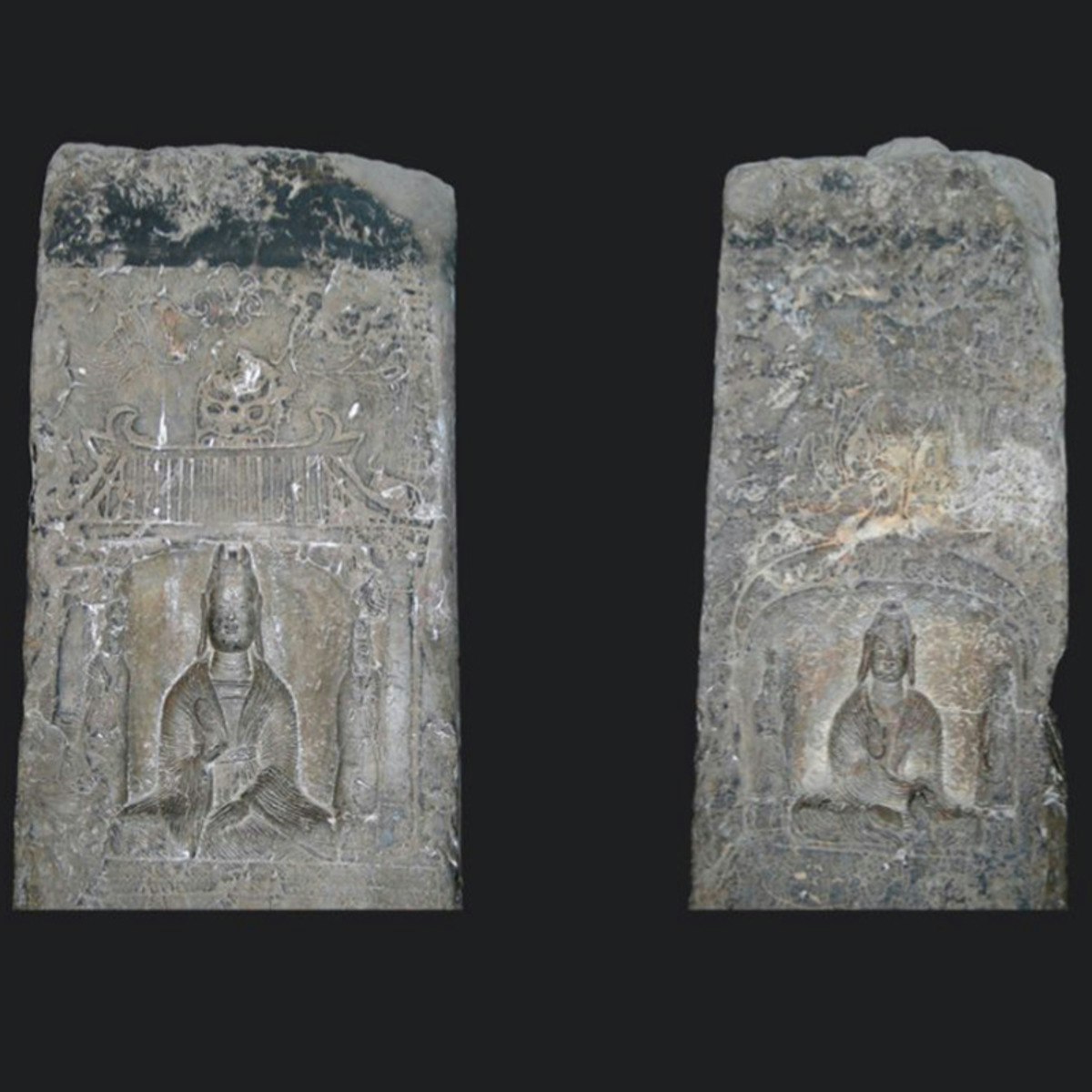
Religious Transformation in Early China: the Period of Division
This sequence of four courses will propose a multi-disciplinary approach to the study of Chinese cultural history conceived of as a succession of modes of rationality (philosophical, bureaucratic, and economic). The focus will be on the moments of paradigm shift from one mode of rationality to another. For each of these moments, cultural facts and artifacts—thought, literature, ritual—will be examined in relationship to changing social, political, and economic systems. The first two courses will cover the periods of the Warring States (481-256 BCE) and the Period of Division (220-589 CE), with a brief excursion into the Han (206 BCE-220 CE). The Warring States laid the social and cultural foundations for the emergence of the imperial mode of rationality; the Period of Division saw the Buddhist “conquest” of China and the emergence of a rationality defined by the opposition of the Three Teachings to shamanism, that is, of a clear contrast between elite and popular culture. The third and fourth courses will focus on the emergence of modern China in the Song-Yuan (960-1368) and of today’s China 1850 to the present. We will see how the modern attack on religion, redefined as "superstition", led not only to religious reform movements but also to a society in which science and the nation became the primary value systems promoted by the state. The courses are listed below: A Critical Cultural History of China - Early China I: Intellectual Change in the Warring States and Han (481 BCE-220 CE) A Critical Cultural History of China - Early China II: Religious Transformation in the Period of Division (220-589 CE) A Critical Cultural History of China - Modern China I: Religion and Thought in the Song, Jin, and Yuan (960-1368) (To be launched in late 2018) A Critical Cultural History of China - Modern China II: Structuring Values (1850-2015) (To be launched in late 2018)

Applied Control Systems 3: UAV drone (3D Dynamics & control)
One of the greatest transformations that we will see in the next couple of decades is going to be the advent of autonomous drones. While being used extensively already, the applications of quadcopters will only grow in time. Drones will be used in delivery services, entertainment, medicine, military, rescue, structural quality inspection - places that people cannot reach easily, and in many other fields. In many cases, there will be a predefined trajectory in a 3D space that the UAV needs to follow without human help. In fact, humans might simply give a simple command for the drone to go somewhere, and then, a specific trajectory will be generated by a computer in that direction and the UAV's control algorithms will need to determine EXACTLY how fast each rotor should turn in order to make the drone follow that trajectory with high-degree precision. And that's what this course is all about - its about DESIGNING, MASTERING, and APPLYING these control algorithms together with deriving the dynamics equations for the quadcopter. In this course, you will receive a full package when it comes to learning about how to model and control a UAV drone and make it follow a trajectory in a 3D environment. Not only you will learn how to model a UAV system mathematically by deriving the equations of motion using the principles of 3D Dynamics, but you will also be exposed to some of the most powerful control techniques out there such as Model Predictive Control and feedback linearization. In 3D dynamics, you will learn the fundamental math and physics behind the UAV quadcopter drone modelling. You will learn how to describe the position and orientation of a UAV quadcopter drone in a 3D space using rotation and transfer matrices, Newton - Euler 6 Degree of Freedom equations of motion, widely used Runge - Kutta integrator in engineering and propeller dynamics. In the end of the course, I will also explain to you the code in the Python simulator. Understanding the material in this course fundamentally, being able to quantify it mathematically, and knowing how to apply it using coding - that will give you an advantage in your engineering career that you cannot even imagine yet. It will give you a competitive edge that you need in the labor market. I'm very excited to start working with you. Take a look at some of my free preview videos, and if you like what you see, then ENROLL in the course, and let's get started right now!
Strategies for Audience Growth and Promoting Music Brands
Embark on a deep dive with "Strategies for Audience Growth and Promoting Music Brands," the second course in the "Building Your Audience for Music Professionals" Specialization. Tailored for those ready to amplify their reach and resonate on a larger scale, this course offers strategic insights and actionable tools across four engaging modules. What You Will Learn: - Advanced Audience Engagement: Strategies to not just reach but truly engage your audience, turning passive listeners into active fans and advocates of your brand. - Digital and Traditional Media Mastery: How to leverage both digital and traditional media platforms to their fullest potential, ensuring your music finds its way to the ears of your target audience. - Trend Analysis and Adaptation: Skills to spot, analyze, and adapt to the latest trends, keeping your brand relevant in a fast-evolving music industry landscape. - Evaluating Brand Presence and Campaign Success: Techniques for assessing the effectiveness of your promotional efforts, utilizing data to refine and optimize future strategies. This course is structured to push you beyond foundational branding concepts, challenging you to implement sophisticated audience growth tactics and evaluate their success. Whether you're crafting your next campaign or seeking to broaden your digital footprint, this course provides the blueprint for impactful, innovative promotion in today's competitive music industry. Designed for the forward-thinking music professional, "Strategies for Audience Growth and Promoting Music Brands" bridges the gap between traditional marketing and the dynamic demands of the modern music scene. Prepare to transform your approach to audience engagement and brand promotion, making your mark in the digital age. Final Project: The culmination of your hard work is a comprehensive audience growth campaign tailored to your music genre and target audience. This project challenges you to apply all the strategies and insights gained throughout the course to create a cohesive, dynamic plan that encompasses engagement tactics, platform selection, trend adaptation, and success evaluation. Who This Course Is For: This course is specially designed for emerging music artists, aspiring managers, producers, promoters, and industry professionals who recognize the power of a strong brand in building a sustainable music career. Whether you're launching a new project or seeking to refine your existing brand, this course provides the foundational knowledge and practical tools to achieve your branding and promotional objectives.

Ultimate Japanese Bootcamp: Speak Like a Native + JLPT N5-N1
Unlock the full potential of your Japanese language skills with our Ultimate Japanese Bootcamp! This comprehensive course is meticulously designed to take you on an exciting journey from the very basics of the Gojuon Chart (50-sound chart) all the way to mastering the advanced proficiency of JLPT N1. Whether you're a complete beginner or an intermediate learner, this course offers everything you need to achieve native-like fluency and excel in real-life communication. Starting with the fundamentals, you'll build a solid foundation in pronunciation and writing through the Gojuon Chart, the bedrock of Japanese language learning. From there, you'll advance systematically through each JLPT level (N5 to N1), covering essential grammar, vocabulary, kanji, and natural expressions. The course also includes listening practice with real-world conversations and reading exercises to boost your comprehension and confidence. What sets this course apart is its practical approach—you'll learn how to use Japanese in everyday scenarios, from casual chats to business settings. Interactive exercises, roleplays, and culturally relevant lessons will ensure you're not just learning the language but living it. By the end of this course, you'll not only have the tools to ace JLPT exams but also the confidence to communicate fluently and naturally, just like a native. Start your journey today and take your Japanese skills to the next level!

Unión Europea: Historia, Instituciones y Políticas
La Unión Europea (UE) continúa siendo una de las experiencias más avanzadas de integración económica y unión política a nivel global. Desde sus orígenes en los años 50 del siglo XX, la UE ha expandido significativamente su influencia, y hoy enfrenta una nueva serie de desafíos globales, desde la gestión de la pandemia de COVID-19 hasta las recientes crisis energética y climática, y los efectos de la guerra en Ucrania. Estos desafíos han puesto de relieve la importancia de una respuesta coordinada a nivel europeo, impulsando el desarrollo de políticas comunes en áreas clave como la seguridad energética, la defensa común y la transición hacia una economía verde. A pesar de la creciente presión de posiciones críticas y escépticas frente al proceso de integración, la UE sigue siendo un referente crucial para sus ciudadanos. Así lo refleja, por ejemplo, el Eurobarómetro de 2023, en el cual un alto porcentaje de europeos expresó su apoyo a una mayor cooperación en áreas estratégicas como la política exterior, la sostenibilidad energética y la defensa de valores democráticos. Estas cifras resaltan el papel fundamental que la ciudadanía otorga a la UE en un contexto de globalización compleja y en continua transformación. Frente a las crecientes contradicciones de un mundo globalizado, entender cómo estos procesos de cesión progresiva de soberanía y coordinación de la toma de decisiones afectan a los ciudadanos europeos constituye uno de los retos más apasionantes para las ciencias políticas, las relaciones internacionales y el análisis de políticas públicas. Este curso, elaborado por la Cátedra Jean Monnet en Políticas Europeas de la UAB y cofinanciado por el Programa Erasmus+ de la UE, tiene como objetivo ofrecer una comprensión profunda del funcionamiento de la UE como un sistema político único. A través de un análisis crítico, el curso explora el origen y evolución de la UE, su diseño institucional y sus principales políticas públicas. Dirigido a un público amplio, el curso proporciona herramientas para entender cómo se definen e implementan las políticas públicas a nivel europeo y doméstico, cuáles son sus actores principales, y las dinámicas que gobiernan la relación entre las instituciones de la UE y los Estados miembros. Los módulos están diseñados para ofrecer una visión integral del proceso de integración europea, partiendo de los hitos históricos más importantes, el rol de cada una de las principales instituciones de la UE y el impacto del derecho europeo en las legislaciones nacionales. Este curso combina la teoría con una perspectiva aplicada, seleccionando algunos de los ámbitos políticos más relevantes para observar la “UE en acción”, tanto a nivel interno (por ejemplo, economía, política agrícola, cohesión y política ambiental), como a nivel externo (la posición internacional de la UE, la cooperación al desarrollo y el comercio exterior, entre otros). Además, el curso analiza el papel de la UE en el contexto actual de tensiones internacionales y sus esfuerzos por fortalecer la seguridad y resiliencia europeas. Puedes ver el vídeo promocional del curso en este enlace: https://youtu.be/SnTonWSwuS8

Sociology: Understanding our Society and Culture
Have you ever wondered how social forces shape us and our culture? Sociology can help us figure out how these forces operate, and the effect they have on our lives. The quest to understand society is urgent and important, because our welfare is tied up with what happens to it. By understanding them we can make better decisions for our own and for our organizations. At the same time sociology helps us not only better understand the world around us, but also sheds light on how our social environment influences the way we think, feel and act. Thus we will be better equipped to make connections between social events and their consequences on our everyday lives. This knowledge in turn enables us to effectively influence others and improve the way we interact with others in groups. The deep understanding of group behavior can greatly enhance our social skills. In this sociology course we will explore a wide range of topics and issues that are prevalent in our society. Sociology may be a great aid to an understanding of social problems because of its interest in the broad basic aspects of social life. While sociology is concerned with the general study of society, it deals also, practically and intensively, with a selected number of social problems. Some of the social problems that sociologists study pertain to the family, government and economic organization. Becoming aware of these issues will help you become a more informed citizen. Apart from that we will learn how groups operate, how culture changes, and how culture affects personality. Studying sociology is imperative, because it allows you to gain a better understanding of human nature and society. So enroll now and let’s get started!

Piano Techniques for Modern Music
If you have always dreamed of playing the piano or keyboard but did not know where to start, this is the course for you. This course will take you through the fundamental skills necessary to build your playing capability quickly and healthily. In addition to the fundamentals, you will learn from exercises and examples from popular music so that you can start playing in multiple styles. You will start by focusing on posture, breathing, movement, and sound production that will help you strengthen your finger independence and control over dynamics, phrasing, articulation, tempo, and pulse. At the end of this course, you will have all of the tools necessary to build a dependable piano technique for performing contemporary music. You will be able to identify common chord progressions used in contemporary music and learn how to play both as a soloist and as an ensemble member. Finally, you will be able to improvise over common chord progressions in various contemporary music settings.

The Complete IELTS Guide- 7 Courses in One - IELTS Band 7+
Updated with FULL IELTS SPEAKING ANSWERS (including Vocabulary, Audios). See Speaking section for more details. The Complete IELTS Band 7+ Guide 7 Courses in One: IELTS Speaking IELTS Listening IELTS Reading Formal Writing Improvement IELTS Academic Writing IELTS General Writing And New IELTS Speaking Band 9 answers updated every season Our Students Say: Nivetha J. Spectacular! By the way, I love that British accent! To be honest it really made me focused and sometimes theres some funniness in this course! P.S. YOUR AMAZING! Jammy D. AMAZING! The way the course is structured makes it easier to follow and understand. The explanations are clear and detailed. THANK YOU. This is a treasure. Edith B. This course is great! The instructor explain a lot of tricks and helpful information also he’s clear and his voice is amazing! İlker S. It was really fun and very helpful! Thank you so much! I got accepted to my master program thanks to you! Melvin R. Took this course for one month to prepare for my IETLS exam and got a score of 7.5. Great course and great instructor. Enjoyed it thoroughly. Picked up new things that I had not known before. Aslan Y. With only a few weeks of preparing I managed to get a 7.5 on the exam thanks to this course, I am very thankful to Mr.Francis and i totally recommend this course for Future IELTS candidates. Are you planning to take the IELTS exam, but don't know how to prepare? Are you new to IELTS, and don't know how to start studying? Have you taken the IELTS exam before, and didn't get the score you need? This course, from qualified IELTS Examiner Francis Carlisle, is here to help In this course, you will: Understand the IELTS test (and how the examiner decides your score) Learn how to get an IELTS Band 7+ for all areas Prepare in a logical and efficient way for your IELTS exam Make your friends jealous and amaze your family with your high IELTS Exam score. Our Course Goal: You score Band 7+ in your IELTS Exam Why take this course? Learn from a qualified IELTS examiner - you'll know exactly how to score Band 7+ in IELTS. Complete IELTS guide - 50 hours of material for all areas of the IELTS Exam. Special Bonus - IELTS Speaking band 9 answers - Updated every season - Always be prepared for the IELTS Exam, no matter when you take it What is included? IELTS Reading: Sections: Understand the IELTS Reading test Learn how to prepare for the IELTS Reading test Acquire important skills for IELTS Reading Practice every different type of IELTS question Answer a full IELTS Reading test together Details: 8 hours of material 89 videos Note: We use the Cambridge English IELTS Reading Books for practice. However, we are not able to provide those books to you - you are responsible for sourcing the books yourself. IELTS Listening: Sections: Understand the IELTS Listening test Learn how to prepare for the IELTS Listening test Practice every different type of IELTS question Answer a full IELTS Listening test together Details: 8 hours of material 94 videos Note: We use the Cambridge English IELTS Listening Books for practice. However, we are not able to provide those books to you- you are responsible for sourcing the books yourself. Formal Writing Improvement: Including: Making Complex Sentences (to make your English writing go to the next level) Using Transitional Words and Phrases (to make your English writing logical and coherent) Formal vs Informal English Writing (to help you understand the difference between formal and informal English writing) And English Writing Common Mistakes (to help you write English with perfect grammar) 24 videos 2 hours of material IELTS Academic Writing: Learn how to answer IELTS Academic Writing Tasks 1 and 2 Understand all IELTS Writing Tasks 1 and 2 questions Find out how the IELTS Examiner decides your score Learn how to choose data and make a plan Learn easy grammar structures to get a high IELTS score Learn complex grammar structures to impress the IELTS examiner Learn how to organize your IELTS Writing Task 2 essay (different structures for every type of question. Make sure you learn this) Discover which tenses to use for which IELTS Writing questions Learn great vocabulary to answer any IELTS Writing question (nouns, verbs, adjectives, adverbs, fractions, prepositions, approximations and more! So much material) Build 4 full IELTS Academic Writing Task 1 videos together (including full IELTS Level 9 answers) Build 2 full IELTS Academic Writing Task 2 videos together (including full IELTS Level 9 answers) 5.5 hours 63 videos IELTS General Writing: Learn how to answer IELTS General Writing Tasks 1 and 2 Understand all IELTS Writing Tasks 1 and 2 questions Find out how the IELTS Examiner decides your score Learn how to make a plan to answer IELTS Writing Task 1 and 2 Discover which tenses to use for which IELTS Writing questions Learn great phrases to use in your IELTS Writing Task 1 Build 3 full IELTS General Writing Task 1 answers together (including full IELTS Band 9 answers) Build 2 full IELTS Writing Task 2 answers together (including full IELTS Band 9 answers) 5.5 hours 67 videos IELTS Speaking: Sections Introduction to the IELTS Speaking test What to do before, during and after the IELTS Speaking test IELTS Key Skill 1: Fluency IELTS Key Skill 2: Lexical Resource (Vocabulary) IELTS Key Skill 3: Grammatical Range and Accuracy IELTS Key Skill 4: Pronunciation You'll learn: Answer IELTS questions fluently without leaving long pauses Use complex sentences confidently in your IELTS exam Speak in grammatically correct sentences Use a wide range of IELTS-suitable words Use common English idioms to answer any IELTS question Tricks to achieve natural pronunciation in your IELTS exam Use tone and contractions in a natural way to impress the IELTS Examiner How the IELTS Speaking Examiners decide your score What areas of your English to focus on to get a high IELTS score Lots of great material to use in your IELTS Speaking test

In Depth CapCut Video Editing Masterclass: Advanced Tools
Welcome to Part 2 of the CapCut Video Editing Masterclass with Adi Singh! Cap cut is the best video editing software for beginners with hundreds of drag and drop effects that would make your videos look like it has been professionally edited. It is so powerful and easy to edit in CapCut that even professionals are switching to this amazing video editing software. By the end of this course, you’ll have mastered CapCut’s advanced tools for producing professional, cinematic videos. You’ll gain hands-on experience with color grading, captions, text animation, and the best export settings for social platforms. You’ll also take on creative projects, including editing short-form reels, that will challenge you to apply everything you’ve learned in practical, real-world contexts. This course is perfect for learners who already understand CapCut’s editing basics and want to push their skills further. Whether you’re an aspiring content creator, social media manager, or videographer, these advanced techniques will help your videos stand out and connect with audiences. To get the most out of this course, you should already feel comfortable using the CapCut timeline and performing basic cuts and edits. With that foundation, instructor Adi Singh will guide you through: * Applying professional color grading for cinematic results * Creating engaging captions and animated text effects * Producing reels and exporting high-quality videos optimized for TikTok, Instagram, and beyond Instructor bio: Adi is a videographer, content creator, and educator whose journey began in 2015 with a camera purchased to document travels in New Zealand. What started as a passion quickly grew into a career — today, Adi runs a video production company and a thriving YouTube channel, sharing creative knowledge with a global audience. Having built his own filmmaking career through online learning and self-teaching, Adi is passionate about giving back by teaching others. His courses are designed to make videography approachable and practical, helping learners gain the skills and confidence to create professional-quality content.

"Another" 40 Tips on Making a Great Online Course
[Optional Prerequisite Course: 40 Tips on Making a Great Online Course]. Welcome to "ANOTHER" 40 Tips on Making a Great Online Course. This is a course to help you save time and money when creating your online courses. Learn from my mistakes. Creating an online course is easier than you think; in this course I will humbly teach you how to work smarter (not harder) by discussing 40 [ADDITIONAL*] tips/best practices I have learned the hard way teaching online over the past 12 months. The Topics and Tips that we will Cover Include: What Should You Teach Tips: • Tip #1: Make “PASSIONATE” Course Placeholders to Help You Decide What to Teach • Tip #2: “Educational Darwinism” (Read Other Course Reviews Before Making Your Course) • Tip #3: Using Udemy’s Insight Tool in Order to Decide What to Teach • Tip #4: When to Stop Making a Course Content: Innovative & Helpful Course Content Creation Tips: • Tip #5: Consistent and “Creative” Content Theme • Tip #6: Idea Generation • Tip #7: Multiple File Formats • Tip #8: Question Anticipation • Tip #9: Using Props • Tip #10: Making Your Course International • Tip #11: Creating Innovative Exercises • Tip #12: Calculating the Length of Your Lessons • Tip #13: Scripting Your Course • Tip #14: Spurts of Inspiration • Tip #15: Write Confidently from Your Heart (Be Different and Unique and Free!) Course Structure Tips: • Tip #16: Fast and Slow Navigation Options • Tip #17: Structuring the Logic of Your Course Outline • Tip #18: Immediate Value Added and Impact Strategy Design Tips: Visual Design Idea Tips: • Tip #19: Design for Mobile • Tip #20: Screen Casting Using QuickTime [Mac Only] • Tip #21: Screen Casting Using PowerPoint [Windows Only] • Tip #22: Providing Internet Links as Resources the “Correct” Way Setting Up Equipment Tips: • Tip #23: Intro. to Setting Up Your Equipment, Recording and Editing from Scratch • Tip #24: Setting Up the Camera, Lights, Microphone and Computer • Tip #25: Recording the Video, Editing the Video and Uploading it to Udemy • Tip #26: Getting Help from Udemy in Order to Perfect Your Videos+Best Practices • Tip #27: Using and Setting Up a Teleprompter • Tip #28: Removing Echoes Appearance and Health Tips While Creating Courses Tips: • Tip #29: Health(ier) Desk Setup • Tip #30: Cosmetics + Looking Camera Ready • Tip #31: Looking Less Tired • Tip #32: Whiter Teeth Delivery Tips: • Tip #33: Get In “Your” Friendly Personable Zone to Teach • Tip #34: Staying Upbeat When Teaching • Tip #35: Use Language That Won’t Get Lost in Translation & Easier to Understand Additional Editing Tips: • Tip #36: Leave Room for Captions • Tip #37: Adding and Customizing Images for Your Lessons with PowerPoint • Tip #38: Selecting/Adding Music to Your Lessons • Tip #39: Making a Video + Animation + Adding Pictures + Music from Scratch • Tip #40: How I Made and Edited the Previous Lecture (Fun)! Please learn from my many mistakes teaching online, so I can save you time and money. In this course are 40 mistakes I made and I want you to learn from my many failures so you can get your course up and running quickly. Making an online course is so much easier than you think as you already have everything single thing that you need to build something far bigger than yourself. : ) Thanks! Chris Closed captions have been added to all lessons in this course.
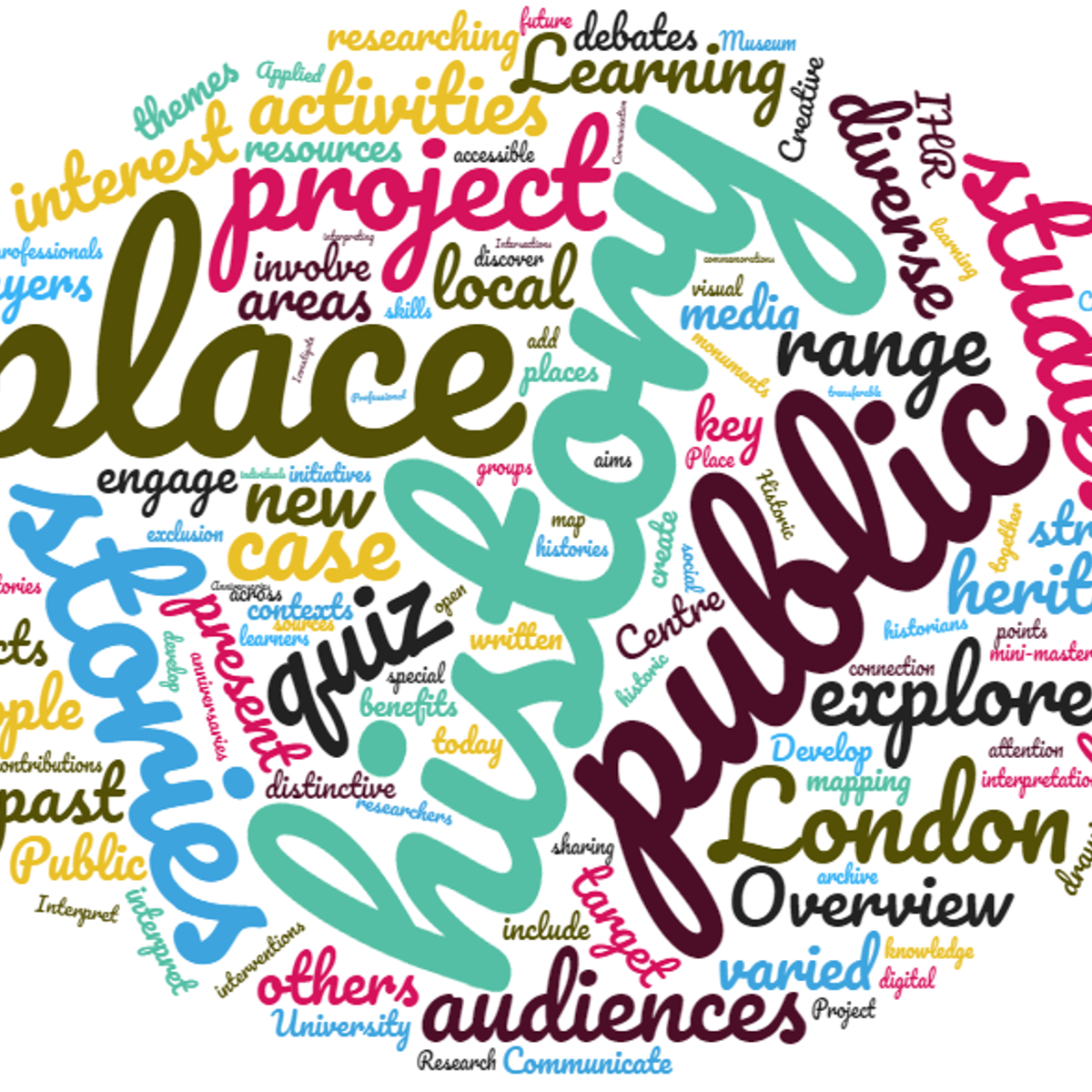
Applied Public History: Places, People, Stories
This course introduces learners to applied public history: understanding and interpreting the past today, and engaging diverse communities in the practice of making and sharing histories. The course draws on project case studies, expert insights and diverse perspectives to model exciting approaches to researching and sharing the history of places and people. Learners will develop a toolkit to apply in their own practice, by participating in discussion, quizzes, creative activities and mini masterclasses. What kinds of stories can we discover through research into the history of places and people? How do we engage diverse communities with those stories today? What kinds of imaginative approaches can we use to interpret the past? And what tools and opportunities can we create to include new groups and individuals in local research initiatives? Led by the Centre for the History of People, Place and Community at the Institute of Historical Research, University of London – the UK’s national centre for history – this course investigates these questions and helps learners develop transferable approaches to their own local history and heritage interpretation.

Canadian Indigenous History and Cultural Sensitivity
For the past ten years Holly Fortier (Cree/Dene from Ft. McKay First Nation, Alberta) has traveled across Canada facilitating Indigenous Awareness training courses for government agencies, major corporations, educational institutions and many other groups. At the request of individuals who were unable to attend her classroom groups, she has created this comprehensive online course to accommodate those wish to educate themselves in Indigenous relations, cultural practices, and the historical impact of colonization.

DaVinci Resolve 19 Masterclass: Video Editing Basics
Start your journey into the world of video editing with DaVinci Resolve 19—the go-to tool for creators, editors, and filmmakers. In this beginner-friendly course, taught by instructor Adi Singh, you’ll learn the essential skills to confidently navigate the software, set up your projects, and edit your first video from start to finish. We’ll cover everything from project and color management settings to trimming clips, working with timelines, using transitions, and adding text animations. You'll also explore productivity-boosting features like smart bins, proxy media, and keyboard shortcuts that streamline your workflow. By the end of the course, you'll have edited and exported your own 30–60 second video using provided footage, complete with clean cuts, smooth transitions, and a professional touch. Whether you’re brand new to video editing or switching to Resolve from another platform, this course provides the strong foundation you need to bring your creative vision to life. Instructor bio: Adi is a videographer, content creator, and educator whose journey began in 2015 with a camera purchased to document travels in New Zealand. What started as a passion quickly grew into a career — today, Adi runs a video production company and a thriving YouTube channel, sharing creative knowledge with a global audience. Having built his own filmmaking career through online learning and self-teaching, Adi is passionate about giving back by teaching others. His courses are designed to make videography approachable and practical, helping learners gain the skills and confidence to create professional-quality content.

Mathematical Statistics for Data Science
This course teaches the foundations of mathematical statistics, focusing on methods of estimation such as the method of moments and maximum likelihood estimators (MLEs), evaluating estimators by their bias, variance, and efficiency, and explore asymptotic statistics, including the central limit theorem and confidence intervals. Course Highlights: • 57 engaging video lectures, featuring innovative lightboard technology for an interactive learning experience • In-depth lecture notes accompanying each lesson, highlighting key vocabulary, examples, and explanations from the video sessions • End-of-chapter practice problems to solidify your understanding and refine your skills from the course Key Topics Covered: • Fundamental probability distributions: Bernoulli, uniform, and normal distributions • Expected value and its connection to sample mean • Method of moments for developing estimators • Expected value of estimators and unbiased estimators • Variance of random variables and estimators • Fisher information and the Cramer-Rao Lower Bound • Central limit theorem • Confidence intervals Who This Course Is For: • Students with prior introductory statistics experience, looking to delve deeper into mathematical foundations • Data science professionals seeking to refresh or enhance their statistics knowledge for job interviews • Anyone interested in developing a statistical mindset and strengthening their analytical skills Pre-requisites: • This course requires a solid understanding of high school algebra and equation manipulation with variables. • Some chapters utilize introductory calculus concepts, such as differentiation and integration. However, even without prior calculus knowledge, those with strong math skills can follow along and only miss a few minor mathematical details.

Ciencias naturales en el nivel medio: del fenómeno a la idea
Este curso está dirigido a docentes de Biología, Física, Química y otras ciencias naturales, tanto principiantes como experimentados. Explora estrategias didácticas innovadoras y recursos accesibles para enriquecer las clases, fomentando la participación de los estudiantes, la comprensión profunda de conceptos clave y el desarrollo de habilidades de pensamiento científico.