Cursos de Humanidades y sociales
Los mismos datos para todos, vengan de Udemy o de Coursera: precio, valoración, duración e idioma. 724 cursos encontrados. Afinar la búsqueda

Polish Language Course - Learn Polish from 0 - Beginner
Looking for Polish language classes for adults? Look no more! You can now LEARN THE ESSENTIALS OF THE POLISH LANGUAGE IN A MATTER OF HOURS, NOT YEARS! AND MOST IMPORTANTLY - LEARN POLISH NATURALLY. The course has audio revisions - recordings, which you can download to your phone and listen to when in the car, on the bus or before going to sleep. Thanks to them, you are able to learn and acquire the language by natural acquisition! What better way to learn the language than to be exposed to it? Forget boring lessons in a language school. Forget fitting someone's schedule. Study whenever you feel like it. The course covers EVERYTHING to get you to a communicative "survival" level in Polish as soon as possible. It is the best way of learning Polish for English Speakers. Trust me! I'm a certified native Polish teacher. I graduated in Teaching Polish As a Second and Foreign Language (Vistula University of Warsaw). Tired after a long day? No problem. Download audio files, close your eyes and listen. Throughout the whole course, we make sentences, then they are recorded for you. By listening to them, you will learn all the vocabulary way faster than by studying by heart. We always learn vocabulary in the context of a sentence. It's easier to remember this way! In this course, we will help you achieve your goal of becoming COMMUNICATIVE! As a certified teacher, I can break down any grammar concepts for you. By signing up for this course, you're choosing to learn from a professional. While native speakers can assist you in speaking, a certified native teacher will guide you to both SPEAK and UNDERSTAND the nuances of the language. What levels does the course cover? We start the lessons from a complete 0. Hence, the course covers all the necessities: from 0 to approximately A1 level, although in this course we don't focus to tick the box to achieve a specific level, we focus on getting you to communicate/survive. Join 10K+ students on the bestselling Polish course on Udemy! What students are saying: ★★★★★Your explanation is very clear and descriptive. I know it's a difficult language, but it's easier with you. ★★★★★ I loved the way that you teach. I learnt a lot and at the same time, I enjoyed it a lot. Thank you for all your effort. ★★★★★ I enjoy earning Polish this way ★★★★★ I completed the first 5 days and I much prefer this course as opposed to the group classes I was having before in Warsaw.. She's very informative and I feel like if I focus and actually apply her advice, it's possible to learn this language. She explains well and introduced new vocabulary which I can download on my computer. ★★★★★ I haven't finished the course and I already feel like I'm learning a lot, and Weronika makes it easy and fun! I'm super happy with this course ★★★★★ Excellent teaching. Encouraging to learn Polish. Highly recommended. Join The Only Polish Language Course For Foreigners That Covers It All! With over 21 hours of lectures, quizzes, downloadable materials and recommendations - this complete Polish course is one of the most comprehensive on the internet for survival Polish. Approx. 20% of A1 level. Learn Polish The Polyglot Method - The best way to Learn Polish Listen to the lectures, download the resources, and audio recordings, make exercises & ACQUIRE THE LANGUAGE NATURALLY! Making and repeating sentences in Polish will help you break the ice and force you to use the language. Follow the Polish translations that are included at the end of each lesson. Learn step by step, day by day. Learn Polish fast and easily. Join an Exclusive Polish Facebook Group and Connect with the Community of Students Learning Polish from +40 countries around the world! Take advantage of this free group, which you can join as my Polish student, and find a partner to further practise talking, and create sentences to get them corrected. Enjoy additional materials to learn Polish! Everything You Need to Know to Communicate in Polish • Polish vocabulary related to 30 different topics (Food, Family, Months, Days, Numbers, Car, Home, Cinema, Furniture, Body Parts, Animals, Professions, Hobby & many more) • 150+ Polish verbs for your daily communication • Polish slang and expressions you won't find in any books • Polish memes • Real-life recommendations (to follow Social Media pages in Polish & more) to have the Polish Language around you outside the course as well What will you achieve? By the end of this course, you will be able to communicate basic needs (survive) in Polish & understand the basics of the written and spoken Polish language. This is the most complete, easiest, and fastest way to learn the Polish language in a short period of time! What are you getting? • Lifetime Access to the 21-hour Polish language course for foreigners • Audio Recordings from each lesson to listen to when in the car/bus/doing chores • 21hrs+ on-demand video lectures • Multiple Choice Quizzes • Polish Grammar Cheat Sheet • PDFs with vocabulary/verbs from each lesson • Recommendations for your future learning of Polish ex. continue with our school directly • Useful tips on how to get Polish around you during your day (Social Media) • Flexibility to Learn Polish anytime you want, anywhere you are This course is not for you if: • You think fluency happens overnight • You have no intention of revising • You expect to pass the B1 state exam after only this course - this is 20% of the A1 level. • You haven’t looked into Slavic grammar and plan to just complain without putting in any effort :) • You’re expecting 1:1 lessons for this price Ready to Learn the Polish Language? Wait No More & Start to Speak Polish like a Native. Buy the Course Now and Have Fun Learning Polish With Me!

Ethical Social Media
Social media connects us across space and time, allowing us to find like-minded communities and participate creatively in public life as never before. We may often use social media without thinking much about the possible consequences. But there is a shadow side associated with social media use, which takes the form of hate speech, increased surveillance, lack of anonymity and questionable use of our data. What do we need to know to use social media spaces effectively, in a way that is safe and productive for all? This course will guide you into a deeper exploration of online identity, social media communities and their users. You will examine the ways that social media is being used by public institutions such as government to build participation and conversation with audiences. You will encounter the most common ethical debates in social media. You will also have the opportunity to build your practical skills by developing your professional social media profile, defining your audience, building your social media influence and understanding how to interpret data analytics to "listen" and communicate well.

Advanced English Fluency - The Complete Guide
Welcome to the Advanced English Fluency - The Complete Guide course! If you want to speak English fluently in conversations, then you've come to the right place. Our comprehensive course will help you speak English confidently and fluently in English conversations. Who is this course for? This course is suitable for you, if... • You want better English conversation skills • You want to improve your English fluency • You have at least A2 level English • You study English and want to improve your exam scores • You work in English and want to improve your Business English speaking skills • You enjoy improving your language skills and want to have better English conversations with your friends What Our Students Say: ★★★★★ Zhekun “Without further ado, it is a fantasitic journey. The lectuer really gives out some phrasal verbs the I may hear in everyday life and I can understand the meaning by its context. But I have never though of using those verbs myself. It is helpful to put these things together so that I can use them more intentionally.” ★★★★★ Alfonso S. “Excelent course, good material and an outstanding instructor. I strongly recommend it!” ★★★★★ Leon D. “Super course again, highly recommended! You are great, Francis, thank you so much and many greetings from Germany.” ★★★★★ Julian “This is really useful course for those who want to upgrade their English level and sound more fluent. I like that phrases are presented in different situations which makes them really useful. Thanks a lot!” The course is divided into four sections, each focused on a specific area of English conversation skills. • 120+ Idioms • 220+ Phrasal Verbs • Hundreds of Collocations • Conversation practice (29 model conversations) What will you learn in this course? • Learn to speak English with great fluency • Understand what native English speakers are saying • Stop having long pauses when you speak English • Improve your English speaking & conversation confidence • Make sure English native speakers always understand you • Use natural English language (not the words you learned at school!) Who is your teacher? • Francis Carlisle - qualified IELTS examiner • 78,000+ students on Udemy • 13 years of teaching experience Section Description: In the first section, you will learn 120+ commonly used idioms in English conversation. Idioms are phrases that have a different meaning from the literal definition of the words used. Mastering these idioms will help you to communicate more effectively with native English speakers to improve your English conversation skills. The second section of the course is dedicated to phrasal verbs. Phrasal verbs are a combination of a verb and a preposition or adverb. There are over 220 phrasal verbs in this course that you will learn to enhance your English conversation speaking and comprehension. In the third section, you will learn hundreds of collocations, which are groups of words that commonly occur together. This will help you to improve your English vocabulary and accuracy in English. When you learn these collocations, English conversation will seem extremely easy to you! Finally, in the fourth section, you will get plenty of English conversation practice through 29 model English conversations. These conversations cover a wide range of topics and will help you to increase your confidence in speaking English fluently. With our course, you will gain the ability to understand what native English speakers are saying, eliminate long pauses during conversations, improve your overall speaking and conversation confidence, and ensure that native English speakers always understand you. Enroll now and start your journey towards mastering English conversation and fluency!
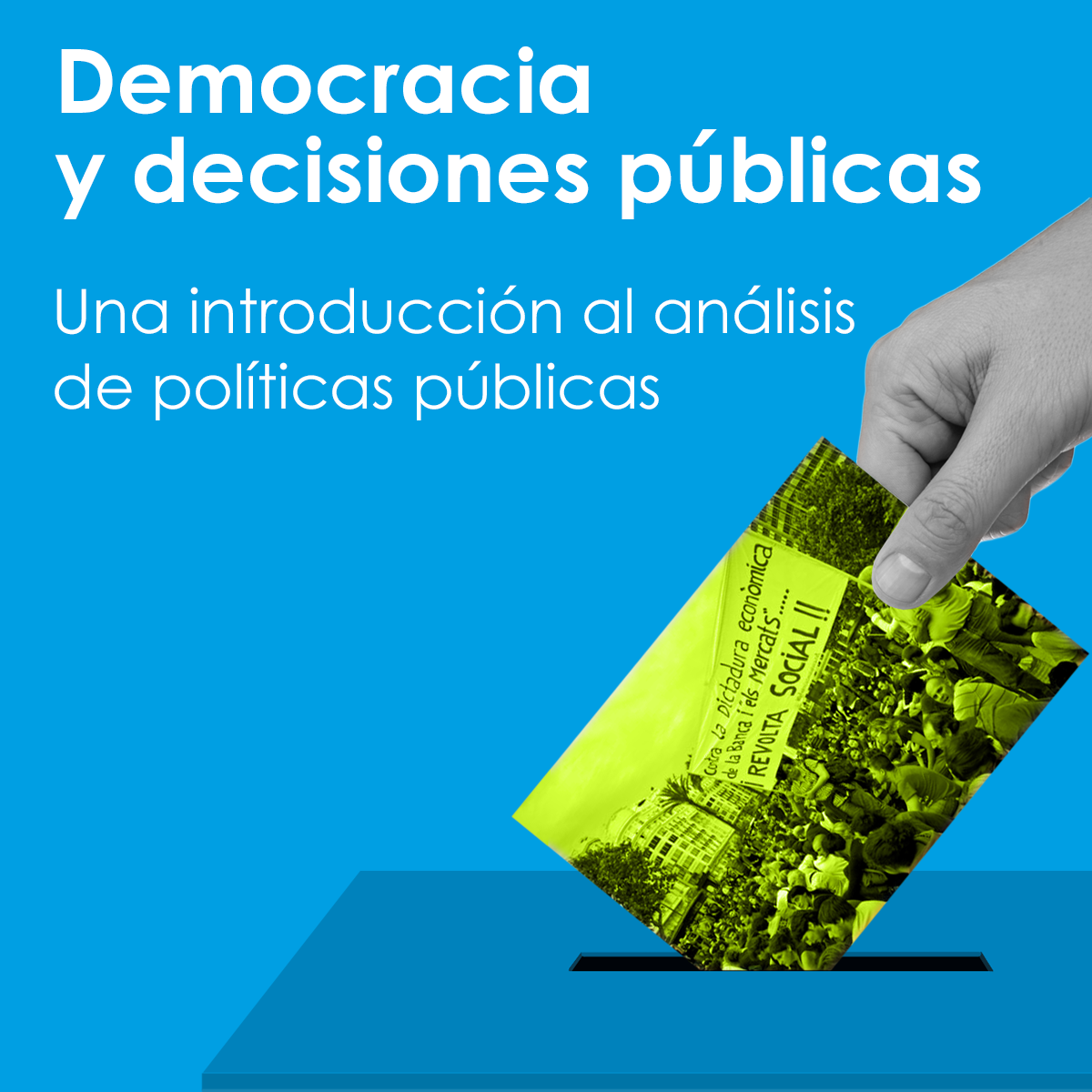
Democracia y decisiones públicas. Introducción al análisis de políticas públicas
¿Qué son las políticas públicas? Son la plasmación más concreta de la política. Lo que los gobiernos hacen, y dejan de hacer, para hacer frente a los problemas colectivos. Este curso trata sobre cómo se decide qué problemas abordar y qué soluciones adoptar. Un proceso primordialmente político y social que suele escapar al análisis puramente racional. A lo largo del curso analizaremos por qué algunos problemas adquieren la categoría de problemas públicos mientras que otros no llegan a captar la atención, describiremos la pugna política que suele haber tras la descripción e interpretación de los problemas, identificaremos el complejo entramado de actores dispuestos a influir en la adopción de las políticas públicas, y cómo las discrepancias se suelen extender más allá de la toma de decisiones y hasta la aplicación práctica de la política pública. Trataremos también sobre las grandes dificultades que padecen gobiernos y actores sociales para llegar a saber si las políticas que se llevan a cabo son realmente útiles y cómo aprender a mejorar su rendimiento. Los objetivos de este curso son: 1. Mostrar a los alumnos un número de casos reales que ilustran la complejidad de los procesos de adopción de las políticas públicas, y cómo estos procesos pueden ser incoherentes con los modelos racionales de toma de decisiones. 2. Transmitir a los alumnos los fundamentos e instrumental del análisis de políticas públicas para que puedan afrontar creativamente problemas del mundo real. 3. Contribuir a que los alumnos sean ciudadanos conocedores del funcionamiento de los sistemas democráticos. Por ello, el curso se dirige a todas las personas interesadas en los problemas colectivos, así como a aquellas que quieran convertirse en participantes influyentes en el proceso de formación de las políticas, ya sea como analistas, funcionarios públicos, trabajadores del tercer sector, o como ciudadanos comprometidos en causas políticas. También se dirige a estudiantes que se dispongan a iniciar estudios de grado o postgrado en administración pública, gestión pública o análisis de políticas públicas.

Medical Terminology 101
Hello! This course is Medical Terminology 101. I’m Dr. Emma Hitt Nichols, a long-time medical writer, and I’ve collaborated with medical writer Dr. Jessica Martin to bring you this course so that you can add to your knowledge of medical vocabulary. Perhaps you are starting some medically-related training, you have to communicate about medicine, or you simply need a refresher course for the knowledge you already have. With more opportunities to work in healthcare than ever before (and that demand is only growing), learning medical terminology is important if you are hoping to pursue a career in any aspect of healthcare, from medical billing to an allied healthcare profession. By the end of this course, you will be able to describe the main suffixes and prefixes involved in medical terminology, and decode medical words pertaining to all major body systems. In this course, we discuss the what, why, and how of medical terminology; we cover the bones, the muscles, the skin, the digestive system, the urinary system, the reproductive system, the heart and circulatory system, the respiratory system, the brain and nervous system, and the eye and the ear. We use a simple approach to medical terminology--not only do we teach you what you need to know, we teach you how to learn medical terminology efficiently. (Hint: it's not by memorizing hundreds of thousands of medical words). Throughout the course, we will give you the tools you need to understand the information, and all of the medical terms are presented with engaging visuals and simple, clear overviews. Throughout the course we have included cheat sheets and over 140 quiz questions so that you can better learn and retain the material. This course will be invaluable for people with a passion to learn medical terminology or anyone interested in a career in... • health care, including nursing, dentistry, chiropractics, pharmacy, physical therapy, midwifery, and more • medical and scientific writing, editing, copyediting, or copywriting • medical billing and coding • medical transcription • medical secretary or receptionist • pharmacy technicians • clinical research All you need to get started is the passion to learn medical terminology and the need to use it in your life. Just click on the link to enroll. Thanks so much!

GenAI for Legal Ethics and Practicality
In this course, you'll discover how to leverage AI while staying aligned with evolving ethical standards in legal practice. In today's fast-paced legal landscape, responsibly integrating AI is not just an advantage—it's essential. This comprehensive course guides you through the complex intersection of AI and legal ethics, providing practical lessons and real-world examples. Whether you're a tech enthusiast interested in ethical AI deployment or a legal professional looking to stay ahead, this course offers valuable insights. By the end, you'll have the skills to confidently use AI in your practice, ensuring compliance with all ethical guidelines. This course is designed for lawyers, legal executives, compliance officers, and AI enthusiasts eager to ethically integrate AI in legal settings. Learners should have an interest in AI and legal practice, with a commitment to ethical standards. No prior AI experience is needed, but basic legal knowledge and an openness to innovation will help you succeed. By the end of this course, you will be prepared to ethically and effectively harness AI's potential in your legal practice, ensuring both innovation and compliance.

Vedic Mathematics Course (Beginners to Intermediate Level)
Vedic Mathematics is the name given to an ancient system of Indian Mathematics. It contains a collection of techniques (also called Sutras) to speed up mathematical calculations. The most exciting benefit of Vedic Math is that it is very simple and yet it helps speed up calculations by 10 to 15 times. It almost feels like magic to the student and therefore creates an interest in mathematics. I have personally seen countless students benefit immensely from learning Vedic Math. It will also increase your confidence in solving math problems. This course has more than 75+ lectures spanning 10 hours of on-demand videos that are divided into 20+ sections. Each topic is explained extensively - by solving multiple questions along with the student during the lectures. The students are also provided and encouraged to solve practice questions & quizzes provided at the end of each topic. Techniques covered in the course: • Multiplication by 11, 22, 33, 12, 13, 14, 15 etc. • Finding squares of numbers ending with 5 • Multiplication of numbers • Multiplication of numbers near to base techniques • Remainder technique by 9 • Multiplication tables up to 1000 mentally • Addition by Left to Right, Dropping Tens and Grouping Techniques • Fast Subtraction by Left to Right and other Techniques • Division by Nikhilam Sutra, Straight Division Technique • Digital Sum Technique • Squares and Square roots of numbers using the duplex method • Cubes and Cube roots of numbers • Calendar (Finding Day of the week) With this course you'll also get: • Full lifetime access to the course • Complete support for any question, clarification, or difficulty you might face on the topic • Udemy Certificate of Completion available for download • 30-day money-back guarantee Feel free to contact me for any questions or clarifications you might have. I look forward to seeing you in the course! :)

The American Renaissance and Mark Twain
This course explores Mark Twain's literary rivalry with Harriet Beecher Stowe and discusses why Huckleberry Finn’s story is labeled as a "tall tale". The module also defines "realism" and "naturalism" in terms of Twain's works. Next, it examines how blackface minstrelsy display the ambivalence as the basis for interracial bonds in the United States and compares the Adventures of Huckleberry Finn with Mark Twain's own autobiographical work, "Life on the Mississippi".

Philosophy for Beginners
In this course, I will teach you the story of human philosophy encompassing an incredible 2500 years of philosophical history. By the end of this video, you will know all the basic philosophical ideas, schools and approaches, as well as some of the most influential philosophers from around the world. The video has 4 major parts and each with 2 or 3 sections, just like chapters in books. In part 1, I will answer the most fundamental question. Why are humans the only species that have invented philosophy? Or where does philosophy really come from? Also how has philosophy evolved in the past 2500 years? And why philosophy has so many branches such as ontology, epistemology, rationalism, empiricism, humanism, utilitarianism, existentialism, postmodernism and more? In part 2, I will look at the origin and differences between eastern philosophy and western philosophy. Why one emphasises spirituality, and changing yourself, while the other emphasises rationality, and changing the world . I will look at the Greek giants of Socrates, Plato and Aristotle, as well as the three giants of eastern philosophy, the Buddha, Lao Tzu and Confucius. In part 3, I will look at the philosophy of life and human civilisation. Is the purpose of human civilisation to promote equality or competition? Is the purpose of human life to seek knowledge or happiness? I will discuss philosophers such as Sun Tsu, Machiavelli, Thomas Hobbes, Jean-Jacque Rousseau, Voltaire, Erasmus, Michel de Montaigne, Francis Bacon, Martin Heidegger, Michel Foucault, and Bertrand Russell. In part 4, I will tackle the question of knowledge and human motivation. How do we know reality? I will discuss the school of European rationalism versus British empiricism and Kant’s reconciliation of the two. After Kant two distinct schools of philosophy emerged to explain human motivation. One sociological and one psychological. Hegel’s sociological philosophy argued we are motivated by historical forces, while Schopenhauer’s psychological philosophy argued we are motivated by a blind subconscious will.

The Art of Music Production
Explore the art of record production and how to make recordings that other people will love listening to. This course will teach you how to make emotionally moving recordings on almost any recording equipment, including your phone or laptop. The emphasis is on mastering tangible artistic concepts; the gear you use is up to you. You will learn to develop the most important tool in the recording studio: your ears. You will learn to enhance every aspect of your own productions, both sonically and musically, by employing deeper listening skills. Assignments will include posting your own recordings for peer review, and reviewing your classmates’ work by employing specific tools and strategies. This course does not provide instruction on using a digital audio workstation, but if you do use one to record and mix, that’s great. But, as long as you can record into your computer and post an MP3, you can complete the assignments. As you learn about the art of record production in this 4-week course, you will also learn about yourself and who you are as an artist and producer. It is not necessary that you read music or play an instrument to take this course.

Document Control & Good Documentation Practices (GDP) in GMP
This course provides a clear and practical understanding of document control and Good Documentation Practices (GDP) within a cGMP-regulated pharmaceutical and biotech setting. You will learn how to create, review, approve, distribute, and archive controlled documents, while ensuring compliance with key global regulations such as FDA 21 CFR Part 211, EU GMP Annex 11, and ICH Q10. Mastering documentation and record control is essential for maintaining an effective Quality Management System (QMS). Proper documentation serves as both guidance for performing tasks and evidence that processes have been carried out correctly. In a regulated environment, accurate and traceable records are not only a legal requirement but also the foundation of product quality and patient safety. By the end of this course, you will be able to: • Understand the purpose and scope of document control systems. • Apply Good Documentation Practices (ALCOA+ principles, data integrity). • Manage controlled documents such as SOPs, batch records, protocols, and reports. • Implement change control and periodic review of documents. • Prepare for regulatory inspections and understand auditor expectations. Target Audience • QA & QC professionals in pharma and biotech. • Production and R&D staff working under GMP conditions. • Regulatory Affairs specialists. • Students and professionals preparing for careers in GMP compliance. • Anyone who needs to understand how documentation supports GMP compliance and contributes to regulatory success. This course combines theory with practical examples, case studies, and real audit findings, making it suitable both for beginners and experienced professionals seeking to strengthen their compliance knowledge.

Programming with Python for Social Scientists
This course introduces social scientists to the power of programming, focusing on using Python to enhance social science research. Learn to write code that aids data collection, analysis, and visualization, applying it to real-world social science problems. Through practical coding exercises, you’ll gain the skills to structure and manage data, build useful objects, and work with APIs and web scraping tools. You will also delve into research-specific applications such as text file manipulation and social media data collection. What makes this course stand out is its unique approach—blending theory with hands-on practice, using Python as a tool for data-driven social science research. You’ll be equipped with the skills to turn programming knowledge into actionable insights for social science work. This course is ideal for social scientists, researchers, and students looking to improve their coding and data handling skills. A basic understanding of social science research and programming concepts will be beneficial but not mandatory. This course is based on the book, Programming with Python for Social Scientists, by Phillip D. Brooker. Copyright ©2020 by Sage Publications Limited. All rights reserved, including rights for text and data mining and training of artificial technologies or similar technologies. Published by Sage Publications Limited, London. Used by arrangement with Sage Publications Limited.

R Programming & RStudio for Epidemiologic Data Analysis
Are you ready to analyze health research data with confidence using R and RStudio? This comprehensive course is designed to take you from data management to advanced epidemiologic analysis, using real-world health datasets. Whether you are a student, researcher, or professional in public health, epidemiology, or biostatistics, this course will give you the practical skills needed to handle, analyze, and interpret data for research and publication. You will begin by learning how to import data from Excel, CSV, Stata, and SPSS, and organize it for analysis. The course then guides you through essential data management tasks, including cleaning messy datasets, handling missing values, transforming variables, labeling data, and preparing analysis-ready datasets. Once the foundation is built, you will move into data visualization using ggplot2, creating clear and publication-quality charts such as histograms, boxplots, and bar graphs. You will also learn how to export figures and tables for reports and manuscripts. A major focus of the course is statistical analysis in R, including descriptive and inferential analysis, p-values, and summary tables using the gtsummary package. You will then advance to key epidemiologic methods, including: • Linear and multiple regression • Logistic regression and interpretation of odds ratios • Cohort study analysis (risk ratio, Poisson regression, IRR) • Matched case–control analysis (conditional logistic regression) • Survival analysis (Kaplan–Meier curves and Cox regression) Throughout the course, you will create publication-ready tables and outputs, making your results suitable for theses, dissertations, and journal articles. This is a hands-on, step-by-step course with real data examples, designed for beginners and intermediate learners. By the end, you will be able to conduct complete epidemiologic data analysis workflows in R, from raw data to final results. If you want to build strong, practical skills in R programming for health research, this course will give you the confidence to move forward.

Teaching the Violin and Viola: Creating a Healthy Foundation
Join us as we explore the fundamental principles and early stages of teaching violin and viola through a series of engaging video lectures and lesson demonstrations, including: 1) Master classes with some of the world’s top string pedagogues, 2) Individual lesson demos of teaching violin/viola set up, left and right hand technique and pieces from the early violin/viola repertoire, 3) Group lesson demos of teaching music theory, ear training and fun activities that encourage good playing habits, and 4) A “field trip” to the violin shop, where we will outfit a new beginning student with a proper instrument and bow. You’ll also engage in a series of discussions and reflections with colleagues and peers across the globe. Upon completion of this course, we hope you’ll return to your studio with confidence, a new curriculum, and a renewed approach to sharing with your students the joyful experience of making beautiful music.

Become a Geometry Master
HOW BECOME A GEOMETRY MASTER IS SET UP TO MAKE COMPLICATED MATH EASY: This 280-lesson course includes video and text explanations of everything from Geometry, and it includes 81 quizzes (with solutions!) and an additional 10 workbooks with extra practice problems, to help you test your understanding along the way. Become a Geometry Master is organized into the following sections: • Lines, including parallel and perpendicular lines • Angles, including angle bisectors and transversals • Triangles, including congruent and similar triangles • Quadrilaterals, like rectangles, parallelograms, trapezoids, kites, and rhombuses • Polygons, including convex and concave polygons and interior and exterior angles • Circles, including arcs, inscribed angles, and chords • Transformations, including translating, rotating, and reflecting figures • Area of polygons, circles, and composite shapes • Surface area and volume of polyhedrons and spheres • Proofs and logic, including conditional statements and proofs AND HERE'S WHAT YOU GET INSIDE OF EVERY SECTION: Videos: Watch over my shoulder as I solve problems for every single math issue you’ll encounter in class. We start from the beginning... I explain the problem setup and why I set it up that way, the steps I take and why I take them, how to work through the yucky, fuzzy middle parts, and how to simplify the answer when you get it. Notes: The notes section of each lesson is where you find the most important things to remember. It’s like Cliff Notes for books, but for math. Everything you need to know to pass your class and nothing you don’t. Quizzes: When you think you’ve got a good grasp on a topic within a course, you can test your knowledge by taking one of the quizzes. If you pass, great! If not, you can review the videos and notes again or ask for help in the Q&A section. Workbooks: Want even more practice? When you've finished the section, you can review everything you've learned by working through the bonus workbook. The workbooks include tons of extra practice problems, so they're a great way to solidify what you just learned in that section. HERE'S WHAT SOME STUDENTS OF BECOME A GEOMETRY MASTER HAVE TOLD ME: • "It was a very well taught program about geometry that helped me review what I learned in school to stay fresh throughout the long summer and to go into the next school year fresh off of math." - Carolyn L. • “Krista is an experienced teacher who offers Udemy students complete subject matter coverage and efficient and effective lessons/learning experiences. She not only understands the course material, but also selects/uses excellent application examples for her students and presents them clearly and skillfully using visual teaching aids/tools.” - John • “Really good, thorough, well explained lessons.” - Scott F. • “This is my second course (algebra previously) from Ms. King's offerings. I enjoyed this course and learned a lot! Each video explains a concept, followed by the working of several examples. I learned the most by listening to Ms King's teaching of the concept, stopping the video, and then attempting to work the example problems. After working the problems, then watching her complete the examples, I found that I really retained the concepts. A great instructor!” - Charles M. YOU'LL ALSO GET: • Lifetime access to Become a Geometry Master • Friendly support in the Q&A section • Udemy Certificate of Completion available for download • 30-day money back guarantee Enroll today! I can't wait for you to get started on mastering geometry. - Krista :)

東亞儒學:孟子二 (East Asian Confucianisms: Mencius(2))
本課程希望透過對《孟子》原典的解讀,使學生發現中國傳統文化的精髓與深刻的人文意涵,並能對應其所處的21世紀全球化時代,領悟經典的現代意義,使其知識得到深刻的啟發,生命也能獲得厚實的成長。 課程內容將帶領同學從戰國至唐、宋、明、清與孟子對話。在對話中,照見自己身處的時代困境,並思索出合宜的處世原則,例如:朱子、陽明都曾藉由與孟子思想的對話,學習孟子的人生智慧,以因應其時代環境之困境。 學生修習本課程,除可了解孟子以強靭的生命力,剛正不阿的性格批判他所處的時代,並試圖改變時代。也可認識孟子抱著堅定的使命感,在政治轉型、社會重組、經濟發展的戰國時代,強力批判急功近利的社會風氣,那種以天下為己任的精神,是值得現今知識分子效法的人格典範。

Voice-Over Training: Record And Edit Voice Overs Like A Pro
This is a Bestselling Voiceover Training Course - updated 2025 Do you need to find an enjoyable source of income from home that’s creative and can even give celebrity status? You could get rid of your 9 to 5 job and learn a set of new skills that will give you much more enjoyment! “Voiceover Masterclass – Record & Edit Voiceover Like a Pro” is a well-regarded course that will offer you this and much more, by explaining in simple steps, how to set yourself up at home with your own studio and editing facility, recording voiceover scripts! The course is designed for complete beginners who have a flair for speaking and reading scripts to be able to start up as a professional freelancer. You’ll discover how to find clients around the world to give you scripts that you’ll be able to interpret and record for really good rates of pay. We’ll take your hand through the various stages so you’ll be able to understand what equipment you need to get and how to connect it together; to interpret various types of scripts such as documentaries, promo and commercial scripts and training materials so your client will be happy first time! By the end of the course, you’ll be totally up to speed with the knowledge that you need to run your own voiceover recording business at home, without paying out for the hire of other recording studios, with no commuting costs, and no nasty boss breathing down your neck! You’ll be in control of your destiny as a professional voice talent! Video-based learning is perfect for this type of work as you can hear and see what you need to know, it beats a book! The main instructor, Peter Baker has over 40 years as a professional voiceover. What Peter doesn’t know, isn’t worth knowing! Plus you’ll get a large downloadable illustrated pdf with notes from the various chapters for you to refer to. What are other people saying? Alun Bessette 5 Stars “Very clear training and at a pace I'm comfortable with.” Anna Marie Cadayang: 5 Stars “Very useful and practical with a very knowledgeable instructor” Rene Vincent Torralba: 5 Stars “Valuable explanations and clear explanations. I love the video samples and exercises!” There's around 6 hours of material in this course and much of it has been completely updated and revised for 2025. Taking it one step at a time, you’ll learn all there is to know about earning income at home as a professional voice talent. We’ll be here for you every step of the way. If you have any questions about the course content or anything related, you can always post a question. Make the decision now that may well transform your life and click to start learning from this course now. You’re welcome to have full access to every module and the resources and enjoy a 100% money back guarantee if you are not completely satisfied. We look forward to welcoming you on the inside!

Dispelling myths about sustainable consumption
What if many of the ideas we take for granted about sustainability are actually myths? This course challenges the familiar stories that shape our everyday choices, business strategies, and public policies. From the belief that more information will automatically change behaviour, to the idea that technology alone will solve environmental crises, myths about sustainable consumption obscure the structural transformations that are truly needed. In this MOOC, developed by Lund University’s International Institute for Industrial Environmental Economics (IIIEE) together with international partners, you will explore twelve of the most persistent myths about sustainable consumption. Each lesson unpacks a specific myth, tracing its cultural and historical origins, examining its environmental and social consequences, and presenting evidence-based arguments that challenge its validity. The course brings together leading scholars and practitioners, combining short lectures, expert interviews, real-world case studies, and interactive quizzes. By the end of the course, you will be equipped to identify and critically assess myths that dominate sustainability debates, and to reflect on alternative strategies for systemic change. Whether you are a student, policymaker, business professional, or simply curious, this course will help you rethink consumption and imagine more just and sustainable futures.

Research Methodology: Complete Research Project Blueprint
There is a lot to think about as a researcher. What design? How to Measure? How to Analyze? This course will guide you through your entire research project: from formulating an intriguing research question all the way to drawing compelling conclusions. What will you be able to DO after this course? • FORMULATE an intriguing but feasible research question. • DESIGN a criticism-proof study that minimizes alternative interpretations of your results. • MEASURE using the most suitable techniques to maximize reliability and validity. • COLLECT DATA while minimizing bias and using the right sample size. • ANALYZE your data correctly using free and easy-to-use software even if you have zero knowledge of statistics. • DRAW compelling conclusions that you can feel confident about and that you can defend against criticism. What TOOLS will you receive? • FULL RESEARCH CHECKLIST to ensure that your research is complete and criticism-proof. • CONFOUNDER CHECKLIST to address all holes in your research design. • DATA ANALYSIS DECISION CHART to easily select the correct data analysis technique. • Links to free and easy-to-use SOFTWARE for data analysis and sample size calculation. • QUIZZES to solidify and deepen your understanding of each section. In short, you will get everything you need to complete your research and make it successful. Many people feel lost when they think about research methodology for the first time. I was no exception: I felt like I was blindly stumbling through a forest during my first project. However, I have learned that research does not need to be complicated. In fact, research can be very simple if you know what steps to follow and how to avoid unnecessary complexity. Even high-impact research often uses simple methods that can be mastered by anyone. So, in this course, I want to give you a complete blueprint that guides you through your entire research project. You will learn what to do, how to do it, and how to keep your research simple yet effective. So what will you learn exactly? • The Three Elements of an Intriguing Research Question. • How to Formulate an Intriguing Research Question. • A Simple Template For Your Research Question. • How to Define The Variables in Your Research Question. • The Four Elements of Strong Methodology. • Which Methodology to Use? Qualitative vs Quantitative. • How Your Research Design Affects the Interpretation of Your Findings. • Inferring Causation - How to Avoid This Common Mistake! • The Most Effective Way to Rule out Alternative Explanations. • Types of Research Designs. • How to Avoid Unnecessary Complexity in Your Research Design. • Why You Need to Randomize (And How). • Experimental And Non-experimental Designs. • Confounders in Research Designs. • How to Design Successful Non-Experimental Studies. • How to Make Your Variables Measurable. • The Two Elements of an Effective Measurement. • A Simple Trick To Boost The Reliability of Your Measurements. • Types of Measurements - Which One is Right for You? • What to Do If Your Variables Cannot Be Measured Accurately (Simple Hack). • The Three Elements of Good Data Collection. • Data Collection Strategies And When To Use Which. • Sample size - How Many Participants Do You Need? • The Three Steps of Data Analysis. • Master Free And Easy-to-use Software for Data Analysis (JASP). • Data Preparation STEP 1: Import and Format Your Data. • Data Preparation STEP 2: Deal With Missing Values. • Data Preparation STEP 3: Handle Outliers (Tricky). • How to Analyze Data with a Numerical IV and Numerical DV (Step-by-step). • How to Analyze Data with a Categorical IV and Numerical DV (Step-by-step). • How to Analyze Data with a Numerical IV and Categorical DV (Step-by-step). • How to Analyze Data with a Categorical IV and Categorical DV (Step-by-step). • How to Generalize to a Population. • The Three Principles Behind Every Statistical Test. • The One Number You Need to Generalize Your Findings. • How to Use Inferential Statistics (Step-by-step). • Generalizing a Correlation. • Generalizing a Difference Between Groups (ANOVA). • Generalizing a Difference Between Moments in Time (RM ANOVA). • Generalizing in a Mixed Design (RM ANOVA). • Generalizing a Continuous Effect on Probabilities (Logistic Regression). • Generalizing a Difference Between Probabilities (Chi Square Test). • Avoid Mistakes! Two Common Mistakes and How to Prevent Them. • The Two Types of Statistical Errors - And How to Minimize Them. • How to Select The Right Sample Size (Power Analysis). • Master Free and Easy-to-use Software For Sample Size Calculation (G*Power). • Sample Size Calculation For Correlations. • Sample Size Calculation For ANOVAs. • Sample Size Calculation For Logistic Regression. • Sample Size Calculation For Chi Square Tests. • Three Simple Strategies to Maximize Your Statistical Power. • How to Test the Reliability of Your Measurements. • How to Test the Validity of Your Measurements. • Conducting Your Research: Essential Parts That You Do Not Want to Miss in Any Research Study. • Recruiting: How To Find Participants. • Incentives: How To Motivate People to Participate. • The Four Steps of Interpreting Findings. • How to Interpret Results in an Experimental Design. • How to Interpret Results in a Quasi-Experiment. • How to Interpret Results in a Non-Experimental Design (Categorical IV). • How to Interpret Results in a Non-Experimental Design (Numerical IV). • How to Interpret Results in a Non-Experimental Design (Categorical IV and DV). • How to Interpret a Null-result. • How to Fix Methodological Problems Even After Your Study is Already Conducted. • And more! In short, you will learn specifically why, what, when, where, and how to perform research. Let me add that I want you to be truly happy with this course. I used to be in your shoes and I want to give you the best possible course to help you succeed. If this course does not deliver on every promise (and then some) you can get a full refund. So go ahead and give this course a test drive. After you click on the red button, the lectures will guide you through the research process. You will also receive tools such as checklists, decision charts, and free software to make your work easier. In addition, you can ask me questions anytime and can have my full support on every step of the way.

Envisioning Educational Transformation
Envisioning Educational Transformation supports aspiring change agents in moving beyond the status quo by building new ambitions for educational access, quality, and equity in their local contexts, with a specific focus on identifying relationships among global, national, and local agendas for systems transformation. You will engage with leading policymakers and researchers to understand global and national policy discourses about educational transformation, and you will collaborate with course colleagues in cross-national comparisons of ambitions for educational access, quality, and equity to fuel your creativity and motivation. You’ll then engage in local systems analyses and lead a local “visioning conversation” with the aim of building shared ambitions for educational transformation in your local context.

Mathematics of Finance
Learn the basics of the mathematics behind finance. In this course you will learn about compound interest, annuities, and amortization of loans. For more details check out all the lecture titles and descriptions!

International Law in Action: A Guide to the International Courts and Tribunals in The Hague
International Law in Action explains the functions of each international court and tribunal present in The Hague, and it looks at how these institutions address contemporary problems. On the basis of selected cases, and through interviews with judges and lawyers, you will explore the role of these courts and tribunals and their potential to contribute to global justice. The first module of the course will investigate how judicial settlement is different from other more political forms of dispute settlement, such as negotiation and mediation. It offers a brief historical overview and introduces the judicial and arbitral bodies based in The Hague. In the remaining modules you will learn about the functions of these courts and tribunals, and some of the challenges and prospects that they face. Three cross-cutting themes tie together all of these modules: (i) The interaction between law and politics; (ii) The continuing role of State consent; and (iii) The ability of international courts and tribunals to protect the public interest and global values. This course offers you an opportunity to gain a better insight into the functions and features of the courts and tribunals present in The Hague. You will gain a familiarity with each court or tribunal. You will develop realistic expectations of their capacity to address contemporary problems and an awareness of their limitations. You will also be able to discuss some of their most prominent cases. If you would like to have a better understanding of international law in action in The Hague, this is definitely the course for you! This course is free to join and to participate in. There is the possibility to get a verified certificate for the course, which is a paid option. If you want a certificate, but are unable to pay for it, you can request financial aid via Coursera

Classroom Management for Teaching Preschool EFL/ESL (3-6yrs)
As teachers, we all want our classes to be filled with happy children learning English. And we know it takes many different skills, such as classroom management skills, to make that happen. These skills keep our classes organized so our students know what do and how to succeed so everyone (including the teacher!) can have a great time in class. And, they're especially important in early childhood English as a Foreign/Second Language (EFL/ESL) classes because preschool children have to learn in a language they don't always understand. Master Early Childhood Education Classroom Management for Awesome English Classes In this course you will: • learn what children between the ages of 3 and 6 years old need, how they develop, and how this affects their behavior in class. • discover how to build great relationships with and among your Very Young Learners (VYLs). • identify how to use routines, rules, praise, and behavior management systems so your preschool students know how to get along well in class. • learn how to arrange your classroom and lesson time to maximize good behavior • learn how to handle times when children make mistakes and how to help them to do better. I designed this course to help new and experienced English teachers use positive, practical, and effective techniques so all of their students have a chance to enjoy learning in their classes. For example, you will learn how to structure your lessons to balance your students' energy levels, organize routines to make your lessons flow smoothly, and even give instructions so everyone is on the same page. However, this is not a entry-level Teaching English as a Foreign Language (TEFL) certification course. It does not include sections on topics like how to teach vocabulary, grammar, or skills like reading and writing. I have also arranged this course so you can watch it in any order you like, so pick and choose the sections that are most interesting to you. After a short introduction of the instructor and the course, the first section will cover what makes this group of students unique. It will also cover what important information about your students and teaching context you will need to find out and consider for yourself. The next section will cover the 5 Basic Needs and how this relate to small children. Later sections will then cover practical information about building rapport, developing and using routines, and creating effective lessons and learning spaces. The last major section will cover how to handle poor behavior, with a focus on a few case studies. All of this information and techniques will work for classes of 5 to 45 students. This course also includes informative handouts and questions for you to consider. By the end of this course you will have had the opportunity to think through many key issues, choose solutions, and develop a classroom management plan for yourself. By the end of this course, you will have all the tools you need to create a great, well-run class for your students so everyone can successfully learn!

Sharpened Visions: A Poetry Workshop
Why just write poems when you can master the craft of high-impact verse? This CalArts Poetry Workshop is built on the rigorous principle that the most exciting writing begins after the first draft, moving beyond self-expression to treat language as a medium for innovation. You will move past clichéd imagery and predictable rhythms to explore how poetic lineation, abstraction, and metaphor can be audaciously used (and 'mis-used') to break new ground for language. By studying the mechanics of modern and contemporary poets, you will develop a technical toolkit to transform initial drafts into a teeming concert of voices. Through a structured peer-workshop process, you will gain the critical feedback necessary to sharpen your vision, refine your prosody, and produce a portfolio of polished, professional-grade poems.

Emergency Course for the TOEFL (2026): Prep in Just 2 Days
*January 21st, 2026 updated* Looking for a quick and simple guide to the new TOEFL exam (updated Jan. 21st, 2026)? You found it. The TOEFL Emergency Course was designed to focus on the most important elements of the exam. By the end of the course, students will be able to predict the structure of each section of the exam and utilize exclusive strategies for answering all of the questions. Most importantly, after going through the entire TOEFL Emergency Course, students will enter the exam feeling comfortable and confident in their TOEFL knowledge and skills. Students who enroll in the course will gain access to: • Study Plan (2 days, 1 week, 2 weeks, or 1 month) • 7 hours of never-before-seen video lectures • 2 Complete TOEFL tests (with answer keys) • 200+ additional TOEFL practice questions • And more! Test-takers will be able to go through all of the video content in just seven hours. This course is a perfect fit for students who are new to the TOEFL or for experienced TOEFL takers who are looking for a fresh approach to the test. There are two types of TOEFL takers, those who get their score and those who do not. The ones that fail to reach their goal regret their lack of preparation. Enroll today and walk in on TOEFL test day without any regrets.

Digital Marketing 2
Businesses today have access to an increasingly large amount of detailed customer data, and this influx of “big data” is only going to continue. Combined with a detailed history of marketing actions, there is a newfound potential for deriving actionable insights, but you need the tools to do so. Using real-world applications from various industries, this course will help you understand the tools and strategies used to make data-driven decisions that you can put to use in your own company or business. This valuable data may include in-store and online customer transactions, customer surveys, web analytics, as well as prices and advertising. You’ll also learn how to assess critical managerial problems, develop relevant hypotheses, analyze data and, most importantly, draw inferences to create convincing narratives which yield actionable results. Artificial intelligence and machine learning will be explored as tools to deepen analytical skills and acumen and hone decision-making. This comprehensive exploration into digital marketing analytics tools and techniques is critical knowledge for marketing influencers, digital marketing analysts, and product and brand decision-makers within small and medium businesses as well as larger organizations with international reach. What You'll Learn in this Course: Learn how to leverage leading tools and approaches to digital marketing data analysis. Dive into Search Engine Marketing and Website analytics, online testing, machine learning, and AI/Big Data applications to strengthen your digital marketing efforts and leverage your resources most effectively. Course Objectives: This course will cover the fundamentals of digital marketing. By the end of this course, you will be able to: 1- Analyze and assess the performance of paid search campaigns, diagnose potential problems, and recommend adjustments to the digital marketing campaign. 2- Describe the importance of Search Engine Optimization and Recommendation Systems in digital environments. 3- Evaluate campaign analytics and use online testing to determine how design affects the performance of a digital marketing campaign. 4- Describe the Paradigm shift in machine learning methods. 5- Identify the process of evaluating the performance of machine learning algorithms. 6- Describe the expanding application of big data as they apply to neural networks.

Introduction to Criminology: Explaining Crime
Have you ever wondered why some people commit crime? Do you want to better understand criminology and provide expert insights in discussions about crime? If that is the case, this course is for you. In this criminology course – the first of its kind on Udemy – I will give you a full introduction to the ins and outs of explaining crime. You’ll Learn the full Spectrum of Criminology Every day, we are confronted with real crime stories in the newspaper, on TV, and online. This course will go beyond the quick soundbites and headlines of news stories and help you understand the backgrounds of criminal behavior. In this course, we’ll cover several core domains of criminology: - The Psychology of Criminal Minds – How can the mind contribute to crime? - The Body and Crime – How do biological factors (e.g., genes, the brain) come into play when it comes to criminal behavior? - Decision-Making – How and why do people choose to commit crime? - Sociology and Social Influence – How do the people and the places around us influence our criminal behavior? Every topic is covered with comprehensive videos and slide presentations. You will also get examples of major studies, thought exercises, and case studies. At the end of each section, you can test your newly gained knowledge in a short quiz. This course is based on a university curriculum. But instead of having to show up in a lecture room, reading a full textbook, and paying college tuition, you can enroll in this course in your own time and at your own convenience. Your Instructor is an Expert I have designed this course to provide you with the best learning experience possible. I am an experienced criminologist with a Ph.D. and have done research, teaching, and public speaking for more than ten years now. I’m friendly and approachable and you’re more than welcome to ask me any questions that you may have as you go through the course. No Risk! This course comes with a full 30-day money-back guarantee. So if for some reason, you are not satisfied, you can get your money back anytime. You’ll Transform the Way You Understand Crime After completing this course, you will never look at crime and criminal behavior in the same way. You’ll be able to analyze crime, understand the backgrounds of criminal behavior, and inject everyday discussions with new insights into how crimes comes about. This course is NOT for people who are seeking a lengthy, detailed treatment of criminological theory. Instead, I will give you a clear and concise overview of explanations for crime with lots of examples.

Master RAW Editing in Affinity Photo
Follow along with your instructor Ally, the creator of Affinity Revolution and unlock the full potential of your photography with Master RAW Editing in Affinity Photo, your step-by-step guide to transforming dull RAW files into stunning, professional-quality images. This course is ideal for photographers, designers, or hobbyists who want to harness the power of uncompressed RAW data to enhance lighting, recover details, and correct color with precision. By the end of this course, you’ll be able to: * Confidently use Affinity Photo’s Develop Persona to edit RAW images in their highest quality state * Restore shadow and highlight detail, adjust tones, and improve overall lighting * Move into the Photo Persona for advanced editing with masks, adjustment layers, and targeted corrections * Apply consistent edits across entire photoshoots using batch processing tools No prior experience with RAW editing is required, but learners should be familiar with the basic tools and interface of Affinity Photo. If you’ve completed Affinity Photo for Beginners, you’ll be well prepared. Whether you're editing portraits, landscapes, or anything in between, this course will give you the techniques you need to elevate your work and dramatically improve your images. Let’s dive in—your photos are about to shine! Instructor bio: Ally, the creator of Affinity Revolution, has been teaching people how to use the Affinity creative suite since 2016. Through her easy-to-follow tutorials on Affinity Photo, Designer, and Publisher, she focuses on delivering maximum value in minimal time—making complex tools feel simple and approachable. Ally knows that learning Affinity can feel overwhelming at first, but with her step-by-step guidance, you’ll quickly gain confidence and master the skills to bring your creative projects to life.

Train the Trainer Foundation: Adult Education Mastery Course
These Are the Most Comprehensive Easy-To-Understand Adult Education Techniques We’ve Ever Created… (And Now I Want To Show You How To Reach Every Learner…Every Time) What if you didn’t have to “pay” for Learning? Instead…what if Learning “paid” you? And what if acquiring new learning was as simple as pulling a lever? It sounds outlandish, but that’s exactly what “Learning Masters” (a.k.a Adult Education Specialists) do. And once you have completed this mastery class, you too will know how to leverage adult education techniques such as Learning Styles and Teaching Tools to not only grow your employees learning… …but to grow your employees learning at a PROFIT. Did you catch that? You’ll no longer have to practice “hope-and-pray” or “wait-and-see” learning. Learning will happen, because you’ll know how to make it happen. But how do you actually do it? How do you take knowledge + understanding and turn it into wisdom and behavior change for your employees without breaking the bank? That’s exactly what you’re about to learn… FACT: All Organizations Need A Repeatable System For Employee Learning (…That Doesn’t Break the Bank) Employees are the life-blood of any organization. It sounds cliché, but it’s true. That’s why “one size fits all” learning strategies just aren’t enough. Organizations today must have scalable, duplicatable learning strategies that produce real, actionable results from learning if they want consistent growth and retention, and more times than not, these “scalable” strategies come in the form of adult education. So whether you want to: • Hook The Learner • Become Their Favorite • Create Your Presence • Understand Your Learners • Reach Every Learner • Create Amazing Learning Materials • Handle Challenging Learners …quality adult education is readily available for learning. You just know how to “teach it” the right way. There’s just one problem: Most so-called “learning experts” and adult educators don’t know what they’re doing, and they have the results (or lack of results) to prove it. That’s where you come in. As an Adult Education Specialist, you are uniquely qualified to help organizations and businesses leverage adult education techniques such as Learning Styles and Teaching Tools and other adult ed techniques to grow your employees learning without breaking the bank. More specifically, in this master class, you’ll learn: • The 4 learning styles of adults and how you can maximize learning by teaching to all of them SIMULTANEOUSLY • The secret to discovering what trainees REALLY want to know about your material without them even knowing you did it • An easy 5 step approach to building credibility that will get even the toughest class to believe in you, listen to you, and trust you • A proven method for HOOKING your trainees that makes them think your class has been tailored to THEIR needs • SPECIALIZED strategies for hooking a “hostile” class that doesn’t want to be there • Fool-proof methods to avoid feeling nervous and intimidated even when you have to teach a room full of powerful people and their colleagues • How to identify the “hard to understand“ concepts in your curriculum, and be SURE you teach them flawlessly every time • The secret to GETTING YOUR CLASS IN THE PALM OF YOUR HAND before the end of your first lesson • How to create AMAZING training materials for ANY TOPIC so your trainees will CRAVE your class • The top 3 forms of communication for a trainer, and how you can harness each one to become more dynamic in the classroom • The 4 critical things you must do in the first 15 minutes of class to make it go smoothly the rest of the day • 12 ways to become their favorite: How to build the kind of rapport that will get your trainees to do anything you ask them to • The top 3 ways to show trainees you understand them and their struggles, and why it’s so important to do so • A simple 5-step model that unravels the mystery of how adults learn, and how you can apply this theory to easily reach every learner you work with • How to meet the needs of ALL of your trainees, even though they are completely unique from one trainee to the next • An easy, effective method for KEEPING trainees engaged and participating in your class at all times • The REAL keys to successfully “break the ice” in your classroom including the things you must avoid to do it well • How to sidestep a learning obstacle called “Higher Brain Disconnection” and why this will immediately improve understanding and learning in your class • The top 4 ways to successfully boost your enthusiasm on stressful days or for topics you find dry and boring • An easy recipe for identifying what questions your class has that won’t make them feel foolish • The most important body language interaction techniques and exactly how to use them to become more captivating and convincing • Efficient and productive preparation techniques so you can spend less time preparing and more time looking good in front of your class • Why it’s so important for your class to see you demonstrate SINCERE enthusiasm, and techniques you can use to avoid looking “fake” • The top 3 ways to effectively tutor to each learning style that will make EVERY trainee wonder why you are always able to make it so easy for them to learn • A simple method to get EVERYONE in the room following along simultaneously without ever getting lost • How to use the “Big Picture” technique: A simple tool that demonstrates to trainees why current subject matter is so important because of how it fits in with what is to come • The best way to use a written review to improve the recall ability of your trainees • Why students MUST write things down to maximize learning, and an easy technique to make sure ALL of them are doing it • How to be SURE your trainees feel comfortable by addressing the #1 fear of adult learners • A simple strategy to COMPEL your trainees to ask questions even if they are quiet or reluctant learners • An indispensable technique called the “7/20 rule”, and how it can be used to engage trainees and keep there attention for as long as you like • A foolproof strategy that actually REWARDS “fast learners” for efficiently completing an activity and still allows “slow learners” to finish and benefit as well • How to execute a “leading” question capable of COMPELLING your trainees to answer and interact WITHOUT patronizing them • The difference between “talk learners” and “talk hogs”, and an easy 5 step method to quickly manage constant interruptions from the “talk hogs” • An easy to follow formula for creating a “Write-It-Down-Box”: One of the most effective tools to ensure ALL of your trainees are able to understand and learn in their OWN unique style • The crucial components of each adult learning style, and why you absolutely MUST know them to successfully reach every learner • How to ensure your curriculum is IDEAL for ALL of the objectives and learners you have in your classroom • The difference between teaching TASKS and OBJECTIVES, and why knowing this is the key to keeping your trainees hooked and learning at the same time • A simple technique to INSTANTLY find out if your trainees understand fundamental concepts BEFORE you move on to the next lesson • The Rule The Room visual aid toolkit, so you can maximize the benefit of EVERY visual aid in your classroom including the board, your PowerPoint show, sticky notes, and handouts • An easy technique to “shut-down” hecklers: Those irritating trainees that sit in the back of the room maliciously badgering you with vocal interruptions • A critical tool you MUST use to ensure understanding and maximize performance in 25% of your learners called the “Step” learners • The difference between CONCEPTS, CONVENTIONS, and ALGORITHMS and why teaching them accordingly will improve your trainees’ test scores • Why most trainers are only able to teach others using their own learning style, and how to be sure you aren’t missing the other 75% of learners in your classroom • Clever tricks to buy yourself some time when you need an opportunity to think about how to answer a question • 11 ways to make your lectures CAPTIVATING so they can’t wait to hear what you have to say next • How to take advantage of working the “sweet spot” – that place in the room that makes you look confident and engaging every time • Why some trainees NEED to “discover the concepts themselves” and how you can make that happen for even the most challenging topics • The #1 reason trainees dread group work, and an EASY method to turn the table and get them to enjoy it • A revolutionary teaching strategy called “Structured Synthesis” that walks trainees through new functionality and concepts in a way that quickly enables them to perform any task on their own • Three surprising reasons why some trainees try to make your life miserable by PURPOSELY causing disruptions, and how to uncover their motivation so you can regain control • How to take advantage of involving the experts in your class and why doing so is such a powerful tool • An easy method to avoid hearing constant nonsense from the “know-it-alls” in your class and how these people are different from the experts • Four strategies to get the “quiet types” involved that will stop their unresponsiveness, and help you better assess how they (and you) are doing • How adults learn differently than children and the reason why that difference will change your entire approach to teaching and training In short, Adult Education Specialists are able to not only flip the switch to the kind of learning environment that grows and retains employees … they are also able to track, measure and monetize your adult education efforts. If you’re interested in becoming an Adult Education Specialist, then I have one question for you… Are You A “Doer”…or Just a “Talker” (or…why You Might Want To Take this Class) Let’s face it: Adult Education experts are a dime a dozen. So how do you separate those who “walk the talk” from the ones who merely… …talk? That’s the problem! And at Rule the Room, it was our problem, too. When I was a kid, my dad was a teacher and a principal. I watched the kind of impact he had in the classroom, and with his teachers that changed lives…forever. “When I grow up, I want to have that kind of impact.” I told myself… Twenty years ago, I set out to make that dream a reality. I went to school to learn how to be a teacher, and I diligently studied every book they taught in both undergraduate and graduate school to make it happen. As I learned all this “theory” in school, I thought I was being let in on all the secrets my Dad knew…things the best teachers I ever had knew…BOY, WAS I WRONG! I quickly discovered that the things I learned in school were great on paper, but often couldn’t be applied in a real classroom… I learned very little (if anything) practical, and I needed things I could use RIGHT AWAY with ANY classroom… In the very first class I taught, (within the first 5 minutes) I watched a desk fly across the room. After the first week of class, 50% of my students failed the test, and even more had no recall when I reviewed what I taught… What Was I Doing Wrong? Why had my 6 years of college training left me SO poorly equipped to handle a real-life classroom? I needed skills I hadn’t been taught in college, so I decided to go back to all of the best instructors I ever had and ask them how they learned all the amazing techniques they used on me. You know what they told me? “Experience… …some things you just have to experience and learn for yourself.” I couldn’t accept that. Why wasn’t there a better way to develop my skills and techniques without having to devote decades of my life to trial and error in a classroom? I decided to make it my mission to create a program that could provide a better way, a comprehensive program incorporating the most effective teaching and training techniques we’ve ever put together so that others wouldn’t have to go through what I did. You see, we don’t just teach adult education best practices, we actually MODEL everything we teach… In other words: WE ACTUALLY DO THIS STUFF… …so we know how hard it is to find truly skilled people who know what they’re talking about. And that’s why we created the “Adult Education Mastery” course. We built this certification to train our own team members, but in the spirit of “open sourcing” our business (which is what Rule the Room is all about) we’re now making this training available to the world. In short, we’re making it available to YOU… Adult Education Mastery Course Details In this 8-hour course you’ll learn everything you need to know about how to motivate adult learners, keep them interested, deal with challenging or disgruntled participants, and maximize learning. • Module 1: Hook Your Class • Module 2: Become Their Favorite • Module 3: Engage And Teach All Learners • Module 4: Create Amazing Training Materials • Module 5: Handle Challenging Trainees (Resenters, Talk-Hogs, Hecklers, Gripers, Experts, Know-it-Alls, Quite Types) • Bonus Materials: 169 Page Learner Guide, Training Checklists, Oral & Written Reviews, Learning Style Assessment, and 5 quizzes PLUS 5 quizzes, 1 for each lesson, to make sure you are understanding all of the material Adult Education Mastery Course Reviews: “I took this course from Jason on adult education, and it was a phenomenally useful experience. Jason gave me a strong theoretical background for teaching adults, and also a huge arsenal of tools and strategies for engaging adults in the classroom. I'd recommend this course to anyone who needs to teach adults." - Simon Tanzman- Corporate Trainer “Just wanted to thank you for the very helpful and informative Video Training these past two days. Although I have taught adult users for > 13 years at Midlands Tech. and have many student 'peace and war stories' of my own, I feel like I learned many helpful tidbits of information that will be so very useful as I train the LMC staff in the future. Thanks again." - Stephanie DiMaggio- Credentialed Trainer “It helped me understand effective communication techniques as well as group dynamics. These have set me up for success not only in direct teaching situations, but also in settings from small informal meetings all the way up to meetings with executives." - Aaron Rutkowski- Project Manager About Your Instructor Jason Teteak is the Founder and CEO of Rule the Room Train the Trainer. Jason first made a reputation in the medical training industry, where he was known as “the Epic trainer of trainers.” In response to many requests, he began to offer personalized services and quickly developed a following as a private training coach and training consultant whose clientele includes elite institutions, universities, and top corporations. In 20 years of working as a trainer and a trainer coach, he has helped more than 15,000 training professionals to “Rule the Room” and has appeared before more than 200,000 people. He’s won praise and a wide following for his original methods, his engaging style, and his knack for transferring training skills via practical, simple, universal and immediately actionable techniques. Or as he puts it “No theoretical fluff”. He founded Rule the Room Train the Trainer with a mission to DOUBLE the impact of 10,000 training professionals in the next 5 years. The Rule the Room Train the Trainer team, under Jason’s management, has flipped the model and changed the approach to great training and instruction for even the most seasoned veterans. Rule The Room Train The Trainer Foundation Is Different Sure, you can probably find other “train-the-trainer” trainings and certifications that cover similar topics, but a Rule the Room Foundation is unique because it’s built and taught by real trainers who actually write and train their own classes and observe, coach and train thousands of trainers to mastery. In other words, we aren’t “researchers” sharing “theoretical fluff”. We’re in-the-trenches trainers who despise untested theory and believe that the best way to learn training techniques is to actually get up and teach in front of a real classroom. If that sounds like something that fits you, then welcome! You’re in the right place. Frequently Asked Questions Q: “How will this Adult Education Mastery Class help me?” A: It depends on who you are….. If you’re a business owner, this course is a great way to learn adult education yourself. It’s also a great way to train members of your own team and get them up to speed in half the time on the latest adult education trends and best practices. If you’re a consultant, this course is a practical way to show that you are an Adult Education Specialist, which could help you attract better, higher-paying clients, boost their ROI and efficiency, and lower turnover, safety and security concerns. If you’re a student, this course can set you apart from other graduates who may have a business or education degree, but don’t have the specialized skills that employers today are looking for. If you’re an employee or training professional, this course can make you more valuable to your company, which can get you that raise or promotion you may deserve (but don’t have a reason to request). Q: “How valuable is this Rule the Room Adult Education Mastery Course?” A: The course itself is highly valuable if your goal is to set yourself apart from the competition. What’s even MORE valuable than any course is the knowledge and understanding you’re going to gain when you take this class and pass all the tests. You will know adult education. I’ll say that again: YOU WILL KNOW ADULT EDUCATION. Q: “When do I have to finish the class?” A: You can go at whatever pace suits you best! You’ve got a lot of other things going on in your life, so just because you enroll in the workshop doesn’t mean you need to complete it right away. In fact, you can start and finish the workshop whenever you want. Either way, we’re going to be there with you every step of the way to ensure you’re successful and can get certified. Q: “How soon can I finish the class?” A: The Adult Education Mastery class is 8 hours of video training, so if you are dedicating yourself full time to it, you could probably finish in one day, but we don’t recommend that. Instead, we recommend you take 3 – 7 days (if you can give your full attention to the material. If you only have a little bit of time each day, then you should dedicated 14 – 21 days to finish it up and take the test. Q: “How certain can I be that I will finish?” A: It’s never a guarantee. If it was, then our course wouldn’t mean anything. Instead, it does mean something, and because of that, you’re going to have to work at this thing to get finished. When you do finish, you can be certain that it will actually mean something. The class and the activities are both going to challenge you, but rest assured we make everything simple, easy to understand, and quick to learn. With that said, you will have to earn your completion. Q: How hard is the course? A: You can liken our course to the story of “goldilocks and the three bears” – not too hot and not too cold. In other words, they’re hard enough that you need to study and know your stuff, but we don’t make them intentionally hard just to be difficult. We make them as hard as they need to be to make sure you know how to “Rule the Room”. We believe learning doesn’t happen until a behavior change occurs, so to preserve the integrity of this course, we have made the class challenging and the questions specific to our proprietary Rule the Room Train the Trainer techniques, methodologies and recipes. Don’t expect to pass the test course because you have taken other trainings or certification courses in the past. This training is different, and the activites will reflect those differences. Q: Why are Adult Education experts priceless? A: A master at teaching adults so they can apply what they learn and grow in their skills is one of the learning team’s most valuable assets. A successfully scaled adult education curriculum at scale can pay for itself immediately with employee growth and retention and these skills can make you truly irreplaceable.

El agua como un asunto estratégico en las organizaciones
El agua es mucho más que un recurso natural: es un factor estratégico para la vida, la sostenibilidad y la continuidad de las organizaciones. En este curso MOOC analizarás el papel del agua en los entornos sociales, productivos y organizacionales, a partir de conceptos clave, reflexiones y casos innovadores. A lo largo de 7 módulos, identificarás retos actuales y oportunidades para proponer soluciones sostenibles que impulsen un uso responsable, eficiente y equilibrado del agua. Un curso ideal para quienes buscan comprender el valor estratégico del agua y contribuir con ideas innovadoras a los desafíos del presente y del futuro.

Complete Portuguese Course: Portuguese for Beginners
Welcome to our ultimate Portuguese beginner course that will teach you Portuguese faster than you thought possible! If you’ve ever dreamed of travelling to Portugal and holding your own in real-life situations, being independent and able to communicate with the locals, our beginner series is the perfect place for you to continue your Portuguese journey! There’s always more to learn, and we’ve prepared yet another course to enrich your vocabulary, advance your grammar and help you express more and more complex thoughts, all in Portuguese! During our course you will learn: • Lots and lots of vocabulary • Useful everyday phrases • Basic sentence structures • Basic grammar rules most beginner courses don’t teach After taking this course you will be able to: • Greet people and introduce yourself both formally and casually • Pronounce words correctly without hearing them first • Count from 1 to 1,000 • Read a restaurant menu • Order food and drinks • Structure basic sentences with ease • Conjugate multiple verbs in the present tense • Create sentences in the past tense • Learn hundreds of new, key vocabulary words • Distinguish between the past tenses • Form questions and negations in the past • Acquire and hone translation skills • Structure new sentences with ease • Adapt to new situations, such as using public transportation or visiting the doctor • Learn how to use social media and technology • Conquer the basics of dating in Portuguese • Learn to make comparisons • Create sentences in the future tense • Create sentences in the continuous tenses • Conquer hundreds of words necessary for day-to-day life • Tackle new topics, such as working from home and global healthcare All this and more in just a few hours of instruction! This course is the first in a series aimed at helping you master the basics of Portuguese and giving you a strong base onto which you will be able to build your skills as a Portuguese speaker. Start your Portuguese journey with us today!

Words Spun Out of Images: Visual and Literary Culture in Nineteenth Century Japan
This course explores how Japanese painters, poets, novelists, and photographers of the nineteenth century collaborated to depict 'real life,' a practice distinct from their European contemporaries. Learners will gain a clear understanding of how society and individuals were represented in early modern Japan. The course highlights the unique combination of Japanese visual and literary culture, where texts inspired images and images were inscribed with poems. Interpreting this indivisibility is key to understanding the social and psychological values embedded in Japanese art. By the end of this course, you will be able to: - Understand Japanese artistic collaboration in the nineteenth century. - Analyze representations of society and individuals in early modern Japan. - Interpret combined visual and literary Japanese cultures. - Re-evaluate artistic realism through a Japanese historical lens. This course is for students, researchers, and enthusiasts of Japanese art, history, and cultural studies. No specific software or tools are required. A general interest in art history or cultural studies is beneficial.

Learn Sanskrit Language (Samskrutam) - The Complete Guide
This course can be considered the ultimate guide for learners who want to learn and master Sanskrit language. This ancient language contains a vast treasure of knowledge which can be practiced and learned to become a PRO! It is meticulously designed keeping in mind the structure of how a language is taught! Following the structure is important so as to get your basics right first and then proceed step by step to more advanced concepts. There are sections dedicated to each topic such as alphabets, vowels, consonants, visarga & anuswar (anunaasik varna), conversations, names (noun), days & time, numbers, actions/verbs, indeclinables, vibhakti, tenses [all essential tenses], participles, prefixes, root words, fables etc.- each section is loaded with examples on how to use them in basic conversations. On top of that, we have drafted smart quizzes for you to test your knowledge about that particular topic. Don’t worry if you do not get it all correct at first. Go through the lecture again and have a go at the quiz again! We are confident that by the end of this course (if you have gone through the entire course diligently), you’ll be able to easily hold a conversation and read and interpret Sanskrit texts easily! We all know that Sanskrit is widely used in prayers and meditation as well as modern literature and music - let’s start a wave of Sanskrit learning which will bring back this ancient language and give it - its due respect!

Bajemos la temperatura: De la ciencia climática a la acción
Todas las regiones del mundo se enfrentan a vulnerabilidades concretas ante el cambio climático y tienen diversas oportunidades de mitigar los efectos y aumentar su resiliencia en el siglo XXI. La comunidad internacional ha expresado su intención de actuar al respecto mediante el Acuerdo de París en la 21ª Conferencia de las Partes en la Convención Marco de las Naciones Unidas sobre el Cambio Climático. De hecho, décadas de avances en desarrollo se ven amenazadas si no se adoptan medidas contra el cambio climático, lo que significa que nos encontramos en un momento de «ahora o nunca». Este curso presenta las pruebas científicas más recientes sobre el cambio climático, explica los distintos efectos de alcance regional y difunde estrategias de acción contra el cambio climático, así como oportunidades para que pueda tomar medidas en relación con el cambio climático. Acerca del curso Este MOOC orientado a la acción le brindará la oportunidad de conocer los efectos del cambio climático a escala regional y las estrategias sectoriales específicas utilizadas para aumentar la resiliencia y avanzar hacia un futuro con bajas emisiones de carbono. Tendrá la oportunidad de estudiar a fondo estas cuestiones y adaptar su experiencia de aprendizaje a una o varias de las siguientes regiones: • América Latina y el Caribe • África Subsahariana • Oriente Medio y Norte de África • Europa Oriental y Asia Central • Asia Oriental y el Pacífico • Asia Meridional Para ello el MOOC reúne a reconocidos científicos y responsables políticos que ofrecerán un resumen de las últimas pruebas científicas sobre el cambio climático, estrategias de desarrollo con bajas emisiones de carbono y capacidad de adaptación al cambio climático a escala regional entre sectores, así como un análisis del Acuerdo de París y otros de los resultados de la 21ª Conferencia de las Partes. Programa del curso Descripción Bajemos la temperatura: La ciencia climática pasa a la acción se divide en cuatro semanas. En las primeras dos semanas se presentará una visión global de las pruebas científicas del cambio climático, que irá seguida de perspectivas específicas de cada región sobre los efectos de un aumento de la temperatura en el mundo en el siglo XXI. Las últimas dos semanas se centrarán en las estrategias de acción emprendidas en distintas regiones y países para abordar el desafío climático, y sobre cómo puede actuar la población de manera individual. Semana 1: El cambio climático en el siglo XXI • Cambios históricos y previstos observados en el sistema climático en los últimos años del siglo XXI. • El potencial de contribución prevista determinada a nivel nacional (CPDN) presentada en la 21ª Conferencia de las Partes por parte de 187 países para inducir a la acción climática. • Tendencias de los efectos del cambio climático, entre otros la pérdida de la capa de hielo del Ártico, el deshielo de los glaciares, el aumento de las olas de calor y las temperaturas extremas, la sequía y la aridez. • Las posibles respuestas de los sistemas naturales, explicando cómo el calentamiento podría dar lugar al aumento del nivel del mar, a olas de calor y temperaturas extremas, y a la acidificación de los océanos. Semana 2: Efectos de alcance sectorial y regional • Repercusiones en sectores clave del desarrollo —desde el calentamiento por encima de la temperatura de la época preindustrial y tendencias climáticas previstas— en cada una de las regiones del mundo. • Repercusiones sectoriales centradas en la producción agrícola, los recursos hídricos, los servicios de los ecosistemas y la vulnerabilidad de las zonas costeras para las poblaciones afectadas. • Importancia de los riesgos que pueden invertir los logros de desarrollo obtenidos con tanto esfuerzo y atrapar en la pobreza a millones de personas, ilustrando la necesidad de actuar ya con urgencia. Semana 3: La ciencia climática pasa a la acción en materia de cambio climático • Debates sobre regiones específicas en torno a las acciones de mitigación necesarias para reducir las emisiones a la vez que se disminuye la vulnerabilidad ante los efectos del cambio climático por medio de la adaptación y el aumento de la resiliencia al clima. • Perspectivas de expertos regionales sobre sus experiencias con estrategias y acciones propuestas en cada región para contribuir a la transición hacia una senda de desarrollo con bajas emisiones y resiliente al clima. Semana 4: Qué puede hacer • Efecto transformador de los cambios diarios a escala mundial • La razón de actuar ahora, actuar juntos y actuar de un modo diferente • Ejemplos y beneficios esperados de las políticas de mitigación y adaptación, teniendo en cuenta las contribuciones a las reducciones de las emisiones a escala mundial y las oportunidades de desarrollo a escala local Aparte de los principales recursos y asignaciones, podrá optar por aprovechar aún más el curso participando en ejercicios divertidos opcionales, interconexiones y debates, y sumergiéndose a fondo en nuestra rica selección de recursos complementarios. Tendrá la oportunidad de estudiar a fondo estas cuestiones y adaptar su experiencia de aprendizaje a una o varias de las siguientes regiones: • América Latina y el Caribe • África Subsahariana • Oriente Medio y Norte de África • Europa Oriental y Asia Central • Asia Oriental y el Pacífico • Asia Meridional Formación recomendada No es necesario ningún conocimiento previo El contenido de este curso está diseñado para ser accesible para estudiantes de cualquier materia. Conectar Comunique y comparta recursos a través de Twitter utilizando la etiqueta #learnclimate. Registre una cuenta gratuita en http://twitter.com Formato del curso La estructura de este MOOC es semanal, con recursos, actividades y ejercicios diseñados para que participe en ellos durante cada una de las cuatro semanas del curso. Cada semana encontrará un conjunto de material didáctico, entre otros: • Conversaciones de vídeo interactivas de reconocidos científicos y profesionales estudiosos del clima. • Recursos: actividades interactivas principales, opcionales (inmersión a fondo) y divertidas sobre el tema de la semana. • Cuestionarios para comprobar su conocimiento, reforzar el material de la lección y proporcionar respuestas inmediatas. • Asignaciones que perfeccionarán sus capacidades de análisis, reflexión y comunicación. • Foros de debate y redes sociales que permiten la colaboración con personas de todo el mundo, enriqueciendo la interacción entre los participantes. • Una sesión interactiva de Google Hangouts en directo con expertos internacionales que participarán en una sesión de preguntas y respuestas sobre el cambio climático. • Como proyecto final, creará un artefacto digital.

Medical Terminology for Medical Coding, Billing & Healthcare
This course is designed to help learners of all backgrounds understand and apply medical terminology in real-world healthcare settings. Whether you're working in medical coding, billing, administration, nursing, or as a medical assistant, this course provides a strong foundation in the language of healthcare — with a focus on practical usage, not academic theory. You’ll learn how medical terms are built using prefixes, suffixes, and root words, and how to interpret the terminology commonly used in diagnoses, procedures, and documentation. The course also includes system-by-system terminology — including cardiovascular, respiratory, digestive, urinary, reproductive, nervous, musculoskeletal, and integumentary systems — along with relevant anatomy and physiology. Designed to be beginner-friendly, this course offers clear explanations, interactive exercises, and realistic examples from EHRs, clinical notes, and billing documentation to help reinforce learning. No prior medical knowledge is needed. What You’ll Learn • Understand the structure and components of medical terms • Learn terminology related to anatomy, physiology, and pathology • Recognize terms used in diagnostic and surgical procedures • Apply medical terminology in clinical, coding, and administrative contexts • Interpret chart notes and electronic health records with more confidence • Strengthen communication in healthcare teams or training environments • Prepare for roles in medical coding, billing, or entry-level clinical support Course Features • 70+ video lessons organized by body system and topic • Systematic breakdown of terms with real-life examples • Focus on high-frequency terms used in medical coding and documentation • Easy-to-follow format, suitable for all learners — including ESL students • Includes terminology practice, memory tools, and review exercises • Accessible on mobile, desktop, or tablet Who This Course Is For • Aspiring and current medical coders, billers, and assistants • Nursing students and healthcare learners seeking strong foundational knowledge • Administrative professionals working in healthcare offices • Anyone entering the healthcare field who needs to understand medical English This course serves as an ideal introduction to medical terminology for practical, professional use — especially if you're preparing for a healthcare role or certification. Whether you're new to the field or brushing up, you'll leave with the confidence to understand and use the language of medicine.

Gather Your Data Online
We go online to communicate, participate in classes and meetings, and find sources in the library. How can we use these tools to collect data for scholarly research? This course gives an overview of types of data and ways to find and generate them online, and encourages evaluation of your own research.

Quantum Physics from Beginner to Expert (Quantum mechanics)
*** The Bestseller for quantum physics & Part of the udemy business collection *** "Phenomenal course!! Prior to this course, I thought I would never be able to understand quantum mechanics. I would certainly recommend this course to anyone that is interested in learning quantum mechanics.“ - Maximus Akrem Nwider "I have learned more theory here than in a semester in a university course. The information is incredibly well organized. I cannot express the insanely good quality of this course." - Aaron This course is for everyone: beginner to expert! We will cover the whole band width of quantum mechanics starting from the initial experimental observations and ending up with relativistic quantum theory. Quantum mechanics is arguably among the most fascinating fields of science. It has made numerous appearances in modern pop-culture and is present in our everyday lives. Still, it is also very challenging to get a grasp at this topic - even understanding the most fundamental concepts can be very difficult without instructions. However, I think that this most fascinating field of science is often taught either too vague or with a too strong focus on the mathematics. Instead of watching random Youtube videos or going through hundred of hours of university courses, I think that Udemy courses are a nice platform for purposeful learning. You are kindly invited to join this carefully prepared course that will teach you the 101 of quantum physics. Why me? My name is Börge and I am a postdoc working as a scientist in quantum theory. Due to my expertise in the field (more than 10 years), I know which topics are most important and which parts can be cut short (especially the very dry parts). I have not forgotten the time when I learned about quantum physics and still remember the problems that I and other students had. I have refined my advisor skills as a tutor of Bachelor, Master and PhD students in theoretical physics. This course is for you if you ... • ... have ever wondered what is the big deal with quantum physics • ... want to know why we need quantum physics • ... want to learn the methods how to actually calculate quantum problems like the tunnel effect • ... want to walk comfortably in the quantum world without being totally overwhelmed by its difficult language • ... have interest in popular physics phenomena like quantum computing or superconductivity and want to understand their core ideas and relations to quantum mechanics • ... are about to attend a university course • ... if you have already attend a university course and want to learn what comes next or • ... if you simply want to have a carefully condensed refresher before your exams :-)

Introduction aux Droits de l’Homme
Ce cours propose une introduction à la protection internationale des droits de l’homme. Il en présente les sources, les catégories, le contenu et les limites qui leur sont opposables, ainsi que les obligations qu’ils génèrent à la charge des Etats. Il expose aussi les principaux mécanismes de mise en œuvre prévus au niveau universel et régional pour assurer leur respect. Depuis la fin de la Seconde Guerre mondiale, les droits de l’homme sont un domaine en plein essor. De nombreuses causes sont aujourd’hui défendues et débattues sous la bannière des droits de l’homme : la protection des minorités, la lutte contre la discrimination des femmes, des personnes lesbiennes, gaies, bisexuelles et transgenres (LGBT), la lutte contre la torture et les disparitions forcées, la lutte contre la pauvreté ou encore la protection de l’environnement et la protection des données. Partout dans le monde, ces causes mobilisent tant les acteurs politiques que la société civile et elles sont discutées dans de multiples enceintes, nationales et internationales. Le présent cours vise à offrir les bases nécessaires pour appréhender et comprendre le domaine vaste et complexe que sont devenus les droits de l’homme. Quelles sont les caractéristiques et les différentes catégorie des droits de l’homme ? Quels sont leurs fondements philosophiques et historiques ? Pourquoi ces droits sont-ils importants ? Quels instruments visent à les protéger ? Comment rendre ces droits opérationnels ? Quels mécanismes existent pour les mettre en œuvre et quels sont leurs avantages et leurs inconvénients ? En abordant ces questions, le cours s’adresse tant à des membres de la communauté universitaire qu’à des praticiens (responsables politiques, membres du corps diplomatique, fonctionnaires, journalistes, membres d’ONG, défenseurs des droits de l’homme et spécialistes de la coopération au développement, de l’aide humanitaire et des questions relatives aux réfugiés), ainsi qu’à toutes les personnes qui sont engagées dans la protection des droits de l’homme ou simplement désireuses de mieux comprendre ce phénomène. Le cours est conçu et dispensé par les Professeurs Maya Hertig Randall et Michel Hottelier, de la Faculté de droit de l’Université de Genève. Durant le cours, des membres d’organes et institutions voués à la protection des droits de l’homme et des spécialistes de la communauté académique seront invités à intervenir. Le cours est donné en français. Il consiste en une série de 8 sessions, comprenant chacune un certain nombre de brèves présentations vidéo (8 à 15 minutes). Chaque session s'accompagne d'un questionnaire d'évaluation. Des lectures préparatoires sont requises pour chaque session.

Neuroscience and Psychology: Electroencephalography (EEG)
5 Star Reviews: • Fantastic explanation, I’m a Neurofeedback therapist and for the first time I listened an explanation that allowed me to understand how to read the EGG results. 5 star for the lecture • Informative course on background and how EEG works. Perfect for beginners! Would definitely recommend it! • A very interesting introduction course to the world of EEG analyses and its applications. Professor Jean-François provides an excellent, clear teaching, which leads to good understading even for those still initiating in the field of neurophysiology. • Succint but complete course, it introduces EEG very well and engages you for further learning and investigation. • A very complete compendium to get started in EEG, with many useful practical details. • This class not only taught me what I need, but was well laid out and interesting! Thank you. • Way of presentation is very good, in a short and clear way. • Loved the content and pace • Very thorough and is good for someone refreshing and potential beginners. • Very informative, well presented and provided a good all-round introduction to EEG • This was a very useful overview of EEG data collection and analysis. The presentation was clear and I found it very helpful. • Strongly recommended for people who want to have a basic understanding of human brain and some knowledge of EEG. Is well taught. • The Course is a wonderful and impactful match for me as I am working with patients on the spectrum of neurodevelopmental Disabilities. It shall definitely help me offer more meaningful services to my clients • I got accepted an internship for a neuroscience laboratory and my duty is interpreting EEG data, to be honest, I did not know many things about it but thanks to this course, I learn fundamental knowledge about it. Now, I feel ready to learn more with this internship and improve my knowledge. Thank you! • Fantastic explanation, I’m a Neurofeedback therapist and for the first time I listened an explanation that allowed me to understand how to read the EGG results. 5 star for the lecture ----------------------------------------------- This course is a complete introduction to the use of electroencephalography (EEG) in cognitive neuroscience and psychology, but also in clinical settings. Through comprehensive videos, you will learn about the fascinating science of EEG. Thanks to recent progress in neuroimaging techniques, both academic and commercial researchers, but also clinicians, are able to dive into the depths of the human brain and see how it shapes our perceptions and interactions with the world. One of the most versatile brain imaging techniques is EEG. EEG records the electrical activity that the neurones of the brain produce, by using electrodes that are placed on the scalp. Measuring electrical activity from the brain is useful because it reflects how the many different neurons in the brain network communicate with each other via electrical impulses. This course was designed, top to bottom, by an experienced instructor who is an expert in the field of cognitive neuroscience and psychology. You will learn the basics of neuroanatomy and neurophysiology; the history of EEG; the goal behind the recording of the brain electrical activity; how EEG data are collected and analysed; how an EEG signal is transformed into an event-related potentials (ERP). The information is presented in an engaging, easy-to-understand format. It is primarily for people who want to venture into this field as well as those who are excited about cognitive neuroscience and psychology, and want to explore various applications related to the brain. UPDATE: All videos in this course now come with complete English subtitles.
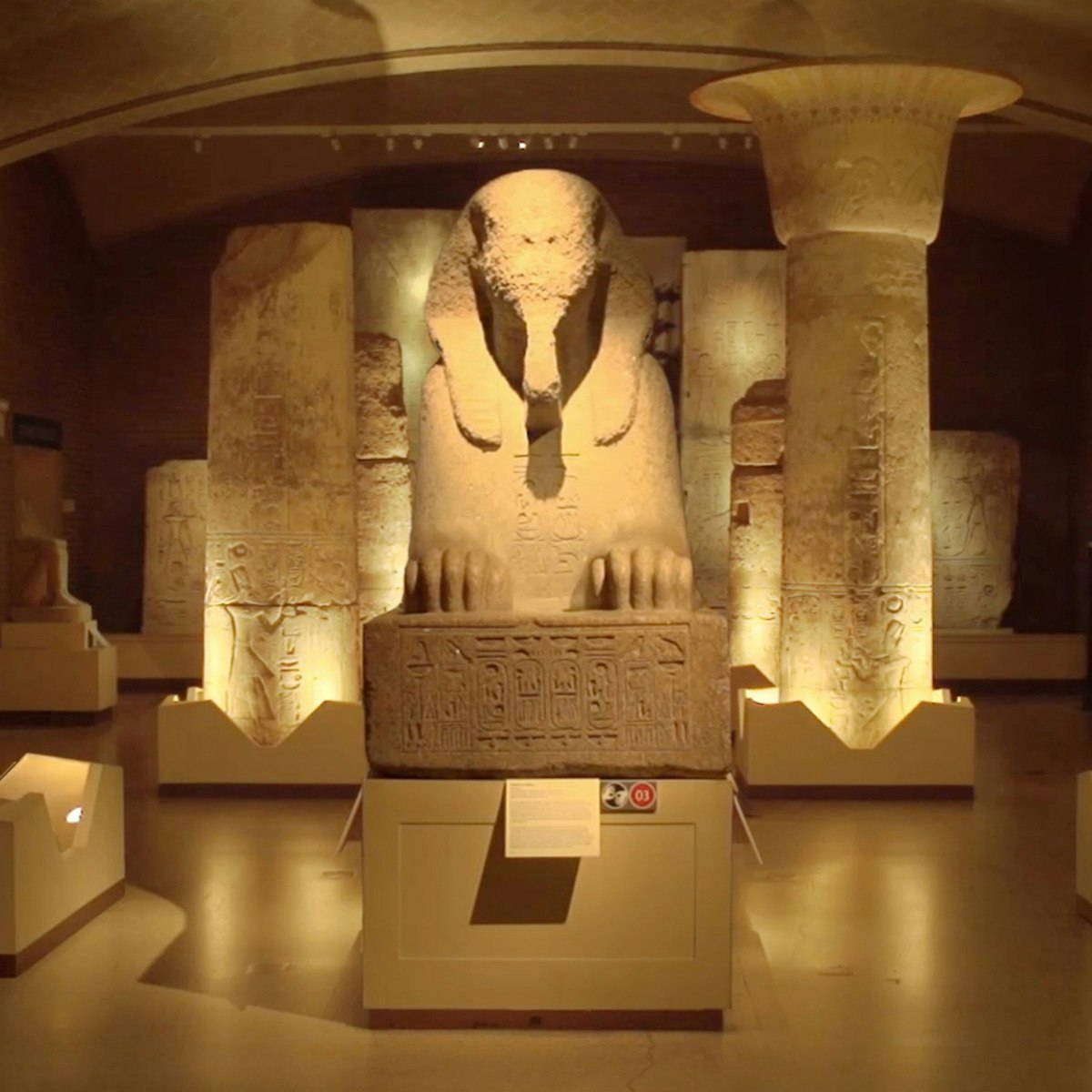
Introduction to Ancient Egypt and Its Civilization
Colossal pyramids, imposing temples, golden treasures, enigmatic hieroglyphs, powerful pharaohs, strange gods, and mysterious mummies are features of Ancient Egyptian culture that have fascinated people over the millennia. The Bible refers to its gods, rulers, and pyramids. Neighboring cultures in the ancient Near East and Mediterranean wrote about its god-like kings and its seemingly endless supply of gold. The Greeks and Romans describe aspects of Egypt's culture and history. As the 19th century began, the Napoleonic campaign in Egypt highlighted the wonders of this ancient land, and public interest soared. Not long after, Champollion deciphered Egypt's hieroglyphs and paved the way for other scholars to reveal that Egyptian texts dealt with medicine, dentistry, veterinary practices, mathematics, literature, and accounting, and many other topics. Then, early in the 20th century, Howard Carter discovered the tomb of Tutankhamun and its fabulous contents. Exhibitions of this treasure a few decades later resulted in the world's first blockbuster, and its revival in the 21st century has kept interest alive. Join Dr. David Silverman, Professor of Egyptology at Penn, Curator in Charge of the Egyptian Section of the Penn Museum, and curator of the Tutankhamun exhibitions on a guided tour of the mysteries and wonders of this ancient land. He has developed this online course and set it in the galleries of the world famous Penn Museum. He uses many original Egyptian artifacts to illustrate his lectures as he guides students as they make their own discovery of this fascinating culture.

Data Structures and Algorithms in JavaScript: DSA Course
Looking for the best DSA JavaScript course? Master data structures and algorithms in JavaScript with this comprehensive JavaScript DSA course designed for LEETCODE and technical interviews. Learn DSA with JavaScript through 117 coding challenges across 50 structured days. Perfect for mastering DSA in JS and acing your next coding interview. Student Testimonials: • "Basically I'm a beginner to javascript but after listening the way of his teaching , i have no word for him he's fabulous person . and I recommend all to watch his course." - Mohd. Amir • "Excellent explanations and application of theory directly to practice!" - GUILLERMO GABRIEL KELLY SCHMIDT • "Explanations and demonstrations are on point and it makes grasping easier.." - Emmanuel Apea • "Excellent Teaching" - Sarhan Sayyed Rasool Shaikh • "Excellent course. The teacher has mastery of what he explains and the content is of great value."-Vyctor Vieira Guimarães • "It's an amazing course the instructor is super amazing and the way of teaching it is super awesome clarify everything very well and the roadmap for learning DSA is superb. Go with this guy without a second thought you will love it for sure..." - Shashank Jaiswal • "Excellent, way of teaching" - Gauri Shankar Jangid About the Course: Welcome to the Data Structures and Algorithms Coding Interview Bootcamp with Javascript! The primary goal of this course is to prepare you for coding interviews at top tech companies. By tackling one problem at a time and understanding its solution, you'll accumulate a variety of tools and techniques for conquering any coding interview. Daily Data Structures and Algorithms Coding Challenges: The course is structured around daily coding challenges. Consistent practice will equip you with the skills required to ace coding interviews. For the next 50 days commit to yourself to practice atleast 2 coding interview questions everyday. You don't need any setup for this as the daily coding problem challenges can be solved in the coding environment provided by Udemy. The course will automatically track your progress and you just need to spend your time making actual progress everyday. Topics Covered: We start from the basics with Big O analysis, then move on to very important algorithmic techniques such as Recursion, Backtracking and Dynamic Programming Patters. After this we move to cover common data structures, and discuss real problems asked in interviews at tech giants such as Google, Meta, Amazon, Netflix, Apple, and Microsoft. For each question, we will: • Discuss the optimal approach • Explain time and space complexity • Code the solution in Javascript (you can follow along in your preferred language) Additional Resources : The course includes downloadable resources, motivational trackers, and cheat sheets. Course Outline: • Day 1: Arrays, Big O, Sorted Squared Array, Monotonic Array • Day 2:Recursion,k-th symbol in Grammar,Josephus problem • Day 3:Recursion, Tower of Hanoi, Power Sum • Day 4:Backtracking, Permutations, Permutations 2 • Day 5:Backtracking, Subsets, Subsets 2 • Day 6:Backtracking, Combinations, Combinations Sum 1 • Day 7:Backtracking,Combinations Sum 2,Combinations Sum 3 • Day 8:Backtracking,Sudoku Solver, N Queens • Day 9:Dynamic Programming, Fibonacci, Climbing Stairs • Day 10:Dynamic Programming, Min Cost Climbing Stairs, Tribonacci • Day 11:Dynamic Programming, 01 Knapsack, Unbounded Knapsack • Day 12:Dynamic Programming, Target Sum, Partition Equal Subset Sum • Day 13:Dynamic Programming, LCS, Edit Distance • Day 14:Dynamic Programming, LIS, Max Length of Pair Chain, Russian Doll Envelopes • Day 15:Dynamic Programming, Palindromic Substrings, Longest Palindromic Substring, Longest Palindromic Subsequence • Day 16:Dynamic Programming, Palindrome Partitioning, Palindrome Partitioning 2 • Day 17:Dynamic Programming, Word Break, Matrix Chain Multiplication • Day 18:Dynamic Programming, Kadane's algorithm - Max Subarray, Maximum Product Subarray • Day 19:Greedy Algorithms - Fractional Knpasack, Non overlapping Intervals • Day 20:Greedy Algorithms - Jump Game 1, Minimum # of arrows to burst baloons • Day 21:Greedy Algorithms - Two City Scheduling, Boats to Save people • Day 22:Greedy Algorithms - Task Scheduler, Largest Number • Day 23:Greedy Algorithms - Gas Stations, Jump Game 2 • Day 24: Arrays, Rotate Array, Container with Most Water • Day 25: Hash Tables, Two Sum, Isomorphic Strings • Day 26: Strings, Non-Repeating Character, Palindrome • Day 27: Strings, Longest Unique Substring, Group Anagrams • Day 28: Searching, Binary Search, Search in Rotated Sorted Array • Day 29: Searching, Find First and Last Position, Search in 2D Array • Day 30: Sorting, Bubble Sort, Insertion Sort • Day 31: Sorting, Selection Sort, Merge Sort • Day 32: Sorting, Quick Sort, Radix Sort • Day 33: Singly Linked Lists, Construct SLL, Delete Duplicates • Day 34: Singly Linked Lists, Reverse SLL, Cycle Detection • Day 35: Singly Linked Lists, Find Duplicate, Add 2 Numbers • Day 36: Doubly Linked Lists, DLL Remove Insert, DLL Remove All • Day 37: Stacks, Construct Stack, Reverse Polish Notation • Day 38: Queues, Construct Queue, Implement Queue with Stack • Day 39: Binary Trees, Construct BST, Traversal Techniques • Day 40: Pre order and In order Traversal of Binary Tree - Iterative • Day 41: Post Order Traversal Iterative, Path Sum 2 • Day 42: Construct Binary Tree from Pre and In order Traversal ^ In and Post order Traversal • Day 43: Binary Trees, Level Order Traversal, Left/Right View • Day 44: Level order Trav 2, ZigZag Traversal • Day 45: Vertical order Traversal, Sum root to leaf numbers • Day 46: Binary Trees, Invert Tree, Diameter of Tree • Day 47: Binary Trees, Convert Sorted Array to BST, Validate BST • Day 48: Lowest common Ancestor of BST, Unique BST 2 • Day 49: Lowest common Ancestor of Binary Tree, Unique BST 1 • Day 50: Serialize and Deserialize Binary Tree, N-ary Tree Level Order Traversal • Day 51: Heaps, Max Heap, Min Priority Queue • Day 52: Graphs, BFS, DFS • Day 53: Graphs, Number of Connected Components, Topological Sort • Day 54: Number of Provinces, Find if path exists in Graph • Day 55: Number of Islands, Numbers with same consecutive differences My confidence in your satisfaction with this course is so high that we offer a complete money-back guarantee for 30 days! Thus, it's a totally risk-free opportunity. Register today, facing ZERO risk and standing to gain EVERYTHING. So what are you waiting for? Join the best Javascript Data Structures & Algorithms Bootcamp on Udemy. I'm eager to see you in the course. Let's kick things off! :-) Jackson

Introduction to Digital Epistemology
In today’s digital world, we are constantly bombarded with information — some of it helpful, much of it misleading. This course explores how we, as digital epistemic subjects, can navigate complex online environments shaped by fake news, conspiracy theories, echo chambers, and shifting norms of trust and mistrust. You'll begin by examining the major epistemic challenges of the digital age, including the impact of online storage and information overload. Next, you'll explore two crucial problems: cognitive offloading — our growing dependence on digital tools for knowledge — and digital skepticism, which questions the reliability of online information sources. Building on these insights, you’ll be introduced to virtue epistemology, an approach that emphasizes the importance of intellectual character traits — like open-mindedness and intellectual courage — in acquiring genuine knowledge. Finally, you’ll put theory into practice by reflecting on how cultivating epistemic virtues (and avoiding epistemic vices) can help us meet the unique epistemological challenges of the digital age. By the end of the course, you’ll understand how the digital environment influences what and how we know.

SAP FICO Product Costing -Simplified For Beginners
SAP Controlling (CO) is another important SAP module offered to an organization. It supports coordination, monitoring, and optimization of all the processes in an organization. SAP CO involves recording both the consumption of production factors and the services provided by an organization. SAP CO includes managing and configuring master data that covers cost and profit centers, internal orders, Product Costing, Actual Costing, Material Ledger, Controlling Profitability Analysis (COPA) Product Cost Planning (CO-PC-PCP) is an area within Product Cost Controlling (CO-PC) where you can plan costs for materials without reference to orders, and set prices for materials and other cost accounting objects. You can use Product Cost Planning to analyze your product costs, such as for: • Manufactured materials • Services Analyzing product costs helps provide answers to questions such as: • What is the value added of a particular step in the production process? • What proportion of the value added can be attributed to a particular organizational unit? • What are the material, production, and overhead costs? • How can production efficiency be improved? • Can the product be sold at a competitive price? Product Cost Planning accesses master data in other components, such as BOMs, routings, and work centers in Production Planning, and cost centers, activity types, and business processes in Overhead Cost Controlling. Costing data within Product Cost Planning can also be made available to other applications. For example, you can update the standard price in the material master with the results of cost estimates, and valuate materials using this new standard price. Product Cost Planning enables you to answer questions such as: • Which is our most efficient production line? • How much of the total cost is overhead? • How much have our costs increased, and why? • How much can we lower our unit costs by increasing output?
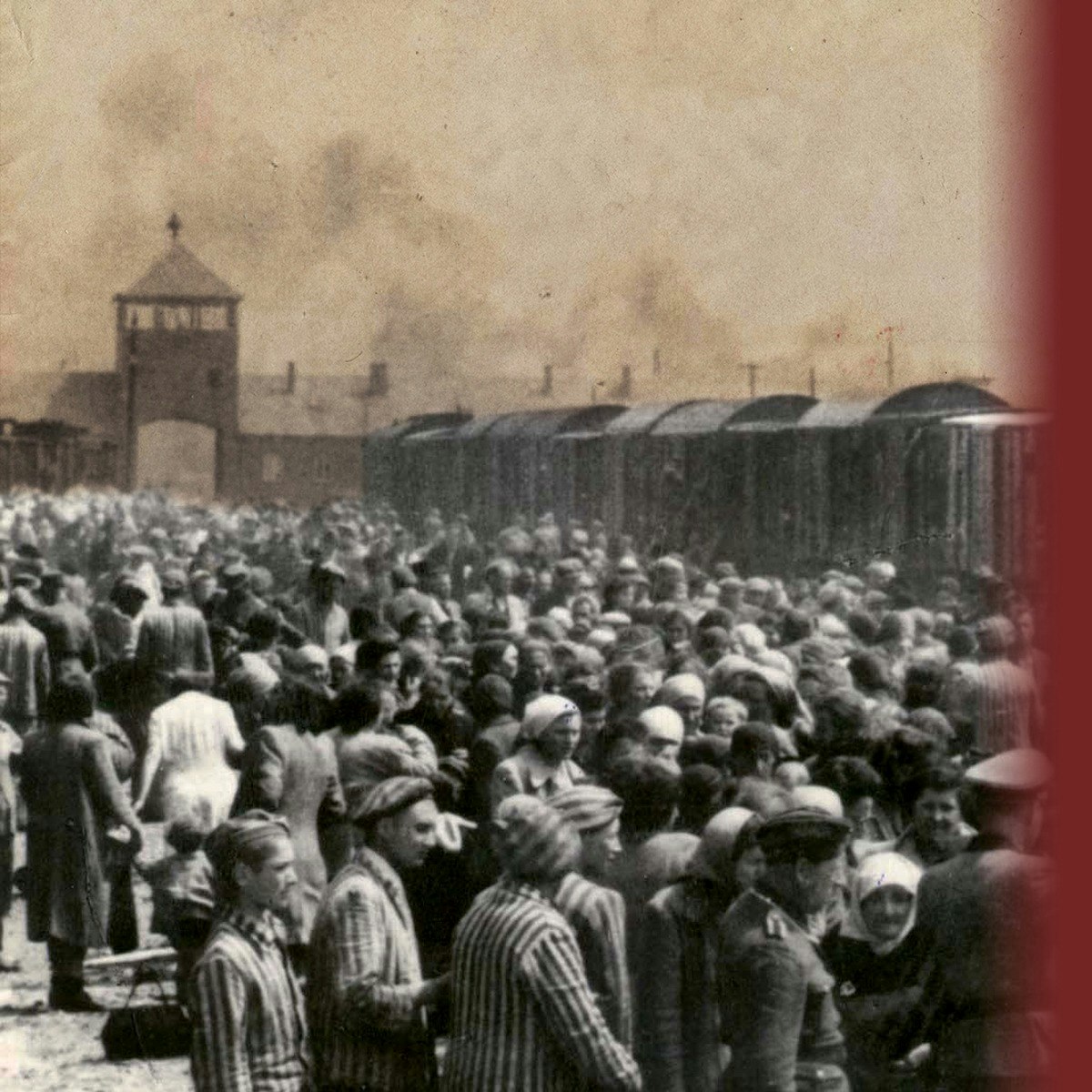
The Final Solution to the Jewish Question
The "Final Solution to the Jewish Question" was the official code name used by Nazi German authorities for the planned annihilation of Jews during World War II. This course focuses on the origins, evolution, and implementation of this deadly operation which led to the murder of six million Jews by the Nazis and their collaborators. The course is composed of video lectures by world-leading researchers who will share their perspectives on this complex topic. It offers a unique opportunity to learn about the distinct nature of the “Final Solution” and its gradual development, from the rise to power of the Nazi Party in Germany in 1933 until the end of the war in Europe in 1945.

Strategies for Applying ADDIE Instructional Design Model
Whether a novice or experienced, every Instructional Designer is familiar with the ADDIE model. However, most of the knowledge and internet search is restricted to naming the phases of ADDIE and revolves around its theoretical explanation. But when you start using the ADDIE model for developing courses, you may want to know answers to questions, such as: • Which tasks are performed in each phase of the ADDIE model? • Which tools and strategies are used in different phases of the ADDIE model? When and how they are used? • How to modify the different phases of the ADDIE model for real-world challenges? To answer many such questions related to the ADDIE model, we have developed the course: Strategies for Applying ADDIE. This course is designed based on our years of experience in developing successful courses and serving global clients. The key focus of this course is to share the tools and strategies that you can use in each phase of the ADDIE model. This course is useful for beginners as well as experienced professionals in the learning and development industry who wish to go beyond the ADDIE model theory. Moreover, this course guides you on: • When to use or avoid a particular tool or strategy • When to use ADDIE in its original form and when to make it Agile, and • How to manage the different phases of your course development • Identify and control how ADDIE influences Learning Experience Management This course will not only help you to develop more effective courses but also give your career a significant boost. So, come, and up your skills by enrolling in this course.
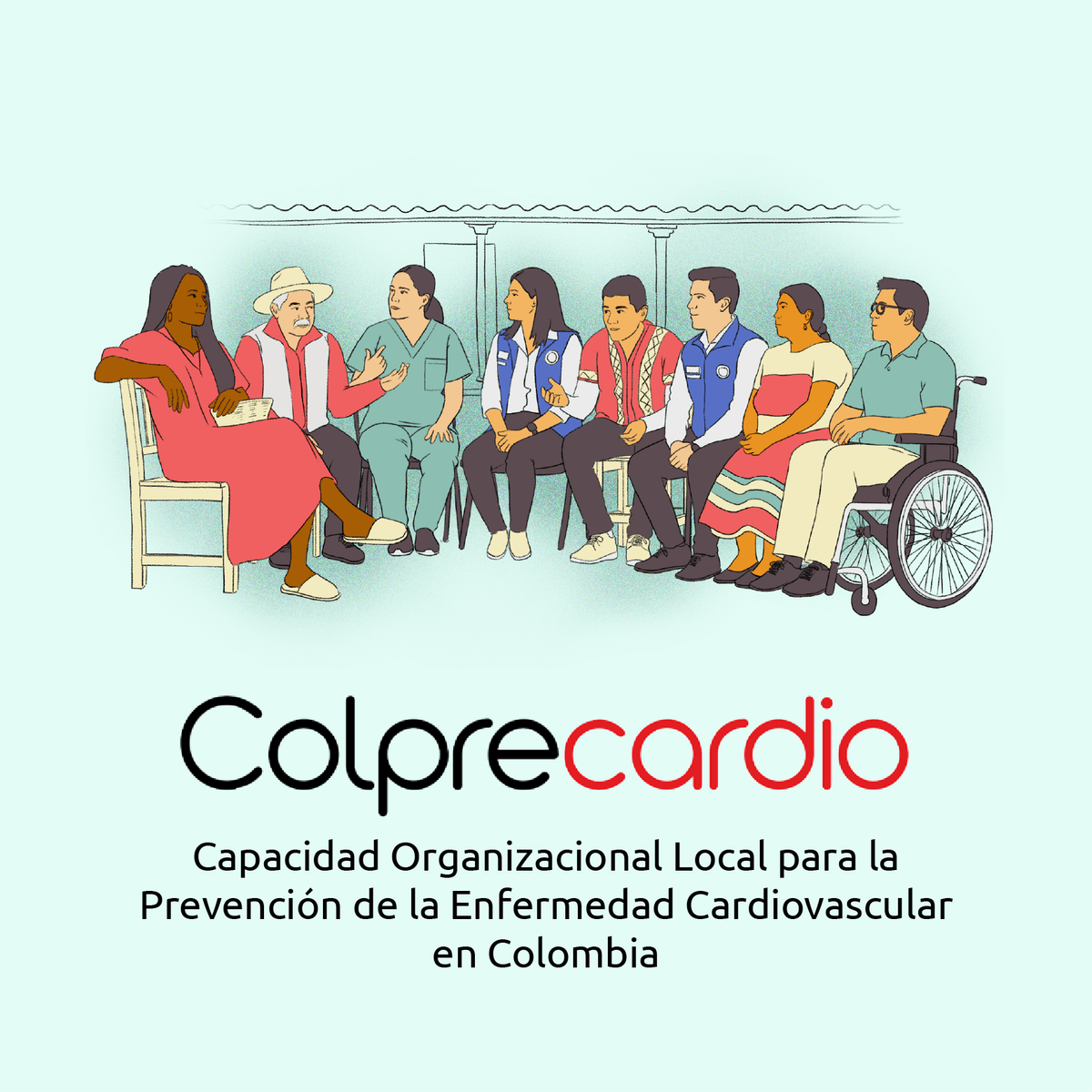
Formación de formadores en prevención cardiovascular
Este curso se orienta al desarrollo de competencias técnicas, pedagógicas y de liderazgo, que permitirán a sus participantes formarse como formadores en el fortalecimiento de la capacidad de los equipos locales de prevención de la enfermedad cardiovascular (ELPEC). El curso profundiza en conceptos relacionados con la prevención de la enfermedad cardiovascular (ECV) y en el desarrollo de habilidades para orientar procesos de formación y acompañamiento a los equipos locales, así como realizar su seguimiento y evaluación de su desempeño. Consta de siete módulos donde se abordan los conceptos básicos relacionados con la prevención de la ECV; metodologías para el fortalecimiento de la capacidad de prevención a nivel poblacional; elementos clave para el diseño y seguimiento de una intervención de prevención; orientaciones para la gestión integral en la prevención de la ECV; papel de las políticas públicas, la gobernanza y el trabajo intersectorial en la prevención de la ECV; herramientas de liderazgo público que le permitirán hacer un ejercicio adecuado de prevención de la ECV a nivel local; y estrategias de seguimiento y monitoreo de los equipos locales que trabajan en la prevención de la ECV. Estos contenidos están alineados con la normatividad colombiana, tienen un abordaje poblacional e incorporan un enfoque de diversidad, equidad e interculturalidad. Este curso ha sido diseñado en alianza con la Gobernación del Cauca, la Corporación para el Desarrollo de la Seguridad Social (CODESS) y la Universidad del Cauca.

Optics from Beginner to Expert - The Physics of Light
This course is for everyone who wants to learn about optics: Beginners to experts! A bit of high school mathematics (trigonometry, equations) is all you need to know to get started! The fundamental question of optics is: 'What is light?' Is light a ray or a beam that can be fully described by geometry? Is light a wave that can interfere with other waves and can bend around corners? Does light consist of particles that have an energy and a momentum just like electrons or even macroscopic objects like a football? Here, we will discuss all of these approaches based on theory and experiments. I can guarantee that you will learn a lot no matter what your current skill level is. For advanced students: The later lectures about wave and quantum optics are on a university level. You are kindly invited to join this carefully prepared course in which we derive the following concepts from scratch. I will present examples and have prepared quizzes and exercises for all topics. Geometrical optics (3 hours) • Reflection & Mirrors • Refraction & Lenses • Applications: Eye, Microscope & Telescope Wave optics (or physical optics) (8.5 hours) • Experiments & Phenomenological description (incl. introduction about derivatives and differential equations) • Diffraction, interference & Polarization • Theory based on Maxwell’s equations (incl. introduction to complex numbers) • Electromagnetic waves in matter: Derivation of the Fresnel equations & Complex refractive indices Quantum optics (4.5 hours) • Photons: Quantum description of light (Photoelectric effect, Compton effect) • Applications: LASER & Solar cell • Introduction to quantum mechanics Outlook: Modern optics phenomena Why me? My name is Börge Göbel and I am a postdoc working as a scientist in theoretical physics. Therefore, I use presented concepts very often but I have not forgotten the time when I learned about it and still remember the problems that I and other students had. I have refined my advisor skills as a tutor of Bachelor, Master and PhD students in theoretical physics and have other successful courses here on Udemy. I hope you are excited and I kindly welcome you to our course!

Ciudades en crisis y nuevas políticas urbanas
Las ciudades se han convertido en un foco de interés preferente para el análisis de políticas públicas. Con una concentración de personas cada vez mayor viviendo en contextos urbanos, las ciudades son hoy el escenario de un apasionante cambio de época que afecta la esfera social, política, económica y tecnológica ¿A qué nos referimos cuando hablamos de políticas urbanas y qué las distingue de otros ámbitos de las políticas públicas? ¿Cuáles son los principales factores de vulnerabilidad urbana y qué respuestas se están articulando en forma de políticas urbanas? ¿Cómo surge la innovación en la ciudad, tanto desde la base como desde las administraciones públicas? Y, finalmente, ¿qué efectos ha tenido la irrupción de la era digital en la ciudad?

QGIS Expert: Professional Maps from Zero
Welcome to QGIS Expert, the only course you' need to learn to produce maps using QGIS. This course is a complete, well-organized training program which will speed up your QGIS learning process and take you from a complete beginner to an expert. In just a few weeks, you will be able to produce professional-looking maps that will impress anyone: your boss, client or professor, and turn you into a reference in the market! My name is Leonardo, I am a GIS instructor with more than 4,000 students wolrdwide, more than 8 years of experience and thousands of hours dedicated to map production and spatial analysis with QGIS software. I consolidated all this knowledge into a step-by-step program that will shorten your journey to success. But before we go any further, let me ask you a few questions: • Right now, if your boss asks you to produce a location map for a client’s Project and the deadline is today, meaning you won’t have time to look for tutorials on youtube, do you feel confident to do that by yourself? • And if you need to import spatial data collected from fieldwork and then create, reproject and split polygons? • and what about working with satellite bands to extract useful data with spectral indices like NDVI, do you still feel confident about that? If you answered ‘no’ to any of those questions, you need to enhance your QGIS skills right now. Sadly, I've seen too many professionals looking for a QGIS course after losing an incredible opportunity only because they didn’t knew how to use QGIS and it was a requirement for that position. My mission right here is to make sure you never ever lose again a professional opportunity because you dont know how to work with QGIS. NO EXPERIENCE NEEDED We start from absolute zero. PRACTICAL EXERCISES Exercises geared to real-life situations. SELF-PACED COURSE Learn on your own schedule. MULTIDISCIPLINARY CONTENT We have students from over 20 academic fields. Our content applies to any area. +5,000 SATISFIED STUDENTS The biggest QGIS course in South America. Now, available worldwide! Our course is organized into the following section: • Module 1 - GIS 101 • Module 2 - First Steps in QGIS • Module 3 - Working with Vector Layers • Module 4 - Print Layout • Module 5 - Working with Raster Layers Even if you are a complete beginner, you will achieve mastery in QGIS because I will teach you everything you must know to develop your skills and become a better professional: everything from zero to the most advanced topics in QGIS. But don't just take our word for it, check out what existing students have to say about my courses: • "In the first service with the Leo's help, even before finishing the course, I got a phenomenal payment that paid not once or twice my subscription, but hundreds of times the value I paid." - Rodrigo Machado • "I've taken two QGIS courses before and haven't been successful. After a lot of searching, I ended up finding Professor Leonardo's course, with excellence in teaching and so I was finally able to learn. his teaching method is very practical, very quick and easy." - Liveston Cortiano • "Because of the course, now I'm working at my city's environmental department, as well as helping my teacher to produce maps for papers. The course has been essential to my career. When someone ask me which course I took, I recommend Leonardo's course with all my heart." - Ana Carolina We're so confident that you'll love this course that we're offering a full money-back guarantee for 30 days. So it's a complete no-brainer, sign up today with zero risk and everything to gain. So what are you waiting for? Whether you're a beginner looking to start your journey in GIS, a professional looking to enhance your skills, or a hobbyist interested in exploring the world of geospatial data, this course is for you. Enroll TODAY and take the first step towards a new future.
Creating a Visual Tasks Guide with Microsoft PowerPoint
By the end of this project, you will have created a Visual Tasks Guide to use with your students. As teachers, we are always looking for ways to help our students grow. For students with special needs or students who need organizational support, completing tasks in the correct order can be a challenge. By providing a visual guide, students are able to gain independence as they practice tasks such as dressing for the weather or getting ready for school.