Cursos de Datos e IA
Los mismos datos para todos, vengan de Udemy o de Coursera: precio, valoración, duración e idioma. 470 cursos encontrados. Afinar la búsqueda

Statistics in Psychological Research
This is primarily aimed at first- and second-year undergraduates interested in psychology, statistics, data analysis, and research methods along with high school students and professionals with similar interests.

Data Analyst Career Guide and Interview Preparation
Data analytics professionals are in high demand around the world, and the trend shows no sign of slowing. There are lots of great jobs available, but lots of great candidates too. How can you get the edge in such a competitive field? This course will prepare you to enter the job market as a great candidate for a data analyst position. It provides practical techniques for creating essential job-seeking materials such as a resume and a portfolio, as well as auxiliary tools like a cover letter and an elevator pitch. You will learn how to find and assess prospective job positions, apply to them, and lay the groundwork for interviewing. The course doesn’t stop there, however. You will also get inside tips and steps you can use to perform professionally and effectively at interviews. You will learn how to approach a take-home challenges and get to practice completing them. Additionally, it provides information about the regular functions and tasks of data analysts, as well as the opportunities of the profession and some options for career development. You will get guidance from a number of experts in the data industry through the course. They will discuss their own career paths and talk about what they have learned about networking, interviewing, solving coding problems, and fielding other questions you may encounter as a candidate. Let seasoned data analysis professionals share their experience to help you get ahead and land the job you want.

Tableau, Networks & Time Series Data Visualization
Unlock the power of data with "Tableau, Networks & Time Series Data Visualization" . This comprehensive program is designed to teach you the essentials of data storytelling through visualizations using Python and Tableau. Starting with the basics of Tableau, you'll learn to create and customize various visualizations, build interactive dashboards, and conduct detailed analytics. Dive into network visualization to understand and depict complex networks and connected data. Using Python libraries, you will create and customize network visualizations that highlight relationships and structures within data. Explore time series data visualization to interpret and present data over time. You’ll master techniques for loading, preparing, and visualizing time series data using Python, enhancing your ability to forecast and analyze trends effectively. By the end of this course, you will have the skills needed to create compelling, insightful, and interactive data visualizations, making complex data more understandable and actionable.
Databases and SQL for Data Science with Python
Working knowledge of SQL (or Structured Query Language) is a must for data professionals like Data Scientists, Data Analysts and Data Engineers. Much of the world's data resides in databases. SQL is a powerful language used for communicating with and extracting data from databases. In this course you will learn SQL inside out- from the very basics of Select statements to advanced concepts like JOINs. You will: -write foundational SQL statements like: SELECT, INSERT, UPDATE, and DELETE -filter result sets, use WHERE, COUNT, DISTINCT, and LIMIT clauses -differentiate between DML & DDL -CREATE, ALTER, DROP and load tables -use string patterns and ranges; ORDER and GROUP result sets, and built-in database functions -build sub-queries and query data from multiple tables -access databases as a data scientist using Jupyter notebooks with SQL and Python -work with advanced concepts like Stored Procedures, Views, ACID Transactions, Inner & Outer JOINs through hands-on labs and projects You will practice building SQL queries, work with real databases on the Cloud, and use real data science tools. In the final project you’ll analyze multiple real-world datasets to demonstrate your skills.
Amazon Bedrock - Getting Started with Generative AI
Amazon Bedrock is a fully managed service that makes foundation models (FMs) from Amazon and leading artificial intelligence (AI) startups available through an API. In this course, you will learn the benefits of Amazon Bedrock. You will learn how to start using the service through a demonstration in the Amazon Bedrock console. You will also learn about the AI concepts of Amazon Bedrock and how you can use the service to accelerate development of generative AI applications.

Landing.AI for Beginners: Build Data Visualization AI Models
In this 1-hour long project-based course, you'll step into the exciting field of Computer Vision and Generative AI using the LandingLens platform. We'll start by exploring the concept of visual prompting, and initiating a visual prompting project. LandingLens simplifies the model creation, training, and deployment process, making it a user-friendly platform for this endeavor. This project will lead you to build and deploy various models like object detection, segmentation, and classification, with hands-on tasks guiding you through the steps of uploading data, labeling, training, and deploying your models both on the cloud and an edge device. It's tailored for a broad audience - students, professionals, freelancers, and business leaders keen on exploring the combined power of Computer Vision and Generative AI. With no stringent prerequisites, anyone comfortable with online platforms can navigate through this project successfully, gaining practical insights into visual prompting and model deployment.
Modèles de séquence
Cette formation vous apprendra à construire des modèles pour le langage naturel, l’audio et les autres données de séquence. Grâce à l’apprentissage profond, les algorithmes de séquence fonctionnent beaucoup mieux qu’il y a deux ans ; nous disposons donc de nombreuses applications très intéressantes en matière de reconnaissance vocale, de synthèse musicale, de chatbots, de traduction automatique, de compréhension naturelle du langage, etc. Vous allez: - Comprendre comment construire et former des réseaux neuronaux récurrents (RNN) et des variantes couramment utilisées telles que les GRU et les LSTM. - Être capable d’appliquer des modèles de séquence à des problèmes de langage naturel, y compris la synthèse de texte. - Pouvoir appliquer des modèles de séquence à des applications audio, incluant la reconnaissance vocale et la synthèse musicale. C’est le cinquième et dernier cours de la spécialisation Apprentissage profond. deeplearning.ai travaille également en partenariat avec le NVIDIA Deep Learning Institute (DLI) dans le cours 5, Modèles de séquence, afin de fournir une affectation de programmation sur la traduction automatique avec l’apprentissage en profondeur. Vous aurez la possibilité de construire un projet d’apprentissage en profondeur avec un contenu de pointe, pertinent pour l’industrie.
Improving Deep Neural Networks: Hyperparameter Tuning, Regularization and Optimization
In the second course of the Deep Learning Specialization, you will open the deep learning black box to understand the processes that drive performance and generate good results systematically. By the end, you will learn the best practices to train and develop test sets and analyze bias/variance for building deep learning applications; be able to use standard neural network techniques such as initialization, L2 and dropout regularization, hyperparameter tuning, batch normalization, and gradient checking; implement and apply a variety of optimization algorithms, such as mini-batch gradient descent, Momentum, RMSprop and Adam, and check for their convergence; and implement a neural network in TensorFlow. The Deep Learning Specialization is our foundational program that will help you understand the capabilities, challenges, and consequences of deep learning and prepare you to participate in the development of leading-edge AI technology. It provides a pathway for you to gain the knowledge and skills to apply machine learning to your work, level up your technical career, and take the definitive step in the world of AI.

데이터 분석을 통한 해답 찾기
Google 데이터 애널리틱스 수료증 과정의 다섯 번째 강좌입니다. 이 강좌에서는 데이터 애널리스트 직무에 필요한 입문 수준의 스킬을 배우게 됩니다. 여기서는 데이터 분석 과정 중 ‘분석’ 단계를 살펴봅니다. 지금까지 배운 내용을 분석에 적용하여 수집한 데이터의 의미를 파악해볼 것입니다. 데이터를 다양한 방식으로 바라보고 생각할 수 있도록 스프레드시트와 SQL을 사용하여 데이터를 구성하고 형식을 지정하는 방법을 배웁니다. 비즈니스 목표를 달성하기 위해 데이터에서 복잡한 계산을 수행하는 방법도 학습합니다. 분석을 위해 수식, 함수, SQL 쿼리를 사용하는 방법을 배웁니다. 현직 Google 데이터 애널리스트가 최고의 도구와 리소스를 사용하여 일반적인 데이터 애널리스트 작업을 완료하는 실습을 제공하고 지도합니다. 이 수료증 과정을 완료한 수강생은 데이터 애널리스트로서 입문 수준의 직무에 지원할 역량을 갖추게 됩니다. 관련 경험은 필요하지 않습니다. 본 강좌의 목표는 다음과 같습니다. - 분석을 위해 데이터를 구성하는 방법을 알아봅니다. - 데이터 형식을 지정하고 데이터를 조정하는 과정을 살펴봅니다. - 스프레드시트와 SQL을 사용하여 데이터를 집계하는 방법을 이해합니다. - 스프레드시트에서 수식과 함수를 사용하여 데이터로 계산합니다. - SQL 쿼리를 사용하여 계산을 완료하는 방법을 배웁니다.

Data Science Coding Challenge: Loan Default Prediction
In this coding challenge, you'll compete with other learners to achieve the highest prediction accuracy on a machine learning problem. You'll use Python and a Jupyter Notebook to work with a real-world dataset and build a prediction or classification model. Important Information: How to register? To participate, you’ll need to complete simple steps. First, click the “Start Project” button to register. Next, you’ll need to create a Coursera Skills Profile, which only takes a few minutes. We’ll send you a profile link the week of the challenge. When does the challenge start? The coding challenge begins Tuesday, August 29th, at 8 AM (PST) and closes Thursday, August 31st, at 11:59 PM (PST). If you’re registered, you’ll receive a reminder email on the challenge start date. Please note this is a timed competition. Once the challenge is unlocked, you’ll have 72 hours to complete it. You can submit as many times as you would like within this timeframe. What will the winners receive? Participants will be evaluated based on their model’s prediction accuracy. The top 20% of participants will receive an achievement badge on their Coursera Skills Profile, highlighting their performance to recruiters. The top 100 performers will get complimentary access to select Data Science courses. All participants can showcase their projects to potential employers on their Coursera Skills Profile. Winners will be notified by email the week of September 10th. Good luck, and have fun!
Tidy Messy Data using tidyr in R
As data enthusiasts and professionals, our work often requires dealing with data in different forms. In particular, messy data can be a big challenge because the quality of your analysis largely depends on the quality of the data. This project-based course, "Tidy Messy Data using tidyr in R," is intended for beginner and intermediate R users with related experiences who are willing to advance their knowledge and skills. In this course, you will learn practical ways for data cleaning, reshaping, and transformation using R. You will learn how to use different tidyr functions like pivot_longer(), pivot_wider(), separate_rows(), separate(), and others to achieve the tidy data principles. By the end of this 2-hour-long project, you will get hands-on massaging data to put in the proper format. By extension, you will learn to create plots using ggplot(). This project-based course is a beginner to an intermediate-level course in R. Therefore, to get the most out of this project, it is essential to have a basic understanding of using R. Specifically, you should be able to load data into R and understand how the pipe function works. It will be helpful to complete my previous project titled "Data Manipulation with dplyr in R."

Prompt Engineering For Everyone with ChatGPT and GPT-4
This course features Coursera Coach! A smarter way to learn with interactive, real-time conversations that help you test your knowledge, challenge assumptions, and deepen your understanding as you progress through the course. In this course, you will dive deep into prompt engineering, learning how to create clear, effective prompts to guide AI systems like ChatGPT and GPT-4. Through hands-on exercises and real-world examples, you'll gain a deep understanding of the principles, strategies, and techniques to optimize your interaction with AI. Starting with the basics, the course will help you craft simple prompts, evaluate their effectiveness, and refine them through an iterative process. You’ll also explore advanced techniques such as chain-of-thought prompting, role prompting, and AI-assisted creative writing, along with the practical application of prompt engineering across industries. As you move through the course, you will apply these techniques in everyday tasks such as content generation, email automation, customer support, data analysis, and even coding. With the integration of real-world case studies and practical exercises, you’ll sharpen your skills and build confidence in leveraging prompt engineering for personal and professional growth. This course is perfect for anyone looking to master AI-driven interactions. Whether you're in marketing, software development, research, or content creation, you will benefit from the practical applications of prompt engineering. No prior experience with AI is required, but a basic understanding of computers and internet usage is recommended. By the end of the course, you will be able to craft and optimize complex prompts, use advanced techniques like chain-of-thought and nested prompts, and apply prompt engineering to solve real-world challenges across various domains, enhancing both your creativity and productivity.

Visualization for Data Analysis with Power BI
This course provides in-depth knowledge of analytical techniques and effective data visualization using Power BI. By the end of this course, you will be able to: - Explain different analysis methods (correlation, time series, cluster, etc.) and their appropriate use. - Analyze data through visualizations in Power BI using different analysis methodologies - Leverage AI to explore data and gain insights. Here is a breakdown of what you'll cover: You will begin with statistical analysis fundamentals, master correlation, and exploratory data analysis, and understand business problems. As the course progresses, you will explore advanced topics like cluster analysis, cohort analysis, and geospatial data visualization. Additionally, you will learn about business intelligence concepts, including building time intelligence functions, conducting time series analysis, and leveraging AI-driven tools like key influencers and decomposition trees. With a strong emphasis on practical application, the course culminates in a hands-on final project, allowing you to synthesize your skills in a real-world scenario, making data-driven decision-making clear and impactful. This program is for anyone interested in data analytics and visualization; there are no prerequisites. To get the most out of the learning experience, it is recommended to follow the courses in sequence, as each one builds on the skills and knowledge gained in the previous ones. Before starting this course, you should be proficient in building data models, maintaining relationships in Power BI, and writing DAX expressions to enhance analysis. You should also understand the ethical implications of handling data. This knowledge will be essential as you learn advanced data analysis techniques and explore data through Power BI's visualizations, supported by AI-driven insights.
파이썬의 응용 소셜 네트워크 분석
이 과정은 NetworkX 라이브러리를 사용한 튜토리얼을 통해 학습자에게 네트워크 분석을 소개합니다. 과정 처음에는 네트워크 분석이란 무엇인지, 왜 현상을 네트워크로 모델링할 수 있는지를 파악합니다. 두 번째 주에는 연결성과 네트워크 견고성의 개념을 소개합니다. 세 번째 주에는 네트워크에서 노드의 중요성 또는 중심성을 측정하는 방법을 탐구합니다. 마지막 주에는 시간 경과에 따른 네트워크의 진화를 탐구하고 네트워크 생성 모델과 링크 예측 문제를 다룹니다. 이 과정을 시작하려면 먼저 다음을 수강해야 합니다. 파이썬의 데이터 과학 입문, 파이썬의 응용 플로팅, 차트 및 데이터 표현, 파이썬의 응용 머신 러닝.

ANOVA and Experimental Design
This second course in statistical modeling will introduce students to the study of the analysis of variance (ANOVA), analysis of covariance (ANCOVA), and experimental design. ANOVA and ANCOVA, presented as a type of linear regression model, will provide the mathematical basis for designing experiments for data science applications. Emphasis will be placed on important design-related concepts, such as randomization, blocking, factorial design, and causality. Some attention will also be given to ethical issues raised in experimentation. This course can be taken for academic credit as part of CU Boulder’s Master of Science in Data Science (MS-DS) degree offered on the Coursera platform. The MS-DS is an interdisciplinary degree that brings together faculty from CU Boulder’s departments of Applied Mathematics, Computer Science, Information Science, and others. With performance-based admissions and no application process, the MS-DS is ideal for individuals with a broad range of undergraduate education and/or professional experience in computer science, information science, mathematics, and statistics. Learn more about the MS-DS program at https://www.coursera.org/degrees/master-of-science-data-science-boulder. Logo adapted from photo by Vincent Ledvina on Unsplash

Exploratory Data Analysis for Machine Learning
This first course in the IBM Machine Learning Professional Certificate introduces you to Machine Learning and the content of the professional certificate. In this course you will realize the importance of good, quality data. You will learn common techniques to retrieve your data, clean it, apply feature engineering, and have it ready for preliminary analysis and hypothesis testing. By the end of this course you should be able to: Retrieve data from multiple data sources: SQL, NoSQL databases, APIs, Cloud Describe and use common feature selection and feature engineering techniques Handle categorical and ordinal features, as well as missing values Use a variety of techniques for detecting and dealing with outliers Articulate why feature scaling is important and use a variety of scaling techniques Who should take this course? This course targets aspiring data scientists interested in acquiring hands-on experience with Machine Learning and Artificial Intelligence in a business setting. What skills should you have? To make the most out of this course, you should have familiarity with programming on a Python development environment, as well as fundamental understanding of Calculus, Linear Algebra, Probability, and Statistics.
Python for Data Science (and Version Control with GitHub)
Master Python programming for data analysis in this comprehensive course designed for aspiring data scientists. Through hands-on projects using real-world datasets, you'll learn essential data manipulation, visualization, and statistical analysis techniques while integrating modern AI tools and version control practices. This course is perfect for analysts and professionals who want to advance beyond spreadsheets to powerful programming solutions. Starting with Python fundamentals and progressing through advanced analysis techniques, you'll develop practical skills that directly apply to real-world data challenges. Upon completion, you'll be able to: • Import, clean, and manipulate data using Python's powerful libraries (Pandas, NumPy) • Create compelling visualizations with Matplotlib, Seaborn, and Plotly • Perform statistical analysis and A/B testing for data-driven decisions • Automate data workflows and generate professional reports • Implement version control best practices using GitHub

Big Data Analytics with Hive, Pig & MapReduce
Build practical big data analytics skills using Apache Hive, Pig, MapReduce, Sqoop, HDFS, and the Hadoop ecosystem. You’ll begin with Hive architecture and database commands, then create and manage external tables, partitions, and buckets. As you progress, you’ll apply constraints such as NOT NULL, UNIQUE, and CHECK and build advanced tables using CTAS, STORED AS, and ROW FORMAT. You’ll then import social media data from an RDBMS into HDFS with Sqoop and execute MapReduce programs to process XML files. Through location-, author-, and reader-based analysis, you’ll examine book performance and preferences within large-scale datasets. Finally, you’ll write Pig Latin scripts to parse XML data, explore and persist results with DUMP, STORE, and DESCRIBE, and combine Hive complex data types with MapReduce to analyze bookmarking datasets and user interactions. Designed for professionals, students, and data enthusiasts, this course connects foundational Hive knowledge with practical data integration, processing, and analysis. Its two hands-on case studies—one in telecom and one in social media analytics—help you apply Hadoop tools to realistic data challenges. Enroll to build a structured workflow for managing complex data, running distributed processing jobs, and extracting meaningful insights at scale.

GenAI for Mobile App Developers (iOS, Android)
At the GenAI Academy, the "GenAI for Mobile App Developers" course explores the transformative power of Generative Artificial Intelligence (GenAI) in mobile app development practices. This comprehensive course equips participants to harness the capabilities of GenAI to streamline their development workflows. Through interactive discussions, video demonstrations, and hands-on exercises, attendees will discover how GenAI can optimize efficiency in mobile app testing, user interface optimization, performance analysis, and automation. The curriculum also addresses the challenges and best practices associated with implementing GenAI in mobile app development. The "GenAI for Mobile App Developers" course is designed for experienced mobile app developers who aim to stay current with emerging technologies and improve their development skills. It also targets newcomers to the field who want to future-proof their skillset and gain a competitive edge in the job market. Additionally, professionals seeking to upskill and enhance their expertise in mobile app development will benefit from this course. No prior knowledge of artificial intelligence is required for this course. However, participants should have a solid understanding of mobile app development principles and practices to fully grasp the applications of GenAI in this context. By the end of the course, learners will be able to identify and apply GenAI capabilities to streamline tasks such as testing, user interface optimization, and performance analysis. Participants will explore real-world applications of GenAI, assess its impact on mobile app development, and develop strategies for its ethical integration into their workflows.
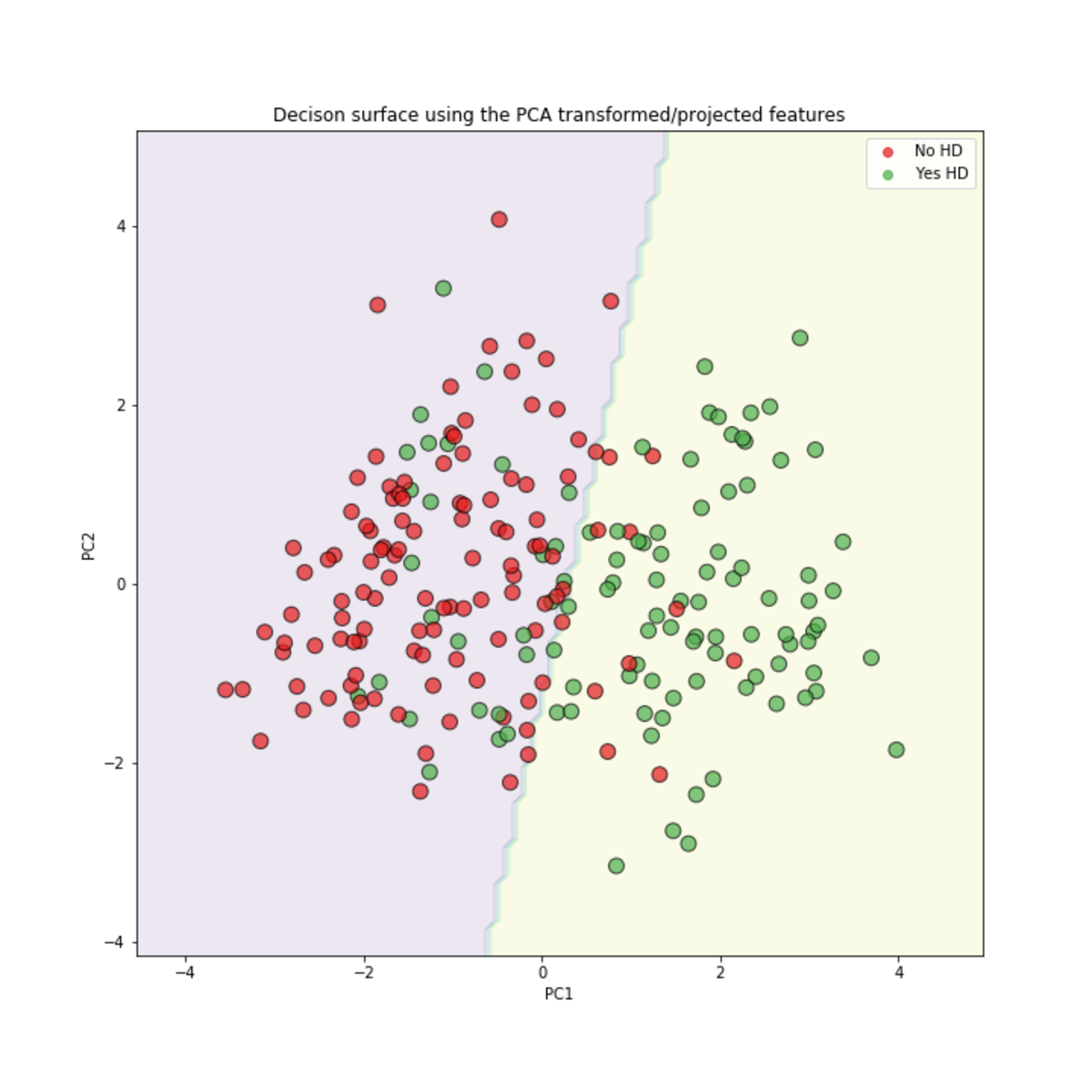
Support Vector Machines in Python, From Start to Finish
In this lesson we will built this Support Vector Machine for classification using scikit-learn and the Radial Basis Function (RBF) Kernel. Our training data set contains continuous and categorical data from the UCI Machine Learning Repository to predict whether or not a patient has heart disease. This course runs on Coursera's hands-on project platform called Rhyme. On Rhyme, you do projects in a hands-on manner in your browser. You will get instant access to pre-configured cloud desktops containing all of the software and data you need for the project. Everything is already set up directly in your Internet browser so you can just focus on learning. For this project, you’ll get instant access to a cloud desktop with (e.g. Python, Jupyter, and Tensorflow) pre-installed. Prerequisites: In order to be successful in this project, you should be familiar with programming in Python and the concepts behind Support Vector Machines, the Radial Basis Function, Regularization, Cross Validation and Confusion Matrices. Notes: - You will be able to access the cloud desktop 5 times. However, you will be able to access instructions videos as many times as you want. - This course works best for learners who are based in the North America region. We’re currently working on providing the same experience in other regions.

Building Recommender Systems with Machine Learning and AI
This course features Coursera Coach! A smarter way to learn with interactive, real-time conversations that help you test your knowledge, challenge assumptions, and deepen your understanding as you progress through the course. In this course, you'll explore the inner workings of recommender systems, gaining hands-on experience with Python and various machine learning techniques. Starting with the basics, you'll quickly move to more advanced methods like content-based filtering, collaborative filtering, and matrix factorization. By building real-world systems, you'll develop the skills needed to evaluate and improve recommender system performance. As you advance, you'll dive into deep learning for recommender systems, experimenting with technologies like Restricted Boltzmann Machines (RBM) and Autoencoders. You'll also explore TensorFlow Recommenders and other state-of-the-art approaches for building scalable recommendation engines. This course is designed to help you build, test, and deploy sophisticated recommender systems that can be applied in various industries. This course is ideal for those interested in artificial intelligence, machine learning, and data science, especially those who want to build personalized systems to enhance user experience. It will benefit anyone looking to design, evaluate, and optimize recommendation algorithms, making it an excellent resource for aspiring data scientists, machine learning engineers, and AI specialists.

Annotate and Analyze Objects for Vision
This short course shows you how to build reliable vision datasets and configure detection models with confidence. You’ll learn how to run a quality-controlled annotation process, review bounding boxes, coach annotators, and check dataset consistency using IoU-based audits. You’ll also explore how to analyze object sizes with clustering to generate anchor box parameters for models like YOLOv8. Through compact videos, guided readings, and hands-on exercises, you’ll practice using tools such as CVAT and Python notebooks to complete tasks common in production vision teams. By the end, you’ll be able to create a clean bounding-box dataset and use real measurements to tune model anchors—skills that support robust, scalable computer-vision pipelines.

Build Interactive Power BI Dashboards for Business Reporting
By the end of this course, learners will be able to analyze business requirements, prepare and validate data, and design interactive, professional Power BI dashboards that communicate clear HR and managerial performance insights. Learners will apply calculated columns, dynamic slicers, KPIs, charts, filters, and formatting techniques to deliver decision-ready reports. This hands-on, project-driven course guides learners through the complete Power BI dashboard lifecycle—from understanding datasets and connecting data sources to building advanced interactivity and polishing final layouts. Using two realistic business scenarios (HR analytics and manager performance reporting), learners gain practical experience that mirrors real workplace expectations. Unlike theory-heavy Power BI courses, this course emphasizes practical execution and stakeholder-focused thinking. Learners do not just learn how features work; they learn why and when to use them to support business decisions. Each module builds progressively, reinforcing foundational data preparation skills before advancing to interactive visuals and professional dashboard design. Upon completion, learners will have the confidence and skills to create Power BI dashboards that are accurate, intuitive, and aligned with real business needs—making this course ideal for aspiring analysts, reporting professionals, and business users seeking job-ready Power BI skills.

Advanced Spreadsheet Skills for Financial Analysis
Master Advanced Excel skills to perform powerful financial analysis and build real-world financial models. Learn the tools used by top analysts to transform data into actionable insights. This course is designed to bridge the gap between basic Excel knowledge and professional financial analysis. You will learn how to use advanced formulas, lookup functions, and data analysis tools to solve real business problems. Through hands-on lessons, you will explore key Excel features such as VLOOKUP, INDEX-MATCH, data tables, Solver, and Pivot Tables. You will also learn how to clean, transform, and visualize data using advanced charts and dashboards. By the end of this course, you will be able to build dynamic financial models, perform scenario analysis, and present insights effectively using Excel. Whether you are a student, finance professional, or aspiring analyst, this course will help you boost productivity and advance your career.

Deploy, Evaluate and Create AI Systems
Course Description: Deploy, Evaluate, and Create AI Systems Did you know that nearly 70% of AI models never make it to production due to deployment issues like version conflicts, poor scaling, and downtime during updates? Reliable deployment is the key to transforming prototypes into production-grade AI systems. This Short Course was created to help ML and AI professionals deploy AI systems reliably in production, optimize deployment costs and performance, and implement zero-downtime release strategies for mission-critical AI services. By completing this course, you will be able to analyze, evaluate, and create scalable AI deployment pipelines using containerization, cloud orchestration, and blue-green deployment methods—skills you can immediately apply to ensure seamless, high-performance model releases. By the end of this course, you will be able to: • Analyze dependency graphs and container configurations to detect version conflicts. • Evaluate performance, latency, and cost metrics across deployment targets. • Create a blue-green deployment strategy for zero-downtime model upgrades. This course is unique because it blends DevOps principles with AI engineering, giving you practical experience in managing version control, optimizing system performance, and achieving continuous AI delivery without service interruptions. To be successful in this project, you should have: • Docker containerization experience • Cloud deployment fundamentals • Basic Kubernetes knowledge • ML/AI model deployment concepts
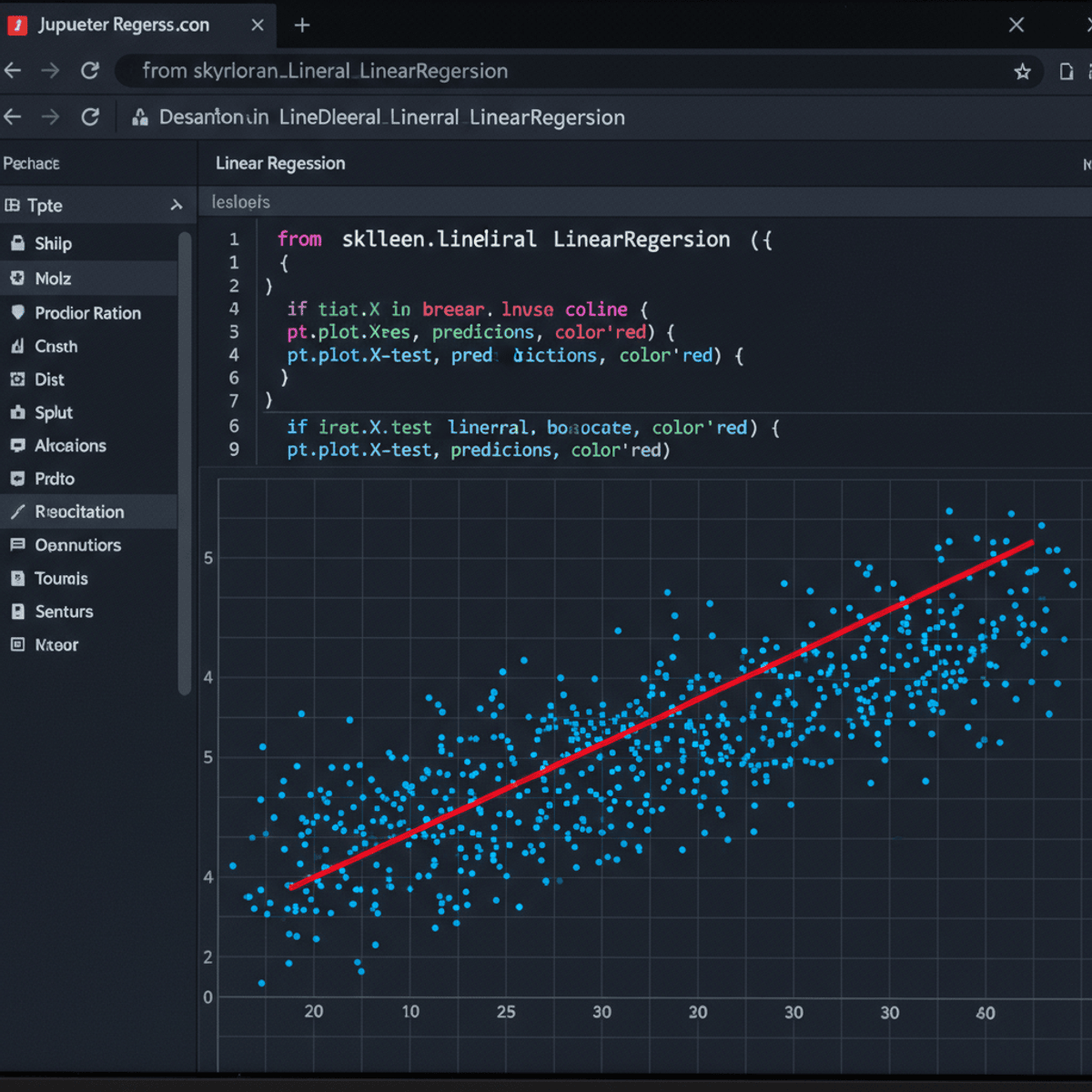
Learn & Build Machine Learning Models with Python
By the end of this course, learners will be able to explain core machine learning concepts, prepare and analyze data using Python libraries, visualize insights effectively, and build and evaluate basic machine learning models using industry-standard tools. This beginner-friendly course is designed to provide a clear, structured pathway into machine learning with Python, making it ideal for students, aspiring data scientists, and professionals transitioning into data-driven roles. Learners start with foundational machine learning principles and gradually progress through numerical computing with NumPy, data manipulation with Pandas, and data visualization using Matplotlib. Unlike theory-heavy courses, this program emphasizes practical understanding and hands-on workflows, helping learners connect concepts to real-world applications. The course also introduces essential preprocessing techniques, Scikit-learn pipelines, and linear regression modeling, ensuring learners understand not just how to build models, but why each step matters. What makes this course unique is its step-by-step learning progression, well-structured modules, and assessment-aligned objectives, enabling learners to build confidence as they move from data preparation to model evaluation. Upon completion, learners will have a strong foundation to pursue advanced machine learning topics or apply their skills in real projects.

Microsoft Azure Machine Learning
Machine learning is at the core of artificial intelligence, and many modern applications and services depend on predictive machine learning models. Training a machine learning model is an iterative process that requires time and compute resources. Automated machine learning can help make it easier. In this course, you will learn how to use Azure Machine Learning to create and publish models without writing code. This course will help you prepare for Exam AI-900: Microsoft Azure AI Fundamentals. This is the second course in a five-course program that prepares you to take the AI-900 certification exam. This course teaches you the core concepts and skills that are assessed in the AI fundamentals exam domains. This beginner course is suitable for IT personnel who are just beginning to work with Microsoft Azure and want to learn about Microsoft Azure offerings and get hands-on experience with the product. Microsoft Azure AI Fundamentals can be used to prepare for other Azure role-based certifications like Microsoft Azure Data Scientist Associate or Microsoft Azure AI Engineer Associate, but it is not a prerequisite for any of them. This course is intended for candidates with both technical and non-technical backgrounds. Data science and software engineering experience is not required; however, some general programming knowledge or experience would be beneficial. To be successful in this course, you need to have basic computer literacy and proficiency in the English language. You should be familiar with basic computing concepts and terminology, general technology concepts, including concepts of machine learning and artificial intelligence.
BiteSize Stats: Data and Descriptive Statistics
BiteSize Statistics for Absolute Beginners: Data and Descriptive Statistics is the first course in the BiteSize Stats for Absolute Beginners specialization. It builds the foundational statistical literacy that every later course depends on: how to think like a statistician, how to classify and measure data correctly, and how to summarize a dataset's center, spread, and shape. Across five modules, learners progress from the Prepare-Analyze-Conclude workflow and the DIKW framework, through population/sample vocabulary and the four probability sampling methods, to the three measures of center (mean, median, mode), the four measures of spread (range, IQR, variance/SD, CV), and finally frequency tables, histograms, distribution shape, the Empirical Rule, and box plots. Every core lesson pairs a short video walkthrough and reading with a hands-on interactive notebook built around a realistic business scenario, and each module closes with a graded applied lab using a real dataset.

3D Data Visualization for Science Communication
This course is an introduction to 3D scientific data visualization, with an emphasis on science communication and cinematic design for appealing to broad audiences. You will develop visualization literacy, through being able to interpret/analyze (read) visualizations and create (write) your own visualizations. By the end of this course, you will: -Develop visualization literacy. -Learn the practicality of working with spatial data. -Understand what makes a scientific visualization meaningful. -Learn how to create educational visualizations that maintain scientific accuracy. -Understand what makes a scientific visualization cinematic. -Learn how to create visualizations that appeal to broad audiences. -Learn how to work with image-making software. (for those completing the Honors track)

Problem Solving with Excel
This course explores Excel as a tool for solving business problems. In this course you will learn the basic functions of excel through guided demonstration. Each week you will build on your excel skills and be provided an opportunity to practice what you’ve learned. Finally, you will have a chance to put your knowledge to work in a final project. Please note, the content in this course was developed using a Windows version of Excel 2013. This course was created by PricewaterhouseCoopers LLP with an address at 300 Madison Avenue, New York, New York, 10017.

Customising your models with TensorFlow 2
Welcome to this course on Customising your models with TensorFlow 2! In this course you will deepen your knowledge and skills with TensorFlow, in order to develop fully customised deep learning models and workflows for any application. You will use lower level APIs in TensorFlow to develop complex model architectures, fully customised layers, and a flexible data workflow. You will also expand your knowledge of the TensorFlow APIs to include sequence models. You will put concepts that you learn about into practice straight away in practical, hands-on coding tutorials, which you will be guided through by a graduate teaching assistant. In addition there is a series of automatically graded programming assignments for you to consolidate your skills. At the end of the course, you will bring many of the concepts together in a Capstone Project, where you will develop a custom neural translation model from scratch. TensorFlow is an open source machine library, and is one of the most widely used frameworks for deep learning. The release of TensorFlow 2 marks a step change in the product development, with a central focus on ease of use for all users, from beginner to advanced level. This course follows on directly from the previous course Getting Started with TensorFlow 2. The additional prerequisite knowledge required in order to be successful in this course is proficiency in the python programming language, (this course uses python 3), knowledge of general machine learning concepts (such as overfitting/underfitting, supervised learning tasks, validation, regularisation and model selection), and a working knowledge of the field of deep learning, including typical model architectures (MLP, CNN, RNN, ResNet), and concepts such as transfer learning, data augmentation and word embeddings.

Predictive Modeling and Machine Learning with MATLAB
In this course, you will build on the skills learned in Exploratory Data Analysis with MATLAB and Data Processing and Feature Engineering with MATLAB to increase your ability to harness the power of MATLAB to analyze data relevant to the work you do. These skills are valuable for those who have domain knowledge and some exposure to computational tools, but no programming background. To be successful in this course, you should have some background in basic statistics (histograms, averages, standard deviation, curve fitting, interpolation) and have completed courses 1 through 2 of this specialization. By the end of this course, you will use MATLAB to identify the best machine learning model for obtaining answers from your data. You will prepare your data, train a predictive model, evaluate and improve your model, and understand how to get the most out of your models.

Project Finance & Excel: Build Financial Models from Scratch
Updated in May 2025. This course now features Coursera Coach! A smarter way to learn with interactive, real-time conversations that help you test your knowledge, challenge assumptions, and deepen your understanding as you progress through the course. This course takes a deep dive into the world of project finance, where you will learn to build financial models from the ground up using Excel. Whether you're new to finance or looking to sharpen your modeling skills, this course introduces key concepts in project finance, such as understanding eligible transactions and building input assumption sheets. Using a real-world case study, the course will guide you step by step through the intricacies of financial modeling, including multi-scenario input sheets and timeline assumptions. In the second phase, you'll explore more advanced topics such as the construction phase and debt sizing, which are essential for forecasting costs and revenue accurately. The course provides hands-on experience with building detailed financial statements like the Profit & Loss statement, Cash Flow Waterfall, and Balance Sheet. Throughout, you'll develop a comprehensive understanding of how to construct models that are both dynamic and adaptable to real-world projects. Finally, you will wrap up by calculating return metrics like the Internal Rate of Return (IRR), which is crucial for assessing project viability. By the end of the course, you’ll be fully equipped to handle every stage of a project’s financial modeling lifecycle, from initial assumptions to detailed cash flow forecasts and financial statement analysis. This course is designed for finance professionals, analysts, and anyone looking to specialize in project finance. A basic understanding of Excel is recommended, though no prior finance experience is necessary. Those with an interest in infrastructure, energy, and large-scale project financing will benefit from the practical skills covered.

Generative AI and Model Selection
Dive into the world of generative AI and learn how to select the right model for your needs in this practical course. You'll gain a solid understanding of how generative AI models work and compare deployment options like web APIs, hosted solutions, and local installations. By the end of this course, you will be able to: • Describe the basic architecture of generative AI models • Compare different AI model deployment options • Evaluate AI models using benchmarks and custom assessments • Troubleshoot and improve model performance • Determine when to use in-context learning vs. retrieval augmented generation Through hands-on exercises, you'll learn to evaluate models using industry benchmarks and create custom assessments for your specific use cases. You'll also master techniques to troubleshoot and enhance model performance. What sets this course apart is its focus on real-world application - you'll leave equipped to make informed decisions about AI model selection and optimization for your projects. Whether you're new to AI or looking to deepen your knowledge, this course will empower you to leverage generative AI effectively.

Data Science: How to Plan Projects, Research and Reflect
This course guides you through the key steps involved in planning and delivering a successful data science project. You will learn how to define your project aims, build a clear project plan, and select methods that support strong, evidence-based work. The course also introduces core academic skills, including how to research a topic, complete a literature review, and evaluate information critically. Reflection is a central part of the process, and you will learn how to reflect on your decisions and communicate your findings with clarity and confidence. Through practical activities and real examples, you will build the skills needed to approach data science projects in a structured and thoughtful way. By the end of the course, you will be ready to plan, research and reflect effectively on your own data science work.
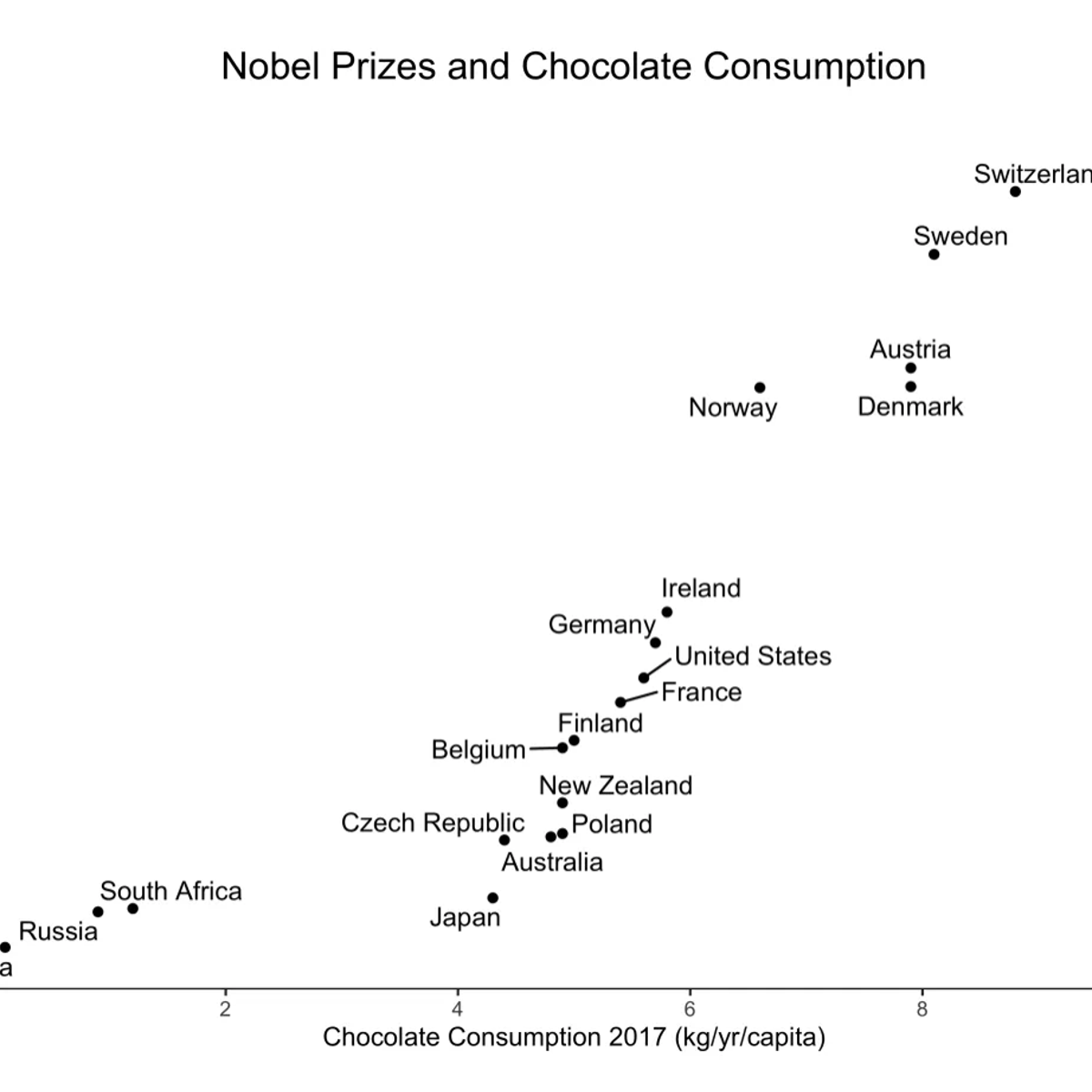
Essential Causal Inference Techniques for Data Science
Data scientists often get asked questions related to causality: (1) did recent PR coverage drive sign-ups, (2) does customer support increase sales, or (3) did improving the recommendation model drive revenue? Supporting company stakeholders requires every data scientist to learn techniques that can answer questions like these, which are centered around issues of causality and are solved with causal inference. In this project, you will learn the high level theory and intuition behind the four main causal inference techniques of controlled regression, regression discontinuity, difference in difference, and instrumental variables as well as some techniques at the intersection of machine learning and causal inference that are useful in data science called double selection and causal forests. These will help you rigorously answer questions like those above and become a better data scientist!

AI for Product Discovery & Strategy
In this course, learners will develop the ability to use AI as a strategic partner in product discovery and planning. They will learn how to apply AI to understand customers, analyze markets, and inform product strategy, turning large volumes of data into clear insights that support better decisions. Completing this course helps product professionals move beyond intuition alone and strengthen their ability to explore opportunities, prioritize work, and shape product direction. Learners will practice using AI to surface patterns in customer feedback, evaluate competitive landscapes, and connect product choices more directly to business goals. What makes this course unique is its focus on strategy, not automation. Rather than replacing product judgment, the course shows how AI can enhance critical thinking and support human decision-making across discovery, planning, and prioritization. Designed by Scrum Alliance, this course helps learners build confidence using AI to guide product strategy in modern, complex organizations.

Responsible AI for Mental Health
Unlock the future of AI-driven mental health care while tackling the critical ethical challenges shaping the field today. From bias and misinformation to privacy and patient safety, this course dives into the complexities of AI’s role in mental health. Explore cutting-edge advancements in computing and social robotics, and compare basic and advanced NLP techniques used in mental health analysis. Gain insight into emerging trends that are transforming therapy, diagnostics, and patient support, and examine how AI can be both a powerful tool and a potential risk in mental healthcare. Designed for mental health professionals, policymakers, and tech leaders, this course empowers you to shape responsible AI frameworks that prioritize fairness, transparency, and safety. Whether you're looking to influence policy, integrate AI into healthcare, or understand the future of mental health technology, this course provides the expertise to make an impact. Join us and be at the forefront of building ethical, effective, and human-centered AI for mental health.

Automate, Evaluate and Deploy ML Models Confidently
Stop letting manual deployments create bottlenecks and introduce risk. Automate, Evaluate and Deploy ML Models Confidently is a hands-on course designed for ML engineers and data scientists ready to master production-grade MLOps. You will move beyond chasing simple accuracy scores and learn to make sophisticated, data-driven decisions by analyzing hyperparameter optimization trials from Optuna, expertly balancing technical performance with critical business KPIs like inference cost and latency. The core of this course is building a complete CI/CD pipeline from the ground up using GitHub Actions. You will integrate MLflow for end-to-end experiment tracking and reproducibility, and implement crucial validation gates that automatically prevent underperforming models from ever reaching production. You will leave this course with a portfolio-ready project that proves you can build, manage, and deploy reliable, automated, and scalable machine learning systems with confidence, bridging the critical gap between experimentation and real-world value. Upon completion, learners are encouraged to deepen their expertise with the "MLOps Specialization" or explore advanced model techniques in the "Deep Learning Specialization".

Explore Raw Data
Finding stories in data using exploratory data analysis (EDA) is all about organizing and interpreting raw data. Python can help you do this quickly and effectively. In this course, you’ll learn how to use Python to perform the EDA practices of discovering and structuring. By the end of this course, you will be able to: • Identify ethical issues that may come up during the data “discovering” practice of EDA • Use Python to merge or join data based on defined criteria • Use Python to sort and/or filter data • Use relevant Python libraries for cleaning raw data • Recognize opportunities for creating hypotheses based on raw data • Recognize when and how to communicate status updates and questions to key stakeholders • Apply Python tools to examine raw data structure and format. • Use the PACE workflow to understand whether given data is adequate and applicable to a data science project • Differentiate between the common formats of raw data sources (json, tabular, etc.) and data types

From Raw to Ready: Data Preparation in Python
In this course, you'll develop essential skills for transforming raw data into analysis-ready formats - a critical foundation for any data science workflow. You'll master techniques for importing data from diverse sources, manipulating complex datasets, and optimizing data structures for analysis. Working with real-world datasets from our EngageMetrics and MediTrack case studies, you'll build practical experience in data preparation that directly translates to professional scenarios. Upon completion, you'll be able to: • Import data into Python from CSV files, Excel spreadsheets, and APIs. • Create, manage, and manipulate DataFrames. • Filter, sort, merge, and group data to prepare it for analysis. • Manage and transform categorical and date/time data using Pandas. • Create and manipulate NumPy arrays, perform mathematical operations, and use vectorized functions. • Apply data import and manipulation skills to build a multi‑source data integration pipeline in a graded challenge.

Generative AI & AWS AI Practitioner Certification
This course features Coursera Coach! A smarter way to learn with interactive, real-time conversations that help you test your knowledge, challenge assumptions, and deepen your understanding as you progress through the course. This comprehensive course covers the essentials of Generative AI and prepares you for the AWS AI certification exam. You’ll start by exploring AI/ML fundamentals, including various machine learning models, data types, and the differences between supervised, unsupervised, and reinforcement learning. As you advance, the course dives into Generative AI, focusing on foundation models, Large Language Models (LLM), and transformer architectures that power modern AI systems. You will also gain hands-on experience with AWS tools like Amazon Bedrock and SageMaker, learning to deploy, fine-tune, and optimize models in a cloud environment. The course equips you with both theoretical knowledge and practical skills, ensuring you're prepared for real-world applications. Throughout the journey, you’ll first build a strong foundation in AI/ML concepts and deep learning. From there, you'll dive into the exciting world of Generative AI, learning how it generates creative outputs and its applications across industries. You'll also explore AWS’s generative AI tools like Amazon Bedrock and SageMaker, which will help you master the skills needed to work in the cloud and deploy scalable AI models. By the end of the course, you’ll have a deep understanding of AI and its applications, making you ready to tackle complex problems with AWS's powerful tools. This course is designed for anyone interested in pursuing a career in AI and cloud computing, from aspiring data scientists to IT professionals looking to enhance their AI knowledge. There are no formal prerequisites, but familiarity with basic programming concepts or cloud computing can be beneficial. The course is suitable for intermediate learners with some foundational knowledge in tech or AI. By the end of the course, you will be able to develop generative AI models, fine-tune them for specific use cases, integrate them with AWS tools, and deploy AI applications on the cloud. You will also be well-prepared for the AWS AI certification exam, demonstrating your expertise in this emerging field.
Prompt Engineering for ChatGPT: Beginner to Advanced
The difference between an average AI response and an exceptional one isn’t the chatbot; it’s the prompt. In this Prompt Engineering for ChatGPT course, you will learn how to write clear and strategic prompts to produce more accurate & impactful responses. Designed for beginners, the course starts with the basics: how generative AI & ChatGPT work, then moves into prompt structure, priming, & root prompts. Then it goes into more advanced things like Chain-of-Thought, Few-Shot, Zero-Shot prompting, and frameworks like the Persona Pattern and Recipe Pattern. It ends with real-world workflows and responsible AI practices. The unique thing about this course is that it’s practical. You won’t just learn theory. You'll put your knowledge into practice, which helps you tackle real-world challenges, automate workflows, & create high-quality content at scale. By the end, you'll be writing prompts that produce sharp, structured output, whether it's text, images, or code. You'll know how to apply advanced techniques on demand, build your own reusable frameworks, & put AI to work to automate your everyday repetitive tasks. Enroll now & make every interaction with AI more effective.

The Importance of Integrity
Data integrity is critical to successful analysis. In this course, you’ll explore methods and steps that analysts take to check their data for integrity. This includes knowing what to do when you don’t have enough data. You’ll also learn about sample size and understand how to avoid sampling bias. All of these methods will help you ensure your analysis is successful. By the end of this course, learners will: - Define data integrity with reference to types and risks. - Check for data integrity. - Identify common pitfalls when cleaning data. - Describe the benefits of documenting the data cleaning process. - Describe strategies that can be used to address insufficient data. - Verify the results of cleaning data.

Seaborn Setup: Tools, Data Prep & EDA for Visualization
Learn how to prepare, analyze, and interpret data through effective visualizations using Python's Seaborn library. In this hands-on course, you will build a strong foundation in data visualization by setting up your Python environment with Anaconda and Jupyter Notebook, preparing census datasets for analysis, and applying exploratory data analysis (EDA) techniques to understand data structure before creating visualizations. As you progress, you will create a variety of Seaborn visualizations, including scatter plots, line plots, swarm plots, violin plots, point plots, heatmaps, and advanced grid-based visualizations. You will also learn how to improve chart readability by refining axis labels, tick formatting, and plot configuration, enabling you to communicate data more clearly and effectively. Designed for data enthusiasts and analysts, this course emphasizes practical application through census datasets, helping you move from data preparation to meaningful visual interpretation. By the end of the course, you will be able to organize datasets, construct and refine visualizations, analyze multivariate relationships, interpret correlation structures, and transform data into clear visual insights that support data-driven decision-making.

Logistic Regression with SAS: Build & Evaluate Models
Master Logistic Regression with SAS: Build & Evaluate Models is a hands-on course that teaches you how to develop, refine, and evaluate logistic regression models using SAS. You will begin by exploring the role of logistic regression in predictive modeling, working with real-world insurance data, and implementing your first models with PROC LOGISTIC. As you progress, you will prepare datasets by handling missing values, encoding categorical variables, and applying data preparation techniques that support reliable model performance. Designed for aspiring data scientists, data analysts, and business professionals, this course provides a structured learning path from foundational concepts to advanced model optimization. You will learn how to reduce predictor redundancy through variable clustering, evaluate predictor importance using statistical screening methods, and apply subset selection techniques to identify the most effective model inputs. In the final module, you will refine logistic regression models using stepwise and backward elimination, implement models with PROC LOGISTIC and ODS, and evaluate predictive performance using misclassification analysis, confusion matrices, and logit plots. Throughout the course, you will gain practical SAS experience while learning an end-to-end workflow for building interpretable, well-validated classification models. If you want to strengthen your predictive modeling skills and confidently apply logistic regression in SAS, this course provides a practical, project-focused learning experience.

Refining Data for Effective Reports using SAS Visual Analytics
In this course, you learn how to use SAS Visual Analytics on SAS Viya to modify data for analysis, perform data discovery and analysis, and create interactive reports.
Introducción a Azure Data Factory para Big Data
Este proyecto es un curso práctico y efectivo para aprender a utilizar la herramienta de Azure Data Factory desde cero. Aprenderás, de manera practica y efectiva a generar pipelines en Data Factory y a utilizar los recursos necesarios de Azure.

Deployment and Impact of AI Agents
Transform technical knowledge into tangible business value by mastering agent deployment and stakeholder leadership. Learners will architect scalable systems, deliver real-world vertical solutions (finance, healthcare, retail), and drive measurable ROI across global and regional enterprises. The course emphasizes production-readiness, compliance, technical communication, and change management, ensuring that agent-driven strategies translate directly into high-impact organizational transformation.
GenAI for Sales Analytics
This course is designed for those looking to ride the wave of GenAI and revolutionize their approach to sales. Whether you’re a complete beginner or someone wanting to sharpen your AI skills, this course will teach you the fundamentals of how AI is reshaping sales analytics. You’ll learn how AI can enhance forecasting accuracy, improve customer segmentation, and refine your overall sales strategy. Through hands-on, real-world examples and case studies, you’ll discover how to apply AI-driven insights to boost decision-making and performance. For example, we’ll dive into scenarios where AI helps sales teams anticipate customer needs, delivering personalized experiences that lead to higher conversions and stronger customer loyalty. This course is designed for sales professionals with no prior experience in AI, new data analysts eager to explore AI tools, business professionals seeking to leverage AI in their workflows, and anyone interested in understanding AI applications in sales. Whether you're just beginning your journey in sales analytics or looking to enhance your existing skills, this course provides valuable insights tailored to your needs. No prior knowledge of AI or advanced sales analytics is required to enroll in this course. However, a basic understanding of sales processes will be helpful to grasp the concepts more effectively. The course is structured to accommodate beginners, ensuring that all participants can learn at their own pace. By the end of this course, learners will have a clear understanding of Generative AI and its applications in sales analytics. They will gain practical knowledge of using AI for basic sales forecasting to make better business decisions, explore AI-driven customer segmentation and personalized sales outreach strategies, and discover simple yet impactful AI techniques to improve daily sales decision-making.