Cursos de IT y software
Los mismos datos para todos, vengan de Udemy o de Coursera: precio, valoración, duración e idioma. 902 cursos encontrados. Afinar la búsqueda

Work with Gemini Models in BigQuery - 日本語版
이 과정은 BigQuery에서 생성형 AI 작업에 AI/ML 모델을 사용하는 방법을 보여줍니다. 고객 관계 관리와 관련된 실제 사용 사례를 통해 Gemini 모델로 비즈니스 문제를 해결하는 워크플로를 설명합니다. 이해를 돕기 위해 SQL 쿼리와 Python 노트북을 사용하는 코딩 솔루션을 단계별로 안내합니다.
C++ Superpowers and More
Explore the C and C++ languages. Look at the specificity of the C/C++ languages and how this impacts security, ways C/C++ can interact with the external world, error handling, the execution environment and much more.

Responsible AI for Developers: Fairness & Bias - Português
Neste curso, apresentamos conceitos de IA responsável e princípios de IA. Ele contém técnicas para identificar e reduzir o viés e aplicar a imparcialidade nas práticas de ML/IA. Vamos abordar ferramentas e métodos práticos para implementar as práticas recomendadas de IA responsável usando produtos do Google Cloud e ferramentas de código aberto.
Relational Database Administration (DBA)
Get started with Relational Database Administration and Database Management in this self-paced course! This course begins with an introduction to database management; you will learn about things like the Database Management Lifecycle, the roles of a Database Administrator (DBA) as well as database storage. You will then discover some of the activities, techniques, and best practices for managing a database. You will also learn about database optimization, including updating statistics, slow queries, types of indexes, and index creation and usage. You will learn about configuring and upgrading database server software and related products. You’ll also learn about database security; how to implement user authentication, assign roles, and assign object-level permissions. And gain an understanding of how to perform backup and restore procedures in case of system failures. You will learn how to optimize databases for performance, monitor databases, collect diagnostic data, and access error information to help you resolve issues that may occur. Many of these tasks are repetitive, so you will learn how to schedule maintenance activities and regular diagnostic tests and send automated messages of the success or failure of a task. The course includes both video-based lectures as well as hands-on labs to practice and apply what you learn. This course ends with a final project where you will assume the role of a database administrator and complete a number of database administration tasks across many different databases.

Information Systems Management
This course explores the intricate domain of information systems management. You will gain insights into the strategic alignment of technology with organizational goals, emphasizing efficient utilization and optimization of information systems. From resource allocation to risk management and performance evaluation, you will gain insights into the multifaceted responsibilities of IS managers. You will also learn about fostering innovation, ensuring security, and driving digital transformation for sustained competitive advantage in today's dynamic business landscape.

AZ-104: Azure Storage, Compute, Containers, and Automation
Updated in May 2025. This course now features Coursera Coach! A smarter way to learn with interactive, real-time conversations that help you test your knowledge, challenge assumptions, and deepen your understanding as you progress through the course. Unlock the full potential of Microsoft Azure with this comprehensive course on storage, compute, containers, and automation. You’ll learn to manage complex cloud environments while building expertise in configuring and deploying Azure services. This course equips you with practical skills to streamline operations, optimize resources, and enhance scalability in your cloud infrastructure. The course begins with mastering Azure Storage, including data import/export, redundancy, and object replication. You'll progress to configuring Azure Files and Blob Storage, covering everything from file shares to lifecycle management. Practical demonstrations ensure you can integrate these tools seamlessly into real-world IT workflows. Dive deeper into automation using Azure Resource Manager templates and VM extensions. You’ll also explore virtual machine configurations, disk encryption, and resource management, building a robust foundation in virtualized compute environments. Further modules introduce container management, from scaling Kubernetes services to creating container apps, and finally, Azure App Service for custom domains, backups, and secure deployment. This course is designed for IT professionals, cloud administrators, and security specialists aiming to enhance their Azure expertise. A basic understanding of cloud computing and familiarity with Azure fundamentals is recommended. With hands-on exercises and expert guidance, this intermediate-level course will elevate your Azure management skills.

Essential Concepts of Vector Databases
Updated in May 2025. This course now features Coursera Coach! A smarter way to learn with interactive, real-time conversations that help you test your knowledge, challenge assumptions, and deepen your understanding as you progress through the course. In this comprehensive course, you will gain a deep understanding of vector databases, their structure, and how they differ from traditional databases. By exploring fundamental concepts, including their benefits and real-world applications, you will be equipped with the knowledge needed to leverage these cutting-edge technologies in data management and AI. The course begins with an introduction to vector databases, explaining why they have become essential in modern data management. You will discover their key advantages and how they address limitations found in traditional databases. Moving forward, the course dives into embeddings and vectors, key components in understanding the data flow within vector databases, and the importance of similarity searches. Next, the course covers a hands-on section where you will work with the Chroma vector database. Through practical exercises, you will learn how to set up your development environment, create databases, query data, and manage embeddings with OpenAI APIs. Additionally, the course explores advanced topics like vector similarity measures, including cosine similarity, Euclidean distance, and dot product, as well as the integration of vector databases with large language models (LLM). This course is ideal for developers, data scientists, and anyone keen on understanding the cutting-edge field of vector databases. A solid grasp of databases and basic programming knowledge will be beneficial for mastering the material.

Developing Applications with Cloud Run on Google Cloud: Fundamentals
This course introduces the Cloud Run serverless platform for running applications. In this course, you learn about the fundamentals of Cloud Run, its resource model and the container lifecycle. You learn about service identities, how to control access to services, and how to develop and test your application locally before deploying it to Cloud Run. The course also teaches you how to integrate with other services on Google Cloud so you can build full-featured applications.
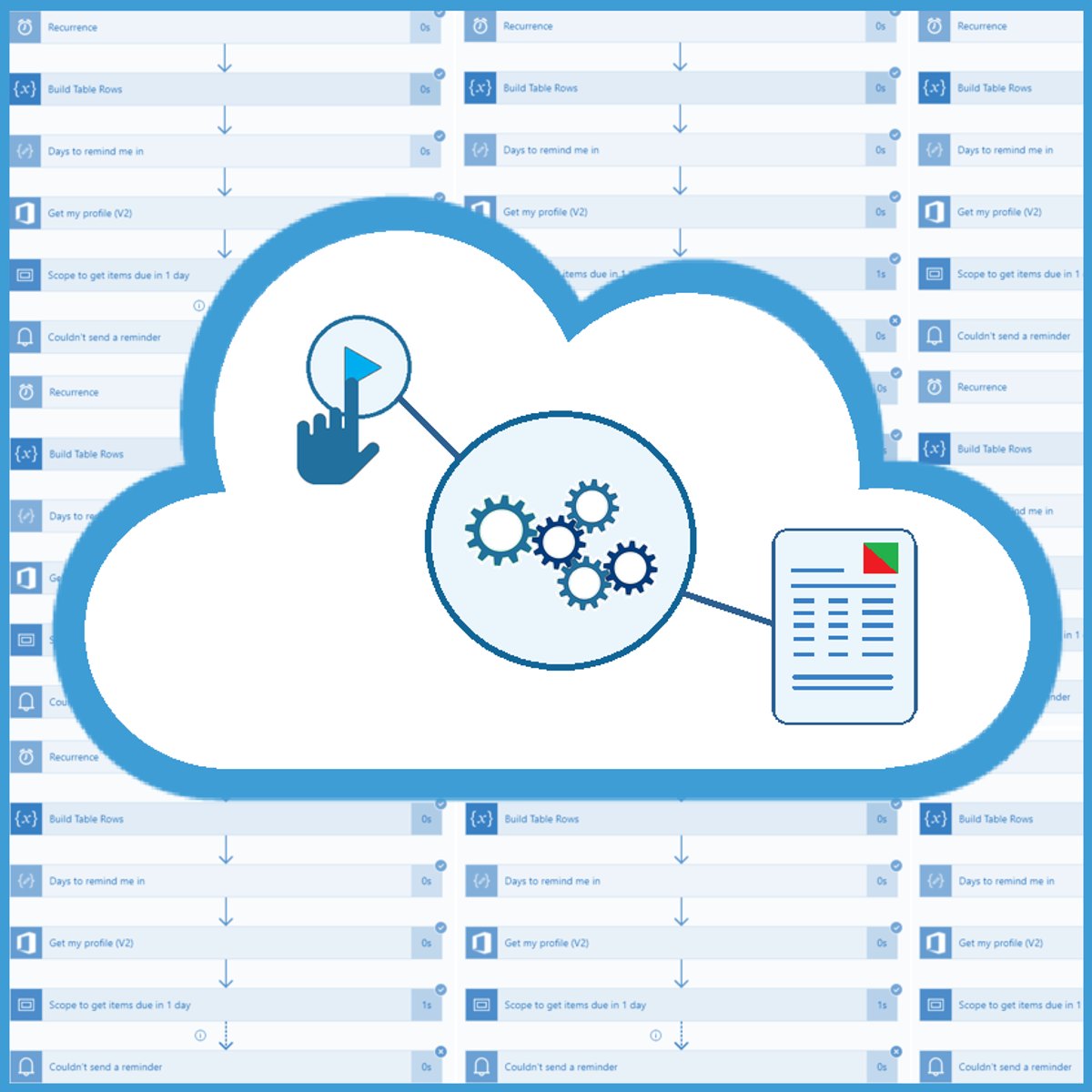
Automize Monthly Report Creation with Power Automate
Imagine you're working in a large company and part of your job is to send reports to other departments about employee absence from work in the past month. Basically, it is a repetitive and boring manual task that repeats every month and takes a lot of your time. However, you can easily automate it with SharePoint and Power Automate! In this beginner-level guided project "Automize Monthly Report Creation with Power Automate", we will create a SharePoint Site and a SharePoint list with data about employees' annual leave days, sick leave days or days off. All the data will be kept in one place. That data will help us to create the Monthly Employee Absence Report. The Power Automate flow will export data from the SharePoint list and save it in an Excel spreadsheet. Then we will send the table (the report) in an email as an Excel table. The requirement for this project is having a Microsoft Developer Program account, and you will be provided with instructions on how to get it right here. If you are ready to make your and your colleagues’ lives easier by starting to automate manual, time-consuming processes which are hard to track, then this project is for you! Let's get started!
Reproducible Training Data and ML-Ready Data Pipelines
This course teaches learners to design reproducible, leakage-safe, governance-ready training data pipelines for machine learning and AI systems. Learners work with dataset versioning, deterministic builds, feature and label pipelines, point-in-time correctness, slice validation, drift monitoring, and CI-based release gates. The course treats training datasets as governed data products with owners, readiness criteria, quality expectations, and reproducibility requirements. By the end of the course, learners can produce reproducible dataset releases, identify temporal and target leakage risks, design feature and label workflows, track changes across versions, and apply release gates for schema, distribution, slice, bias, and reproducibility checks. The focus is on operationally reliable training data pipelines that teams can trust in production AI development.

Assessing Data Quality with Dataplex
This is a self-paced lab that takes place in the Google Cloud console. This lab shows you how to assess data quality using Dataplex.

Protecting Data with NetApp Cloud Manager & Cloud Volumes ONTAP for Google Cloud
This is a self-paced lab that takes place in the Google Cloud console. In this lab, you will learn how to implement a full data protection strategy with NetApp Cloud Volumes ONTAP and Cloud Manager capabilities.

Specialized RMAN Features and Advanced Use Cases
Updated in May 2025. This course now features Coursera Coach! A smarter way to learn with interactive, real-time conversations that help you test your knowledge, challenge assumptions, and deepen your understanding as you progress through the course. Unlock the advanced capabilities of Oracle RMAN in this comprehensive course tailored for database administrators and IT professionals. This program equips you with the skills to efficiently manage Oracle databases through RMAN’s specialized features, covering database duplication, performance optimization, and integration with multitenant and RAC environments. Practical exercises and demonstrations ensure a hands-on learning experience to reinforce theoretical concepts. The journey begins with exploring database duplication techniques using RMAN, covering various methods like active duplication and backup-based duplication, both with and without recovery catalog connections. As you advance, you'll delve into troubleshooting RMAN processes, interpreting diagnostics, and fine-tuning performance using techniques like asynchronous I/O and multiplexing. The course then transitions to RMAN operations in Oracle multitenant and RAC environments. Learn to back up and recover Container Databases (CDBs) and Pluggable Databases (PDBs), manage complex recovery scenarios, and optimize RMAN usage in RAC setups. Conclude with a dive into Oracle Database Backup Cloud Service, from configuration to secure backup storage in the cloud. This course is ideal for Oracle database administrators and IT professionals looking to elevate their expertise in RMAN. A basic understanding of Oracle databases and RMAN is recommended, with the content suited for intermediate-level learners seeking advanced techniques.

Sistemas operativos y tú: Convertirse en un usuario avanzado
En este curso, a través de una combinación de conferencias de video, demostraciones y prácticas, aprenderás acerca de los componentes principales de un sistema operativo y cómo realizar tareas críticas tales como administrar software y usuarios, y configurar hardware. Vamos a terminar con un ejemplo de cómo puede aparecer este contenido en una entrevista. Al final de este curso, podrás: ● navegar por los sistemas de archivos de Windows y Linux utilizando una interfaz gráfica de usuario y un intérprete de línea de comandos. ● configurar usuarios, grupos y permisos para el acceso a la cuenta. ● instalar, configurar y eliminar software en los sistemas operativos Windows y Linux. ● configurar particiones de disco y sistemas de archivos. ● comprender cómo funcionan los procesos del sistema y cómo gestionarlos. ● trabajar con registros del sistema y herramientas de conexión remota. ● utilizar el conocimiento del sistema operativo para solucionar problemas comunes en un rol de Especialista de soporte de TI.
Choosing your AWS identity service
***This course was developed by members of AWS Technical Field Communities (TFC), an AWS community of technical experts. The content is intended to complement our standard training curriculum and augment your AWS learning journey. We are aware some courses have accessibility limitations and are working to address. If you require accommodation, please contact [AWS Training and Certification Customer Support](https://support.aws.amazon.com/#/contacts/aws-training).*** In this course you will learn how to choose an AWS identity or access management service, what each service does, and which services are applicable to your current needs.

Cisco ACI Fundamentals for Beginners
Dive into Cisco ACI with this beginner-friendly course that covers everything from basic setup to advanced configurations. Learn to deploy and manage the Nexus 9K, APIC, ACI fabric, and configure tenants, bridge domains, and VLAN pools. Step-by-step guidance ensures clear learning and hands-on practice. This course provides a comprehensive foundation in Cisco ACI, guiding learners through essential concepts and practical configurations. The journey starts with an introduction to ACI, APIC, and Nexus 9K, setting up the fabric for efficient management. Students will understand how to configure and monitor the system, exploring Nexus devices, fabric discovery, and initial setups. As the course progresses, learners will dive deeper into managing bridge domains, tenants, and VRFs. With a hands-on approach, the course includes lab sessions for configuring VLAN pools, domain settings, and policies. You’ll build a strong foundation in interface policies, IPGs, and Layer 2/3 connectivity within ACI. By the end, you’ll be able to manage a fully functional ACI fabric. This course prepares you to deploy and troubleshoot ACI networks confidently, covering the entire journey from setup to real-world application. This course is ideal for network engineers, IT professionals, and beginners interested in Cisco ACI. It is suitable for individuals who want to start working with Cisco's ACI technology. While prior networking knowledge is helpful, it is not a requirement. Those looking to build a career in network automation or ACI management will find this course especially valuable. The course follows a hands-on approach, starting with foundational concepts and building up to complex configurations. Learners will set up a functional ACI network, including VLANs, bridge domains, and Layer 3 connectivity. Real-world labs and exercises ensure learners gain practical skills that they can immediately apply in their professional environments. This course is based on Cisco ACI Fundamentals for Beginners, by Ashish Ashish. This Course is licensed and distributed by Packt. All rights reserved. Packt is one of the world's most prolific publishers of cutting-edge technical content. For over two decades we've made it our mission to curate and publish the knowledge of only the very best technical experts. We focus on real-world courses that help our customers get the job done, with coverage that extends across a wide range of established and cutting-edge technical topics. If you're an individual or an organisation that embraces learning by doing, Packt is the perfect fit for you.

Advanced Security and Troubleshooting
Updated in May 2025. This course now features Coursera Coach! A smarter way to learn with interactive, real-time conversations that help you test your knowledge, challenge assumptions, and deepen your understanding as you progress through the course. Strengthen your expertise in network security and troubleshooting with this advanced course. Delve into the latest techniques to secure networks, establish robust connections, and proactively address vulnerabilities. You’ll learn how to counter sophisticated cyber threats, optimize remote access, and implement wireless security measures effectively. The course begins with a deep dive into network security essentials. Explore topics such as remote access protocols, social engineering tactics, VPN implementation, and enterprise physical security. Understand best practices for network hardening, from securing SNMP communications to advanced wireless protections like geofencing and EAP. Transitioning to troubleshooting, the course follows CompTIA's structured model, guiding you through problem identification, testing theories, implementing solutions, and system verification. You’ll master essential tools for diagnosing and resolving network issues, including cabling challenges, software tools, IP commands, and DNS troubleshooting techniques. Designed for IT professionals, network administrators, and cybersecurity specialists, this course requires a foundational understanding of networking concepts. If you’re ready to tackle advanced security and troubleshooting challenges, this course is for you.

Advanced DAX and Performance Optimization
This course focuses on advanced DAX (Data Analysis Expressions) concepts and performance optimization techniques essential for Power BI developers. Participants will learn to write complex DAX formulas, create calculated columns and measures, and implement sophisticated business logic. The course emphasizes performance optimization methodologies and troubleshooting techniques to ensure reports are efficient and responsive. By leveraging tools like Performance Analyzer and DAX Studio, learners will diagnose and resolve common performance issues.

Introduction to SQL and relational databases
In the modern business landscape, information represents the most valuable resource for organizations, with the majority of this critical data housed within digital relational database systems. The overwhelming majority of database management platforms currently deployed across industries rely on SQL as their primary language for data manipulation and retrieval operations. As a globally recognized standard, SQL empowers users to execute sophisticated data analysis and aggregation operations through an intuitive command structure that maximizes efficiency. For professionals pursuing careers in data analytics, software development, or any field requiring database interaction capabilities, SQL proficiency serves as a fundamental prerequisite. This comprehensive course will guide you through essential database management principles while providing hands-on experience with SQL implementation. Beginning with fundamental data retrieval techniques from single tables, you'll progress to advanced multi-table operations that enable comprehensive data analysis—all practiced using our cloud-based SQL simulation environment throughout your learning journey.

Mastering Microsoft Endpoint Manager and Intune
This course features Coursera Coach! A smarter way to learn with interactive, real-time conversations that help you test your knowledge, challenge assumptions, and deepen your understanding as you progress through the course. This course provides an in-depth look at how to manage and secure endpoints using Microsoft Endpoint Manager. You will gain a strong understanding of the key components, including Microsoft Endpoint Configuration Manager and Microsoft Intune, both of which are powerful tools for deploying, managing, and protecting devices, data, and applications in an enterprise environment. By the end of this course, you’ll be proficient in the core practices of endpoint management, from enrollment to security policy deployment. The course begins with an introduction to Microsoft Endpoint Manager and its co-management features. You’ll explore various device enrollment methods, followed by a detailed examination of deploying and managing Windows clients in a business environment. Next, you’ll dive into configuring endpoints using profiles and managing their security posture with compliance policies. You'll also learn how to use Microsoft Intune for application deployment and management. Finally, you’ll explore additional features of Endpoint Manager, such as troubleshooting and the advanced security capabilities available within the platform. The course includes practical tips and hands-on examples to ensure you can apply your knowledge effectively in real-world scenarios. This course is ideal for IT professionals, system administrators, and anyone involved in managing endpoints in an organization. It requires a basic understanding of IT infrastructure, but no prior experience with Microsoft Endpoint Manager is needed. This course is suitable for intermediate learners who want to take their endpoint management skills to the next level.

Blockchain Evolution and Technology Concepts
This specialization offers the latest developments in blockchain technology through a highly engaging learning experience with animated video components and intuitive course flow to maximize your knowledge retention.

Building No-Code Apps with AppSheet: Implementation
This course teaches you how to implement various capabilities that include data organization and management, application security, actions and integrations in your app using AppSheet. The course also includes topics on managing and upgrading your app, improving performance and troubleshooting issues with your app.

Multimodality with Gemini
This is a self-paced lab that takes place in the Google Cloud console. This lab provides a variety of different use cases enabled by multimodality with Gemini Pro Vision.
Introduction to Enterprise Computing
Large Scale Enterprise Computing powers all major transactions, and the Mainframe is responsible for 87% of all credit card transactions and enables 71% of all Fortune 500 companies. Mainframes are fundamental on how we do business, and IBM Z is the only production mainframe sold today. Virtually everyone depends on it. This is your introduction to the hardware, operating systems, security, and features that make this possible. On successful completion of this course, learners are eligible to earn their Introduction to Enterprise Computing badge. More information can be found here: https://www.youracclaim.com/org/ibm/badge/introduction-to-enterprise-computing

Debugging Apps on Google Kubernetes Engine
This is a self-paced lab that takes place in the Google Cloud console. This lab teaches you how logging works on GKE and some best practices for log collection by going through some common logging use cases.
Modern Spring Security & Cloud Integration
Modern application development demands robust security practices and seamless cloud integration to protect services, users, and data in increasingly distributed environments. This course explores advanced Spring Security capabilities, modern authentication strategies, and cloud-ready deployment approaches that are essential for building secure enterprise applications. Throughout the course, learners will develop the skills needed to manage user sessions, implement advanced security configurations, and secure microservices using OAuth 2 and JSON Web Tokens. Participants will also gain practical knowledge of implementing Single Sign-On solutions and preparing applications for modern cloud-native environments through GraalVM native image generation. What sets this course apart is its combination of updated Spring Security concepts with real-world implementation scenarios. The material bridges foundational security principles with practical techniques used in modern enterprise and microservice architectures. This course is ideal for Java developers, Spring developers, software engineers, and IT professionals seeking to strengthen application security and cloud integration skills. Learners should have prior experience with Java and the Spring Framework and a basic understanding of web application development. This course is part three of a three-course Specialization designed to provide a comprehensive learning pathway in this subject area. While it delivers standalone value and practical skills, learners seeking a more integrated and in-depth progression may benefit from completing the full Specialization.

Introduction to Image Generation - Français
Ce cours présente les modèles de diffusion, une famille de modèles de machine learning qui s'est récemment révélée prometteuse dans le domaine de la génération d'images. Les modèles de diffusion trouvent leur origine dans la physique, et plus précisément dans la thermodynamique. Au cours des dernières années, ils ont gagné en popularité dans la recherche et l'industrie. Ils sont à la base de nombreux modèles et outils Google Cloud avancés de génération d'images. Ce cours vous présente les bases théoriques des modèles de diffusion, et vous explique comment les entraîner et les déployer sur Vertex AI.

Product Management: Developing and Delivering a New Product
In this course you will be introduced to the steps required to effectively develop and launch a new product. These are important phases of the product management lifecycle and generally consume majority of the product manager's time. The course highlights how resources are assigned to design, create, and test the new product. The course also walks you through best practices to ensure a smooth transition from product development to product launch and delivery. Then, once the lifecycle of the product has come to an end, you will learn about how the Product Manager oversees retirement processes for the product. Throughout this course, several product management experts will share their insights and experiences in product management. Practice quizzes and graded quizzes will test your knowledge throughout. Also, you will put what you have learned to the test in a series of practical exercises that culminates in a final project allowing you to demonstrate real-word product management expertise. This course is suitable for anyone who aspires to apply for product management jobs. It requires no prior experience or knowledge of product management.

The Zero Trust Framework
This course is designed to demystify Zero Trust security and guide learners through practical implementation. Based on the principle of “never trust, always verify,” this course explains what Zero Trust is, why it matters, and how organizations can begin their Zero Trust journey. Key topics include network, endpoint, and cloud security, starting with foundational concepts and addressing misconceptions—highlighting that Zero Trust is not achieved by simply deploying technologies. Real-world use cases, assessment methodologies, and maturity ranking techniques help participants create a customized Zero Trust strategy for their business. The curriculum explores modern Zero Trust standards and frameworks, such as NIST and the Open Group, moving from principles to architectural design. With a focus on practical application and strategic planning, this course is ideal for anyone responsible for organizational security seeking to enhance their defense strategy using Zero Trust.

PostgreSQL 17: Core Concepts and Advanced SQL Techniques
This course focuses on mastering PostgreSQL 17's core features and advanced SQL techniques, which are vital for database professionals. You'll explore new enhancements in PostgreSQL 17, along with an in-depth understanding of transaction management, indexing, and complex SQL queries. By the end of the course, you'll be proficient in using PostgreSQL 17 to improve database performance, security, and efficiency, and will be able to apply advanced SQL techniques to real-world database challenges. What sets this course apart is its blend of foundational PostgreSQL concepts with practical, hands-on exercises that help bridge the gap between theory and real-world database management. This course is ideal for database administrators, developers, and anyone seeking to deepen their knowledge of PostgreSQL and SQL, with a foundational understanding of databases required. This course is part one of a three-course Specialization designed to provide a comprehensive learning pathway in this subject area. While it delivers standalone value and practical skills, learners seeking a more integrated and in-depth progression may benefit from completing the full Specialization.

Unlock Multimodal Search
"Unlock Multimodal Search" is an intermediate, hands-on course for developers and ML engineers ready to build the next generation of AI-powered search. Text-only search is no longer enough; this 90-minute course will teach you how to create applications that can search across different data types, such as finding text from an image. Using the powerful open-source vector database Weaviate, you will move from theory to a functioning demonstration. This course requires basic skills in Docker, APIs, Python, and the command line (CLI). Familiarity with vector databases. Docker Desktop must be installed. This course is focused on execution. You will learn to configure a Weaviate schema to handle both image and text embeddings for a single object, ingest multimodal data, and perform powerful cross-modal queries. Through a final, hands-on project that mirrors a real-world job task, you will not only build an image-to-text search demo but also learn how to measure its accuracy with precision metrics. By the end, you'll be equipped to architect and validate sophisticated, multimodal AI applications.

The Linux Essentials
This course features Coursera Coach! A smarter way to learn with interactive, real-time conversations that help you test your knowledge, challenge assumptions, and deepen your understanding as you progress through the course. In this course, you'll embark on a journey through the world of Linux, gaining foundational knowledge to navigate and manage Linux operating systems. From understanding the history and usage of Linux to mastering essential command-line operations, this course will provide you with a strong base to begin your Linux journey. You'll also dive into Linux distributions, comparing popular versions like Ubuntu, CentOS, and Debian, and learn the nuances of installing and configuring them. As you progress, you'll explore using Linux’s powerful CLI (Command Line Interface) for tasks such as file management, software installation, networking, and scripting. You’ll learn how to manage networks, secure systems, and administer user accounts, empowering you to configure, manage, and secure Linux systems with confidence. The course is designed for beginners who want to start from the basics, progressing to more advanced Linux administration tasks. Whether you’re interested in IT, system administration, or development, this course will provide a solid foundation for managing Linux environments. No prior experience with Linux is required.

Develop Code with Gemini in BigQuery
This is a self-paced lab that takes place in the Google Cloud console. In this lab you learn how to use Gemini code generation, explanation and suggestions in BigQuery.

Migrating to Cloud SQL from Amazon RDS for MySQL Using Database Migration Service
This is a self-paced lab that takes place in the Google Cloud console. In this lab, you migrate MySQL data from an Amazon RDS instance for MySQL to Cloud SQL for MySQL using a one-time Database Migration Service job and an IP allowlist for connectivity. After you create and run the migration job, you confirm that the data have been successfully migrated to your Cloud SQL for MySQL instance.

CompTIA CYSA+ CS0-003: Vulnerability Management
This course is meticulously designed for cybersecurity professionals eager to enhance their skills in identifying, analyzing, and mitigating vulnerabilities. Through hands-on lessons, you'll gain the expertise to implement effective vulnerability scanning methods, prioritize risks, and recommend strategic controls to protect against potential threats. Equip yourself with the knowledge to not only understand vulnerabilities but also to proactively defend against them, ensuring your organization's security posture remains robust and resilient.

Securing Compute Engine Applications and Resources using Chrome Enterprise Premium
This is a self-paced lab that takes place in the Google Cloud console. Learn how to secure a Compute Engine instance with Identity-Aware Proxy (IAP).

Getting started with the Vertex AI Gemini 1.5 Pro Model
This is a self-paced lab that takes place in the Google Cloud console. This lab will provide an introductory, hands-on experience with Generative AI on Google Cloud.

Implementing Basic BGP
Gain the essential skills for configuring, monitoring, and troubleshooting the Border Gateway Protocol (BGP)—the backbone of internet routing. This course offers a deep dive into BGP’s robust and scalable architecture, used by internet service providers, universities, and corporations to ensure seamless global connectivity. Unlike standard IGPs such as OSPF, IS-IS, or EIGRP, BGP enables precise policy control and interconnectivity between distinct networks, making your expertise highly valuable in enterprise and service provider settings. Learn to distinguish BGP operations from other routing protocols, discover key path attributes for optimal route selection, and gain hands-on experience with BGP neighbor session establishment. Through practical exploration of Cisco IOS commands, you’ll build critical skills in configuring BGP, monitoring routing status, and resolving common startup issues. What sets this course apart is its focus on real-world scenarios and command-line practice—empowering you to troubleshoot and maintain resilient BGP networks. By course end, you’ll be equipped to design, implement, and support BGP solutions vital to today’s internet infrastructure.

Autoscaling TensorFlow Model Deployments with TF Serving and Kubernetes
This is a self-paced lab that takes place in the Google Cloud console. AutoML Vision helps developers with limited ML expertise train high quality image recognition models. In this hands-on lab, you will learn how to train a custom model to recognize different types of clouds (cumulus, cumulonimbus, etc.).

Introduction to QoS and QoS Mechanisms
As user applications continue to drive network growth and complexity, supporting diverse types of traffic—especially for business-critical and delay-sensitive applications—has never been more essential. This course equips learners with in-demand skills to effectively manage Quality of Service (QoS) in converged networks, ensuring that priority applications receive the performance they require. You’ll explore the foundations of QoS, identify common network issues, and learn step-by-step methods for planning and implementing QoS using modern models like best-effort, IntServ, and DiffServ. What sets this course apart is its practical focus on Cisco’s Modular QoS CLI (MQC) and breakthrough AutoQoS tools, enabling both granular configuration and simplified deployment for different user needs. Through hands-on exercises, you’ll gain skills in class-based marking, monitoring QoS, and leveraging Cisco’s automation tools for both campus and WAN environments. By the end of the course, you’ll be confident in creating and maintaining QoS policies that optimize network performance and reliability—making you an invaluable asset in any network administration or architecture role.

Data Privacy, Security, Governance, Risk and Compliance
Whether you’re an aspiring data engineer, data architect, business analyst, or data scientist, a strong foundation in data security is crucial for any data management professional. By gaining practical experience and comprehensive knowledge, you will strengthen your resume and unlock exciting career opportunities in the dynamic field of data security and protection. This course provides insight into data privacy, security, and governance. You will learn to implement effective strategies for protecting sensitive information while identifying and mitigating various cyberthreats. You’ll explore encryption techniques, access control management, and incident response planning. The course also covers data architecture and governance, where you will develop frameworks for maintaining data quality and integrity. Additionally, learner will learn about risk management and compliance, focusing on essential regulations to safeguard data and foster organizational trust. You will reinforce the concepts learned in the course through hand-on labs, activities, and case studies. To enhance your resume with the essential skills for a data-oriented career and attracting the attention of potential employers, enroll today!

Competencias y recursos básicos para entornos digitales
Este curso está dirigido no solo a profesionales de los los medios de comunicación, sino también a cualquier persona interesada en manejarse con fluidez en el actual entrono digital. Aprenderás habilidades esenciales para utilizar herramientas, programas y aplicaciones de carácter audiovisual que te facilitarán hacer uso de las redes sociales con seguridad cualquiera que sea tu edad o formación.

Debian Server Mastery - Hands-On Linux Administration
This course features Coursera Coach! A smarter way to learn with interactive, real-time conversations that help you test your knowledge, challenge assumptions, and deepen your understanding as you progress through the course. This hands-on course is designed to provide you with in-depth knowledge and practical skills in Debian server administration. You'll master the essential components of Linux servers, from installation to advanced system maintenance, ensuring you're well-equipped for real-world server management. Through interactive lessons, you'll explore every aspect of managing a Debian server, including network configuration, user management, system monitoring, and securing your environment. You'll walk away with the expertise needed to configure, maintain, and troubleshoot Debian servers confidently. The course starts with an introduction to Debian and its features, followed by setting up the Debian environment. Then, you'll navigate through core server administration tasks such as package management, networking basics, and user permissions. The course culminates in advanced topics like system logs, backup strategies, and server security. This course is ideal for those interested in mastering server administration or IT professionals looking to enhance their Debian skills. A basic understanding of computers and operating systems will help, but no prior Linux experience is required. By the end of the course, you will be able to install and configure Debian servers, navigate the command line interface, manage system users and permissions, configure network settings, and implement server security best practices.

Gemini for Security Engineers - Español
En este curso, descubrirás cómo Gemini, un colaborador potenciado por IA generativa de Google Cloud, te ayudará a proteger tu entorno y tus recursos en la nube. Aprenderás a implementar cargas de trabajo de ejemplo en un entorno de Google Cloud y a identificar y corregir los parámetros de configuración de seguridad incorrectos con Gemini. A través de un lab práctico, comprobarás cómo Gemini mejora tu postura de seguridad en la nube. Recuerda que Duet AI ahora se llama Gemini, nuestro modelo de nueva generación.

Networking in Google Cloud: Fundamentals - Français
"""Networking in Google Cloud"" est une série de cours en six parties. Bienvenue dans la première des six parties de notre série de cours ""Networking in Google Cloud: Fundamentals"". Ce cours fournit une présentation complète des concepts fondamentaux de la mise en réseau, y compris les principes de base de la mise en réseau, les cloud privés virtuels (VPC) et le partage des réseaux VPC. Il traite également des techniques de journalisation et de surveillance des réseaux. "
Cybersecurity Management and Compliance
In this course, you’ll learn about data and record management, Information security, standards and policy formation, and implementation. You’ll also explore cloud adoption frameworks and regulatory compliance frameworks. This course will take you one step closer to the Microsoft Cybersecurity Analyst Professional Certificate, which requires no degree or prior experience. After completing this course, you'll be able to: • Explain the principles of cloud security planning • Identify security requirements for cloud architecture • Explain Microsoft's privacy principles • Use available tools for compliance management This is also a great way to prepare for the Microsoft SC-900 exam. By passing the SC-900 exam, you’ll earn the Microsoft Security, Compliance, and Identity Fundamentals Certification.

Connect to Cloud SQL from an Application in Kubernetes Engine
This is a self-paced lab that takes place in the Google Cloud console. This lab shows how easy it is to connect an application in Kubernetes Engine to a Cloud SQL instance using the Cloud SQL Proxy container as a sidecar container. You will deploy a Kubernetes Engine cluster and a Cloud SQL Postgres instance and use the Cloud SQL Proxy container to allow communication between them.

App Deployment, Debugging, and Performance - 日本語版
アプリケーション デベロッパーは、このコースを通して、Google Cloud エコシステムのコンポーネントをシームレスに統合するクラウド ネイティブなアプリケーションを設計、開発する方法を学びます。講義、デモ、ハンズオンラボを通して、インフラストラクチャをコードとして扱うことによって再現可能なデプロイを作成する方法、アプリケーションに適したアプリケーション実行環境を選択する方法、アプリケーションのパフォーマンスをモニタリングする方法を学習します。 各ラボのいずれかのバージョンを完了する必要があります。各ラボは Node.js で利用できるほか、ほとんどの場合、Python または Java でも提供されます。各ラボはご希望の言語で完了できます。

MLOps with Vertex AI: Manage Features - Español
En este curso, se presentan a los participantes las herramientas y prácticas recomendadas de MLOps para implementar, evaluar, supervisar y operar sistemas de AA de producción en Google Cloud. Las MLOps son una disciplina enfocada en la implementación, prueba, supervisión y automatización de sistemas de AA en producción. Los estudiantes obtendrán experiencia práctica con la transferencia de transmisión de Vertex AI Feature Store en la capa de SDK.

Responsible AI for Developers: Privacy & Safety - Deutsch
In diesem Kurs werden wichtige Themen zu Datenschutz und Sicherheit beim Einsatz von künstlicher Intelligenz vorgestellt. Dabei lernen Sie, wie Sie mit Google Cloud-Produkten und Open-Source-Tools empfohlene Vorgehensweisen im Zusammenhang mit Datenschutz und Sicherheit beim Einsatz von KI umsetzen.